

On May 26, 2026, the Center for China and Globalization (CCG) hosted the International Talent Exchange Seminar at the Beijing Representative Office of the Alliance of Global Talent Organizations (AGTO), close to the Beijing Municipal Administrative Center.
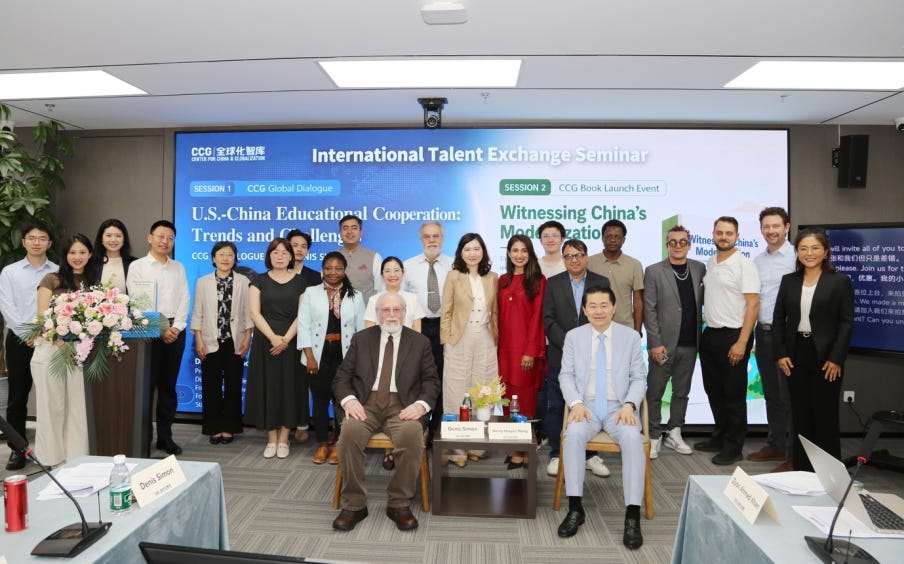
As part of the seminar, CCG held the launch event for the new English-language book Witnessing China’s Modernization in a hybrid format. The video recording of the book launch has been uploaded to CCG’s official YouTube channel.
Mabel Lu Miao, Co-founder and Secretary-General of CCG and editor of the book, joined representatives of the contributing authors and more than 30 experts, scholars, educators, young professionals, and media representatives from China, the United States, the United Kingdom, Pakistan, Brazil, Singapore, Zimbabwe, and other countries at the event.
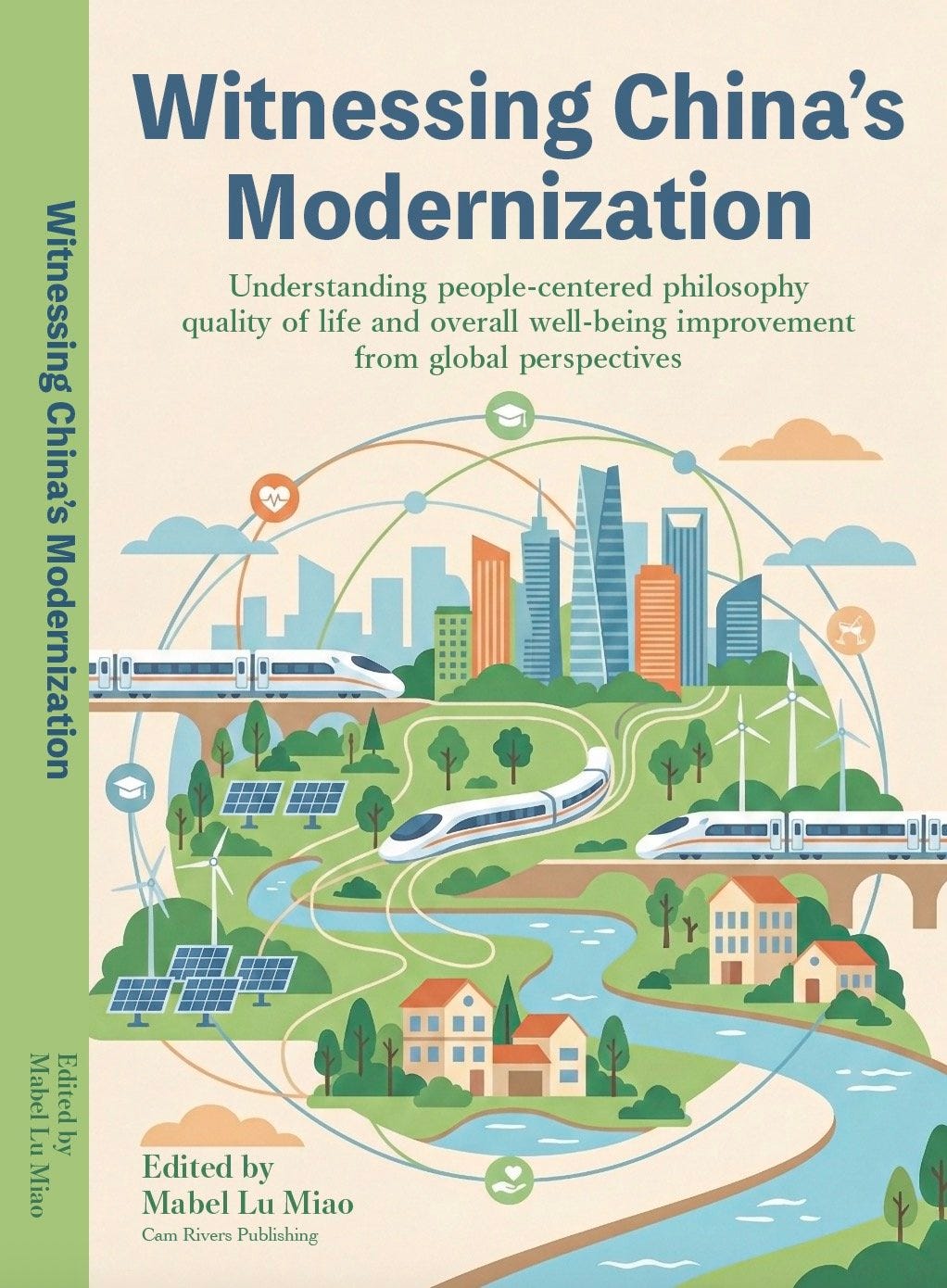
Witnessing China’s Modernization:
Understanding People-Centered Philosophy, Quality of Life and Overall Well-Being Improvement
from Global Perspectives
ISBN: 978-1-80606-037-5
Edited by Mabel Lu Miao
Published in January 2026
Publisher: Cam Rivers Publishing (United Kingdom)
Published by Cam Rivers Publishing, Witnessing China’s Modernization brings together the first-hand observations and lived experiences of 18 international authors from 14 countries and different generations who have lived, worked, studied, or travelled in China. The contributors include economists, anthropologists, senior professionals, and young researchers. Through cross-cultural perspectives, personal observation, and vivid storytelling, the book explores the social transformation and improvements in people’s livelihoods that have accompanied China’s modernisation. It also offers international readers a more varied and multidimensional perspective on contemporary China and its people-centred approach to development.
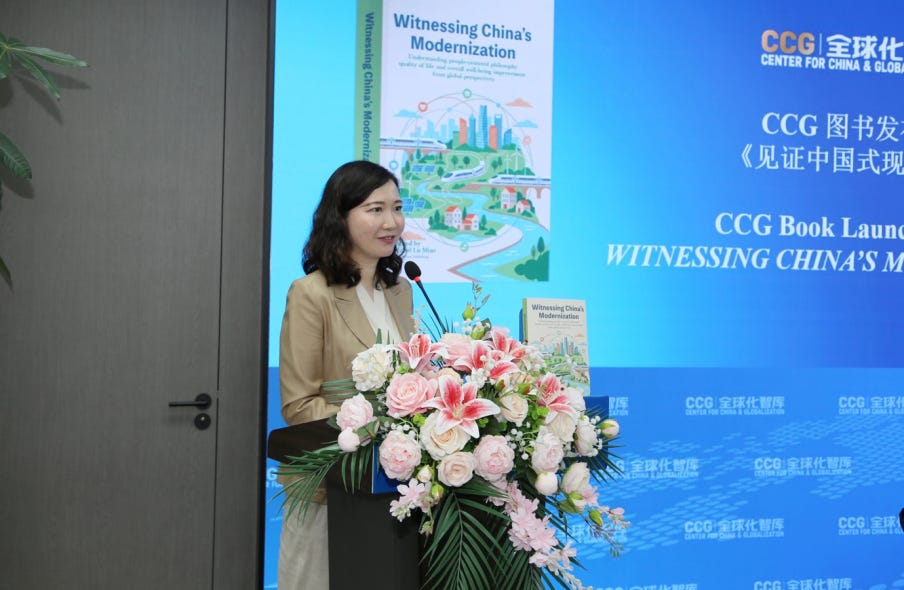
During the launch session, Mabel Lu Miao introduced the book in her capacity as editor. She said Witnessing China’s Modernization is a collective work rooted in the real experiences of international authors and seeks to record China’s development and transformation over recent decades through individual stories. The book, she noted, looks at areas including poverty reduction, infrastructure, public services, education, youth development, and quality-of-life improvements. It also considers, from a global perspective, what China’s experience may mean for human development, Global South cooperation, and the Sustainable Development Goals. Miao emphasised that the book is not only about telling the story of China’s modernisation, but also about contributing to a wider global conversation on human modernisation, internationalism, and common development.
During the roundtable discussion, several international contributors shared the changes they had observed in Chinese society and in people’s everyday lives, drawing both on their own experiences and on their interactions with Chinese friends and communities. They also highlighted the value of cross-cultural exchange in deepening understanding and friendship.
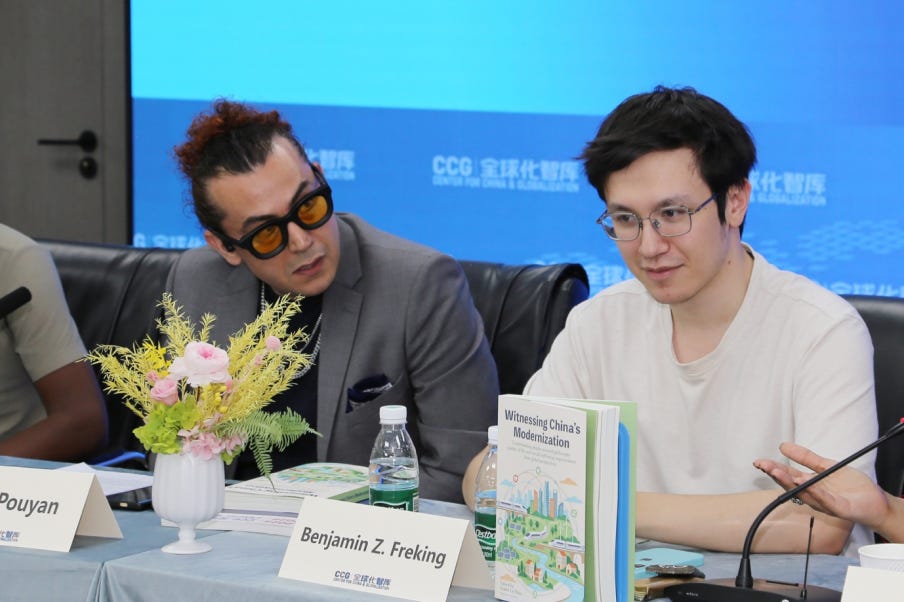
Benjamin Z. Freking, Associate Research Fellow at CCG, said the key to understanding China lies in building deep connections with Chinese people. Drawing on his experience of living in China on and off for around 15 years, he noted that the country has seen remarkable changes in rural development, urban renewal, and digitally enabled lifestyles. The transformation of payment methods, including the widespread use of WeChat Pay and Alipay, he added, reflects China’s digital integration and rapid capacity for innovation.
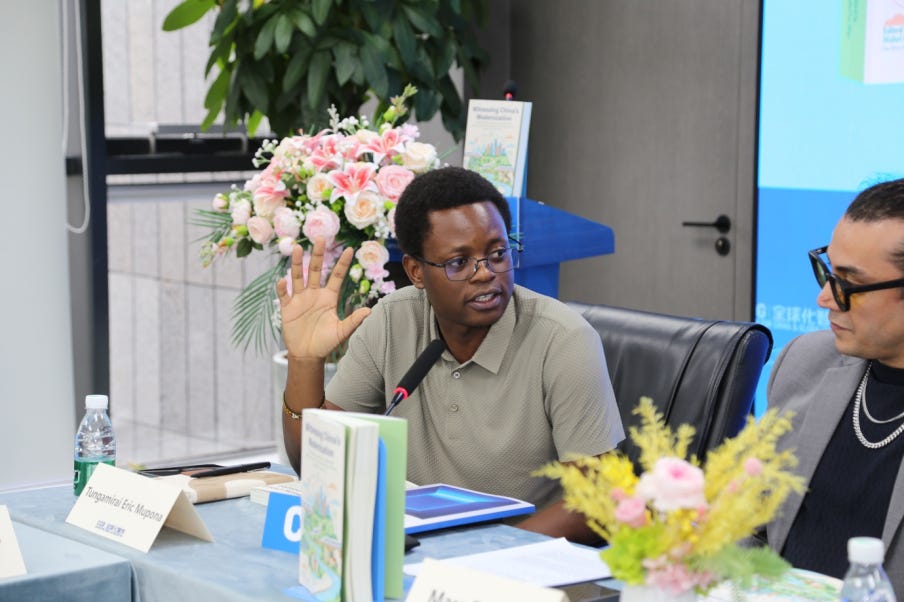
Tungamirai Eric Mupona, Vice Chairman of the China-Zimbabwe Exchange Center and Deputy Secretary-General of the Harare Africa Forum, shared his experience of conducting research and living in rural Zhejiang. He said he was deeply impressed by China’s approach to coordinated development, noting that many rural areas have not been left behind by urban growth, and that some remote counties have even attracted international medical companies. He said the continued flow of public resources to the grassroots and rural areas had given him a personal sense of China’s progress in inclusive development and rural revitalisation.
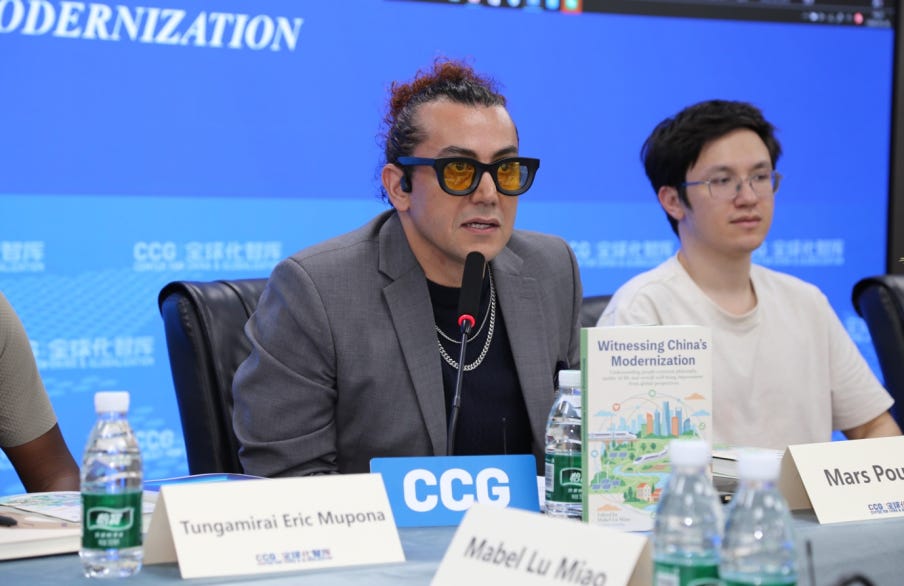
Mars Pouyan, international investor and founder of Quantum Vision Capital and Quamix.io, described China as his “second home.” He said what he feels most strongly in China is the close connection between family, community, and the country. Chinese people, he said, have their own “secret recipe” and “formula,” showing extraordinary execution capacity in whatever they set out to achieve. He also expressed the hope that China’s development experience could bring prosperity and inspiration to more countries.
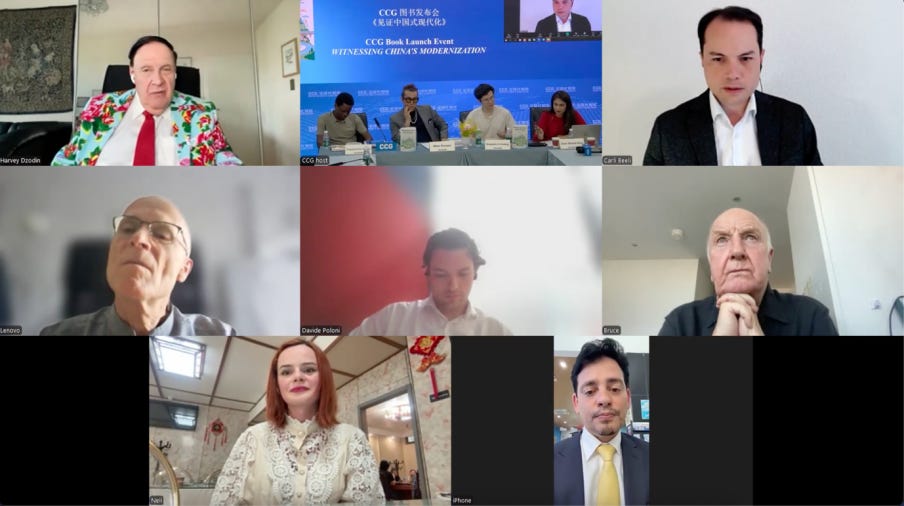
Carli Beeli, President of China Switzerland Connection (CSC), said China is like a “magnet,” attracting interesting people and ideas from around the world. He summed up China in three words: “ancient,” “futuristic,” and “hardworking.” He particularly highlighted developments in public transport, high-speed rail, and robotics, and said Chinese society has a strong capacity to adapt to change and progress.
Harvey Dzodin, former Vice President of ABC TV Network, used the words “peace,” “prosperity,” and “progress” to describe China. He said that over several decades he had witnessed China’s dramatic transformation from a country with relatively limited infrastructure into a highly modernised society. In his view, although China’s high-speed rail, robotics, and infrastructure have changed rapidly, the Chinese people’s aspiration for happiness and a better life has remained constant.
Michael Hermann, Chief Representative of the Yunnan and Chongqing Representative Offices of Humana People to People China, reflected on his experience in poverty alleviation and social work in Yunnan. He said China’s development is reflected not only in hard infrastructure such as roads, bridges, and airports, but also in the continued improvement of rural public services, social security, and grassroots governance. He noted that China’s ranking on the Human Development Index has continued to rise, and said that if Global South countries wish to truly understand China’s development experience, they need to look more deeply at China’s historical and cultural background, governance system, and forms of social organisation.
Davide Poloni, Sales Operations Manager at Porsche China, said that during his time living and working in Shanghai, he had been deeply impressed by the safety, creativity, and vitality of Chinese cities. He particularly highlighted the rapid rise of China’s automobile industry and new energy vehicles, arguing that Chinese manufacturing has moved beyond its former low-cost image into a new stage defined by advanced technology, improved quality, and stronger global competitiveness.
Bruce Connolly, a Scottish photographer and freelance writer, recalled his long-term observations of China’s development since first entering the country by train in 1987. He said China’s transformation from steam trains and bicycle-filled cities to high-speed rail networks, a cashless society, and modern metropolises has been astonishing. At the same time, he said, the greeting “Welcome to China” remains one of his most enduring memories of the country.
J. Renato Peneluppi Jr., member of the board of the Brazilian Bar Association of Rio de Janeiro for the coordination of Brazil-China relations, said the words that had drawn him to stay in China over the long term were “resilience,” “warmth,” and “welcome.” He said that while China has addressed its own development challenges, it has also continued to respond to global challenges. Renewable energy, electric vehicles, poverty reduction, and infrastructure cooperation, he noted, all reflect the dynamic relationship between China and the wider world.
Neli Akhobadze, Research Fellow at the Caucasian Association of China Studies, shared her experience of studying Chinese, living in China, and travelling across the country. She said it was her Chinese friends who helped her truly understand Chinese society and inspired her to pursue Chinese studies. Through the rapid expansion of Hangzhou’s metro network, she said, she had witnessed first-hand the profound changes that can take place in China within just a few years.
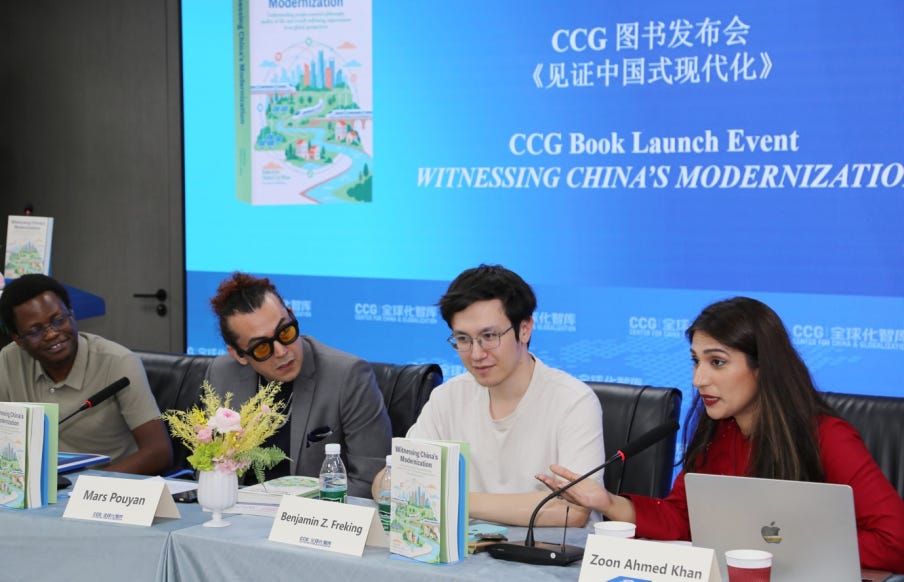
The roundtable was moderated by Zoon Ahmed Khan, Research Fellow at CCG. She said China’s development is visible not only at the macro level, through economic growth, technological progress, green energy, and infrastructure development, but also through the personal experiences and genuine understanding formed by people from different countries and backgrounds. The book, she noted, brings together the personal stories of 18 international authors and reflects CCG’s long-standing efforts to encourage diverse voices to take part in the international conversation on China’s development.
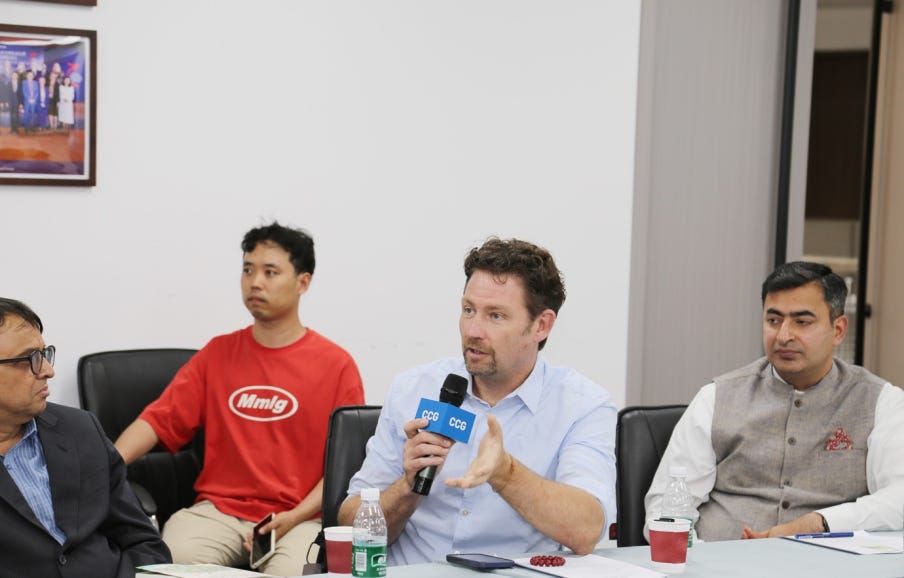
During the audience exchange, Joshua Dominick, founder of Krankin’ Thru China, said China is like a constantly flowing river, with new ideas, new communities, and new changes continually emerging. This, he said, is one reason many international friends are willing to stay in China over the long term, observe its development, and take part in it.
Audience members and guests also discussed the question of “where China will go next.” Participants noted that China still faces challenges including demographic change, green transition, industrial internationalisation, Global South cooperation, domestic consumption upgrading, and deeper engagement with the world. At the same time, they said, China’s accumulated strengths in industrial capacity, infrastructure, technological innovation, and development experience will continue to offer important reference points for the international community, especially developing countries.
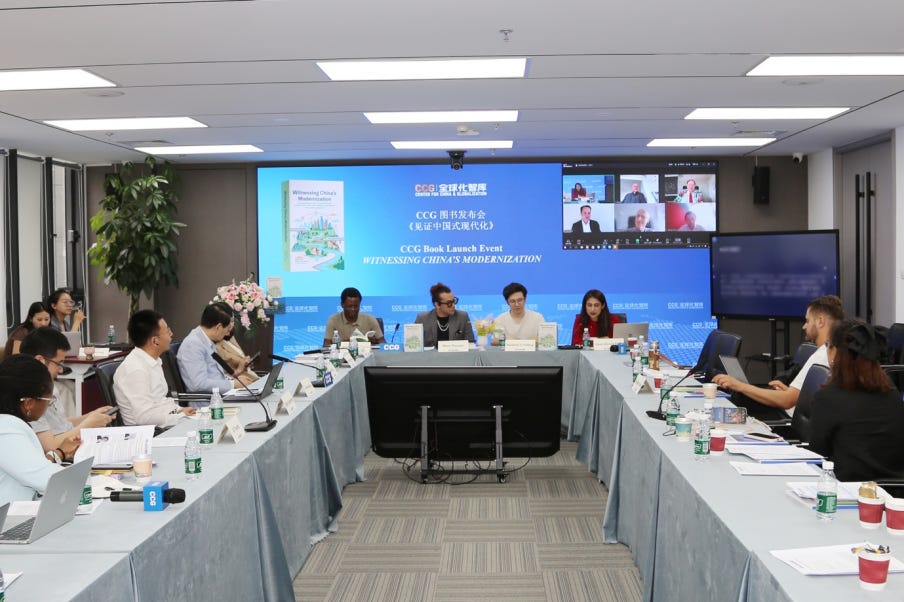
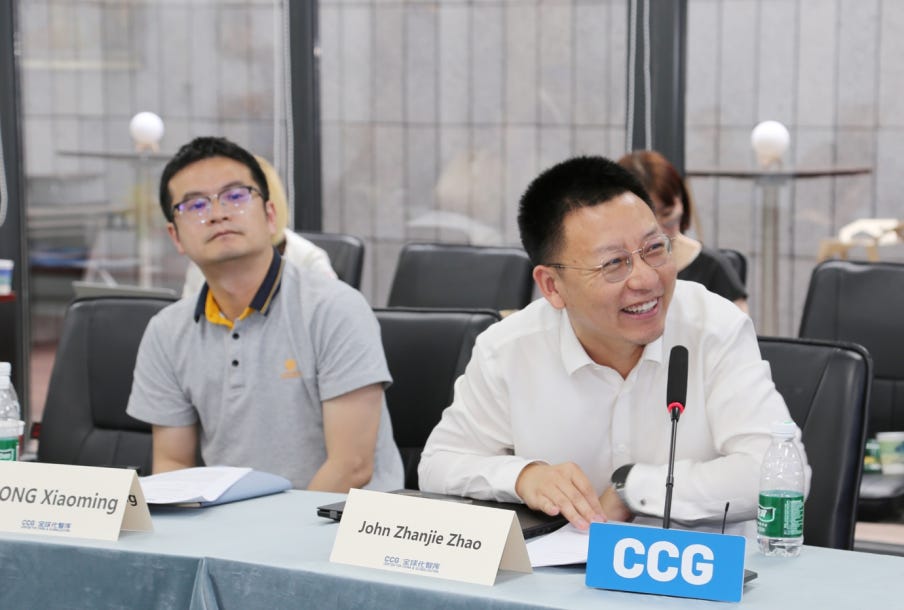
The launch event opened with remarks by John Zhanjie Zhao, Deputy Secretary-General of CCG and Director of the Cooperation and Innovative Network Department. Other guests included diplomats from the embassies of India, Kazakhstan, and other countries in China; experts and scholars from universities and research institutions including Peking University, Tsinghua University, Beihang University, the University of International Business and Economics, and the University of Auckland; representatives from organisations including the Beijing NGO Association for International Exchanges, Postal Savings Bank of China Tongzhou Branch, Sunshine Insurance Group, and EURAXESS China; international young professionals; and media representatives from outlets including Huanqiu.com and Beijing Daily’s Beijing Municipal Administrative Center Edition.
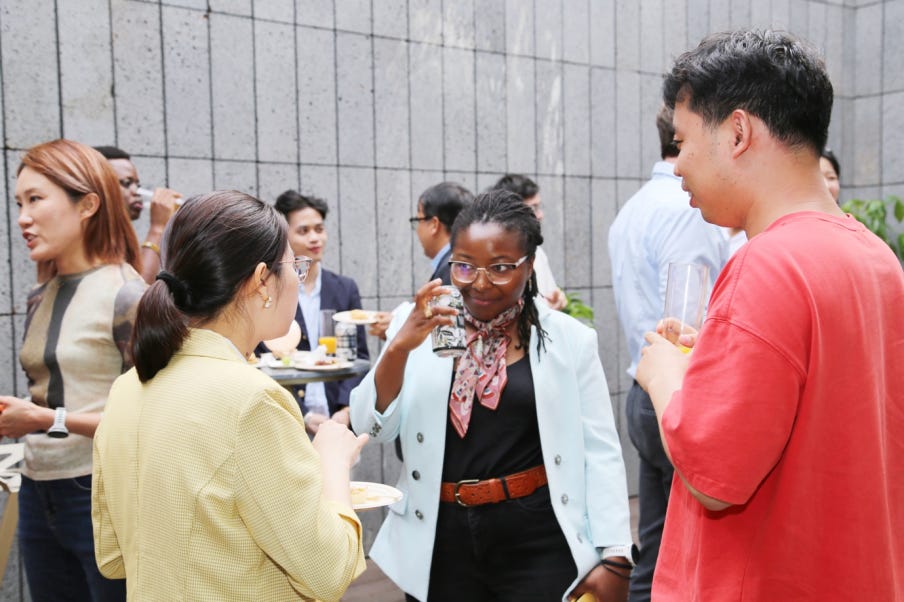
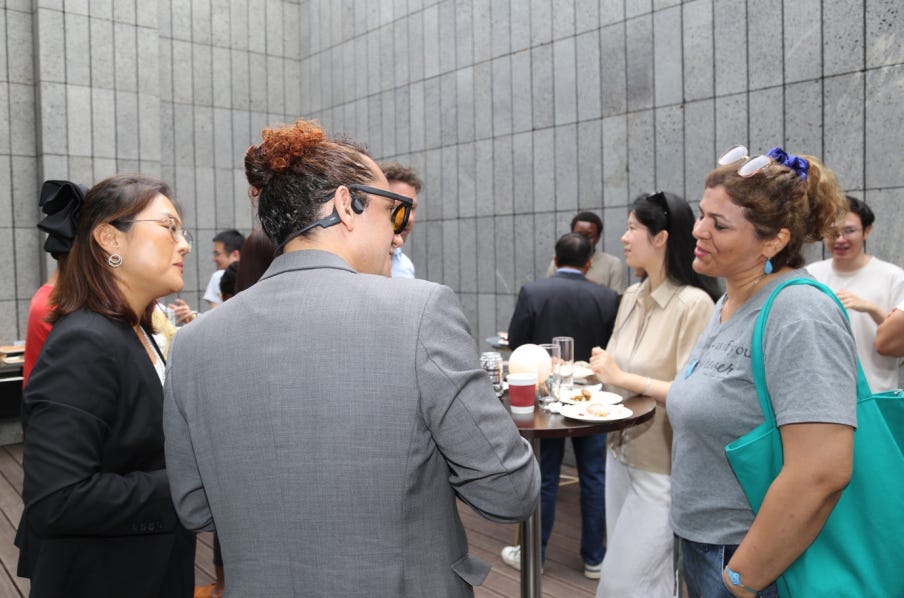
After the book launch, guests from different countries and fields, contributing authors, and young representatives continued their conversations over dinner in a relaxed setting, further deepening mutual understanding and connections during the networking reception.
Transcript: David Shambaugh at CCG

On Monday, May 25, David Shambaugh, Gaston Sigur Professor of Asian Studies, Political Science, and International Affairs at George Washington University and Director of its China Policy Program, joined the latest session of CCG Global Dialogues, delivering a keynote speech and engaging in a discussion with Henry Huiyao Wang, Founder and President of th…
CCG Forum heard calls for China to take enriched uranium from Iran

China’s Foreign Ministry was asked Monday whether Iran had sought Beijing’s help in transferring highly enriched uranium to China, after report said Tehran was willing to move such material there as part of efforts to resolve the U.S.-Iran conflict.