


The Center for China and Globalization (CCG) convened the 11th China Global Think Tank Innovation Forum in Beijing on November 21, 2026.
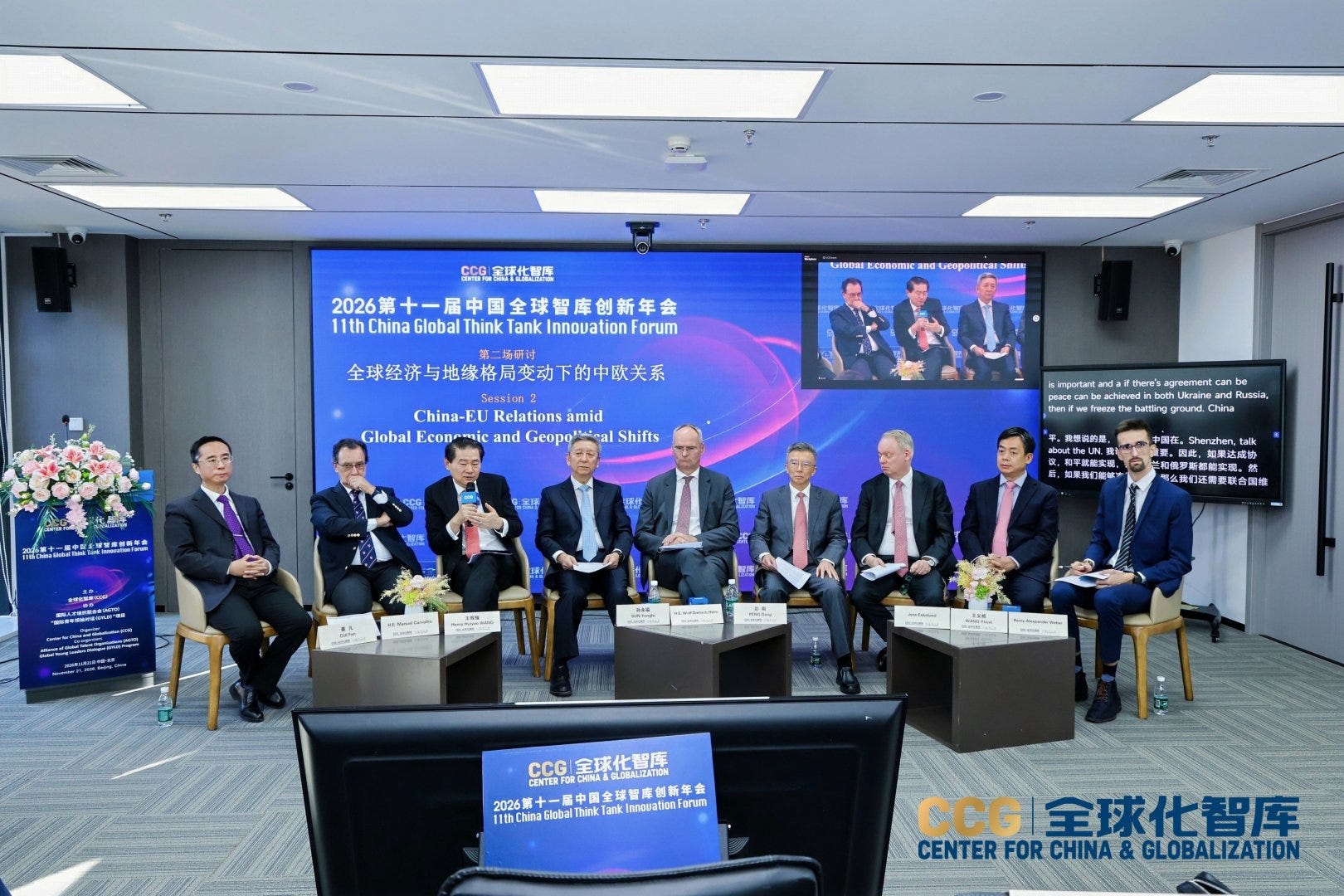
Below is the transcript of the forum’s second panel discussion, “China–EU Relations amid Global Economic and Geopolitical Shifts,” held on November 21. SUN Yongfu, former Director-General of the Department of European Affairs at China’s Ministry of Commerce and CCG Senior Fellow, moderated the discussion.
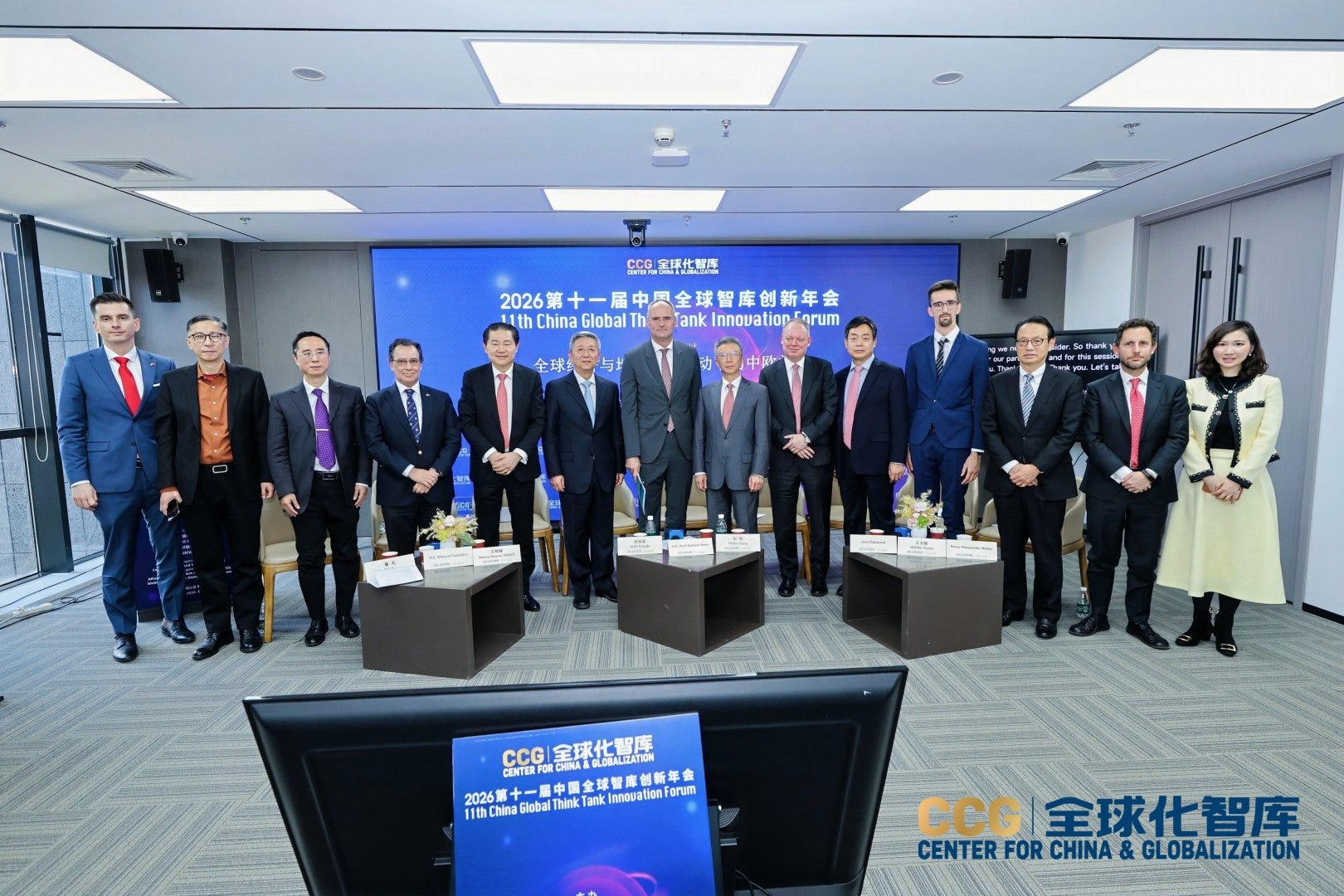
The following panellists spoke, in order of appearance:
Wolf Dietrich Heim, Ambassador of Austria to China
Henry Huiyao Wang, Founder and President, CCG
Manuel Carvalho, Ambassador of Portugal to China
PENG Gang, former Minister at the Mission of China to the European Union and former Director-General of the Department of Asian Affairs at China’s Ministry of Commerce; Senior Fellow at CCG
Jens Eskelund, President of the European Union Chamber of Commerce in China and Maersk’s Chief Representative for Greater China and Northeast Asia
WANG Yiwei, Professor at the School of International Studies and Jean Monnet Chair Professor, Renmin University of China
Rémy Alexander Weber, Senior Program Manager, Global Solutions Initiative
CUI Fan, Professor at the School of International Trade and Economics, University of International Business and Economics
The transcript also includes the live Q&A. It is based on a recording and has not been reviewed by any of the speakers.
Sun Yongfu, Former Director-General, Department of European Affairs, Ministry of Commerce; Senior Fellow, CCG
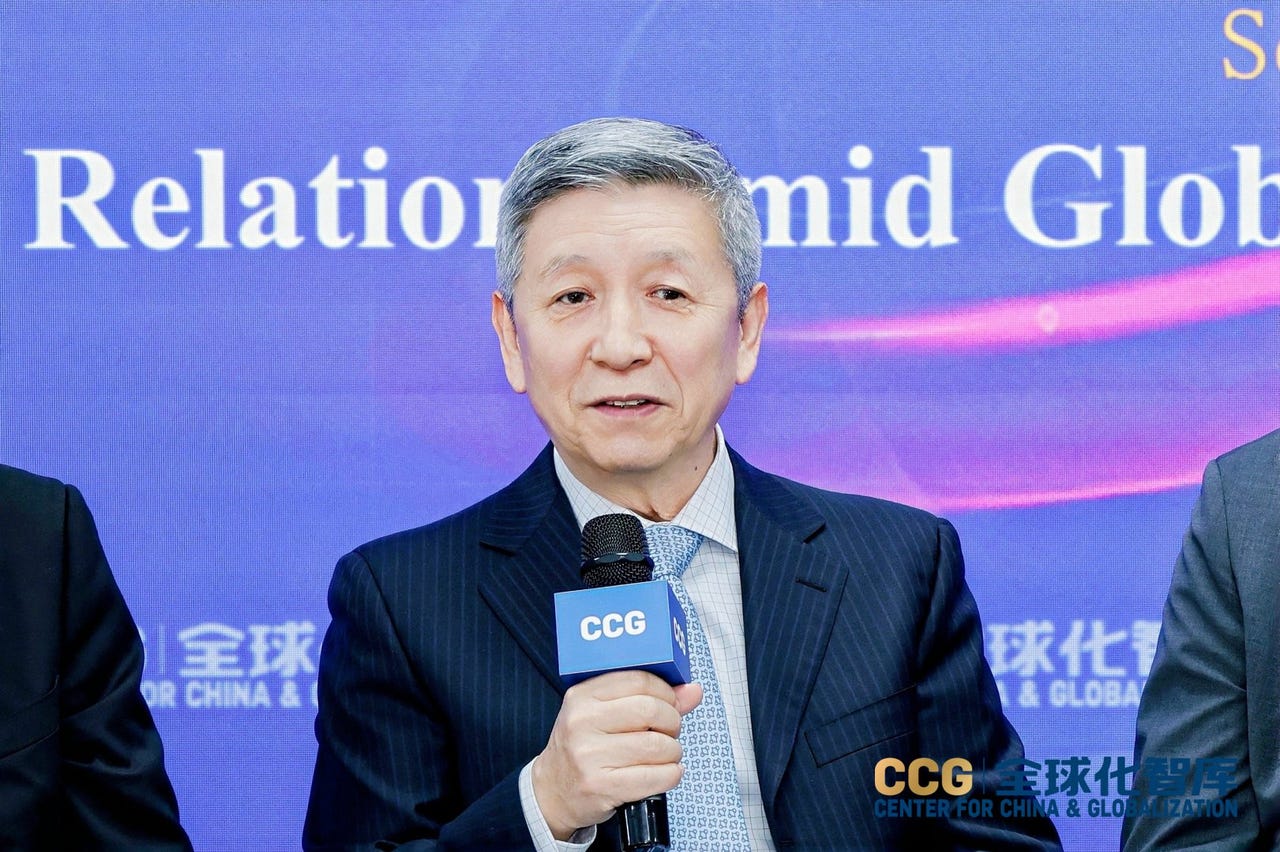
Good morning. We are right now in the session, which is “China-EU Relations and the Global Economic and Geopolitical Shift.” This high-level dialogue will bring together leading scholars and policymakers with extensive experience in China-EU relations to assess the bilateral relationship amid the rapidly evolving multipolar landscape.
We have very important participants and speakers in this session. We’ll discuss trade and investment, climate change and the green transition, and digital governance. And we’ll explore the possibilities of resuming negotiations on the bilateral investment agreement, and identify ways for China and the EU to advance multilateral agendas together, maintain open dialogue, manage differences, and deepen practical cooperation. The discussion will examine Europe’s strategic orientation and highlight the unique contribution that a constructive China-EU engagement can make to improve global governance and safeguard international stability.
We have a little bit more than one hour for this session, and let me very briefly introduce the speakers. His Excellency Wolf Dietrich Heim, Ambassador of Austria to China. And Wang Huiyao, Founder and President, CCG. His Excellency Manuel Carvalho, Ambassador of Portugal to China. Peng Gang, Former Minister of the Mission of China to the EU, and former Director-General of the Department of Asian Affairs, Ministry of Commerce. Jens Eskelund, President of the European Union Chamber of Commerce in China, and Chief Representative for Greater China & Northeast Asia. Wang Yiwei, Professor of the School of International Studies, Renmin University, and Director of the Institute of International Affairs, Renmin University of China. Remy Alexander Weber, Senior Program Manager, Global Solutions Initiative. Cui Fan, Professor of the School of International Trade and Economics, University of International Business and Economics, and Chief Economist of the China Society for WTO Studies.
Since we have limited time, I would prefer that each of our speakers could limit themselves to five minutes for introductory remarks, and then we leave enough time for Q&A. Okay, let me start with the first one.
Wolf Dietrich Heim, Ambassador of Austria to China
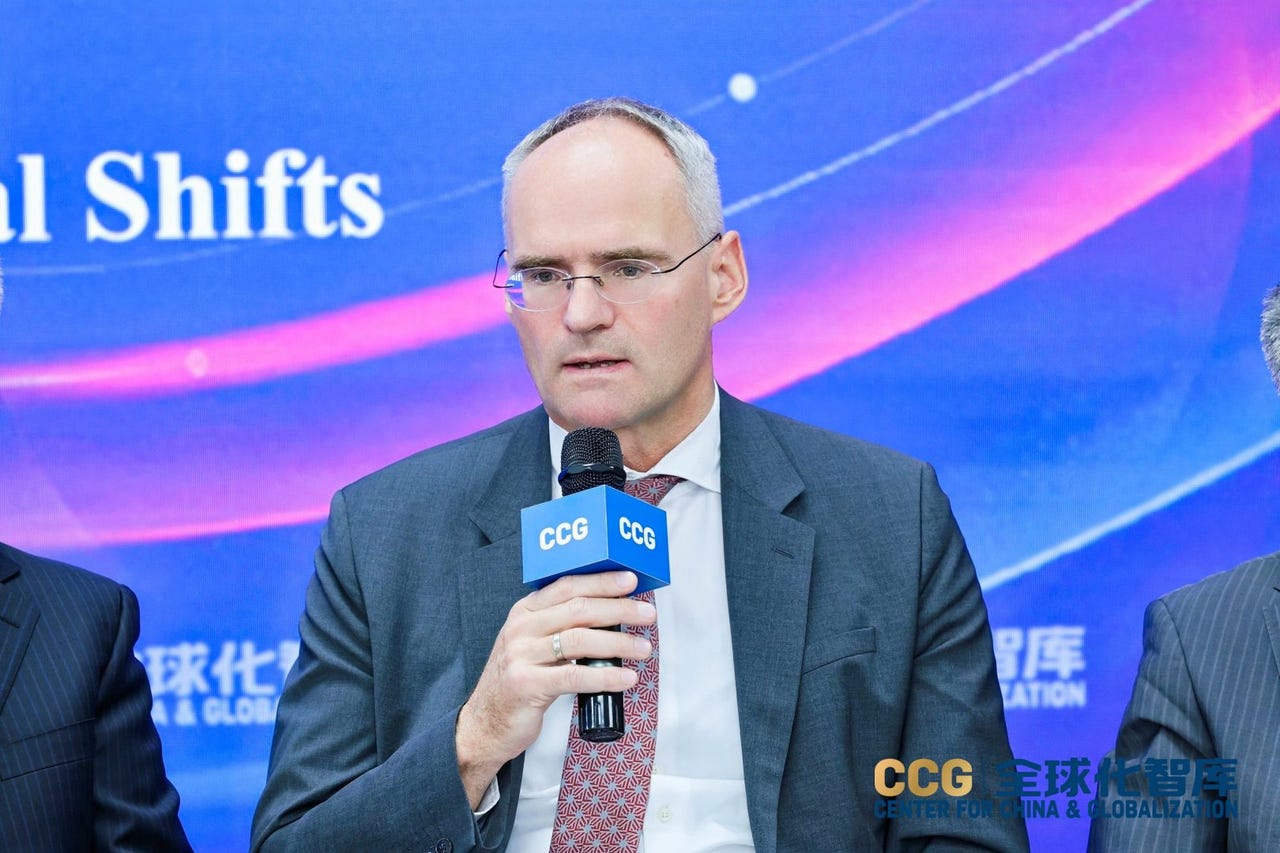
Thank you very much. Good morning and thank you for the invitation to participate in this panel. I’m honored to speak on the European side, and I’m happy that I have my Portuguese colleague, the Ambassador, with me, and also the President of the EU Chamber of Commerce, Jens Eskelund. I will try to share a little bit of what we are trying to say, the three of us.
I will start with Austria. As a member of the European Union, we joined in 1995, a few years after the end of the Cold War, at the same time as Sweden and Finland decided to join the European Communities and the European Union, as it were. Now, Finland and Sweden, after Russia had attacked Ukraine in 2022, decided to apply for NATO membership.
Austria has a tradition of being historically neutral when we became fully sovereign again after the Second World War, in 1955. So we modified our constitution: there is military neutrality, but there is no political neutrality. And I mention this because, in the wider context of the meetings that we’ve just seen in Shenzhen—but also, on the same day, I think we had a very important meeting in Berlin of the Coalition of the Willing, 39 countries supporting and defending Ukraine against the attack of Russia that has been going on for almost five years now.
Now, we will be talking about trade and the challenges that we see in our economic relationship, but I think it is important to understand the wider context. And I think it’s also important—if you allow me—to make reference to the previous panel: Yalta is a beautiful location in the Crimea. And when I was Ambassador to Ukraine, 2010 to 2015, I went there many times, and I guess it’s still beautiful. But the historic context of the meeting in February 1945, I think, had a very specific context that is important to remember. And I will not give a lecture on history, but I think it is very different from any trilateral meeting that we had this week. I think this is nothing to be compared with it.
Now, when I was in Crimea some 15 years ago, my impression was that the Crimean Tatars had a lot more civil liberties respected under Ukrainian governance. Now, when Russia annexed Crimea in 2014, I think a lot of the parameters changed for Europe, and for the wider world. And I think this is an element that many people maybe underestimate in facing the challenges that we in Europe, but also I think Russia and China, have.
Now, in my current role as Ambassador of Austria to China—and I’ll try to stay within this framework—it is important to understand that our relations with China also have a strong element referring to the European security that is currently in great strain ever since Russia launched the full-blown attack on Ukraine in February 2022.
Now, I will leave the political introduction at this point, and move to a much more optimistic chapter, and that is underlined by the very successful negotiations that the European Union had, specifically the Commissioner in charge of trade, Maroš Šefčovič. There were two rounds of trade and investment consultations earlier this year, and the one in October, I think, concluded in a very satisfactory and successful way, showing that dialogue is a way to resolve the serious issues that we see when we look at our trade relations, at the trade balance, but also our economic relations in a wider sense.
I think it is important to not only look at the trade deficit on our side. I think it’s important to consider services, to consider the economic impact of relations, and also, as is part of the trade and investment consultations, mutual opportunities for investment, the protection of intellectual property rights, and access to the markets—public procurement being one element that I think is, and will be, under negotiation for the years to come.
Also, it is very important to understand that the talks were not a singular event. This is, I think, a process that will continue early next year. And I think in all areas where the European Union sees a dramatic surge of Chinese exports to the European market, we will see the need to look into new approaches that are WTO-compliant and fully respect our commitments—our rules-based approach. And personally, I’m very optimistic that we can build on the success that was found in October; that was then approved by the heads of state and government at the European Council in mid-October. My impression is also, after the visit of my Prime Minister only a few weeks ago, that there is also a generally positive approach on the side of our Chinese interlocutors that this is the right way to proceed, to find solutions in dialogue, and to see how that affects the other side.
I would have many more things to say, but I will leave some of them to my colleagues. I think on trade and the current state of affairs, we have very knowledgeable colleagues. And I’ll be happy not to overextend your patience. Thank you very much.
Sun Yongfu
Thank you very much. Yeah, we have a time limitation, so I hope we can have a second round of this discussion, and we can explore more possibilities of cooperation with the EU. Okay, Huiyao.
Henry Huiyao Wang, President, CCG
Thank you, Yongfu. This is actually a very important panel that we’re having. So again, really welcome to this 11th China Global Think Tank Innovation Forum. What I actually want to say—maybe just briefly, three points.
The first: I think I just got back from the Paris Peace Forum 10 days ago, and I really had a talk with Pascal Lamy and many people there. So I think it’s probably time to revive the China-EU Comprehensive Agreement on Investment, because now there’s a huge interest for China to invest. And I know the EU side is concerned about the so-called overcapacity, or subsidies, and things like that. But let Chinese investment come into Europe. And also, we have so many European companies in China, like 5,000 German companies, many French, many Dutch, and so many other companies in China. The JVs they have in China can invest back into Europe, and also can invest back into other Global South countries. So that would be really great to start these great investment opportunities, creating jobs and bringing more benefit to the local community, so that we can really come down on these trade frictions and really expand investment.
So that’s my first point: to really welcome Chinese investment, we need to improve the political climate there, rather than being bashed like Huawei, like TikTok, and so on. We need to really improve the business environment for Chinese investment in Europe. That’s the first point.
The second point is about the geopolitical one. China has always been pointed at for supporting Russia, but China doesn’t provide any military equipment and is trying to promote peace. What I would like to say is that I noted this trilateral summit in Shenzhen talked about the UN. I think that is important. So, if peace can be achieved in both Ukraine and Russia, if we freeze the battleground, we will need a UN peacekeeping force there. China is the largest UN peacekeeping force contributor among the P5 of the Security Council. And I read the news this morning; they were talking in Europe that they need more guarantees for this Ukraine war. China probably can provide guarantees, together with Global South countries like India, South Africa, and Brazil. So in that case, I think if it’s just European troops, just NATO troops, for peacekeeping, I’m sure Russia would not agree with that. So I think by bringing China to the peacekeeping, that would really probably serve as a guarantee as well, and we probably can find the end to this war.
And finally, I know there are some European friends complaining that this P3 meeting in Shenzhen did not involve European countries. But I have a proposal: we’re going to have the Miami G20. We had a P3 summit this time. Maybe we can have a P5 summit in Miami? So that all the Security Council members’ heads of state are there, they have a face-to-face meeting, and if they have a joint declaration on how to reform the UN, I think that would be great. And also, they can decide at that time who the best UN Secretary-General could be, with all the P5 summit. So that’s what I would suggest. Thank you.
Sun Yongfu
Thank you. And I think he made quite a few good suggestions, especially the first one, because I was personally involved in the Comprehensive Investment Agreement in the first step. It takes two to tangle, and the Chinese government is willing to discuss with our European partners concerning the Comprehensive Investment Agreement, but we need a positive reply from Brussels as well. Let me have Your Excellency Manuel Carvalho, the Ambassador of Portugal. Your time, please.
Manuel Carvalho, Ambassador of Portugal to China
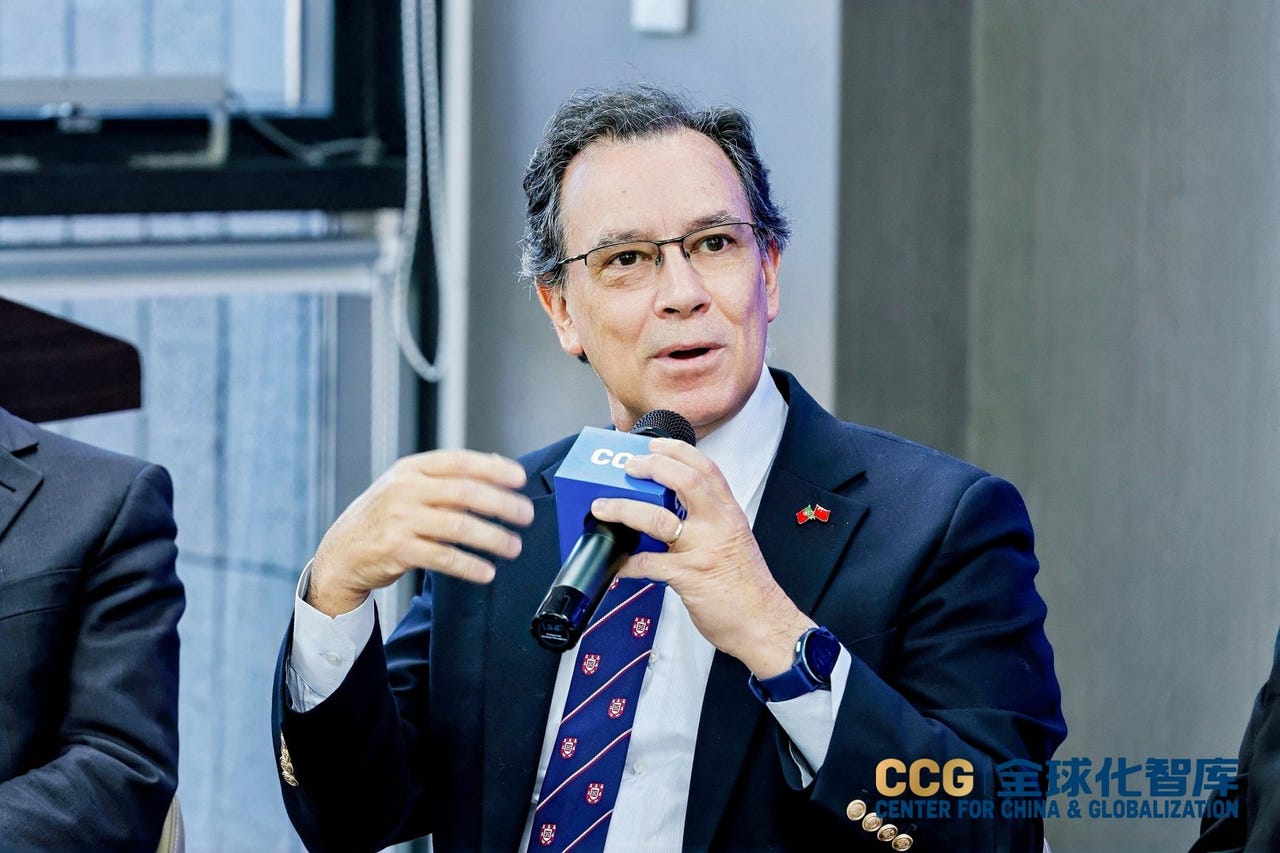
Thank you. Good morning, everybody in the panel, distinguished audience. It’s a pleasure to be here. I happen to represent the first European country that established relations with China, and has been dealing with China for 500 years now. So we have some depth in the way we look at this part of the world.
We talked about the other things before—arms control—and I talk about understanding, and understanding how different peoples and different nations, from different points of departure, can still understand each other and cooperate with each other. And I would say I flow from a tradition of doing exactly that, because I mean, I cannot think of countries that would be further apart in size or outlook than Portugal and China, and yet we were able to maintain a profitable, rewarding relationship for five centuries, building actually a city that exists down to today.
And I returned yesterday from Macau. I know that Macau today is associated with gaming and other things, but Macau is a point of contact between the East and the West, as a living society that existed and was created by an unwritten mutual agreement between the two countries.
This is a very important point, because in a very fundamental way we disagreed. There was a fundamental disagreement between Portugal and China on what Macau was, and therefore we had no treaty on Macau. So we just established it; we created it, with acquiescence—I must say, it must have been acquiescence on the Chinese side, because I mean, we could have been easily expelled. So I mean, if we were there for 500 years, some kind of cooperation was necessary on the receiving side, to put it that way, because it was profitable. We never could come to quite an agreement whether it was a Portuguese city in China, or a Chinese city in China where there were Portuguese residents. That fundamental part of the disagreement was not solved. Yet we were able to have trade, to have benefits, to have profits; and that lasted for those many centuries. In a way, I pride myself for being the country that has been here for 500 years without breaking the glass. So we did that.
It is, to me, a lesson of how we can engage. And I would venture to use this as an example, because China has changed many times. If you think of it, we start with the Ming dynasty, then came the Qing dynasty, then came the Republic—Sun Yat-sen was a doctor living in Macau, actually. So when we talk about him and celebrate his legacy—which we also celebrate—in fact, his first wife lived in Macau until she passed away. He kept on coming back. And then everything that happened during the 20th century, including the many renditions of the People’s Republic of China, because the People’s Republic of China, in itself, since 1949, was many things within the same construct, which means you can evolve, and you can look into the future, and accept that we come from different points of departure, and yet we can operate, and we focus on the points we need to cooperate on.
Now, if I take the broader view, from Portugal into Europe, we are a European country, a North Atlantic country, and a traveled European nation that has been around the world. We just celebrated 500 years of diplomatic relations with countries as far apart as Ethiopia or Thailand. With China, it was on and off. We had relations with China; it was on and off, while maintaining this long-term relationship, but diplomatic relations were on and off. But with Thailand and Ethiopia, it was continuous.
Today, as a European, I would say that if I look at the world, in many challenges that we have, we have quite clearly come back to China. China, for the better part of its 2,000 years of statehood since the founding of the Qin dynasty, was the biggest country and the biggest economy in the world for most of the time. Then there was a moment of eclipse, the so-called years of humiliation of China, where China lost that position. I heard a moment ago that China, apparently, as seen from Washington, is not going to take over the United States. Well, that’s something to be seen. China has a long past, and I believe China has a long future. But it is true that China creates a new fact in international relations, and we have to deal with that.
In dealing with that, we often talk about the Thucydides trap, where the emerging power will produce a conflict. Even in ancient Greek history, I’m not sure that is a scholarly, universally accepted view. In modern times, my take is that that is not necessarily so. We have seen different moments of shifting political power. We have seen that in Europe. There’s no one from Germany here, but we had to deal with two wars with the rise of Germany until we found a solution with the current arrangement that we have within the European Union. So, conflict is not a predestined destiny. We can manage it, and I believe we can manage it also with China.
One thing that I see China repeating many times over is respect for the role of the United Nations. That is something—as a committed UN member, the country of the current Secretary-General, and an incoming member of the Security Council—that is something we appreciate, and we expect China to continue in that way.
One last point. The question of Taiwan was mentioned a moment ago. From our point of view, there is no doubt that there is one China, and Taiwan is part of China. We, like others, hope that the solution of the Taiwan question is going to be done peacefully, as it was done in the cases of Hong Kong and Macao. And we are part of that, I mean, as a formal signatory. So we have a direct experience. I know what we are talking about. I was myself Consul-General in Macao, and I can tell you that Macao is still today. I arrived yesterday from different cities in China — there are models that can be used, and I think we can draw inspiration from that.
I leave the economy, but I believe Mr. Eskelund will also talk about that, and I may return to that, because there we do have issues to talk about.
Sun Yongfu
Good. Thank you very much, Ambassador. Actually, China and Portugal have very good political and economic relations. We have a lot of investment right now—Chinese investors and companies in your country, like the Three Gorges, for example. Of course, Macao is playing a very important role bilaterally, and we also have a China and Portuguese-speaking Countries Forum every year. So it’s quite important. All right, now Peng Gang, my colleague, your turn, please.
Peng Gang, Former Minister, Mission of China to the European Union; Former Director-General, Department of Asian Affairs, Ministry of Commerce; Senior Fellow, CCG
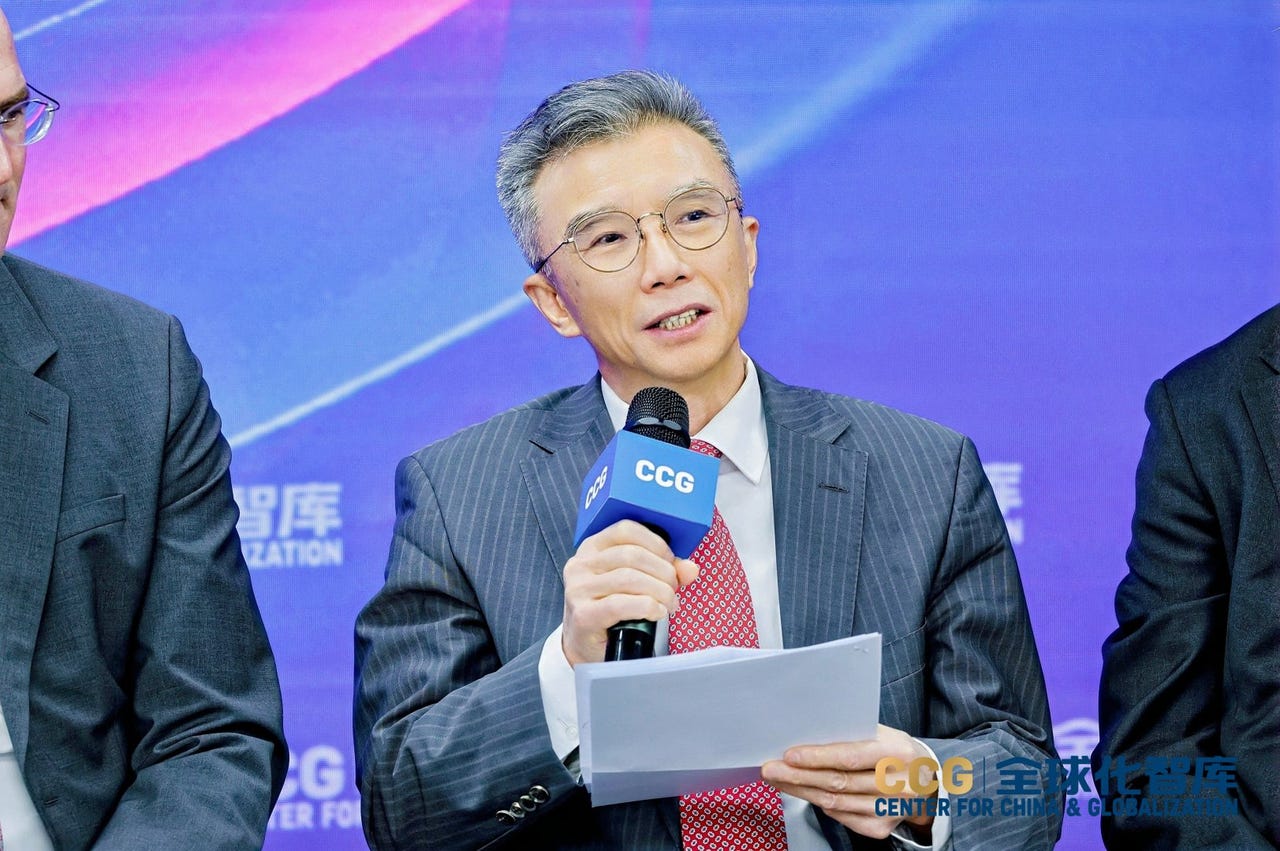
Good morning. Thank you, Mr. Sun. And also, thanks to Henry for your kind invitation. For me, I have this very great honor to be here, together with all Excellencies, ambassadors and old and new friends together. Warm congratulations on the successful convening of today’s forum.
As Your Excellencies just mentioned, the world is undergoing profound changes unseen in a century, and now both China as well as Europe are facing some kind of challenges and problems, not only from the domestic view but also from the external world. So, as two major powers, markets, and civilizations, how China and Europe see or view each other, and manage differences effectively, not only bears on our people’s well-being, but also on global stability. So that’s why I think it’s very important, for the Excellencies and friends, both from the European side as well as the Chinese side, to be sitting together and to discuss with each other.
Just now, Henry, as well as Ambassador Wolf, mentioned our bilateral trade between China and Europe. Here I have a great honor to just share a little bit of data together with you.
Despite the turbulent environment, our trade and economic cooperation have proven remarkably resilient. As we can see, in the first 10 months of this year, China-EU trade reached 769.4 billion US dollars, up 13.1% year-on-year. And two-way investment stocks exceeded 290 billion US dollars. That is not a very, very easy result, coming from the ongoing turbulent environment, especially from the external environment. The China-Europe Railway Express has run over 140,000 services, carrying goods worth more than 560 billion US dollars, to 237 cities in 26 European countries. This is also a very remarkable cooperation result. That means our economies are highly complementary, and mutual benefit defines China-Europe relations.
Still, as some of the Excellencies mentioned a little bit earlier, in Europe especially, you are facing a lot of problems or pressures. And especially, the EU has repeatedly articulated a kind of de-risking approach. It’s very clearly targeting China. So under the guise of supply chain security, it has tightened investment screening and subsidy reviews, expanded export controls, and hyped the Chinese overcapacity, as well as “China shock 2.0,” and so on and so forth.
These kinds of views or practices are neither objective nor responsible. We also understand that there are really a lot of challenges. But Europe’s real challenges, I think, just come from within, from the perspective of the economy, such as sluggish recovery, employment pressures, higher transition costs, weak innovation, and so on and so forth. So surely not from China.
From the broader view of our bilateral relationship—that’s the topic, and that’s why we are sitting together here. I would like to put forward five proposals.
Firstly, uphold our partnership and consolidate its foundation. This is very, very important. And both ambassadors also just mentioned the consultations and the partnership.
Secondly, pursue open cooperation and safeguard the industrial and supply chains.
Thirdly, expand mutual benefits and the pie of trade and investment. As Henry just mentioned, the second meeting of the China-EU Trade and Investment Consultation Mechanism was held not long ago. The 16 points of consensus reached from this meeting covered trade and investment, export controls, intellectual property and WTO reform, balancing both sides’ concerns. And the third meeting is set for next March. At the beginning of the 15th Five-Year Plan, and advancing high-quality development and high-standard opening up, China’s policy, market and innovation dividends will create greater opportunities not only for Europe, but also for the whole world.
Fourth, deepen practical cooperation on green and digital growth. As we all know, pragmatic cooperation is the cornerstone of China-Europe relations, and the best answer to the so-called de-risking. China and Europe are strongly complementary in climate change, green development, the digital economy, AI, and so on. Especially, Chinese automakers are already building plants in Europe and joining local supply chains, creating mutually reinforcing advantages with the traditional automotive industry, and contributing to Europe’s green transition. So from the Chinese point of view, we are ready to deepen cooperation on new energy vehicles, lithium batteries, photovoltaics, critical minerals, and AI, and so on.
Fifth and lastly, uphold multilateralism and manage differences through dialogue. Dialogue and consultations are the most important between us. And also, as the Excellencies just mentioned, guarantee multilateralism and safeguard the rules-based, WTO-centered multilateral trading system. Thank you very much.
Sun Yongfu
Thank you. Now the floor is Jens’. The EU Chamber in China is a very important chamber. I had the privilege to have a very intensive dialogue with your former President. The floor is yours, please.
Jens Eskelund, President, European Union Chamber of Commerce in China; Chief Representative for Greater China & Northeast Asia, Maersk
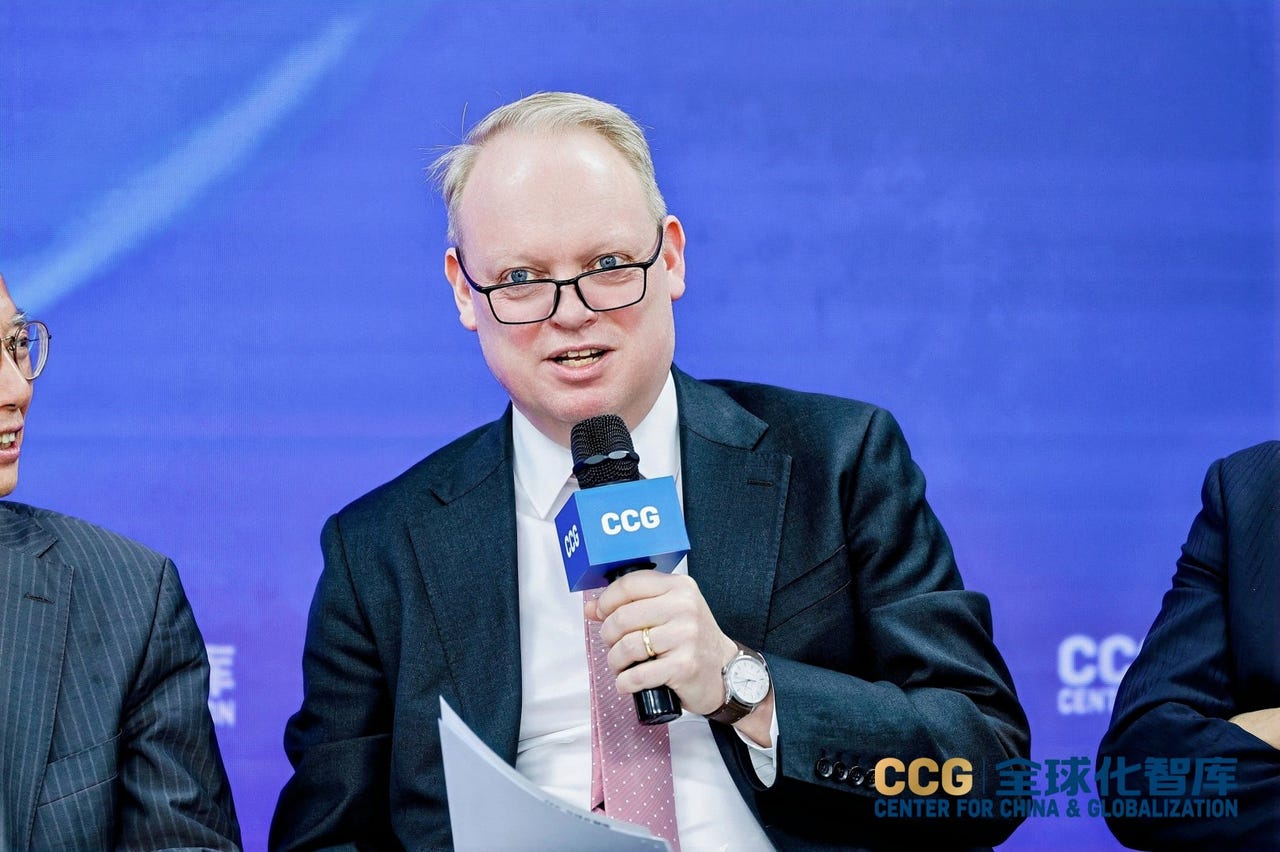
Thank you very much, and thank you also to Henry and CCG for providing this safe space where we can agree to disagree and still be friends afterwards. And also for having this opportunity to speak right after my old friend, Minister Peng, who I knew also from Brussels.
But let me just start by also repeating what Ambassador Heim was talking about. It was a little bit sad, as a European, to see the spectacle in Shenzhen. Russia is not a great power. Russia has an economy as the size of Spain; and whereas Spain is an absolutely great country, the way that Russia behaves in the world, I don’t think this qualifies for a designation as a great power. We should stand on the side of the victims. We should not stand on the side of the aggressor. That is very, very important. And that will also be important in order to rebuild trust between Europe and China. I think this is fundamental.
And then I’d like to go back to Minister Peng. You talked about the de-risking. Because it’s always a little bit interesting when I hear this criticism of European de-risking, because I think China was the original de-risker. We have seen Made in China 2025. We saw dual circulation coming in the last five-year plan. We have had these strategic plans for self-sufficiency. We have these very specific targets for self-reliance within energy, within technology, within agriculture, and we have also seen it in the 15th Five-Year Plan.
I think China has been phenomenally good at de-risking and becoming self-sufficient. So I don’t understand why you can blame Europe for maybe learning a little bit from China. I should mention, Europe does not go nearly as far as China. China talks about self-reliance, self-sufficiency, creating a complete industrial system. We don’t talk about that in Europe. We talk about diversification. Diversification is that maybe you can get 60% of a commodity from one country, say China, but then you need to get the rest from somewhere else. So if something happens, you’re protected; your economy can continue running. And again, looking back at the last year, with the export controls on magnets and rare earths, can you really blame Europe for thinking about de-risking? That was probably the single largest issue that European businesses faced last year. We had companies that were losing hundreds of millions of euros because they had to stop production chains. Wouldn’t you de-risk? I think corporate leaders have an obligation to de-risk when faced by these situations.
Then you mentioned bilateral trade. I think the devil is in the detail. It’s not enough to look at bilateral trade — we need to break it down into import and export. Now, if we go back to the start of the pandemic, January 2020, every time Europe exported one container to China, China exported 2.5 containers to Europe. That is already a very big imbalance. Two years ago, that imbalance had grown to 1 to 4: one container from Europe to China for every four in the other direction. In the first eight months of this year, every time Europe sends a container to China, China sends 6.1 containers to Europe. And as of last month, it’s 6.6 containers. I work in shipping. We have full ships sailing from China to Europe, but we have empty ships coming from Europe to China.
That I think, is not sustainable. Because why do we trade? We trade because of win-win. By the way, it’s been a long time since I heard people talk about win-win in China. Now we talk about rules-based order, not so much win-win—because I think for some of China’s trade partners, the win is getting harder to identify.
Goldman Sachs had an interesting report last December, where they estimate that China’s trade with the world, by 2029, will contribute a negative 0.5% to European GDP, and negative 0.9% for Germany. Now, why should countries trade if trade is no longer creating value but destroying value? That takes the fundamental basis of trade away.
And that is my encouragement to China: we need to get back to win-win. We need to get to a point where both Europe and China can see themselves as winners.
Now, I was just talking about imbalances. I actually don’t think the imbalances are super important, because not everything is important. 95% of all Christmas decorations sold in Europe come from China. Is that a problem? No, it’s not. But what is important is economic security. It is employment. Europe can easily sustain a trade deficit of maybe 200 or 300 billion euro with China. That’s not a problem. Maybe this year it looks like it’ll be more than 400 billion euros; maybe it’s too much. 400 billion euros—that’s about the GDP of my country, Denmark. So it’s a lot of money, right? But 200, 300 billion euros, who cares? What is important for Europe is economic security.
And here, actually, I think there is a solution, because what Europe and China want is not mutually exclusive. What China wants is continued broad and deep access to the European market. Because honestly, the only thing that works in the Chinese economy right now—that’s export. Exports accounted for 50% of economic growth in the first half of this year. We have seen consumption is flat, investment growth is declining. That leaves export, which is ballooning, 35% up.
So I think Europe is happy to continue to give China broad and deep access to the European market, but there needs to be a quid pro quo. China needs to accept that Europe has legitimate economic security interests, in the same way as China has taken care of its security interests. We see it all the time: whether it’s ICT or it’s energy, China is obsessive about security. I don’t think Europe will go as far as China, but if China can accept and accommodate that Europe has economic security concerns, then I also think there is a way that China can continue to have broad and deep access to the European market.
As I see it, it’s not about trading less; it’s about trading better. And I think this is a space that we need to get into. Listen to each other, accept that there are legitimate concerns. And if we can take care of these 10% of trades that are problematic, then I think the rest of trade can easily continue to grow.
And that’s why I agree with you: it takes two to tango. So let’s hope that China is also willing to dance. I’m sure Europe is. No one talks about decoupling in Europe. Thank you.
Sun Yongfu
Okay, thank you. It’s a very important remark. I believe Professor Wang will, in a way, respond to the worries of your concern. Okay, Professor Wang.
Wang Yiwei, Professor, School of International Studies, Renmin University of China; Jean Monnet Chair Professor
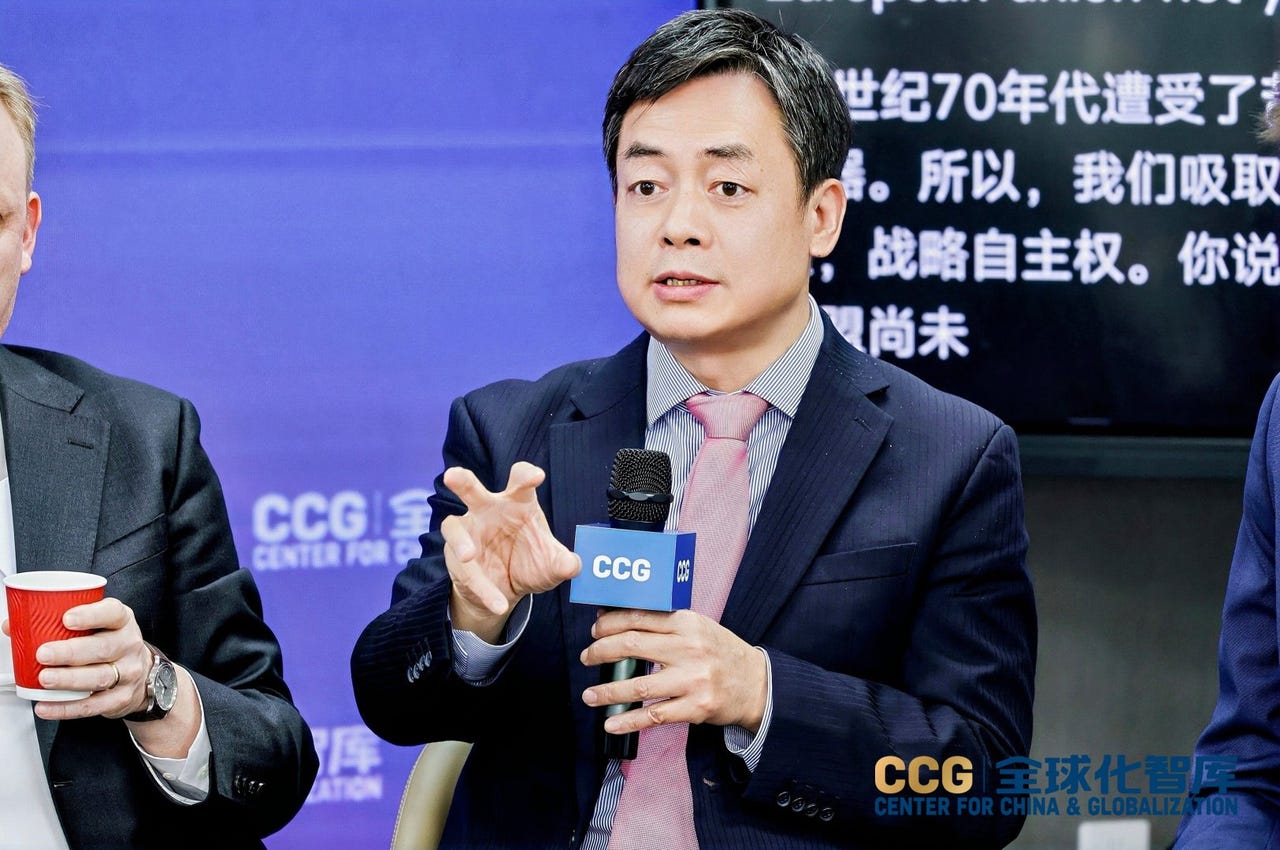
Thank you. Your speech is like that of the Ambassador of the European Union to China. Okay, business is business.
I was asked, “Why not G3?” 15 years ago, when I worked in Brussels—I was kind of sent to the European Union—at that time Obama put forward the G2. And you can say, why not G3? I say, yes, there is G3, but the G3 is with Russia. Then Europeans will complain about that. But what lessons can we learn from the China-U.S. relationship?
Number one: very pragmatic. China put forward a constructive relationship of strategic stability, and the U.S. accepted and put more into it— fairness and reciprocity, mutual respect. Because it’s very pragmatic. China-U.S., we have the comprehensive strategic partnership, right? But the European Union unilaterally changed it, identifying China as a competitor, partner, and adversary. So this is against the principles and the legal basis of the relationship. You can put more in front of “comprehensive strategic partnership,” but not unilaterally. These are three identities from China. As our foreign minister said: “How can we drive? This is a red light, and a green light, and the yellow light.” So we cannot drive in China-European relations. So, in Chinese we say, “名不正则言不顺” [If the name is not correct, the words will not ring true]. So we need to come back to the constructive strategic partnership.
Number two: You say Putin “launched the war,” whatever. President Xi sat down there, and then the two guys launched the wars—one in Ukraine, one in Iran—and they sat down, talked about stuff, and then made peace. You should appreciate that. [Other panellists interject. Audio unavailable.] They made four points of the agreement, saying: consensus, no fighting, no use of nuclear weapons at any circumstances. You should appreciate that, right? At the very beginning, President Xi made a phone call to President Putin. [Other panellists interject. Audio unavailable.]
The Chinese policy is very consistent. At the very beginning, President Xi said, “Under any circumstances, do not use nuclear weapons.” Nuclear weapons—there is no winner, right? This is good to say on your behalf, right? Because in Russia, there are so many reasons to use nuclear weapons. China suffered in 1969, when the Soviet Union wanted to use nuclear weapons to attack China. So we have the lessons. We have lessons to show you.
Okay, number three —I think most importantly—strategic autonomy. You said “strategic independence.” Russia is strategically independent. European Union—not yet, to be frank. So that’s the reason many reports say the European Union now suffers from the middle technology trap, in AI particularly, because artificial intelligence is more in the hands of U.S. companies, like Google, like Microsoft. So that’s the reason you need more strategic autonomy. And then China is the partner for you to build on that, not the U.S. Because China’s AI model is open source. So you can cooperate with China. [Other panellists interject. Audio unavailable.] That’s another issue we’ll talk about later. Please focus on what I’m saying.
Number four is leadership. Like it or not, President Trump, President Putin, President Xi—they are three strong leaders. In the European Union, you don’t have one. The so-called strong leader, von der Leyen, is illegal [representative of the EU]. She is the prime minister. But where’s your President? The President of the European Council is on behalf of the European Union. But the European Commission President has bypassed that. I hope in the future when Le Pen become the President of France, the European Council should play a more decisive role, not the European Commission.
I think there are lessons we can learn from the China-U.S. relationship. And three suggestions for the European Union:
Number one, you have three identities, right? Civilian power, normative power, and legal power. Now, as the previous panelists talked about Taiwan: all the European countries signed diplomatic ties with China, recognizing the one-China principle. In the UN resolution, also one China. This is a legal basis. But now you put China and Taiwan as the two entities. And then, as mentioned before, you’re against it. Your policy is not consistent. The legal basis is very important. It’s not China asking you to recognize the one-China principle. This is the legal basis, okay?
Number two, normative power. As for normative power, you took a leading role in AI. You made the first AI Act. It’s good. But now China and the U.S. also talk about AI. Why not the European Union? You should play an decisive role in AI, to negotiate. As Henry said, maybe in Miami. That’s the hope.
Number three, your civilian power. But now the war has happened in Europe. In China, we have never had a war in East Asia for half a century. China’s peaceful rise is very crucial. So in this regard, the European Union should play a more decisive role, an important role as a civilian power, normative power, and legal power, the power of law. And then, the world will be more influenced. Don’t just blame China. China and the U.S. are rising powers. You are only [inaudible]. In China, we say: “反求诸己” [seek the cause in oneself]. So think about yourself, don’t blame others. Thank you. [Other panellists interject. Audio unavailable.]
Sun Yongfu
Okay. I hope later on, after the first round, you will have time to discuss it again. Okay, Rémy Alexander Weber, Senior Program Manager of Global Solutions Initiative, it’s your turn.
Rémy Alexander Weber, Senior Program Manager, Global Solutions Initiative
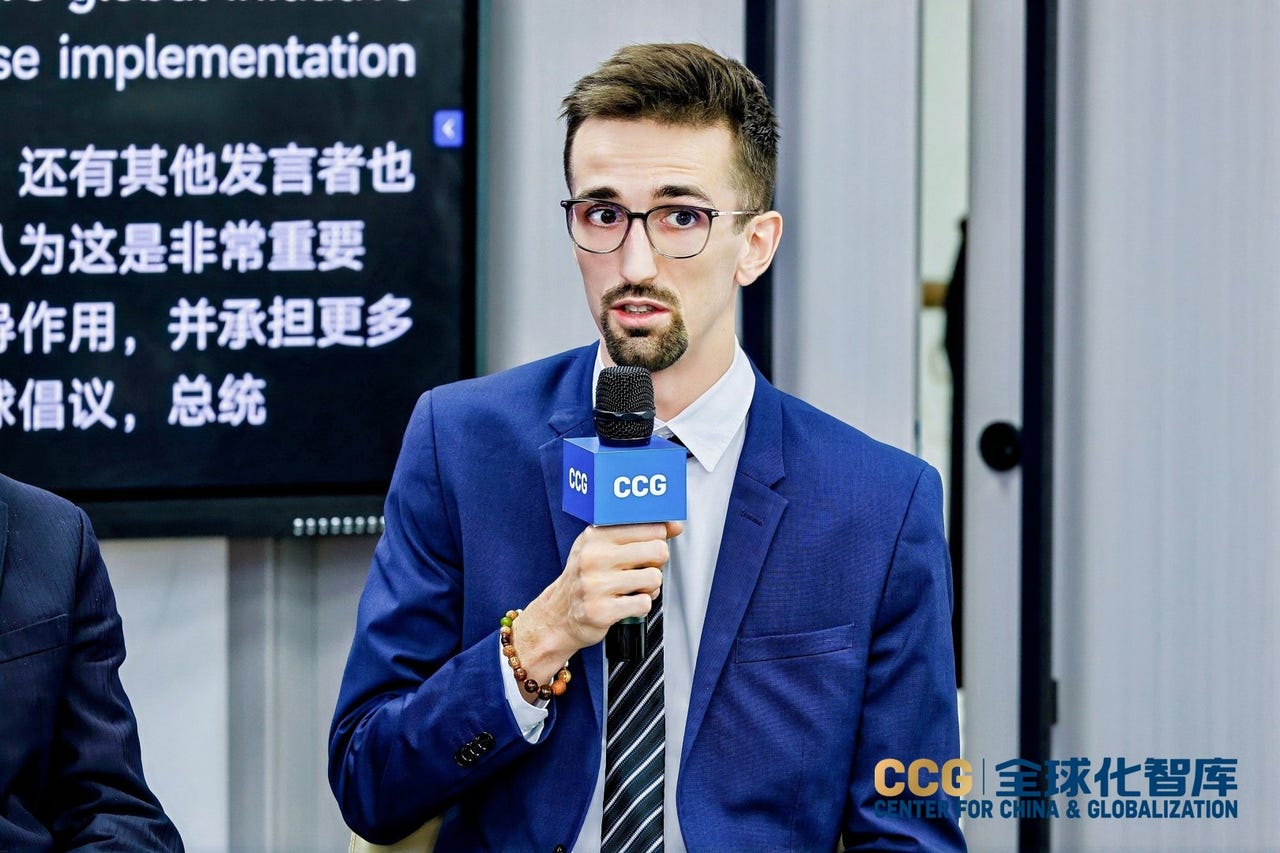
Thank you very much. Thank you also to Henry wang and CCG for inviting us to join this panel. It’s a pleasure. It’s always great to be back here in China and at the CCG forum. So, I’ll set aside a bit the contentious part for now. I’ll just give you very broad, general remarks.
I think, from our view, in general, the EU-China relationship: it has issues, some older ones, some newer ones, but it is not in bad shape, right? If you read the media, you know the media logic—it tends to focus on the negative to make headlines. And I think there’s a good basis: we are here together; I see quite a parity of Chinese and European guests. I think we have the new high-level consultation mechanisms. So, the channels are open. They should be kept. They should be used. But the relationship has a good basis to continue to thrive and to solve the issues we’re discussing today. So that was number one.
My second remark is, as what Henry mentioned already, and as other speakers mentioned, on China’s support for multilateral structures, we think it’s a very important thing. We see China taking more leadership and also more responsibility on that front, creating the four great global initiatives and seeing the first implementation steps in the last years. So we welcome this. And we also welcome very much that China is trying to address gaps in representation of Global South countries, for example, that were not so strong in traditional institutions, or also in the availability of development finance. For instance, we would appeal to China’s leadership to continue on that front, and to make sure also that those new efforts complement, in a meaningful way, the existing institutions, and do not create parallel tracks or more confusion in a, sometimes, a little bit weak international order.
I’ll conclude the first round with that. The EU and China are still two very relevant players. We have contentions; we just discussed about it, so we’ll talk more about that. I think joining together, they can achieve quite a lot for themselves, but also for the rest of the world by setting standards, and also creating and upholding rules. I think we should not forget: the bilateral relationship is very important, but also, there are many smaller countries, less powerful countries that are not at those tables. And China and Europe can create a good basis for them as well, by making sure the rules are there, clear and transparent for all, and continue to be upheld. So keep it going. Thank you.
Sun Yongfu
Okay, thank you very much. Last but not least, Professor Cui Fan. He’s a real expert in WTO rules and in this field. Professor Cui Fan, your turn.
Cui Fan, Professor, School of International Trade and Economics, University of International Business and Economics (UIBE); Deputy Secretary-General, China Society for World Trade Organization Studies
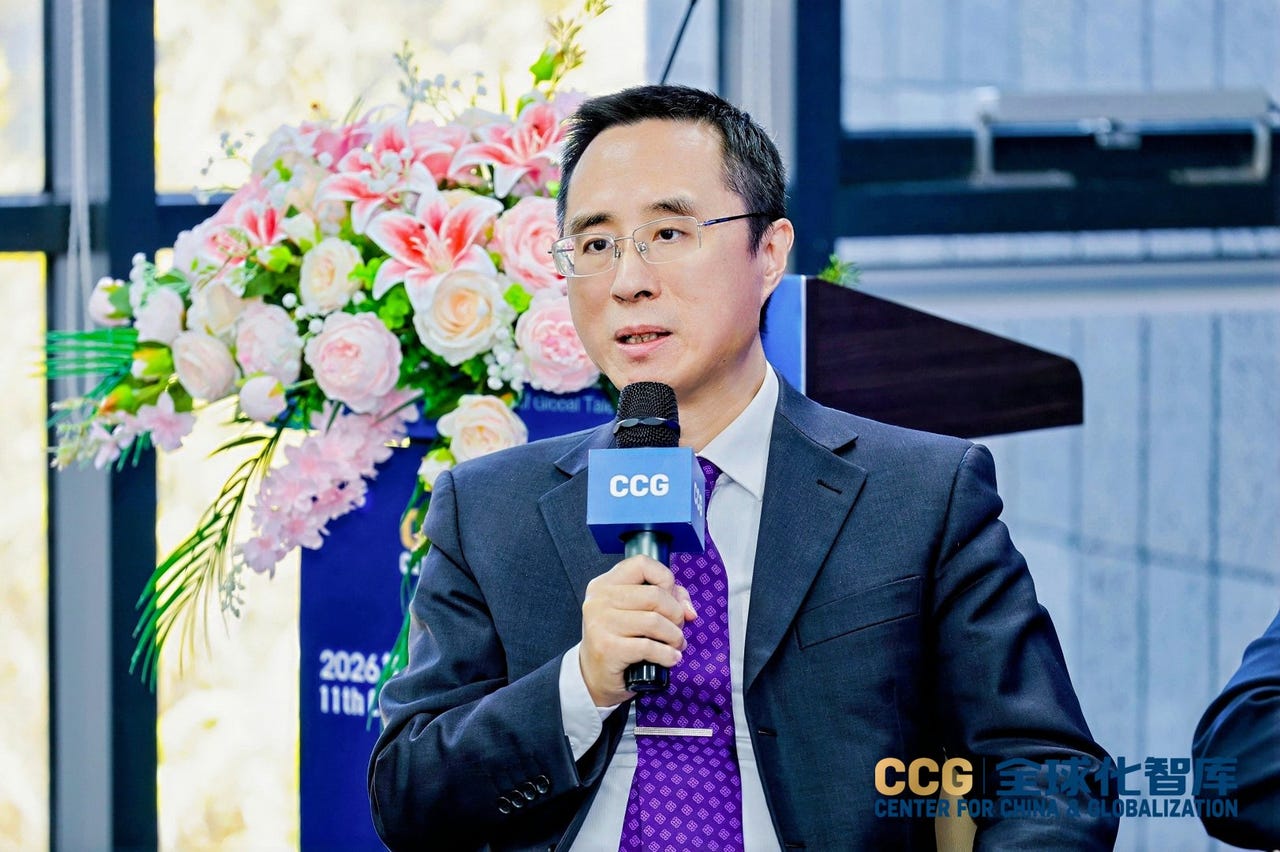
Thank you very much. It looks like we have both good news and bad news for the China-Europe trade relationship. The good news is that we have reached a lot of consensus in October. But in the meantime, we see that Europe will maybe roll out more restrictive policies next month, and maybe next year there will be more legislative actions, such as revising the Cybersecurity Act and launching the Industry Accelerator Act.
However, there’s still a good signal beyond this good news and bad news: both China and the EU have said that we will safeguard the multilateral trading system; we will try to solve all the disputes within the framework of the WTO. So both China and the EU have economic security concerns. But I think, as long as we can keep this commitment to WTO rules, we can avoid the bilateral trade relationship spiraling out of control.
Actually, if we look at the dual circulation strategy of China—it’s a singular word, not a plural word. That means the internal and external circulation are actually one, an integrated one. Xi Jinping once talked about the internal circulation. He said that we need to make sure that we can still have circulation in extreme times—only in extreme times. And the Premier, Li Qiang, once said that if we produce everything ourselves and do nothing with the external world, that’s the largest insecurity.
So actually, China emphasizes economic independence because we have been facing export controls for decades. Maybe European friends started to talk about rare earths from April last year, but we have been in this situation for decades. However, economic security doesn’t mean we produce everything ourselves. For example, we emphasize energy security, we emphasize food security, but in both agricultural products and energy products, we have a lot of deficits. So we have a lot of other measures—for example, reserve measures, not only trade measures—to make sure we have economic security.
Anyway, I would like to talk a little bit more on what China can do and what China cannot do, because we know that we are facing the fact that we really have a bilateral imbalance. Although the EU still has a surplus overall, we really have a bilateral imbalance. We need to face that.
I would like to talk about three points. One: subsidies and export tax rebates. China has been taking a series of steps to discipline local government subsidies. But I think some organizations, just like the OECD, have overestimated the scale of China’s subsidies. And recently, Professor Nicholas Lardy published an article. I heard a similar view as his: the OECD methodology is totally wrong.
Actually, the Chinese government just doesn’t have that much money to give as subsidies. However, facing this kind of imbalance concerns, China has started to decrease or eliminate export tax rebates for certain industries. For example, we have already eliminated all the tax rebates for photovoltaic products. And for lithium batteries, all the tax rebates will be eliminated from January next year. And the export rebate rate for new energy vehicles will decrease from 13% to 9% from next April.
Some Chinese scholars said that we need to eliminate all the export tax rebates for all industries. I don’t agree with that. We need to be cautious about that. But we can do it step by step, and eliminate rebates for certain industries.
The second point is exchange rate. The Chinese foreign reserves have been stable for maybe more than 10 years. So the central government actually has not intervened to depress the value of the Chinese yuan.
Last year, we had a large current account surplus, but in the meantime, we had a large non-reserve financial account deficit. So there’s serious capital outflow pressure for Chinese capital. Because this exchange rate is decided by the market, not with much of an intervention from the central bank.
If the central bank is forced to increase the value of the Chinese yuan immediately, that means we will have to withdraw a lot of Chinese yuan—a lot of RMB liquidity—from the market, and sell a lot of foreign reserves, maybe a lot of U.S. dollar-denominated assets. Facing this weak macroeconomic situation, it’s actually not right for the government to withdraw too much Chinese yuan. And it’s not feasible for us to have a Plaza Accord–style coordinated intervention as well. I don’t think other central banks are willing to buy in a lot of Chinese yuan to hold a lot of Chinese RMB reserves.
So I think in the future, in the long run, I support the idea of further liberalizing China’s capital account flow, and make the exchange rate more flexible. But we need to pay attention to the pace and the timing, because if now we just liberalize everything, maybe immediately, we will see another dramatic deterioration of the financial situation.
The final point about investment: I totally agree with Henry’s idea to relaunch the Comprehensive Agreement on Investment. I think the Chinese government should continue to support the legitimate outbound investment to European countries. But in the meantime, I hope our European friends can be cautious when you draft your Industrial Accelerator Act, which has a lot of discriminatory articles targeting Chinese investment. Thank you very much.
Sun Yongfu
Thank you, Professor Cui. I think partially he answered the question of the trade deficit between China and the EU and also subsidies. China is trying to reduce those, especially at the provincial level of the government.
We had a very intensive discussion. I don’t know whether our audience has any questions. If you have, we can take one or two.
Zichen Wang, Deputy Secretary-General, CCG
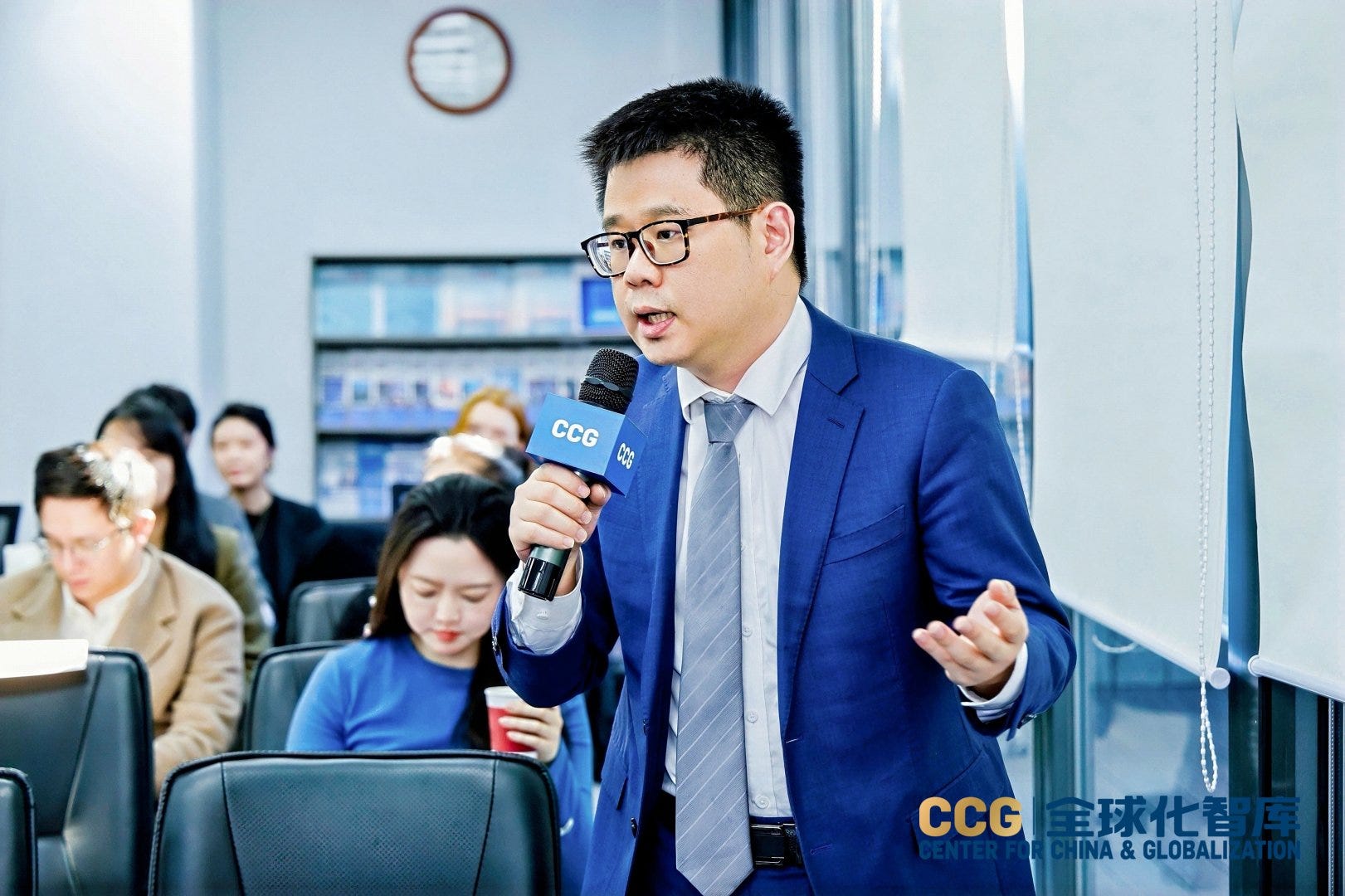
So my name is Wang Zichen. I actually work here at the Center for China and Globalization. I have news specifically for the Austrian ambassador here. We’ve read over the past several days that the German and Austrian governments have publicly floated the idea of a forced sell-off of the European business of TikTok of the Chinese company ByteDance. I’m sure you have read the news. Would you like to share that with the audience here? I’m sure this is going to gain a lot more attention in China. And many here will read that as a replay of the forced TikTok sale in the United States, at which time the Chinese government fought back with a lot of measures. So, if you can share any more details, I’d be happy to hear them. Thank you.
Wolf Dietrich Heim
Yes, I read the reports, and I think there’s nothing much I would like to add to that. But I think it is important. And also, with reference to the recent comment on the debate on the Industrial Accelerator Act, I think a lot of the measures that Europe is taking somehow make reference to what Professor Wang Yiwei was speaking about. I think one has to distinguish that Europe is undertaking efforts to diversify, to strengthen, and to be more resilient. And in many ways, as Jens Eskelund has pointed out, Europe is doing, in a much more moderated way, what China has been doing 10 or 20 years ago. And I think one needs to distinguish what is up for debate.
I think Europe has very little intention to mingle and meddle with the 15th or 16th Five-Year Plan. I think we respect that. And I think in some ways, when Europe is discussing legislation that is country-agnostic and is not really focusing on China—and this is true also for the Cybersecurity Act—many European governments and government institutions have been subject to cyber attacks. I don’t see why China is so eager to discuss that. I think this is nothing that has relevance, apart from building a stronger system, being more resilient.
Let me close also in saying: a strong leader, to me, is someone who’s able to manage the needs of their society, to strengthen civil liberties, to strengthen and grow the economy, and respect the obligations that you have as a “P”—permanent member of the UN Security Council. So when President Putin sits down and discusses in Shenzhen peace, world peace on a day when Russia attacks Ukraine and also inflicts damage on the Austrian embassy—this happened on Thursday, on the very same day, also on the Dutch embassy in Kyiv. And the official statement from the Russian colleagues is: “We shouldn’t be there.” You know, that’s one way to solve this. Now, this is [inaudible] sit down and discuss with someone who is the aggressor, leaving out the victim. It’s a nice picture, but it doesn’t really help the cause. A strong leader, to me, is something else.
And also one closing remark on the ways how the next Secretary-General of the United Nations will be established. This is a matter for the 15 members of the UN Security Council. And this is one where a permanent member, as always, may have a veto—but is not in a better place to find a solution on who is the best candidate. And I think there are very good candidates who find a very broad consensus. So on that, I think we’ve been covering a lot of ground, and thank you.
Cui Fan
I would like to respond to His Excellency’s point. I have heard this point for many times: that Europeans are doing a similar thing or the same thing as China used to do many years ago. Actually, there are two important differences.
One is compliance. Before China’s entry into the WTO, China used to have some technology policy to encourage the inflow of technology. When we give preferential treatment to foreign-invested enterprises, we define high-technology enterprises to give it to. People say that’s a kind of forced technology transfer. But China eliminated this kind of policy since China entered into the WTO, to make sure we comply with WTO rules.
The second point, very important: non-discrimination. China has never announced a policy of so-called forced technology transfer, or targeting a certain country or a group of countries. But if you look at the Industrial Accelerator Act, the country targeted is only China because within those four industries, they said that the country with production capacity of more than 40% will be targeted. That’s only China. So this is a kind of discriminatory policy. But China’s policy, even in history, was totally not like that. Thank you.
Jens Eskelund
I have to comment on that because, I mean, we have 1,600 member companies, and our experience is slightly different. We continue, in spite of the WTO, to have faced very extensive localization requirements, whether it’s [inaudible] or rail equipment. And we see now, for example, that many years ago, when Europe was selling wind turbines to China, the software that they have provided and continue to earn service fees on is now being squeezed out. So localization requirements continue to be a very big deal.
And then I would just make a few comments also. I feel that I was misrepresented a little bit. I hope that China can agree to, very basically, that we need to get to a win-win. If that’s not a positive outcome for both sides—both China and Europe—then basically we will be in a volatile situation. We need to be able to point to a clear, measurable positive outcome from both sides.
And then I think also what I heard from Professor Cui and other speakers is: there is such a thing as legitimate economic security interests that nations are justified in taking care of. And that’s again where I call on China to work with Europe to find a way that China and Europe can agree on where legitimate security interest consists. If we can ring-fence that, then I think we can easily grow the other parts of trade. And that’s what I meant when I said it’s not about trading less; it’s about trading better, trading smarter. And I think that’s where there is scope.
And then just the last point: I can tell you don’t like the trifecta of being partner and competitor and systemic rival. I think it makes perfect sense. It reminds me a little bit of my relationship to my wife. She’s both a dear, dear partner whom I love dearly; she’s also sometimes a systemic rival. We’ve been married for 25 years, and at some point we’ll also have been married for 50 years. So I mean, you can still have deep, very engaging relationships even though there is also an element of competition and rivalry. Thank you.
Henry Huiyao Wang
I just want to add one point. I think Jens mentioned quite a lot about this imbalance and trade deficit. We heard that there is a $1 billion-a-day trade deficit between China and the EU, and that has been often mentioned by Merz, by Macron, by many people.
But there’s a fact: if you look at the trade, 560 billion last year. Out of that, 360 billion from China, according to some statistics. So the Europeans may have a trade deficit with China. But on the whole, with the world, Europeans have a surplus. Because out of the 360 billion, 250 billion is from semi-finished products and intermediate products imported back by Bosch and Siemens and many, many companies. So if they are missing this 250 billion of intermediate, semi-finished products from China to Europe, Europe’s trade with the world will be in a greater deficit.
So the Europeans can trade with the world with a surplus because they have this deficit with China. So there’s a huge difference there. I hope that we can do some study—that’s probably Professor Cui and the WTO Center—and see if CCG and the Center could do a joint report on that, because that really helps the competitiveness, helps the Europeans export to the rest of the world in surplus, because they have this deficit from China. I think you have to look at the whole picture rather than just one way.
The other thing I would like to say is that the EU learned from the U.S. The U.S. called China a strategic rivalry; the EU said systemic rivalry. Now the U.S. is abandoning the rivalry culture. Europeans should really catch up to really see that. We all can see competition is fine. But rivalry means adversary, deadly; I’m wiping you out, you wipe me out. So that’s not a very good term. Most of China’s culture doesn’t like rivalry that much. I think that’s something we would hope that the European Union can change a bit of its policy, in terms of some adjustment, like the U.S. I think the U.S. has changed it from term one “strategic rivalry” to “strategic stability”; that’s the huge shift. Also, I see the UK didn’t mention rivalry. Many other countries didn’t mention rivalry. So probably this rivalry is not comfortable. I don’t know whether your wife and you have a rivalry position, but that’s really different.
Aleksandra Kuśmierska, PhD Fellow, Copenhagen Business School
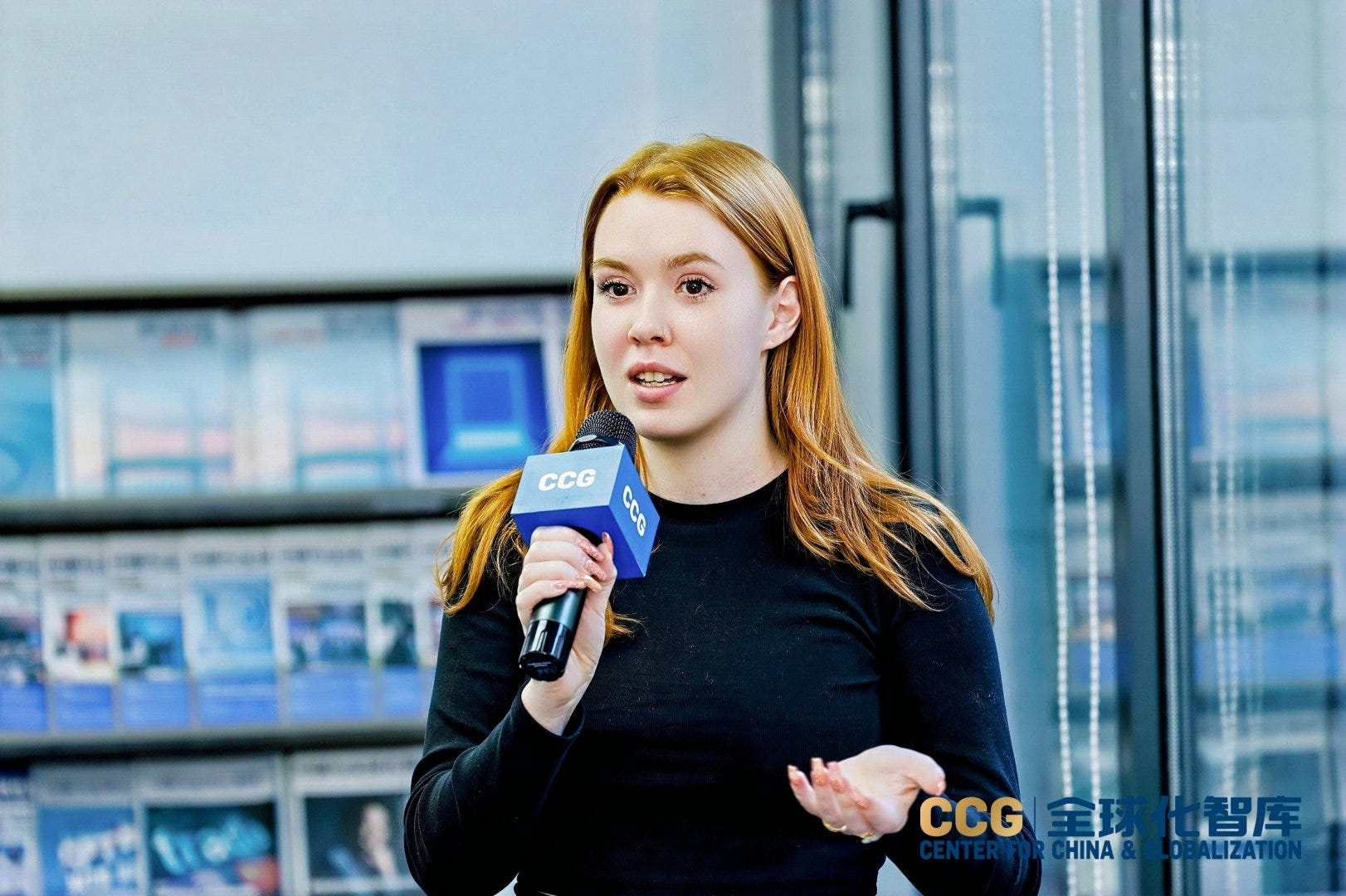
Thank you so much. My name is Aleksandra Kuśmierska, and I’m a researcher associated with the University of Chinese Academy of Sciences and Copenhagen Business School. And I’m currently working on a project concerning Chinese investment and how European policies respond to it and reshape it. And I was just wondering—because I’m pretty sure Mr. Wang just mentioned that it’s about creating and improving the political climate—and from the Chinese perspective, how can we work, as the EU, to improve the political climate if we’re introducing more secure taxation, investment screening, and legislative initiatives such as the Accelerator Act that was mentioned a couple of times? Thank you.
Kang Jincheng, Former Director-General, International Cooperation Bureau, Chinese Academy of Engineering
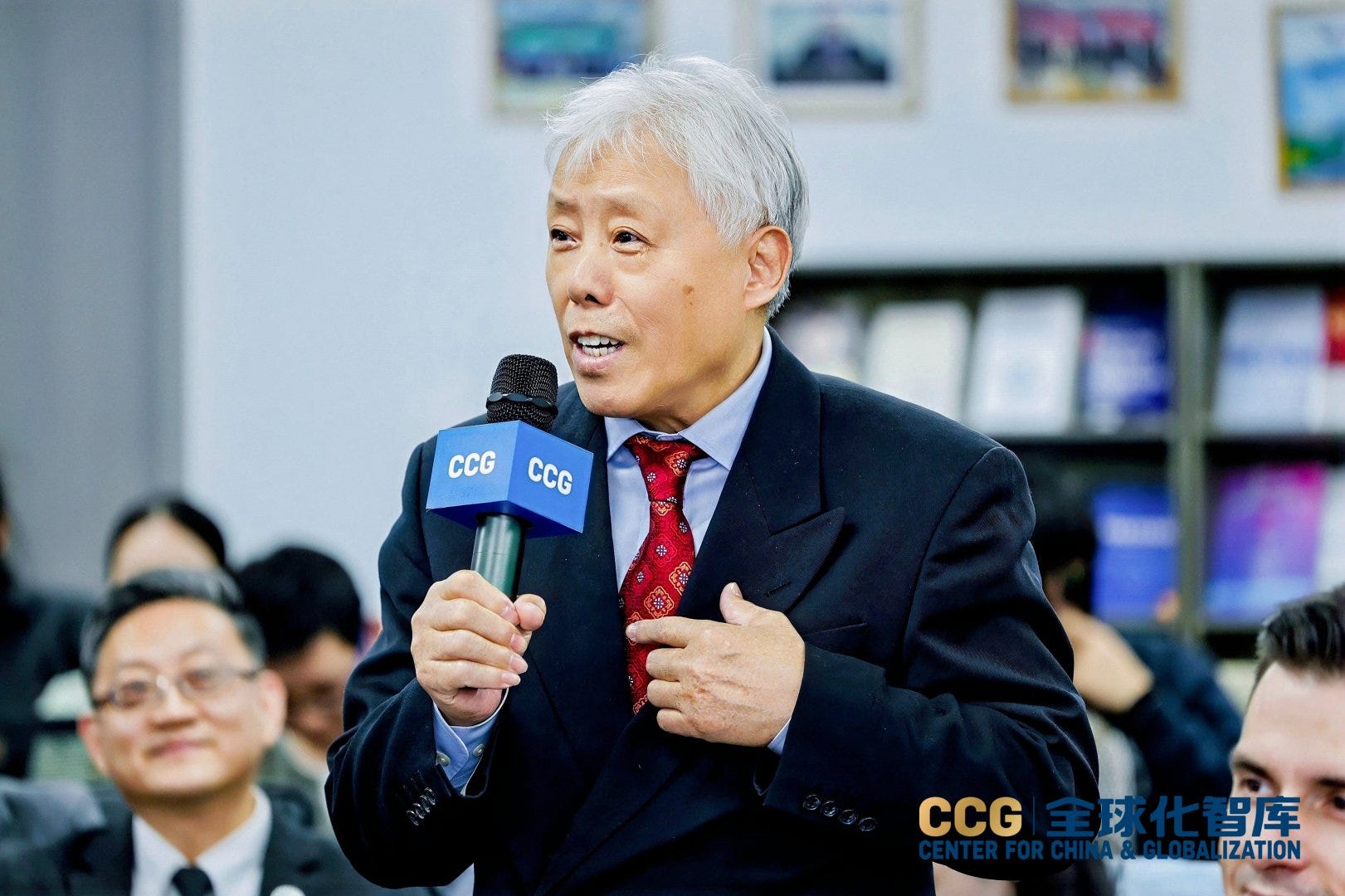
Thank you, Henry. My name is Jincheng Kang. I was born in Beijing. My question first goes to Jens. Jens, you said you and your wife have been married for 25 years. My wife and I have been married for 44 years. We’re both from Beijing. Well, I’m no expert in international trade and balance of trade, but I do have an observation.
You said that for every container of goods imported to China from Europe, there are six containers or more from China to Europe. Of course, it is unsustainable in terms of economic relations and trade relations. But as an observer, I found that: is it because Chinese products on sale to Europe are very welcome by European people? Otherwise, there is no point of Europeans buying Chinese products if their prices are higher or qualities are not as good. This is my observation.
Another thing is that behind many of the reasons — because of this imbalance of trade — there is one point, a very, very important point, that is, the extremely industrious and hardworking Chinese people on the production line. They sacrifice their free time. They’ve worked on the production line, just wanting to feed their family. So maybe there might be one solution in the future: European countries could modernize their production lines in most of the enterprises using robots, while China’s enterprises also use robots, so that the Chinese working people may take a rest, and for the competition to take place between robots in the production line from Europe and those from China. Thank you.
Jens Eskelund
Yeah, I think this is not about lazy Europeans. Because when I look at G20 countries’ trade with China, all G20 countries have seen double-digit decreases in their exports to China. And that includes Japan. Japan has seen, in volume terms, a drop almost the size of Europe, and I don’t think anyone is calling the Japanese lazy.
Moreover, I think McKinsey came out with a report two years ago, and they say that the productivity of the average European worker is still two to three times higher than the average Chinese worker. So I think we need to distinguish between productivity and competitiveness. You have salary levels, you have exchange rates, you have energy prices—that helps make a product’s competitiveness. But productivity is the output per worker. And there, in average terms, I recognize you have dark factories with Xiaomi and all that, and fantastic improvement in China, but it’s not the productivity difference. That’s the issue.
The second point I want to make is that, again, I don’t think it’s the trade deficit itself that’s an issue, because I agree: a certain trade deficit—I don’t know whether it’s 200 or 300 billion for Europe—can be a good thing. It can help keep inflation down. It can give European consumers higher purchasing power. But what should not be allowed to happen as a consequence is that Europe is losing its autonomy. For me, the important part is that Europe, just like China, aspires to be master of its own destiny. We want to be able to make our own sovereign decisions. We want our children and grandchildren to be able to make their sovereign decisions. And they cannot do that if they depend on everything from the rest of the world.
So I think for the vast majority of trade, bring it in, and we can have a trade deficit. But I also think where it’s truly important for our autonomy, then Europe needs to take measures to ensure that capability remains on European soil. And I think Europe and China are quite similar in that respect.
Henry Huiyao Wang
Maybe I’ll just add a little. When you talk about trade deficit, we’re not counting tourism, student exchanges, service trade. On those fronts, Europe has a surplus. But coming back to the latest question about improving the EU-China relationship, the EU doesn’t have to take a side. It’s not China versus the West. You know, the EU can be a great mediator between China and the other trade partners. And we have the same interests in multilateralism: WTO, WHO, UN, climate change. So I think China and the EU have many common things to work together on. So that’s the conclusion.
Wang Yiwei
From history: from Galileo, you kicked China out. Now we have the BeiDou system. We will launch an astronaut from Pakistan to the International Space Station. And 5G: you kicked out Huawei. Now you are far behind on 5G, while China moves on to 6G. So learn the lesson from the mistake you made. Put China as the partner, consistently. Otherwise, your comparative advantage compared to China is actually declining. That’s the reality. We need strong leadership of Europe.
Manuel Carvalho
I’d insist on win-win. I mentioned that we have a long history of disagreeing and yet having a win-win relationship. As we talk about the WTO, the UN, and so forth, there are ways where we can disagree and still have a win-win relationship, even if we have to take measures.
Portugal is a big implementer in renewables. We are a leader in that. We realize, and we have realized for a number of years, that we don’t have any other place to source our parts for our systems than China. So when we talk about having a situation that is discriminatory because we indicate a certain threshold of dependency, it does happen with one country only. But it’s still a problem: for 90% of our pieces, we have to source them from one single country. It’s a country we are very old friends with, but it’s still a problem from that point of view.
Another point on Ukraine. I mean, the others talked about Ukraine. By the way, on economics, I share everything that Jens mentioned. Ukraine was not at the table in the so-called peace settlement. There are, however, two points that are relevant there, and where I hope China will follow suit. One is the principle that a nuclear war cannot be won and should not be fought. One of the players in the Ukraine matter has been continuously threatening that. So China, please do remind the given entity of that point. Second, territorial integrity, because we also agree that it is Russian troops that are inside Ukraine, and not vice versa. So yes, indeed, China, please remind that principle of territorial integrity that the three leaders signed. Thank you.
Wolf Dietrich Heim
Yes, I would just like to find some more balance. We are talking about the efforts to rebalance our trade relationship. But also, looking back at the previous panel, I would have arrived here assuming that European-Chinese relations are much better than you would ever get the impression when you listen to the gentlemen here on the panel. If my daughters saw a picture of this panel, they would say one thing, you know what? No ladies. This is totally unacceptable. I think this could never happen in Europe, and maybe in other places too. But thank you for the invitation.
I think we have to be a bit more cautious. I think part of the problem is the fact that, as Jens pointed out, the only thing in China that is really growing is export. And this is referring to the gentleman in his question. I think we would all be happy if the Chinese citizens were able to consume more, and if the domestic consumption would actually grow. That would help to see more European exports to China find a customer. So I think that is important.
But in our role as foreign ambassadors, I think we are very hesitant to intervene in domestic policy and issues. This is up to the Chinese government to address these issues. I think many people, when they read newspapers here, would get the impression that Europe is very weak and consumption is not extremely strong. But at the same time, the European demand for Chinese products is very high, much higher than the Chinese demand for foreign products at this stage.
And one last remark, I think: yes, China very successfully joined the WTO 25 years ago, but it never made efforts to be part of the public procurement part of it. And that is something that, for many European businesses, is regrettable, because there are serious impediments to accessing a very large market of public procurement in China. Thank you.
Sun Yongfu
I think we need more than two hours to have a detailed discussion, but time is very limited. I’m sorry for that. Actually, the Chinese central government is addressing these problems very seriously.
We had a very intensive dialogue and discussion concerning the China-EU relationship. And back to my situation: I was the DG for many years—more than 12 years at the DG in our ministry—dealing with our partners in the EU. Fortunately, in my time, the situation was much better than the present.
Of course, compared with others, China-EU relations, especially in the trade and economic field, are not that bad. We have the future. We are back on track again, because we have successful September and October discussions right now. If we keep on going like that next year in March, I think we can find a way to improve our good relations.
The deficit is something, but it’s not the whole problem we are facing. We can definitely find a way. One way is to resume the Comprehensive Agreement on Investment. I think that’s quite important. I think if both sides could have a good strategy and lead the trade and economic relations forward, the Comprehensive Investment Agreement is something we need to consider.
Thank you very much for our participants and for this session. Thank you. And thank you all. Thank you.
Transcript: Panel on the Future of China–US Relations at the 11th China Global Think Tank Innovation Forum

The Center for China and Globalization (CCG) convened the 11th China Global Think Tank Innovation Forum in Beijing on November 21, 2026.