

On 10 June 2026, the Center for China and Globalization (CCG) convened its latest CCG VIP Luncheon themed “Evolving China-U.S. Dynamics and Global Strategic Outlook”.
The event featured Henry M. Paulson, Jr., founder and chairman of the Paulson Institute, executive chairman of TPG Rise Climate, and 74th Secretary of the Treasury under U.S. President George W. Bush.
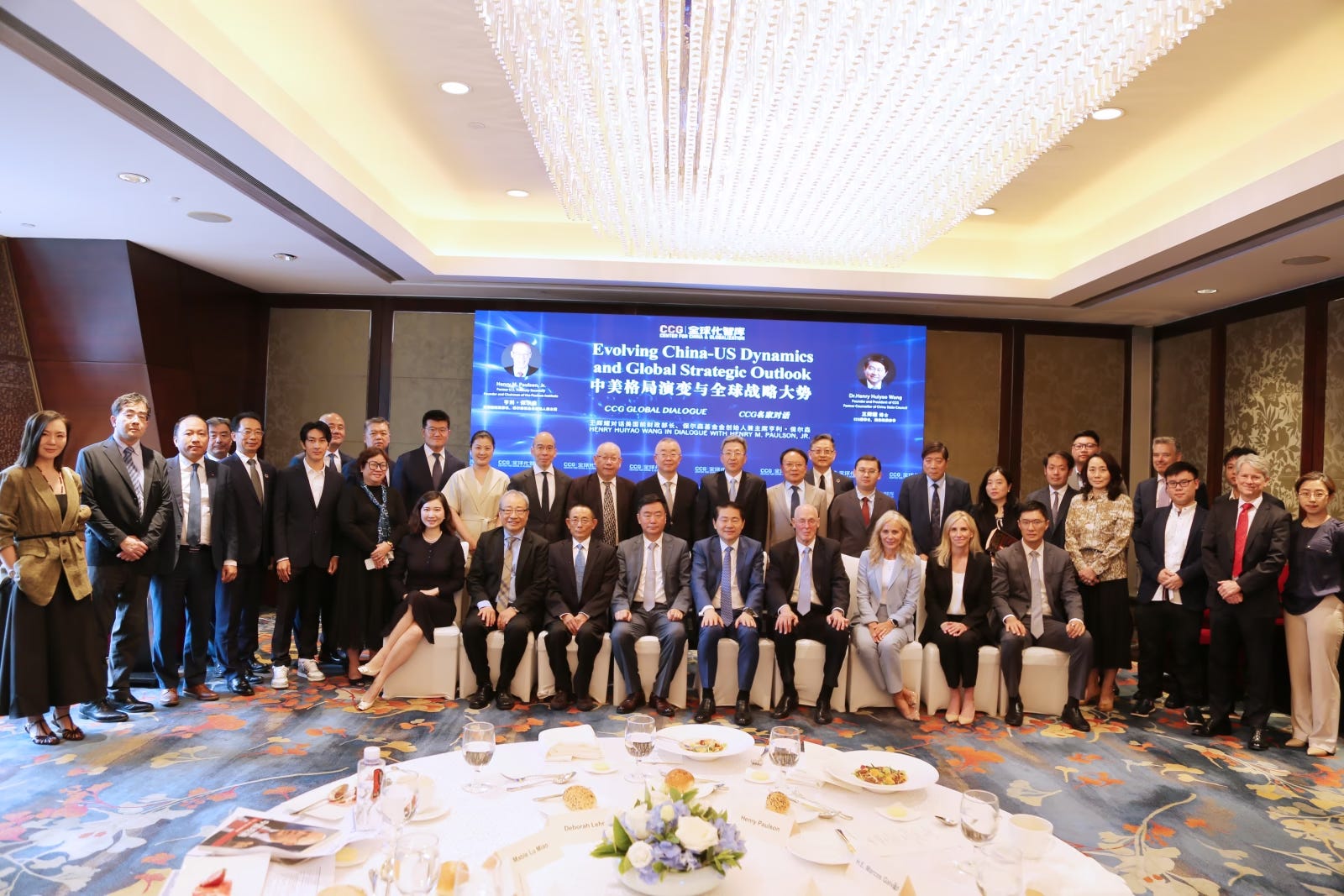
CCG has uploaded the video recording of the luncheon to its official YouTube channel and WeChat blog.
The following transcript is based on a recording and has not been reviewed by any of the speakers.
Mabel Lu Miao, Co-founder and Secretary-General, CCG
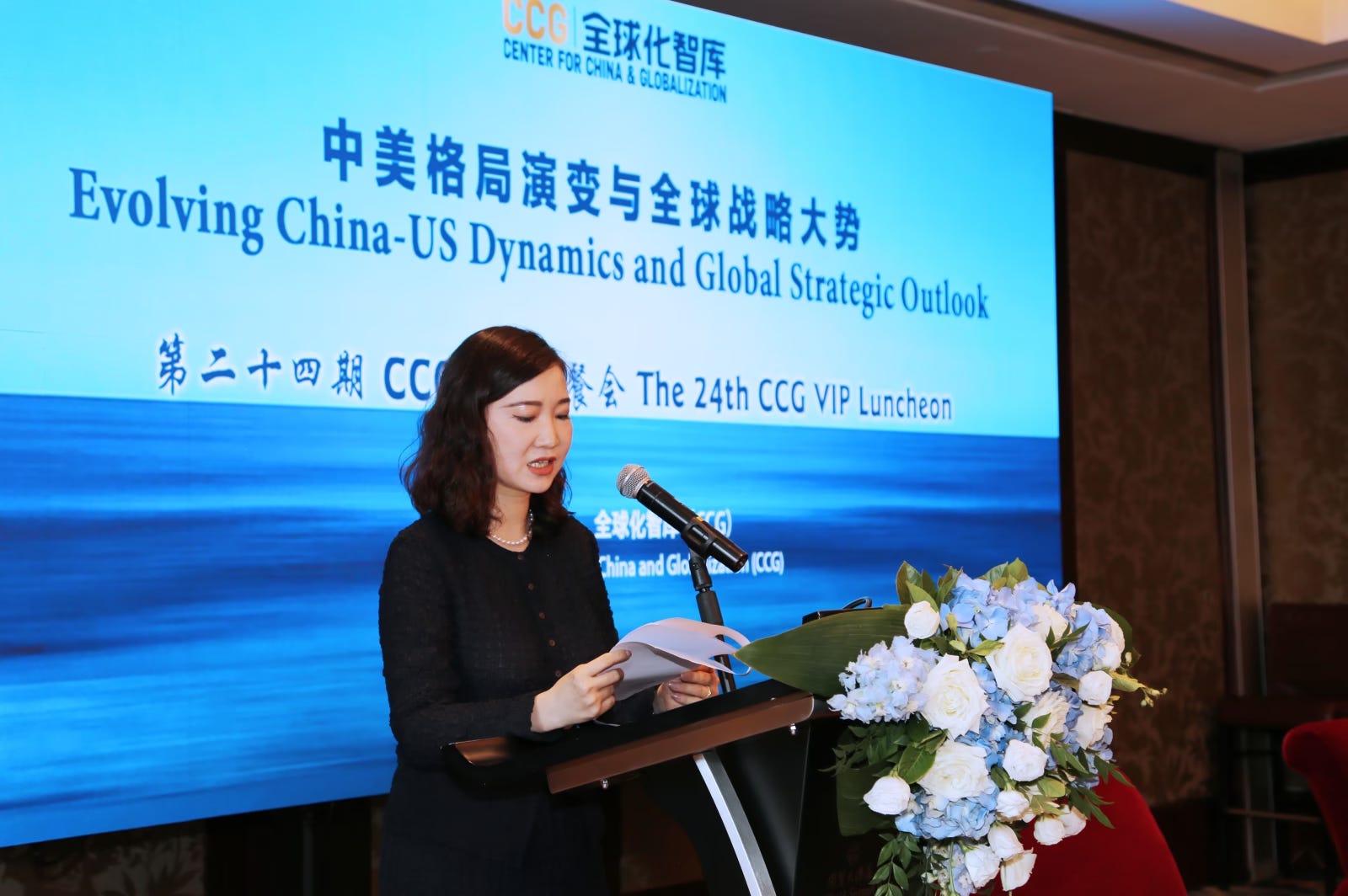
Your Excellencies, distinguished guests, ladies and gentlemen. Good afternoon. Thank you all for joining us today at the CCG VIP Luncheon. The CCG VIP Luncheon is a flagship high-level international exchange platform established by the Center for China and Globalization (CCG). It serves as a key bridge connecting global political, business, and academic communication to promote pragmatic cooperation between China and the world. Today’s luncheon is also a special edition of CCG Global Dialogue, our flagship platform that brings together policymakers, scholars, and business leaders from around the world to discuss the most pressing global challenges. As a forum for open exchange, the dialogue fosters cross-cultural understanding and pragmatic solutions on issues ranging from governance and sustainable development to economic cooperation and international security.
Today’s theme is Henry Paulson’s insights involving China-U.S. dynamics and global strategic outlook. As we look at the current global landscape, relations between major powers are evolving rapidly, following the recent presidential summit. At the same time, we are witnessing adjustments to global industry and supply chain, alongside breakthrough advancements in new energy and core technologies. Against this complex global backdrop, precise trend, judgment, and the strategic vision have become core competitiveness for all stakeholders. This is precisely why we are here today. Today, we are honored to convene this VIP Luncheon.
It is my great honor to invite our distinguished guest, Mr Henry Paulson, to join us for this exclusive luncheon dialogueue. Mr Paulson will exchange in-depth views with representatives from China’s business and academic communities on latest global economic trajectory and development trends in China-U.S. bilateral relations. Before we start, let’s take a moment to acknowledge some of our special guests and the VIPs who are here.
We have invited representatives from host organisations, distinguished diplomats, government authorities, academic institutions, international organisations, corporate leaders, and media representatives.
From the Paulson Institute, we have invited Deborah Lehr, Vice Chairman and Executive Director; Kelley Folino, Chief of Staff to Chairman Henry Paulson and Chief Operating Officer of the Paulson Institute; Jerry Yu, Chief Representative of the China Office and Managing Director of the Paulson Institute; Gracie Sun, Senior Advisor and Managing Director of the Green Finance Center at the Paulson Institute; Tina Ren, Deputy Chief Representative of the Paulson Institute; Terry Townshend, Advisor to the Paulson Institute; and Vicky Beal, Executive Assistant to the Chairman’s Office.
We have also invited ambassadors, including H.E. Marcos Galvão, Ambassador of Brazil to China. Welcome, Ambassador. We are also honoured to welcome H.E. Rol Reiland, Ambassador of Luxembourg to China.
We have also invited distinguished government representatives and experts, including Huang Rengang, Vice President and Secretary-General of the China Society for WTO Studies, MOFCOM; Huo Jianguo, former President of the Chinese Academy of International Trade and Economic Cooperation, MOFCOM; Jiang Shan, former Director General of the Department of American and Oceanian Affairs, MOFCOM; Ma Jianchun, President of the China Society for WTO Studies, MOFCOM, and former Director General of the Department of Foreign Affairs, MOFCOM; Xu Chaoyou, former Director General for International Exchanges and Cooperation, CCIEE; and Zhu Hong, former Minister at the Chinese Embassy in the United States.
We are also joined by colleagues from embassies and diplomatic missions, including representatives from the British Embassy Beijing, the Embassy of Canada, the Embassy of Iceland, the Embassy of the Republic of Indonesia, the Embassy of Mongolia, and the Embassy of Vietnam.
From international organisations, we have invited representatives from the Asian Infrastructure Investment Bank, Columbia Global Center Beijing, GSMA, the International Monetary Fund, the International Sustainability Standards Board, and the World Business Council for Sustainable Development, among others.
We have also invited representatives from international corporations and multinational companies, including Goldman Sachs, Merck China, Cargill China, bp China, and many other important companies.
We are also pleased to welcome media representatives from the South China Morning Post, Global Times, Beijing Daily, The Choutao Journal, Phoenix New Media, Reuters, CGTN, and China Net, as well as representatives from prestigious universities in China and abroad.
Next, please allow me to introduce Henry Huiyao Wang, Founder and President of Center for China and Globalization, former Counsellor of the State Council of China, to deliver opening remark and introduce our distinguished guest, Mr Henry Paulson. So, Floor is yours, Henry.
Henry Huiyao Wang, Founder and President, CCG
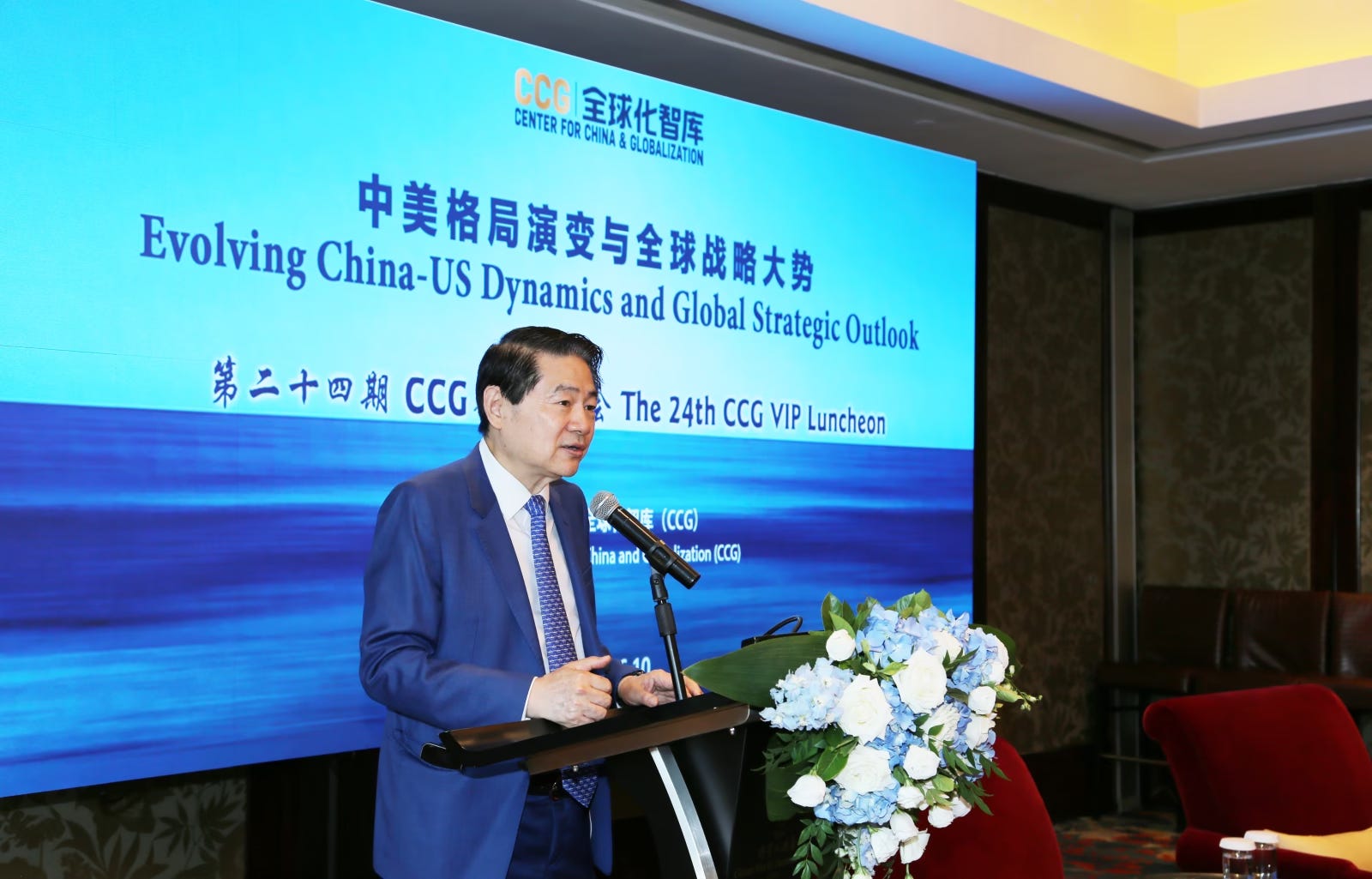
Honourable Secretary Paulson, Your Excellencies, distinguished guests, ladies and gentlemen,
Today is truly a great day as we hold the 24th CCG VIP Luncheon. While I am speaking, please go ahead and enjoy your salad.
What I would like to say is that we are extremely honoured and very pleased that Secretary Paulson, despite his very tight schedule during his visit to China, has come here to meet us, share his views with us, and have a dialogue with us.
As we all know, China-U.S. relations have entered a new phase. It is therefore very important that we gather here to reflect on, think about, and, of course, look ahead to the future of our bilateral relations. CCG is also very pleased to host this global dialogue, where we have been able to engage with so many great leaders, opinion leaders, academics, and business leaders. We are extremely happy to have Secretary Paulson with us today.
Of course, I know all of you are very eager to hear what Secretary Paulson is going to share with us. So let me first introduce Secretary Paulson and his truly impressive career before we begin our dialogue.
Secretary Hank Paulson is a business leader, conservationist, statesman, and author. He has also just released a new book. He is the founder and chairman of the Paulson Institute, a well-known think tank and do tank. He also serves as Executive Chairman of TPG Rise Climate, among many other important roles.
Secretary Paulson is dedicated to advancing free markets, environmental protection, the rule of law, and many other important causes. His career spans two stints in the public sector, a long career in the private sector, and the founding of his own not-for-profit think tank.
Secretary Paulson served as the 74th Secretary of the Treasury under President George W. Bush. As Treasury Secretary, he led the nation’s response to the financial crisis of 2008, helping to stabilise the global financial system and avoid a second Great Depression. He also designed the Strategic Economic Dialogue to revitalise the way U.S.-China relations were conducted, which has been very helpful in many ways.
Before that, he had a 32-year career at Goldman Sachs, serving as co-chairman and co-CEO in 1998, and as chairman and CEO beginning in 1999. He was a very strong business leader. As a banker, he grew Goldman Sachs’ presence in China, believing that it was important to bring best-in-class practices and standards to China.
Today, Secretary Paulson is the chairman of the Paulson Institute, which aims to foster a U.S.-China relationship that helps maintain global order in a rapidly evolving world. A think tank and do tank founded in 2011, the Institute operates at the intersection of economics, financial markets, environmental protection, and policy advocacy, in part by promoting balanced and sustainable economic growth. The Institute’s approach grows out of Secretary Paulson’s commitment to purposeful engagement and to promoting U.S.-China ties in ways that help keep Americans strong and safe.
In 2021, Secretary Paulson launched and became Executive Chairman of TPG Rise Climate, the climate-investing platform of the global private equity firm TPG. His leadership of TPG Rise Climate reflects his belief that there is an urgent need to accelerate action against climate change, and that innovative vehicles for private-sector financing will be essential to meeting this challenge.
Secretary Paulson is also co-chair of the Aspen Economic Strategy Group, together with former U.S. Treasury Secretary Tim Geithner. The Economic Strategy Group convenes, in a non-partisan spirit, a diverse range of distinguished leaders and thinkers to address significant structural challenges in the U.S. economy. It is a very important platform.
Secretary Paulson is also a lifelong conservationist. He was chairman of the Nature Conservancy’s Board of Directors, and founded and co-chaired the Asia-Pacific Council of The Nature Conservancy. In 2011, he founded the Latin America Conservation Council, comprising business and political leaders, which he also chaired for many years. He was also co-chair of the Risky Business Project from 2013 to 2017.
So you can see the wide range of Secretary Paulson’s activities. He has been deeply dedicated to climate, the environment, green development, and many related areas.
Furthermore, Secretary Paulson is the author of the bestsellers On the Brink and Dealing with China. He is also the co-author, with Ben Bernanke and Tim Geithner, of two books, First Responders and Firefighting.
Secretary Paulson graduated from Dartmouth College in 1968 and received an MBA from Harvard University in 1970.
Now, without further ado, let us welcome Secretary Paulson. We are going to have a great dialogue with him. Secretary Paulson, welcome again to the CCG VIP Luncheon. While we are talking, everyone can also enjoy the luncheon.
Secretary, welcome again to CCG VIP Luncheon.
Henry Paulson, Former U.S. Treasury Secretary; Founder and Chairman, Paulson Institute
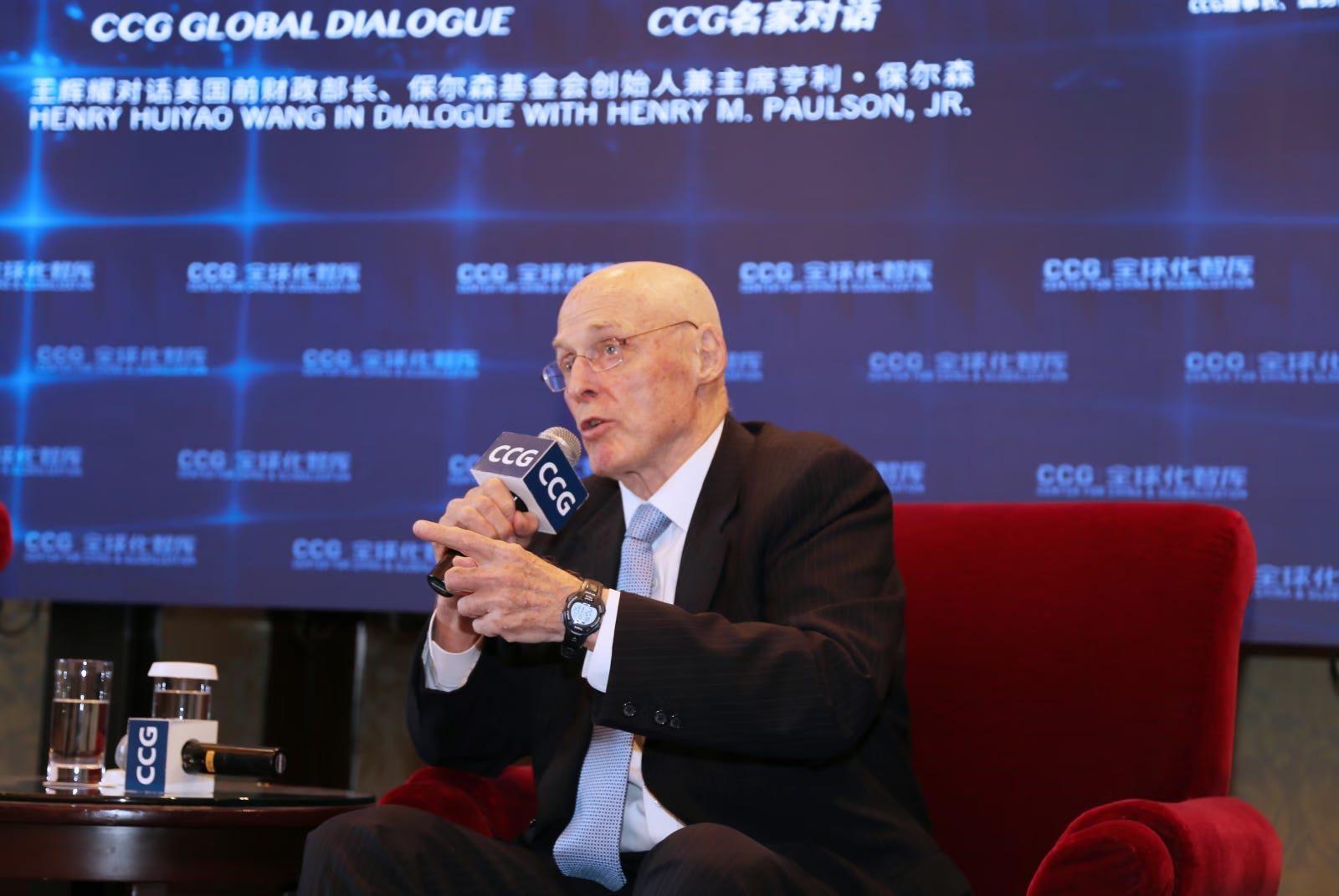
Henry, let me thank you for doing this, and all of you for being here today. So many colleagues, I would say I’ve never had an introduction like that. It was embarrassing, I’ll tell you that. But I don’t mind being embarrassed that way. So,
Henry Huiyao Wang
Well, it is a historic and very impressive career. That is why we wanted to give such a full introduction. I did not want to miss anything.
Mr Secretary, we are actually very excited about your new book, Reflections on China, a collection of articles and interviews. This collection brilliantly captures your evolving, long-term observations on China’s economic transformation and broader U.S.-China dynamics over time.
Looking back at the core arguments you made in those contexts, and in contrast with today’s competition and strategic rivalry, which of your earlier assessments do you feel have truly stood the test of time? And if you were to write a new collection today, what message would you send to policymakers and the public?
Henry Paulson
Of course, we all know that the U.S.-China relationship is the most consequential. I have consistently argued for a high-level economic dialogue, because I saw the benefits of this when I launched the Strategic Economic Dialogue as Treasury Secretary. Quite recently, I had an op-ed in The Washington Post where I made the point about how important it was that the two leaders, the U.S. and China, meet, because they can set the right tone and the parameters for a relationship. As part of that, I made the case that it was important to have a high-level dialogue to set goals and action steps to drive progress.
Now, we didn’t get what I called for was a strategic rebalancing dialogue, but we got something that can achieve the same objectives, because what we see is this Board of Trade and Board of Investment, mindful of each country’s priorities on the security side, have the same objective, which is to drive more trade and more investment between the two countries. I’m particularly focused there on investment and investment flow, because I do think U.S. companies could use better guidance on where to invest in China, and vice versa, Chinese companies deserve better guidance on where to invest in the U.S. I’m particularly focused on investment in private equity funds. So, to begin with, there.
Secondly, I have been mindful of the fact that both countries are going to do what they believe is in their security or their economic interest. I warned a good number of years ago against an economic iron curtain, because I believe that there are plenty of areas for us to work together with China to our mutual benefit in the economic area. But we have to be careful here and really think strategically. So we have to be careful that decoupling doesn’t become dysfunctional.
Then I would say, for the last six or seven years, I’ve made the point that we’ve got this great power rivalry. It’s really important that each country recognise the other as a major power, as a permanent power, and that we avoid crossing red lines, so that intense competition doesn’t devolve into economic conflict or military conflict, which very easily could happen. We could stumble into conflict because of miscommunication, miscalculation, and escalation.
Lastly, the advice that I’ve given, and I’ve given for a good while, is that in this major power rivalry, I think it is really important that each side recognises the other as a great power, number one. Number two, that we have really robust dialogues in the economic and security areas and that we work hard to find areas where we can cooperate and work together mutually. The trick is going to be, while we’re intensely competing, that we have guardrails, so we don’t devolve into military or economic conflict.
At the end of the day, I’m very encouraged by the first meeting of presidents, where President Xi, I think, summed it up when he said what we have is constructive strategic stability. I think that says it pretty well.
Henry Huiyao Wang
Great, thank you, Secretary Paulson. That’s excellent. I think the recent President Trump visit to Beijing has been really encouraging, and we see both presidents have come to a great consensus that we could have strategic stability, constructive strategic stability. That’s the word they use, actually. So this is very important.
I remember in the first term of Trump, during which he issued his national strategic report, it talked about strategic rivalry. Now, in the second term, his strategic report doesn’t mention strategic rivalry, but now we are coming to a constructive strategic stability. It’s a great thing, a great new narrative, and probably new stability that affects him.
So, with the upcoming President Xi’s visit, because they are going through another three possible meetings, at APEC, at G20, and of course September’s state visit, we’re going to see another probably three visits. So what do you think are the further, more things that we could achieve?
Henry Paulson
[Audio unclear] So I used “managed stability”, which was rooted in mutually assured economic disruption, because each side knows that the other could take steps to disrupt the other. So again, we have stability based upon this mutually assured economic disruption, on the one hand. But on the other hand, we have a trust deficit. We have to really understand that bigger than the trade deficit is a trust deficit. That is a significant problem.
I have made the point repeatedly here that it’s so important. [Audio unclear] As I look at it, this trust, we need to cover it, because there are profound challenges out there, and we know what they are. There is AI, agentic AI, a profound challenge, pandemics, nuclear proliferation. So there are profound challenges, right? I think the best chance we have is having our two presidents work together to solve these problems.
So now, where are we, and how do we look ahead? I’ve got to start with where we are with the first meeting. The first meeting’s emphasis was on stability, and the accomplishments were small steps. The accomplishments were Boeing sales to the U.S., exports to the U.S., soybeans, energy, and, as we said, the Board of Trade and the Board of Investment. I think it’ll be important to see how those are actually implemented. That will be very important.
Again, it’s going to be very important that they make progress on some of these big challenges. Looking ahead, I really think that is the key, because they’ve got the upcoming state visit in D.C. on the 24th. They’ve got the opportunity for two other meetings, and of course they’re having regular phone calls. So the key opportunity here is how do we recognise — and let me tell you, the challenges we have in the world today are really profound.
We’ve got the geopolitical challenges, war in Iran, war in Russia — Russia in Ukraine, Iran. So we’ve got those geopolitical challenges. We’ve got the things that I talked about before: the pandemics, the agentic AI, and so on. Then we’ve got challenges that I look at as being more severe than my government does, in terms of biodiversity destruction and climate change. These are so significant that no country can solve those by themselves, and the best starting place is to have the two biggest economies get together and cooperate.
This is why these senior leader meetings are so vitally important. Looking ahead, I’m saying huge challenge right now, big trust deficit. It’s not going to be easy at all, but it’s very, very important. So we’ve got stability, we’ve made some progress, but the relationship is still fraught, and we’ve got a long way to go. But I’m greatly relieved, as I think people in America are quite positive by this first step, as I think people are in China. I think they’re positive and relieved.
Henry Huiyao Wang
Thank you, thank you, Secretary Paulson. That’s great news. Actually, I think it’s great that both presidents keep meeting as time goes on for this year, and also further. I think you mentioned the new phrase, “mutually assured economic disruption,” right? That’s really, I think, a great way of reflecting the current reality of the status of China-U.S. relations. As a matter of fact, through eight years of trade war, sanctions, countermeasures, and reciprocal measures, now we have come to the stage where both countries realise it doesn’t really make sense if we have mutually assured economic disruption.
You are also absolutely correct. I think China and the U.S. are the two largest economies and probably the two largest geopolitical powers as well, and we have a huge responsibility for global peace. You can see what has happened in Iran, in Ukraine, and in many parts of the world. We actually have to work together.
You also mentioned AI, pandemics, and also all those things. I think absolutely those bigger interests will really bind us together, so that we should really take the high moral ground and, as the two largest economies, work together to try to avoid a rivalry position, or maybe decoupling, because decoupling is not really the option, I think.
So what do you think about things that we can continue to do, like financial stability, global status of economic growth? I remember well that in 2008, during the financial crisis, you basically architected this rescue plan for bailing us out of this financial crisis. Now we need more wisdom on how we can really keep the world, not just financially, but geopolitically, but also with AI and many, many more challenges now.
Absolutely, trust building is probably the key word and the most important thing you mentioned. I would think that we have to work on that, step by step, so that we can achieve a new equilibrium, that really we have to work together, from mutually assured economic destruction to mutually assured economic construction.
Henry Paulson
Yeah, that would be a good place to go. You alluded to something, Henry, because you talked about the financial crisis and the ability that I had to work with Wang Qishan and Zhou Xiaochuan and others made a big difference.
Now, when you look at the world, we’ve got many, many issues. There are systemic financial and economic issues, because we’ve got some economies very strong, like the U.S. At the same time, China’s economy has more problems. We’ve got different macroeconomic policies around the world. There is, in my judgment, a fairly high chance that we’ll have some kind of financial disruption.
Now, with high levels of debt around the world, sovereign debt everywhere, there’s less flexibility and capacity to deal with a financial crisis, if we have one. So I’ve argued, and one of the things I’ve consistently argued, that it’s important that the U.S. and China have the right people talking to each other, monitoring the domestic risks and the economic risks. I don’t think that these conversations, in and of themselves, will be able to identify the next crisis or prevent it. But the huge advantage is they’re talking, they’re building trust, and the right people are talking to each other. So if and when something happens, they’ll have the lines of communication, and they’ll have a basis to work and stabilise. That is something that I think is very, very important.
Henry Huiyao Wang
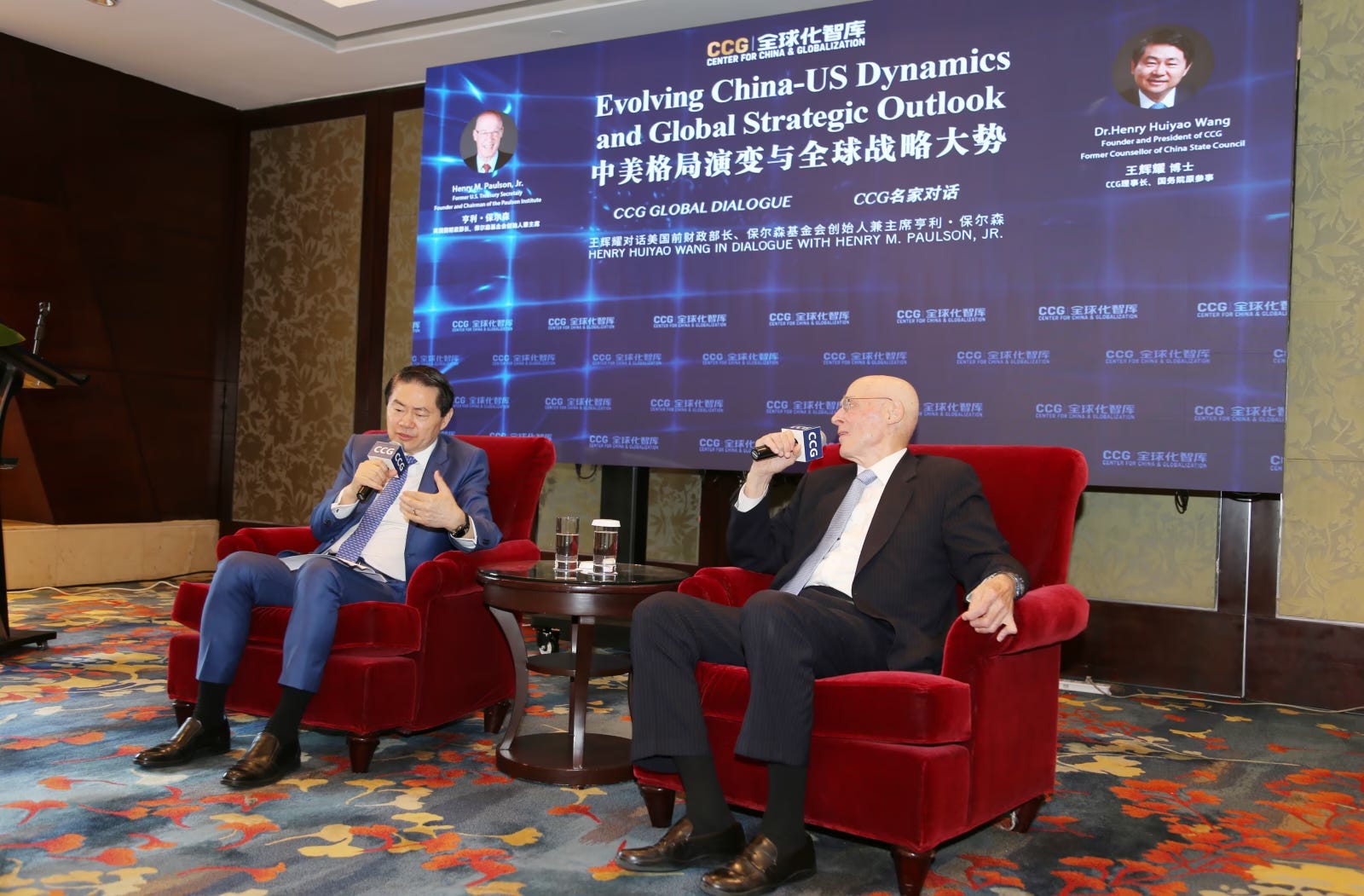
Absolutely, you are right. I think this high-level dialogue, particularly also in the financial and economic sectors, is really important. Actually, we see quite well that even during the trade talks, for the last number of talks since Trump’s second administration, we see Vice Premier He Lifeng and Minister Li Chenggang, and of course Scott Bessent, Treasury Secretary, and the USTR. They meet regularly. They have met five or six times already.
So I think, in a situation like this, we really need to keep deep dialogue to stabilise. Now you talk about this possible disruption in the financial area. What about companies? We have so many multinationals attending our luncheon today. On corporate strategy amid geopolitical crosswinds, during your tenure as CEO of Goldman Sachs, you witnessed the acceleration of foreign enterprises embracing the China market. Today, American multinational corporations really value their supply chains or are adopting a China-plus-one strategy.
So, if you were still in the corporate world, what advice would you give to American CEOs and Chinese CEOs? Because we see recently Trump brought 17 biggest company CEOs to China. So on the business side, what do you see? Because we are too much embedded with each other, and how can we really further promote cooperation amid the geopolitical crosswinds?
Henry Paulson
So, Henry, actually, I’m still very much in that business, because I’m being approached all the time by corporate CEOs asking for advice on China. So this is something I’m living continually, and I give different advice depending on the industry and the company’s competitive position internationally and in China.
Now, you mentioned supply chains. I think any well-managed company today needs a resilient supply chain, so they can never be dependent on one country for critical portions of the supply chain. So you start there.
Then I would say the other thing, if you’re a CEO today, your job is complex because you’ve got to manage the geopolitical risk we’ve talked about. You’ve got to have political scrutiny, so you know you’re going to have that, and then you’re going to have the risk of unexpected export controls and sanctions. So you need to deal in that world.
Now, the advice I give to companies, though, is this: if they are a leader globally and they want to continue to be a leader globally, you walk away from China at your own peril. You have to understand this market, and you can’t understand it unless you come here. So you start there.
Now, my job is becoming more difficult, because today what we’re seeing is so many companies, when they look at the laws in China and the way the national security laws work and cross over into the economic area, they’re forced with sometimes a decision whether they’re going to obey U.S. law or Chinese law, and if they violate it, they are subject to being arrested. So that is a risk.
As I thought about it, one of the things I’ve also noticed, which has surprised me, is that, as the second largest economy in the world, China doesn’t have nearly as much foreign direct investment as you would expect. When I looked at those numbers, I didn’t quite believe it. So I asked people to go back and show them to me again. I really do believe China is going to want the investment. Investment has even slowed down here among Chinese entrepreneurs, so they’re going to want the investment, they’re going to need the investment, and this is one area I think we can work on in that dialogue.
So when we look at the Board of Trade and the Board of Investment, that is something that I think would be constructive to work on.
Henry Huiyao Wang
Absolutely. I think the two new things about the recent outcome of the President Trump-Xi summit are the establishment of these two boards, the Board of Trade and the Board of Investment. There are so many things complementary to both countries.
We know that, as you said, 17 CEOs followed Trump, and they are all still quite positive on China’s development. Also China now has established, I think, world-class infrastructure, supply chains, talent pools, and also all the logistics. So it makes a lot of sense now that we have to have the balance, of course, competitive advantage, of course also political and geopolitical disruption.
But I think China is still the best country for U.S. companies to work here. For example, there are almost 2,000 Chinese companies now on the American entity or sanctions list. There are probably about 20 American companies that are also on the Chinese entity list, largely for selling weapons to Taiwan.
So I think if we are going to resume the trust, and then we also realise in this world we cannot live without each other, and then it is such a very embedded ecosystem that we have to work together. I remember you mentioned that we cannot live in two different systems. If we have all separate systems, then the whole world has to do everything twice, with huge waste, and it’s really not good for both countries.
So I think this gradual pickup of some of the trust and cooperation between our two countries is so important. Of course, there is always structural competition, there are always other disruptions, but overall I think we need to find out what are the most important things to work with each other.
So your advice is valuable. I think that we have to find out what is really good for companies, and what are the words. China is also a big market, the U.S. is a big market, and things like that.
So just on financial stability and systemic risk prevention, since you have most masterfully navigated the 2008 financial crisis, you have a lot of great experience there. With soaring global debt, as you also mentioned, the U.S. probably reached 40 trillion, and divergent monetary policy today, do you see a new macro-financial risk that is coming? Or how should the U.S. and China, the world’s two largest economies, coordinate together to prevent the next black swan event?
Henry Paulson
Henry, as I said earlier, I think that there’s a relatively high possibility that there’ll be some kind of financial disruption, which could lead to a financial crisis, and that it’s going to be harder for the world to respond because sovereign debt is so high right now, and there’s less flexibility. There’s more opportunity for disruption because of everything that’s going on geopolitically, but also because you’re going to have very different macroeconomic policies.
If an economy is struggling a bit, like China, it’s going to have a different macroeconomic policy than the U.S., right? As I’ve emphasised, it’s so important that the right people talk to each other. During the 2008 crisis, I was talking regularly with Wang Qishan, Zhou Xiaochuan, and others about all kinds of things. So when we needed it, we were able to get together and coordinate.
I’ve often said, listen, you can talk a lot, and the odds of being able to identify what’s going to cause a crisis or prevent it are very low. But if and when the crisis comes, if you’re talking, you’ve got the trust, you know who to talk to, and you can respond and minimise the damage. And I’m pleased that that’s happening.
Henry Huiyao Wang
Great. Absolutely, we have to keep the dialogue and talk, and also keep that frequency. That’s what I think is a big credit for President Trump, for doing that, and also for Chinese leadership as well, that we maintain such a great intense dialogue in 2026. It could have a lot of stabilising effects that they’re going to achieve this year.
Also on bilateral trade, we see there is a slowing down of the trade dispute. Of course, there is a truce being made, but still we can see China-U.S. trade, even though the deficit has come down, but the U.S. deficits with other economies are going up. In that sense, also, when we talk about the trade deficit, there are a lot of multinationals actually making that. For example, 40% of China’s international trade was conducted by multinational and foreign enterprises. We see many good examples of Apple, Tesla, and all making good products in China, but maybe the deficits are on China and profit is on the companies.
So in that sense, I mean, also the U.S. is having a huge trade surplus on U.S. dollars. I mean, they’re having many dollars, and the U.S. maybe has a trade surplus on goods. So do you think that we should have new studies, maybe to really find out what are really the benefits of trade cooperation?
Henry Paulson
Henry, I do. I think there’s the risk right now, which we see, and it’s not as much on U.S.-China as it is on China with Europe and Southeast Asia, because what we see is because of really big imbalances in China that have existed for some time. But now the Chinese economy is so big, with these imbalances, we’ve got huge excess capacity.
China is going to export maybe as much as one and a half trillion dollars of product in the world, and this is going to be problematic in two ways. First of all, it’s big enough to disrupt certain economies in Europe and in Asia, number one. Number two, it’s going to cause trade frictions. So that is something I know China is focused on.
But what we have right now is that the renminbi is low because it’s essential for China to have those exports to keep the economy going. When I was Treasury Secretary, the imbalances were bigger as a result of the same problem, but the economy was smaller. Today, China is a leading trader with economies that have 70% of global GDP. They’ve got great products. When you look at the EVs, the batteries, the solar panels, when you look at the products they have, they’ve got great products. But the elephant is too big for the tent right now. So I think that’s a risk we have to be mindful of. China needs to be mindful of it.
Henry Huiyao Wang
Yeah, I think the trade actually is absolutely right, going very strong. But also in China, though, there is a new phenomenon. China’s outbound investment is increasing as well. So we see a lot of Chinese companies interested in investing in Europe, in the U.S., in Latin America, and that’s the Board of Investment we established in China-U.S. It is really great.
Henry Paulson

I think that’s so important. That’s what I’m really hoping, that we’re going to get some more specific criteria on where Chinese investors can invest in the U.S. and not get hung up with CFIUS. So it’s going to be important to find areas that are subject to national security and economic security issues, that are acceptable to invest in, and get those standards.
Again, I think it’s very important also that right now China needs to invest, can invest in private equity funds in the U.S., which they’ve done for a long time. But right now, the regulations are such that it’s hard for U.S. private equity funds to accept the money because they have to sign problematic documents. Again, that’s something else that the Board of Investment can work through.
There are plenty of issues to work through, and I’m optimistic, but they’re not easy. None of these are easy. If they were easy, they would have been done by now. So there are so many sensitive areas.
Henry Huiyao Wang
That’s great. I think exactly what this Board of Investment, we hope to achieve, is really to promote more investment among each other. Particularly now China can do more investment, manufacturing, and going global, so that we can address some of those trade deficit issues by investing in more categories.
Of course, we talk about this trust issue. Actually, two weeks ago, we had a dialogue with David Shambaugh. He came here in Beijing. And he said there may be over-securitisation, over-emphasised security. That may not be a good trend on both sides. So we have this technology competition now, we have this AI disruption, which is unprecedented in the history of our bilateral relations and the world at large.
How do you think we can overcome this technological competition, but also avoid AI disruption? Because I remember Henry Kissinger, in his last piece of op-ed with Graham Allison, was talking about this AI race and real AI disruption. Now we’re embracing the AI era. How can we avoid anything devastating that is going to happen if we’re not too careful, particularly the U.S. and China?
Henry Paulson
Well, right now we know that this is where the competition is taking place, right? It’s taking place with the most advanced technologies and with AI. There’s robust competition, and the fact that it’s unconstrained really by either nation means that it’s moving very, very rapidly.
I think the risks are twofold. We’ve all talked about agentic AI, and that’s what Henry Kissinger talked about a long time ago. I know your leaders are focused on it, our leaders are focused on it. So I think that is something that is really quite a profound risk, a really, really profound risk. It’s not going to be easy to deal with, but the best chance of dealing with it is if our two countries could get together and come up with forms of governance here that work. I think it’s not easy, but necessity is the mother of invention.
Then I think there’s another risk that is going to come first. Let me just say at the beginning, so I don’t sound like a total Luddite, that AI is bringing huge benefits to the economy and a number of companies and industries. It’s got some pretty amazing benefits. I visited a number of AI companies here, and it’s extraordinary what we’re seeing.
But make no doubt about it, it’s going to destroy jobs. So all those that say, “Oh, well, this is just another industrial revolution,” well, that took place over a long period of time. This is moving so quickly, so that will be disruptive. It’s causing a lot of concern. Economies, countries, companies have got to be figuring out how to deal with those that lose their jobs.
Here it’s easier sitting here being a former government leader than a current one, because I’ve got to tell you, it’s a lot easier to cite the problem than come up with a solution. One thing I know, in the U.S., we don’t do a great job of training, right? The government doesn’t do a great job of training, so maybe industry needs to do more.
Again, glad you cited that. That’s an area where our two countries need to come together. But we’re a long way from doing it right now. To just raise the topic is one thing, but each country needs to figure out what they’re going to do themselves, right? And before they can get together with the other. This is moving pretty quickly, so this is something significant, and it’s something I’m glad you brought up.
Henry Huiyao Wang
Thank you. Thank you, Secretary Paulson. That’s really important. As you mentioned, AI is accelerating so fast. I mean, not like the Industrial Revolution, which took many decades. This is really a brink of AI. We see daily changes. That’s really so fast to cope with. Absolutely, China and the U.S. have to work together.
I’m glad to see both governments actually having a dialogue on that since Trump’s visit, and I hope continuously we’re going to talk about that, to have some governance, possibly regulations, to really work together. As you also mentioned, companies and industry should talk to each other and also have some joint efforts. That is a great, great idea.
Now my last question before I open the floor to the audience is that we know that you’ve been a dedicated contributor to the Nature Conservancy, to climate change, to green development, and many, many things you’ve been doing for those years. China, obviously, is a large green economy now, and the largest green power producer in the world. Do you see in this arena that China and the U.S., knowing that we have to fight climate change, even though we have some different views on that, but I do see that we are so complementary as the two largest emitters. So how can we work together on the green? You have been a leader in this field, on nature conservation and also fighting climate change.
Henry Paulson
Well, I’m really glad you brought that up, because this is a huge focus of mine, both climate change and conservation and biodiversity preservation. As I said earlier, I think species are declining at 1,000 times the historical rate, and so this poses significant risks. I spend a lot of time, and my institute spends a lot of time doing that.
I’m really pleased to report here that the Paulson Institute, working with some great partners in China, has done a lot and is continuing to do a lot. I was thinking today, going back years ago, I was involved in the first pilot national parks in China and Yunnan, and boy, was that fun, interesting, inspiring work, right? So that to me was something that has been very significant.
We’ve worked with Ma Jun on green financing principles on the Belt and Road. When I was looking at the progress today, we’ve got 52 signatories, 23 supporters, in 19 different countries. So again, something that’s quite significant.
One of the things that the Paulson Institute did, working with the Chinese Academy of Sciences, we looked hard at the coastal wetlands, which were being threatened, and we mapped them, came up with a lot of good data that helped policymakers in China decide how to prioritise which sites needed to be saved and what the restoration plan was.
I worked closely with my friend Xu Lin on the U.S.-China Green Fund, and we worked on that. I had a terrific meeting with Madam Zhao at the AIIB yesterday, because again we’re doing work there on groundbreaking work on green infrastructure, looking at nature and saying, how do we invest in it? How do we store it? How do we save it?
Then the thing that is taking up a huge amount of our effort is we are doing a redo of our groundbreaking study on financing nature on the biodiversity crisis. Here, the situation has gotten worse, and so the problem is accelerating. We’re looking ahead to the Biodiversity COP17 in Armenia. But this report is going to be — hopelessness is the enemy here. So we’re going to focus on all the progress that has been made, on new strategies, new projects that can work if they’re rolled out and at scale. There are some really good ones.
So I will tell you here, and this is a good question for us to end on, because I am really looking forward to working in China. Now I need to say at the outset, when we look at biodiversity, we look at conservation, we look at climate change, I look at them and say they’re not a risk, they’re a certainty. Climate change is a certainty, no risk here. It is a certainty. Some of the other things we’re talking about are risks.
I’m in a different spot than my government. I’d like the government of the U.S. to be in a different position here. So what I tell our team is that it makes it all the more important for NGOs like the Paulson Institute to be working in this area, working across the border, doing work in China and in the U.S. and elsewhere around the world. We’ve stepped up our involvement in this area to try to do our job, and again, we look forward to continuing to work in China.
Henry Huiyao Wang
That really should be congratulated. That’s great news. I’m very pleased that the Paulson Institute is taking such a dedicated effort to fighting climate change, keeping biodiversity and nature conservation, and of course all this green development. China, being a country that has also been probably the leader in the green transition, has a lot of room to work together.
I really think this is a great area that both countries in the future could work on. I’m really thankful for the Paulson Institute for taking a leading role in promoting climate change prevention, but also green cooperation.
I really want to thank you so much for sharing all those great insights with us. Now we’re going to open the floor. Please raise your hand if you have any questions. Maybe we’ll get one first from Minister Zhu Hong. He was former Minister for Trade at the Chinese Embassy in Washington for many years. Minister Zhu Hong.
Zhu Hong, former Minister for Commercial Affairs, the Chinese Embassy in the United States
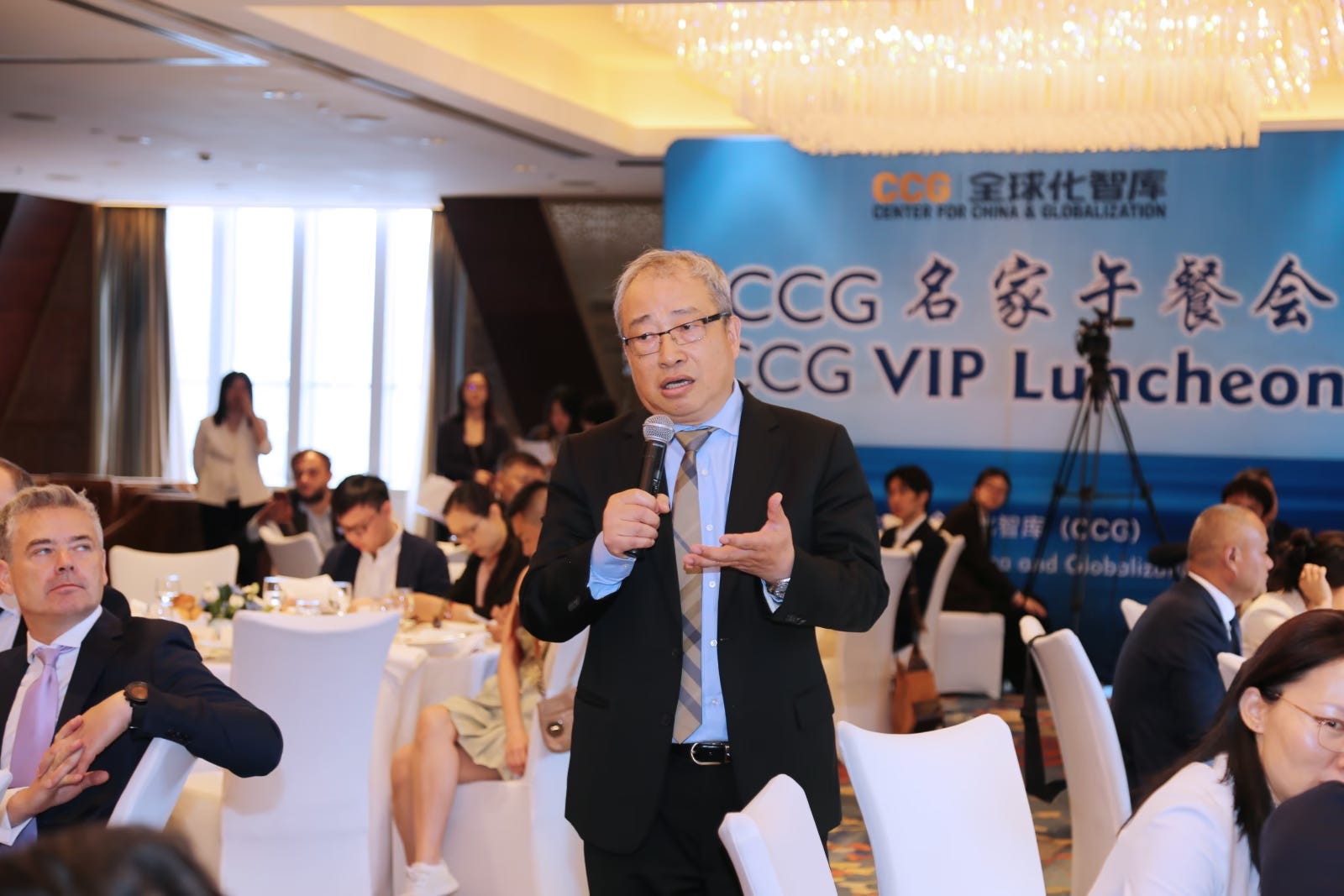
Thank you. Thank you. We are so glad to hear two Henries’ dialogue, very impressive. Mr Paulson, first, I would like to pay my tribute to your idea and work on the Strategic and Economic Dialogue (S&ED) 20 years ago. Actually, Ms. Zhang, sitting beside me, was in the office of the Ministry of Finance, in charge of these issues. So through the S&ED, we still can see those perspectives and advantages to our two nations’ relationship.
In today’s world, in today’s time, how can we resume such a strategic dialogue? Secondly, my question is regarding the business community, because I had long been Minister for Commercial Affairs in the U.S., and I think the business community had a not so good time a few years ago. After President Trump’s visit, I think the good timing is coming. So how will this visit, also this autumn’s President Xi’s visit, promote our bilateral economic and business dialogue? Thank you.
Henry Paulson
Okay, well, first of all, I take my hat off to you, and thank you for all your work.
Second of all, in terms of the S&ED being resumed, I actually believe that the Board of Trade and the Board of Investment, if they are implemented properly, achieve the same goal, which is more trade, more investment. You have to deal with the same issues, right? You have to deal with the same tough issues, and the issues are more difficult today than they were when I was here.
When I was doing this, I basically said, the key is the economic side. If you get the economic relationship right, that’s the propeller, that’s the lens through which China will look at this. If we get that right, other issues will be easier. Of course, today more than not, people are looking through the military lens. The economic lens really can be win-win. The military lens is win-loss.
So I think one of the key things we need to do is, each side is going to protect their priorities on the economic and military side, but I think we need to look and say what are really legitimate issues and what are the ones where we can expand trade and investment. That’s hard, and that’s hard politically.
But I think the biggest benefit so far of the summit between the two presidents is the tone. Right now there’s a more positive perception of China in the U.S. Among Republicans in the Senate and the House, they are more restrained in their criticism or more positive about the opportunities. So I think with that wind at the back, it’s going to make it easier to do some of the things we need to do.
But I do think we need to cut through some of the underbrush and some of the things I mentioned. I really think China, and the way the regulations and the law are set up and coming down, is actually scaring some U.S. companies in terms of investment here. I think clearly there are Chinese companies eager to invest in the United States, and they deserve to know what criteria there are, where they can invest. So I’m really hoping that will make a difference. As I said, I’m again really hoping that investment in private equity funds will resume.
Henry Huiyao Wang
Great, good news. I think the two boards, Board of Investment and Board of Trade, will be more active. As if SED can be, a lot of the same effectiveness can be achieved. Okay, we go to the next question. The lady here. Okay.
Erin Zhang, Head of Government and Regulatory Affairs, Goldman Sachs International Bank Beijing Office
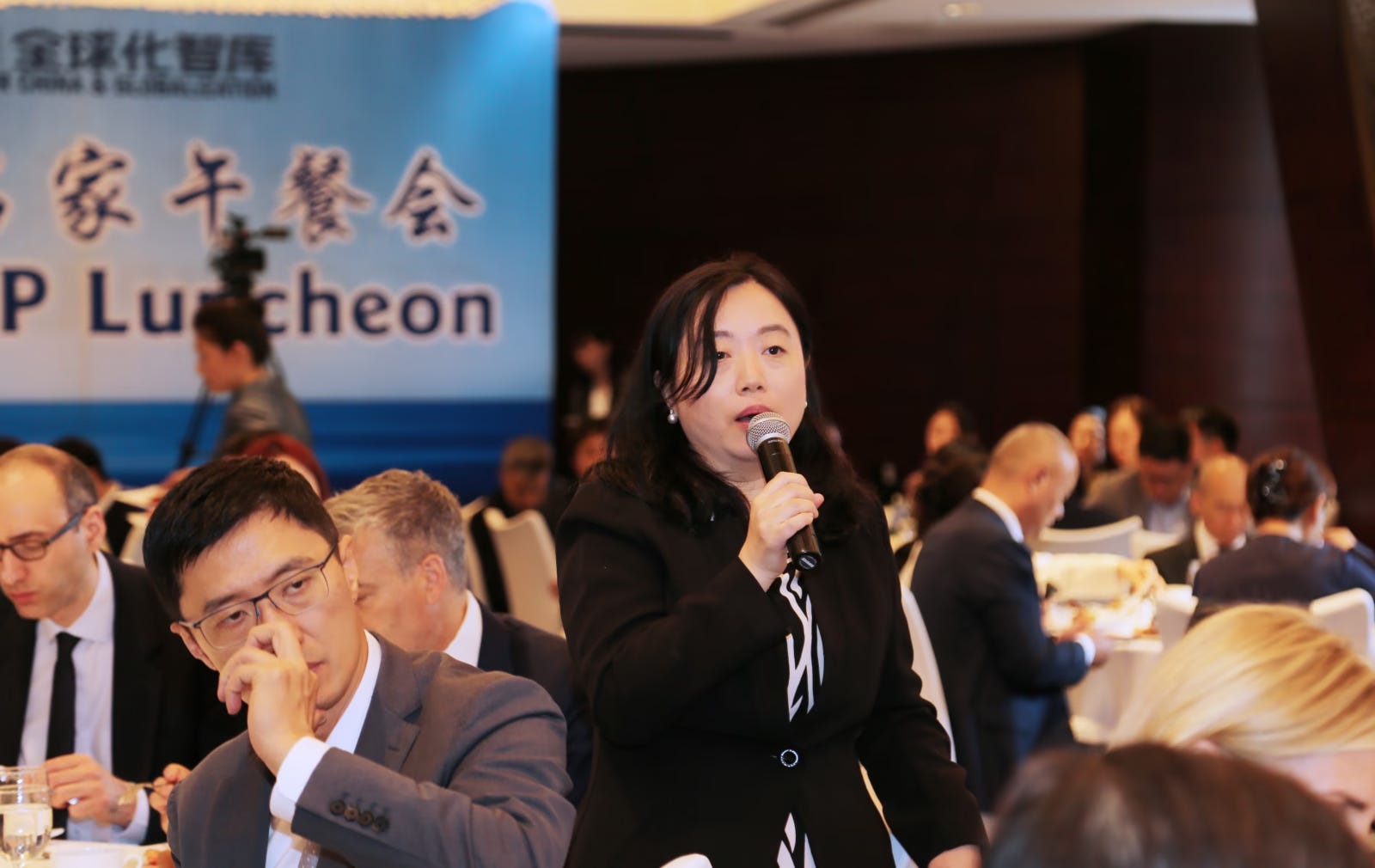
Thank you. I’m Erin. I’ve been with the firm for almost 10 years, so it’s a great honour that I can join this event and hear your insights directly. It’s really a great honour. Thanks for all the sharing.
I think dialogue between these two countries is so important at the moment, and we agreed to see the summit between the two state leaders last month. Hopefully, it paves the way for a sustainable relationship for this year and beyond.
My question is really related to the outcome from the summit, that is for the Board of Trade and Board of Investment. For the Board of Trade, at least we see some directions. But for the Board of Investment, we are really closely monitoring the development, and we see a lot of questions from the clients. But our understanding is that there is kind of no timeline for the next step for the Board of Investment.
Thinking about the sanctions, maybe from the U.S., restrictions on capital investment to the U.S., and maybe the new outbound investment from China, to me, I feel it is such a challenging job for the next step for the Board of Investment. So my question is, what’s your expectation for the Board of Investment? Where can it start, and what should be the priorities for it?
Henry Paulson
Well, let me say to you, I share your view. I share your view that it’s important. It’s going to be more difficult. Even in the trade area, they’re going to work on areas where there are less sensitive issues. Given the sensitivities and the issues you cited, it’s a challenge on the Board of Investment. So I begin by saying I’m going to watch that very carefully.
Now, what’s been said publicly, and I think Secretary Bessent said it, is that to begin with, we need to look at situations where you’ve got two enterprises wanting to do a deal, that they could go and clear with each side and be told whether there’s going to be a CFIUS issue or not. So they wouldn’t announce a deal and then find there was a CFIUS issue. You saw something worked out with TikTok and ByteDance, but there haven’t been a lot of those situations. So that’s a starting point.
But as I said, I think it’s going to take strong leadership by the two countries. I remember early on when President Xi made his first trip to the U.S. as a vice president, and he was clearly going to be president in the fall. He got together with a number of us who had worked on U.S.-China for a long time, and he’d asked me to do some things for the trip. When we got together, he asked everyone, what was the key to U.S.-China relations? And he said, let me tell you what I think the key is. I’m going to do what’s in our best interest, China’s best interest. I’m always going to do that, and I wouldn’t respect the U.S. president if he didn’t do the same. But there are going to be plenty of things that are in our mutual interests, but are unpopular in our countries. So it’s going to take someone strong enough to agree to do things that are in mutual interests that are unpopular.
We’ve now got two presidents that are strong enough to do that, but it’s more difficult than it was when President Xi mentioned it, because the relationship has moved beyond that point. Let’s not make a mistake that China is building closer partnerships with U.S. enemies, right? And we’ve got different security relationships, we have a whole lot of regulations, so it’s not going to be easy.
That’s why I said the thing I’m going to look at most carefully is how these things are operationalised. Let me tell you, it’s not going to be easy, but I’m expecting both sides to make progress here. That’s something we should all be watching.
Henry Huiyao Wang
Great. You mentioned these leaders that can do things unpopular at home, but then really for mutual benefit. That’s a great vision. I think that’s what we are seeing probably today as well. So we hope to continue. We’ll have maybe another question from — yeah, yeah. Okay. Thank you very much. We’ll take the two together. Okay.
Song Dongze, Reporter, Phoenix New Media
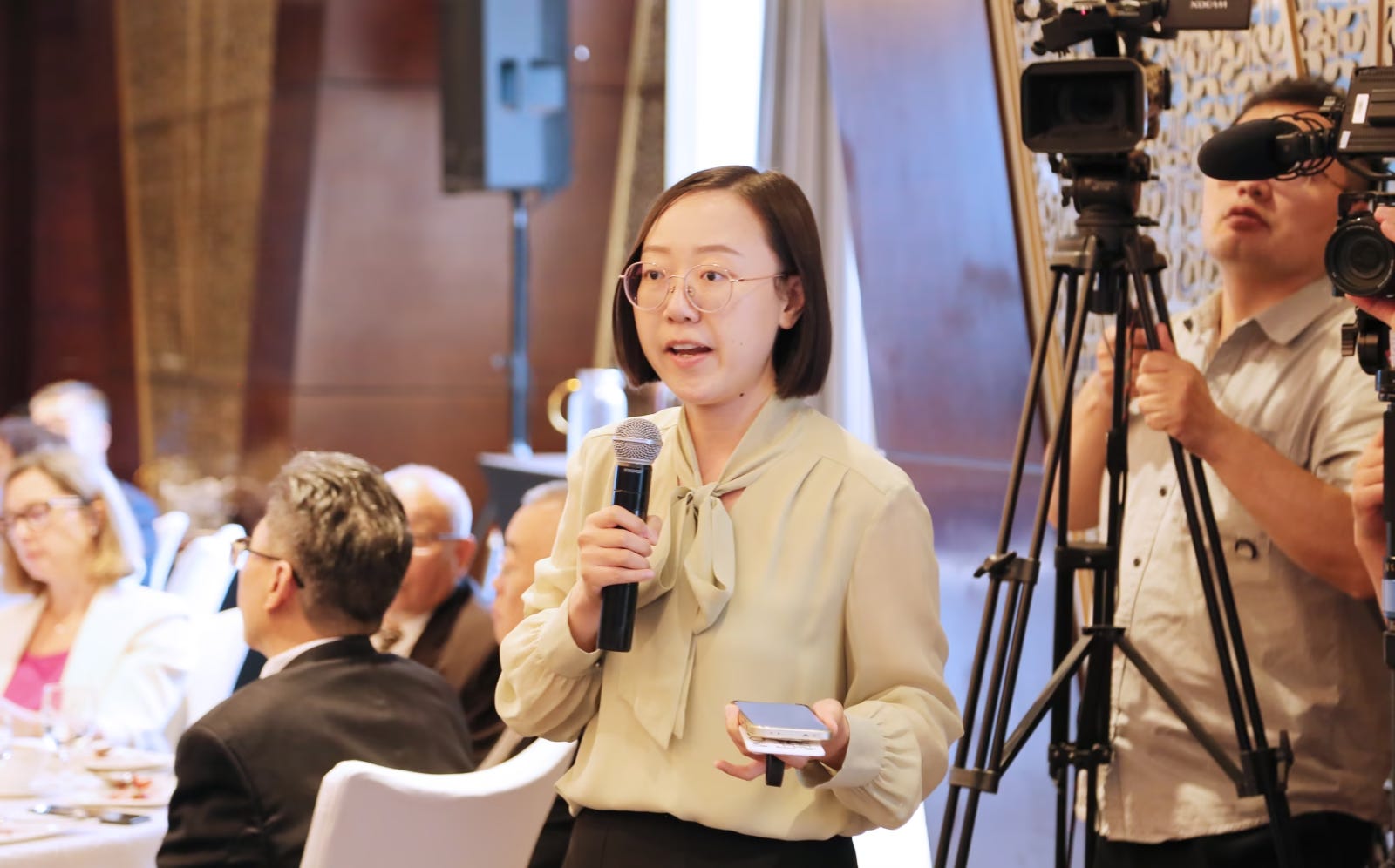
Hello, everyone. I’m Katherine Song from Phoenix New Media. Mr Paulson, thank you very much for your wonderful speech. My first question is, as we know, U.S. tech stocks plummeted last Friday, and although there was a rebound, the market is still hotly debating whether the AI bubble is bursting. What’s your take on this? Is AI still worth investing in?
My second question is, speaking of AI, many ordinary people have neither the capital nor insider information to rely on. So is it feasible for them to use AI to trade stocks? Like, I ask AI, which stock should I buy, or should I sell it? What is the most important message you would like to convey to them? Thank you very much.
Henry Paulson
Okay, wow. So in terms of AI, there are massive amounts of money flowing into AI right now. What’s happening is money is being invested and market values are going up based upon the money that’s being invested rather than earnings today. So I would expect that at some time there’ll be a correction. It’s hard to predict when, and there’ll be some winners and some losers. That’s all I can say. I can’t predict a market, but I will tell you this is very real in terms of money that’s being spent.
Secondly, I never advise investors on things. I know that there are plenty of Chinese investors that have been very unhappy with decisions they made in the market from time to time, and there’s speculation. But no, I wouldn’t. I personally wouldn’t rely on AI to make a decision, but I would rely on AI to get me the information I need, right? Get information. But you have to make sure, because there’s so much stuff that’s out there that’s fake. You need to be careful. You need to be careful.
I will tell you one other thing. I don’t trade in the market, and I certainly wouldn’t trade based upon AI, personally.
Yubin Du, Reporter, CGTN
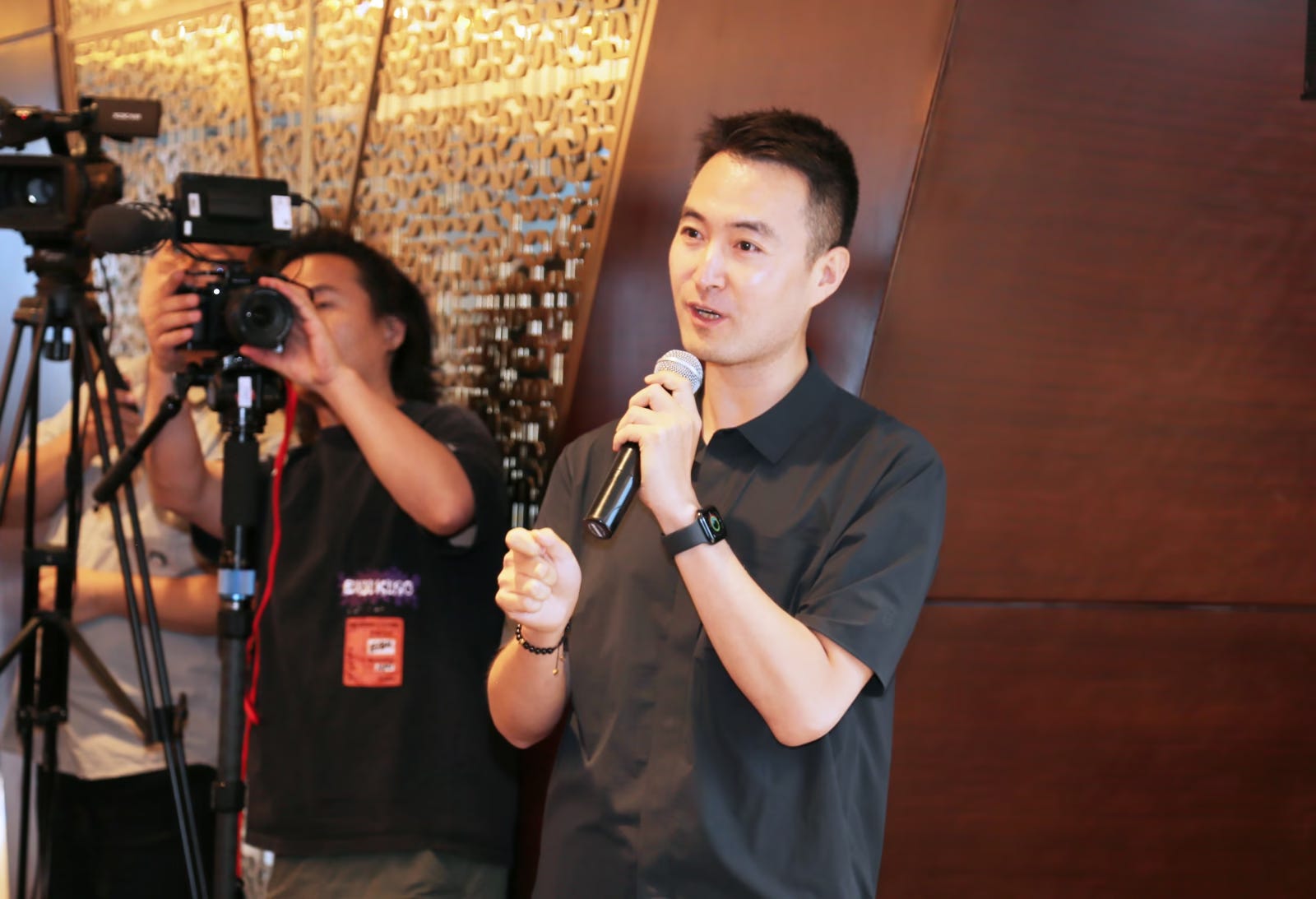
Thank you so much to Henry. Thank you very much. My question is about climate change. I remember around over 10 years ago I read your book, Dealing with China, the first one to tell the world that President Xi told you, hey, we’re going to make a new land outside Beijing to relocate some resources for sustainable development. Also, we know, Henry, the Paulson Institute helped China to build the national park system.
However, if we see right now the current administration in the U.S. doesn’t have too much enthusiasm about climate change and green development, what do you see? Is this a possible field that China and the U.S. still can work together on, and whether it still has many opportunities for Chinese enterprises to work in this field? Thank you.
Henry Paulson
So, here’s what I would say. I can’t add anything to what you’ve said about where the government is, and I’ve said the government’s in a different place than I am.
But I would say there are plenty of people in the U.S., and plenty of local governments and companies, that are aware of the climate risk. You would have to be blind and dumb not to be, right? When you see the world is overheating, you can argue about what causes it, but the world is — I think we all know what’s causing it — but even if people don’t want to admit that the world is overheating. There’s a lot that people need to do, and companies need to do also, including resilience and adaptation.
So we want to mitigate emissions. But given what’s already up there, we know we’re not going to meet the one and a half degrees, probably not two degrees, but two degrees is better than two and a half, or whatever. So there are all sorts of investment necessities and opportunities.
I’m finding that the climate fund that I’m Executive Chairman of, despite all the rhetoric, I’ve never seen so many good opportunities to invest where you can reduce climate emissions, or you can make a difference in terms of resilience.
Again, there’s a need. As I said earlier, I don’t view this as a risk. I view it as a certainty. We need to prepare for it. Companies need to harden their supply chains. We need to look at our power and our energy systems. This is an area where I give China a lot of credit for what they’ve done in terms of products like batteries, EVs, solar panels, diversifying energy sources, and so on. But there’s a lot that needs to be done. Don’t think that U.S. citizens and companies aren’t aware of this.
Ji Xiaoyu, Founder, Tianjin Haileybury International School; Chair, Murong Capital Fund
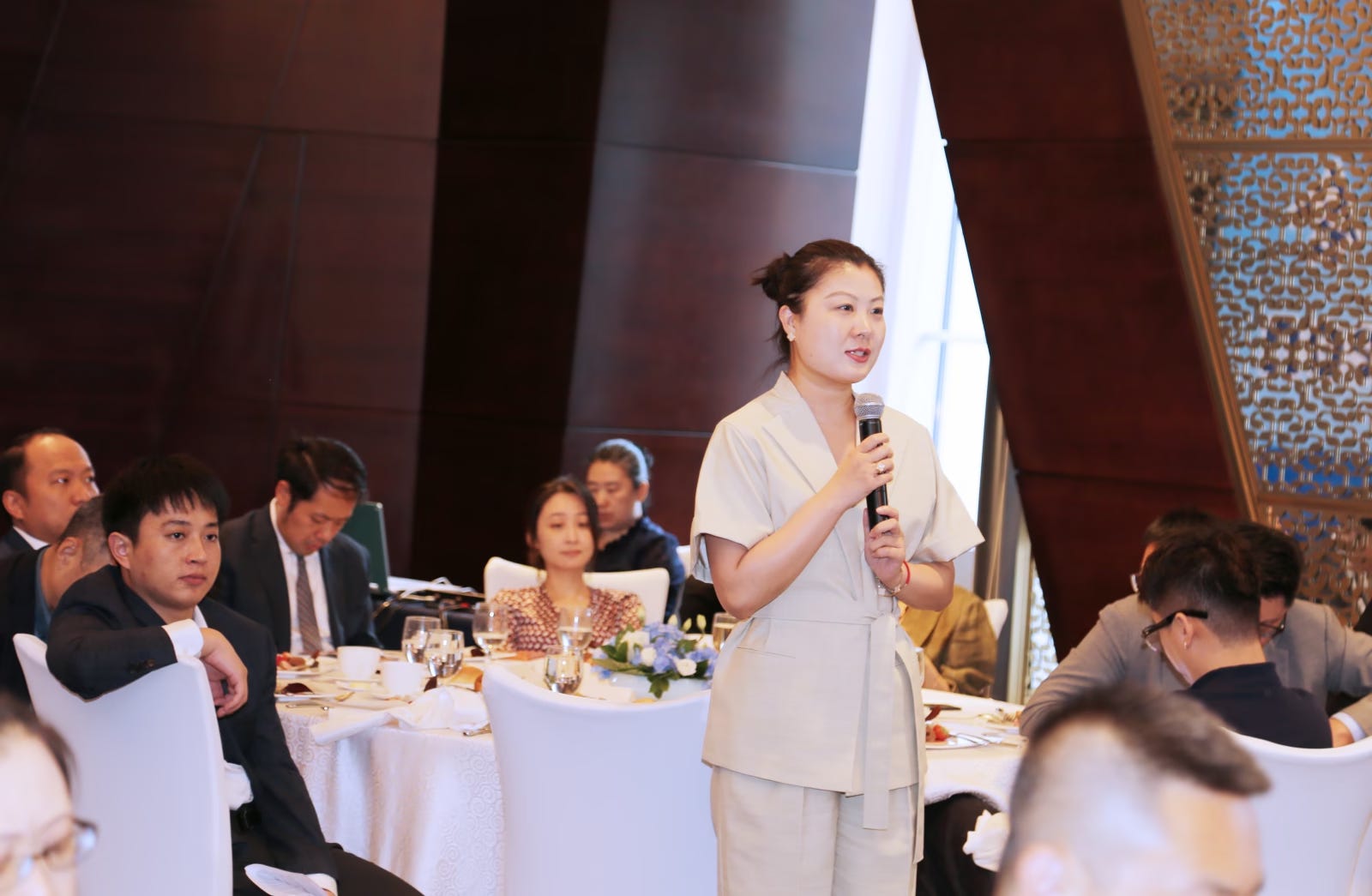
Mr Paulson. I’m from the Western Returned Scholars Association 2005 Committee, and I myself am a technology investor. So I have a question for you.
We all know that you were very famous for managing the 2008 financial crisis and stabilising the market. Now, do you think AI is going to cause the AI fever in the capital market? Is the AI fever going to cause another financial crisis as huge as the 2008 crisis or the 2000 dot-com crisis? If you do think so, what would you suggest the government do to prevent the bubble collapse? Or do you think it’s destiny that it will come again and again, and we will have no way to prevent it. Do you think there are any opportunities for China and the U.S. to cooperate to do something to prevent or manage the crisis?
Henry Paulson
Here’s what I think. I think it is absolutely impossible to identify what will cause the next crisis, right? There’s always someone that has pointed to it, and then afterwards they say, “See, I saw it.” But other people don’t see it, and they won’t see the next one.
So I would say this: as long as you have governments and political decision makers, you’re going to have flawed policies or adverse risks and conditions that are going to cause crises. The key thing is hopefully you will be able to get involved soon enough to mitigate them before they become too great.
Now, in the U.S., as a result of the 2008 financial crisis, we have the tools, and I think the knowledge, to know what we’ve got to do, because the only way you can stop a panic is with government capital. In the U.S., it takes great courage to stand up and “do the rescue or a bailout”. In China, that’s the first move, and it takes great courage to let the markets work, right? China has been propping up non-viable assets at the sub-national level for some time. So we’ve got different policies. There are all kinds of risks around the world.
But the key thing, which you cited in the 2008 financial crisis — I personally think if we have a crisis, I don’t think it will begin in the U.S. I could be wrong, but I think the markets are resilient enough and liquid enough in the U.S. I think it’s apt to take place outside of the U.S. But regardless of where it takes place, the world is getting smaller and smaller in terms of the risks and the way they move.
People will say globalisation has ended. I say BS to that, right? Look at pandemics. Look at the way money moves around the world with lightning speed. So when there is financial disruption, and we know there will be sometime, because there always will be, when there is, we need to cooperate and coordinate and do what we can to limit the risk. So that’s the best answer. I’m sorry I can’t be more specific, but what I’m telling you, trust me, it’s right.
Henry Huiyao Wang
Okay, great. I think, given the time, we’ll have to end here. I think we had a very stimulating, very exciting, and also very encouraging, constructive dialogue. I absolutely agree with Secretary Paulson that we need to engage in deep dialogues, frequent dialogues, at high level and at all levels. But also, we have to be very earnest in building trust. I mean, that’s probably the biggest deficit we’re having now.
Furthermore, I think Secretary Paulson gave a lot of good suggestions, like we have to carry on with this Board of Trade, Board of Investment, and of course also we need to be really on AI. We have to harness AI, but also at the same time prevent the risks of that.
Furthermore, I want to congratulate you on your new book that has really come out just recently. So we really appreciate your time to come to China, to come to the CCG VIP Luncheon. I’m sure our distinguished guests here really enjoyed your great talk. We hope to have you again. If you have any last words you want to say, we would love to hear them.
Henry Paulson
Henry, my last words are thank you. Thank you for doing this, for putting this together. Thank you to all of you for coming and listening. I’m sorry, but I have to move pretty quickly, because I’ve got another meeting to go to. So, thank you.
Henry Huiyao Wang
Thank you very much.
Henry Paulson at CCG VIP Luncheon in Beijing

The following is an English translation of a Chinese-language press release approved by the Beijing Representative Office of the Paulson Institute.