


On July 2, 2026, Henry Huiyao Wang, Founder and President of the Center for China and Globalization (CCG), joined a panel titled “Multilateralism: End of Cooperation, Advent of Predation” at the Aix-en-Provence Economic Forum.
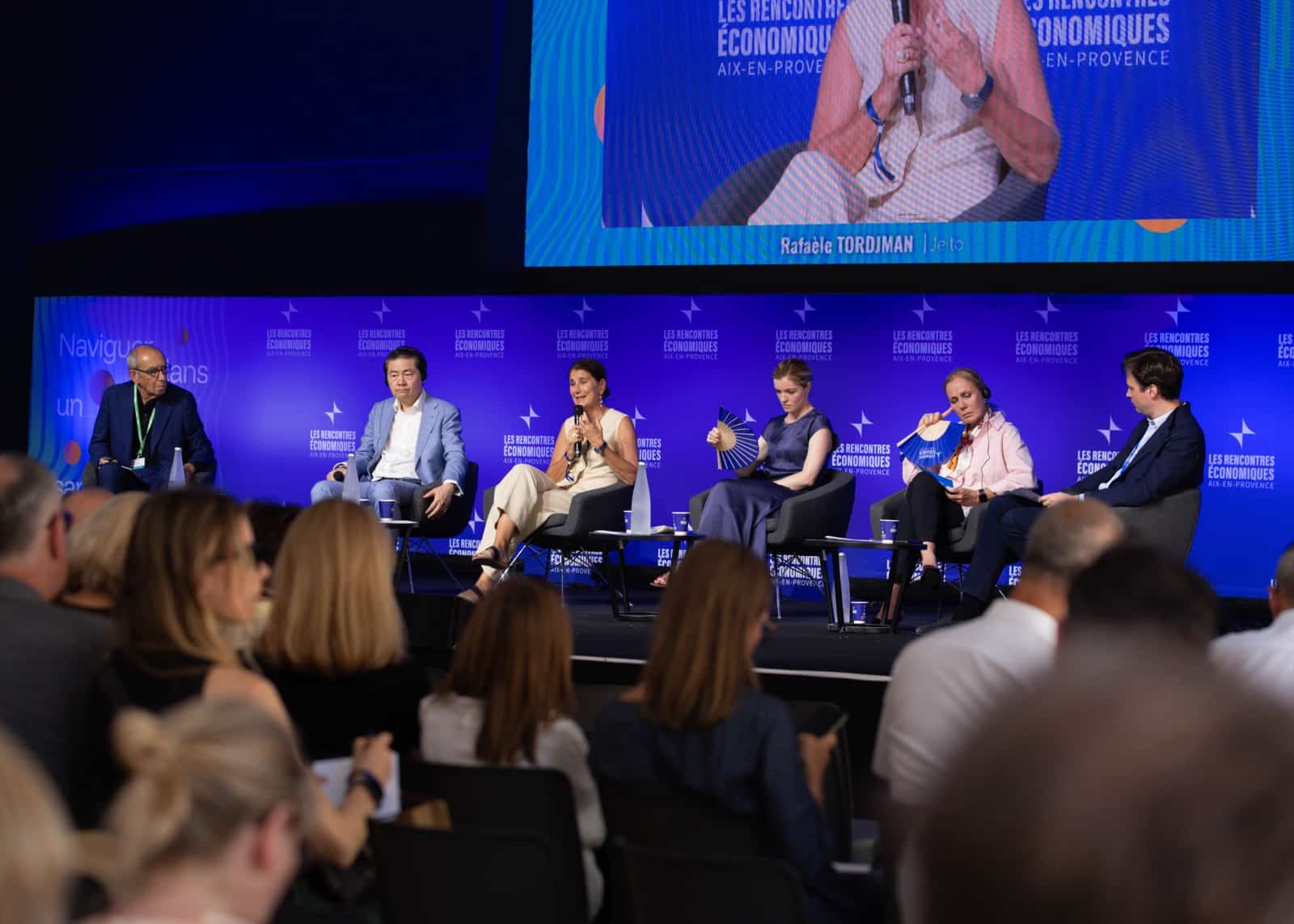
Moderated by François Miguet, Deputy Editor of Le Point, and coordinated by economist Jean Pisani-Ferry, the panel also featured Corentine Poilvet-Clédière, Chief Executive Officer of the London Stock Exchange Group (LSEG); Rafaèle Tordjman, Chairwoman of Jeito; and Kitty van der Heijden, Deputy Executive Director for Partnerships at UNICEF.
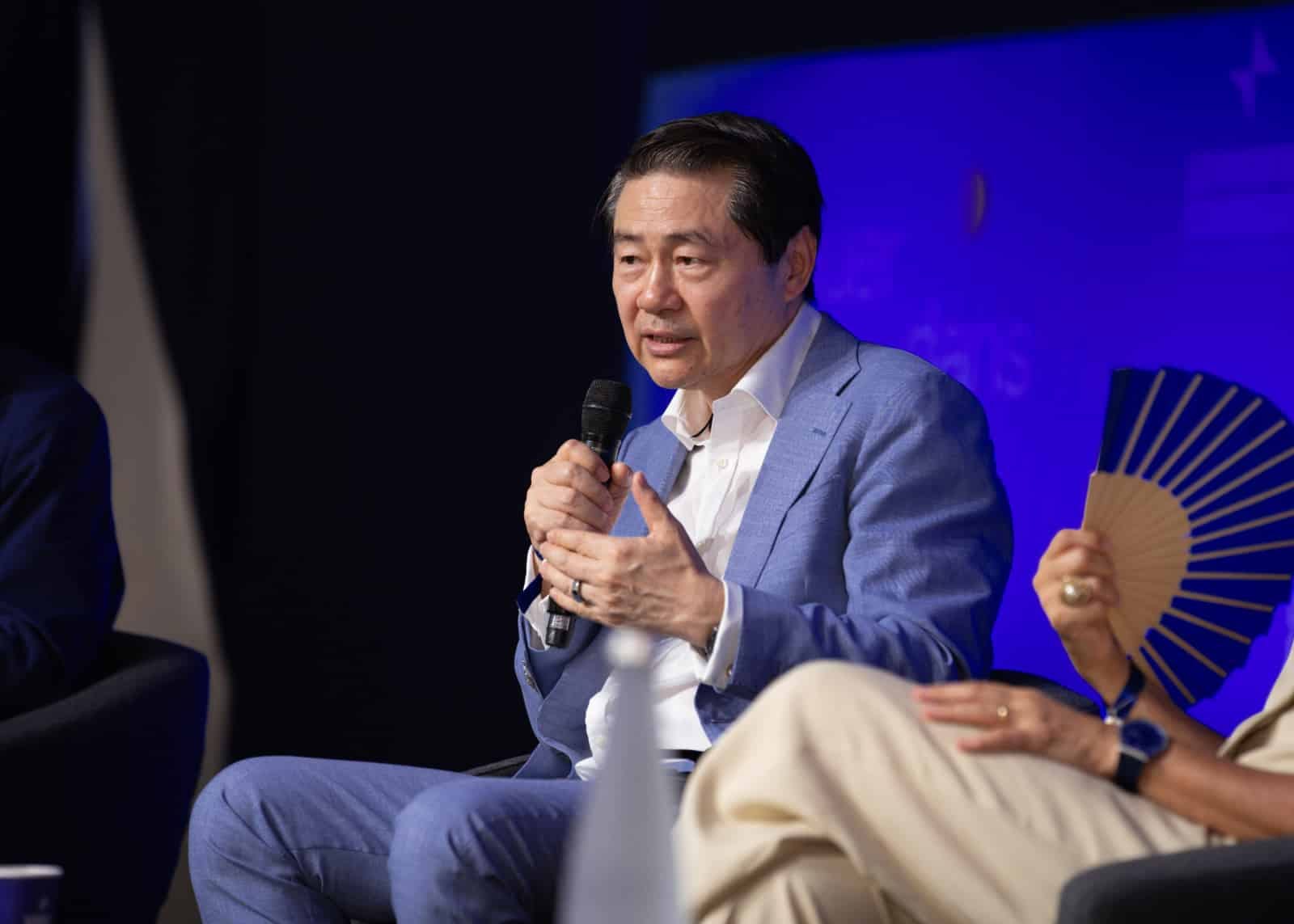
Wang argued that the emerging multipolar world requires a stronger and reformed multilateral system. He called on China and Europe to work together to safeguard multilateral institutions, urged Europe not to take sides in China-U.S. competition, and advocated dialogue and economic cooperation over sanctions, containment, and the weaponization of trade and technology.
This transcript is based on the session’s English simultaneous interpretation. Wang and Poilvet-Clédière spoke in English, while the other panelists spoke in French. It has been lightly edited for clarity and has not been reviewed by any of the speakers.
The video is available here:
François Miguet, Deputy Editor, Le Point
Good afternoon. Thank you for being with us for this session one at the Les Rencontres Économiques Meetings. Our session is called “Multilateralism: End of Cooperation, Advent of Predation.” My name is François Miguet, and I’ve got five people with me for this panel. We have Kitty van der Heijden, who is Assistant Secretary General and Executive Director General for Partnerships from UNICEF. Corentine Poilvet-Clédière, who is the Chief Executive for France at the London Stock Exchange. Rafaèle Tordjman from Jeito Capital, an independent fund for biopharmaceutical companies. We have Professor Henry Huiyao Wang from Beijing, chair of the Center for China and Globalization. Finally, we have the economist who has coordinated this panel, Jean Pisani-Ferry, who is a professor at Sciences-Po in Paris and is a member of a number of think tanks.
So I’m going to hand over to Jean to give us a brief introduction, and then we will talk about this fascinating theme of globalization today.
Jean Pisani-Ferry, Professor, Sciences-Po Paris; Senior Fellow at Bruegel and the Peterson Institute
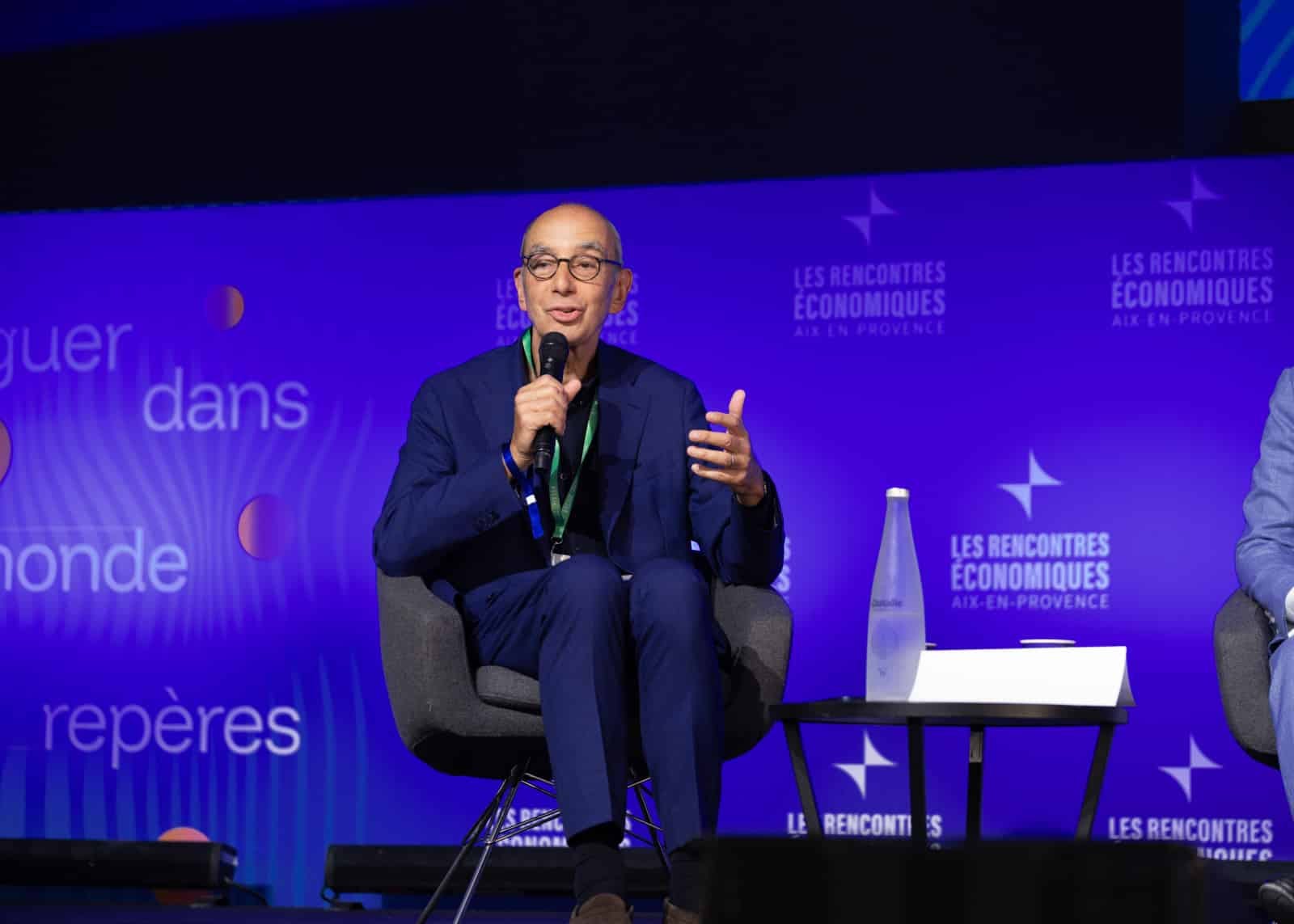
Thank you, François. I would like to just give a very brief introduction, and I’d like to start by mentioning three key dates in the era that we are starting to experience.
The first date is 2008, and the financial crisis when Western countries lost their reputation for competencies. Until 2008, emerging countries said they might be a little bit unpleasant, unbearable, even, but at least they’re competent. But from 2008 onwards, the emerging countries realized that that was no longer the case.
The second date is the COVID crisis, 2020. This was when the world realized that all of the interdependencies that we had built up, these value chains, were not resilient enough, and that the quest for total efficiency had come at the expense of robustness, resilience; and this was a very significant turning point because this lesson has not been forgotten.
The third key date, which I’d like to mention, is obviously 2022. Russia’s war of aggression against Ukraine, which demonstrated that we live in a much more violent world than before, and a world which has a very chance of remaining as violent as that.
It’s a new world that we’re living in, and I want to give you a brief analysis from my point of view of what this new world looks like. First of all, the USA is tired of playing the role of global policeman in the world that it had played up till now. With Trump, the states have moved on from being the global policeman to being the global predator, and that’s perhaps where the title of this panel session has come from.
The question one might ask is: is this a sustainable position in terms of the predatory attitude? It probably isn’t going to be sustainable. The fact that the USA was tired of the role it was playing in the world, and the fact that the U.S. has decided to change its role, I think that is a lasting change. I think that’s a very important first thing to say.
The second observation I’d like to make is that China has upturned world trade. I know that’s a very obvious thing to say. Currently, China represents 16% of world GDP by value. It represents 22% of GDP in PPP, purchasing power parity, and it accounts for around 30% of manufacturing production. It’s no longer possible to imitate or compete with China, and that’s been the case since around the turn of the millennium.
It’s a new world. We live in a multipolar world because this world is no longer dominated by the West. I say a multipolar world because behind China there are other emerging countries who are asking to be part of decision-making processes, so we have to learn to cope with this multipolar world. That’s what we’re going to be talking about today.
And my final point is to say that, with all of that, the world’s common goods are still around; they’re still with us, and we’re reminded of it in many different ways. The most recent example of this is the heatwave we’ve just lived through in Northern Europe. This is just one example of the range of global struggles that will require multilateral cooperation.
So, I’ve mentioned three key dates. I talked about us living in a very different world, and in many ways, we need to get to know this new world and get to know how to navigate within it.
Francois Miguet
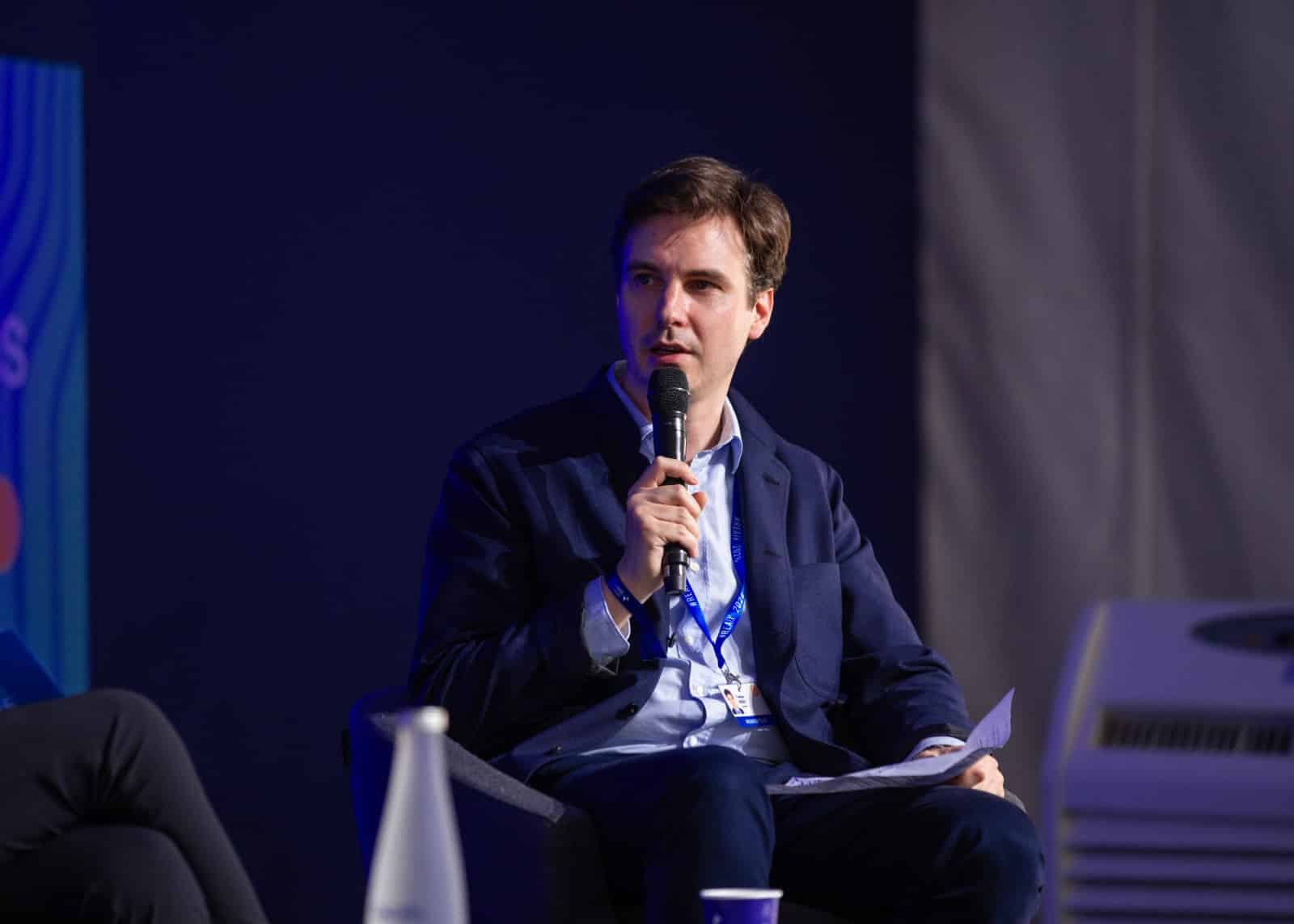
Thank you Jean for that very full and global overview. You’ve got a round of applause for that. I’m going to start with you, Professor Wang. You came from Beijing to join us here in the heat of Aix-en-Provence. Do you share the observations that Professor Pisani-Ferry has shared with us? Do you share this view of America as a global predator? And do you share this view of a different role that China is now playing, a role that concerns some other countries of the world? And in your view, what is the state of multilateralism today?
Henry Huiyao Wang, Founder & President, CCG
Thank you, moderator. I tend to agree with Professor Jeans’s comments. I think, as we all know, we are getting into a multipolar world. This has already happened. But what I can also see is that, for the last 81 years since the Bretton Woods system, globalization has still achieved great success. For example, our global GDP in dollar terms has gone up 40 times, compared with 1949, and global trade has gone up almost 400 times in dollar terms. So things are still really moving.
I think just now Jean mentioned the financial crisis of 2008. Talked about the pandemic in 2020. I was here at this conference in 2022 when China was in lockdown. We were the only think tank coming out of China to attend this conference. Of course, now we have war going on — not only in Ukraine, but also Iran and many, many other places now. So the war is really getting more fragmented, and, to people’s surprise, things are really out of control. We are really going into a multipolar world, but there’s no multilateral system to support it. Also, effective minilateralism or polylateralism is still not enough. I remember the Munich Security Conference this year, the report “Under Destruction.” There’s a big elephant getting into the China shop, knocking down all the Chinese vessels and things like that.
I think that unilateralism is very prevalent. We saw what happened in Latin America; we saw what happened in Iran; we saw what happened in Venezuela, so the multilateral system, the UN system, is not really effective. What I envision for the future is that we’re getting into a multipolar world. There are really two major poles, which are the U.S. and China, and of course there are other poles — like the European Union, of course, India, and the Global South, and many more.
Among these two major poles, I think there is some progress now because the U.S. has realized that it cannot really contain China, and it cannot really afford to have a trade war with China. President Trump visited Beijing two months ago, and President Xi is going to visit the U.S. in two months’ time, so there is some kind of understanding going on between the two. In Trump’s first term, there was strategic rivalry between China and the U.S. Now, in Trump’s second term, the U.S. and China have reached a consensus to achieve strategic stability. And I think this is great.
My thinking is that these two major poles need some kind of balance, whether through mutually assured deterrence or mutually assured destruction. Then we may see other poles start playing major roles, like the European Union. I think it’s good for other poles not to take sides, and maybe mediate, promote the relationship between China and the U.S., and also not really follow U.S. practice, because U.S. practice was not working: they have a trade war, sanctions, and unilateralism. That’s the kind of path the European Union should probably avoid. We should really seek dialogue, discussions, and consultations.
I think it is really, really important for China, European Union, WTO, WHO, United Nations, UNICEF, you name it, to safeguard multilateralism. China and the EU have so much in common in terms of safeguarding multilateralism. So I think Europe, as one pole, should not really take sides. It’s no longer China versus the West, or the West versus the rest. It’s completely on a merit basis. We will side with whoever is doing well.
So in that sense, I think we really need to build a good new multipolar world and a new multilateral system. China, the European Union, the United States, the Global South can then all work together. Let’s support the UN and also reform the UN and the UN Security Council. I think all those are the things we need to do to safeguard the multilateral system.
François Miguet.
Thank you very much, Professor Wang, for sharing your vision with us.
Before I give the floor to our other speakers, I would like to perhaps give Professor Pisani-Ferry the chance to respond on the role that Europe should play. You opened this discussion, but Jean, what role do you think Europe should play in this new world?
Jean Pisani-Ferry
Europe, of course, has an important role to play. Europe is a great power if you take Europe as a whole, but nonetheless, Europe needs to learn to speak the language of power. I do want to respond to what Professor Wang said about China.
Today, my view is that China is dominant right across a whole range of products and goods, and this is new. World trade had taught us that each country could specialize in terms of its own comparative advantage, but China seems to refuse this idea of comparative advantage. So I’d quite like to talk about that.
China also exercises control over critical materials and uses it in discussions with other countries for leverage. We have seen that it was a very significant form of leverage when the USA decided to waive some of the tariffs that have been put in place against China because China’s response was to say, “We’re capable of bringing American manufacturing to a halt by stopping our exports of critical raw materials.”
Those are some key points, but perhaps some other points from a macroeconomic point of view. China’s model hasn’t changed. China’s economic model is focused on exports. Still, it hasn’t managed to, or hasn’t wanted to, stimulate internal domestic demand and consumption. I think this is a significant problem that still needs to be solved. Otherwise, it will lead to disaster. It will lead to confrontation between Europe and China.
My final point on this subject is to say that there is potential for significant partnership with China. There is potential for partnerships in terms of fighting climate change; there’s potential for partnerships in terms of world governance. Nonetheless, this will require that China understands and responds to these challenges.
François Miguet
Thank you very much, Jean Pisani-Ferry. I can see that Professor Wang would like to respond, but we’re going to first hear from some of our other speakers before we open up the discussion on this point.
I’m going to turn to Rafaèle Tordjman. When we when we were talking together about this panel discussion ahead of time, you said that in your area, in terms of cutting edge pharmaceuticals, you are facing pressure both from the United States and from China, so I’d like you to tell us how that applies in your industry and what can the European response be.
Rafaèle Tordjman, Chairwoman, Jeito
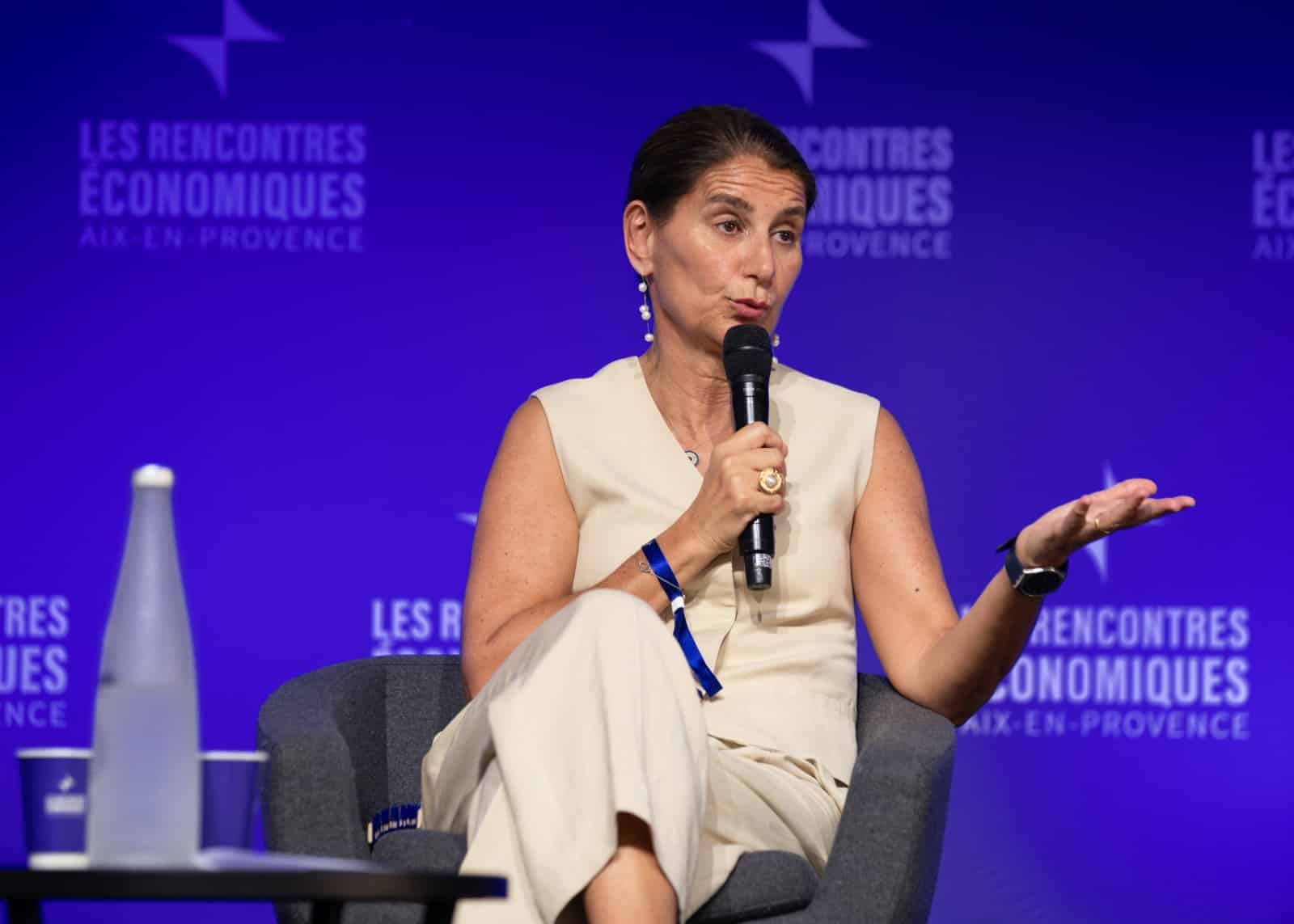
Thank you. Just before I tell you how that works, I want to tell you a few features of the healthcare sector and the economic sector, and I’m very pleased to represent it. I’m a doctor. My background is in hematology, and I’ve got 20 years of experience in biotechnologies and medical research.
Innovation-driven healthcare is a sector that has seen permanent growth without any cycles, boom and bust, bubbles. It’s a permanently growing sector, and this growth comes from innovation. These innovations have helped us get out of crises such as COVID, or have given us treatments to two thirds of known illnesses. These therapeutic innovations come from small businesses, biotechnical biopharmaceutical startups, which are then bought out by big pharmaceutical companies, American or European, who sell innovative products, innovative drugs, of which 60 or 70 percent of them come from smaller organizations.
These big pharma companies outsource the R&D to small companies in order to fill their portfolio of medical products because their patents will expire, and when they become generic products, there is a massive drop-off in sales revenue. It’s estimated that by 2033, pharma companies will lose up to 400 billion dollars in turnover per year, and this is due to 200 medications.
That’s the world that I work in, Healthcare. It’s a worldwide industry, and we need to cooperate across the world. We need interdependency, and I think that over the next few years we will need to work with the U.S. and with China, both of them.
So, how does Europe fit into this scenario of dependency or predation? Europe, in some ways, is under pressure caught between the U.S. and China. The U.S. represents a very significant share of the market for innovative therapies, more than 50%. But the U.S. only represents 4% of the world population. So they’ve got a hold of this big market because of the higher drug prices, but also because of the capacity for innovation in the U.S. market. The American companies can exercise leverage or even blackmail in order to get major investments in manufacturing plants and so on. In 2025, there was 400 billion dollars in investments from pharmaceutical companies just to get access to the American market.
What about China? China is competitive and is interested in all forms of technology, but in terms of therapeutic innovation, it’s probably the last area that is managed to crack. If you remember, in 2021, China’s COVID vaccine wasn’t any good, but over the last three or four years, China has finally harvested the fruits of everything that has been invested in medical innovation over the last 20 years.
From a very specific strategic point of view, with an investment framework looking at 2040 to 2050, they’ve invested and simplified their regulations, and they’ve promoted medical research. It goes three times faster, and it’s twice as cheap. 35% of approved innovative medication in 2025 came from Chinese innovation, including in the United States. Predictions suggest that by 2030 this, figure will reach 50%. Chinese innovation is with us and is providing our own medications.
So, how does Europe get on in that? Rather than being at the same time a victim and an accomplice of this, we need to draw on our assets, our advantages, and make sure that we don’t get left behind. If I look at the different chains in the links in the chain of healthcare and innovative research, when we think about innovative drugs, 30% of them come from European R&D, so that’s still a significant share. It was 50% 10 years ago, so it has dropped off. But we need to continue investing in European research and development in order to ensure that innovation keeps going on in our continent.
That’s why I’ve raised 1.6 billion euros, including from foreign investors who’ve understood the opportunity of European research.
The second thing that goes along with R&D is AI. Artificial intelligence is used in lots of fields, in particular healthcare. Progress can be made in terms of accelerating development and commercialization to increase the chances of success, and that’s why European stakeholders and French companies such as Dassault Systèmes have chosen to focus on healthcare after airplanes and cars, and to focus on digitalisation in order to accelerate research in the field.
Nonetheless, in Europe, we need to simplify the GDPR education and to defragment European data in order to get access to use data with AI and remain competitive.
The third key aspect of value chains are clinical trials, which are used to develop drugs and commercialize them. We need to continue to carry out clinical trials by assuring access to patients. Clinical trials in Europe are still highly regarded; they are currently going to be ranked third in clinical trials, even though Europe has dropped off. China is also driving ahead in clinical trials, and we need to draw inspiration from some of the better countries in Europe, leading countries like Italy or Germany, where Germany uses the price to incite people and patients to take part in clinical trials. Poland is ranked ninth in clinical trials because they’re very effective and they’re cheaper.
The fourth element is industrialisation. We need plants, manufacturing plants. That is a long-term issue. We need to make sure we’re making not just paracetamol but also innovative products by taking risks and investing in order to remain independent in the production of future drugs. And the key issue, the key hub, is capital and investment. It’s an issue of sovereignty, which will enable us to finance investment funds of at least a value of 1 billion euros in order to ensure we have large, high-quality European research projects and remain in control over our innovation. There are funds and very promising initiatives, such as the Scaleup Europe Fund, for example, which includes almost all member states, and that has enabled us to form bigger funding pots.
In this era of predators, it’s important that Europe realizes that healthcare is not just a cost; it’s also about investment, and that by working together between European countries and investing in R&D, we can achieve the golden triangle: R&D, relative independence, and societal good.
François Miguet
Thank you very much. Corentine Poilvet-Clédière, you obviously bring the perspective of the world of finance on this new, more complicated, and perhaps also more brutal, world. When we discussed this panel last week, you explained to me that there is a desire on the part of each state — which is quite legitimate, by the way — to be more self-sufficient, but that this desire, at least in your sector, could sometimes collide with the realities on the ground and lead to results that are ultimately unfavorable to the economy, or unfavorable to growth. Can you tell us a bit more about that?
Corentine Poilvet-Clédière, Chief Executive Officer, London Stock Exchange Group (LSEG)
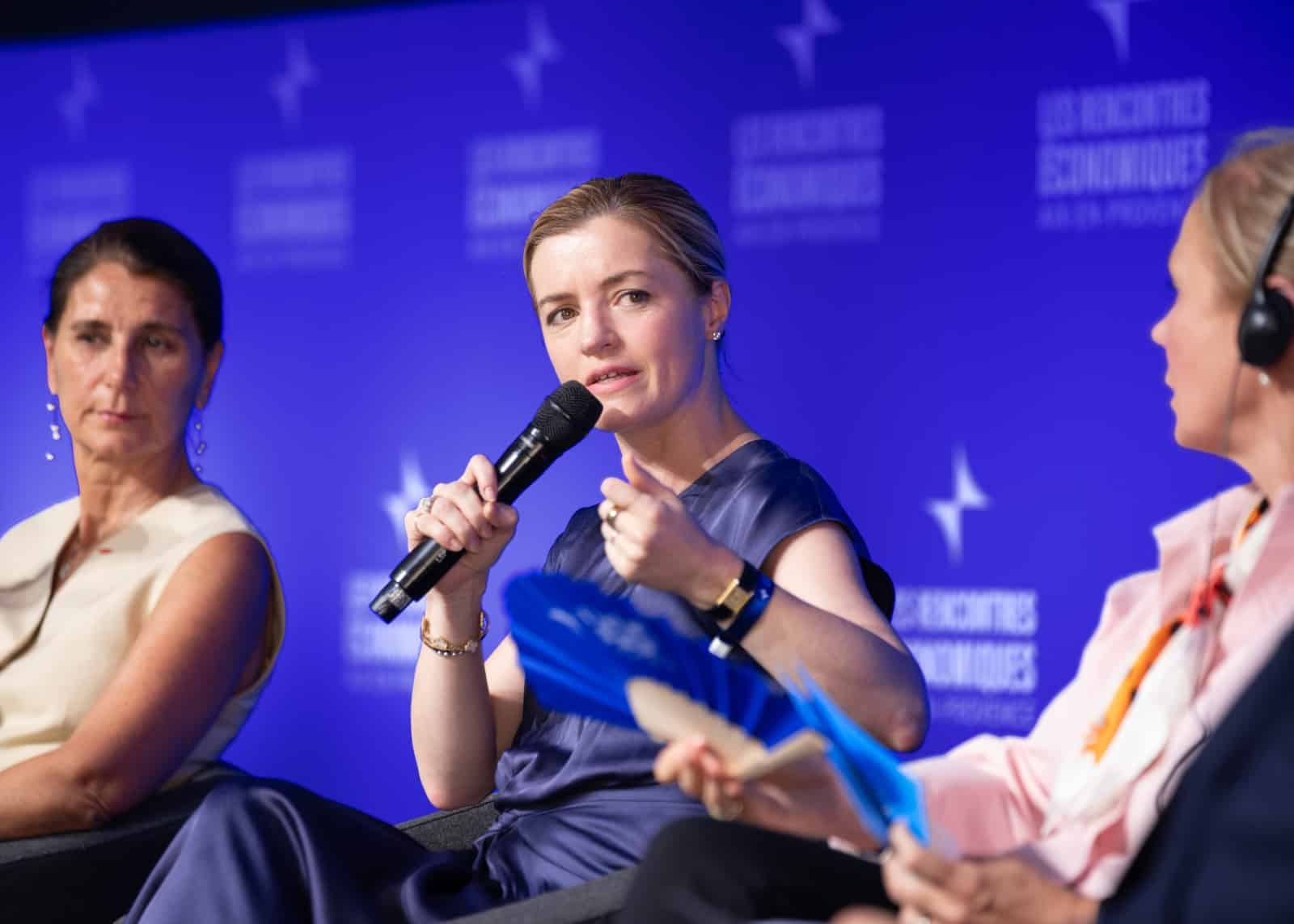
I do recognize a lot of elements in what you said, Rafaèle, about interdependence and the need of scales. So this shows that, across sectors, we’re dealing with similar issues. Now, I was told we should speak in our own language, so I will do this in French. From the financial viewpoint, to put it simply, it’s about the financial markets, indices, financial data, and risk management in hundreds of countries. What we see, and what we mentioned together, is this major topic of sovereignty.
What does it mean? What’s its shape? What’s the scope? And what are the constraints associated with a concept like that? So back to our discussion: what do I see from multilateralism? The position of financial markets is a key position to see the confidence among players.
Multilateralism never went better than it is now in terms of volume of trade, risk-taking, and transactions. There is what I would call very strong complacency in financial markets.
What has changed, however — and I recognize this in what both Jean and Raphaël said — is how we look at interdependence or the interaction. A few years ago, being interdependent was seen as a virtue, a positive thing, the very bedrock of the global economy. We were all supposed to become more efficient in our own ways by leveraging each other as centers of excellence.
That’s no longer the case today. Interdependency is now a weakness. It’s something that can be used against you. It’s a tool of pressure, it’s a tool of coercion, and that’s the great phenomenon that has changed, in my view, over the past year and a half to two years — mostly because of the American posture, but not only, because it had been brewing for years, and it’s going to stay.
Let me give a more concrete example for the audience here. From a finance standpoint, it is translated by the technological choices you make, because the control of technological infrastructure is where power is to be found today in all sectors. What’s your data? What’s your infrastructure? Is there AI without infrastructure? What is your energy policy? Where are your sources for raw materials, and so on? So if there is a real European discussion to have, it’s about technological infrastructure.
Let me draw three observations quickly. First, we have entered what I call the weaponization of dependencies. This changes the economic rationale of companies — Rafaèle touched on this a bit for her own sector, and we’ll see it in finance too. And what does that call for? Having a sovereignty policy that is, at the European scale, a supply-side policy.
So what does weaponization of dependencies mean? I don’t personally believe there’s a “return of power.” You see that phrase a lot these days. I don’t think power ever went anywhere in recent years. What I do think is that power is now using interdependencies as a means of coercion. We see this with AI models and frontier AI models. You’ve all seen the press coverage on the Mythos model for example. It’s made available to you to help protect you on cyber security, and then, poof, it gets withdrawn depending on your nationality. That’s the new world of technological interdependence.
I don’t think power is going to go anywhere. However, the power uses interdependence as a means of cohesion. We see this with the AI model, frontier AI. You all read about the Mytho model. I give it to you to protect you from cyber security, and then I pull it out depending on your country. So that’s the new world of technological interdependence.
When you’re a decision maker, regardless of the sector, you’re no longer just asking which supplier or which partner to choose. You have to ask: where is my data, which court has jurisdiction, is my contract valid cross-border? Will the rights I have today still be valid tomorrow? What’s the actual durability of the relationship I’m building? That mattered a couple of years ago, but less now.
This changes the economic rationale of companies. Why? Without oversimplifying our respective professions, but broadly speaking, across every sector, a decision-maker’s job — as Jean said — used to be to increase and optimize the efficiency of assets. That was the job. That was the KPI, the key performance indicator.
Today there’s another one that’s just as important, if not far more important: our ability to preserve decision-making capacity, room for maneuver, trade-offs, and options. And that’s ultimately what becomes the new job of executives. And that’s how this tension and this predation ultimately materialize in our own lives — protecting spaces of decision-making, freedom, and optionality becomes the job, on top of creating efficiency on assets
So on the question of choice, I’d go so far as to say that in the period ahead, the new gold is choice — and that’s how Europe needs to think. Europe must create choices. I’m very interested in the debates around technological sovereignty, because, as I explained, that’s fundamentally where power is being contested between the blocs today.
There’s an active debate on European technological sovereignty, but it’s a debate that is very defensive, very defensive. It’s more about European preference, regulatory constraints. Those things are essential, because if you want players to reach a critical size — notably to equip themselves with quantum computing, to have frontier models, and to have credibility — you may need to exercise a preference for a certain period of time. And in fact China and the United States do it. So it’s not a dirty word at all.
On the other hand, you must not shield them from competition. So you absolutely have to commit instead to a policy of creation. Sovereignty must be a policy of creation; a sovereignty that doesn’t produce merely protects you from lagging behind and protects you from a void. So it has to be a supply-side policy.
And I’ll conclude on this: if we approach European sovereignty as an active supply-side policy, notably to offer European alternatives and choices, then it becomes something that doesn’t run counter to openness at all, but is in fact the very condition for the long-term survival of Europe’s openness. That’s a bit how it translates into our lives.
Francois Miguet
Thank you. Kitty van der Hudgen, you probably have a complementary vision, which is one of UNICEF. This new world where interdependence remains, but it is a world where there are increasing tensions, sometimes clashes. We’re talking about the clash in the Strait of Hormuz recently, and each time you see at UNICEF that it has non-measured impacts, and decision makers who are at the origin of the measurements did not take into consideration this aspect, especially on children, especially in African countries. Could you tell us more about that?
Kitty van der Heijden, Deputy Executive Director, Partnerships, UNICEF
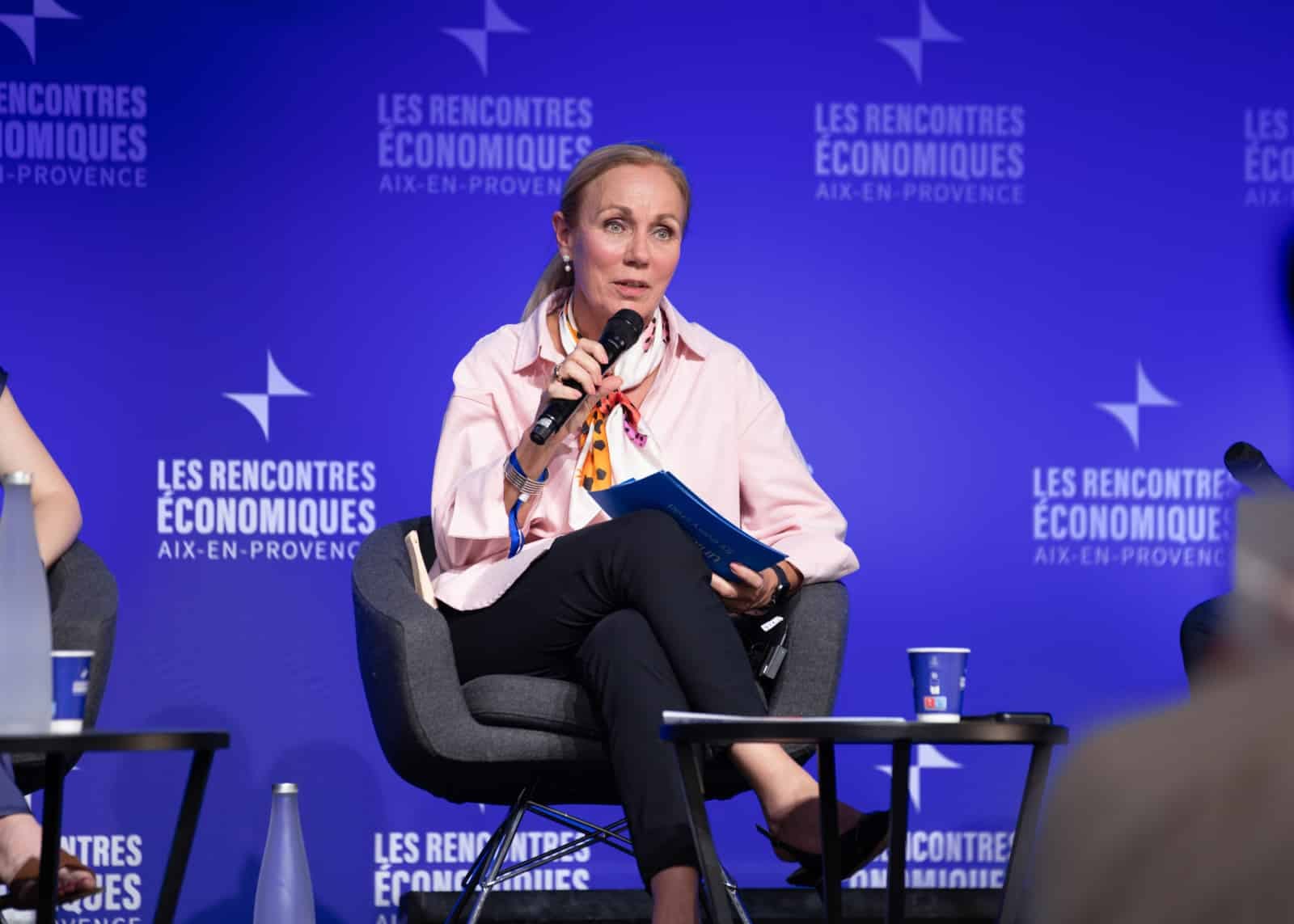
Thank you. I think we’ve done some sort of a tour of the world, from the political heavyweights to the economic streams and the financial streams, and I’m actually going to take you back to something completely different, but at least as important, and that’s the question: what happens to children when cooperation fails, when ceasefires break down, when conflict intensifies, when humanitarian and development funding goes down, and when international norms and child rights are being weakened?
And I think we know the answer. It’s always the children that suffer first and foremost. But the flip side of that is equally true: children are one of the few things that, if governments can agree on nothing else, they can still agree that you shall not harm children. And so it is one of those conveyor belts, if you will, to maintain, to renew, to rebuild collaboration in what is a very fractured world.
And why does that matter? Because cooperation, to me, to us at UNICEF, as the UN, is not just the absence of agreement. It’s not about disagreement. If there is no cooperation, what happens is that vulnerabilities become a strategic variable. Whether it’s rare earth materials, access to finance, or in my case, access to education, to healthcare, and to everything children need, it becomes dependent not on needs, not on universal norms that we’ve agreed upon. It becomes dependent on power dynamics, and then of course children don’t have the economic leverage that you guys have, or the political influence that we were speaking about. They are literally the sitting duck.
And then, if you look at history, which is what I do when I get depressed and anxious about the state of the world, the biggest successes that we’ve collaboratively ensured were projects of cooperation. Look at the arms treaties. Look at the trade domain. Look at what happened with halving child mortality. Look at the protection that we’re offering to refugees. We can actually do that.
And it never happened in times of stability and security. All of these processes actually began when the world was in turmoil, when there was lots of insecurity. The UN was formed on the ashes of the Second World War. If you look at the weapon treaties, that was done in the midst of the Cold War. If you look at the Convention on the Rights of the Child, and we are the custodian of that, that was done in 1989. It’s the most ratified human rights convention in the world, because even in the Cold War, states choose collaboration over fragmentation and competition.
And I know that in a forum like this, we often see cooperation as naive, idealistic, the do-gooders. But of course, this is the conveyor belt to much of human progress, and we know that. We are dependent. Corentine, you were talking on financial streams. We depend on each other, whether we like it or not. From trade to terrorism, we are connected. From social media to migration, we are connected. From communicable diseases — look at the Ebola case we had here in France. Look at polio. Look at climate change. We are connected. That’s just a political fact, and so we can choose to close our eyes for that, and all of us will suffer.
But children will suffer most, because for them, multilateralism is not what I hear here. It’s not an ideology for children. For children, it is very often the difference between living or not having the chance to survive. For children, it is that invisible hand. It’s not those guys or girls in the pinstriped suits in the august halls in the UN. It is the vaccine that reaches that remote village. It is the ceasefire that we brokered so that we can actually get behind the front line to deliver humanitarian goods. It is those treaties that we signed together to protect girls from trafficking, from abuse. That is what multilateralism really means.
And perhaps my last word I want to say is that I think in times like these, when fragmentation becomes the norm and cooperation is still seen as the weakest part, we have shown, as a world, that we do not have to be pessimistic. We have shown, as a world, in times of turmoil, that we can actually get together. Even in a time like the Ukraine crisis, we got the grain deal to protect Africa.
So our plea is to continue to find bridges, to continue to find not where the world divides us, not between the big powers and the small powers, but to look at the small powers — that is, children — because those pin-sized citizens of this world really need your protection and your collaboration. Thank you.
Francois Miguet
Thank you very much. Professor Wong, early on, you wanted to react to Jean’s very words. Now, let me tell you this, if you don’t mind. In the U.S., things are fairly clear-cut when we go to the U.S. and we talk to U.S. people. China is an opponent, and that’s to be contained at best, which has to be fought against in the worst case. In Europe, possibly just as in the U.S., China is considered as a predator country. Pisani-Ferry mentioned the surpluses and the support of China to Russia in the Ukraine war.
So I’d like to give you the floor. What is the role of China and the vision that other countries may have in the Western world about China? Which could be maybe a more complex vision and which sometimes has a negative note?
Henry Huiyao Wang
Yes, I think those are great questions. First of all, I would like to say, what you say — the U.S. wants to treat China as a rivalry and contain China. That’s totally wrong. China represents about 20% of the global population, and China lifted 800 million people out of poverty. China contributed 30% of global GDP growth, and China is the largest trading nation with 140 countries. So China does bring good benefits to the world. That’s not right to contain that.
But I think, particularly since the second term of Trump, the U.S. realizes China is important for constructive strategic stability. They want to maintain that now, so there’s a shift from Trump’s first term of strategic rivalry to now Trump’s second of strategic stability. So that’s number one.
We understand all the complaints about China. They talk about rare earths and things like that. But let’s not forget who weaponized first. We should not weaponize technology. We should not weaponize ships. We should not weaponize the sale of chip equipment. China has 2,000 companies on the sanction list by the U.S. There’s probably another 100 or 200 companies on the European list. So they weaponized first. China responded with some measures. I mean, China is already resilient enough; they can still. That’s what Hank Paulson recently spoke at my event, saying China has achieved reciprocal, mutually assured disruption. The U.S. and European countries realize if they want to sanction and contain China, they are going to hurt themselves. There is a trend where countries are being realistic.
And also there’s complaints about China’s overcapacity and things like that. Well, 70 percent of Airbus’s sales are outside Europe. Nobody talks about overcapacity. There’s 8 million German cars manufactured, and 6 to 7 million sold outside Germany. Nobody talks about overcapacity. And with Japan, 8 million cars are manufactured and over half of them are sold overseas.
Nobody talks about overcapacity. Chinese produced 30 million EV cars, but only 6 to 7 million are sold outside of China. That’s less than 20 percent. And of the 20 percent are made by multinationals — by Tesla, BMW, and other international companies. So I think we have to see that objectively on those issues. China likes to invest. China likes to invest in Europe, in the U.S., in Latin America, but is not allowed to sometimes. They were restricted from investing. So we would like to invest more in technology, create jobs, and generate tax revenue.
What I think we should do, my recommendation, is that we should get rid of geopolitical globalization. We should really pursue economic functionary globalization. Let’s all work together on climate change, work together for global health, work together for global development, and work together to get rid of the global debt. Let’s forget about the geopolitical rivalry. I think the U.S. has already abandoned the rivalry mentality, at least from the White House. Why hasn’t the European Union abandoned the rivalry mentality too?
Right now the European policy towards China is a competitor, rivalry, and collaborator. Let’s put cooperation first, rather than rivalry. So finally, I would like to say China is really doing a lot of good things. I think China was also the first country to say no nuclear weapons should be used by Russia in Ukraine. President Xi told Olaf Scholz, no nuclear weapons should be used by Russia in Ukraine. That’s a strong stand. China also did not support the closure of the Hormuz Channel.
We should open the Hormuz Channel and promote peace and dialogue. Minister of Foreign Affairs Wang Yi spoke with almost 40 foreign ministers behind the scenes to promote peace in Iran. In the future, let’s agree on not weaponize anything we are using. For example, can we agree we are not going to be the first user of AI? China said it’s not going to be the first user of nuclear power. Can the U.S., France, U.K., India, Pakistan all say the same thing? Let’s not use nuclear weapons. Let’s not weaponize anything we have. Let’s promote peace and prosperity. That, I think, is the new functionary globalization we need. Thank you.
Francois Miguet
To close on what you’ve just said, let me ask one last question. A lot of people, in my opinion, here in Aix-en-Provence, and especially leaders, managers, talk about technology transfer 20, 25 years ago, China was against the opening of its market, imposed to us Europeans and others, technology transfers, and therefore it was able to catch up on the fact it was lagging in some domains and now it is leading. So should there be technological transfer from China to the rest of the world, accessible to the European market, for example?
Henry Huiyao Wang
Absolutely. I think all the multinationals, even the European Union and German Chamber of Commerce, have done service. Most companies still want to do business in China. They keep their investment. The chairman of McKinsey Greater China, recently wrote a book, calling China the best fitness room and best training room for multinational corporations. If you can conquer the Chinese market, sell to 1.4 billion people, you can sell to the world. That’s the state of our technology, on EV, climate change, and everything.
So I think that China definitely would like to invest and facilitate technology transfer if we have a good political environment. You cannot bash China and expect China to give you what you want. I think we really need to have a good relationship. Let’s build up the trust first, and then we can always do good business. And like China is doing for all ASEAN countries, with Latin American countries, African countries. China is the only country in the world that announced that China is going to exempt tariffs, zero tariffs, for 53 African countries. No country is doing that. China is doing that. I think there are many things China can do for Europe and for Western countries, including the Global South.
Francois Miguet:
Thank you. As Corentine said earlier today, we live in a world where interdependencies are well known, and the major states that control significant leverage points, chokeholds, no longer hesitate to use them to serve geopolitical aims. There’s the obvious example of critical metals, which is a lever for China. There’s the latest artificial intelligence from Anthropic, which the Americans banned for the Chinese, and even in Hong Kong. I wanted to ask you all this question collectively: what are the levers that Europe controls today that are of equal importance, and that it could use in a context of tension with the United States or China?
Do we in Europe have something we can use that’s equivalent to Mythos 5 or to critical metals? Perhaps Jean Pisani-Ferry, if you’d like to answer this somewhat difficult question. That’s a tricky question.
Jean Pisani-Ferry
Well, it is a tricky question, but the answer we can give is that we got ASML, the company which has the monopoly of the design of chips — it’s a de facto global monopoly— and we don’t use it. So clearly there is something we can use. I’m leaving this discussion more worried than I came in, because when I arrived, I thought we could find ways to discuss forms of cooperation, and I realized that in fact we don’t measure the efficiency cost of these rivalries and the efficiency cost of weaponization, as Corentine said.
And now I realize, in fact, that we do not measure the efficiency cost of rivalries and the efficiency cost of the weaponization of whatever. And this is dangerous because when we tip over into that, it will be difficult to pull out of it. History shows us, teaches us, that it is very difficult to pull out of such a bad situation.
Francois Miguet
Perhaps someone else — Rafaèle Tordjman — on this?
Rafaèle Tordjman: Well, simply, the major asset we have is that we have 450 million people. In any case the largest population, so just that alone is an asset. When we look at the projections on declining birth rates, including China, China has as many IVF procedures per year as in the rest of the world combined because they’re making enormous efforts to boost the birth rate. Infertility is a major problem, as is the number of births. It is projected that by 2100, if nothing changes, China’s population could drop to 450 million people. That alone is a power we need to leverage.
Francois Miguet
Right. But I believe American demographics are very good shape, and there are 1.4 billion Indians too. And, well, I don’t know if — Corentine Poilvet-Clédière
Corentine Poilvet-Clédière
Unfortunately, and we were discussing this earlier, we don’t really have a hundred options here. The only thing that counts is access to markets, which is what you said: it’s about having a very, very strategic intentionality about where we position ourselves in the value chain, particularly around AI. We haven’t had much time to discuss it, but the real issue with AI isn’t application, it’s an infrastructure. So ultimately it’s an energy policy issue. And the European Union’s energy mix is actually quite interesting in that respect.
That said, one area where we’re completely absent is cloud access. Only 15% of businesses in the European Union today use the cloud. So, to put it simply: no cloud, no AI. And the ones that do use the cloud overwhelmingly use an American cloud. They use an American cloud very predominantly cloud partly because there’s no pan-European cloud standard that’s recognized as sovereign and authorized for systemically important companies. We have a lot of ambition on AI, we have a good energy policy, but we’re completely behind on cloud. These three elements go together, and we can work on this while we still control market access.
Francois Miguet
Kitty van der Hudgen, how do you see paths for improving cooperation, despite this rather bleak landscape?
Kitty van der Hudgen
Million-dollar question. Look, I don’t think it’s going to be easy, but as I said, history has taught us that we can always find a way forward when you unite with what brings you together as humanity. And whether we like it or not, we are independent.
So if we are not able to vaccinate children, diseases are going to travel and end up on your doorstep, and it will disrupt your business. We’ve seen that with COVID. And many of you will be parents here. What do you do when your child does not have access to education or healthcare? You walk. So the despair that follows when we’re unable to reach children — that fuels instability, displacement. That is going to ripple outwards.
And what I want you to retain today is that the more fragile a child’s life becomes, the more fragile the world becomes, and that is worthy of the investment of all of us. Whether you’re in trade, whether you’re in finance, whether you’re in pharma, or whether you’re an individual, because we know it can be done. Thank you.
Francois Miguet
Thank you very much to all five of you. This has been a really interesting panel discussion. We perhaps need to put things into practice. So next year, maybe we’ll need to come back with some better news about a world that’s cooperating a bit better than this year and a little less fragmented. Who knows? Thank you very much.
The most revealing tension in this discussion is that nearly everyone describes the order as multipolar while the practical choices keep returning to Washington and Beijing.
Europe is called a pole, yet the search for leverage—ASML, market access, energy, cloud—shows how difficult it is to become a centre others depend on rather than a large actor manoeuvring between two centres. Strategic autonomy is the ability to resist another pole’s pull; polarity is the ability to generate pull of one’s own. Europe has not yet solved the second problem.