

CCG Research Fellow Veronica Hong Liu has contributed a chapter, “Building a Cohesive Global Order: Promoting Interregionalism between GCC and BRICS,” to the Springer Nature volume The BRICS+ and Gulf Cooperation Council Countries: Public Policies, Foreign Policy and Geopolitics, edited by Osmany Porto de Oliveira and Esmat Zaidan.
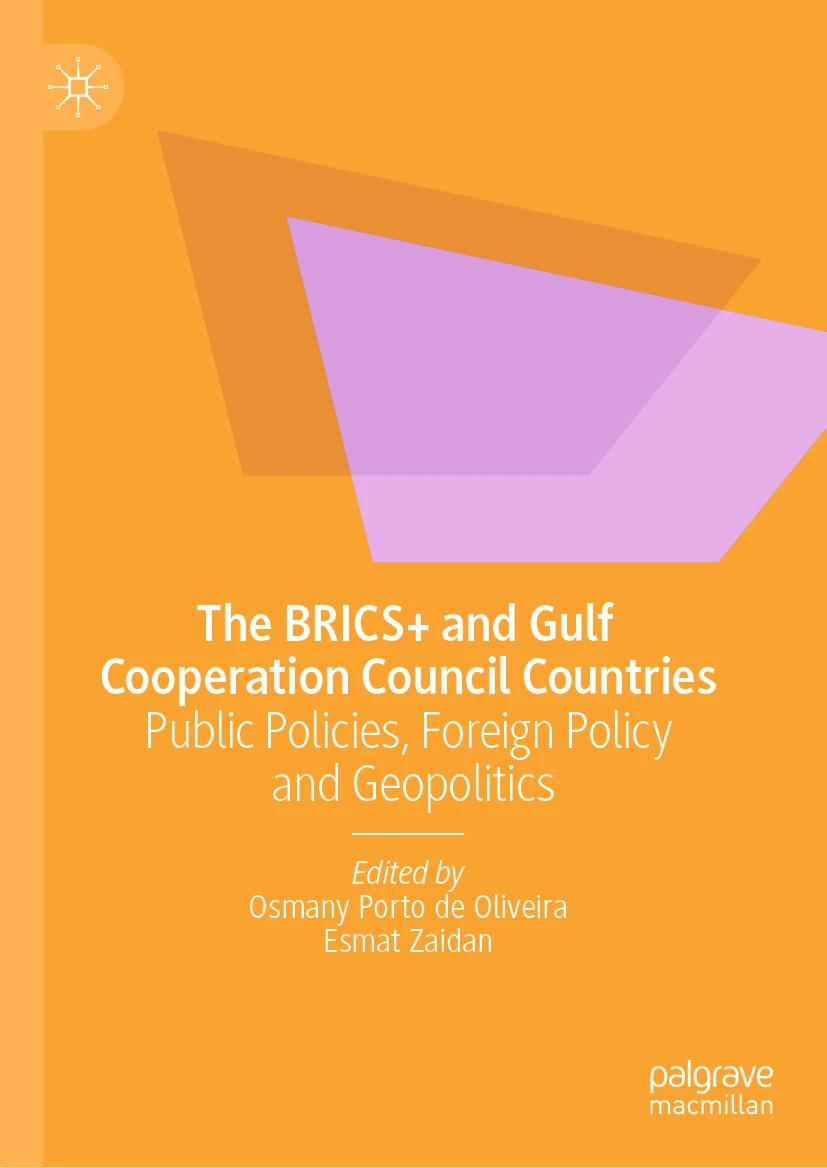
Drawing on the concept of interregionalism, the chapter analyses the institutional logic, strategic opportunities, and policy challenges of stronger engagement between BRICS and the GCC, and highlights China’s possible role in fostering closer cooperation between the two sides.
We are pleased to share the full text of the chapter here. Readers interested in supporting the full volume may visit the publisher’s official website.

Building a Cohesive Global Order: Promoting Interregionalism between GCC and BRICS
Abstract: In an era characterized by both regional fragmentation and global integration, the interplay between regional organizations is pivotal in shaping international dynamics. This paper examines the evolving landscape of regional cooperation, focusing on the expansion of BRICS and its recent inclusion of Gulf Cooperation Council (GCC) members such as the UAE and potentially Saudi Arabia. BRICS distinguishes itself by embracing broad interregional goals, while the GCC acts as a crucial link between the West and the East. Both the GCC and BRICS have established significant relationships with other regional organizations. By leveraging its unique position within BRICS and strong ties to the GCC, China offers a case study of how major powers can navigate the complexities of globalization to promote a more integrated global order. This study analyzes the opportunities, challenges, and implications of this interregional cooperation, emphasizing its potential to contribute to global governance and regional integration.
Keywords: Interregionalism BRICS GCC China
As Peter Katzenstein claimed, “we live in a world composed of regions” (Katzenstein 2005, 1). Currently, the global landscape is characterized by both the fragmentation of regional and international organizations and a simultaneous trend towards interconnection and integration. A notable example is the expansion of BRICS to include Gulf Cooperation Council (GCC) countries such as the UAE and potentially Saudi Arabia. While BRICS can be considered an interregional bloc, the GCC has historically served as a typical regional organization linking the West and the East. This study tackles a complex research question and seeks to offer an initial response: As a leading BRICS nation with strengthening ties to the GCC, what role can China play in advancing interregionalism? What are the economic, political, and cultural challenges and opportunities? Furthermore, how might stronger interregional connections between the GCC and BRICS contribute to a more integrated and cohesive global order?
This investigation seeks to identify, at this early stage, the key areas where China can promote interregionalism between the GCC and BRICS. The central argument of this paper is that China, with its unique position within BRICS and its strong ties to the GCC, has the potential to facilitate cooperation between these two groups. While challenges and potential conflicts may arise, there are abundant opportunities for China to play a pivotal role. By implementing effective strategies, the enhanced interregional collaboration can contribute to the creation of a more cohesive and integrated global order.
Interregionalism: A Preliminary Analytical Framework
Since the 1960s, regional organizations within the international system and among states have gradually gained recognition from the international community. Especially since the end of the Cold War, regional cooperation to address the various challenges of globalization has become a common choice for many geographically proximate countries. Based on this, the interaction between different regions and regionalism has become a new field of development in international relations, increasingly attracting attention from the international community.
The process of regionalism began in the 1950s, with Europe being the most exemplary case of regional integration theory and practice. During the first wave of regionalism development, regional cooperation in Latin America was once very active, but eventually declined due to market distortions and a lack of political will to support the integration process.
In the 1990s, regionalism experienced a revival, ultimately forming a basic pattern with East Asia, North America, and Western Europe as its core regions, exerting significant influence on the international economy. The end of the Cold War and the rapid advancement of globalization created opportunities for the flourishing of the second generation of regionalism.
The second generation of regionalism no longer defines regional organizations purely based on geographical concepts. For example, the BRICS countries constitute a cooperative mechanism; although its member countries are spread globally, the BRICS organization focuses on their common interests and cooperation, thus can be regarded as an interregional bloc.
Against the backdrop of globalization, the development of inter-regional relations has become another manifestation of the flourishing of the second generation of regionalism (Olivet 2005, 24). The birth of the Asia-Pacific Economic Cooperation (APEC), the launch of the Transatlantic Cooperation Agenda between Europe and the Americas, and the Asia-Europe Meeting mechanism have established dialogue mechanisms connecting the three major regions. Data from the World Trade Organization shows that the number of various forms of interregional dialogue mechanisms and cooperative forums worldwide has reached hundreds (Cruz 2016, 5). Matthew Doidge pointed out that the rise of regionalism is largely a product of regions as independent actors in external relations (Doidge 2011, 16). Diverse forms of interregional and regional dialogue mechanisms and institutional arrangements reflect the increasingly powerful agency of regions as actors (Hettne 2003, 8).
Interregionalism originates from the second generation of regionalism and surpasses it in its own way. Therefore, the emergence and development of interregionalism are also regarded as signs of the rise of the third generation of regionalism (Luk and Costea 2007, 80). Many scholars believe that the external relations and political processes propelled by interregionalism have significant implications for global governance and world order. Interregionalism may become a new level in the future global order, and its study will also become a new field in international relations research.
Broadly speaking, interregionalism has five functions (Ma 2009, 45-46): first, balance, which can be manifested in two forms: balancing of power and institutions. In addition to the balance of regional power, major powers also use interregional and transregional forums as institutional tools to maintain balance among them; second, institution-building, the establishment of a large number of interregional and transregional forums has added a new level to the international system and promoted its diversification. While creating greater demand for coordination within regions, regional interactions also increase the institutional cohesion of regional organizations because members of regional organizations must cooperate more closely to deal effectively with dialogue partners between regions; third, construction of regional identity, as mentioned above, the vitality of interregional and transregional interactions, and the subsequent greater demand for regional cohesion, promote the construction of regional identity because the process of interaction with external organizations at the interregional level will strengthen identification at the regional level; fourth, relieving the burden of global multilateral forums, due to the increasing complexity of discussions in global forums and the increasing number of actors representing different interests, their efficiency has been declining. Interregional and transregional forums share and decompose the decision-making process of global multilateral forums, making negotiations and resolutions of global issues a bottom-up process. Interregional relations thus streamline the overloaded agendas of global forums, preventing the paralysis of global mechanisms due to “bottlenecks” at the top of the international system; fifth, setting agendas, closely linked to the function of “easing the burden” of global multilateral forums, interregional and transregional forums provide a convenient platform for introducing new topics into global forums and establish a coordination mechanism with a broad base, to some extent, promote the resolution of global issues or prevent their occurrence.
It should be pointed out that interregionalism is not limited to the pursuit of a single specific goal; its content and mission are multidimensional. As a comprehensive multi-level regional cooperation process, the content and goals of these mechanisms are constantly expanding and extending, involving various aspects such as politics, society, culture, and non-traditional security. Interregionalism is established on the basis of respecting the diversity of regional organizations, emphasizing the principles of democracy, equality, and consensus-based cooperation, following a path of progressive development, and demonstrating characteristics of inclusiveness and flexibility. Interregionalism follows the principle of “open regionalism,” reflecting the strategic choice of nation-states to both strengthen their position in the international political and economic landscape through regional cooperation and strive to comply with the trend of global economic integration in the new era.
At the same time, interregionalism as a concept involves a broader range of actor relations than simple inter-state relations. Any form of cooperation involving actors spanning two or more regions, including corporate product networks or non-governmental organization networks, can theoretically be classified as interregionalism (Aggarwal and Fogarty 2004, 5). In interregionalism, states are indeed important actors, but non-state actors from the private sector and civil society, including transnational actors, are also involved in this process (Hettne and Söderbaum 2000, 457-473).
Regional or interregional blocs: Comparative Analysis of GCC and BRICS
The GCC is an organization actively seeking regional integration, while BRICS is relatively diverse and inclusive. Despite this, there has been ongoing active interaction between them. In 2024, the UAE officially became a member of BRICS, while Saudi Arabia’s membership is still pending, marking a new milestone in cooperation between the two organizations.
Since its establishment over 40 years ago, GCC has been committed to building “one market, one economic body, one financial system,” achieving positive results in promoting regional cooperation and economic diversification, and playing an increasingly important role in international and regional affairs (Yousef and Ghafar 2023). The GCC even set up a military unit, the Joint Peninsula Shield Force (Baabood 2023).
In 2001, the six GCC countries signed the “GCC Economic Agreement,” covering trade, common market, economic and monetary union, overall development, human resources, scientific research, transportation, communication, infrastructure construction, and enforcement mechanisms. In 2003, the GCC countries announced the establishment of a customs union, initiated the construction of a common market in 2008, and endeavored to explore the establishment of a monetary and economic union, as well as enhancing infrastructure interconnection. In 2019, at the 40th GCC Summit, it was reiterated that regional economic integration legislation would be completed by 2025; in January 2021, the 41st GCC Summit issued the “Al-Ula Declaration,” emphasizing a commitment to comprehensive cooperation, unity, and integration; in December 2021, the 42nd GCC Summit approved the establishment of the GCC Railway Management Bureau to promote progress in the Gulf Railway Project. In December 2022, the 43rd GCC Summit called for accelerated achievement of GCC economic unity, completion of requirements for the customs union, GCC common market, and railway projects, and approved regulations including the “GCC Unified Industry Management Law” and “GCC International Land Transport Unified Law.” In May 2023, at the Arabian Travel Market Exhibition held in Dubai, UAE, several GCC officials stated that relevant countries were discussing the implementation of a Gulf tourism visa similar to the Schengen visa to attract tourists to GCC countries. In October, the Financial and Economic Cooperation Committee of the GCC approved a plan to establish the Gulf Customs Union by the end of 2024.
Compared to the GCC, the BRICS organization is more inclusive, with significant differences among the member countries in culture, economy, and geopolitics. Among them, China’s GDP is 37 times that of South Africa, and its population is 24 times larger. Regarding religious beliefs, Orthodox Christianity, Hinduism, Catholicism, and Protestantism are the main religions in Russia, India, Brazil, and South Africa, respectively. Geographically, the BRICS countries are distributed across four continents, with only China bordering both Russia and India. There are significant differences in geopolitical interests among the member countries.
Due to the differences among the member countries, the cooperation mechanism of BRICS does not seek to establish a core leadership mechanism but rather adopts a consensus-based approach to address common concerns (Wang and Miao 2022). The member countries have a strong desire for economic development and a strong willingness to reform the current international economic and political order. On one hand, BRICS is committed to increasing its voting power within the IMF and reviewing World Bank shares internally, and on the other hand, it attempts to build a financial order within the member countries. The two main financial cooperation mechanisms are the New Development Bank established in 2016 and the Contingent Reserve Arrangement established in 2014.
Beyond the economic field, the multilateralism of BRICS is also reflected in the political security field. In order to institutionalize and mechanize political security cooperation among BRICS countries, and timely express and coordinate positions on major international security issues, BRICS has established two representative cooperation mechanisms: the BRICS National Security Advisors Meeting Mechanism and the BRICS Foreign Ministers Meeting Mechanism. Currently, these two mechanisms have voiced their opinions on regional security issues, energy security, and non-traditional security.
The GCC has always attached importance to developing friendly cooperation with other regional organizations. It has established long-term cooperation with the European Union. EU-GCC relations are based on a Cooperation Agreement signed in 1989, which establishes regular dialogue on cooperation between the EU and GCC on economic relations, climate change, energy, environment, and research, especially considering that the majority of interaction occurs directly between individual European and GCC nations (Ghafar and Colombo 2021). In May 2022, the European Commission adopted a Joint Communication on a strategic partnership with the Gulf. In June 2022, the European Commission has appointed for the first time ever an EU Special Representative for the Gulf to further develop a stronger, comprehensive and more strategic EU partnership with the Gulf countries. In recent years, the relationships between GCC countries and ASEAN nations have grown closer. On October 20, 2023, the GCC-ASEAN Summit was held in Riyadh, the capital of Saudi Arabia, where participants exchanged views on the situation in Palestine and reached a consensus, condemning all attacks against civilians and calling for a ceasefire. GCC has also fostered friendly relations with Central Asian countries. In July 2023, a summit between Gulf and Central Asian leaders was held in Jeddah, Saudi Arabia, attended by presidents of all five Central Asian countries-Kazakhstan, Kyrgyzstan, Tajikistan, Turkmenistan and Uzbekistan (Wajid 2023). See Charalampos Giannakopoulos & Georgios Dimitropoulos, The Gulf Cooperation Council and its Member States: Emerging Inter-Regional Players?
The BRICS has also prioritized fostering friendly cooperation with other regional organizations. In the Xiamen Summit Declaration of 2017, BRICS proposed the adoption of the “BRICS+” model, which is conducive to establishing broader partnerships and injecting new impetus into the cooperation and development of BRICS. BRICS does not exclude existing UN systems and international organizations, which is conducive to the progressive reform and innovation of the international order. Its status and role in multilateral mechanisms such as the United Nations, G20, World Bank, and International Monetary Fund continue to rise. BRICS countries also attach great importance to developing relations with other regional organizations. In 2013, BRICS leaders held a dialogue meeting with the Chairman of the African Union and some African country leaders. Subsequently, BRICS leaders held dialogue meetings with leaders of the Eurasian Economic Union member states, South American countries, countries around the Bay of Bengal Economic Cooperation Organization, and Shanghai Cooperation Organization member states (Wang 2019, 19-22).
In January 2024, the UAE became a member of BRICS, with Saudi Arabia’s membership still pending, marking the organization’s first expansion into the Gulf region. The expansion of BRICS undoubtedly opens up new opportunities for cooperation and development. With their accession, the overall economic strength of BRICS has been further enhanced, and their political influence has also increased. This not only helps consolidate and expand the discourse power of BRICS in global economic governance but also injects new impetus into regional peace, stability, and prosperity. At the same time, this cooperation fully demonstrates the spirit of close cooperation and mutual benefit between regional organizations. This cross-regional cooperation model not only helps promote the diversification and balanced development of the global economy but also provides useful exploration and attempts for building an open world economy.
Why can China Promote Interregionalism between GCC and BRICS
With its unique standing as a leading power within BRICS and its increasingly robust connections with the GCC, China is strategically positioned to serve as a bridge between these two influential regional organizations. China’s economic clout, diplomatic influence, and deepening bilateral relationships with GCC member states provide it with the leverage to foster greater interregional cooperation. By leveraging its role in BRICS, China can advocate for collaborative initiatives that align with the interests of both regions, addressing shared challenges and opportunities in areas such as trade, investment, energy, and cultural exchange. This potential to facilitate interregional cooperation not only strengthens ties between BRICS and the GCC but also contributes to the broader goal of enhancing global economic and political integration.
China established connections with the GCC at the inception of its establishment (Olimat 2016). In June 2010, China and the GCC established a strategic dialogue mechanism and held the first round of dialogue in Beijing. In recent years, the friendly relations between the two sides have continued to develop. China remains the largest trading partner and the largest exporter of petrochemical products to the GCC. The bilateral trade volume exceeded $230 billion in 2021. In 2022, the trade volume between China and the GCC reached $315.8 billion, a year-on-year increase of 35.6%.
In January 2022, the foreign ministers of Saudi Arabia, Bahrain, Kuwait, and Oman, along with the Secretary-General of the GCC, collectively visited China, highlighting the GCC’s high regard for China and the solidity of bilateral relations.
In September 2022, China and GCC held the tenth round of negotiations of the China-GCC Free Trade Agreement. The two sides conducted in-depth discussions on topics including trade in goods, trade in services, investment, rules of origin, customs procedures, and trade facilitation, achieving positive progress. The negotiation of the China-GCC Free Trade Area was launched in 2004 and has held ten rounds of negotiations so far. If successfully established, this free trade area will become the world’s second-largest after the Regional Comprehensive Economic Partnership (RCEP).
On December 7, 2022, Chinese President Xi Jinping attended the inaugural China-Gulf Arab States Cooperation Council Summit in Riyadh, Saudi Arabia, and delivered a keynote speech titled “Carrying on the Past and Creating a Better Future Together for China-Gulf Relations.” The summit decided to establish and strengthen the strategic partnership between China and the GCC (Yu, Xing, and Zhang 2022).
On October 22, 2023, the China-GCC 6+1 Ministerial Conference on Economic and Trade and the “China-GCC Economic and Trade Cooperation Forum” were held in Guangzhou, China. Minister of Commerce of China, Secretary-General of the GCC, and officials responsible for economic and trade departments of GCC member countries such as Oman, the UAE, Bahrain, Saudi Arabia, Qatar, and Kuwait attended the meeting.
Currently, all GCC countries have signed cooperation documents with China to jointly build the Belt and Road Initiative. The development strategies of GCC countries such as Saudi Arabia’s “Vision 2030,” the UAE’s “National Development Strategy for the Next 50 Years,” and Oman’s “Vision 2040” are closely aligned with China’s high-quality Belt and Road Initiative, achieving a series of tangible results. In Saudi Arabia, the underground tunnel project constructed by Chinese enterprises has brought convenience to the local people; in the UAE, Chinese enterprises participating in the construction of the second phase of the federal railway project have greatly improved the local infrastructure construction level; in Oman, China-Oman cooperation in electricity has provided support for promoting local new energy development; in Bahrain, the International Clinical Research Center has become an important platform for China and Bahrain to carry out drug research and development.
In recent years, as GCC countries vigorously promote economic diversification, cooperation between China and the GCC has gradually expanded to high-tech and emerging industries. GCC countries have taken the lead in promoting the use of Chinese 5G communication technology and have conducted extensive and in-depth cooperation with Chinese companies in renewable energy, aerospace, artificial intelligence, big data, and other fields.
China has played a crucial role in the establishment and development of the BRICS, marking the first global mechanism that China helped create, comprising solely emerging powers. Historically, China participated in pre-existing international organizations where policy-making and rule-setting were predominantly influenced by developed nations. However, within the BRICS framework, China occupies a significant position, allowing it to shape agendas and policies more effectively. This involvement in BRICS has enabled China to construct a global network, thereby enhancing its relations with other major world powers.
At the Yekaterinburg meeting in 2009, China actively participated in the consultations and preparatory work; as the chairing country in 2010, China promoted South Africa’s accession to the BRICS cooperation mechanism; at the Sanya Summit in April 2011, the “Sanya Declaration” was issued, promoting local currency trade settlement for the first time, strengthening financial cooperation, and formally signing the “BRICS Bank Cooperation Mechanism Financial Cooperation Framework Agreement,” injecting strong development momentum into BRICS cooperation. In the report of the 18th National Congress of China in 2012, BRICS cooperation was clearly identified as an important diplomatic platform (Zhao 2014, 46). On March 27, 2013, with the support of China, the 5th BRICS Summit adopted the “Durban Declaration” and action plan, decided to establish the BRICS Development Bank, prepare to establish a foreign exchange reserve pool, announced the establishment of the BRICS Business Council, Think Tank Council, and reached extensive consensus on jointly addressing global and regional hot issues, reforming the international monetary and financial system, and promoting global development, advancing BRICS cooperation into substantive areas. At the Xiamen Summit in 2017, China established an initial 500 million RMB BRICS Economic and Technological Cooperation Exchange Plan; contributed $4 million to the BRICS New Development Bank Project Preparation Fund; provided $500 million in assistance under the South-South Cooperation Assistance Fund; and provided 40,000 training places in China for other developing countries in the coming year (Liu 2019, 4). In 2018, at the Johannesburg Summit, China proposed to jointly build a new industrial revolution partnership of the BRICS countries. In 2019, at the Brasília Summit, China called for continued promotion of the BRICS new industrial revolution partnership. China also proposed practical initiatives such as hosting a high-level conference on climate change, a BRICS sustainable development big data forum, establishing a BRICS vocational education alliance, and organizing vocational skills competitions. In 2020, China announced the establishment of the BRICS New Industrial Revolution Partnership Innovation Base in Xiamen; in 2022, the BRICS Vaccine Research Center promoted by China was launched. In August 2023, the BRICS leaders held their 15th meeting in Johannesburg, South Africa. At this BRICS summit, China announced the establishment of a $4 billion global development and South-South cooperation fund and will establish a “China-BRICS New Era Science and Technology Innovation Park” and explore the establishment of a “BRICS global remote sensing satellite data and application cooperation platform.” In October 2024, President Xi Jinping traveled to Kazan, Russia, to attend the 16th BRICS Summit, marking the first in-person gathering of the expanded BRICS family. The summit, themed “Strengthening Multilateralism, Promoting Global Equitable Development and Security,” highlighted the principles of multilateralism and equitable development, while emphasizing the importance of voicing the concerns of developing countries. See Mingchun Xu & Emma Mawdsley, Understanding China in the BRICS+: From Domestic to Foreign Policy Experimentation
The Opportunities and Challenges for China in Advancing GCC-BRICS Relations
As a prominent member of BRICS and with robust ties to the GCC, China stands at a pivotal juncture to advance interregional collaboration (Sultan 2016, 71-98). Leveraging its unique position, China holds significant promise in fostering synergy between these two influential blocs. While acknowledging the presence of potential conflicts, proactive strategies can be devised to navigate these challenges and strengthen cooperation. By fostering dialogue, promoting mutual understanding, and prioritizing common goals, China can play a pivotal role in forging a more cohesive and interconnected global order.
China has numerous opportunities to advance GCC-BRICS relations. First, enhancing political dialogue stands as a cornerstone for fostering stronger ties between the GCC and BRICS. Previously, BRICS leaders held productive discussions with the African Union, the Eurasian Economic Union, South American countries, the Bay of Bengal Economic Cooperation Organization, and the Shanghai Cooperation Organization. In a similar vein, China could facilitate dialogue between BRICS leaders and GCC, enhancing diplomatic and economic engagement across these regions. These dialogues could take the form of ministerial-level meetings or summit conferences, facilitating joint projects, planning initiatives, and information exchange. By convening such dialogues, both parties can underscore their mutual commitment to non-interference in domestic affairs and the principles of sovereignty. This emphasis provides a robust foundation for cooperative endeavors aimed at mutual benefit and regional stability.
Saudi Arabia and the United Arab Emirates (UAE) hold particular significance in this dialogue process. They can serve as pivotal bridges connecting the GCC and BRICS regions due to their strategic positions and robust relationships with both blocs. Their involvement can help bridge any gaps and facilitate smoother communication and collaboration between GCC and BRICS member states.
Moreover, fostering a good relationship between GCC and BRICS contributes to the potential expansion of BRICS membership to include more GCC countries in the future. Countries like Kuwait may find the prospect of joining BRICS more appealing as they witness the benefits and opportunities arising from closer cooperation between the two blocs.
Second, the need for strengthened trade and investment between GCC and the BRICS countries is increasingly apparent. Saudi Arabia has solidified its position as the largest trading partner within the BRICS group, underscoring the potential for robust economic collaboration between the GCC and BRICS nations. Moreover, since 2021, the UAE has become a member of BRICS’s New Development Bank, signaling a notable step towards deeper involvement in investment initiatives within the BRICS framework. This interaction not only reflects evolving economic dynamics but also presents opportunities for enhanced trade flows, investment partnerships, and economic cooperation between the two regions.
At the same time, China can promote the signing of Free Trade Agreements between BRICS countries and GCC countries, and carry out economic and trade cooperation. The total trade volume of the BRICS countries accounts for about 20% of global trade, but the trade volume between the BRICS countries only accounts for 6% of each country’s total trade volume, indicating considerable room for improvement. The BRICS countries, including China, should sign free trade agreements to further tap into the potential for trade cooperation. The GCC should accelerate its layout for multilateral economic and trade cooperation, and China can promote the early conclusion of the China-GCC Free Trade Agreement. Free trade agreements should also be signed between BRICS countries and GCC countries to promote economic and trade cooperation.
Energy cooperation stands as a crucial pillar for fostering sustainable development and addressing global energy challenges. For example, Saudi Arabia has long been China’s largest supplier of crude oil. From January to November 2023, China imported 79.98 million tons of crude oil from Saudi Arabia. Since 2023, the world’s largest oil producer, Saudi Aramco, has invested 200 billion RMB in China. As Saudi Aramco invests in China, China is also increasing its presence in the Saudi market. In 2022, China’s investment in Saudi Arabia was only $1.5 billion, but it surged to $16.8 billion in 2023.
However, oil production in GCC countries will be subdued in the near term. The primary non-oil deficits are expected to decrease to 24 percent of GDP by 2028, with higher non-oil revenue reflecting sustained fiscal and structural reforms and contained expenditures (IMF 2023, 4). In this regard, there is a pressing need to establish a new paradigm of multifaceted energy cooperation between the BRICS countries and GCC. China, as a key player in both regions, has been at the forefront of promoting diversified and expanded collaboration in the energy sector. Leveraging platforms like the Shanghai Petroleum and Natural Gas Exchange, China attempts to facilitate smoother transactions and reduce reliance on traditional currencies. Moreover, China spearheads initiatives aimed at bolstering cooperation in clean and low-carbon energy technologies such as hydrogen energy, energy storage, wind power, solar photovoltaics, and smart grids (Sulayman and Alterman 2023). By fostering joint research, technology transfers, and localized production of new energy equipment, China seeks to cultivate a sustainable energy ecosystem that benefits both the BRICS and GCC countries. This multifaceted approach not only advances energy security but also promotes environmental sustainability, paving the way for a greener and more resilient energy landscape on a global scale.
Third, addressing global challenges such as climate change stands as a crucial imperative for both the BRICS nations and GCC. In alignment with the commitments outlined at the inaugural China-GCC Summit, a symposium focusing on climate change mitigation and adaptation was convened by China and the GCC on December 8, 2023, during the 28th Conference of the Parties (COP28) to the United Nations Framework Convention on Climate Change. This event, held under the auspices of the “China Pavilion” at COP28, underscored the collective resolve of China and the GCC to tackle the pressing challenges posed by climate change. By facilitating a platform for robust dialogue and knowledge exchange, China can spearhead efforts to deepen collaboration between the BRICS nations and the GCC on climate policies, actions, and green low-carbon technologies and practices. Such initiatives are pivotal in reinforcing cooperative endeavors aimed at mitigating the adverse impacts of climate change and fostering sustainable development pathways. Through collaborative initiatives, these regions can collectively contribute to global efforts to combat climate change, underscoring their shared commitment to environmental stewardship and resilience-building on a global scale.
Moreover,supporting multilateralism and jointly safeguarding the international order is imperative in today’s complex geopolitical landscape. The trade disputes between the United States and countries like China have cast a shadow over international trade, highlighting the risks associated with unilateralism. Furthermore, conflicts such as the Russia-Ukraine conflict and the Israel-Palestine conflict have brought about instability and unrest on a global scale. To tackle these challenges, it’s imperative to strengthen the influence of international organizations like the United Nations (UN) and other multilateral institutions. They play a vital role in providing a comprehensive counterbalance to Western-dominated blocs like the G7 (Kateb 2024). Strengthening these organizations can facilitate the resolution of intricate issues and promote stability and cooperation among nations. China can play a pivotal role in this regard by coordinating strategic consultations within the frameworks of the BRICS nations and the GCC. By engaging in proactive dialogue and collaboration, these regions can effectively coordinate their actions on the international stage, fostering greater cohesion and solidarity in addressing global challenges. Embracing multilateralism not only reinforces the principles of collective action and mutual respect but also underscores a shared commitment to upholding the rules-based international order for the collective benefit of all nations.
Certainly, it’s essential to recognize that conflicting interests often arise between different blocs, and the relationship between the GCC and BRICS is no exception. One significant area of contention revolves around currency usage issues within these two blocs (Greene 2023). While some countries, like the UAE and India, have taken steps to utilize local currencies for trade financing and settlements, thereby diminishing their dependence on the US dollar, others remain cautious about embracing de-dollarization initiatives. The divergence in perspectives on currency preferences underscores the complexity of financial dynamics within these regions. While some nations prioritize diversification and reducing reliance on a single currency, others may perceive such moves as potentially destabilizing or prefer maintaining the status quo. These varying viewpoints highlight the need for nuanced dialogue and negotiation to navigate the intricacies of financial cooperation and address concerns effectively.
Moreover, the positions of the GCC and BRICS countries on international sanctions targeting nations like Russia and Iran often diverge significantly. While some countries within these blocs may advocate for imposing or maintaining stringent sanctions in response to perceived violations of international norms or security concerns, others may adopt a more cautious or conciliatory approach. These differences in stance reflect the complex geopolitical dynamics at play and the diverse interests of the nations involved. For instance, some GCC countries, due to their strategic alliances or economic ties, may support robust sanctions against certain nations, while BRICS members, emphasizing principles of sovereignty and non-interference, may oppose such measures. As a result, navigating consensus on issues related to international sanctions requires careful diplomacy and negotiation to reconcile varying perspectives and prioritize collective interests effectively.
In the realm of relations with the GCC, China and India find themselves in a competitive dynamic (Tran 2023). The Indian government has recognized the multifaceted strategic value of engaging with GCC countries and has actively adjusted its policy objectives and governance priorities accordingly. Against the backdrop of its “Look West” policy, India has fostered comprehensive interactions with GCC nations across various domains, including politics, energy, trade, security, and cultural exchanges. Notably, the UAE and Saudi Arabia have emerged as India’s third and fourth-largest trading partners, respectively. GCC countries play a significant role in India’s energy security, contributing to 35% of its oil imports and 70% of its natural gas imports. However, India’s approach to sensitive issues in the Middle East has introduced uncertainties in international and regional dynamics. Its somewhat ambivalent stance on contentious matters in the region, while conducive to its pursuit of “strategic autonomy” and “strategic balance,” may impede efforts to garner collective trust among GCC countries (Jiang and Ma 2024). Although China and India reached a border agreement at the BRICS Kazan summit in October 2024, it cannot be guaranteed that they will be free of conflict in the future.
In dealing with relations with the United States, there are also challenges and difficulties that need to be considered and resolved in future cooperation (Baycar 2023). There is a growing rhetoric of decoupling and risk reduction between China and the US. The United States’ dedication and engagement in global economic and security affairs are diminishing. The unilateral actions of the United States have made its former allies and partners feel uneasy. As a result, an increasing number of countries are choosing to reduce their reliance on the United States and instead seek more opportunities for cooperation (Ching 2023). More and more countries are joining the BRICS, including traditional US allies such as Egypt and the UAE. With the accession of new member countries, the BRICS will have considerable influence in global affairs, forming a large alliance of emerging markets and developing economies. This new change in the global landscape will bring profound impact and challenges to international relations.
Conclusion
The intricate interplay between interregionalism and globalization underscores a delicate balancing act for nations worldwide. On one hand, there’s a concerted effort to shield themselves from the disruptive forces of globalization, which often bring about economic, social, and political challenges. Yet, on the other hand, there’s a recognition of the need to strategically position themselves within the global landscape to harness its opportunities for growth and advancement. This dual nature of nations’ endeavors reflects the nuanced complexities inherent in navigating globalization’s multifaceted terrain.
China’s proactive approach in fostering interregional cooperation between the GCC and BRICS serves as a compelling example of aspirations for a more integrated global order. By taking proactive steps to bridge regional divides and promote dialogue, China not only seeks to navigate the complexities of globalization but also endeavors to unlock its potential for collective progress and development. Such initiatives reflect China’s diplomatic prowess, illustrating the possibility of fostering cooperation amid the challenges of an increasingly interconnected world.
Driven by principles of openness, inclusivity, and mutual benefit, and reflecting its successful mediation between Saudi Arabia and Iran, China can facilitate broader interregional cooperation between the GCC and BRICS. As they press forward, these regional blocs are poised to continue playing pivotal roles in shaping the dynamics of interregional cooperation amidst the backdrop of globalization. Their collaborative endeavors not only underscore the importance of dialogue and partnership but also highlight the potential for regional alliances to drive positive change on a global scale.
Bibliography:
Aggarwal, V. K. and Fogarty E.A, eds. EU Trade Strategies: Between Regionalism and Globalism, Palgrave Macmillan, 2004.
Baabood, Abdullah, “The Future of the Gulf Cooperation Council Amid Saudi-Emirati Rivalry”, Carnegie Middle East Center, October 30, 2023.
Baycar, Hamdullah. “The Gulf in BRICS: Reshaping Geopolitical Landscapes.” Gulf International Forum, November 6, 2023.
Ching, Frank. “China and doubling of BRICS size challenges the U.S.-led global order.” Japan Times, September 7, 2023.
Cruz, G. M..“The Latin American-EU Inter-Regionalism’s vis-à-vis the Trans-Pacific and Trans-Atlantic Trade and Investment Partnership Agreements.” UNU-CRIS Working Papers, W-2016/2.
Doidge, Mathew. The European Union and Interregionalism: Patterns of Engagement. Burlington: Ashgate, 2011.
European External Action Service. “Gulf Cooperation Council (GCC) and the EU.” https://www.eeas.europa.eu/eeas/gulf-cooperation-council-gcc-and-eu_en#
Ghafar, Adel Abdel and Silvia Colombo, eds. The European Union and the Gulf Cooperation Council: Towards a New Path. Palgrave Macmillan, 2021.
Greene, Robert. “The Difficult Realities of the BRICS’ Dedollarization Efforts—and the Renminbi’s Role.” Carnegie Endowment for International Peace, December 5, 2023.
Hettne, Björn and Fredrik Söderbaum, “Theorising the Rise of Regionness.” New Political Economy, Vol 5, No 3 December 2000, p. 457-473.
Hettne, Bojrn.“Regionalism, Interregionalism and World Order: European Challenge to Pax Americana.” Council on Comparative Studies Presents Working Papers Series, No. 3, 17 March 2003.
IMF Country Report. “Gulf Cooperation Council: Economic Prospects and Policy Priorities for the GCC Countries.” No. 23/413, December 2023.
Jiang, Ying and Lirong Ma. “The Reason, Pathway, and Limitation of India’s ‘Look West’ Policy toward GCC.” Arab World Studies, No. 1, 2024.
Kateb, Alexandre. “BRICS+ and the Arab Gulf: The Perks of Membership.” Carnegie Endowment for International Peace, January 04, 2024.
Katzenstein, Peter J.. A World of Regions: Asia and Europe in the American Imperium. Cornell University Press, 2005.
Langenhove, Van, Luk, and Ana-cristina Costea. “The EU as a Global Actor and the Emergence of‘Third Generation’Regionalism.”in Foradori Paolo edited, Managing a Multilevel Foreign Policy: The EU in International Affairs, Lexington: Lexington Books, 2007.
Liu, Yi. “BRICS Mechanism and Contemporary Chinese Diplomacy’s Cooperation Governance Strategy.” Journal of Chongqing Jiaotong University, Vol 19, No. 3, June 2019.
Ma, Ying. “A New Field of Regional Cooperation———Interregionalism,” Around Southeast Asia, May 2009.
Niblock, Tim, Degang Sun, and Alejandra Galindo, eds. The Arab States of the Gulf and BRICS: New Strategic Partnerships in Politics and Economics. Gerlach Press, 2016.
Olimat, Muhamad S.. China and the Gulf Cooperation Council Countries: Strategic Partnership in a Changing World. Lexington Books, 2016
Olivet, Maria Cecilla.“Unraveling Interregionalism Theory: A Critical Analysis of the New Interregional Relations between Latin America and East Asia.” Paper Presented at the VI Conference of Redealap, Buenos Aires, October 12-13, 2005.
Sulayman, Faris Al and Jon B. Alterman. “China’s Essential Role in the Gulf States’ Energy Transitions.” Center for Strategic and International Studies, December 11, 2023.
Sultan, Beenish. “China’s Role in BRICS & Relevance to GCC-China Relations: Complementarities & Conflicting Interests.” Journal of Middle Eastern and Islamic Studies (in Asia), Vol. 10, No. 2, 2016.
Tran, Hung. “China and India are at odds over BRICS expansion.” Atlantic Council, August 8, 2023.
Wajid, Asna. “The diplomatic surge between the GCC and Central Asian states.” the International Institute for Strategic Studies, 13th November 2023.
Wang, Huiyao and Lu Miao, China and Globalization in the 21st century, China CITIC Publishing Group, June 2022.
Wang, Mingguo. “BRICS+ Collaboration Model and China’s Innovation on Global Governance Mechanism.” Contemporary World, December 2019, p. 19-22.
Yousef, Tarik M. and Adel Abdel Ghafar, eds. The Gulf Cooperation Council at Forty: Risk and Opportunity in a Changing World. Brookings Institution Press, 2023.
Yu, Hong. “China’s Belt and Road Initiative and Its Implications for Southeast Asia”, Asia Policy, No. 24, July 2017, p. 117-122.
Yu, Jincui, Xiaojing Xing, and Han Zhang, “Historic summits chart course for China-Arab, GCC ties.” Global Times, December 09, 2022.
Zhao, Kejin. BRICS Cooperation in China’s International Strategy, International Review, No. 3, 2014.
Veronica Hong Liu on the Roots and Realities of U.S. and Chinese Exceptionalism

A new chapter by CCG Research Fellow Veronica Hong Liu, titled “Individualism and Collectivism: Roots and Realities of U.S. and Chinese Exceptionalism,” will appear in the forthcoming Routledge volume Clash of Exceptionalism in International Relations: Contemporary Dynamics and Impacts of U.S. and Chinese Exceptionalism on Global Affairs