

The following is the transcript of the latest CISS Podcast by the Center for International Security and Security (CISS) at Tsinghua University, aired on December 30, 2025, featuring Zichen Wang, now the Deputy Secretary-General of the Center for China and Globalization (CCG). The interviewer is Chenghao Sun, Fellow, Head of US-Europe Program & Associate Professor at CISS.
The transcript is based on the audio and hasn’t been reviewed by either of them.
Hello, and welcome to the CISS Podcast. This is the On-the-Spot series by China Forum. In this series, we return to the platform of international forums and webinars, where leading minds in academia, government, business, technology, and media deliver novel, collaborative responses to the global issues of today.
Sun Chenghao
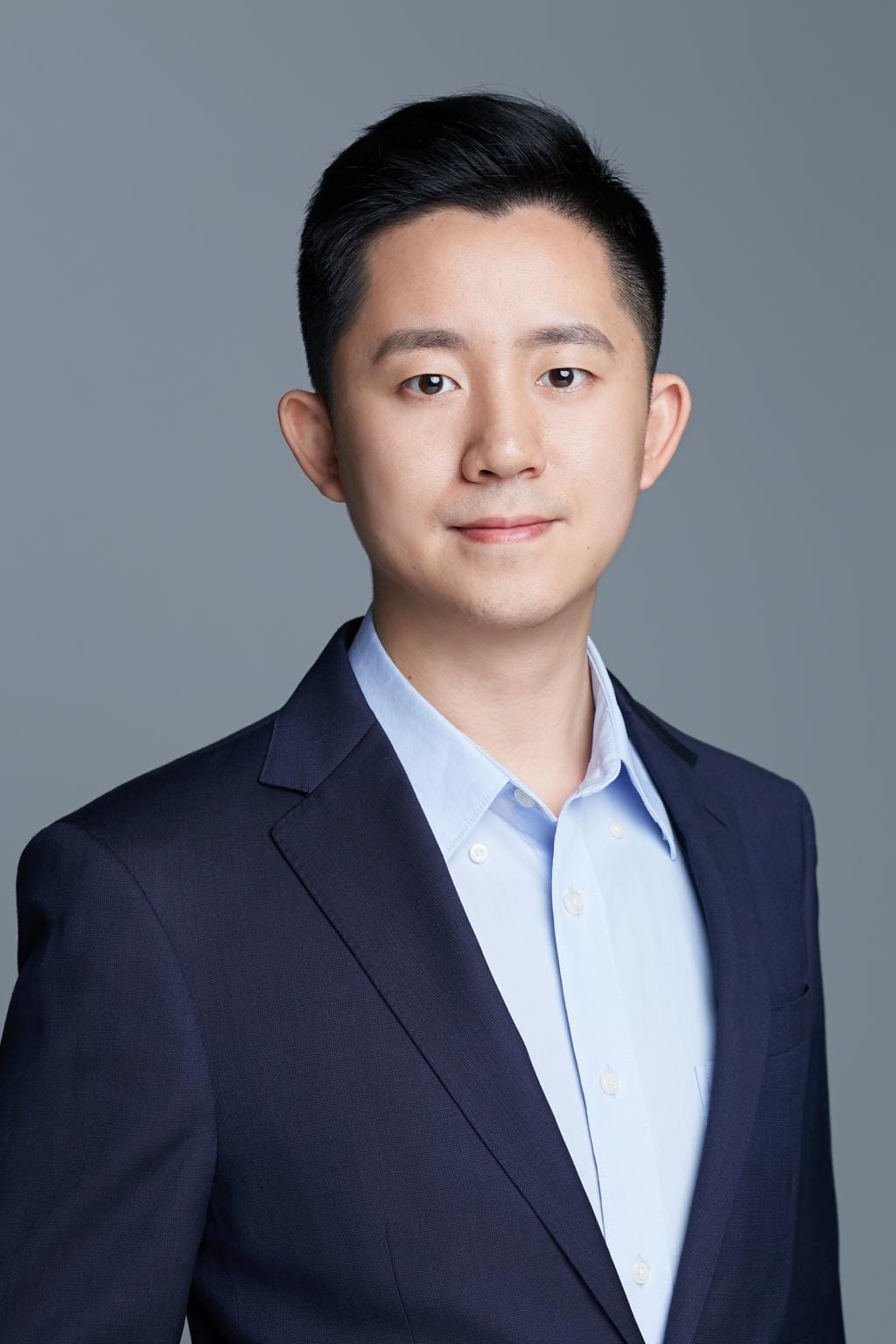
Hello, and welcome to the CISS Podcast. I’m Sun Chenghao from the Center for International Security and Strategy, Tsinghua University. Today, we are joined by Mr. Wang Zichen. Zichen started his career at Xinhua News Agency, where he spent 11 years, then joined the Center for China and Globalization, a non-governmental think tank in Beijing, in 2022. However, Zichen is perhaps better known for his newsletter, Pekingnology, which is probably the first English-language newsletter on China’s current affairs, written by a Chinese professional from within Chinese institutions. With now over 23,000 subscribers, many outside China have grown familiar with, and shall we say, intrigued by his work. Today, he’s back in Beijing and shares with us his experience and unique insights on communicating China’s stories to the outside world. Mr. Wang Zichen, welcome to CISS.
Zichen Wang
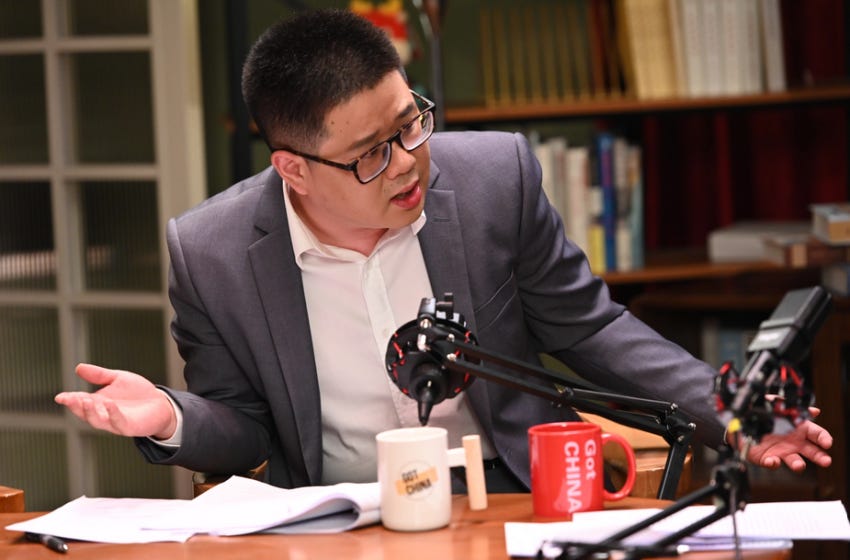
Thank you for having me here. And shall I say, it’s a great privilege to be here. And I also want to start by acknowledging, I think this is perhaps the only English-language podcast run by a Chinese think tank. And I think that shows, you know, CISS attaches great importance to international communications, and also your wisdom in recognizing this as a unique and very effective form of communicating your messages. So again, thank you for having me here.
Sun Chenghao
Okay, thank you very much for your encouragement for our work here. And so, in your Twitter, or X, bio, you describe yourself as, quote, “self-anointed journalist posing as thinktanker.” Why?
Zichen Wang
Well, I think maybe I wanted to convey three different meanings. First of all, as you generously described, the overwhelming majority of my career so far, for 14 years, I spent 11 as a journalist. So that is a, you know, hint at my previous occupation. And secondly, I now work at a think tank, the Center for China and Globalization, a non-governmental think tank in Beijing. But I also write some newsletters, including, you know, Pekingnology, The East is Read, and CCG Update. So although I don’t have any press credentials—I used to have one from China, and when I was based in Brussels, I had one accredited by the European Union—I don’t have one anymore. But still, I think what I do now is a kind of journalist. And the third, and finally, is, I think actually a lot of think tank work is another form of long-form journalism. So yeah, that’s what I basically wanted to say in the short sentence, in the bio of my Twitter account.
Sun Chenghao
Okay, very interesting experience. So some people say that rather than describing China to the world, what is needed is translating China to the world. Your newsletters are widely popular among Western audiences. Do you think it is because you have translated China successfully? And have you found any secrets that you can share with us?
Zichen Wang
Oh, you’re so kind. And I would not say they are, like, widely popular. Yes, we have maybe several tens of thousands of subscribers, but overall, that may be influencial, but still a very small audience.
And actually, I think the number one reason is actually quite simple, is because you and I, we have identified the means of, basically, communicating via emails. And that’s something very common for people living outside China. But many people inside China, in this line of work haven’t come to realize that foreigners, not just Westerners, but people outside the People’s Republic of China, they use emails just like we use WeChat. So whenever an email arrives, they have push notifications on their smartphones, on their iPads, on their, you know, laptops. So this is something people constantly pay attention to.
So that is why I think, you know, using email deliveries is actually quite important. And I’m very glad Substack, the platform, now makes the job much easier. And so it enables us to do email-based delivery in a much more smooth and cost-effective way.
And on the content. I’d to add a little bit on the previous question, that actually translating from Chinese documents and leaders’ speeches, or policy discussions, it’s not exactly super easy. You know, a lot of phrases used in China, including its political communications, if you just translate literally, word by word, verbatim, it probably doesn’t convey the sophisticated nuances that the domestic speakers want to say, you know, for a number of reasons. Sometimes it’s purely language, sometimes it’s because of the historical and political background here.
So I think maybe 80 or 90% of what I put out in Pekingnology, and then The East is Read and CCG Update, is translations. So what I do, together with my colleague, I have one full-time colleague, Ms. Jia Yuxuan, who is fabulous, we identify Chinese public discussions and put it into English. I think it boils down to what kind of content we actually pick from a wide array of available sources.
So different people have different choices. For example, I think you focus in China Affairs+ on China’s international relations, its foreign policies. I do have some of that content, but maybe my primary interest is in Chinese domestic affairs. And I think it’s a combination of judgement, of my previous professional training and experience at China’s state news agency, as well as, basically, my reading these days, and based also on, you know, we read Western press and think tank research on a regular basis, and we have a sense of what people are talking about, what they’re interested in.
So combining these different knowledge, and sometimes it’s just instinct, to identify what kind of interest, or what interesting content, that I should publish. I would not say there is a coherent, uniform set of standards around which I choose content, but it’s more out of instincts. And yeah, I put it up.
Sun Chenghao
Right, right. It’s not easy to translate, and it’s also not easy to have some original articles published on our platform. I hope in the future I can invite you to write some original articles for us, for the China Affairs+.
Okay, so now, China is always the center for discussion, but the voices from China remain peripheral. So why is it? And what do you think we can do about it?
Zichen Wang
Well, in one sense, the Chinese economy is the second largest in the world. Its military might has been growing rapidly. It has 1.4 billion people, perhaps the largest middle-income groups in the world, 400 million of them, with increasing international influence. That is a fact. But on the other hand, China’s rise, China’s international links, is a relatively recent phenomenon.
China embarked on the path of reform and opening up only around 1978. So until now, it’s less than 50 years. And in the grand scheme of things, that’s still quite recent. And we speak very different languages. Outside China, the international discourse has long been dominated, first and foremost, in the English language, and secondly, by other powers that have already risen before China, you know, the United States, Great Britain, and others. So I think it’s quite natural. It’s not something that we Chinese should always blame ourselves. I think that’s just what happened.
And what we should do? Well, I guess, two thoughts. First of all, in the Chinese tradition, we always say, basically, we should examine ourselves first, and then maybe have some expectations of others. And secondly, in the prevailing Chinese political philosophy, in Marxism, we say internal factors are the driving, primary, and fundamental factors in terms of things. So what we should do, in my personal opinion, is we should lower the barrier, lower the threshold, lower the requirements for the outside world to understand ourselves. So we should not become our own worst enemy, for others to understand China. We should make it easier. We should allow more foreigners to come to China, enable them to access Chinese materials, Chinese thinking, in a costless way.
And maybe as individuals, I would say within our framework where in our studies, in our employment, we should have the courage to take more initiative on our personal basis, whether by starting a Substack, as you and I did. Or maybe starting a podcast, or maybe just getting on social platforms and begin saying something. I think this is all the things that we can do, and I’m glad to see more and more people are actually trying to do that, out of their own personal volition.
Sun Chenghao
Right. I think the world is full of bias, but what we could do is to provide more information to the outside world as much as we can. And that’s back to your personal experience. You have a total of 11 years of experience as a journalist in Xinhua, one of the most recognized state news agencies in China, then running popular newsletters on China’s affairs, and then working at a non-governmental think tank, still running the newsletters. So is it safe to say that your motivation has not changed throughout the years, which is to tell the China story better? Has anything changed for your newsletter between your Xinhua years and now, at CCG? And do you feel any difference between then and now?
Zichen Wang
Well, on an operational basis, I would not say much has changed. Actually, I think little has changed. I was, and I remain, fortunate to have employers that didn’t and don’t interfere with what I put out. So whether it was in my previous employment, or at my current one at the Center for China and Globalization, led by Henry Huiyao Wang and Mabel Lu Miao, they don’t actually tell me what to put out or what not to put out. I think for a long time, readers actually know—for example, when it comes to Pekingnology, 23,000 of them; and when it comes to The East is Read, 13,000 of them—on these platforms, very few content originates from either Xinhua or CCG, the Center for China and Globalization.
So it’s not exactly a tool used by my previous employer, or by my current employer, to publicize themselves. What I do, and what my colleagues do, with the blessing of my previous supervisors and current supervisors, is to make it as a platform that helps other reasoned, credible, or what I believe to be valuable information, from other Chinese institutions, including here at CISS Tsinghua, at the National School of Development at Peking University, at various Chinese media outlets and WeChat blogs.
I want to serve as a platform, you know, to give them some help, my limited help, to reach more people. And in that sense, to help others, including many—well, most of the subscribers are not Chinese mainland nationals—so for them to have a better, more comprehensive understanding of China.
When it comes to the first part of the question, you mentioned “tell China’s stories well,” “tell China’s stories better.” This is a slogan in China for quite some years. My personal understanding, and maybe my expectation for that, is to, this is a very powerful, very simply-written sentence. It could have very different connotations and meanings. My understanding is to tell China’s stories truthfully, in a more comprehensive, real, true, and multi-dimensional way.
So that means the progress that China made. That means the enormous challenges that the People’s Republic of China, its governing party, its government, and its people face, that we should deal with utmost capabilities within our reach. And we also have enormous limitations, but try to, again, enable our audience to have a more comprehensive, more real, and a more multi-dimensional view of what is happening in China, what kind of public discussions is happening inside China.
Sun Chenghao
Yes, I totally agree with you that we should tell China’s story truthfully. But we often hear Western media complaining about a lack of Chinese perspectives on China-related matters. At the same time, we also hear Chinese scholars arguing back that it is the Western world that refuses to listen. So what’s your take on this interesting dilemma? Have you personally experienced any challenges in your lines of work?
Zichen Wang
Actually, what inspired me in the first place to start Pekingnology, which was May 2020, and I seriously got to develop that towards the end of 2020, which is now five years later, was that, yes, there was a substantial, serious, extreme lack of Chinese perspective on China-related matters, in English, in the international discussions back then. There were already some Substacks. There was, you know, Sinocism by Bill Bishop, the number one Substacker on China. But none of the many Substacks were written by any Chinese mainland professional, especially if they work in Chinese institutions, including state-owned institutions or Chinese universities. So that actually is a gap I wanted to narrow. So that’s the primary reason I got on Substack.
And I want to basically return to something I said a little bit earlier here, is that I think as Chinese institutions, as people who have some sort of discourse power within China, at least within our very small area and field, we should make it easier for our colleagues, ourselves, our students, our interns, to meet foreign visiting scholars and think tankers and consultants, and even diplomats, to make these exchanges as easy as possible. I think it goes without saying, and for many of the listeners here, that we should truthfully acknowledge that the barrier of communicating, especially directly, has grown. It’s become more difficult. And we should have the courage to recognize that. And that is not the right direction, in my understanding.
But I’m very glad to see you, me, and CISS, and there are many, shall we say, far-sighted individuals and institutions, that are trying to make it easier.
And on the other hand, I do think some of the internationa media reporting and analysis on China, on Chinese affairs, from the observation of you and me, may seem a bit, let’s say, a bit foreign. It’s a bit wrong sometimes, in our views, and I think that’s unavoidable.
I think most of that comes from just different understanding of facts on the ground, from the long-held beliefs about China as a country, as a society, as how its politics, its economy, society are run. And some of that is probably driven by some motivations that are not exactly, in our views, very fair. So again, it’s always very difficult to, quote unquote, “correct others’ behavioural attitudes.”
So I think first and foremost, what we can do is to make our own efforts to help broadcast our messages, our analysis on all kinds of Chinese matters, and also make it easier for them to understand. It’s what our prevailing political philosophy tells us. It’s what our traditions tell us. And I think it’s also demanded by the reality that we’re facing now.
Sun Chenghao
Yeah, right. I think CISS has always encouraged young students to engage more with international friends.
Zichen Wang
Exactly. You have more effective events.
Sun Chenghao
And we also have our project of CISS Strategic Youth. And I also led two student delegations to visit Switzerland and the U.S., with your help, to connect with many friends and institutions there.
So the younger generation sometimes still feel frustrated about the current geopolitical tensions around the world and the Western worldview on China. So if you can leave a message, what do you want to say to the (younger generation)?
Zichen Wang
I would hope, like, for people a little bit younger than our generation, who have a passion, who have some interests in what we do and what they are going to do. First and foremost, I would hope they have a more accurate and comprehensive understanding of our own national facts. China is huge. It has 1.4 billion people, but its GDP per capita, a usual measurement of wealth, of income, is only $13,000 a year. That’s something like 70s in the world. Actually, it’s on par with the lowest member of the 27 EU member states in the European Union.
I think several years ago, a senior Chinese leader publicly remarked that 600 million Chinese citizens have a monthly disposable income of less than 1,000 yuan, which is about 150 U.S. dollars. And yesterday, or two days ago, I saw Huang Qifan, the former mayor of Chongqing, and a very well-received public intellectual in China, also repeating something similar, like there is still an enormous gap for, for Chinese people, to get better, to improve our own living standards.
I think we should always keep that in mind in our trying to understand China and trying to interact with the rest of the world. What others think of China is actually much, in my opinion, much less secondary, less important, to how exactly we develop our economy, improve our income. This is the most important thing.
Chinese leaders have repeatedly said, and I think the governing Communist Party of China has also taken to heart that the top priority is to manage our own affairs well. And that is the fundamental thing to everything the Chinese government does. And that actually touches on the lives of you and me, of our parents, of our grandparents, of our neighbours. So I think to have a good understanding of what is happening in China, what are the challenges, the shortcomings that we are facing, this is very important.
And secondly, I think we should have the confidence that if we believe that we are on a right track, that China’s rise is inevitable, or it is sustainable, or the economy, in the long run, will get better, with people’s living standards improved, then we should have the confidence to engage and to confront wrong, baseless accusations. So to have more courage, but also with facts, with reason, with logic, rather than just political rhetoric. So always ground our arguments, ground our messages in facts, in logic, in our unique national conditions.
And I think also with China’s rise, with what I think is going to be a relatively long period of adjustment in the minds of many of our American friends, of our friends in the West, try to contain the potential conflict, manage our differences well in a calm way, because peace is extremely important. Conflict and war are very costly; they are not in China’s national interests. I think this is also what, for example, CISS has been doing in running some Track Two dialogues on AI, because potentially, if not managed well, it could have very dire consequences for China-U.S. relations, for the international landscape.
So try to resolve, manage these issues from a perspective that is directed towards peaceful coexistence, towards prosperity. This is not a zero-sum game. And the world is not a zero-sum game. I genuinely believe that. And I think Chinese senior leaders have repeatedly said that, and I’m very confident they genuinely believe that, that we are going to find a way to manage the geopolitical tensions, build our national strength, but at the same time, exist and share the Chinese market, the Chinese technology, Chinese know-how, with many partners in the world.
I’m not just saying the Global South, but also increasingly in what we call Western industrial nations, coming with Chinese investment, Chinese technology, and employment of local people by Chinese companies. And I’m sure with our joint effort, and with the wisdom from people not just in China but also outside China, we’ll be able to achieve that.
Sun Chenghao
Yes, right. I think I totally agree with you that to understand China and the world better, we can only achieve this and communicate China’s stories to the outside world by providing more facts and numbers.
Zichen Wang
Yes. Sometimes, what I publish on Substack, on Pekingnology and The East is Read, actually includes a lot of critical discussions of China’s matters, including by various professors at Tsinghua, at PKU. And I would love to see more basically just treating the problem, treating the challenges as they are, and talking about them openly in an honest fashion, because a lot of these things are not necessarily a product of a system, of a policy. Many of them are just because we evolved from a very thin material and development stage, and we’re a huge country with uneven development. That’s just the challenges along the way.
To have these discussions, I think, also serves for the outside world to understand China, that it is not a behemoth, a giant creature that’s getting very scary. It has its own problems to tackle. The domestic situation is always the priority. China doesn’t want to impose its system, its culture on the world, for a number of reasons. And very important of them is that we still have a lot of problems to solve in our own society.
Sun Chenghao
Right. Thank you very much. And that was Mr. Wang Zichen, who shared his journey and his reflections on bridging China’s story with the world. Thank you for listening. Please stay tuned for more CISS podcasts.
This has been a thoughtful and generous discussion, and it does important work in insisting on honesty and precision when describing China. That commitment to truth, however, should also apply to how we describe the West. Referring to “Western industrial nations” is now a category error. The United States in particular is no longer an industrial economy in structural terms. Roughly 80 percent of U.S. GDP comes from services. Industry exists, but it is no longer the dominant source of income, employment, or value creation. If we are serious about telling the truth about China, we must also be serious about telling the truth about America. Precision in description is the foundation of sound political-economy analysis.
I appreciate the genuinely cosmopolitan, humane, sensible and matter of fact approach that Zichen Wang adopts. I appreciate his perspectives.