

The following is a transcript of TRT World’s The Newsmakers, Turkey’s flagship English-language news channel, aired on 7 January 2026.

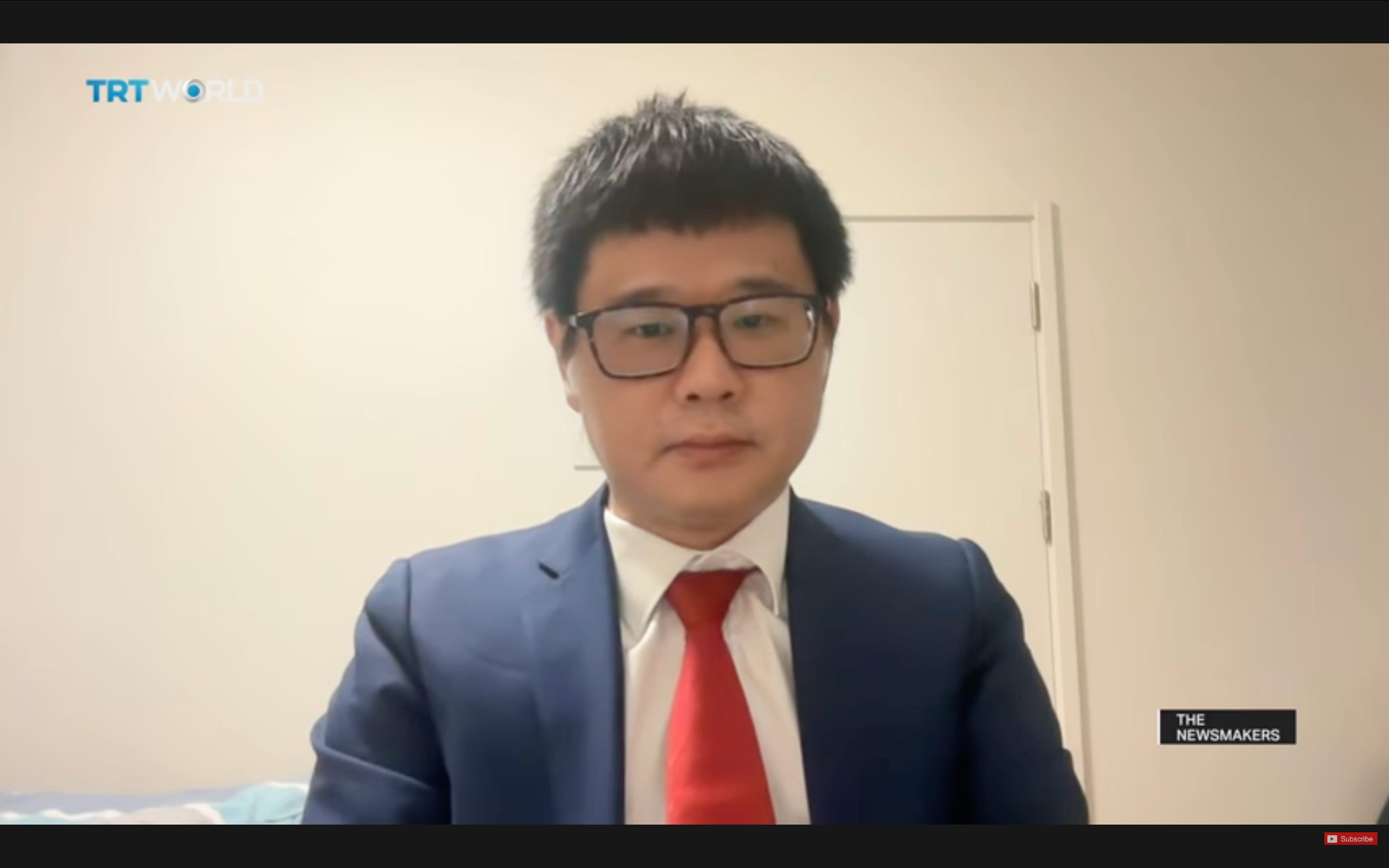
The programme featured Zichen Wang, the Deputy Secretary-General of the Center for China and Globalization (CCG) as one of the three panellists to discuss rising China-U.S. tensions over ports near the Panama Canal.
The transcript is based on the YouTube upload and hasn’t been reviewed by any of the speakers.
Andrea Sanke

From the Panama Canal to Venezuela and even Greenland, is undermining China at the core of putting America first? The controversial destruction of a Chinese monument in Panama is perhaps the most symbolic example of a troubled relationship. As the U.S. chips away at China’s access to Latin America’s resources, could Trump’s “peace through strength” approach turn into dangerous discord?
I’m Andrea Sanke, and this is The Newsmakers.
Well, a lot has been said about U.S.-China tensions over the past year, as everything from tariffs and trade, to access and influence, put the two global powers at odds. And perhaps nowhere are those tensions more evident than in Panama, where U.S. companies sought to buy out Chinese-managed ports near the entry points of the Panama Canal. Washington was confident the deal would go through, but China has refused, demanding a controlling stake. Now, just a few days ago, the U.S. also took steps that would block Venezuelan oil exports to China, and today reiterated it will take Greenland, in large part because of alleged Chinese threats to U.S. security there. So, where are the rhetoric and action actually going? Here’s a look.
...
So, how much is U.S. action undermining China, and could it lead to conflict? Joining me now to debate that and more are: from Beijing, research fellow at the Center for China and Globalisation, and author of Pekingnology, Zichen Wang; from Milwaukee, Central America lead at the Atlantic Council’s Adrienne Arsht Latin America Center, Maria Fernanda Bozmoski; and from New Jersey, CEO of CJPA Global Advisors, Earl Carr. Thanks all so much for being with me.
You know what? I’ll just start with the big question and ask Zichen Wang: how dangerous do you think all of this is? Will China simply give in to U.S. demands to extricate itself from what the U.S. believes is its, you know, sphere of influence, or will we see a more confrontational alternative?
Zichen Wang

Well, I don’t think it’s fair to say, you know, China is controlling the Panama Canal in any way. What we have on the ground is basically a privately owned, Hong Kong-based company that is on a lease and operating several ports, providing commercial services to ships that, out of their own volition, decide to dock there. And there is no Chinese military, there is no People’s Liberation Army, and everything has been going on very well. And even the U.S. government’s own assessment—I mean, before President Trump took office this time—was that it was perfect. Nothing was wrong.
So I’m truly at a loss how a Chinese, Hong Kong-based private company operating these ports is a threat to U.S. national security or to U.S. interests in the region and its domestic interests. So what the U.S. has been trying to do is, in my opinion—and I think many in China agree with me—it’s economic coercion. And Beijing is not going to sit idly by that, or just drop on its knees to conform to U.S. demands on that.
Andrea Sanke
Okay. Maria Fernanda, is it economic coercion, or does the U.S. genuinely see a security risk here, as it’s more being sold to the U.S. public?
Maria Fernanda Bozmoski
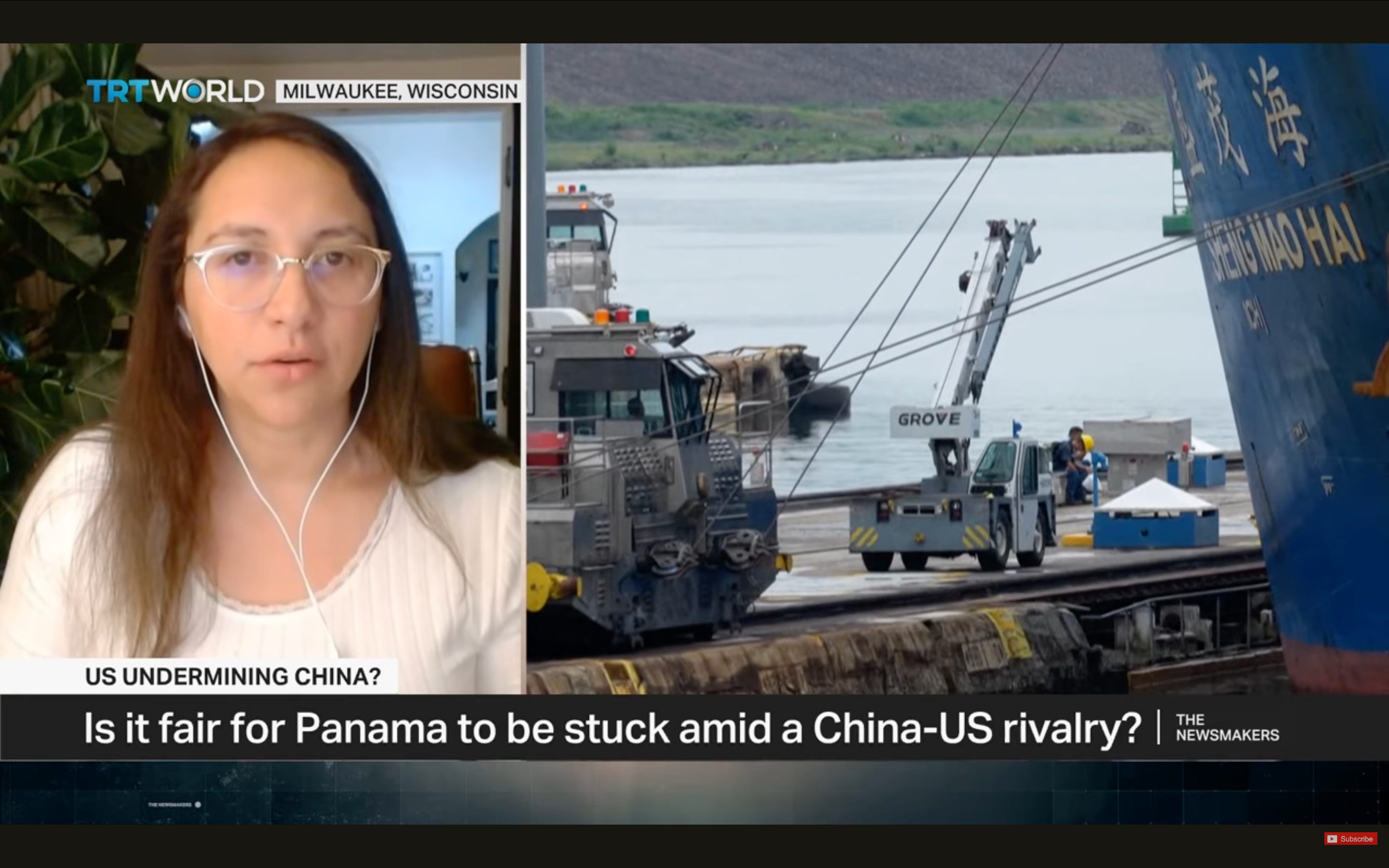
Well, I think that it’s very clear from the National Security Strategy that just came out—was published in December of last year—that this Trump administration sees the Western Hemisphere as an intrinsic part of its homeland security. The two are interconnected, interlinked.
I will say, importantly as well, that National Security Strategy—to your question, Andrea—is also a commercial diplomacy strategy, and it talks at length about how the United States needs to be engaging more commercially with the Western Hemisphere, and the way that the United States, let’s say, engages and invests in the countries. I mean, the United States as a country does not invest; it’s more from the private sector. But the United States is Panama’s largest trading partner.
You know, I think that this administration has really set its sights on engaging more commercially with the Western Hemisphere. Trade is just a means to a bigger end.
Andrea Sanke
Let me ask Earl then. I mean, does the U.S. then have a right? It’s kind of hilariously being called the “Donroe Doctrine”. But does it have a right? Yeah, does the U.S. have a right to take this stance, and is it a dangerous one?
Earl Carr
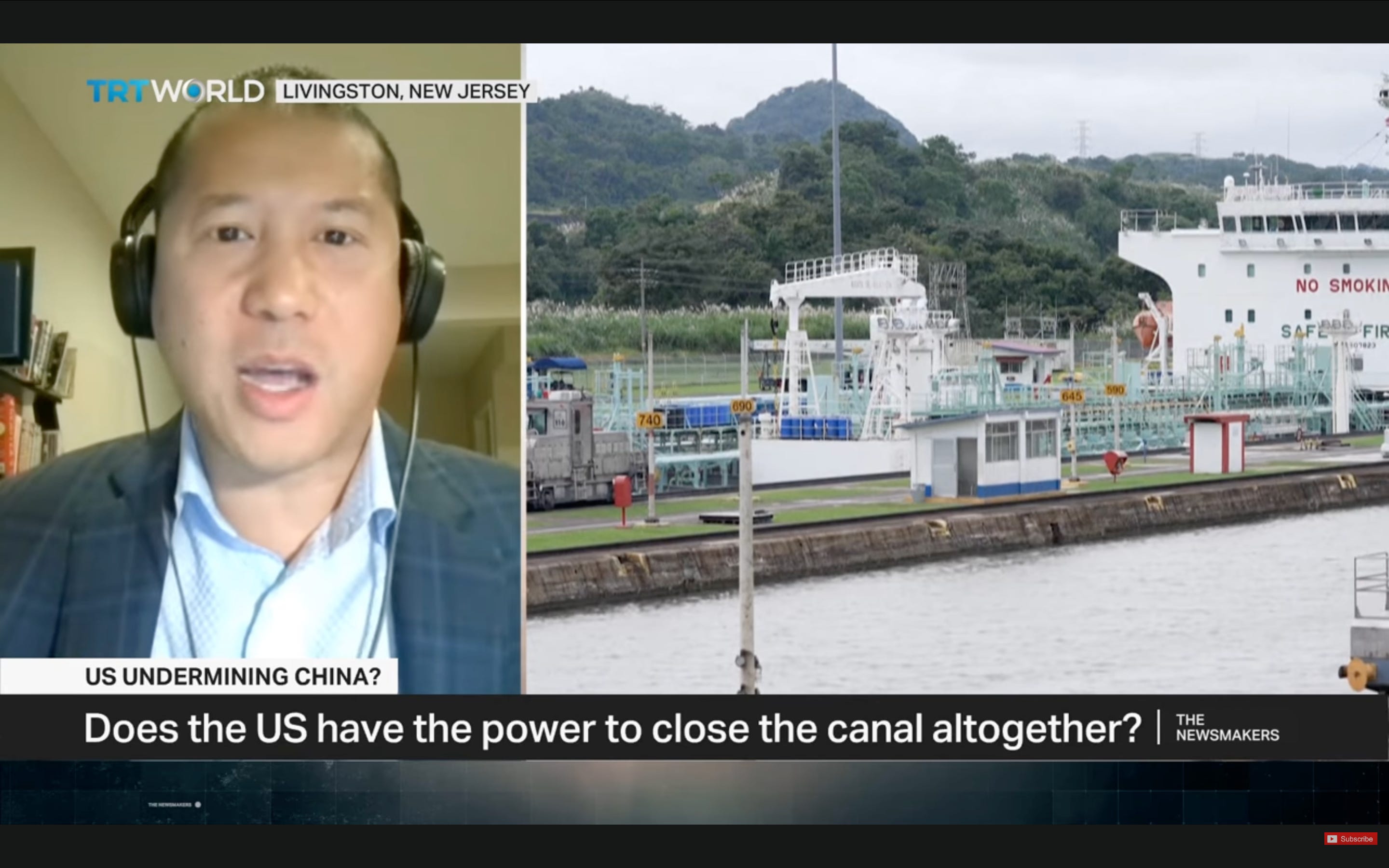
Yeah. So, I think it’s important to put things in context. The Chinese have been in Panama for a long period of time. The Sea Witch clipper, which was a ship which travelled from China to Panama carrying about 705 Chinese labourers, began on March 30, 1854. And they were instrumental in building the Panama Canal. And so, if you look at the historical ties that the Chinese have had in Panama—not just economically, politically, but also socially—they go back a long time.
So let me give a little bit of context as well. In July of 2025, The Wall Street Journal reported that China is threatening to block the sale of more than 40 ports owned by the Hong Kong-based CK Hutchison to BlackRock and Mediterranean Shipping Company if the Chinese shipping company, COSCO, does not get a controlling stake. So this kind of, like, upped the ante for the previous demands for just an equal share, creating a significant impasse. So I think that’s the context for where this is coming from.
And to answer your question, does the United States have a right? I think you saw Marco Rubio, in his first official trip to Latin America—which historically, he goes to countries like Europe or the Middle East—but he specifically went to Latin America, and he set a very specific tone, saying that the United States wants to have a more specific and intentional role in Latin America and the Western Hemisphere, and that involved, essentially, mitigating the Chinese economic, commercial interests in the region.
Andrea Sanke
Okay. Well, Zichen Wang, then, if the United States really keeps the pressure up, economically, what is best for China and for the region, and how far would Beijing actually go to protect its own interests, especially in the realm of the Belt and Road Initiative that it has spent so much money investing in globally?
Zichen Wang
Well, first of all, I’m not very sure that the U.S. will basically use all its force, all its influence, to enforce its intended, stated goal of economic coercion here, because as we saw in the year of 2025, President Trump launched a tariff war against basically everyone on Earth, including on China, but China fought back, and by all accounts, I think nobody is saying today that Beijing lost that war. And I think that creates some deterrence for future U.S. economic coercion.
And secondly, there is a good chance that the Chinese president and the American president will meet multiple times in this year, 2026. There may be three meetings including an April visit from President Trump to China, and then meetings at the G20 and APEC, and both sides value these meetings a lot. So I’m not sure the U.S. president and his administration will want to disrupt the schedule. And President Trump certainly has high respect for his Chinese counterpart.
Beijing also has its own tools in its arsenal when it comes to technology and trade, and economic tools. So I guess we will have to see how serious the U.S. is intent on enforcing its, you know, “Donroe Doctrine” in the Western Hemisphere, and in particular on the Panama Canal and several ports alongside it.
Andrea Sanke
Okay, Maria Fernanda. I mean, the question is whether or not China should really be preparing so that it’s not caught, I guess, off guard. Some might even say, you know, given Trump’s posturing, they’d be naive not to prepare. But let me ask you something on the other side of the equation here. If we look at Panama and beyond that—you know, Greenland—and the fact that they’re now at the centre of a major geopolitical battle between China and the U.S., does Panama, for example, have any real power to decide what it wants, given U.S. threats in particular toward other Latin American countries?
Maria Fernanda Bozmoski
I think that in these conversations, we’re also not giving the Latin American countries much agency, and we should be. I think that years of this rapprochement to China, where many countries have sort of, you know, severed ties with Taiwan, have favoured ties with Beijing, and then have been disappointed in the return of that relationship. Most recently, for example, Honduras. We’re going to see the Honduran, the newly elected Honduran government switch ties back to Taiwan, sever ties with China, because China made all these promises and never delivered.
So yes, these countries in Latin America are perhaps, one could say, stuck between this bigger rivalry, but at the end of the day, they’re also, you know, I think coming to terms and realising that China has not delivered; it has been a disappointing relationship. And now that they have a president in the White House that is so focused on the Western Hemisphere, countries are recalibrating how they’re seeing things and partnerships.
Andrea Sanke
So, Earl, Maria Fernanda cited Honduras there, but I mean, it was just eight years ago when Panama cut ties with Taiwan and fully recognised China; that allowed China to come in and invest in major infrastructure projects, including a metro line that’s going to be running under the canal. The U.S. isn’t making those same kinds of investments in Panamanian infrastructure today. So does Panama have true agency over the decisions it makes now, given Washington’s stance?
Earl Carr
It’s a great question. And you saw, in 2017, when China officially severed ties with Taiwan and established diplomatic ties with Panama. You saw for many years, prior to that, the Chinese investing significantly in Panama.
I was in Panama in 2024, and it was striking to see the number of Chinese ads—of Xiaomi, the Chinese phone company—all throughout the airport. As I walked through downtown Panama, seeing the ads of Chinese companies, Chinese restaurants, I mean, the Chinese presence, particularly in electric vehicles, of cars that are being sold to Panama, was staggering.
And I think that, in many ways, the Panamanians see clear and inherent economic investment into Panama. They also see the advantages of having economic trade with the United States. To your point, Panama has to kind of tread a fine line, because, on one hand, while they value the economic relationship and ties that come with China, they also understand that geopolitics is very real, and that Marco Rubio, as Secretary of State, is spearheading a much more aggressive U.S. foreign policy, as you pointed out, the “Donroe Doctrine”.
And so, in many ways, Panama is trying to tread a fine line between, one, accepting and engaging on the economic advantages of China, but at the same time, the United States has to also put real and economic, you know, viable options on the table in order to really put something on the table that Panamanians can engage and be part of economically.
Maria Fernanda Bozmoski
Sorry, if I may. Also, you know, let’s remember that China can move faster because it uses a state-driven infrastructure model. That’s what the Belt and Road Initiative is. There’s a policy direction. You have state-owned firms. You have state-linked financing. You don’t have that on the United States side. The public finance tools are smaller. They’re more constrained, more compliance-heavy. So, you know, that kind of limits you to the kind of infrastructure investments that you could have from the United States.
Andrea Sanke
Yeah, fair enough. But that’s not Panama’s problem. I mean, if the Chinese find a way to invest and they’re going to build the end product, Panama should have agency to decide that China is the better partner in that case.
But let me go to Zichen Wang then, because you seem a bit more “wait and see”. It almost seems you’re insinuating that China will have kind of patience in this. They’re not rushing to war, conflict, or anything. I mean, is there a thought process then looming in the background for the Chinese that Trump’s days in office are arguably limited? He would only have three more years left at this point. It’s not worth going to any kind of armed conflict or escalating further because the days are somewhat numbered. I mean, a lot could happen in three years, to be fair, but still, if you say China’s game is “wait and see”, is that how they are approaching this?
Zichen Wang
Well, I think generally speaking, and Chinese leaders have repeatedly highlighted this internationally, including telling successive U.S. presidents in person, that China wants a peaceful world, wants economic globalisation, wants to do business with everyone, including with the United States. So I don’t think it was ever, it is, or it will ever be China’s intention to challenge the United States to a conflict, much less an armed one. It’s not in anyone’s interest.
And I think one thing that has been a little bit more comforting is that this administration—the Trump administration—has also made it very clear it doesn’t seek to have a war with China. And I think when it comes to Latin America, China understands that’s in the Western Hemisphere, that’s a long way from Asia-Pacific. That’s across the entire Pacific Ocean. And the Chinese kind of understand that the U.S. has its own concerns, has its own interests in the Latin America region, and China is not interested in challenging U.S. leadership in that part of the world.
But still, that doesn’t mean sacrificing basic Chinese commercial interests over there over or because of something that’s just not threatening to the U.S. at all. I mean, we have to come back to the root of the problem: the U.S. seems to think that the Hong Kong-based CK Hutchison operating some ports is somehow a threat to U.S. national security or U.S. commercial interests, but I really don’t see how is that and why is that? And with Chinese investment in Latin America, with economic investments over there, with trade over there, actually, that could help Latin America build its economy. [interrupted]
Andrea Sanke
Yeah. I mean, let me ask Maria Fernanda that, because our view from Beijing there is that the U.S. just shouldn’t have a problem with what China is doing. But the U.S. has also framed this in that they have a treaty with Panama, and Panama has actually violated that very treaty because Panama was supposed to have control, and they say by the agreements it’s made with China, they’ve given too much of a controlling stake to a Chinese company. So yeah, go ahead. I mean, and there’s another issue I’d like to ask you on that, but go ahead.
Maria Fernanda Bozmoski
So, let’s remember that the Panama Canal is operated by Panamanian engineers. They are the ones who operate the canal: the Panama Canal Administration, the locks, and everything. The two ports in question on both sides, on the Atlantic and the Pacific, yes, they are in strategically located positions. And I think the concern is, you know, that it’s not so much that China controls the canal—which obviously has been a talking point—but it’s more that China could be using the canals for other things; that it could be used for espionage; that, you know, because of the location of the ports, they have access to privileged information as to what’s coming in and what’s coming out. That is what is of concern to the United States.
But I think that it’s very clear, and Panama has made this very, very clear. I had the opportunity to interview Panama’s Canal Minister in DC and ask him about this, and he made it very clear that Panama right now wants what’s best for the country, because many of the revenues for Panama come from the canal.
Andrea Sanke
Earl, I’ll tell you what, we’re down to our last few minutes, and I need to ask you this question, because what actually prompted part of this programme was the symbolism and the controversy over Panama taking down that monument to China that was, you know, in Panama, representing decades, almost a century of relationship between China and Panama, going so far back. And there’s a significant Chinese community there. Now the local authorities said that this was about safety issues and an expired land permit, and the mayor of the town ordered it on that basis. And then the Panamanian president came out and condemned him for doing so, which is very curious. Do you think the president here is being duplicitous?
Earl Carr
It’s a great question. And I think right now, as you noted, there is a significant Chinese community in Panama. My grandparents immigrated from China to Panama in the late 1800s. That monument has been an icon of the friendship between China and Panama for decades. And to see the bulldozer come and just take it down—you know, especially in this geopolitical environment—one could argue that clearly the United States was a clear and inherent factor in that monument being taken down politically.
Now, that being said, the Chinese still are very present economically in Panama. Like I said, the vast majority of EVs being sold to Panama are there. Xiaomi and a number of Chinese companies still continue to export their products to Panama. And so there is still that economic linkage there with the Chinese community, and I don’t think that’s going to be going away any time soon.
Andrea Sanke
You don’t think their days are numbered, even in spite of everything we’re hearing out of Washington?
Earl Carr
I think the critical litmus test is: to what degree can the United States give and replace those economic advantages that China is currently providing? And yes, there is the geopolitical factor with the United States using force, but the United States cannot use force in every single country in Latin America. We understand that that kind of imperial overreach is a hand that the United States doesn’t want to play.
And I think the Chinese are saying, look, let’s wait and see. Let’s see how things go. But I think economically right now, the Chinese have an upper hand, and we’ll see how long it can continue to play that hand.
Andrea Sanke
Okay, Earl, that will have to be the final word for this edition of The Newsmakers. I’d like to thank sincerely all three of my panellists so much for being with us, and our viewers for joining us as well. Remember, you can follow us on social media, and do be sure to subscribe to our YouTube channel. I’m Andrea Sanke. We’ll see you next time.
Zichen Wang on CK Hutchinson's port operations in Panama at CNBC

Zichen Wang, Research Fellow and Director for International Communications at the Center for China and Globalization (CCG), on July 29, 2025 told Emily Tan of The China Connection live on CNBC that U.S. concerns about CK Hutchison's port operations in the Panama Canal and many U.S. arguments made against the Chinese lease of port operations are exaggera…
Transcript: Zichen Wang on Tsinghua CISS Podcast with Chenghao Sun

The following is the transcript of the latest CISS Podcast by the Center for International Security and Security (CISS) at Tsinghua University, aired on December 30, 2025, featuring Zichen Wang, now the Deputy Secretary-General of the Center for China and Globalization (CCG). The interviewer is