

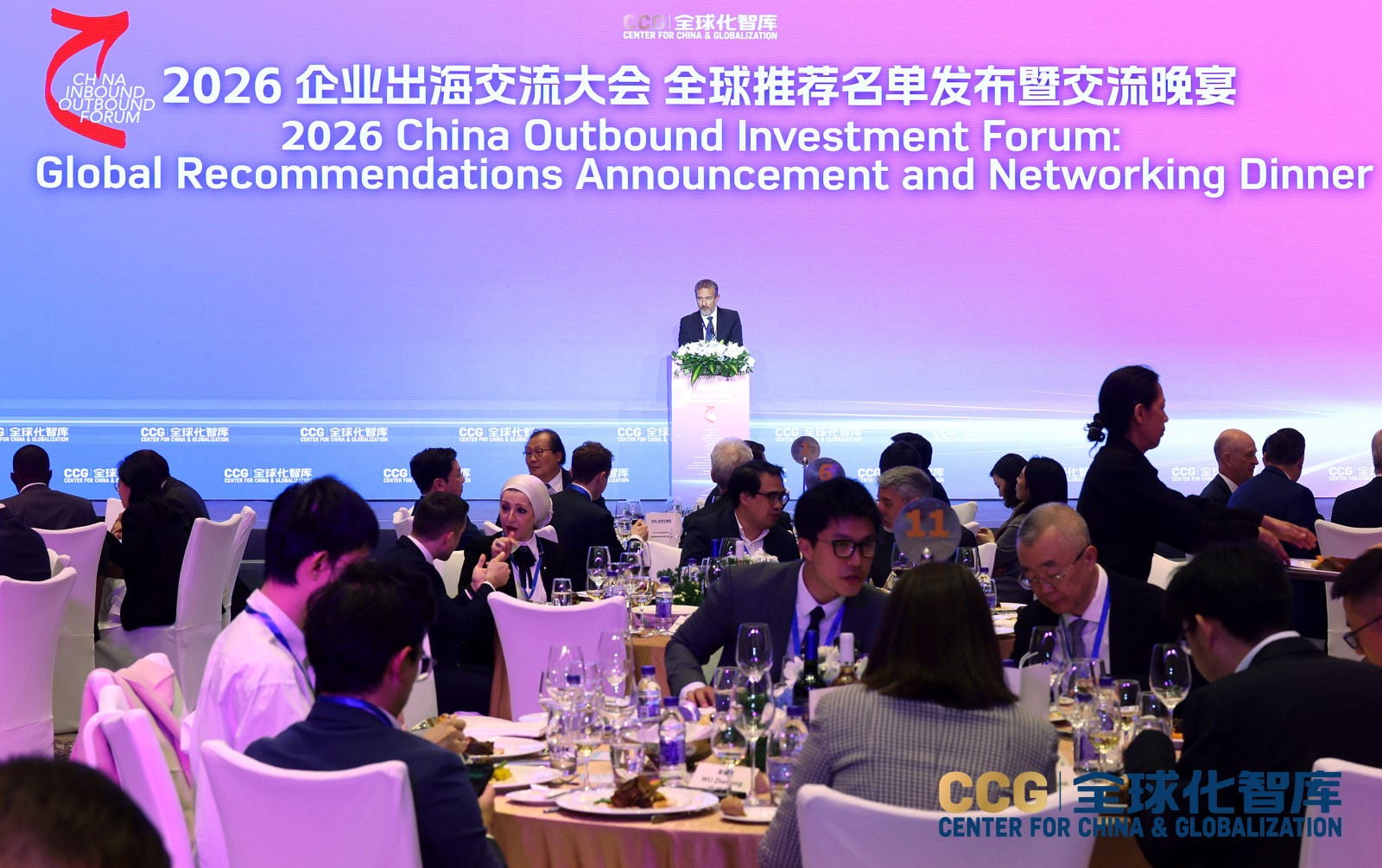
On 17 October 2026, Massimo Meloni, Head of Policy Research in the Division on Investment and Enterprise at United Nations Trade and Development (UNCTAD), delivered a keynote speech at the gala dinner of the 2026 China Outbound Investment Forum, hosted by the Center for China and Globalization (CCG) in Beijing.
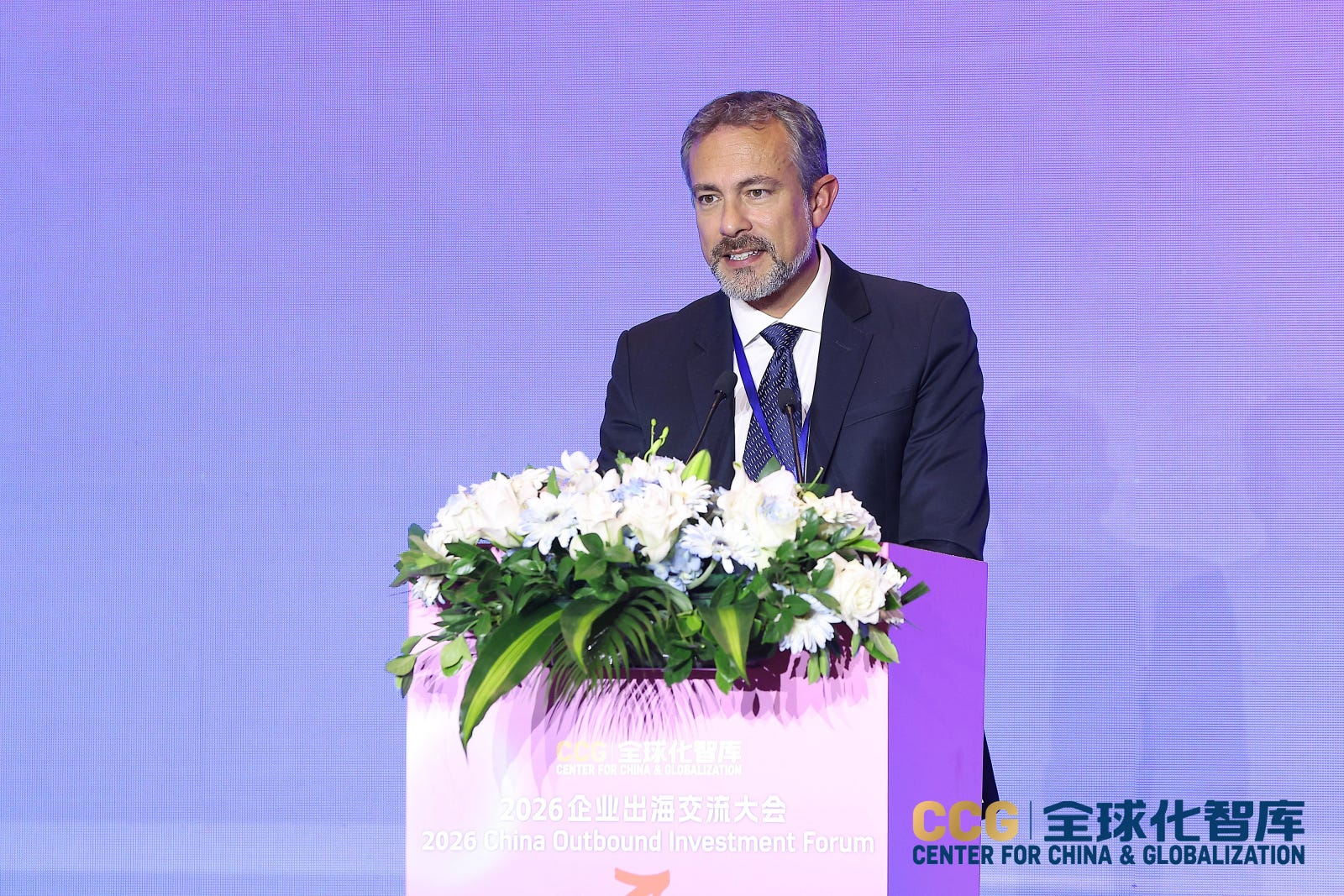
Drawing on UNCTAD’s World Investment Report 2026, he highlighted China’s position as both the world’s third-largest source and fourth-largest recipient of FDI, and the growing overseas presence of Chinese technology and automotive companies. He argued that Chinese investment should create local value by developing suppliers and skills, and called for clearer rules and greater cooperation to make cross-border investment more predictable.
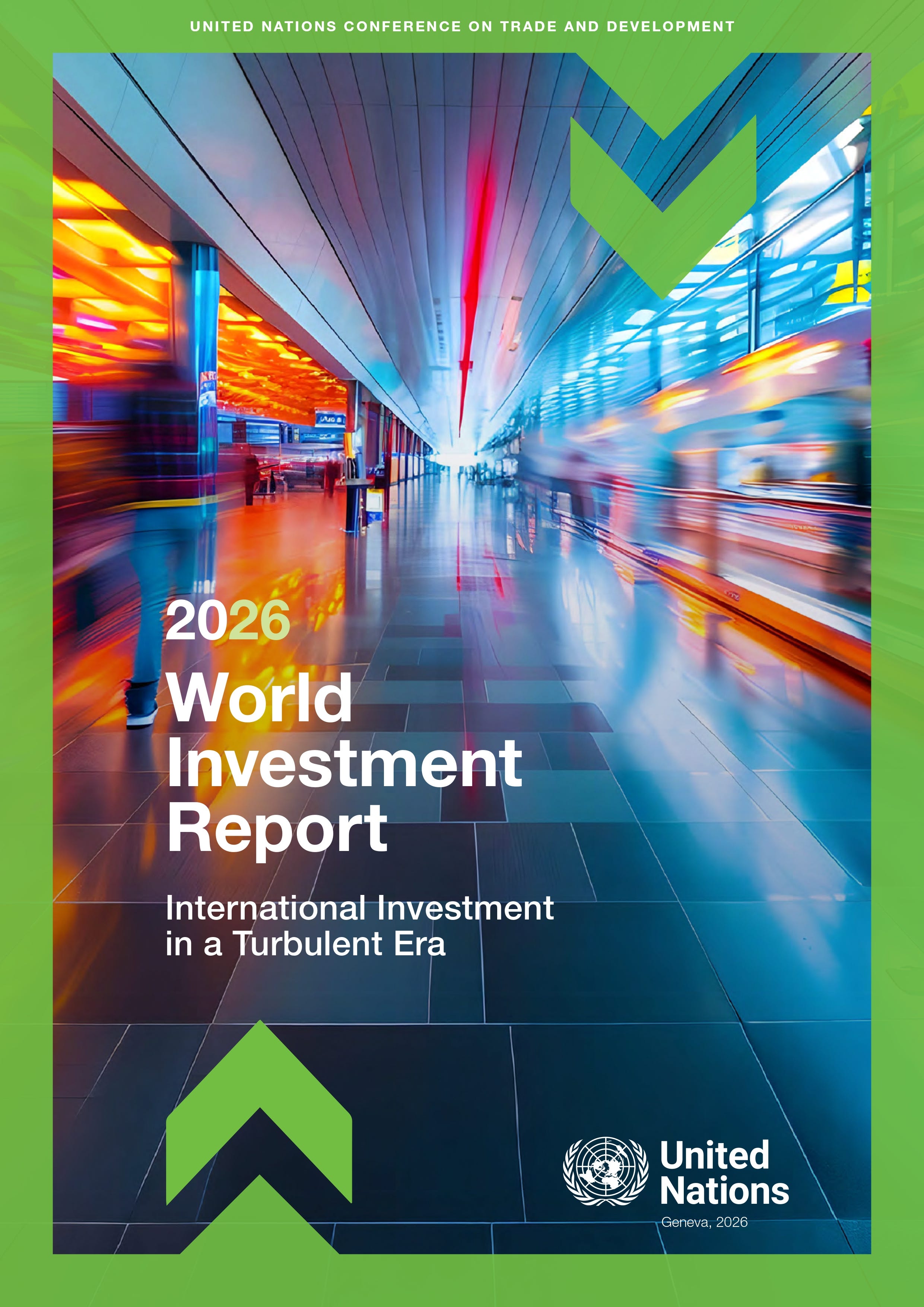
The following is a transcript of Meloni’s speech. It is based on a recording and has not been reviewed by Meloni or his staff.
Massimo Meloni, Head of Policy Research, Division on Investment and Enterprise, United Nations Trade and Development (UNCTAD)
Thank you. Good evening, Excellencies, distinguished guests, ladies and gentlemen. I will try to be brief. I know that many of you have had a long day of meetings and networking. But I would like to start first off by thanking our hosts for bringing together business, business leaders, diplomats, and representatives of international organisations.
And it’s the international character of this gathering which reflects something fundamental about investment. Every investment abroad connects the ambitions of a company with the aspirations of a country. And its success depends on how well those ambitions and aspirations come together.
Tonight I have been tasked, or invited to reflect into the profound changes in the global investment landscape, China’s role within it, and the opportunities for cooperation between investors and their host countries. Our World Investment Report 2026 presents a picture of resilience alongside growing uncertainty. Global foreign direct investment increased by 6% in 2025, reaching approximately $1.6 trillion after three years of decline. That is an encouraging headline, but it’s not the full story.
We see investment in a new landscape both from the policy side and the sectors and activities that it is reaching. For years, investment was going from the North to the South in sectors led by cost efficiency, by production, in an environment in which the openness of countries to investors was the key feature of the rules of the game.
This landscape is changing. We see countries adopting increased restrictions both on inward and outward investment. We see the rules of the game changing, and we see investment flowing to new sectors in which cost is only one of several factors. And other factors such as geopolitical risk and economic security interests become the norm.
So investment is becoming more selective. Large projects in a relatively small number of economies and sectors increasingly shape the global totals. Artificial intelligence and related technologies, materials and infrastructure, concentrate an increasing share of global investment in fewer destinations. For governments, this raises a difficult question: how can their countries participate in the next wave of investment? For companies, the question is equally demanding: where can they invest with confidence and build operations that will remain viable as policies and markets change?
This question brings us to a second important development. As I was saying, the factors shaping investment decisions are changing. Market size, production costs, and infrastructure remain essential. But companies must now give greater weight to geopolitical relations, economic security, energy availability, and the resilience of supply chains. A change in tariffs or market access can alter the prospects of a project. An investment screening decision can affect its timing. Uncertainty about future rules can delay an investment that would otherwise make commercial sense.
And these pressures affect both countries and investors. Governments want reliable partners who will contribute to their development priorities. Investors want clarity about the conditions under which they will operate.
Against this background. China has a particularly important role. In 2025, China was the world’s third largest source of foreign direct investment with outward flows of $174 billion. It was also the 4th largest recipient of investment, attracting $105 billion. The experience of China, both as a home and a host country of investment, creates a strong basis for dialogue with international partners. China understands the contribution that foreign direct investment can make to industrial development. Its companies increasingly understand the challenges of establishing and managing operations in different markets. And as we saw this morning and throughout the day, the pattern of Chinese internationalisation is also evolving.
Our report analyses leading multinational enterprises from China. It shows that Chinese technology and automotive companies increased the share of their assets held abroad. Their expansion contrasts, however, with developments in some other key sectors where firms placed greater emphasis on domestic operations. This includes some of the traditional sectors, such as oil, gas, or capital goods.
For host countries, this evolution can open opportunities in manufacturing and the activities that support it. A new production facility can create demand for local suppliers, technical skills, logistics, and business services. The development contribution, however, depends on how these connections are built. A project becomes more valuable to its host country when local firms can supply it. Workers can acquire new skills, and knowledge spreads beyond the initial investment.
This is where the interests of governments and companies can reinforce each other. Stronger local capabilities can improve the competitiveness of the investor while increasing the benefits for the country.
So where are the new opportunities? The report shows that strategic sectors accounted for 44% of the value of announced greenfield investment in 2025. And this means five sectors largely: artificial intelligence, energy transition technologies, critical minerals, semiconductors, and digital infrastructure. These sectors continue attracting considerable attention, but countries have different capabilities and their most promising entry points will differ. An economy with an established manufacturing base may well be placed to attract investment in components or related services. A country with abundant renewable energy may be able to support new industrial activities. A mineral-producing economy may seek investment that enables more processing and value added locally. But these are possible directions for cooperation, and the right approach must begin with each country's circumstances and development priorities.
For ambassadors and commercial counsellors, this creates an important role. You can help investors understand those priorities, identify reliable partners, and anticipate issues that might otherwise emerge too late. For us, for international organisations and development institutions. The task is to try to help turn interest into feasible investment. And that involves assisting in project preparation, providing technical capacity-building, or arrangements that allow institutions of different nature to share risks. The concluding section of this year’s World Investment Report calls this agenda “the search for the commons.”
As national priorities diverge, countries still need areas of cooperation and shared rules that will allow international investment to continue flowing and to support development. There is practical common ground. Greater transparency about investment-related policies can and should help governments and companies anticipate change. Clear procedures for security-related investment reviews can make investment decisions more predictable while respecting legitimate national concerns. Cooperation in project preparation and financing can help bring productive investment to countries where needs are high, but risks are difficult for a single investor to absorb. And partnership between home and host countries can connect the search for reliable supply chains with the goals of local value addition and industrial diversification.
The uncertainty surrounding international investment makes this cooperation more necessary than ever. And the companies represented here are making decisions with consequences that extend well beyond their own balance sheets. The countries represented here are seeking investment that will strengthen their economies over many years. Our shared task is to bring those perspectives together.
This is why initiatives, such as our gathering today, are so important. China’s outward investment can make an important contribution. With well-designed partnerships, it can help expand productive capacity, connect businesses across borders, and create opportunities for host economies. I hope that the conversation that has taken place at this conference will lead to such partnerships grounded in mutual understanding and sustained by tangible benefits.
Thank you all, and I wish you a very pleasant evening.
2026 China Outbound Investment Forum Held in Beijing

The 2026 China Outbound Investment Forum, hosted by the Center for China and Globalization (CCG), was held in Beijing on Saturday, October 17.