


The 12th China and Globalization Forum, hosted by the Center for China and Globalization (CCG) and co-organized by the China Association of International Trade (CAIT), the China Society for World Trade Organization Studies (CWTO), the China-United States Exchange Foundation (CUSEF), and Schwarzman College at Tsinghua University, was held in Beijing on Sunday, April 26, 2026.
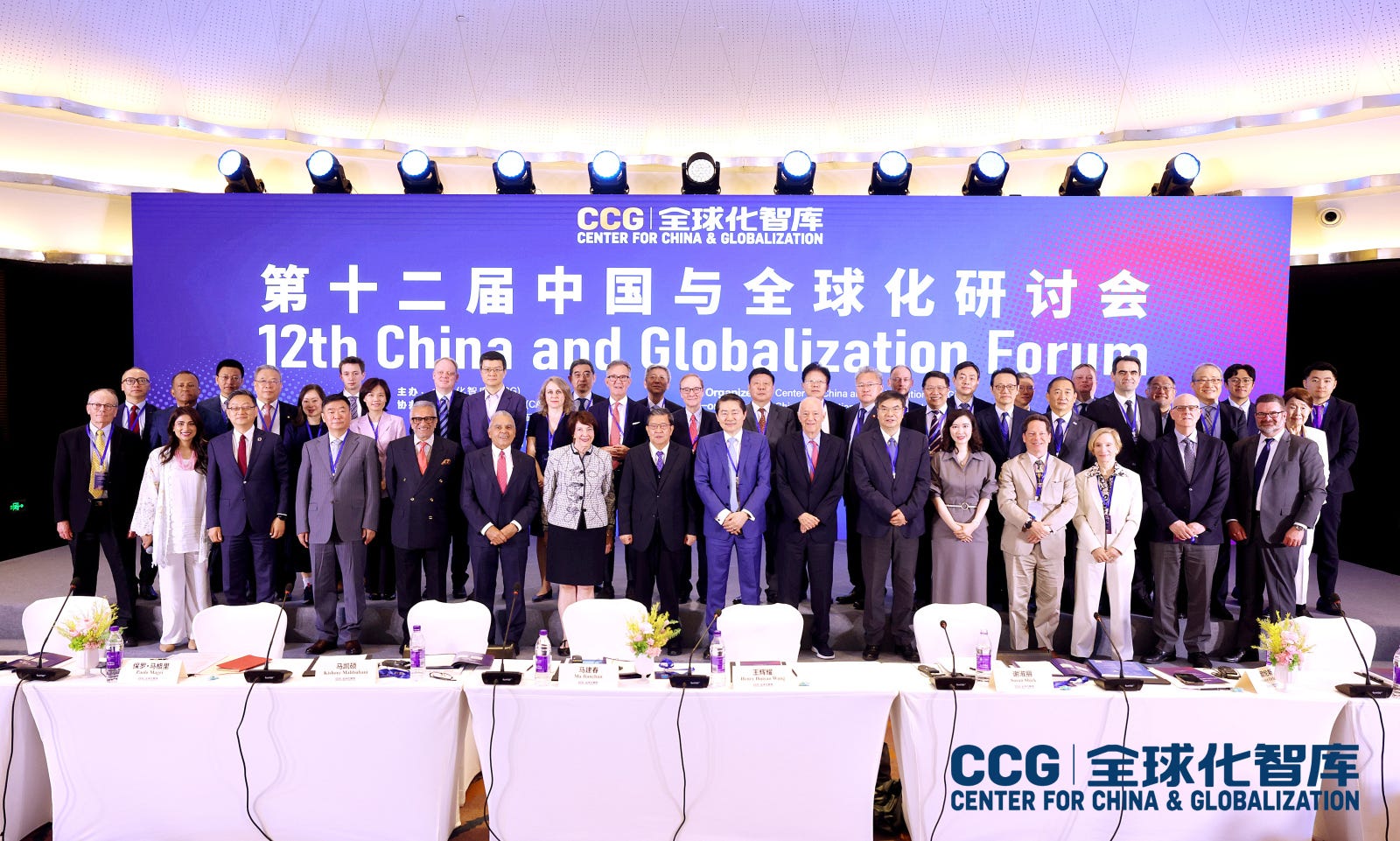
Below is the transcript of the forum’s opening ceremony, moderated by Mabel Lu Miao, Co-Founder and Secretary-General of CCG. Henry Huiyao Wang, Founder and President of CCG and former Counsellor of the China’s State Council, delivered opening remarks.
The session then featured keynote speeches from:
Long Yongtu, former Vice Minister of the Ministry of Foreign Trade and Economic Cooperation and former Secretary-General of the Boao Forum for Asia;
Susan Shirk, research professor at the UC San Diego School of Global Policy and Strategy, director emeritus of its 21st Century China Center, and former Deputy Assistant Secretary of State in the Bureau of East Asia and Pacific Affair, U.S. Department of State;
Steve Orlins, President of the National Committee on United States-China Relations (NCUSCR);
Kishore Mahbubani, Distinguished Fellow at the Asia Research Institute, National University of Singapore and former singaporean ambassador to the United Nations;
and Paolo Magri, President of the Advisory Board of the Italian Institute for International Political Studies (ISPI).
CCG has broadcast the video recording of the opening ceremony on Chinese social media platforms and uploaded it to its official YouTube channel.
This transcript is based on the video recording and has not been reviewed by any of the speakers.
Mable Lu Miao, Co-founder and Secretary-General of the Center for China and Globalization (CCG)
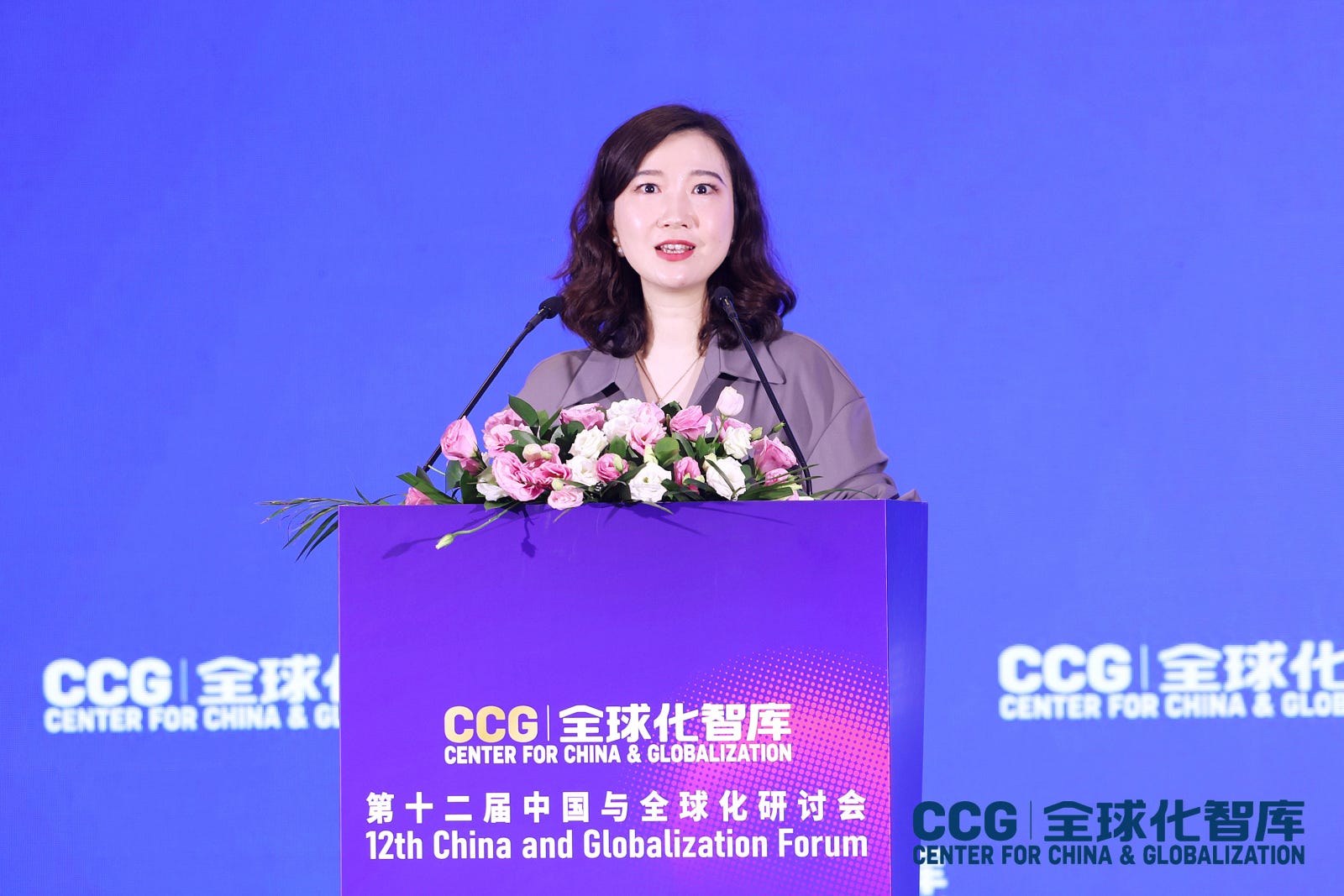
Your Excellencies, distinguished guests, ladies and gentlemen, friends and colleagues, good morning. It is my great pleasure to welcome you all to the 12th China and Globalization Forum.
This year, we are privileged to co-host this forum with our distinguished co-organisers: the China Association of International Trade (CAIT), the China Society for World Trade Organization Studies (CWTO), the China-U.S. Exchange Foundation (CUSEF), the Adenauer Foundation, Schwarzman College, Tsinghua University, and the European Policy Centre (EPC). Your generous support and close cooperation have laid a solid foundation for in-depth exchanges at this forum. Thank you all for your unwavering support.
Today, we are honored to welcome a diverse group of leaders to this forum, with around 200 distinguished participants from across Asia, Europe, the Americas, Africa, and Oceania. They have gathered here today. We have with us policymakers and diplomats, along with experts from think tanks. We also see professionals from international organisations, NGOs, and foundations, scholars from leading universities worldwide, executives from prominent multinational corporations and enterprises, representatives from international and domestic media, and officials from relevant Chinese government departments.
With that, we have a packed agenda today, featuring insightful keynote speeches and roundtable discussions. Our discussions will be on global governance, U.S.-China relations, and the future of Europe. The opening session features a distinguished group of speakers, including Dr Henry Wang, Minister Long, Professor Susan Shirk, Mr Steve Orlins, Professor Kishore Mahbubani, and Dr Paolo Magri. With such a diverse and distinguished lineup, the opening session will offer valuable perspectives. We look forward to an insightful and thought-provoking discussion that will set the tone for the rest of today’s forum. Without further ado, let us begin our opening session.
Now, please join me in welcoming Dr Huiyao Wang, founder and president of the Center for China and Globalization (CCG), and former counsellor to China’s State Council, to deliver his welcome remarks. Dr Huiyao Wang is a pioneer and thinker in the field of China, globalisation, and global engagement. He also serves as Chief Editor of the Springer Nature China and the Globalization Book Series, which has published 12 books on China and globalisation. The floor is yours, Dr Wang. Welcome.
Henry Huiyao Wang, Founder and President, Center for China and Globalization (CCG); Former Counsellor of China’s State Council
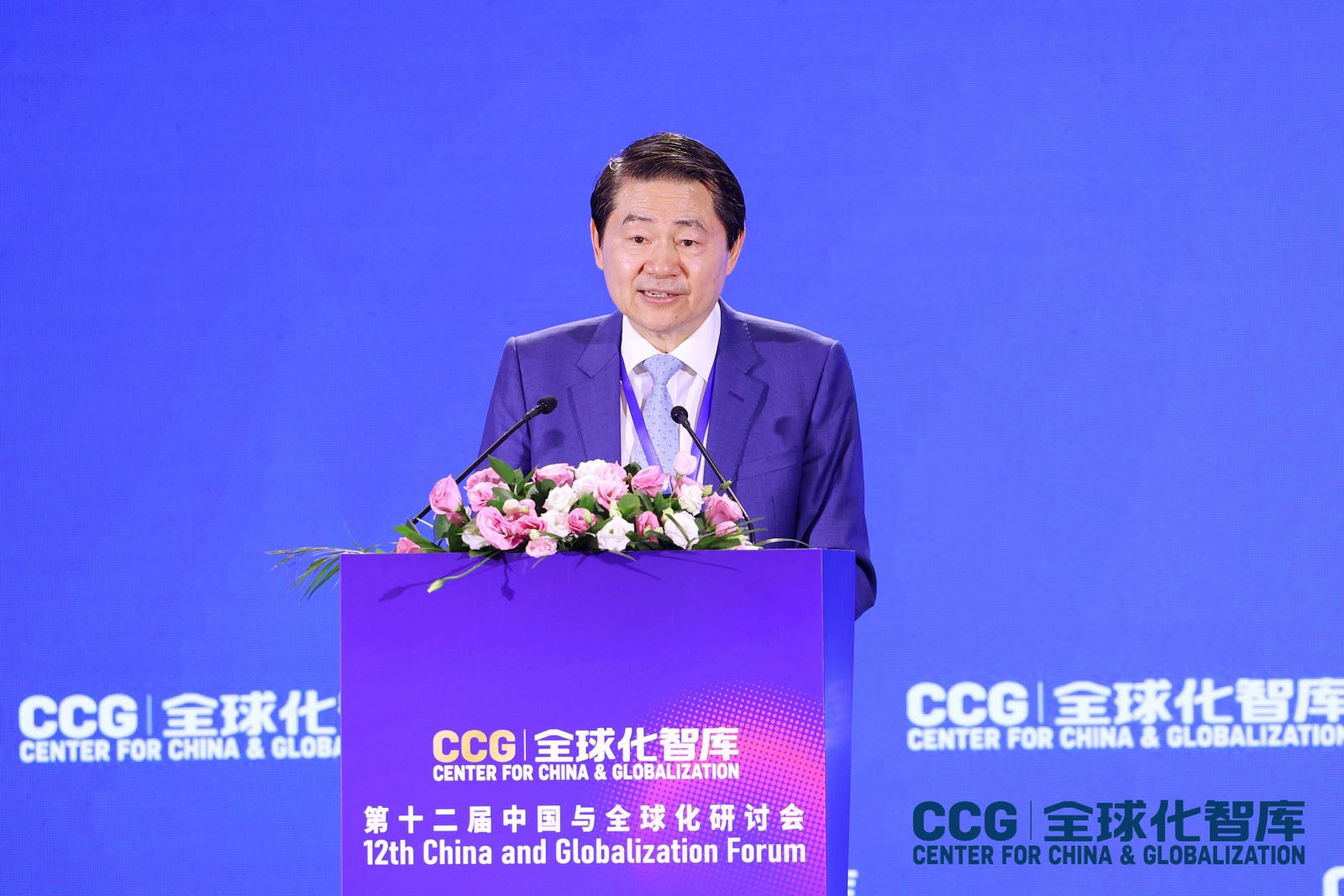
Distinguished Minister Long Yongtu, Professor Susan Shirk, President Steve Orlins, Professor Kishore Mahbubani, President Paolo Magri, President Mahbubani, and also President Jin,
Your Excellencies, distinguished guests, distinguished colleagues, friends, and ladies and gentlemen, good morning.
It is really a profound honor to welcome you at this 12th China and Globalization Forum that we’ve been holding for 12 years in a row. So, we convene here today at a critical juncture, against the backdrop of unprecedented change and a rapidly shifting global landscape. The development dynamics in the world are exerting a profound impact on the evolution of a multipolar global order—a pragmatic paradigm further complicated by the escalating severity of the geopolitical crisis, most notably the unfolding U.S.-Israel-Iran conflict and the ongoing war in Ukraine. In a world increasingly defined by such profound uncertainties and fragmenting blocs, the necessity for candid, inclusive, and constructive international dialogue has never been so urgent. This is precisely why our gathering here today is so timely.
Among these global headwinds, China has entered a critical stage of implementing its 15th Five-Year Plan, deepening high-level opening up, actively participating in global governance, and advancing high-quality development. For China and the outside world, this represents an important strategic mission entrusted to us by the new era, reinforcing our commitment to seeking cooperative solutions and bridging divides in these turbulent times. So again, this is really a great moment for all of us to come here today to talk and discuss.
Our agenda today is designed to tackle those pressing challenges head-on. We’ll begin momentarily with keynote speakers who represent very well the perspectives from their respective backgrounds, exploring the broader challenges and prospects for global governance, cooperation, and international collaboration. Next, we will also examine the critical shift in China-U.S. relations, from engagement to the current situation, discussing whether cooperation in technology, trade, climate, and health can continue amid strategic stability, and strategic stability is something I think both governments want to seek. This is followed by the China-U.S. and Global Youth Roundtable, which we also attach great importance to, drawing valuable insights from the 10th anniversary of the Schwarzman College. We will then turn our focus to navigating between headwinds and openings, discussing the next chapter of China-Europe relations. We’ll also talk about the Global South and explore how we can forge cohesion and define a new era of partnership. And of course, we’ll also have a closed-door session on the China-Ukraine engagement discussion. Finally, our day will also be concluded with a dinner hosted by The Amersi Foundation to discuss the Middle East and what lies ahead. So we are truly privileged to have such a distinguished group of world-renowned experts and practitioners share their insights with us today.
As the organizer, the Center for China and Globalization is a frequent convener for global dialogues here in China, and CCG ranks one of the top 100 think tanks ranked by the University of Pennsylvania for five years in a row. We are the only non-government think tank that has a special consultative status from the United Nations. So we are deeply committed to our vision of fostering inclusive global dialogue and building bridges across nations and cultures.
So today’s forum is a vital continuation of CCG’s global conversations, as we bring those critical dialogues here to Beijing. Your professional insights and practical experience will inject invaluable wisdom into our discussions today, providing a vital reference for global governance and China’s global development.
CCG remains steadfast in its mission to convene China’s voice, build a global consensus, and explore feasible solutions to the dilemmas that we are having in our society today. Ultimately, CCG wants to promote a mutually beneficial international cooperation. So, I really look forward to your contributions as we work together towards those shared goals. This is really a great occasion to welcome all of you.
I know many of you are coming from different parts of the world. Some are actually just arriving today, like Amersi and Achilles from Athens. We were in Athens in Greece just yesterday attending the Delphi Forum. So we see so many friends. We have Paolo coming from ISPI in Italy, and of course, we have Fabian from Brussels. Just to name a few. We have so many different people, and of course, we have Steve Orlins, Susan—those prominent U.S. representatives—and we have Kishore arriving today especially for this conference. And of course, we have Minister Long; he is chair of CCG’s Advisory Council, personally attending this 12th China and Globalization Forum. So we are very honored to welcome all of you, and again, thank you all for coming.
Mable Lu Miao
Thank you, Dr. Wang, for your great opening remarks. Now, it is my distinct honor to have Minister Long Yongtu, former Vice Minister of the Ministry of Foreign Trade and Economic Cooperation and former Secretary-General of the Boao Forum for Asia. He is also CCG’s Chairman for our Advisory Council. Mr. Long is a distinguished Chinese diplomat, trade expert, and prominent figure in global economic governance. He is best known as China’s chief negotiator for WTO accession. Welcome, Minister Long.
Long Yongtu, former Vice Minister of the Ministry of Foreign Trade and Economic Cooperation and former Secretary-General of the Boao Forum for Asia
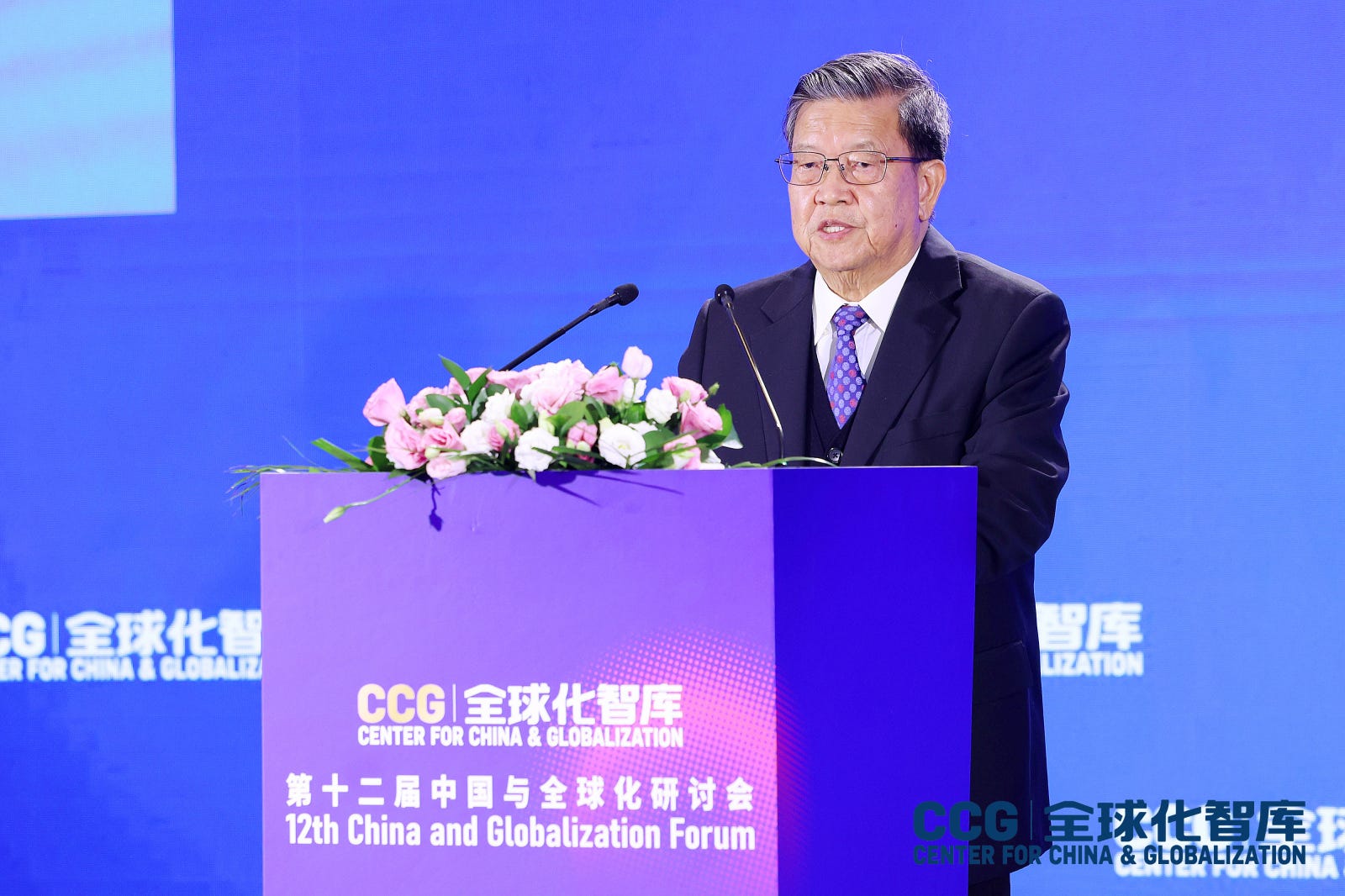
Distinguished guests, ladies and gentlemen: I am delighted to see so many old friends attending today’s conference. Since this is the annual meeting of the Center for China and Globalization, I would like to share my observations on globalization under current circumstances. Overall, I am optimistic about the prospects of globalization. This observation is based primarily on the following two judgments:
First, I am optimistic about the prospects of new modern science and technology. In the past, when we discussed globalization, we identified three main driving forces: the power of government, the power of the market, and the power of science and technology. In recent years, we have seen that some countries have significantly changed their views on globalization, while the global economy has also been volatile. Therefore, everyone feels that the power of government and the power of the market are still unreliable; the most important force still comes from the power of science and technology. We have all witnessed the rapid development of new science and technology represented by artificial intelligence in recent years. The development of science and technology knows no national boundaries; it connects more countries around the world. The development of science and technology also has its own laws, which do not change according to human will, and are less affected by the politicization of international economic relations. Under the impetus of modern science and technology, many countries, especially emerging and developing countries, have risen rapidly, making the global balance of power more balanced. As we all know, only a balanced global power structure and common economic development can produce a relatively healthy and equitable globalization.
Second, I am optimistic about the prospects of China-U.S. relations. China and the United States are the world’s two largest economies. Their relationship largely determines the trend of globalization’s development. Good China-U.S. relations are conducive to the development of globalization. Since I participated in China’s WTO accession negotiations and have dealt with Americans for more than a decade, I deeply understand that for China and the United States to have a good relationship, the following must be achieved: Firstly, China and the United States must respect each other and treat each other as equals. In this reality that values practical interests, it is unlikely for the strong and the weak to respect each other. After all these years of China’s rapid development, especially driven by emerging technological forces, the gap in strength between China and the United States, including both hard power and soft power, is narrowing. Coupled with correct perceptions, the foundation for mutual respect and equal treatment between China and the United States is being established.
Secondly, we must strengthen communication and reduce misjudgments. Due to differences in history, culture, social systems, and ideologies, China and the United States will certainly have many disagreements and even conflicts. However, if the two countries can strengthen communication and exchanges, and can sit together even in the most difficult times, then many misjudgments can be reduced, thereby keeping the relationship in a rational and stable state.
Lastly, China and the United States should seek common interests and achieve mutual benefit and win-win outcomes. The world is vast, and matters are complex; China and the United States can always find common interests in the intricate web of intertwined interests. Therefore, as President Xi Jinping pointed out, the essence of China-U.S. economic and trade relations is mutual benefit and win-win. Once common interests are identified, both sides can establish a stable, healthy, and sustainable relationship. At present, although China and the United States still have many differences, as the balance of power between the two sides is increasingly narrowing, and there is also a desire to seek common interests through exchanges, I remain optimistic about the relationship between China and the United States.
Distinguished guests, ladies and gentlemen, just now, of course, my understanding of globalization may have oversimplified a complex issue. But I hope that such a simplified observation can bring some inspiration to everyone’s discussion. Thank you.
Mable Lu Miao
Thank you, Minister Long, for your great speech. It is now my pleasure to welcome Professor Susan Shirk, professor at the University of California, San Diego. She served as Deputy Assistant Secretary of State for East Asian and Pacific Affairs of the U.S. Department of State under the Clinton administration. Professor Susan Shirk is one of the most influential American scholars on contemporary Chinese politics and U.S.-China relations. Based at the University of California, San Diego, she is also the founding Chair and Director Emeritus of the 21st Century China Center at UCSD. Welcome, Professor Susan Shirk.
Susan Shirk, research professor, School of Global Policy and Strategy, UC San Diego; director emeritus, 21st Century China Center; former Deputy Assistant Secretary of State, Bureau of East Asia and Pacific Affairs, U.S. Department of State
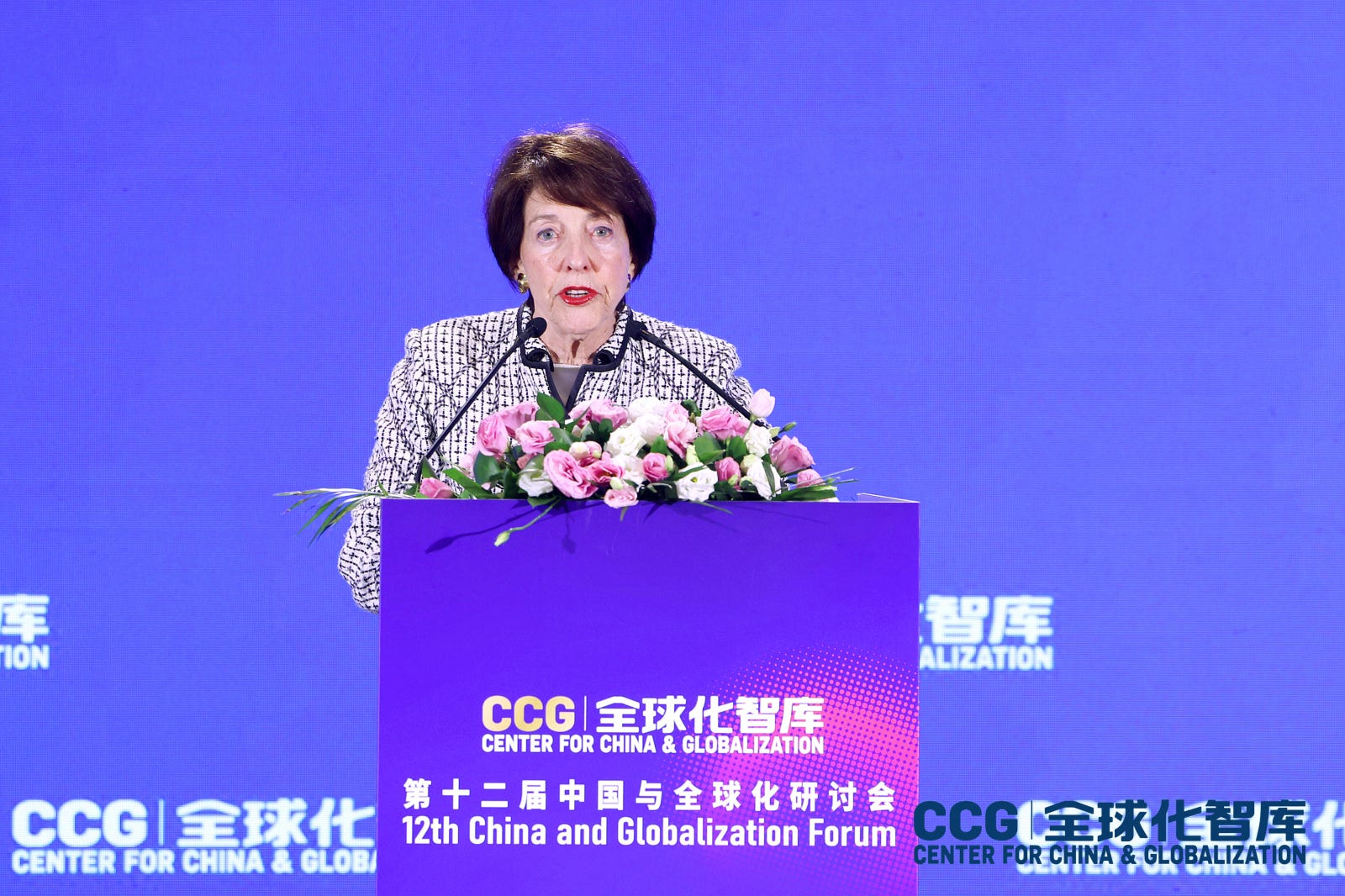
Well, it’s a great pleasure and honor for me to be here with you today at this forum. It is a very important moment, not just in U.S.-China relations but in world history, I would say, because the world is transitioning in its order from the unipolar world that we had following the end of the Cold War to a more bipolar situation between the United States and China, to a multipolar system, which is very complex and confrontational and filled with risk. I recently have read the book by Cold War historian Arne Westad, which I recommend to everyone, called The Coming Storm, which compares today’s situation in the world with the situation at the end of the 19th century and in the lead-up to World War I in 1914. And although the situations are not exactly the same, there are many lessons from how the world fell into a great-power war—a very costly war—and the situation that we are in today.
One of the main points he makes is that the decision-makers, not just in the major powers but in many other regional powers and other countries, were motivated by fear—fear of challenge to their position of primacy or their position of influence in their own neighborhood, and fear of being attacked by other countries. And this human emotion, this suspicion of other countries and fear, motivated them to try to protect themselves in ways that led to misunderstandings, misperceptions, and especially—and this is one of his major points—the failure to find compromises that would stabilize the situation and preserve the peace. The problem, the challenge, is not just between the major powers themselves, but also there are so many festering regional disputes that have not been resolved over many, many years, and that these regional disputes can draw in the major powers in a way that leads to major-power war. And I think we see this quite vividly in the Middle East today.
I think another implication of Professor Westad’s chilling but very important analysis is that today, I see a failure of a lack of imagination. People, and especially decision-makers in governments in Washington, Beijing, Moscow, Delhi, European capitals, Tokyo—all of these countries—they’re fearful, and they’re focusing on how to reduce their risk and protect themselves. And there’s no vision, no imagination of how positive initiatives, compromises, and unilateral gestures could reduce the mutual suspicion and preserve the peace. I thought of this a lot yesterday when I was at Tsinghua, and people were once again making reference to the Boxer Indemnity funds that Theodore Roosevelt returned—I think around half of those indemnity funds to China for scholarships—and that was very important to Tsinghua, very important to MIT. And it was a gesture of confidence in the future and mutual trust. And now, can we imagine today such a gesture on the part of the U.S. government, the Chinese government, Moscow, any other government, to take such a unilateral gesture of confidence in the future and ability to preserve the peace?
So I have some thoughts about this year in U.S.-China relations. It is a year when there are great opportunities, more opportunities than we’ve had in many years because of the leaders’ meetings. And my hope is that we can use these meetings to show imagination, to reduce mistrust, and to have the U.S. and China not just stabilize their bilateral relations but work together to help manage this new multipolar, very complex world and preserve global peace. Thank you.
Mable Lu Miao
Thank you, Professor Susan. Thank you for your great remarks. Yes, U.S.-China does not handle our bilateral relations—we should work together for the multipolar world. Let us then welcome Mr. Steve Orlins. Mr. Steve Orlins is CCG’s old friend. He is also our veteran U.S.-China expert, lawyer, and business leader. He is the president of the National Committee on U.S.-China Relations. He has led this prominent U.S. nonprofit organization, building understanding and dialogue between the U.S. and China, since 2005. So welcome, Steve Orlins, to deliver his keynote speech. The floor is yours, Steve.
Steve Orlins, President, National Committee on United States-China Relations
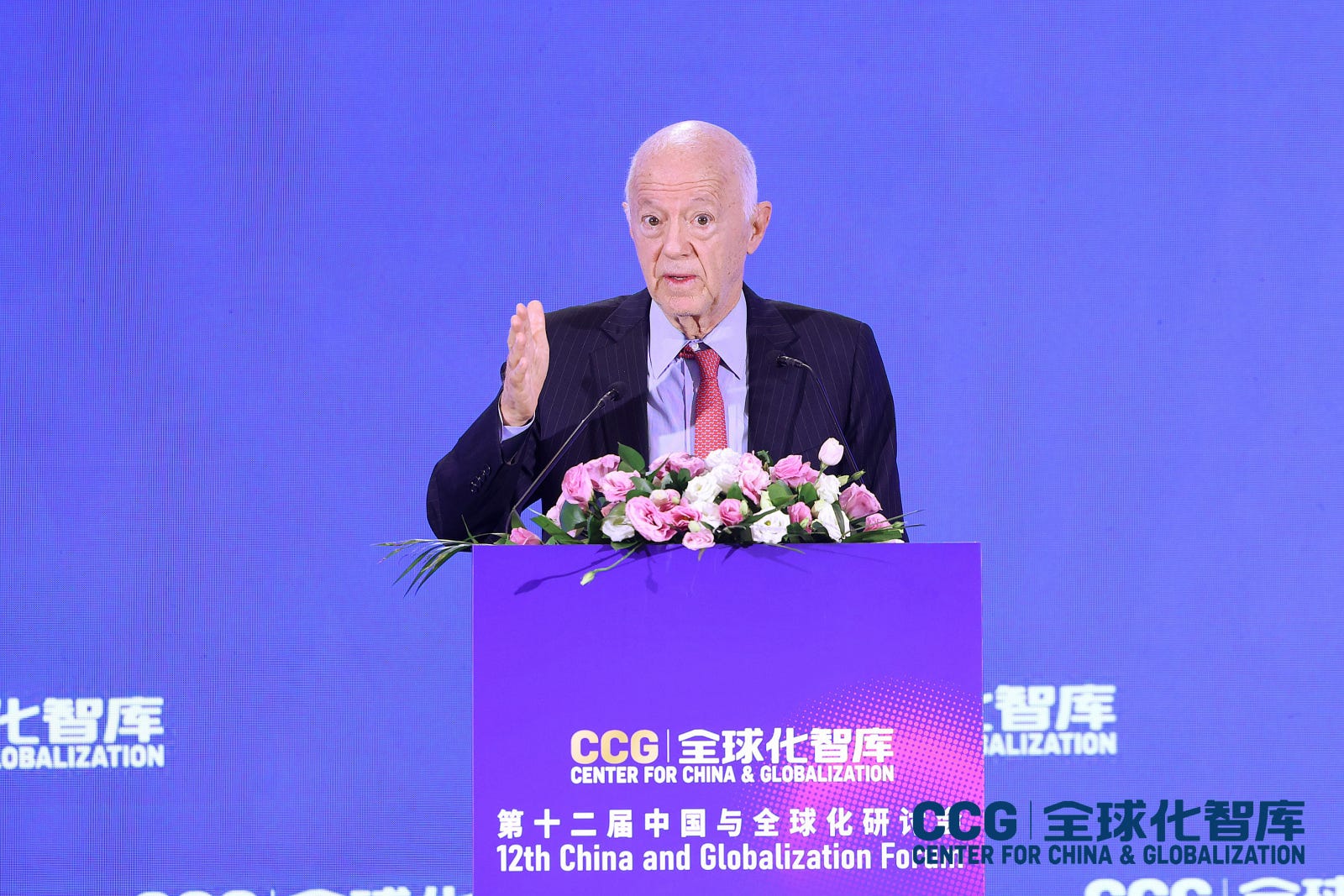
Well, it’s great to be here. I think, as Mabel, as Henry, Susan Shirk, Scott, Da Wei, and Roberta, and many others in this room know, I will soon be stepping down as president of the National Committee on U.S.-China Relations. So it’s given me the opportunity to think back to my failures, which have been many, and to the successes, which have also been not insubstantial. So what I’d like to cover very briefly today is some of the successes—I’ll ignore the failures—and talk about the lessons for us today in those successes.
You know, I was a student in Taiwan in 1972, and it was very hard for us to come to China then. So I did come down to Hong Kong, and I went to Lo Wu. You could take the train. You couldn’t go to Shenzhen. You took the train, and I stood at Lo Wu, and I looked across the border, and I saw PLA soldiers there, and I thought, “So I finally have come. I finally can see China.” And I was so excited as a young student having studied Chinese history when I was back in the university. And then a couple of months ago, I was in Shenzhen, and I was at the Futian Shangri-La holding meetings, and I left the Futian Shangri-La, and I walked into the station, you know, the high-speed rail stop, and I was in Kowloon in 14 minutes. So, a trip that 55 years ago we couldn’t take, now I could accomplish in 14 minutes. And the message for America in that is: China constantly changes, and we should never, ever forget that China is not static. And that’s message one.
Message two is: then I was in the State Department working for Secretary Vance, and President Carter talked to us. Because I spoke and read Chinese, I was put on the team to establish diplomatic relations with China, and President Carter talked to us about the polling. So even back then, we had polling, and it was quite negative on China—it was 1978—and he talked to us about the opposition in the House and in the Senate to the establishment of diplomatic relations, and he said, “But we are going to do this because it’s right for America.” He ignored the polling, and he decided to do this, and he stood firm. And I still remember—I think I was 28 years old—and when your boss… I did not testify before the Senate Foreign Relations Committee, but my boss did, and I sat in the second row behind him and listened to him be excoriated by the Senate Foreign Relations Committee. Obviously, they felt we had sold out American interests, when in fact what we did is we set up a peaceful Asia for the next four-plus decades. And don’t forget, up to then, we had basically been at war in Asia for 70 years, if you include World War II, the Vietnam War, the Korean War, etc. So it was looking beyond the polls.
Then I think back to—and that’s obviously a lesson for today. I very much… America’s views of China are actually improving. We saw in a Pew poll a couple of weeks ago that it’s up to, I believe, 37% have a favorable view, which is important because obviously the people’s view is the foundation for what U.S. policy should be. Then I think back to October 19th, 1979, when finally we had established diplomatic relations, and I could come to China, and I landed at the old Beijing airport. And as Roberta knew, because she was there too at that time, when I rode from the Peking airport to the Peking Hotel, it was 1:00 in the morning. I did not pass one other car. We were the only car on the road. There were ox carts, there were bicycles, but there were no other cars. And think about the contrast today—obviously, you’d probably have a traffic jam at 1:00 in the morning.
Now, what was so interesting about then? We’ve got a friend who worked on one of the joint ventures that we established back in 1980, ’81, ’82, and ’83. We didn’t have a roadmap. Chinese laws on joint ventures were about this thick—they were about 10 pages—and we created a roadmap because the folks who were doing this, we and the U.S. companies that were making this investment, and the Chinese companies who were accepting that investment, basically had the same goals and trusted each other. And the lesson for today is: even when you don’t have a roadmap, you can find a way to do it. And I so hope, as Susan made reference to, when President Trump comes next month, that we can make progress when there is no roadmap.
I think back to 1984, when Margaret Thatcher signed the agreement with Deng Xiaoping for the reversion of Hong Kong, and I was in Hong Kong working for Lehman Brothers. And I thought, “What can we do to make this a better reversion, to have stability at that point?” All debt in Hong Kong expired before 1997. So we sat, and we figured, let’s do a big project where the debt expires after 1997, and with a Japanese construction company, with CITIC, with Bank of China, with Hongkong and Shanghai Bank, with Citibank, we put together a financing for something called the Eastern Harbour Crossing, which extended beyond 1997. And it gave Hong Kong the financial stability to be able to do well through the reversion.
When Susan talked about being at Tsinghua yesterday, we were there for the 10th anniversary of the establishment of Schwarzman Scholars. And when I think about successes, when I think about victories, that is really one of the successes that I think about, because what Steve Schwarzman did is establish a program where we have leaders from all over the world, including China, come to China for a year and learn about China and learn about leadership. And these kids are already becoming leaders. And one day, like the Rhodes program, we will have presidents and premiers and CEOs who have spent time in China and have developed a better understanding of China.
Last, it’s funny—I’ve done a lot of things over these years, but the last… and I think Mabel and Henry certainly know what I’m best known for in China, which is a quote I gave at the Chinese Embassy in Washington a few years ago, which was, “在困难的时候要看到成绩,要看到光明,要提高我们的勇气“. For those of you who may not speak Chinese, it’s about basically being courageous in the face of difficulty. And as Susan made reference to, we are in a difficult situation. So my message to all, and to this meeting, is: be brave, know what you want, and stick with it. But Henry, Mabel, thank you all for having me.
Mable Lu Miao
Thank you very much, Mr. Steve Orlins. You spent so many years on U.S.-China relations and boosted our confidence a lot. And be brave, like you mentioned—always be optimistic. Although the Chinese government and Chinese officials always mention that they are cautiously optimistic, we are really optimistic. Just as we listened to Susan, Steve, and other experts on U.S.-China relations, I would like to move to the Asian views. Let us then welcome Professor Kishore Mahbubani, distinguished fellow of the Asia Research Institute at the National University of Singapore. Professor Kishore Mahbubani is a distinguished Singaporean diplomat, scholar, and global affairs expert. He has had a 33-year diplomatic career with the Singapore Foreign Ministry, twice served as Singaporean Permanent Representative to the UN, and as President of the United Nations Security Council. He is a founding Dean of the Lee Kuan Yew School of Public Policy in NUS, named among Foreign Policy’s Top 100 Global Thinkers, and renowned as “The Muse of the Asian Century” for his authoritative insights on Asia’s rise and global power shifts. He is the author of The Asian 21st Century, published by the CCG-Springer Nature China and Globalization Book Series, which has been accessed over 4 million times. The floor is yours, Professor Kishore Mahbubani.
Kishore Mahbubani, Distinguished Fellow, Asia Research Institute, National University of Singapore; former singaporean ambassador to the United Nations
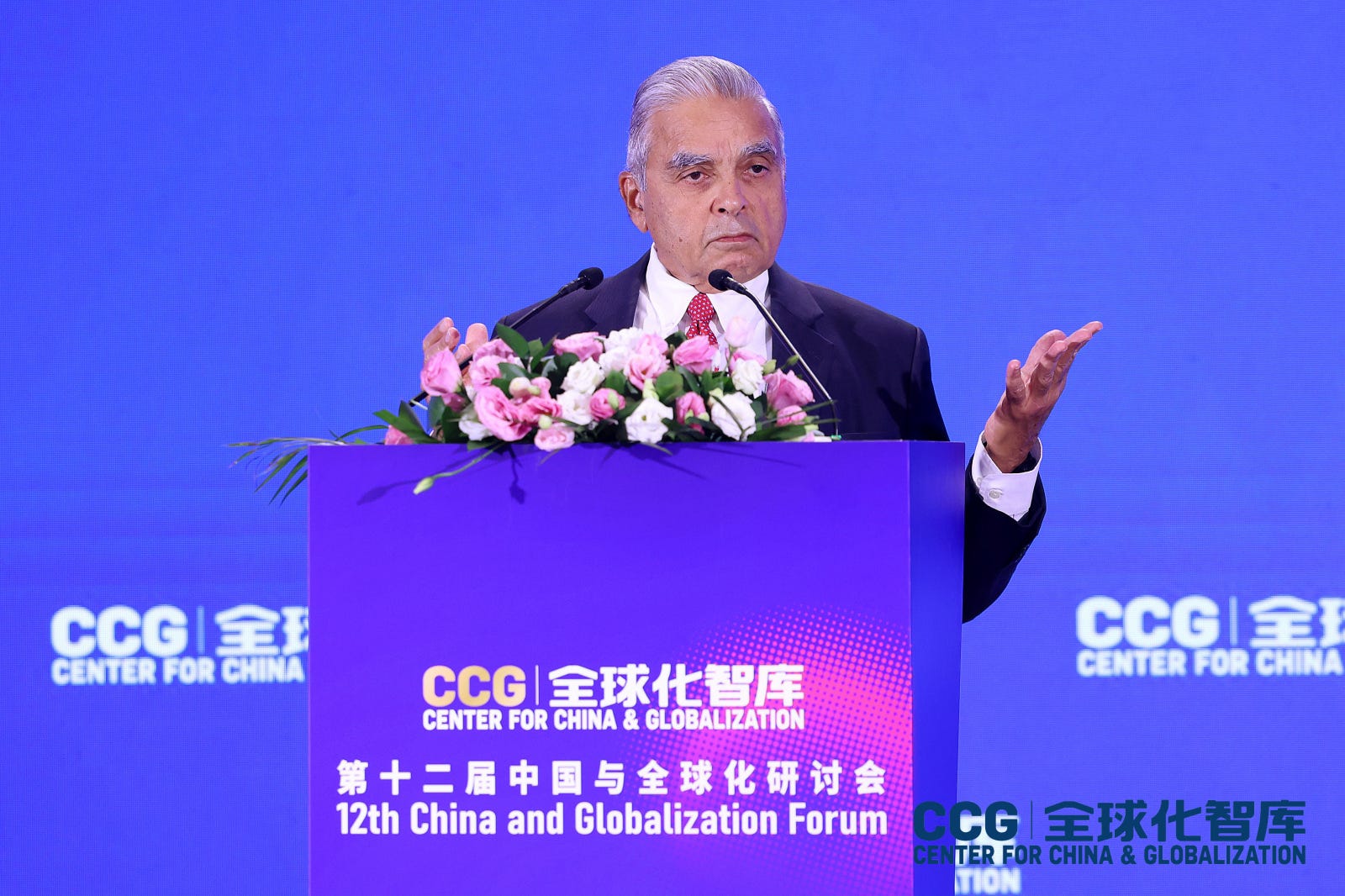
Thank you, Henry, Mabel, for organizing this splendid meeting. I’m so glad I’m following Steve. He spoke about successes; I’ll speak about failure. Indeed, one of the biggest failures of our time. And what’s that? Look at where we are today. The whole world is frozen. Our economies are stuttering. Why? Because someone started a completely unnecessary, illegitimate war. One decision, and the whole world is frozen. And why is that? I think the answer is that we haven’t done enough as humanity to delegitimize unnecessary, illegitimate wars.
Now, some of you may be puzzled: if I’m talking about unnecessary, illegitimate wars, what is a necessary, legitimate war? Well, we have had a few. I have seen them. I can tell you, for example, that when Saddam Hussein invaded Kuwait, President George H.W. Bush did the right thing. He mobilized the UN, got world support, and removed Saddam Hussein from Kuwait. That was a necessary, legitimate war. Similarly, after Manhattan was attacked, President George W. Bush convened the UN Security Council, and I was there sitting in the council. I voted for the resolution that justified the attack on al-Qaeda for the terrible things it did. Yes, there are legitimate, necessary wars, but many of the wars that we are experiencing are unnecessary and illegitimate.
So what do we do? Here, I think we make a mistake when we think that we’re helpless, that we can’t change things. But if you look at the longer arc of human history and see how we have transformed global norms over time, we have progressively delegitimized barbaric practices, inhumane practices, successfully. So, for example, we have delegitimized slavery. Nobody can have a slave today. We have delegitimized torture. We have delegitimized child labor. We have delegitimized child marriages. We have done lots of things to improve the human condition. But we haven’t done enough to delegitimize wars. And unfortunately, they’re coming back with greater frequency.
So what else can we do? I think clearly we can learn the lessons from history. Let us ask ourselves, for example: why is it that today, within Europe, inside the European Union, you don’t just have zero wars between any two EU member states—you have zero prospect of war. France and Germany will never go to war with one another again. Nor will the UK and Germany. Why not? Because they went through the horrors of World War I, World War II, and they learned the lessons. So that is what we need to do. We need to learn lessons from unnecessary wars.
And I’ll give you a recent example. And this was a war amazingly started by a Nobel Peace Prize winner. And in an article I was reading yesterday by Andrew Byers, a professor in Texas, he says: “In 2016, near the conclusion of his second term, President Barack Obama was asked by Chris Wallace about his greatest mistake as president. Obama didn’t hesitate to respond. He said his ‘worst mistake’ was ‘probably failing to plan for the day after what I think was the right thing to do in intervening in Libya.’” That was an unnecessary war. And you could see what happened, as he says: “This resulted in Gaddafi’s death and the transformation of Libya into a failed state, a condition that persists thirteen years later, which has resulted in an ongoing civil war, countless deaths of civilians, and a humanitarian and refugee crisis.” But do we speak about it? Not at all. Libya is forgotten.
And that’s the mistake. Because when people die, when people suffer as a result of unnecessary wars, we should broadcast it, make the whole world aware. And remember, at the end of the day, the people who suffer the most from unnecessary wars are not the rich elites who travel around the world in private jets, but the people at the very bottom. And we see that today, even with what’s happening in the unnecessary war in the Gulf. So let us make a bigger effort. Let us work harder to delegitimize such wars, and then maybe we’ll make the world a better place. Thank you very much.
Mable Lu Miao
Thank you, Professor Kishore Mahbubani, for that impressive speech. Finally, last but not least, please join me in welcoming Dr. Paolo Magri, president of the Advisory Board of the Italian Institute for International Political Studies (ISPI), to deliver his keynote speech. I would like to introduce a little about Dr. Magri. Dr. Magri leads a very important Italian think tank, the Italian Institute for International Political Studies, Italy’s oldest and top-ranked think tank. He is also a professor of international relations at Bocconi University. He is a key figure bridging European geopolitics, business, and global policy networks. The floor is yours, Dr. Paolo Magri.
Paolo Magri, President of the Advisory Board, Italian Institute for International Political Studies (ISPI)
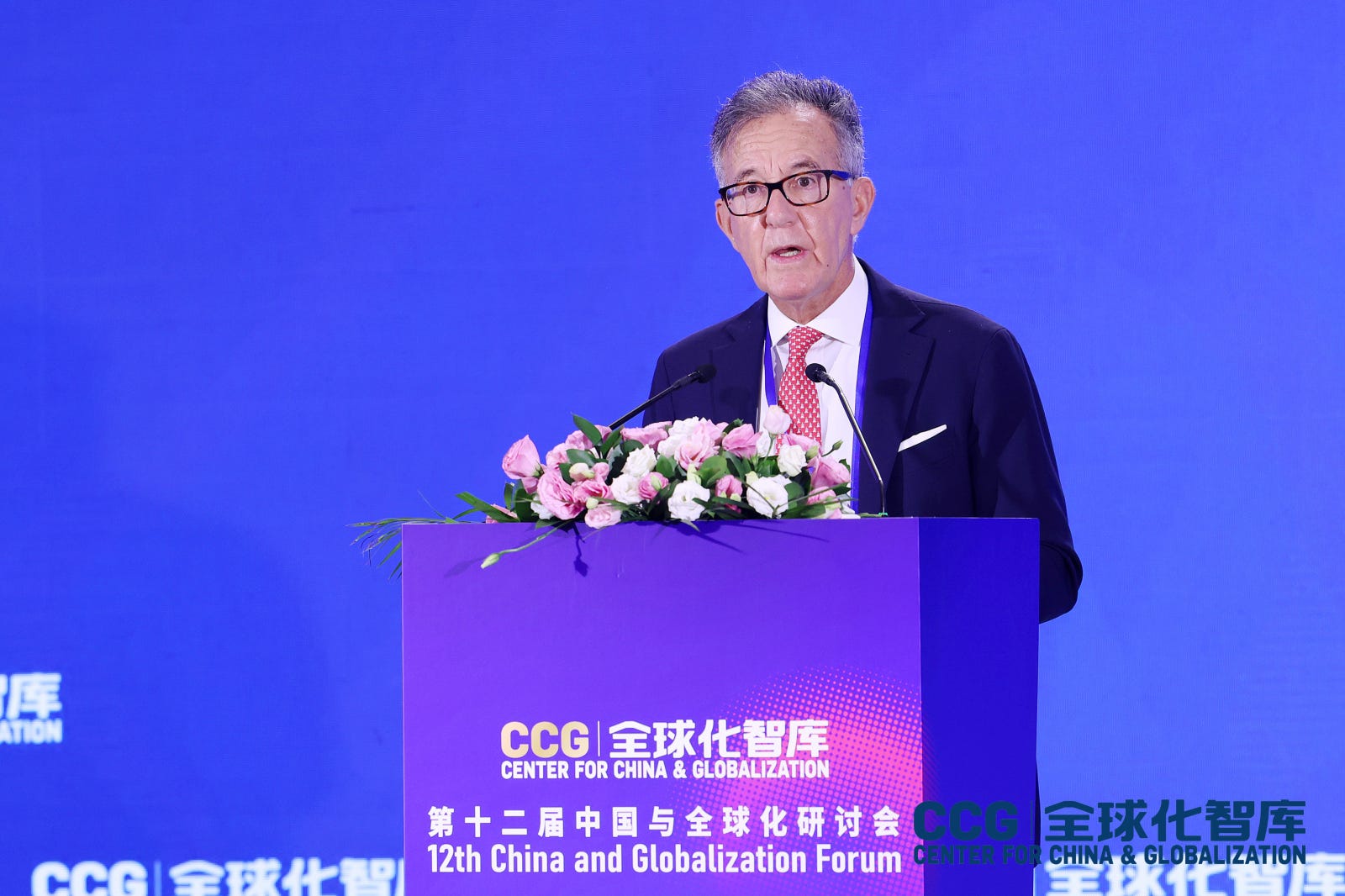
Thank you, Henry. Thank you, Mabel. Being the last, you know already everything about successes and failures, but it is nevertheless a privilege to speak after prominent speakers. And let me say, in particular, after Ambassador Mahbubani, whose work has consistently reminded us of simple but uncomfortable truths that many of the assumptions guiding global governance are not universal—they are historical and increasingly outdated.
And indeed, what is striking today, from Ukraine to Gaza to Iran, is how many of the core assumptions of global governance somehow collapsed. We assumed that alliances were stable anchors of order. Yet today, the most established frameworks, from NATO to BRICS, show internal fractures, diverging priorities, and limits. We assumed that economic interdependence would make war irrational and impossible. We are witnessing the reverse: war is driving economic fragmentation, decoupling, and the weaponization of trade, finance, and supply chains.
We have recently assumed that the United States under Trump would turn into a world less engaged globally, more isolationist. And then came Venezuela, Iran, and who knows next. We assumed that energy, especially oil, belonged to the geopolitics of the past. Instead, energy security has returned to the very center of strategic competition, alongside critical minerals and new technological dependencies. We assumed that violations of sovereignty and attacks on civilians were relics of another era. Yet today they are again central features of conflict, not exceptions, and we talk—and someone talked—about the end of civilization.
We assumed that military Goliaths would prevail quickly over weaker Samsons and Davids. Instead, asymmetry has proven resilient: weaker actors adapt and often reshape the battlefield in unexpected ways. We assumed that international institutions would act as first responders in crises. Instead, they often follow rather than lead. And we assumed that deterrence would remain stable and predictable. Instead, we are entering a world of overlapping, sometimes contradictory deterrence systems. And we assumed that conflicts would remain geographically contained. Instead, they affect economic, technological, humanitarian, or global spheres.
And yet, if it were not such a delicate and at times tragic moment, it would also be an extraordinary, stimulating intellectual moment. Because what we are witnessing is not just disorder, but a redistribution of ideas, power, and legitimacy—a moment that calls exactly for the kind of intellectual openness and strategic humility often advocated by Mahbubani in his writings. The real question before us is not whether the old assumptions were wrong. It is whether we are capable, together and rapidly, to build better ones. Together and rapidly, because as Antonio Gramsci, the Italian Marxist philosopher, wrote from prison during fascism in 1930: “The old world is dying; the new world struggles to emerge. Now is the time of monsters.” If we do want to limit and contain monsters, as we do, we need to work together and rapidly on the new world, with the strategic humility mentioned by Mahbubani, with the imagination of Professor Shirk, and being brave enough, as Steve said. Thank you.
The 12th China and Globalization Forum Held in Beijing

The 12th China and Globalization Forum, hosted by the Center for China and Globalization (CCG), was held in Beijing on Sunday, April 26, 2026.