


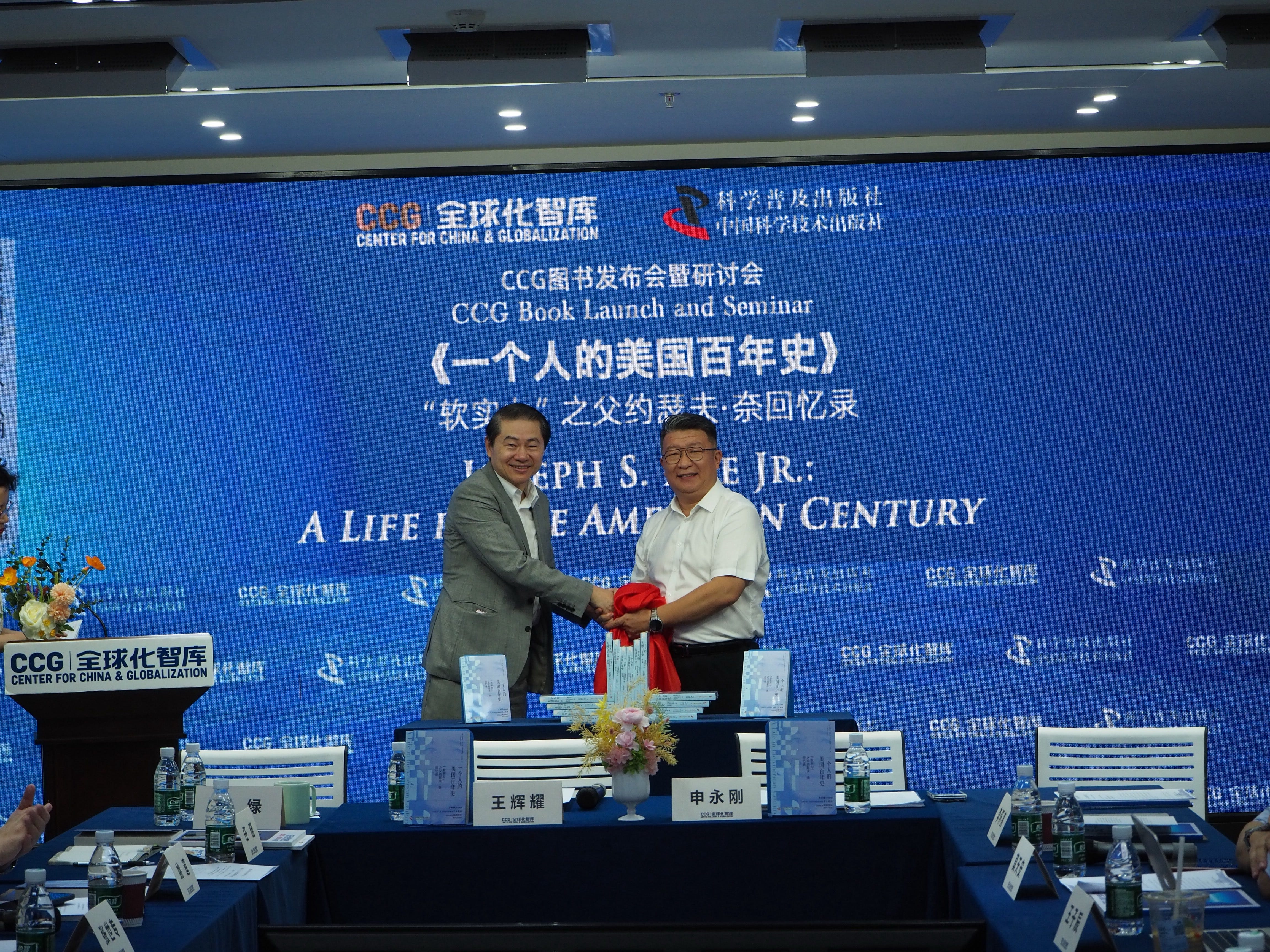
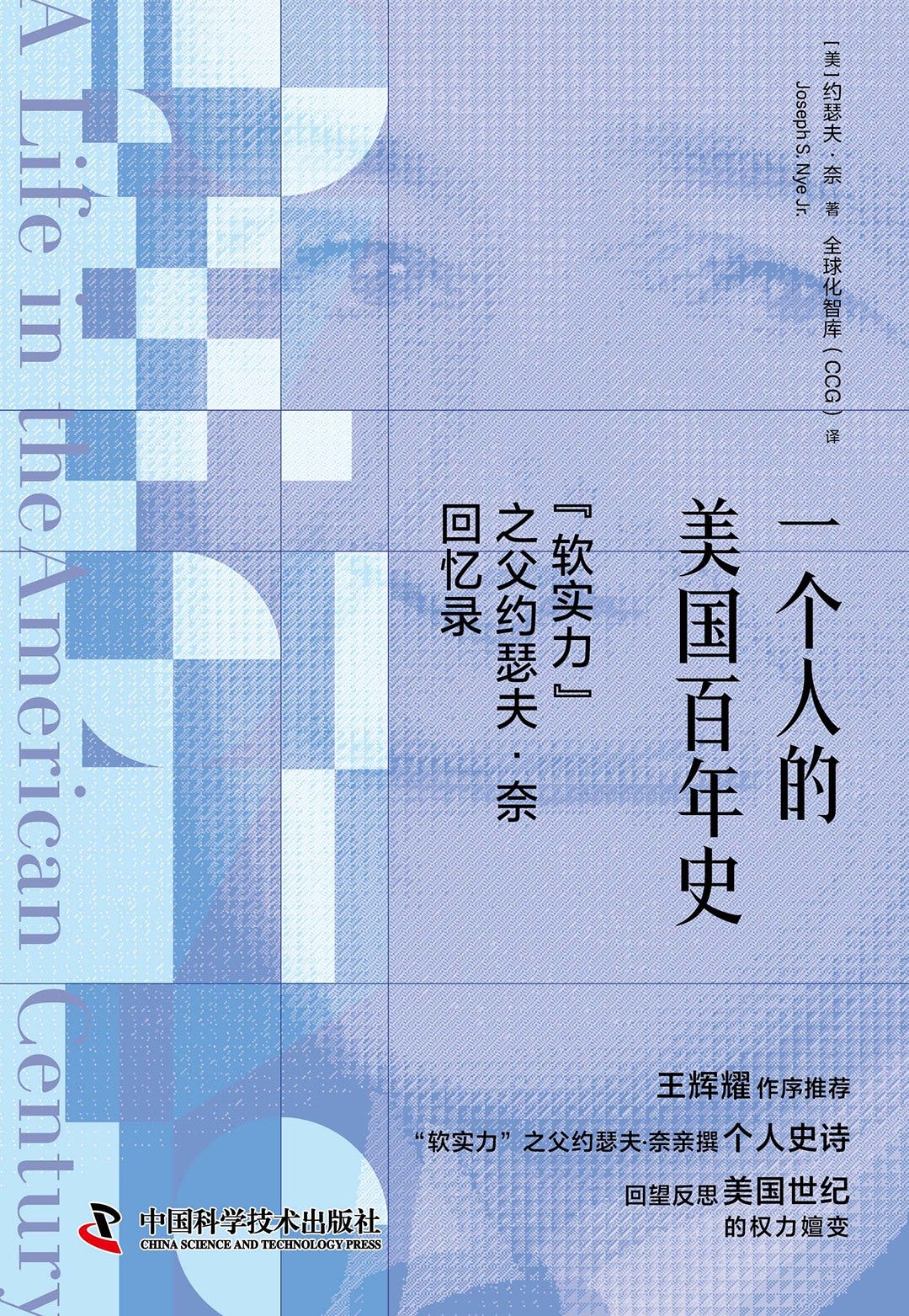
On August 27, 2026, the Center for China and Globalization (CCG) and China Science and Technology Press jointly held a launch event at CCG’s Beijing headquarters for the Chinese edition of A Life in the American Century (《一个人的美国百年史》), the final book and memoir of the late Joseph S. Nye Jr.
One of the most influential international relations scholars of his generation, Nye developed the concepts of “soft power” and “smart power” and held senior positions in both academia and the U.S. government. Drawing on more than eight decades of personal experience, the book intertwines Nye’s academic and policy career with some of the defining developments in modern international affairs, including the Cold War, nuclear nonproliferation, globalization, the war on terror, and the evolution of China-U.S. relations.
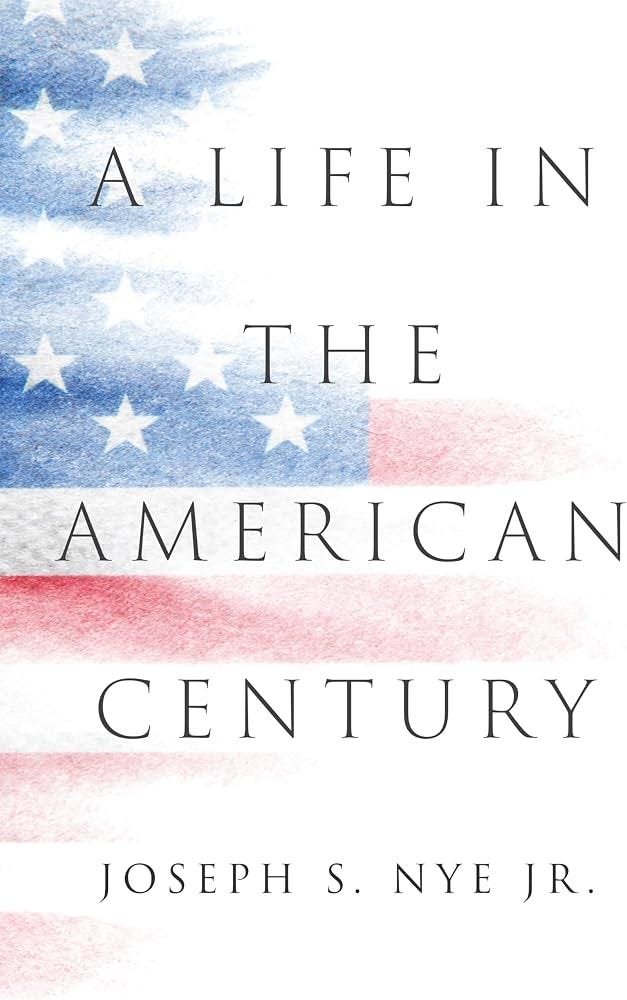
Nye maintained longstanding exchanges with CCG. In 2024, he authorized CCG to translate A Life in the American Century into Chinese.
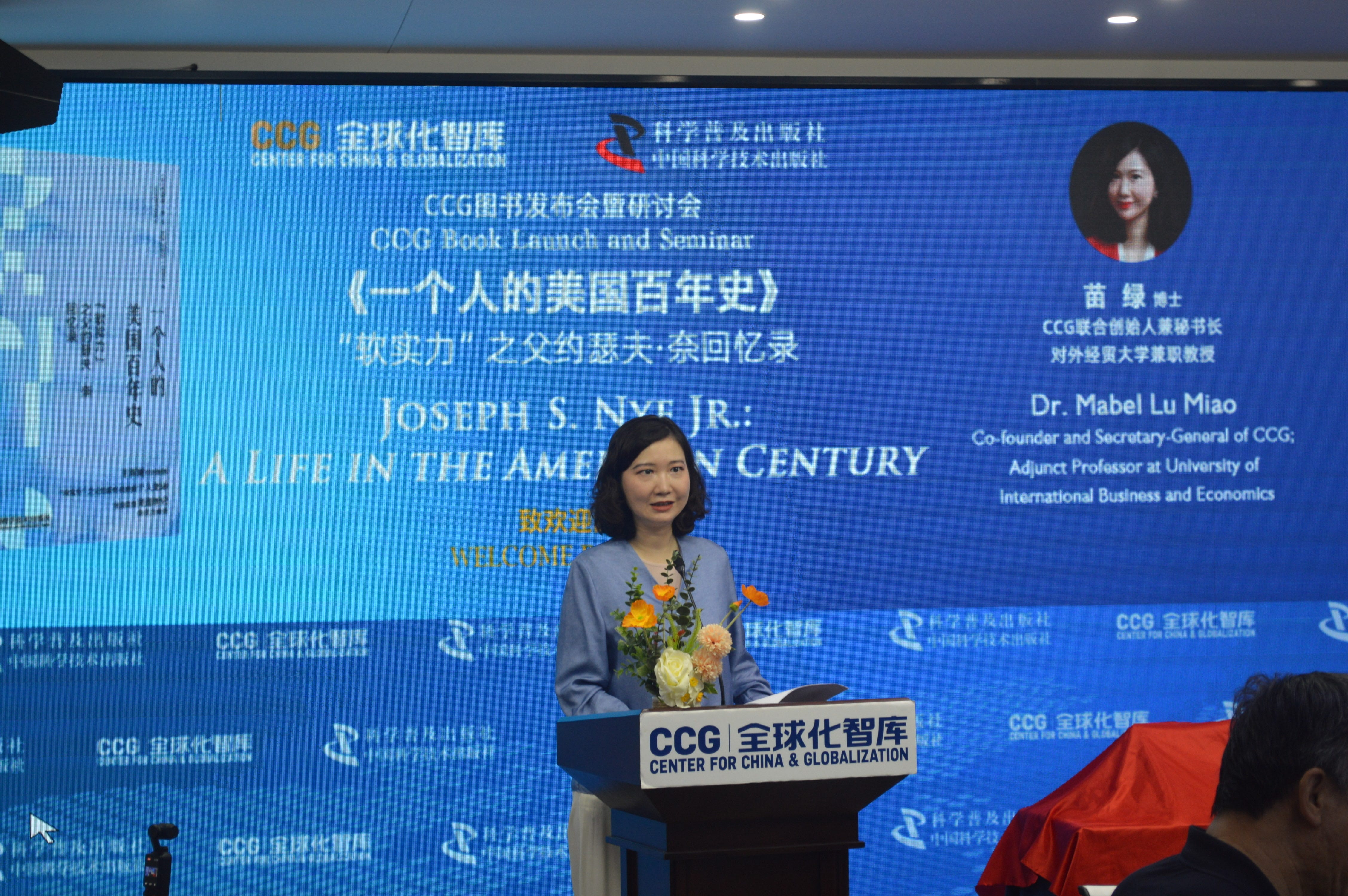
Mabel Lu Miao, Co-founder and Secretary-General of CCG, delivered welcome remarks and moderated the event.
Shen Yonggang, Deputy Editor-in-Chief of China Science and Technology Press Co., Ltd., gave the opening remarks, followed by the formal book launch led by Henry Huiyao Wang, Founder and President of CCG.
The launch was followed by a seminar bringing together Chinese and international scholars and experts, including
David Blair, former Chair of the Department of Economics at the Eisenhower School, U.S. National Defense University
Harvey Dzodin, former Vice President and Director of ABC Television and former Legal Counsel to President Jimmy Carter
Li Huailiang, Dean and Professor of the Institute for a Community with Shared Future at the Communication University of China
Andy Mok, Adjunct Lecturer at Beijing Foreign Studies University and CGTN commentator
Ren Xiao, Professor at the Academy of Regional and Global Governance at Beijing Foreign Studies University
Yao Yao, Dean of the Institute for Urban Civilization at the Communication University of China and Director of the National Soft Power Research Center at China Foreign Affairs University
Zichen Wang, Deputy Secretary-General, CCG
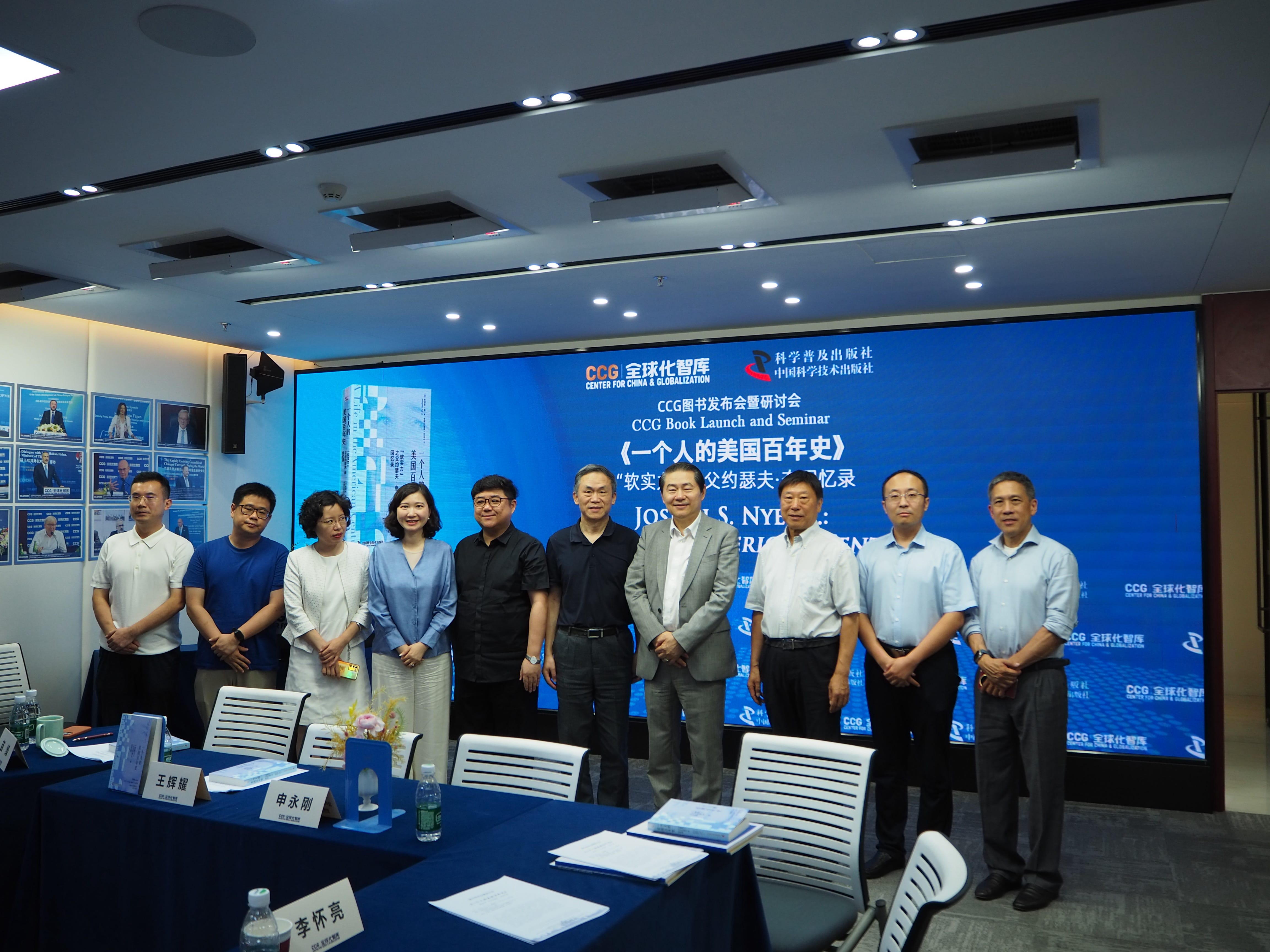
The following transcript is based on a recording of the event and has been lightly edited for clarity and readability. David Blair, Harvey Dzodin, and Andy Mok delivered their remarks in English; the other speakers spoke primarily in Chinese, and their remarks have been translated into English for publication.
Shen Yonggang, Deputy Editor-in-Chief, China Science and Technology Press
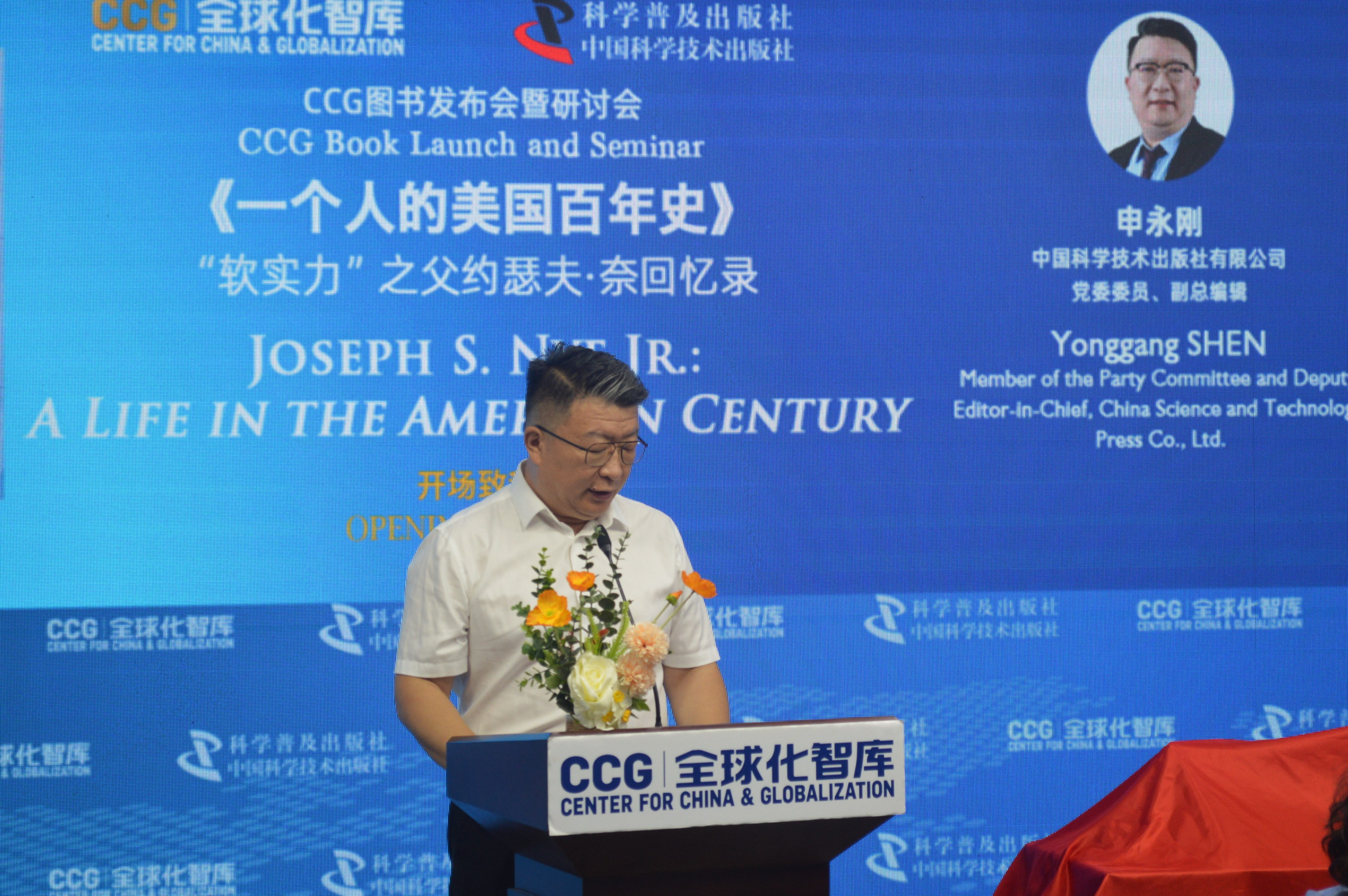
Distinguished guests, dear friends, good afternoon! It’s a great honor to attend today’s book launch and to witness, together with all of you, the publication of the Chinese edition of A Life in the American Century. I’d like to thank the organizer and initiator of this event, the Center for China and Globalization (CCG), as well as CCG’s founder Henry Huiyao Wang, Mabel Lu Miao, and the think tank’s translation team. I’d also like to extend my heartfelt thanks to the experts, scholars, and friends who have followed and supported the publication of this book.
First, allow me to express, on behalf of the press, our profound respect for this book’s author, Professor Joseph Nye. Professor Nye is an internationally renowned scholar of international relations, and the concepts of soft power and smart power that he introduced have had a profound impact around the world.
At a time when the international situation is tangled with turmoil and global development faces severe challenges, understanding how Professor Nye’s thinking on soft power took shape is of critical importance. President Xi Jinping has pointed out that diversity of human civilizations is a basic feature of our world; as the future of all countries are closely connected, tolerance, coexistence, exchanges, and mutual learning among different civilizations play an irreplaceable role in advancing humanity’s modernization process and making the garden of world civilizations flourish. Strengthening China’s cultural soft power bears on the country’s standing in the global cultural landscape, and on its international status and influence.
The right path is never walked alone; the world is one family. As changes unseen in a century continue to accelerate, revisiting Professor Nye’s thinking on soft power carries real significance for our era, helping us understand relations among major powers and promote exchange and mutual learning between civilizations.
China Science and Technology Press is a national science and technology publisher directly under the China Association for Science and Technology. It has long been committed to advancing the communication of scientific knowledge, promoting scientific culture, and fostering academic exchange between China and the rest of the world.
I have always believed that a good book can serve as a bridge of ideas and understanding across countries and cultures. The publication of A Life in the American Century is a meaningful reflection of our press’s commitment to sharing ideas, advancing knowledge, and promoting mutual learning among civilizations.
Throughout the publishing process, our editorial team worked closely with CCG’s translation team, maintaining rigorous standards for the translation and carefully refining every detail of the book’s design and production. Our goal was to present the book’s ideas and value to readers with the greatest possible accuracy and care.
Looking ahead, we will remain true to our mission by publishing more outstanding works with international vision and intellectual depth, and by producing more high-quality books that promote scientific culture, encourage exchange among different intellectual traditions, and contribute to dialogue across civilizations.
Finally, I would like to thank once again all the distinguished guests and members of the media who have joined us today. I wish this book launch every success. Thank you all.
Henry Huiyao Wang, Founder and President, CCG
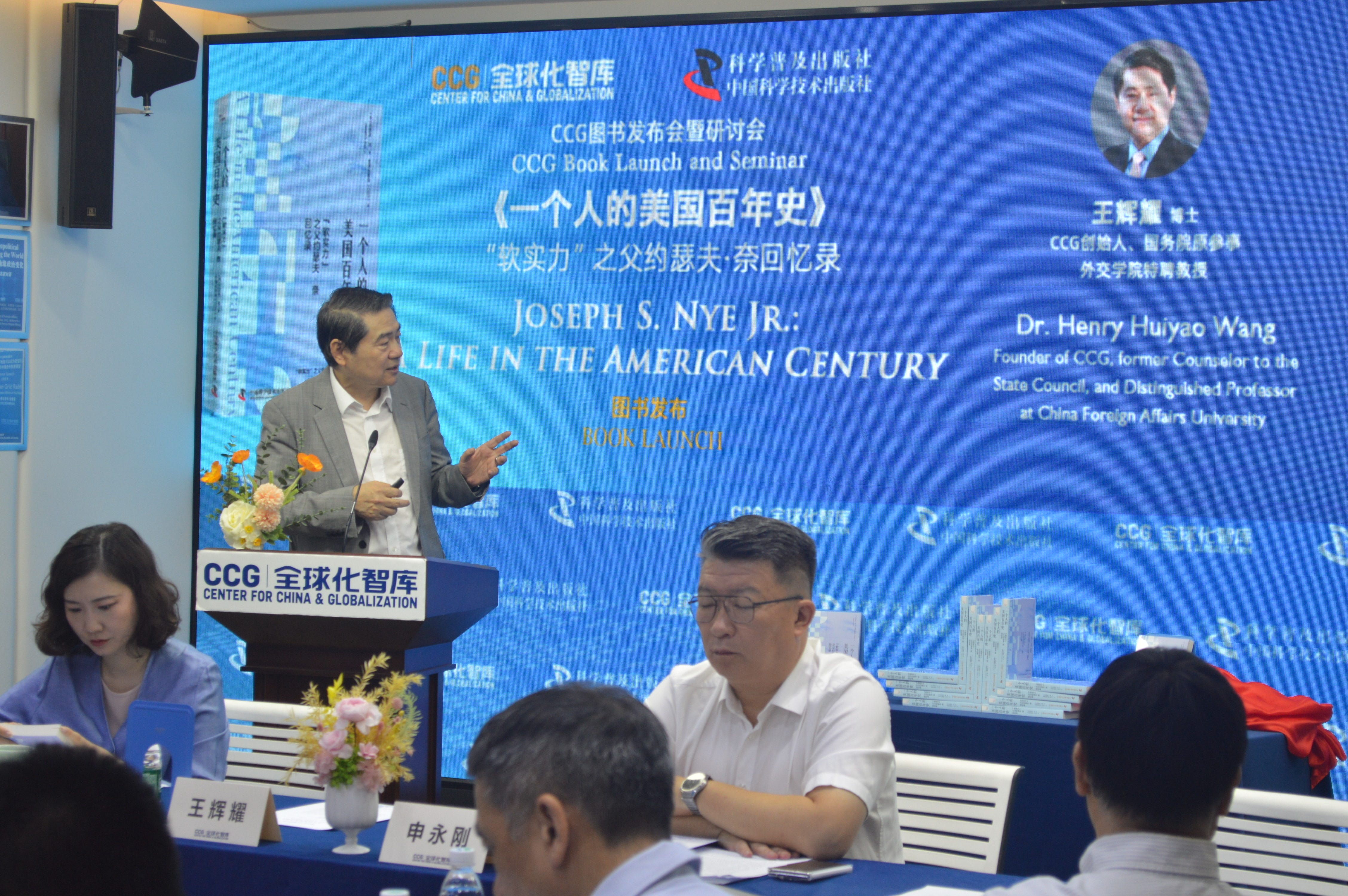
Deputy Editor-in-Chief Shen Yonggang, distinguished experts and guests joining us today — Dean Li Huailiang, Professor Ren Yuan, Professor Yao Yao, Professor Andy Mok — as well as our senior colleagues, friends from the media, and representatives from various sectors: good afternoon.
It is a great honor to be here today at CCG in Beijing for the launch of a newly published book from China Science and Technology Press: A Life in the American Century, the latest book by Professor Joseph Nye, the renowned American scholar, father of the concept of soft power, and former Dean of Harvard Kennedy School.
This launch is also tinged with some regret. Before his passing, Professor Nye entrusted CCG with translating the book, and with the strong support of China Science and Technology Press, we were able to bring out the Chinese edition. Sadly, however, he did not live to see its publication. Professor Nye passed away in May last year. His family, and in particular his son, have continued to take a close interest in the book’s publication in China. Just a few days ago, his son sent us an email congratulating us on the release of the Chinese edition.
I would also like to express my sincere thanks to CCG and China Science and Technology Press for making this publication possible. It makes today’s occasion all the more meaningful, and we are very grateful to have the opportunity to gather here for the launch.
We are also joined online by two distinguished guests, Dr. David Blair and Mr. Harvey Dzodin. Both are American scholars and commentators who have given considerable thought to the question of soft power, and both have also had connections with Professor Nye. Although they are not here with us in Beijing today, we are very pleased to have them joining us online.
Let me now briefly introduce the book. Its English title is A Life in the American Century. As everyone knows, Joseph Nye was widely known as the father of soft power. He was also a scholar-practitioner who moved between academia and public service, and he served as Dean of Harvard Kennedy School. Professor Yao Yao, who is with us today, also conducted research on soft power at Harvard. I myself was fortunate to spend some time at the Kennedy School as well, where I had many opportunities to interact with Professor Nye.
He served in senior U.S. government positions under both the Carter and Clinton administrations, including at the State Department and the Pentagon. He’s written many works — including our most recent book on soft power, compiled and published by CCG, called Soft Power and Great-Power Competition, whose Chinese and English editions have both now been published. But of course, the most famous of all remain Soft Power and Smart Power, along with The Powers to Lead and The Future of Power, and so on, all of these are major classics of his.
I think this new book is a genuinely important one. It is also Joseph Nye’s first full personal memoir, and in many ways it can be read as a strategic guide to the evolution of international relations over the past century.
Drawing on his dual experience as both a scholar and a policymaker, Nye reflects on the major transformations of the era he lived through — from Cold War nuclear strategy and non-proliferation, to the rise of globalization, the War on Terror, and the evolution of China-U.S. relations. At the same time, through the lived history of his own career and a great many previously little-known details, he shows us how the thinking of an international affairs scholar was actually formed over time.
For readers interested in international politics, international security, and international relations — including Chinese readers — I think this book offers an excellent window into the evolution of U.S. foreign policy, shifts in great-power influence, and changes in the international order.
Professor Nye offers a candid account of both the achievements and the failures of American diplomacy, as well as the deeper forces that shape power and the changing balance among major powers. In that sense, the book is both a summation of his own life and a vivid guide to understanding how the world of today came into being through the course of the past hundred years. It is, in a way, a living account of the American century.
So I think it also provides a valuable first-hand resource for anyone interested in international relations and international politics. I won’t go through the table of contents in detail, but the book follows the course of Nye’s life from his early years onward.
It begins with his undergraduate years at Princeton, then his Rhodes Scholarship and study at Oxford, and later his move to Harvard. It traces his academic career alongside the major political events of his time: the Vietnam War, the Johnson, Nixon, and Ford administrations, his service in the State Department under Carter, the Reagan and George H. W. Bush years and the end of the Cold War, and later his service in the Clinton administration, including at the Pentagon.
During the Clinton years, he also served for several years as Dean of Harvard Kennedy School and made a major contribution to the school’s development and expansion. The book then moves through the George W. Bush and Obama years, and concludes with his reflections on Trump, Biden, and the future.
As for this broader discussion, a number of senior scholars were unable to join us in person today because of scheduling conflicts, but they have all contributed thoughtful endorsements to the book.
For instance, Professor Wang Jisi of Peking University’s School of International Studies said:
“Joseph Nye is one of the contemporary international relations scholars and strategists I admire most. This book records his extraordinary life, along with his vivid descriptions and fair-minded assessments of historical events and political figures — including his patriotism, and his firm conviction that American power would not decline in his lifetime. But he also pointed out, with disappointment, the reality that American soft power has declined under Trump’s leadership. The rise and fall of America is bound to be a defining global theme of the 21st century, and one that will continue to shape the fate of Chinese people today.”
Let’s look at another senior dean, Professor Xue Lan, Cheung Kong Distinguished Chair Professor at Tsinghua University and Dean of Schwarzman College. He said:
“From 2001, when Beijing first encountered the concept of soft power at the height of its influence, to today, when America’s own conduct has driven a sharp decline in its soft power, Joseph Nye’s intellectual appeal remains as fresh as ever. A Life in the American Century, the memoir of the father of soft power, Joseph Nye, traces his personal journey and reveals both the achievements and the resilience of great ideas. As the Chinese edition is published, one can’t help but ask: facing today’s world, would Professor Nye still hold to his cautiously optimistic judgment? That’s a question perhaps best left for us, the readers, to reflect on further.”
We also have Jia Qingguo, former Dean of the School of International Studies at Peking University, and Director of Peking University’s Institute for Global Cooperation and Understanding. Professor Jia said:
“As the father of the concept of soft power, Professor Joseph Nye was not only highly regarded in academia, but also held important positions in American politics, making him a figure of genuine global influence. His life was rich and eventful, bearing witness to America’s development across many dimensions over the past half-century and more. This autobiography vividly recounts his formative years and his observations and reflections on many issues, and will help readers understand both the evolution of his thinking and the course of America’s development over the same period. I highly recommend this book.”
We also have Wang Yiwei, Jean Monnet Chair Professor, from Renmin University, who likewise gave endorsements. Professor Wang said:
“After Henry Kissinger, Joseph Nye is the author who has had the greatest influence on China within the American field of international relations. The concept of soft power Nye introduced is not only a household term in China, it has also entered Party Central Committee documents and become part of China’s political vocabulary. In official discourse, soft power is usually paired with “cultural soft power” — you could call it a successful fusion of Western international relations theory with China’s fine traditional culture.
Nye’s death came not long after Trump returned to the White House; he lived to witness the decline of American soft power. Having devoted himself for so long to China-U.S. cooperation, as a longtime friend of CCG, he also witnessed the rise of China’s soft power — perhaps one of history’s ironies. Nye developed the concept of soft power in part as a response to Paul Kennedy’s thesis in The Rise and Fall of the Great Powers; he skillfully carried American exceptionalism into international relations theory, and from there it quietly worked its way into political discourse and even flew into the homes of ordinary people, a genuine phenomenon. His memoir has been translated by CCG. Its publication is the finest tribute to his era — highly recommended.”
There’s also Professor Su Hao, a professor at China Foreign Affairs University and Director of the university’s Center for Strategic and Conflict Management. He wrote:
“More than 20 years ago, I visited Professor Nye at Harvard and asked him how soft power shapes power and interdependence in international relations. This final work of his is the product of a lifetime of effort and insight, and it vividly explains the role of soft power and its relationship to the rise and fall of American hegemony — very much worth our understanding and reference.”
And finally, there’s Professor Da Wei, a professor of international relations at Tsinghua University’s School of Social Sciences and Director of Tsinghua’s Center for International Security and Strategy (CISS). Professor Da Wei said:
“This book is this wise man’s review of his own life, and also a reflection on the American century he personally lived through. The world stands at a major turning point, and Nye’s thinking in the final moments of his life can help us take a more clear-eyed look at the world and at the grand question of where it should go from here.”
Turning now to Nye’s own views, he made a number of important observations about China’s soft power. For instance, he talked about the attractiveness of traditional Chinese culture, the popularity of Chinese films and television overseas, the 2008 Summer Olympics, the increasing number of foreign students and tourists to China, as well as China’s tripling of its GDP versus pre-reform levels, its foreign economic aid and open markets, had all greatly increased China’s attractiveness.
But Professor Nye also noted that China’s soft power still has a long way to go, as “China does not have cultural industries like Hollywood, and its universities are far from the equal of America’s. It lacks the many non-governmental organizations that generate much of America’s soft power.” He raised these views from his own perspective, but he also, in fact, acknowledged that China’s soft power has already grown enormously.
He also had some fairly favorable things to say about China-U.S. relations — for instance, that “There is little evidence that an increase in Chinese soft power would unbalance American soft power.” Once a country’s hard power reaches a certain stage, its soft power naturally starts growing too — that doesn’t necessarily mean the soft power is aimed at the U.S. That’s the point he was making.
He also said: “If China becomes more attractive in the United States, and the United States becomes more attractive in China — it could help both of us overcome our differences.” I think that’s a very fair point.
He said: “The soft power interaction between the United States and China thus need not be seen as a competition, but rather as a more complex combination of competitive and cooperative forces.” All of that, I think, is a very weighty and well-reasoned position on his part. He also said soft power isn’t unique to the U.S. — these Chinese values have influenced most of East Asia. I think that’s a very fair point too.
He also said — speaking of the U.S. and China — that “There is no need for the countries to get caught up in a new Cold War, let alone a destructive hot war. Over the next 40 years, as China becomes stronger, both countries will need to adjust to a new normal. The US and China should maintain the current cooperative rivalry.” “The greatest danger we face is not that China will surpass us, but that the diffusion of power will produce entropy, or the inability to get anything done.” We’re now entering a multipolar world, and while Trump keeps talking about a “G2,” I actually think the U.S. and China should be cooperating more.
He also said “China is not an existential threat to the U.S. unless we make it one by blundering into a major war. The historical analogy that worries me is 1914, not 1941.” That was his own warning about the risk of a future hot war.
He and I had many conversations over the years. In one of them, he put forward a theory of China-U.S. relations moving in 20-year cycles. He said that the first 20 years after the founding of the People’s Republic of China saw extremely strained bilateral relations between the US and China, with two countries at war in Korea; in 1972, Nixon’s visit to China marked the beginning of a 20-year period of improving bilateral relations; after Clinton took office in 1992, bilateral relations remained good, during which China joined the WTO and deeply integrated into the global economy and international order; following the rise of Trump in 2015–2016, bilateral relations began to deteriorate and we are midway through the current cycle. Based on this 20-year cycle theory, Professor Nye predicted that U.S.-China relations would begin to improve by 2035.
I find this “20-year theory” quite persuasive. Ultimately, I think both sides still need to find a way to coexist peacefully. And I would say that Trump himself also seems to be shifting — from defining China primarily as a strategic competitor during his first term toward seeking a degree of strategic stability in the current period. To me, that reflects a further recognition that China and the United States still need to cooperate.
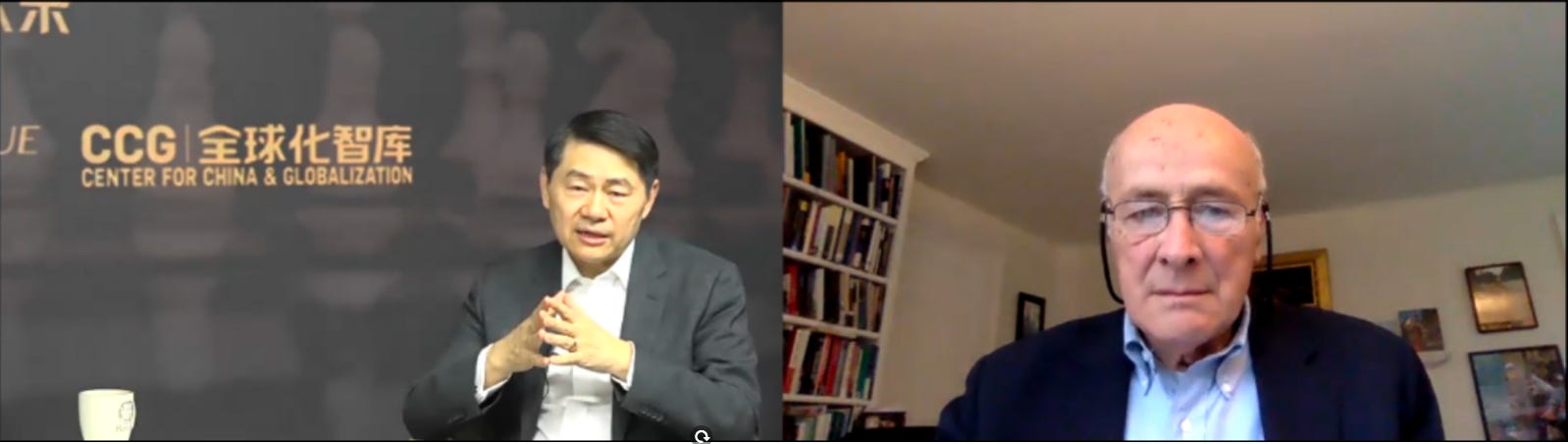
As for Professor Joseph Nye, I actually had quite a lot of interaction with him over the years. For example, during the pandemic in 2020, we held an online dialogue together with Friends of Europe. Then in 2021, I invited him to join us at CCG for a more in-depth conversation. At that time, international travel was still largely impossible because of the pandemic, so we held the discussion online as a livestream, and several hundred thousand people tuned in.
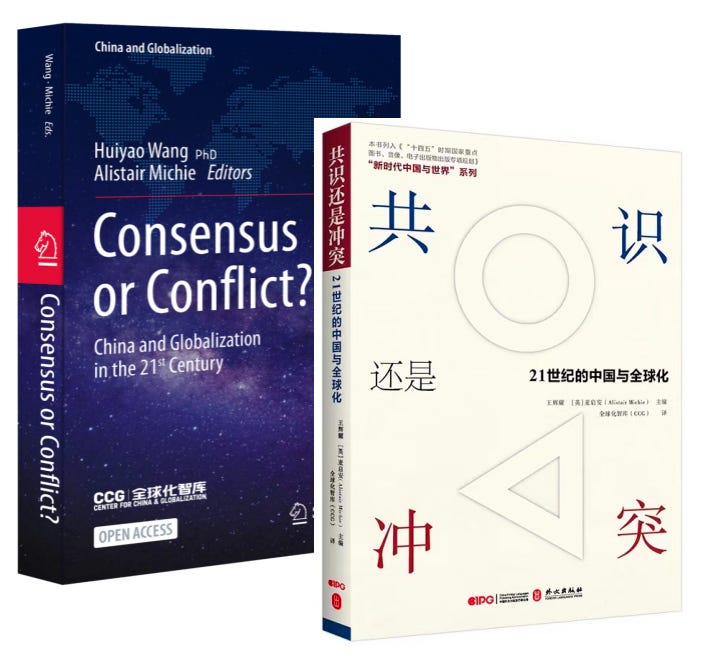
Also in 2021, he shared some of his writing with me, and I included one of his essays in a volume I edited that year, Consensus or Conflict. The book was published before the Russia-Ukraine war, and its basic message was that if consensus could not be reached, conflict might follow. Professor Nye contributed an essay to the volume, alongside more than 30 other prominent international figures.
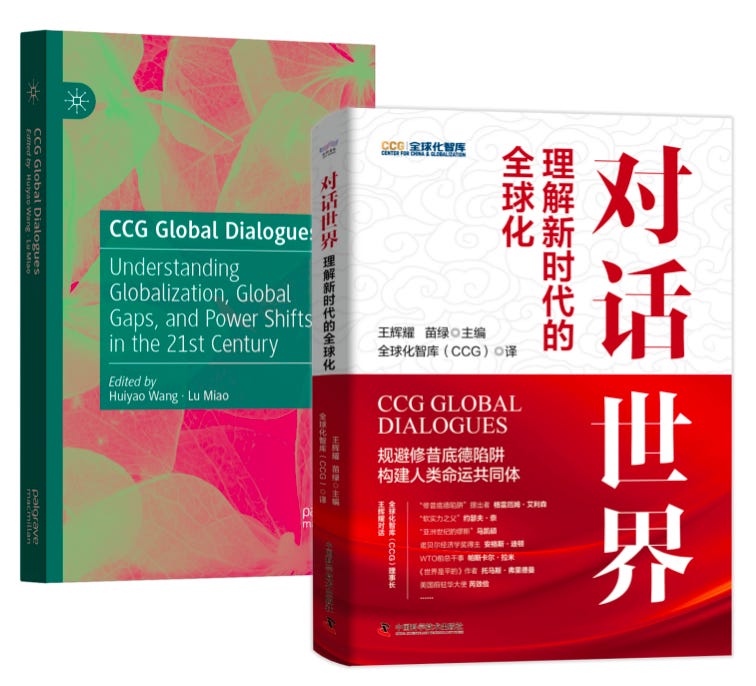
Then in 2022, our conversation was included in the book CCG Global Dialogues, published simultaneously in Chinese and English. He revised the transcript of that conversation for us before it went in.
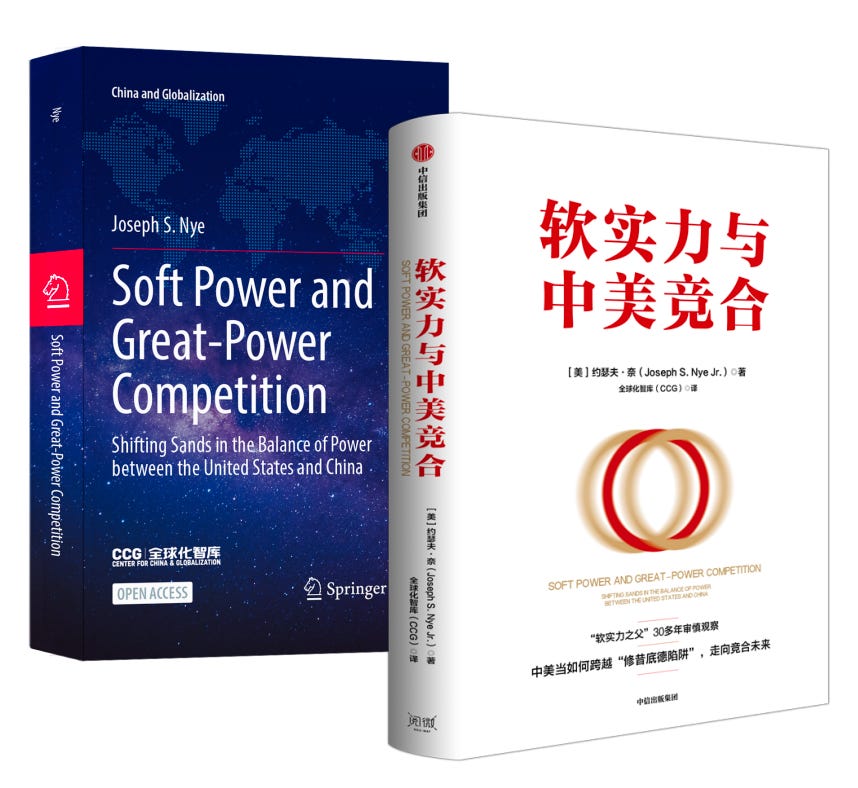
In 2023, he gave us some more essays, and we compiled another book for him, called Soft Power and Great Power Competition. That book later came out in a Chinese edition too, 《软实力与中美竞合》 . You can find copies of it at Harvard’s Kennedy School. We held another book launch built around that book, and invited him to take part with us.
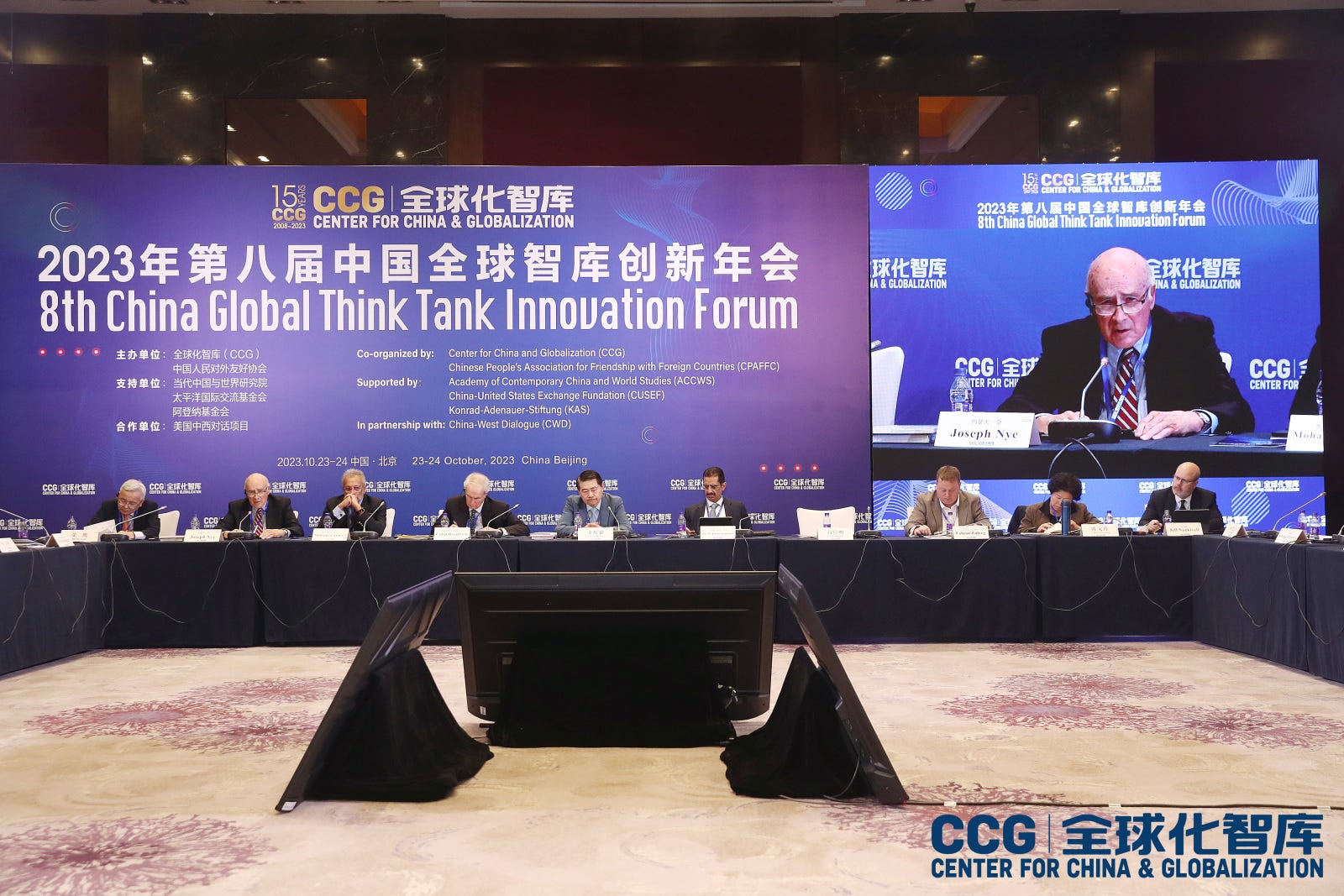
In 2023 we also invited him to Beijing, where he took part in our eighth annual China and Globalization Forum — he was in very good spirits that time.
By 2024, Professor Nye was back in Beijing, leading a fairly large delegation for a dialogue with the Central Party School. I took part in that Track II exchange myself. He led the delegation and brought a sizeable group from the Aspen Strategy Group to China.
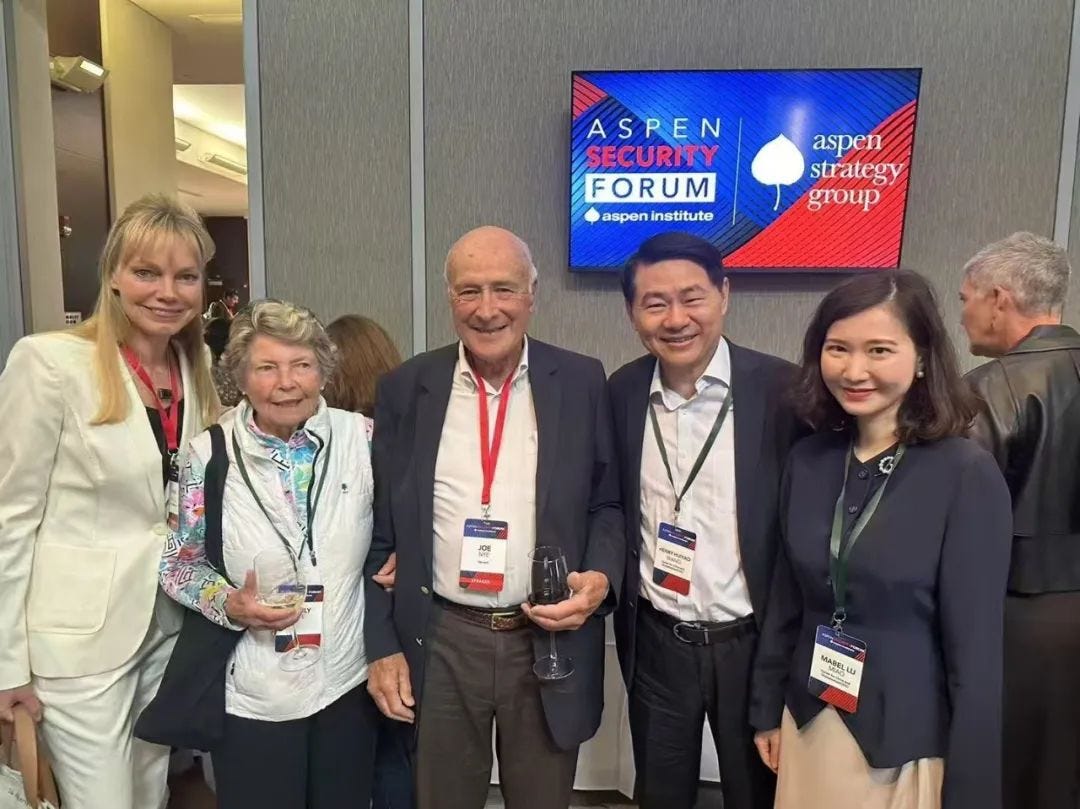
Later that year, Professor Nye invited me, together with Dr. Mabel Lu Miao, to attend the Aspen Security Forum, one of the most important forums in the United States focused on geopolitical and security issues. Very few Chinese participants usually attend, and that year we were the only Chinese representatives there.
I also remember seeing him there with his wife and taking photos together. That became a particularly precious memory. His wife passed away in late 2024, and Professor Nye himself passed away the following year, in 2025. She went first, and he followed not long afterward.
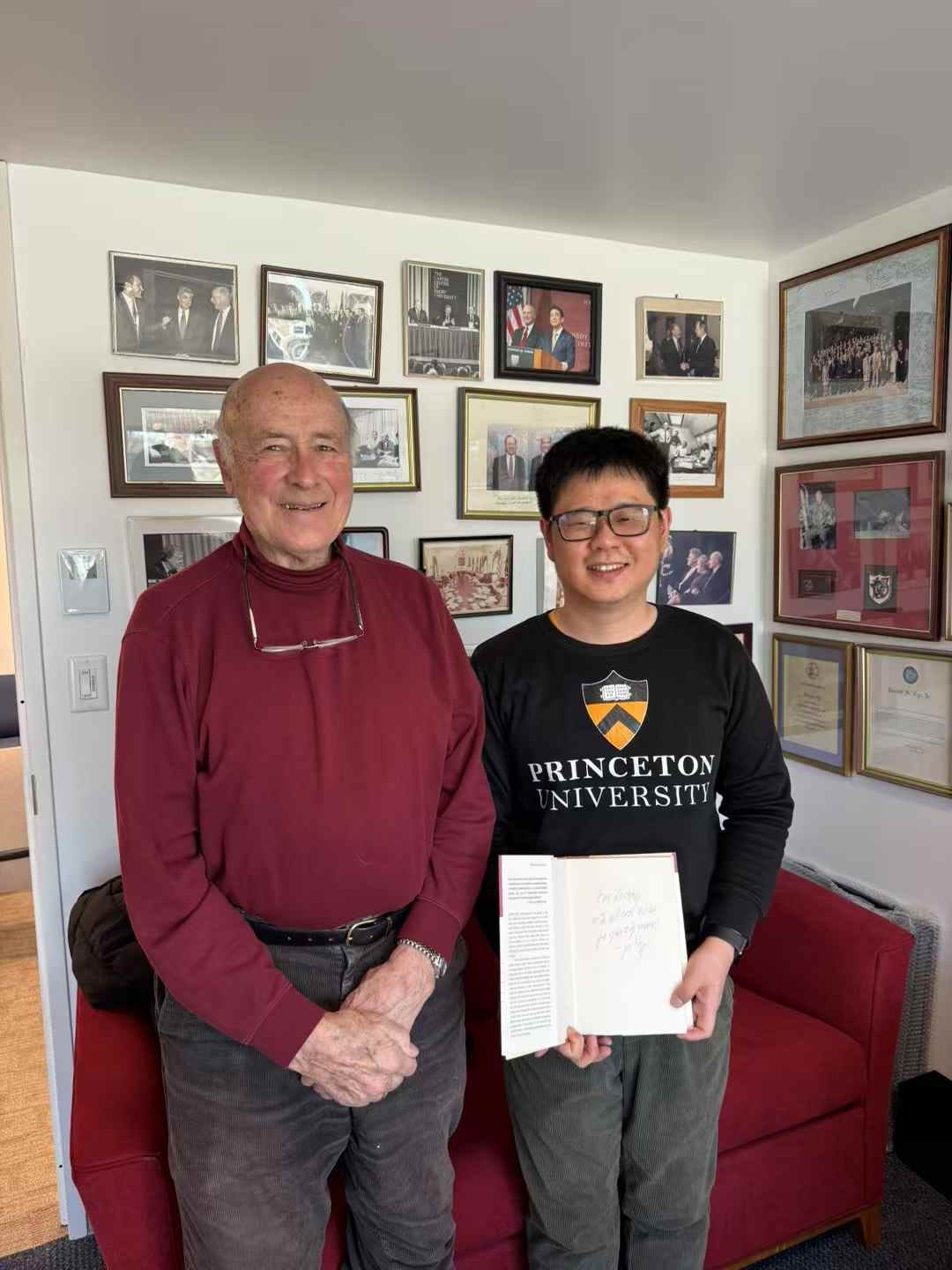
Just a few months before he passed away, CCG’s Zichen Wang went to see him. Professor Nye even signed a copy of his book for him, writing: “For Zichen, with all best wishes for your soft power! — Joe Nye.” That was the last time anyone from CCG saw him.
Today, I’m very pleased that we have had this opportunity to hear the introductions and insights of so many experts. My sincere thanks to Deputy Editor-in-Chief Sun Yonggang of China Science and Technology Press, and to all the other experts who joined us today. I would also like to thank the many guests from different fields here in Beijing, as well as friends from the international media and other sectors, for their enthusiastic participation.
That concludes my brief introduction to the book. Thank you all very much.
Mabel Lu Miao
Thank you to all our distinguished guests and experts. I was very touched just now. I had also kept in contact with Professor Nye until quite recently. Unfortunately, he passed away. But he left us with many important and insightful questions, and his views on soft power have had a significant impact on China.
Now, let’s move into our discussion session. I’ve already introduced the guests joining us for today’s discussion, but as for our topic, I’d like us not to focus solely on soft power itself, but also to bring in the new trends in soft power and global governance, and how we can strengthen China’s soft power. I would like to invite our experts to discuss this. There are two experts online, so I think we can invite them first to discuss this topic, then we move to our offline roundtable to discuss this topic.
We’ll go ahead and focus our discussion on new trends in soft power and global governance, as well as how to strengthen China’s soft power. I’d like to first invite our two guests joining online to speak, and then we’ll move on to the in-person discussion. We would like to invite Professor David Blair to speak on this topic. The floor is yours, David.
David Blair, Former Chair of the Department of Economics, Eisenhower School, U.S. National Defense University
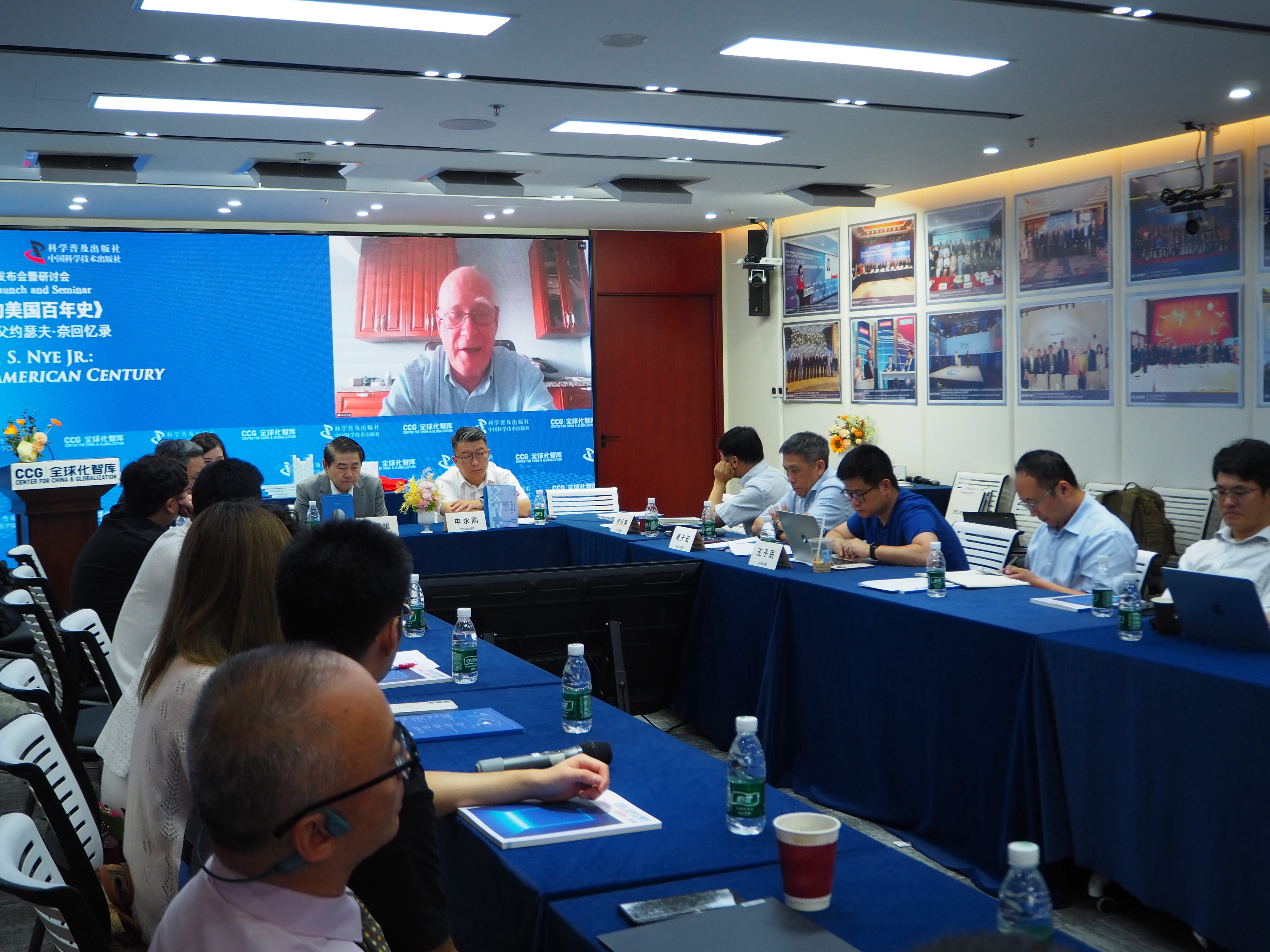
Thank you. Good to talk to everybody. I was a fellow at the Center for Science and International Affairs, which became the Belfer Center, in the late 1990s. So I got to know Joe Nye. He’s the director of the center. But I’ve learned a good bit from looking at this book. I had not realized that he grew up at least partially Baptist and considered being a preacher, which is something I would have never thought could have been in his background — very different from the usual demographic of a Harvard professor in the United States.
And I want to tell you one quick anecdote from the time I was there. It tells you a little bit about American politics, and especially about academic politics, the Kennedy School as a whole, and especially the Center for Science and International Affairs. It was considered by many other departments at Harvard to be unacceptably right-wing. And we constantly got protests from the Divinity School, of all people. And the psychology department sent a graduate student down to take Nye’s classes to prove — the assignment they gave him was to prove that Nye was an insane warmonger.
So that tells you something about what was going on in academia, even 35 years ago. Seriously, I want to talk a minute about his work, especially in the 1990s, when he was, during the Clinton administration, chairman of the National Intelligence Council, which is sort of an advisory role for the intelligence agencies. And he was later on assistant secretary of defense for East Asia. And he developed a number of policies while there, especially in the second term, which I think raise important issues, thinking about U.S. and Chinese relations.
His main accomplishment — I’ll let you judge whether it was accomplished or not — was developing something called the Nye Initiative when he was assistant secretary, which basically was aimed at strengthening U.S, power in East Asia. Kurt Campbell, who later authored the pivot to Asia, was a protégé of Nye’s, and so that’s essentially the same.
In traditional thought, it’s important to understand how different the world was in the 1990s. The U.S. had just won, without much effort, the first Gulf War, and the Cold War had ended. And the U.S. economy — I think not sustainably, but the U.S. economy was booming at the time. So the U.S. government became very arrogant — not necessarily arrogance, they believed at the time that the United States needed to be there to manage the world. In Hillary Clinton’s terms, the U.S. was an indispensable power. And so what Nye and his followers and his successors were arguing is that the U.S. has to be continuously engaged in the world in a leading position, in order to maintain sort of the Pax Americana, the idea that the United States meant that the world can remain at peace.
Also during that time, there was a debate going on — a very strong debate within the Clinton administration — about whether to expand NATO or not. Bill Perry, who was Secretary of Defense at the time, strongly argued, along with a lot of other people, that NATO should not be expanded and that Russia should be welcomed into the Western alliance and into Europe. In the end, the Clinton administration and Clinton himself, I guess, overrode them. I’m not sure; I can’t find anything in the book about how Joe Nye came down on that. But he was working for Bill Perry at the time. Perry said later that the worst mistake of his life was not resigning in protest when Clinton made that decision. And I think the world could be much more peaceful if the Clinton administration had been more open, not only with Russia, but also with China and in the Balkans, probably.
So one thing that made this sort of liberal internationalist American dominance thinking possible — that was going on in the 1990s, especially in the Clinton administration — was that it seemed to be easy and cheap. You know, it didn’t seem to cost very much. It’s easy. Why not? Sort of the argument. But we learned later that it’s not easy and it’s not cheap. And right now, I think that the big debate going on in the U.S., in the Trump administration, is either to continue that policy to some extent, without the nation-building part of it, or to withdraw the U.S. economy and the U.S. policy from the world. And I don’t think anybody knows how it’s gonna turn out. The U.S. government changes its mind from time to time, depending on the case, and that’s to be expected.
But I do think the world Nye lived in, in the 1990s, has totally changed since then, partly because of the rise of China, partly because of messing around in the Middle East, partly because of economic problems. And now we’re facing a different world. And I think the key problem in the world is: what’s the relation between the U.S. and China, the other leading power? What’s its place in the world? Is it a leadership position? Is it a withdrawal position? What are we looking at? That’s the key issue.
Just one more point, Joe Nye was born in the mid-1930s, same period as both my parents. And I think he definitely lived in the American century. The time period he lived in was probably the best time to be an American. He was too young for World War II and Korea, too old for Vietnam. So he missed all the wars. If he’d been 10 years younger, he would’ve probably been killed in World War II. And it’s a time — especially from 1945 to the early 1970s — when the standard of living was there, becoming a very prosperous United States. And now we’re not in that time anymore. I think people born today, or people born in this century, are not gonna have as good a century as Joe Nye did, or as people my age did. Thank you.
Mabel Lu Miao
Thank you, David. What you said was very impressive, especially coming from an American perspective. You mentioned that the context has changed, particularly in the United States and in the broader global order. We are now living through a very different moment from the “American Century,” and in some ways it is a rather gloomy period for American society and for individuals in America.
Against this backdrop, I think the world is also changing, with countries increasingly emphasizing their own particularities. But soft power remains very important, especially for developing countries and rising powers. And looking back at American history is also very important, because it can offer us useful lessons and inspiration for the future. I think David has a lot of genuine feeling in what he said just now about the American century.
Next, I think we can invite everyone to share more as well: on one hand, reflecting on our understanding of soft power, and on the other, looking at how it connects to new trends in global governance, and how we can strengthen China’s soft power — everyone’s welcome to weigh in. Next, we would like to have Harvey Dzodin to speak. Harvey, the floor is yours. Harvey is the former director and vice president of ABC Television, and also served as legal counsel to U.S. President Carter.
Harvey Dzodin, Former Vice President and Director of ABC Television; former Legal Counsel to President Jimmy Carter
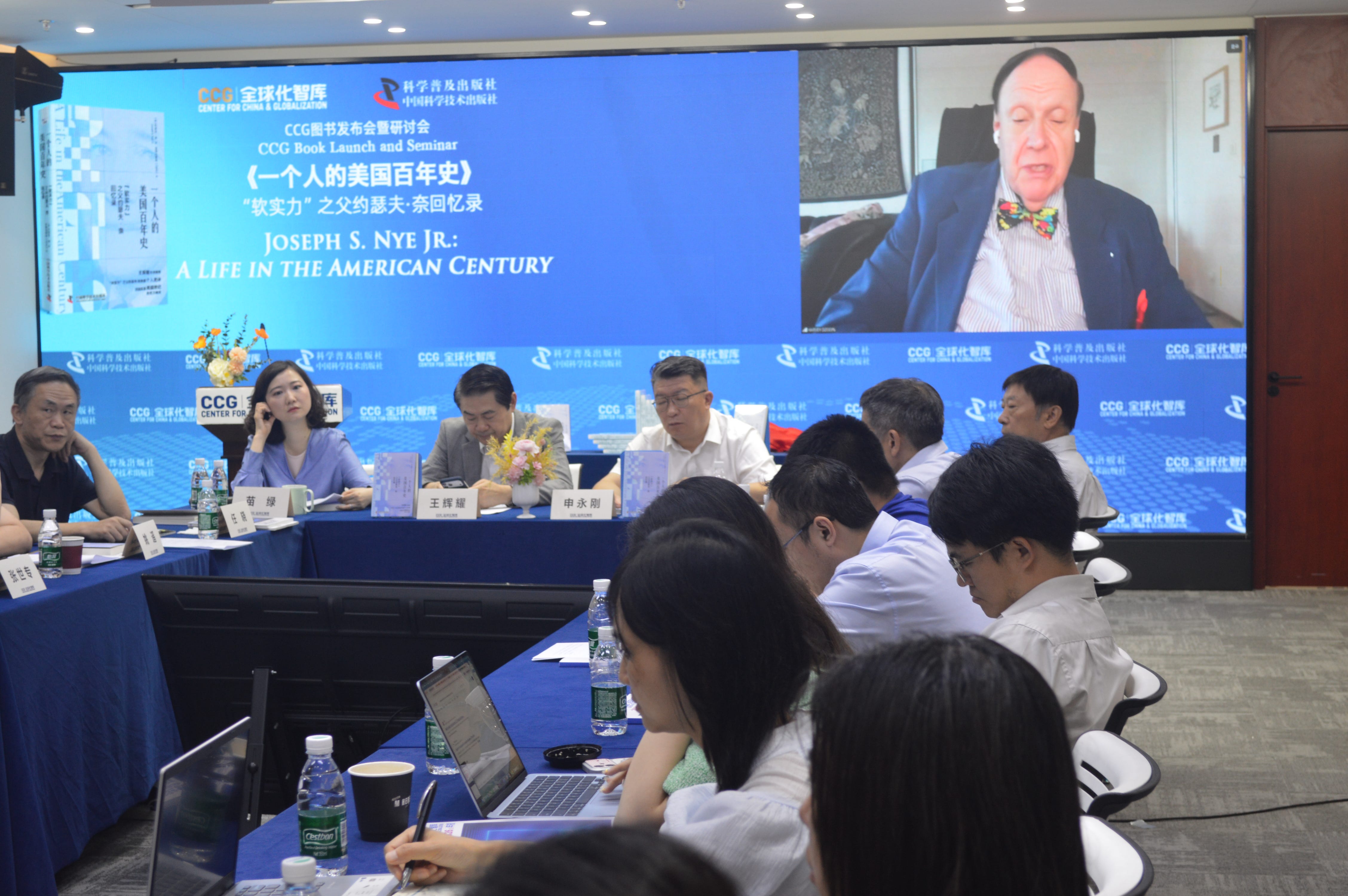
Thank you very much, Mabel. And hello, everybody. Having met Professor Nye at the Harvard Club in New York two decades ago, I’m honored to say a few words this afternoon about the launch of the Chinese edition of his insightful memoir.
I congratulate CCG and the China Science and Technology Press for their initiative. This book is a must-read for any student of the continuum of power, from sharp, hard, smart, and soft.
I myself consider Professor Nye the Picasso of international relations, because, like Picasso, in his long and storied career, Professor Nye continually refined his views. He began as a national security realist who took hard power, nuclear deterrence, and American strategic primacy very seriously. His evolution toward soft power was not a rejection of hard power, but a recognition that military and economic capabilities by themselves could not explain or sustain American influence.
Professor Nye, in fact, spent his career explaining why America needed to combine hard power with attraction, alliances, and cooperation. And he left us just as the U.S. was moving toward a much more transactional conception of power. His soft power theory was never fundamentally anti-power. It was a theory about how power had become more multidimensional and multi-institutional. His final intellectual warning was that a country can possess immense external, hard, and sharp power, and nevertheless weaken itself by losing the qualities that make others want to cooperate with it. And I think recent events bear him out.
Although Professor Nye was a member of the American defense establishment, Nye was neither a hawk nor a dove. But along with Graham Allison and other colleagues, he was an owl — someone who recognized the necessity of deterrence, but who was acutely concerned about miscalculation, escalation, and unintended nuclear war.
Professor Nye is already sorely missed. We’re indeed lucky to have his last book to provoke our thoughts and to guide us in these challenging times. Thank you very much for the opportunity to speak today and participate.
Mabel Lu Miao
Thank you, Harvey, for your great words on this book and on soft power.
Now, we’d like to hand the floor over to the experts here with us in person, so that everyone can discuss together these new trends in soft power and global governance, and how to strengthen China’s soft power.
First, we’d like to invite Mr. Li Huailiang, Dean and Professor, Institute for a Community with Shared Future, Communication University of China. I think the very name of a Community with Shared Future already carries a strong sense of China’s own soft power. So please, share your thoughts with us.
Li Huailiang, Dean and Professor, Institute for a Community with Shared Future, Communication University of China
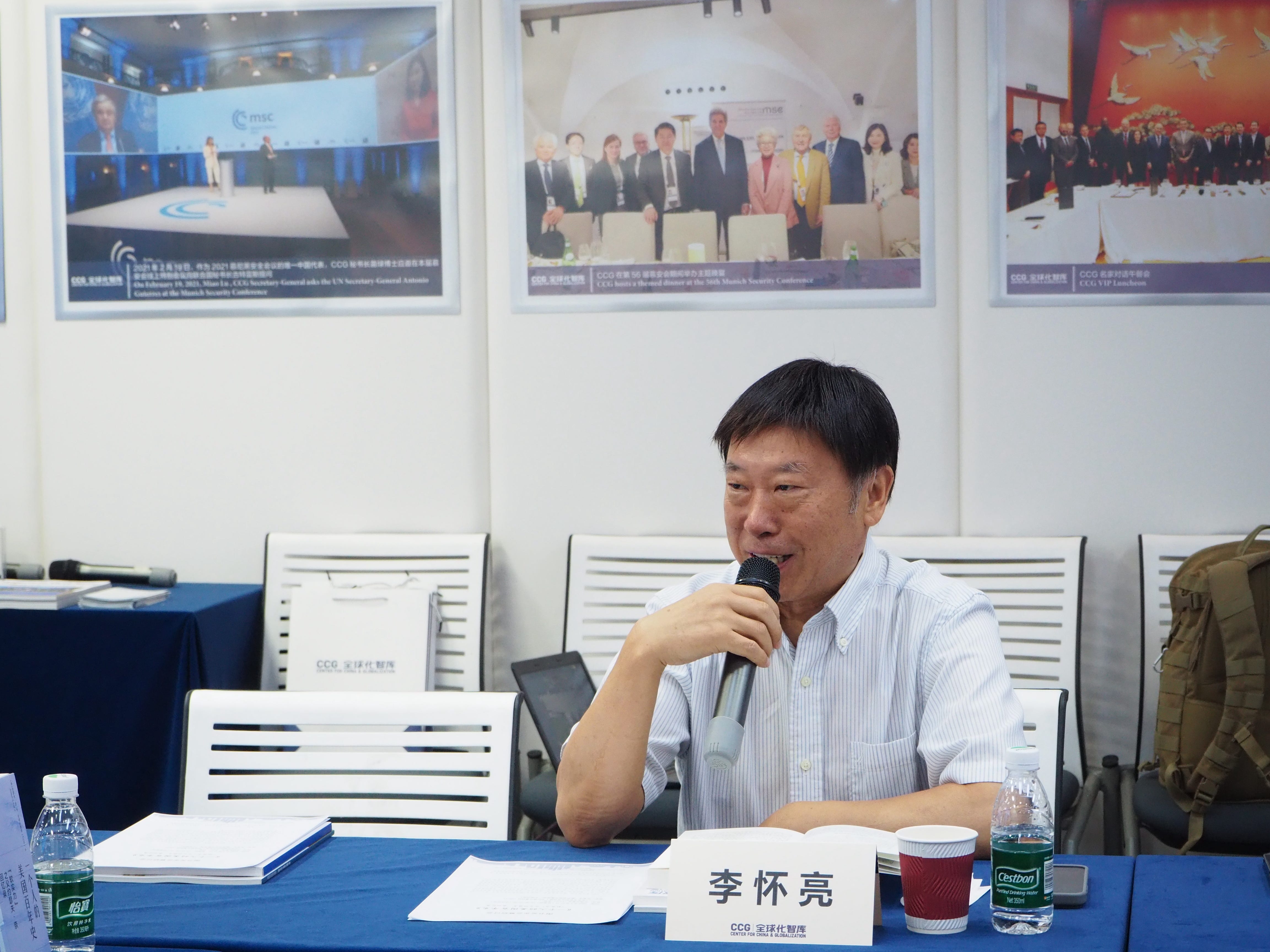
Thank you Dr. Wang and Dr. Miao for this opportunity to learn. First, congratulations to Editor Shen and President Wang. A book like this, published at a time as full of challenges as this one, is especially meaningful, and I want to thank you both for the excellent work you’ve done.
Speaking as a reader, I had a look through the table of contents and found it very appealing. I’ve read Professor Nye’s earlier work quite closely, so I’m fairly familiar with his ideas and arguments. But seeing them woven together here with the story of his own life makes this book feel even more accessible and engaging than some of his earlier writing. I’ll definitely go back and give it a proper read.
Having just listened to the two American guests speak, and to Dr. Wang’s introduction, I have a few thoughts. Following Dr. Miao’s request, I’d like to share a few unpolished ideas — one on how to understand soft power, and another on soft power’s relationship to China-U.S. relations, global governance, and building up China’s soft power — hoping they might spark further discussion, and I welcome any criticism or correction.
As for Professor Nye’s concept of soft power, what we generally understand by the term is actually somewhat different from what he himself meant. Nye identified three main sources of soft power: culture, political values, and foreign policy.
I noticed that Professor Wang Yiwei mentioned in his endorsement that Chinese government documents usually refer to “cultural soft power.” That is also much closer to what people in China generally have in mind when they talk about soft power. I have done some literature review on this myself, and my sense is that, in the Chinese context, “soft power” is often used essentially to mean cultural soft power.
That is not quite the same as Nye’s concept. In practice, we tend to leave out the dimensions of political values and foreign policy, and when we talk about soft power, we are usually referring primarily to culture.
This brings another point to mind. In fact, there may be two different understandings of soft power. What was the historical context in which the concept of soft power was introduced? It emerged against the backdrop of globalization, and I think that was precisely why it was able to spread so quickly and gain such broad influence around the world.
If Professor Nye were introducing the concept of soft power today, it might not have the same impact. At the time, globalization was advancing rapidly, and soft power and globalization were moving with the same historical tide. In a sense, they shared the same underlying spirit.
But if we take that line of thought one step further — and CCG is particularly well placed to discuss this — globalization itself, as I understand it, is not just one single thing. There are different forms of globalization.
For the wave of globalization that began in the 1980s, let me borrow a formulation by American sociologist Roland Robertson. In essence, globalization is the historical process through which the Western concept of modernity expands without limit across the world.. I have quoted this idea many times. It sounds rather complicated at first, but in plain terms, it can be understood as a process of Westernization.
Under that broad understanding, Westernization includes Western values, the globalization of production driven by Western multinational corporations, free trade, the market economy, political values, and Western culture. In other words, it is globalization in a very comprehensive sense.
In Chinese government documents, however, what we generally emphasize is “economic globalization.” It is somewhat similar to the way we talk about soft power: instead of simply saying “soft power,” we often speak of “cultural soft power”; and instead of speaking of globalization in an all-encompassing sense, we usually speak of “economic globalization.”
So in that sense, there are two different understandings of soft power, and also two different understandings of globalization. The form of globalization we tend to emphasize is about global value chains, the international division of labor, global markets, and global consumption. That is the globalization we are mainly referring to.
There is another point. Robertson’s formulation also brings in the idea of modernity, and modernization itself can also be understood in more than one way. Modernization, as a historical concept, grew out of the Renaissance, the first and second industrial revolutions, and the enormous expansion of productive forces that followed. Western sociologists, from Émile Durkheim all the way through more recent economists — including, I believe, Claude Lévi-Strauss, in his book on modernization, published around 1958, said modernization comes down to eight standards.
But how were these eight standards arrived at? They were drawn out of countries that had already modernized — Britain, the United States, France, Germany, and others. In other words, the standards of modernization were largely derived from the historical experience of Western countries. Because those countries had followed a particular path of development, that path came to define what modernization meant.
So from that perspective, modernization itself was also, to a considerable extent, understood as a process of Westernization. In the old Western framing, the world was often divided into “the West” and “the rest,” and modernization meant, in effect, transforming “the rest” according to the experience of “the West.”
China, however, later put forward the idea of Chinese modernization. That itself suggests that modernization does not have only one form. So when we look at globalization, modernization, and soft power, what China is talking about is in some respects the same as what the West is talking about, and in other respects different. There is both continuity and divergence.
There is still an area of overlap between them. The larger that area of overlap becomes, the safer and more peaceful the world is likely to be. The more common ground we share, the fewer conflicts we are likely to have.
But if there is no overlap at all — if you speak only in your own terms and I speak only in mine — then we simply talk past one another. There is no real mutual understanding. And in a world where cultures have no dialogue, no exchange, and no shared ground that people can recognize together, the world becomes a much less secure place.
So what I’d say is: through today’s launch event, and through Professor Nye’s book, if we can build more and more common ground, then conflict in our world will keep shrinking too. That’s just my own unpolished thought. Thank you.
Mabel Lu Miao
Thank you, Dean Li. What you said was very insightful too. On modernization and globalization, China and the West do have different concepts. Even now, when we talk about “Chinese modernization,” I believe that concept was influenced by Western modernization as well, but it has its own distinct character: we’ve folded in elements like humanity living in harmony with nature and common prosperity as part of what makes it distinctly Chinese. I think that’s true of cultural soft power too, as you were saying. We may end up realizing more of it through this very process of Chinese-style modernization.
And of course, I think your university’s think tank has also always been exploring what China’s globalization actually looks like, within China’s globalization. How can China play a role? How can China show the world more clearly that it can help drive globalization forward and do better within that process, for the shared development of all humanity? So the idea of a community with a shared future for mankind is woven into this as well. Thank you very much.
Next, I’d like to invite Ren Xiao to speak. Professor Ren, please go ahead. Professor Ren Xiao is a professor at the Academy of Regional and Global Governance at Beijing Foreign Studies University. Professor Ren is also an expert in American studies as well as regional and global governance, and I’d love to hear your thoughts.
Ren Xiao, Professor, Academy of Regional and Global Governance, Beijing Foreign Studies University
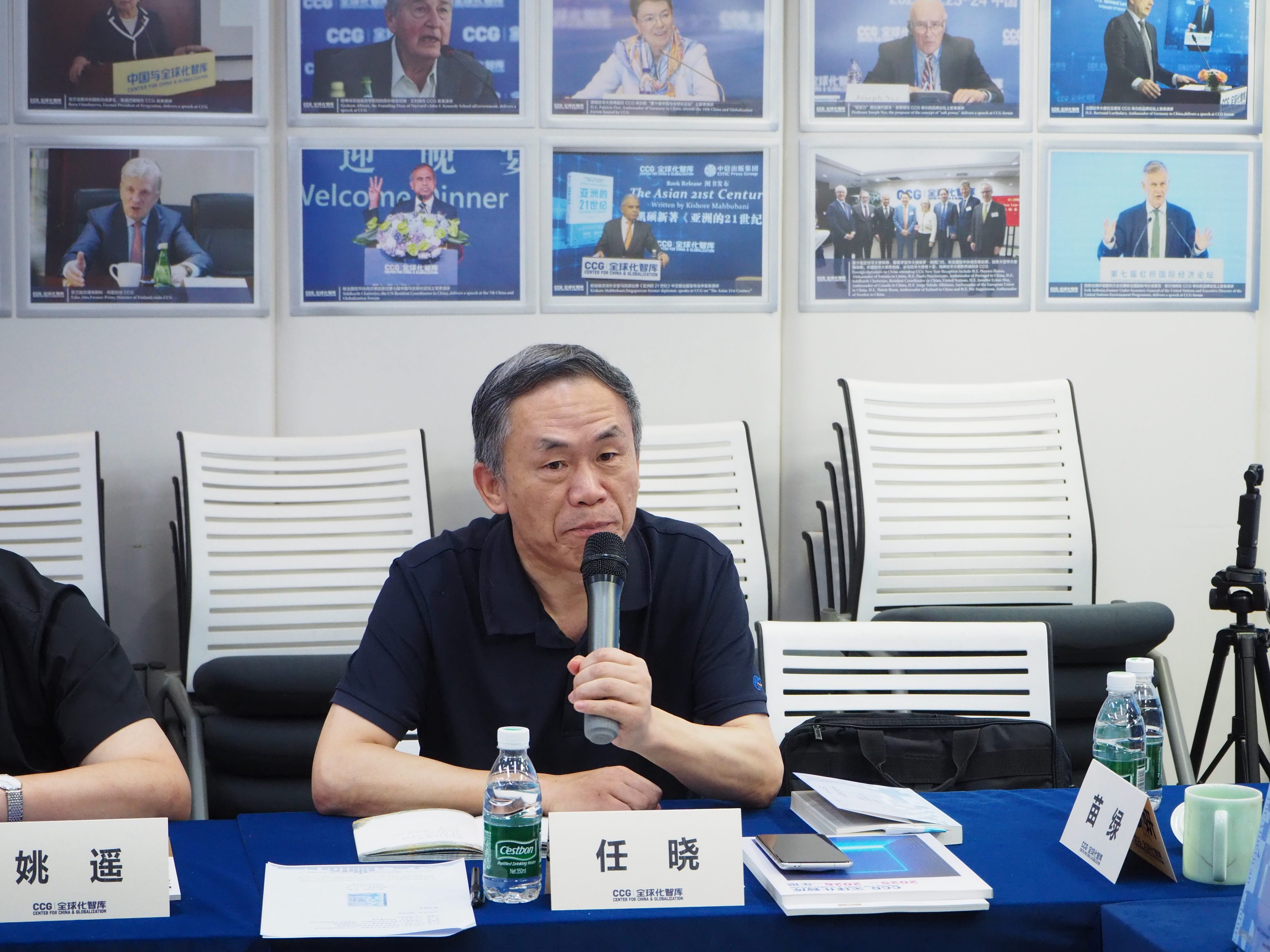
Thank you, everyone. First, congratulations to CCG and China Science and Technology Press for collaborating on something so meaningful.
I think Professor Nye has lived a life of complete fulfillment. We Chinese speak of the “three immortalities”: achieving great deeds [立功], cultivating virtue [立德], and establishing enduring ideas [立言]. He’s accomplished all three, so this has truly been an extraordinary life.
If we were to sum up his academic contributions — and let’s set his soft power work aside entirely for a moment, not touch on it at all, and just look at his other academic contributions outside of soft power — I think you could write a very long essay on that alone.
You could start at least as far back as the 1970s. He had a Harvard colleague, a longtime collaborator named Robert Keohane — anyone who’s studied political science or international relations knows this name. The two of them collaborated for many years; around 1974 or ‘75, they co-edited a book called Transnational Relations and World Politics, which is a highly influential work in our field. In 1977, the two of them co-authored and published Power and Interdependence, and that book went on to become a genuine classic.
Later, Keohane moved on to teach at other universities. He’s since retired, and he’s still alive. He ended up at Duke because his wife became president there, so he went along with her, the two of them went together. Before retiring, he was a professor at Princeton.
So Nye and Keohane collaborated together; I believe this was actually Nye’s last major article, also co-authored by the two of them. On top of that, Keohane has another very important paper, published in the journal World Politics, called “Neorealism and Neoliberalism,” a very significant paper.
So, if we look at this purely from an academic perspective — setting soft power aside for the moment, since I’ll come back to it shortly — Nye made important contributions across a wide range of fields. Of course, the idea we are all most familiar with is soft power, which he first introduced around 1990. One of the earliest formulations appeared in an article he published in Foreign Policy, and the concept went on to have a major impact on the field. He later developed the idea more fully in book form, which was also highly influential. I think everyone here is already very familiar with that part of his work.
Personally, I’ve had the chance to meet and talk with him on a number of occasions — in Boston, Washington, Tokyo, Shanghai, Beijing — so I do have some understanding of his scholarship, his character, and other aspects of who he is.
Building on what has already been said about the high regard in which Nye has been held in China, I think it is fair to say that his influence here has been genuinely significant. Some people prefer the term ruan shili (软实力) for “soft power,” while I myself sometimes use ruan liliang (软力量). The wording is not really important; it is simply a matter of preference.
What matters more is where a country’s soft power actually comes from. In my view, if a country is making social progress, has a high level of education, and has a well-educated and cultivated population, then its soft power will naturally be strong. Conversely, if a country remains poor and underdeveloped, with low living standards, a low level of development, and a population with limited education and civic cultivation, then it will be very difficult for that country to possess much soft power, because it simply will not be very attractive to others.
This is because, for Nye, the most important element of soft power is attraction. So if a country wants to be attractive, it first has to embody the qualities I just mentioned — it has to be able to demonstrate them in practice.
Another very important aspect is whether you’re a country that other people actually like. If a country goes around throwing its weight around on the world stage, resorting to brute force at the drop of a hat, a country like that might have considerable economic and military strength, but its appeal suffers: once other countries stop liking you, you have no soft power. There’s nothing there. Your soft power takes a serious hit.
So fundamentally, I believe — and we do discuss China’s soft power quite often — that at the bottom, it depends on a country’s continued development, continued progress. That’s the fundamental thing. Of course, I don’t rule out the role of deliberate effort. Taking the initiative in certain areas can help strengthen a country’s soft power, so there is also an element of conscious effort involved.
Now, looking at how the balance of power between China and the U.S. has shifted in recent years, the change is visible to everyone: the China-U.S. power balance is changing, in three respects. China’s strength, soft power included, is rising. After the end of the Cold War, there was a widely used description of the international system: “one superpower, several major powers.” I think we are now moving toward an era of “two superpowers, several major powers.” That is the broader shift now taking place in the global balance of power.
Mabel Lu Miao
Thank you, Professor Ren. That was a genuinely insightful set of remarks. As you said, I think the point about soft power that has left the deepest impression on us is that, ultimately, it comes down to attraction. And attraction means first getting your own affairs in order and building up your own strengths, so that others are naturally drawn to you. There is probably an element of charm in that as well.
This may also connect with what Professor Li Huailiang said earlier. Beyond things like political values or foreign policy, when Chinese people talk about soft power, what probably comes to mind more readily is cultural soft power in particular. So in that sense, it is again about doing your own things well.
At the same time, once you have developed a system of your own, you are in a better position to attract others. But that system has to be strong enough and genuinely compelling enough for others to admire it and aspire to it. As you were saying, this kind of soft power is something we ourselves need to work more actively to generate.
I would also say that this is an important part of China-U.S. exchange itself. It reminds us that, as China continues to develop its own system, we can also draw on the achievements of other civilizations. And it reminds us as well of the depth of experience and knowledge that has accumulated through such exchanges over time.
Actually, that is why I was struck by Mr. Wang Yiwei’s point about cultural soft power and traditional Chinese culture. I have a similar feeling myself. If you have not engaged deeply with Joseph Nye’s thinking, you may not immediately realize that there is actually quite a lot of resonance between his ideas and certain strands of Chinese culture.
On this question of attraction as a form of soft power, there is something to the idea that a civilization can simply be itself — without invading others, without going out and provoking conflict — and still inspire admiration from others. I think that connects with this discussion as well. Thank you again very much.
And beyond soft power, Nye’s earlier ideas — on power and interdependence, neoliberalism, neorealism, and related concepts — are also part of an important intellectual legacy that deserves further exploration.
That is also what makes this book so fascinating. It is at once a personal memoir and, in a sense, a reflection of the broader historical trajectory of the United States. Nye brings together his own experience, his thinking as a scholar, and the development of the era in which he lived. That makes the book deeply meaningful. Part of what makes him such a compelling figure — and why he is so worth discussing and learning from — is the way his personal life intersected with the sweep of an entire historical era. In that sense, he was also a product of a defining moment in history.
All right, next I’d like to invite Mr. Andy Mok to speak. He is also an adjunct lecturer at Beijing Foreign Studies University and a current affairs commentator with CGTN.
Andrew (Andy) Mok, Adjunct Lecturer, Beijing Foreign Studies University; CGTN Commentator
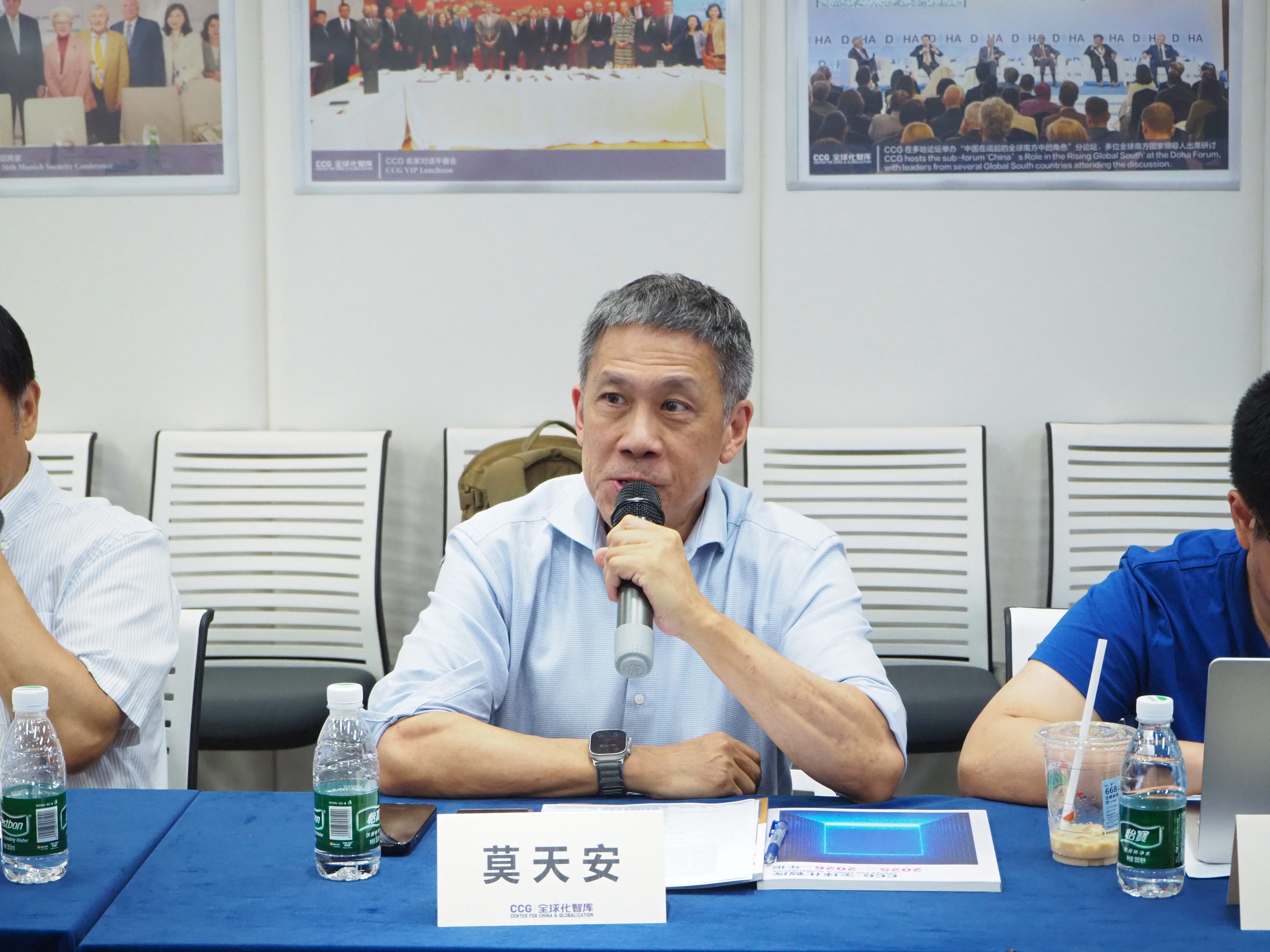
Thank you for the opportunity to be here today and be part of this very meaningful event. So when I think of Joseph Nye, I can’t help but think of another very influential American, who wrote a book called At a Century’s Ending. And this influential American, George Kennan, also wrote the “Long Telegram”, and is famous for identifying the cause of the Soviet Union’s aggression against the United States, and gave the world a term for describing that — which, of course, for international relations scholars, we all know as containment.
So when I think of Joe Nye giving the world this term, this concept, soft power, you can also think of Kennan as well. And I think what’s interesting here is neither of them created or invented what you were talking about. Joseph Nye did not invent or create soft power. George Kennan did not create the motives of the Soviet Union. But what they did was give it a name.
And why this is so important? I’ll use a quick example. For thousands of years, people looked up in the sky at night and saw stars. And it wasn’t until one day people realized these are not just a random collection of stars. There are actually groupings of them that we can call galaxies. And with that insight, we’re able to more deeply understand the universe and take more effective action. So I think this is, again, a very important contribution: Joe Nye giving us this term, soft power.
The question then is: is soft power a lagging indicator or a leading indicator of economic and technological power? I think Professor Ren gave us part of the answer here, but I want to elaborate a little bit on why it is a lagging indicator. So a country achieves economic leadership, technological leadership, and other countries, other people, want to emulate that country.
And I think one of the reasons, or the main reason, is that humans are hardwired to seek status, right? Whether that’s more degrees, more money, or higher office. And what happens is that this creates, I think at a subconscious level, a halo effect. If we emulate people we see as high status, we will also acquire some of those qualities.
So when we talk about soft power and the accumulation of soft power, I think one of the ideas is that it is not a leading indicator, but a lagging indicator.
Then why do we even care about soft power? I think it has a very practical use, which is that it reduces compliance cost — whether we’re talking about a family, whether we’re talking about a country, or whether we’re talking about tianxia, or the whole world. So I’ll use a quick example here from my book.
When we look at the Qin versus the Han, we can see the difference between hard power and soft power. The Qin was known for very strict rules, and, of course, enormous military success, but was very punitive. And this is expensive, right, because even if you don’t have to watch people, delivering the punishments can be very expensive. The Han, on the other hand, were very clever in that they gamified what it meant to be Chinese. They took a body of Chinese Confucian classics and said, look, if you can demonstrate your mastery of this body of knowledge, you’re Chinese. And why this is so important is that internalized soft power is not just cultural, but it is also philosophical, also political.
So by mastering and internalizing this body of Confucian classics, people automatically acted on their own in a way that was preferential for the state. I think we can project this onto the international arena as well, to see why countries should care about soft power — because it’s cheaper to gain compliance from other countries if you do have soft power over them. So I think that tells us that soft power is worth fighting for.
And when we think about fighting for soft power at the country level, especially when we think about China and the United States, I think it’s useful to think about Mao Zedong’s On Protracted War. Of course, this was written to explain what should be done about Japan. And I think we all know this: in On Protracted War, Mao says there are three phases — strategic defensive, strategic stalemate, and strategic counteroffensive. So when we look at China’s quest for soft power, the first phase was strategic defense. We probably all remember the days when China felt we had to protect our own culture, our own power, and sovereignty in this area. And I would say now we’re in the period of strategic scaling.
So while it looks like there’s not a lot going on, on the surface, under the surface I think there are very powerful changes, very powerful capabilities being accumulated — maybe naturally, but also, I think, deliberately, by China. And when we enter this strategic counteroffensive phase of global soft power, I think, remains to be seen.
But we can, of course, see some, I think, to use an Obama term, green shoots, right? So we look at the recent movie Dear You (給阿嬤的情書), a very kind of oddball movie, yet gaining such tremendous traction globally, especially in Southeast Asia.
We look at Labubu, we look at TikTok, as forms of soft power. But I think here, to again quote Mao, it’s important not to lose hope that China can fight against Hollywood, against global domination by most media, global media platforms, etc. — using Western terms, to think about political values. So one should not be discouraged, but at the same time not be overly confident either. We do see, again, very meaningful breakthroughs; but in my view, at least, we’re still in the strategic stalemate period.
So in terms of how to improve China’s soft power, I would say perhaps one thing is just patience. Nine women cannot create a baby in one month, right? It takes one woman nine months. That’s just the natural process.
But at the same time, I do think that there’s cause for hope, and even excitement, when we look at what’s happening — partly, perhaps we could say, because of mistakes made by the U.S. in terms of damaging its own soft power on the global stage. But of course, at the same time, I think, under the surface, there are very important changes happening in China regarding soft power. Looking ahead, I think we have a lot to be optimistic about. Thank you.
Mabel Lu Miao
Thank you, Andy. Excellent. What you just said about “gazing up at the stars,” together with Professor Ren’s remarks earlier, is genuinely fascinating.
Speaking as fellow scholars, and as people who are all here today to learn from Joseph Nye and discuss this book, I have been deeply impressed by what everyone has said. It brings to mind the traditional ideal of achieving great deeds, cultivating virtue, and leaving behind enduring ideas. Nye was, after all, developed the concept of soft power, and he has left us an extraordinarily important intellectual legacy — one that belongs not just to the United States, but to humanity as a whole.
And I think Nye himself — his life, the story told in this book, and the fact that he chose to reflect on his own experience in this way — was in some sense also an embodiment of American soft power. Simply by virtue of who he was and what he represented, he became part of that attraction.
It makes me wonder, when we talk about China’s soft power today, shouldn’t we also be encouraging more scholars like this, more individual stories like this, to emerge? Making his whole journey more widely known to others. Because if there were more people like this, wouldn’t each of them also become a symbol of a country’s soft power, whether cultural soft power or soft power in other forms? That’s a real source of inspiration for us too.
Also, what you said just now reflects a genuinely positive and optimistic view of China’s soft power, and I think that is right. When you mentioned the Qin and Han dynasties, it made me think of a similar contrast in aesthetics between ease and power. I immediately thought of taiji. It contains tremendous energy within it, yet expresses that energy in a light and seemingly effortless way. In fact, that can be a more efficient, more economical, and lower-cost way of exerting influence.
But behind that ease, there has to be a long process of building up substantial strength and momentum. So I wonder whether we today are still in the middle of that process of accumulation. The question is when we will be able to express power with greater ease — in a way that is more appealing and draws others toward us of their own accord. In that sense, it really is a process of quietly accumulating strength and, ultimately, learning how to make something weighty appear effortless.
Thank you so much for bringing up that cultural dimension just now. All right, next I’d like to invite Mr. Yao Yao to speak. I know Professor Yao Yao currently serves as Dean of the Institute for Urban Civilization at Communication University of China, and Director of the National Soft Power Research Center at China Foreign Affairs University.
I remember we first met at one of Mr. Joseph Nye’s lectures, back when he was still a professor. That was an event you organized. I remember Mr. Nye was in especially high spirits that day too. I recall that at that event, a Chinese scholar actually raised almost this exact same question we’re discussing today — about soft power — asking him: you’ve talked about America’s soft power, but where is China’s soft power? What will it look like going forward? So I’d like to invite you to share your thoughts on today’s topic as well. The floor is yours.
Yao Yao, Dean, Institute for Urban Civilization Studies, Communication University of China; Director, National Soft Power Research Center, China Foreign Affairs University
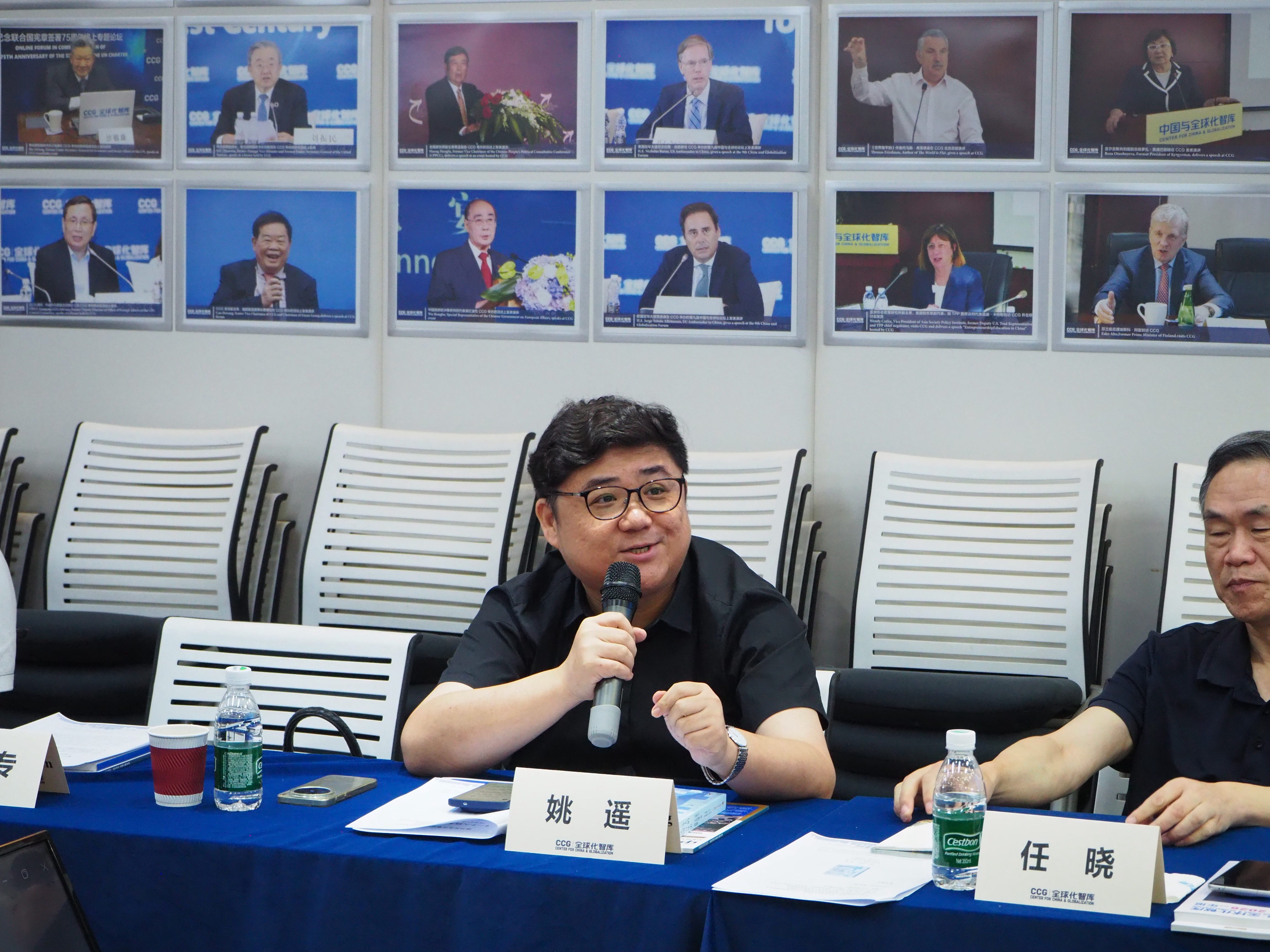
Okay, thank you, Professor Wang, and thank you, Professor Miao. Professor Wang told me about this event just the day before yesterday. I was away at a conference in another city, and the moment I heard about it I knew it was a wonderful thing, so I made a special trip back this morning just for this.
The reason is that from 2010 to 2011 I was sent by the Chinese government to Harvard’s Kennedy School under a joint PhD training program through the Sino-U.S. Fulbright Program, and my advisor there was none other than Nye himself. Getting into that Fulbright program doesn’t necessarily land you at Harvard, and even landing at Harvard doesn’t necessarily get you Nye as your advisor. I actually had to work hard for it at the time. I had three letters of recommendation: one written by Professor Yuan Ming of Peking Univerisity; one by Professor Xue Lan of Tsinghua, who was just mentioned as having recommended this book; another by Professor Li Zhaoxing, who was then Dean of the Zhou Enlai School of Government at Nankai University and a former Foreign Minister of China.
Nye later held up those letters and said, “I can’t reject you,” because the weight behind those three names was simply too great.
So, going back to what Dr. Miao just mentioned — I remember your think tank was just getting off the ground around that time. After I joined my own think tank, Professor Nye continued to give me a great deal of guidance and support as well. And the event you mentioned earlier — the one we organized was called the Harvard China Soft Power Forum. That required official approval from Harvard University itself, and getting approval for something organized by Chinese students was genuinely difficult back then. Nye gave us tremendous support on that front.
The lecture you mentioned earlier was actually the very first session — he was the keynote speaker, and he spoke on soft power and China. After that, we went on to invite a series of other speakers, including Li Xiaolin, then President of the Chinese People’s Association for Friendship with Foreign Countries, Fu Ziying, then Vice Minister of Commerce, and Liu Changle, then Chairman of the Board of Phoenix Satellite Television. I’d say it was very well received; it really sparked a broader discussion at Harvard about the relationship between China and soft power.
Honestly, this book makes me very, very happy, because — truthfully — when Nye was advising me, he talked a lot about academics but very rarely about his own personal experiences. So he said very little about his younger years, including his time serving under both the Carter and Clinton administrations. I knew he’d already written an English-language memoir; and getting a Chinese edition published, I think, we really owe to CCG and to our publishing house here. Thank you for doing this hugely important work. I genuinely can’t wait to read it, to get to know him better through it.
A lot of what I do know about him, I actually learned from Professor Ezra Vogel. I remember Mabel was at the Fairbank Center at the time. And Professor Wang was at the Kennedy School, where I was also formally registered as a student. But back then Professor Ezra Vogel also gave me a class every two weeks, so Professor Vogel told me a great deal about Nye’s younger years, including the Aspen Institute you mentioned earlier.
Actually, the founder of the Aspen Institute was — and this is something Ezra Vogel told me — Paul Nitze, who discovered and championed Nye’s early career. Not the philosopher Nietzsche, to be clear — this is Paul Nitze, the father of America’s Cold War strategy, who came after Kennan. And so it should really be said that Nye’s first appointment was at the Department of Defense — that was when Nitze himself was serving as Deputy Secretary of Defense. Actually, the Aspen Institute itself was founded by Paul Nitze’s brother-in-law, a very well-known and wealthy American art dealer. He single-handedly created the Aspen Music Festival and the Aspen Institute. Nitze ran it at first, and later handed it off to Nye.
So I think getting to know a person is actually a very basic part of doing good academic research and public diplomacy alike. Given the time, I would just like to say a few very simple words about Joseph Nye’s theory of soft power, focusing on four pairs of dialectical relationships.
The first is the relationship between hard power and soft power. Nye introduced the concept of soft power, as some of the experts just mentioned, but in fact he never denied the importance of hard power. On the contrary, he saw hard power as a very important foundation for soft power.
As Secretary-General Miao mentioned just now, when we met Nye, he was full of energy and confidence, largely because Obama was in office at the time. But during the George W. Bush administration, he was actually in a very different mood, especially because of the wars in the Middle East. At the time, a journalist asked then Secretary of Defense Donald Rumsfeld whether America’s repeated use of military force was damaging its soft power. Rumsfeld’s answer has stayed with many people ever since: “I don’t know what it means.”
For Joseph, that was clearly deliberate on Rumsfeld’s part — there’s no way he genuinely didn’t know what soft power was. Joseph never let go of that episode; it stuck with him. So when Obama took office, it was, for him, like being liberated all over again. From what I heard, he was in great spirits about it. But even so, he was someone who believed in using force sparingly, not someone who ever denied the role of the military, of force, of national defense.
One thing has stayed with me — and this came back to mind because, as we were just discussing, many of us have recently been watching the documentary about General Secretary Jiang Zemin: back before the NATO bombing of the Federal Republic of Yugoslavia, Nye was teaching us at the time and he addressed the question of NATO’s involvement, should the U.S. send ground troops into Yugoslavia? His answer was: “I’m in favor — but only 51% in favor.” So you see, that captures the relationship between hard power and soft power in his thinking very vividly. He never denied hard power. I think this is a point where Nye is very easily misunderstood today, and it’s something I want to underscore.
The second point is the dialectical relationship between America and the world. Nye is, without question, a scholar who placed enormous emphasis on America’s openness and its connectedness to the rest of the world. But what I want to stress is that, throughout that whole process of connecting with the world, he remained 100% an American patriot. He never once denied or downplayed his love for his own country, and as a scholar, he never turned down the chance to serve his country, to take part in government. As I mentioned earlier, he held important posts twice, both times, of course, under Democratic administrations, the Carter and Clinton administrations.
And on that note, I saw Professor Wang Yiwei’s endorsement just now. It’s actually quite a clever observation that this soft power concept still, in the end, expresses a kind of American exceptionalism. That is, he emphasizes soft power, but there’s an implicit assumption underneath it not discussed. When he was lecturing, you could see it very clearly: that American soft power was, without question, the best in the world, that nothing surpassed it.
I actually had quite a few arguments with him over this point, if I’m honest. I remember, right when I was about to finish my studies and head back to China, he called me into his office, and that day we got into a bit of a debate.
Once you get into an argument, you don’t speak the way you would write an academic paper. I had actually said the same thing several times before, so that probably made him even more worked up this time. This was right after China had just wrapped up the Olympics and the World Expo, and China’s soft power was just starting to take off. He said, “Yao, don’t be fooled by China’s economic momentum right now” — back then China’s GDP had just overtaken the U.S. for second place — “but in your lifetime, your country’s soft power will never surpass America’s.”
I’ve remembered that line my whole life. At the time I said, “Well, Professor, I’ve still got a long life ahead of me — you know how old I am — so what makes you so sure that in my lifetime our soft power won’t surpass yours?” He then rattled off several “H”s. I’ve talked about this before, and a lot of people have quoted me on it, but none of them have the original version — because what he actually told me were four H’s, and whenever I’ve spoken about it publicly, I’ve only ever revealed two of them. I was worried about it getting “pirated,” so to this day I still only give the two — a lot of people have already talked about those two.
The first H was Harvard. “Harvard is the best university in the world, otherwise, Yao, why would you have come here in the first place?” That line actually stung a bit, choked me up. I’d say every university has its own strengths. I studied at both Peking University and Tsinghua in China, and they each have their own merits, but of course Harvard does have a great deal worth learning from. Since today’s event is about a book, I’ll mention — Huiyao, Mabel Miao, and I have all visited Harvard’s Fine Arts Library — and I honestly think that library is something genuinely worth learning from.
You can borrow as many books as you want, for as long as you want, as long as you can physically carry it out, you could take a whole truckload. And once you’ve checked it out, as long as no one else is waiting on it, you can just keep it and keep reading indefinitely. Even better, when you’re carrying out that many books, they give everyone, free of charge, a specially made plastic bag — you can load 30 pounds of books into it and it won’t tear. I think that kind of genuine encouragement to read is truly something Harvard does that we should learn from. We have to acknowledge that.
But he also mentioned another H after that — one I’ve also talked about publicly quite often, which was Hollywood. And the example he gave was pretty infuriating too. He said: even during the Middle East war, with so many Iraqis hating American soldiers, they still went to the movie theater to watch our films. What films does China have? Name me just one. That really got under my skin. Honestly, I didn’t sleep that night. But he passed away last year, and if we could actually have that conversation today, I’d want to ask him what he’d make of it now.
Over this past year, China has had real momentum with what’s being called the “new trio” of cultural exports going overseas, especially micro-dramas. Last week I saw a piece of data on this. It’s not just micro-dramas going overseas in general; there’s now a platform specifically for them called ReelShort. ReelShort is dedicated to putting out Chinese micro-dramas, and last year, in 2025 alone, it racked up 38 million downloads on the Apple platform — more than Netflix.
Doesn’t that tell you something about Chinese soft power? Of course, when I look at the content, most of it is what you’d call “wish-fulfillment dramas”. For instance, the highest-grossing title was called Billionaire’s Contract Wife, and honestly, most of them have “Billionaire” in the title somewhere. That also reflects something about this economic downturn: people wanting to watch wish-fulfillment stories, wanting to see a reversal of fortune play out on screen.
So, granted, Hollywood films themselves are sometimes uneven in quality, and we should recognize that culture itself is a kind of mirror; sometimes it works through emotional resonance, and intellectual resonance is really a separate, deeper layer. In any case, this is all worth discussing — China’s soft power does still need to grow, but we’re already seeing a number of new developments that deserve real attention.
I remember, back when we held our Harvard China Soft Power Forum, Nye kept insisting that I invite Li Zhaoxing. Why? Because Nye himself had served for years as Chairman of the National Intelligence Council under the Clinton administration. And it happened that right around the time of the NATO bombing of the Chinese embassy in Belgrade, he had gone back to Harvard. So he told me directly: he’d been 51% in favor of sending in ground troops, but as for bombing the Chinese embassy — he called that “stupid,” and said that if he’d still been there, something like that never should have happened.
He deeply admired — and this actually comes up in that biographical documentary about General Secretary Jiang Zemin we were just discussing — the moment when Li Zhaoxing went on CNN in the United States for an interview with Larry King and laid out China’s position, in English. And that, really, is the point I want to make. Soft power doesn’t mean refusing to push back, and it isn’t just about being pleasant and agreeable. Stating your position with clarity, justification, and restraint is every bit as much an expression of soft power.
So Nye held Li Zhaoxing in very high regard, and that whole episode stayed vivid in his memory. Unfortunately, because Li Zhaoxing was, at the time, also serving as Chairman of the Foreign Affairs Committee of the National People’s Congress, the visit never ended up happening. The timing just didn’t work out.
The third dialectical relationship, the one I want to discuss here is the relationship between freedom and order that Nye emphasized so often. Professor Ren touched on this a moment ago. Since we were formally trained in international relations, in the Department of International Politics at Peking University — Professor Wang Jisi and Professor Jia Qingguo, who were just mentioned, were both our teachers.
Back when we were students, soft power hadn’t taken off yet as a concept. What we mainly studied was Nye’s theory of interdependence, because the theory of interdependence is really about globalization — the very thing Professor Ren researches about.
What interdependence talks about there was mainly the “stickiness” of economic and cultural ties binding countries together. But even so, Nye founded a school of thought called Neoliberalism, and what he emphasized there was a particular kind of world order — one led by the United States.
In 2017, he published an article in Foreign Affairs criticizing Trump for damaging America’s soft power, and damaging the American-led liberal world order he cared about so deeply. He argued that this liberal world order had been a very good thing — in his own words, it has helped secure and stabilize the world, and promoted globalization.
Now, as Professor Ren mentioned earlier, his closest, most trusted collaborator, Professor Keohane, actually published a rebuttal directly targeting that article. So these two men, who began as close collaborators, ended up, in the final chapter of their relationship, arguing against each other. Keohane said globalization is a good thing, but some scholars seem to deliberately overlook one point: that globalization today has long since been hijacked by large corporations and multinationals. He used the word “hijack” — that’s the actual word he used. And on this particular question, I’d say Professor Keohane was more objective than Professor Nye was. Nye really couldn’t stand to hear anything negative said about America — that much is genuinely true.
So I especially want to emphasize this: when it comes to supporting, or defending, concentrated power and capital, well, that’s America for you. As for what you said earlier about achieving great deeds, cultivating virtue, and establishing enduring ideas, I think we need to add one qualifier: all of that was in service of achieving great deeds, cultivating virtue, and establishing enduring ideas for America. Because he was an American, and that’s entirely as it should be.
But from our standpoint, from a Chinese perspective, from the perspective of a new model of globalization, we need to think about this from other angles as well. Foreign Minister Wang Yi has said repeatedly in speeches in the United States: China is not America, and China will not become America. And the crux of the matter really comes down to this liberal world order — this notion of great powers protecting small ones — and to globalization itself, and the different views on the forces of capital that stand behind it. This is a point I think we, as Chinese scholars studying this today, need to be very clear-eyed about.
The last dialectical relationship I want to touch on is the one between culture and politics. Actually, Dean Li put it very well a moment ago — soft power, for Nye himself, was never just about culture. I’d add one more point to that: culture, at its core, is ultimately subordinate to politics; fundamentally, this is a question of political science.
Let me give you an example. I was, at the time, in Nye’s office — and you’ve all probably been there too — and honestly, his affection for Japan actually ran deeper than his affection for China. I visited his home once, and I remember it clearly: his wife was a gallery artist, and their house was filled with Japanese ukiyo-e prints. You could see right there just how much he loved Japanese culture. But that affection didn’t necessarily translate into any special political consideration for Japan. Every position he ultimately held still came back to America.
My very first disagreement with him was in 2010, around the time the Hatoyama government fell. Hatoyama had, right from the start in 2009, explicitly proposed reconciliation among China, Japan, and South Korea and the building of an East Asian Community. At the time, Nye’s close friend, then-Assistant Secretary of State Kurt Campbell, said publicly: “I just want to assure you that … the United States is going to be part of this party.” Nye also, quite uncharacteristically, took the initiative to give an interview to Japan’s Bungei Shunju. You could call it a friendly warning, but really it carried a slight edge of threat directed at Hatoyama: that if Japan and China were to start running East Asia without the United States, that would become a very serious situation. That was the actual wording.
And in fact, less than six months later, Hatoyama was forced out of office amid public pressure. That was my first real argument with him. In other words, his personal love for Japanese culture never once got in the way of his conviction that the U.S. should keep troops stationed in Japan, that Japan’s political and diplomatic conduct should remain subordinate to the United States — that never changed. This is culture being subordinate to diplomacy. That’s the point I want to make here — that he was speaking, always, from an American standpoint.
So I think when we look at someone’s whole life, we have to look at it dialectically, comprehensively, and give it full and fair credit, because to be honest, the fact that his concept was able to enter China’s official discourse at all — let me close on this — is remarkable: in 2007, “culture as part of the soft power” became a specific, official term of art in the report to China’s 17th National Congress. Because in the official usage of the People’s Republic of China, the English word “power” has always been strongly disliked.
When we say “power politics,” we mean “强权政治,” the politics of coercive strength. When Nye and other American scholars refer to a “great power,” we don’t accept that framing; our official translation is “major country,” not “great power.” In other words, in our eyes, the word “power” carries connotations of imperialist great powers — something we’ve never been fond of. So the limit of our tolerance for the word “power” is really just this one instance: Nye’s own term, with “soft” attached — “soft power.” That’s the only use of the word we’ve ever fully accepted, right up to today.
I also want to add — as Dean Li mentioned a moment ago — that China’s official discourse has actually taken a further step forward recently, and that’s actually connected to an internal reference report I wrote myself. Last year’s communiqué from the Fourth Plenary Session of the 20th Party Central Committee didn’t include this language, but it did come up in remarks by central leadership. Specifically, in the process of drafting our 15th Five-Year Plan, a very important passage was raised: that during the 14th Five-Year Plan period, China’s hard power — economic, technological, and defense — and its soft power — cultural, institutional, and diplomatic — both saw marked improvement. This was the first time our official national discourse explicitly named soft power in this way, covering all three aspects: culture, institutions, and diplomacy.
So my point is that the term “soft power” has become deeply embedded in Chinese official thinking — we have really come to embrace it. And I want to add something that I have actually researched quite closely: as far as I can tell, the academic community’s current understanding of this newer official definition of soft power that I just described can ultimately be traced back to Nye.
What I find somewhat regrettable is that —Henry Huiyao Wang raised this early on — Nye himself became interested in Confucian culture only late in his life. Back when I was studying with him, I told him: “Do you know what Confucian culture actually means in the Chinese context?” In China’s earliest comprehensive dictionary, the character ru (儒), meaning “Confucian,” is defined as being refined and gentle. Confucian culture, in other words, already had soft power built into it from the start — and he found that fascinating.
It’s just a shame that by the time he learned all this, he was already too old, past the age where he could really devote focused time and energy to learning something new. Why was he so deeply knowledgeable about Japanese culture, by contrast? Because it was during his own younger years — younger even than I am now — that Japan’s economy was rising rapidly, so he immersed himself in studying Japan.
I think that, in turn, is a real lesson for China — it’s exactly why think tanks like ours, non-governmental think tanks such as CCG, need to do more to identify and cultivate the younger generation of Americans, to help them understand Chinese culture as early as possible in their lives. Through this kind of mutual learning between civilizations, we can help them — whether in the social sciences or in public diplomacy — go on to create new political vocabulary and new political theories that combine the strengths of both East and West.
On this point, I also want to stress that China’s vision of globalization is neither the anti-globalization backlash that populism speaks of, nor the so-called liberal globalization dominated by any single great power or by capital — it’s a new type of globalization altogether, one that is broadly inclusive and beneficial to all, that is also equal, and of course orderly, and — most importantly, I think — one that shifts focus away from the speculative, “virtual” economy and back toward the real economy.
On this front, I look forward to working together with all of my colleagues, especially fellow social think tanks like ours, and I’m confident China’s soft power will keep getting stronger. Thank you all.
Mabel Lu Miao
Thank you, Professor Yao Yao. Yao, that was so vivid, and you clearly have real, firsthand experience with Joseph Nye. As you were speaking, Professor Nye seemed to come alive again in my mind. We also had many opportunities to speak with him ourselves.
And I think, just as you said, in terms of personal charisma, he really stood out. We have met many people who developed influential ideas and theories in international affairs, but Professor Joseph Nye himself was, in a very real sense, an embodiment of soft power. He was a junzi — or, to put it in English, a true gentleman: someone of genuine character, grace, and personal charm.
Actually, what you said just reminded me. The last time I saw him in person was at the Central Party School. He was in dialogue with the school’s leadership, and by then he was already well into his 80s, and it was a three-day dialogue in a row. He had terrible jet lag. I could see he was nearly falling asleep, but whenever the professor on the other side was speaking to him, he’d force himself to stay alert and really listen. And he even turned to me at one point and asked, “What did they just say? Remind me again.” That left a real impression on me. I thought he truly is a courteous, well-mannered junzi, in the sense that Chinese traditional culture uses that term.
And on the other side, the four dialectical relationships you laid out just now, I think, carry very deep meaning too and reminds us to have a comprehensive understanding of this matter.
I think what we’re doing today, whether it’s publishing this book or discussing soft power more broadly, is really about using it as a mirror to look at ourselves as China, right? So I think this has also helped us understand what soft power really means at a deeper level, and helped us understand more deeply that, as China moves forward day by day in this process of globalization, what should our next step be? As we take in other cultures, other countries’ experiences, how should we move forward from here?
That’s another point that really stayed with me. You only revealed two of the H’s, and I was actually sitting there waiting to hear what came next after Harvard and Hollywood. But I think you’ve already captured the essence of the idea.
So perhaps the question for us today is this: as America continues to develop and sustain its own soft power, what should we be doing on our side? And that includes the last point you made — how we can give more young people from the West, and from around the world, opportunities to encounter Chinese culture earlier in their lives. For example, the Western idea of a gentleman has quite a lot in common with the Chinese concept of junzi, but junzi also carries its own distinctive connotations. It includes qualities such as grace and restraint — much like the idea of taiji that came up earlier. But how deeply do people really understand those qualities?
More broadly, culture itself rests on philosophy. Philosophy, in turn, shapes institutional culture as well as the more fluid, everyday ways in which culture is expressed in practice. What we really want others to understand more deeply are those underlying ideas and structures.
And I think, based on everything we’ve heard today, we really should organize a dedicated session on Joseph Nye at some point in the future. This has been fascinating, especially because what you’ve shared comes from such direct, firsthand experience. Thank you.
Now I’d like to invite Zichen Wang, Deputy Secretary-General at CCG, to share a few thoughts. You were actually in that last photo we saw just now. I imagine you have your own thoughts on this topic as well. But let’s keep this a bit shorter, maybe two or three minutes, since we’re wrapping up shortly.
Zichen Wang, Deputy Secretary-General, CCG
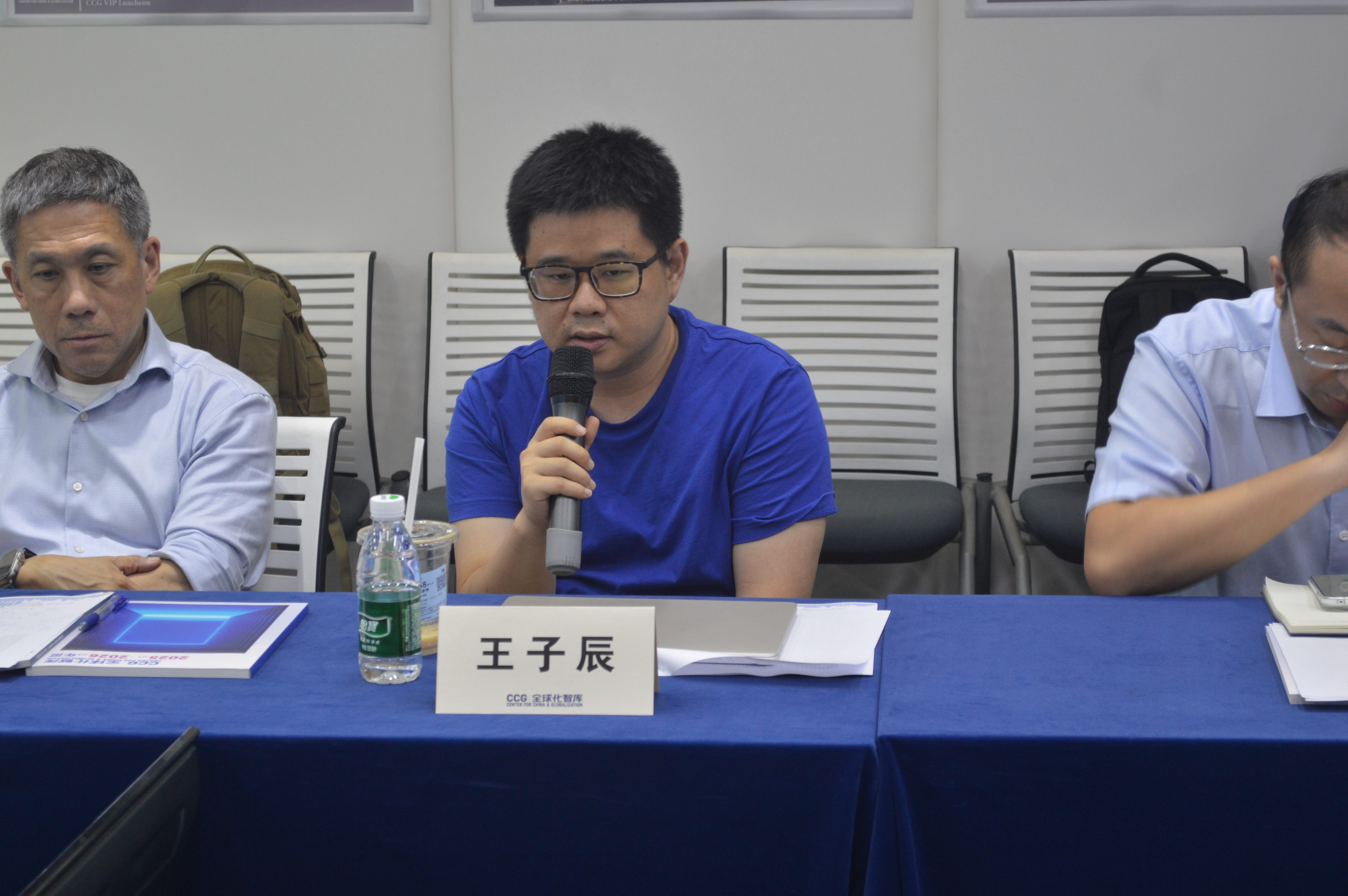
Thank you, Secretary-General Miao. It’s also been very rewarding to hear everyone’s sharing just now. Compared to what all of you have shared, my own interactions with Joseph Nye were, of course, far fewer in number and far less deep.
CCG — some of you may have heard — runs a few English-language newsletters that have built a certain degree of international influence, and I happen to be responsible for managing them. Joseph Nye was one of our long-standing subscribers.
The last time he was in Beijing was in 2023, when he came to attend one of our forums. Shirley Ren, Director of CCG’s publishing center, and I drove to pick him up and later took him back, so I had quite a bit of time to talk with him in the car. He was very curious about China’s domestic situation, the policy environment, and a range of other issues. As we explained these things to him, I was struck by how open-minded he remained throughout our conversations.
The last time I saw him was in March 2025. At the time, I was doing a mid-career Master in Public Policy at Princeton’s School of Public and International Affairs, and Princeton’s spring break happened to fall a week earlier than Harvard’s. So during our break, I went up to Harvard to see him. I didn’t want to trouble Secretary General Mabel Miao, so I simply emailed him directly. He responded very warmly and made time especially to meet with me.
While I was there, I also had the chance to speak with people around Harvard more broadly — some of his assistants, as well as other faculty members and students. His wife had passed away before him, and I think her death had a profound effect on him. You could really see what a full and rounded person he was — not only an accomplished former government official and distinguished scholar, but also someone who had shared a deeply devoted marriage for many decades. Her passing clearly affected him a great deal.
And in fact, not long after his wife passed away, he himself passed away as well. I remember that when I visited him in March, he had just written a long piece for the Financial Times. The latter part of the title was something like “Donald Trump and the End of American Soft Power.” His distress over the damage Trump was doing to America’s soft power came through very clearly in the piece — you could feel it in almost every line.
Since everyone was paying close attention at the time to the Trump administration’s policies, I also asked him what he thought was likely to happen next. If I remember correctly, he said he didn’t know either; he even wasn’t sure President Trump himself knew what he was going to say the next day.
So I think that, when it comes to dealing with the uncertainty of U.S. policy under the current circumstances, there may simply be no single silver-bullet solution. That uncertainty is inherent; it is something we have to learn to live with.
And just as our Secretary-General Miao mentioned earlier, Professor Nye genuinely cared about younger people like us, people of our generation. When it was time for me to leave, he took the initiative to bring out one of his books and offered to sign it for me. What he wrote was genuinely warm and heartfelt.
He probably also knew that our newsletters have a certain reach and influence internationally, including among Western experts, scholars, and officials who work on China-related issues. So he made a point of saying that he hoped our own soft power could continue to grow and become more influential.
Thank you.
Mabel Lu Miao
All right, thank you all very much. I’d now like to invite President Henry Huiyao Wang to speak. President Wang is also the editor of this book, so I’d like to ask him to share a few thoughts with us.
You touched earlier on the story of how we came to know Joseph Nye and why we decided to publish this book. I’d also be very interested to hear your thoughts on soft power itself, and on what lessons it may hold for global governance and for China.
Henry Huiyao Wang
Thank you. I think this has been a wonderful afternoon. We are all extremely busy, and the fact that we have been able to spend so much time today discussing Joseph Nye’s new book is, in itself, genuinely meaningful.
Why do I say that? First of all, however we translate the concept, I think we reached a shared understanding this afternoon: for a society or a country, what lies behind hard power is something much broader — its appeal, its influence, and the many other ways in which it can shape how others see and respond to it. Of course hard power matters; that goes without saying. But I think soft power is actually broader in scope and encompasses much more.
So although we have translated and published Professor Joseph Nye’s book, and although his discussion of soft power is closely tied to the history of the American century, I think what we are really doing today, in discussing the Chinese edition, is creating an opportunity to reflect on China’s own soft power: how can we continue to build it and strengthen it? I think that is one of the most important meanings of today’s book event and of reading this book.
Nye himself, of course, recognized that China has an extraordinarily deep civilizational foundation to draw on. The question is how we can bring the soft power of Chinese culture more fully to life — how we can better express ideas such as “harmony without uniformity” and “great harmony under heaven.” I think there is still a great deal for us to explore and develop in that regard.
Then there is the hard power that Yao Yao mentioned earlier. China is now the world’s second-largest economy, with an enormous domestic market, and it is also doing very well in areas such as green globalization. I would argue that these, too, can become sources of soft power.
And of course, as others mentioned earlier, there is also the growing international reach of Chinese popular and folk culture. That is developing very quickly, and there is a great deal we can learn from it. In fact, in some ways it echoes the very channels through which the United States has historically exercised its own soft power.
I would also add that China’s balanced and multilateral approach to diplomacy — not forming exclusive alliances and not simply taking sides — can itself be a form of soft power. Through this particular style of international engagement, China is also projecting a certain kind of appeal and influence.
Of course, after reading this book and reflecting on its discussion of soft power, I also think there are still a number of areas where China could do better in projecting its own soft power. One of the most important is agenda-setting — our ability to shape agendas within the global discourse system. To some extent, the United States still dominates that space, and I think there is enormous room for us to improve.
Then there is cultural soft power. China has an extraordinarily long and rich cultural history, but compared with Hollywood, our culture is really only beginning to reach international audiences on a large scale. New forms such as micro-dramas, and even events like the recent robot games, may seem quite ordinary at home, but they can also become forms of soft power — new kinds of cultural IP with international appeal. There is still room to improve, of course, particularly in making these forms of communication more accessible, engaging, and easier for international audiences to connect with.
I would also mention the role of non-governmental think tanks in public diplomacy. In the United States, non-governmental organizations and think tanks participate in public diplomacy on a very large scale, creating a broad, grassroots network of people-to-people engagement. This is another area where I think we still have considerable room to grow.
Then there is our capacity for international storytelling and interpretation. China already has quite a few English-language media outlets, but the question is how we connect more effectively with the wider international English-language media ecosystem, and how we engage more deeply with the Global South, so that more voices — and more balanced voices — can be heard. There is still a great deal more we could do.
This also relates to talent. We still need more internationally minded people with the ability to operate effectively across cultures and institutions, and we could do much more to send such talent out into the world and give them more opportunities for international engagement.
There are also other areas in which we can strengthen our soft power, including the logic of our narratives and the way we frame issues in the first place. In particular, I think we need to move away from a traditional external-propaganda mindset and toward a model of empathetic communication — communication that begins by understanding how others see the world. That is something we genuinely need to work on.
Finally, we also need a more diverse and pluralistic ecosystem for communicating China’s cultural soft power. That means involving university think tanks, enterprises, and especially companies engaged in grassroots international exchanges, as well as young Chinese studying abroad, overseas Chinese communities, and many others. All of these can become important channels for building and projecting soft power.
And of course, when it comes to agenda-setting, I think China has already put forward many important proposals at the national level, including the Four Global Initiatives. Beyond that, there is also the question of how we can work more closely with countries of the Global South to strengthen soft power on a truly global scale. I think there is still a great deal we can do in all of these areas.
So overall, how should we understand Joseph Nye? Although much of what he wrote about was the United States, his ideas remain deeply thought-provoking, and there is a great deal we can draw on and learn from. Of course, he was speaking from an American perspective, and we fully understand that.
But if we look at the American century and at the nearly one hundred years of history that Nye himself lived through, we can also see that China today is undergoing profound changes unseen in a century and entering a new stage in its own national rejuvenation. I believe that, with our generation taking part in this process, and with more and more young people joining in, the building and strengthening of China’s soft power — and its greater presence on the world stage — is something we can expect to see take shape in the years ahead.
So with that, I would like to thank China Science and Technology Press, including Editor Shen Yonggang for joining us in person today, as well as the editors and senior editors who worked so closely on this book from beginning to end. We are deeply grateful for all their efforts. I would also like to thank all of our experts for the insights they shared with us this afternoon, as well as our translation team for their hard work.
That is all I wanted to say today. Thank you all again.
Mabel Lu Miao
Okay, thank you all very much. As President Wang just said, we are deeply grateful to China Science and Technology Press for its strong support for this book, and to all the experts who joined today’s discussion, both online and in person.
I believe this book can have a real impact. It brings the idea of soft power back into focus and encourages more people to think seriously about it — all with the broader goal of strengthening China’s own soft power. Whatever terminology we ultimately use, I think we have reached a point where China’s hard power has already grown substantially, while our soft power is still very much a work in progress. And that, in itself, can inspire a great deal of fresh enthusiasm and reflection among Chinese people.
Now that the country has reached this stage of development, there are still many areas where we need to do more and build further. Put simply, I think this discussion has really stirred something in many young people.
And when China’s own centennial history is written years from now, will it be the work of one person, or of many people writing it together? After all, Chinese culture tends to place greater emphasis on the collective. As for our generation’s own “Chinese Century,” we are usually more modest and simply say that the 21st century will be the Asian Century. But then the question remains: where is China’s own century within that? What would a Chinese Century actually look like? And what kind of Chinese Century do we hope to leave to the world?
Ren Xiao
In the future, Professor Yao can write a book called A Life in the Chinese Century.
Mabel Lu Miao
Exactly. And I think that could be something worth doing as well — perhaps Professor Yao and others could come together to write more about “A Life in the Chinese Century,” so to speak: the intersection between an individual life and a larger historical era.
I think that is part of what makes Joseph Nye so compelling, what makes this book so compelling, and really what has made today’s discussion so compelling. Here was someone whose life was deeply intertwined with his time, and with the broader currents shaping the world around him. In the process, he left behind a story rich enough to draw people in, to make later generations want to study not only his ideas, but the life and historical experience behind them. There is simply so much substance there. It is genuinely fascinating.
Thank you. Thank you all for your attention. That is also an important part of why we were so eager to publish this book in the first place.
And finally, thank you again to all of our speakers, and to our team. Our Publishing Center put an enormous amount of work into this book over a long period of time. It was by no means easy. In many respects, a book like this is genuinely difficult to bring to publication. So I want to thank them as well. Thank you all.
Remembering Joseph S. Nye Jr.

Joseph S. Nye Jr., an influential figure in international relations who shaped decades of American foreign policy and introduced the world to the enduring concept of “soft power,” died on Tuesday in Cambridge, Massachusetts, at the age of 88. A former dean of Harvard’s Kennedy School and senior official in the U.S. government, Nye’s passing marks a prof…
Joseph Nye‘s speech & conversation at book release

On April 28th, Professor Joseph Nye’s new book, Soft Power and Great-Power Competition: Shifting Sands in the Balance of Power between the United States and China, published by Springer Nature in English and CITIC Press in Chinese, was released at the Center for China and Globalization (CCG).