

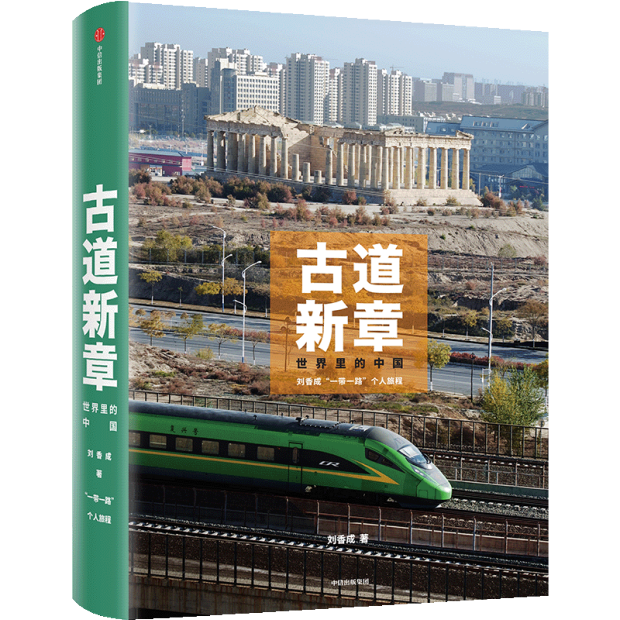
On September 24, 2026, the Center for China and Globalization (CCG) hosted its 27th CCG VIP Luncheon in Beijing, featuring Pulitzer Prize-winning photojournalist and photographer Liu Heung Shing for a conversation about his new book, 古道新章· 世界里的中国 Old Road, New Connections.

Liu is one of the best-known photojournalists of his generation. He was Time magazine’s first photographer posted to Beijing after China began reform and opening up, and later worked for the Associated Press in Beijing, Los Angeles, New Delhi, Seoul, and Moscow. In 1992, he shared the Pulitzer Prize for Spot News Photography with the AP team in Moscow for their coverage of the collapse of the Soviet Union.

His latest project took him some 270,000 kilometres across five continents, 21 countries, and 54 regions over three years. The resulting book, Old Road, New Connections, follows the connections taking shape along and beyond the ancient Silk Road, looking at how Chinese infrastructure, companies, technology, and people are encountering very different societies around the world. The Chinese edition was published by CITIC Press, while the English edition is published by ACC Art Books.

The luncheon opened with remarks by Mabel Lu Miao, Co-founder and Secretary-General of CCG, followed by a presentation from Liu and a dialogue with Henry Huiyao Wang, Founder and President of CCG. Liu reflected on more than half a century behind the camera, from China’s transformation and the collapse of the Soviet Union to his recent travels documenting Belt and Road projects. Their conversation also explored how China and the outside world report on one another, the importance of being physically present as a journalist, and the role of people-to-people and cultural connections alongside infrastructure and trade.
The session concluded with a live Q&A. Questions came from Antonio Villafranca, Vice President for Research at the Italian Institute for International Political Studies (ISPI); Hodan Osman Abdi, Ambassador of Somalia to China; Hong Hai, Founder of TimeDoc; and Zichen Wang, Deputy Secretary-General of CCG.
The following transcript is based on a recording of the event and has been lightly edited for clarity. It has not been reviewed by any of the speakers.
Mabel Lu Miao, Founder & Secretary General, CCG
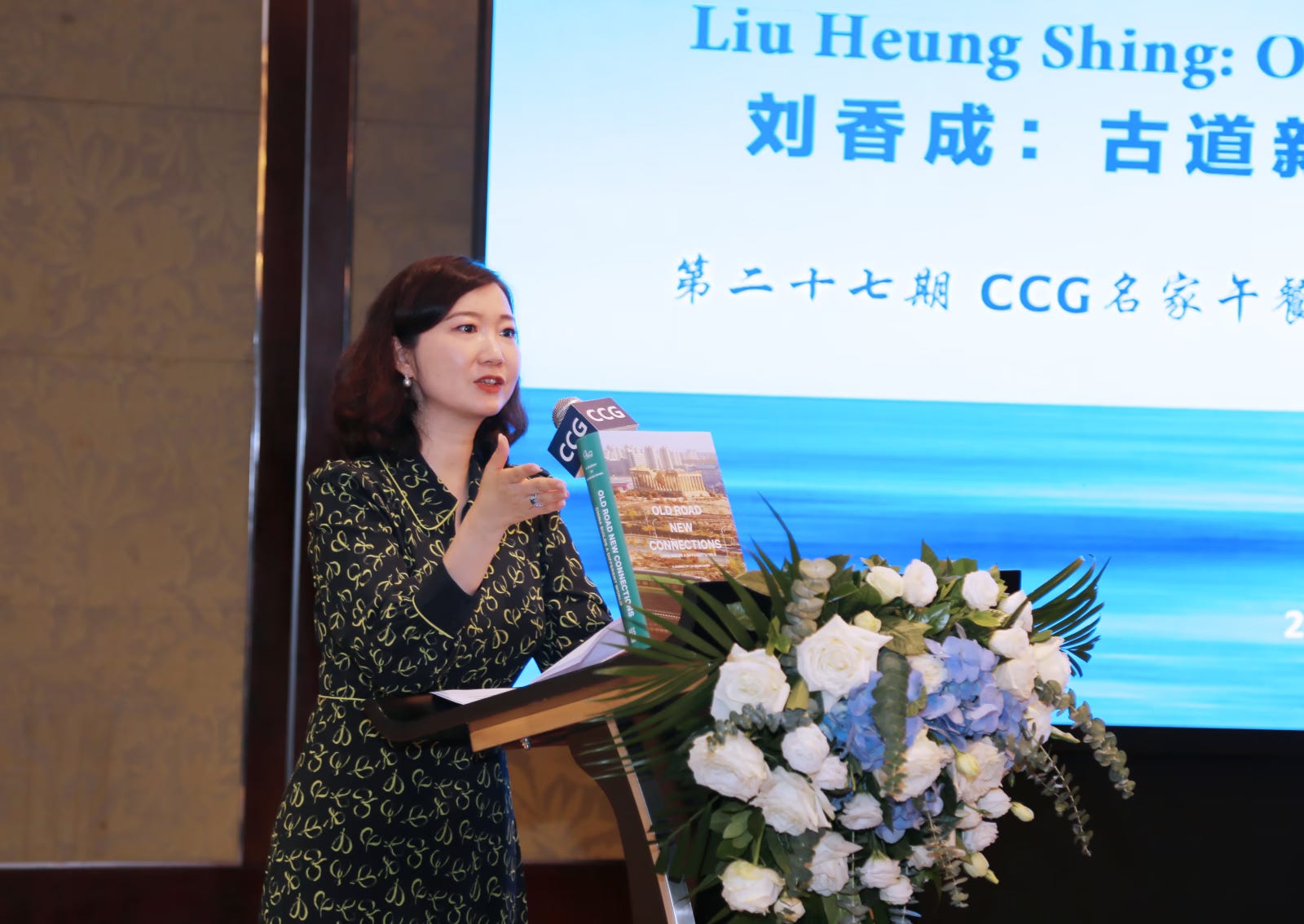
Your Excellencies, distinguished guests, ladies and gentlemen, good afternoon. Thank you all for joining us for today’s CCG VIP Luncheon. The CCG VIP Luncheon is a flagship high-level international exchange platform established by the Center for China and Globalization (CCG). It serves as a key bridge connecting global political, business, and academic communities to promote pragmatic cooperation between China and the world.
Today’s luncheon is also a special edition of the CCG Global Dialogue, our flagship platform that brings together policymakers, scholars, and business leaders around the world to discuss the most pressing global challenges. As a forum for open exchange, the dialogue fosters cross-cultural understanding and pragmatic solutions on issues ranging from governance and sustainable development to economic cooperation and international security.
Today’s theme is Old Road, New Connections. Over the course of three years, Pulitzer Prize-winning photographer and photojournalist Mr. Liu Heung Shing travelled some 270,000 kilometres across five continents, visiting 21 countries and 54 regions. Amazing. The result is his new book, Old Road, New Connections, a work of long-form photojournalism that traces the new connections taking shape along and beyond the ancient Silk Road.
Today, CCG hosts a VIP Luncheon featuring Mr. Liu for a conversation on the making of the book, whose English edition is published by ACC Art Books and Chinese edition by CITIC Press. The luncheon will feature a visual presentation by Mr. Liu, including selected photographs from his journey and a 12-minute film edited by well-known Chinese filmmaker Jia Zhangke, followed by a dialogue with CCG President Henry Huiyao Wang and a live Q&A with guests.
Before we start, please let me take a moment to acknowledge some of our special guests and VIPs who are here. We have invited representatives from the diplomatic community, government authorities, academic institutions, international organisations, corporations and the media.
We have invited several ambassadors to China: His Excellency Robert Lee, Ambassador of Fiji to China. Welcome. Her Excellency Hodan Osman Abdi, Ambassador of Somalia to China. Welcome, Your Excellency. And Mr. Ma Jianchun, President of the China Society for WTO Studies and former Director-General of the Department of Foreign Affairs, Ministry of Commerce. Welcome. We also invited Huang Haifeng, Senior Fellow of CCG and Co-Dean of the China Institute for Responsible Management Education and Sustainable Development. We invited Huang Junxiong, Director of the Regional Agreement Service Division, Beijing Investment Promotion Service Center. Welcome. And Mr. Song Yaoming, former Minister-Counsellor for Economic and Commercial Affairs at the Chinese Embassy in Japan and former Commercial Counsellor of the Department of Asian Affairs, Ministry of Commerce. Welcome. Mr. Sun Yongfu, former Director-General of the Department of European Affairs, Ministry of Commerce. Welcome. He is also a CCG Senior Non-Resident Fellow. And we invited Mr. Wang Haiwen, Dean of the School of Economics, Beijing International Studies University. Welcome.
We have a special guest today. He is Vice President of a well-known Italian think tank, ISPI. He is Mr. Antonio Villafranca. Welcome, Antonio. We have invited representatives from different multinational companies, including Ms. Liu Chang from an American company and many other well-known companies. We also invited media reporters from People’s Daily, CGTN, The Christian Science Monitor, and TimeDoc.
Before my introduction, we would like to show a film to all of you. I think the film is very unique. It is not open to the public, but you guys can have a look.
[Film screening]
This film was edited by a well-known director, Jia Zhangke. But the most important thing is that the content features Mr. Liu Heung Shing, who is a well-known photojournalist.
Very touching. A very touching story, and a lot of vivid pictures, a lot of vivid faces and individuals. That is very important. So maybe let me introduce Mr. Liu Heung Shing after this fantastic video.
Mr. Liu Heung Shing is one of the best-known Chinese photojournalists of his generation. Over more than five decades, he has photographed some of the most important changes in China and the world. He was Time magazine’s first photographer posted in Beijing after China began its reform and opening up, and later worked for the Associated Press in Beijing, Los Angeles, New Delhi, Seoul and Moscow. In 1992, he and his AP colleagues in Moscow received the Pulitzer Prize for their coverage of the collapse of the Soviet Union.
Many of us first came to know Mr. Liu through his photographs of China in the late 1970s and 1980s. He was there at a time when the country was changing very quickly, and his photographs captured both the big events and what was happening in everyday life.
His new book, Old Road, New Connections — you can see it on the table — brings that same eye to his travels across a much broader part of the world. Between 2023 and 2025, he travelled some 270,000 kilometres across five continents, visiting 21 countries and 54 regions. The Chinese edition came out with CITIC Press in July this year. The English edition, Old Road, New Connections: China Builds a Different World, is being published by ACC Art Books. We have copies here today, so you can take a look.
This is also a particularly interesting conversation for us at CCG. We have long been involved in bringing people from China and around the world together through policy dialogues, international exchanges, and people-to-people engagement. Mr. Liu’s work speaks directly to many of the same questions about how people, societies and cultures understand and connect with one another.
So let’s move to the next part of our luncheon today. It is a dialogue between Henry Huiyao Wang, Founder and President of CCG, and Mr. Liu Heung Shing. Before our dialogue, we can invite Mr. Liu onto the stage to deliver his introduction and speech. Welcome, Mr. Liu.
Liu Heung Shing, Photographer & Photojournalist
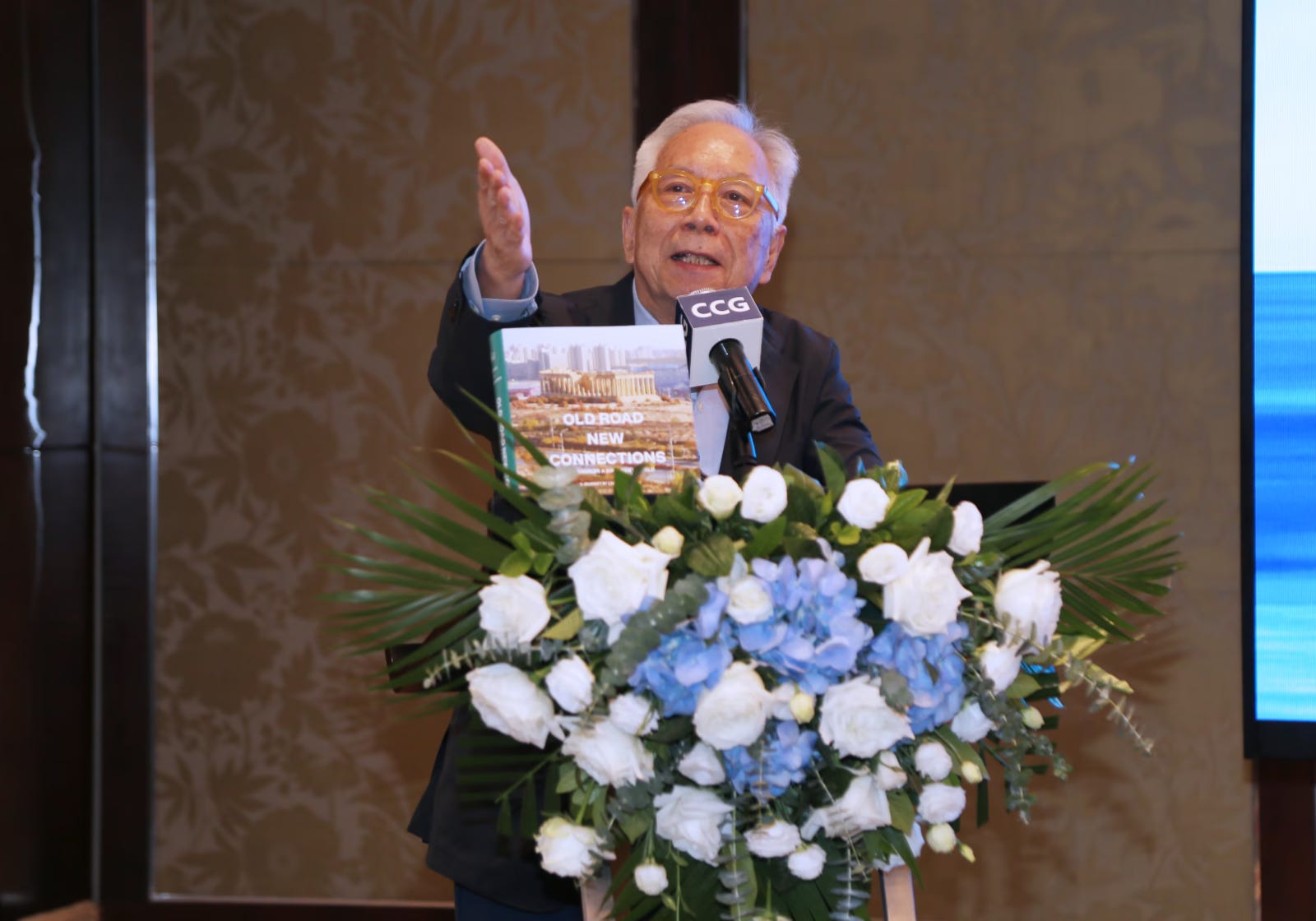
Good afternoon. Thanks for being here. Since the project started three or four years ago, I have had many, many questions, and one of those asked most often is: Why do you do this?
To answer that question, I have to bring everyone back to what I see as China 1.0, China 2.0, and what I think, when this BRI project is more or less completed — there is still a long time to go — could arguably be China’s 3.0.
When I came back from Hong Kong, where I was born, to China to receive my primary education, that was in the mid-1950s. The vivid impression that education left with me was that every day I entered the schoolyard, there was a billboard, maybe about three times the length of this billboard, which said, “China must catch up with Great Britain and surpass the United States.” I also saw, at that time, the ongoing Great Leap Forward, and I saw the effects of the Great Leap Forward on the neighbours who moved into our family’s courtyard, which had been a dowry from my grandparents to my mother and father. So I saw these faces from malnutrition — blown faces and legs and arms and so on and so forth.
There was a time when my parents brought me back to Hong Kong, and I received a British education until I left for the United States in 1969 to study in the U.S. But before then, I also had the unique experience of visiting China before I left for the U.S. In 1968, I actually saw the Cultural Revolution with my own eyes. And as a photographer, as a future photographer, I watched with great curiosity the relationship between people in China, especially people who came back from overseas. They were met with scrutinising eyes from schoolmates and friends.
So after my graduation, I went to Europe. I photographed Spain in the first years after Franco. I photographed the election participated in by the Portuguese Communist Party. And when I went back to Paris, I saw all the Parisian newspapers with front-page pictures, entire-page pictures, of Chairman Mao. I knew then what had happened. Time magazine and the German magazine Stern sent me back to China. At that time, I don’t know how many of you realise that, to buy train and plane tickets in China, you had to go through China Travel Service. So I obviously missed the million-strong crowd commemorating the death of Chairman Mao.
Instead, I stayed in Guangzhou for 10 days on the banks of the Pearl River. I watched with my eyes and I studied very carefully the people’s new body language, which was a comprehensive, general relaxation from the Cultural Revolution. I also remember people’s walking steps were gentler, slower. They dropped their tense shoulders. Their facial muscles were more relaxed. So I felt China would change, but how it would change, I had no answers.
So I went back to New York, and I pitched to the president of Time Inc. When he asked me what I wanted to do, I said, “I want to go to China.” So I was here from 1977-78 as a resident foreign correspondent in Beijing for over five years. At that time, I watched the unfolding of a national debate which had the title “Seek Truth from Facts.” In Chinese, it says, “实践是检验真理的唯一标准.” It’s amazing in China: when Deng Xiaoping launched reform with these emphatic messages for the people of China, suddenly you see things moving.
By the end of my visit, and subsequently when I returned to China after multiple assignments in the U.S., in New Delhi covering the entire South Asia region, in South Korea and, finally, in the Soviet Union — and it collapsed before my lenses — during this period, obviously, I saw the steady success of the economic reform to what China today is, arguably, the world’s largest manufacturing powerhouse.
So when you see with your own eyes, and you go through all these years here of China’s economic reform to what China is like today, for me, at least, I take what China says very seriously. So when the Chinese leadership announced the Belt and Road, I said to myself, “Uh-huh. This will be the first time China is reaching out to 146 countries around the world.” And I said to myself, “This is big, but this is difficult to do.” After many years of thinking about it, I said I really should do this, because the result of this may arguably become the largest man-made project in the world of the 21st century.
So I proceeded to do this, and I encountered two challenges. In order to tell this story, I felt I had to go to the five continents. Without capturing this vast mass of the globe, you cannot understand how comprehensive this project is, how China can build projects in different countries that are in different stages of development, with different cultures, different languages, different races and different religions, and so on and so forth. Because I feel, if I don’t reach out to do this, it is very hard to get the in-depth feeling, because you have to watch with your eyes, and you have to listen to people, and you have to then decide what would be included in your camera and the lenses.
So what I saw after this travel, after this book was wrapped up, basically, I could point to three compelling competitive advantages that China brought to this project. As I stayed in these container-converted sleeping quarters in the oil field and shared breakfast and so on with Chinese managers and engineers, I realised that all these 146 countries are sovereign nations. So China — unlike many voices of criticism saying this could be a post-colonial period, or this could be a debt trap for many nations — I realised that all the sovereign nations have to invite China to participate in various projects. China has to submit a bid like everybody else.
And if you go through the bidding process, you realise one aspect of Chinese competitiveness is the cost of management. I have been an expatriate all my life. When you realise that Chinese engineers and managers who are sent abroad today do live in very comfortable housing — I watched it with my own eyes in Rio de Janeiro, on the beautiful beaches. I photographed the Chinese playing Sunday volleyball on the beach. Afterwards, I walked back with them to where they lived. They lived in just beautiful condominiums with a beachfront view. And I asked, “How many of you live here?” He said, “Oh, 214 units belong to our State Grid Corporation. We live here.” As opposed to what I am familiar with in all my travels: most foreign corporations, when they send their representatives abroad, may require staying in a villa; they have to have the chef; they have to have the driver; they have to have the children attending international school, et cetera, et cetera. So you could easily imagine, when China sends 100 engineers and technicians overseas to this project, their management cost is considerably less, but equally good and competitive.
The second aspect is what China brings to the table in terms of raw materials. After a long time getting to know some Wenzhou businessmen, I finally went to Zhejiang and went to Wenzhou. I met with the Ruili Auto Parts Company and the chairman, Mr. Zhang Xiaoping, who started his business with 15 people and today has 50,000 staff. He pointed out to me these gigantic brakes. I was told that if you build a high-speed train and you don’t have these brakes in every single compartment, on both sides of the compartment, when you brake the high-speed train at 350 kilometres an hour, the backside of the train will simply flip over. And he said, “Well, our brakes are as good as any, but our cost is about 40 to 50 percent of the Italian, German and French.”
So when China brings, you know, 2,888 pieces of equipment to Algeria to build another 583-kilometre railway under 50 degrees Celsius and completes a project like that, China also brings with it these compelling advantages of good, high-quality equipment and raw materials and so on at a very, very competitive price.
And the third aspect is that, in terms of financing, you all know Chinese financing is as competitive as anyone.
And the fourth observation I have known all along, in my whole life, in all my travels to different countries, developed and developing countries, is this peerless pragmatism of Chinese people and how hard Chinese people work. So if you add the last quality to the previous three, you have a situation — and you may find the answers to why the Chinese nowadays, even though they have learned many, many lessons in the Belt and Road projects, have also brought something to the table: their projects are usually within budget and always on time. And these overseas countries, and the elites who manage the Chinese projects that I talked to, more or less understand that if they don’t do this, they will be falling behind in their development.
So without going further, I would rather prefer that Henry and I answer many of your questions, because each one of you will have a different question, and I look forward to our chit-chat.
Mabel Lu Miao
Thank you very much for the great words from Mr. Liu Heung Shing. We were really touched by the film, also by the pictures and your speech. Later, we would like to move to the dialogue part between Henry Wang and Mr. Liu Heung Shing.
Henry Wang is the President and Founder of the Center for China and Globalization. Actually, we have conducted the CCG Global Dialogue Series for several years. We have had dialogues between Henry and different distinguished guests, like Joseph Nye, Graham Allison, a lot of distinguished thinkers around the world, and of course including think tankers, policymakers and former statesmen.
But this time, we would like to invite Mr. Liu, who is an artist and also a journalist. I also think he is a great thinker. Beyond those visual things, there are many thoughts and insightful perspectives. So I think we would like to invite our colleagues to set up the chairs, and we would like to move to the dialogue part. Let’s welcome both of you, Henry Wang and Mr. Liu.
Henry Huiyao Wang, Founder & President, CCG
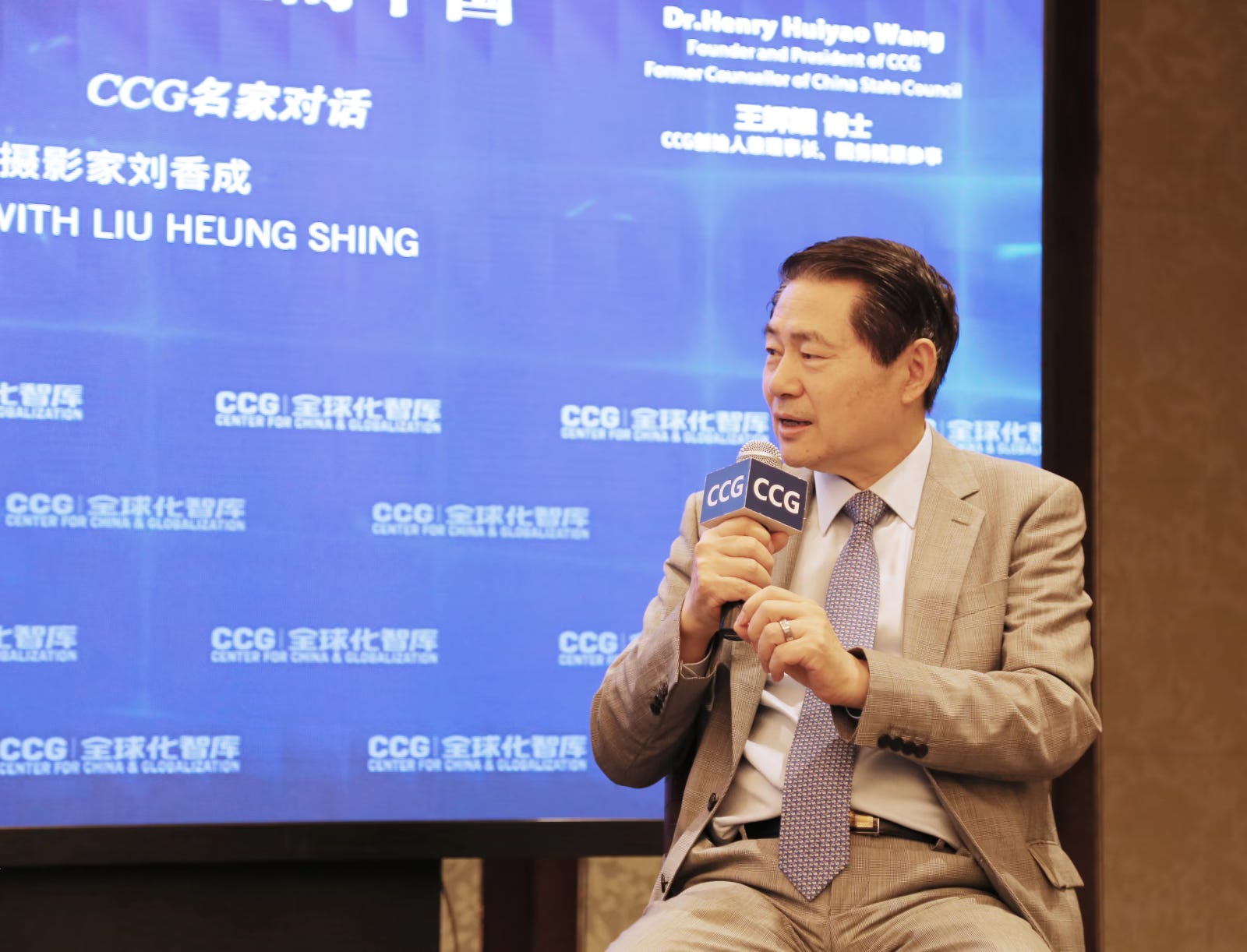
Great. So Mabel and I were really fascinated by your introduction of this new undertaking you have, and it is very, very impressive. At the Center for China and Globalization, CCG, we have conducted many dialogues. And of course, we usually talk with political leaders, think tankers and, as Mabel mentioned, also business leaders. But this is actually the first time we have talked to a journalist leader and a great pioneer in photography, particularly in China.
So first, I would like to ask you. I know you are a Pulitzer Prize winner, right, many years ago. So based on your five decades of travelling to quite a number of countries — just on this trip, you have already been to 20-some countries, right? — what are the most important transformations, say, in the last half-century that you have witnessed that strike you the most? I heard you just mention you were in Europe, you witnessed the collapse of the Soviet Union, and then of course you saw the rise of China, and then you saw how the world is shaping. Now we are in a more intertwined but also intensified world.
So what is your impression of this changing world, and how can we address that, particularly through the media, through artists, through photographs and through people-to-people exchanges, which I think is the broader theme of your latest landmark project? So maybe you can give us a little bit more about how you evolved and, in the last 50 or 60 years, your experience. You touched on some of that, but we would like to hear more about that.
Liu Heung Shing
Thank you. I think I would make one or two comments from my perspective. At 26, I began my career with a mainstream U.S. media company. I spent about 30 years as a day-to-day journalist, but also had over 10 years of experience in management roles with Time Warner and also with News Corp. With both of these companies — one, as you know, being an American centre-left corporation, and one a centre-right corporation, which today are more or less in fierce competition for the public’s attention — I learned that media do play a very significant role in shaping our perceptions.
And I learned how politics and economics, in fact, are joined at the hip. One influences the other. Because I have also witnessed that the conversations between the United States and the People’s Republic of China have gone through this sweep of the pendulum, from the heyday of Richard Nixon’s visit to what it is today. I believe, and I hope, media from both countries will get to learn from each other better.
I was just with a colleague last night after an event, and we shared notes. And I realised that since the late 1990s, somehow the people in our newsrooms, editorial rooms, who make decisions about sending foreign correspondents to distant countries — and in this case particularly China — somehow the senior editors in the late 1990s, towards the second half of the 1990s, believed that China was an economic story. And therefore we sent many, many journalists to China who could read spreadsheets and understand what corporate reports said.
Versus the time when I first arrived in 1978: I was one of eight American journalists who landed in Beijing. In those days, three out of the eight people, my colleagues, had studied China. They studied the language. They were all students of John King Fairbank at Harvard. So, if anything, they brought their curiosity to China, and they brought the necessary language skills and understanding of Chinese history. And that changed when the people arriving on the ground became so focused on the economy. Gradually, the story swung and became the competition between the two economies, and therefore the narrative also shifted.
And of course, the people in Congress also played a role, because they sensed increasing economic competition. So the conversation is skewed towards the side that is, in effect, what we all see today. So I think it will take considerable time going forward. What China can do and what the U.S. can do is to reopen their minds about China. I am not asking everybody to change their lenses, but today the discussion and the topic can so easily become misguided when you don’t have that curiosity, when you look at China with a straitjacket view. I think the level of understanding just plummets.
I think the reverse side is also important. One of my American colleagues once made a comment. He said, “I notice all the Chinese journalists arriving in Washington. They seem more interested in attending discussions in the think tanks.” He said, “I rarely see a Chinese journalist going to follow a local election, understand local elections, understand American politics, campaign contributions, et cetera, et cetera.” Which is also a necessary pair of lenses to scrutinise what makes America tick. So I think I’m hopeful. I’m hopeful. I’m very hopeful that this period will also move on.
Henry Huiyao Wang
That’s great. Actually, President Xi is visiting the United States now, and I think we are going to talk about the issues of trade. You talk about investment, AI, people-to-people exchanges, particularly also, I think, journalistic exchanges that you mentioned. I think absolutely we need to expand exchanges, and then have more journalists come and report on both sides. So I am really for that.
As a matter of fact, when I look at your presentation, I think the Center for China and Globalization is also doing similar things. We have been going to different countries. In the last five years, we have also travelled to 50 countries, actually, for all the think tank meetings, global conferences and so on. What I think is that this narrative from China probably needs to be reshaped somehow. And your work, certainly from a journalist’s unique perspective, has really given new, fresh thinking.
For example, when I look at your presentation, it reminds me that when I was growing up in the 1960s and 1970s, my father actually went to Africa to build the Tanzania-Zambia Railway. At that time, I remember seeing my father off at the airport.
Liu Heung Shing
And 68 Chinese died.
Henry Huiyao Wang
Yes. So that was really a moment when China was just starting. But it is amazing. You talked about Jakarta to Bandung, cutting 10 hours to 40-some minutes. So with that kind of infrastructure and hardware connectivity, I think China is making a lot of progress.
So what do you think about the software now? I think we probably also need to connect with the world on the software — on people-to-people exchanges, students, tourism, and also journalists, culture, artists and all the other areas. So in that aspect, you travelled to these 20-some countries in the last few years. What do you see that we can still improve to enhance mutual understanding?
Of course, this “old road, new connections” has a new meaning, a new connectivity. But how can we revive the Silk Road spirit to make the connectivity? We have a friend from Italy here, right? I mean, we have Marco Polo. Seven hundred years ago, he travelled to China. You are probably a new photographer version of Marco Polo in contemporary times. And I also know we have many companies here doing business in those Silk Road countries. For example, we have this AI company, you know, Kai-Fu Lee’s company, actually doing projects in Kazakhstan, and so many things like that. So what do you think? How can we go further after your three-year journey on this very interesting, fascinating project?
Liu Heung Shing
Well, my travel over more than three years actually has brought me back to what I learned on day one. I didn’t go to study journalism, but from day one at the Associated Press, we had what is called the AP Stylebook, which is the Bible for American journalists and newspapermen. And in fact, if you ask American journalism teachers, Journalism 101 emphasises being there. And being there has a magic that removes all sorts of stereotypes.
Henry Huiyao Wang
Seeing is believing, basically.
Liu Heung Shing
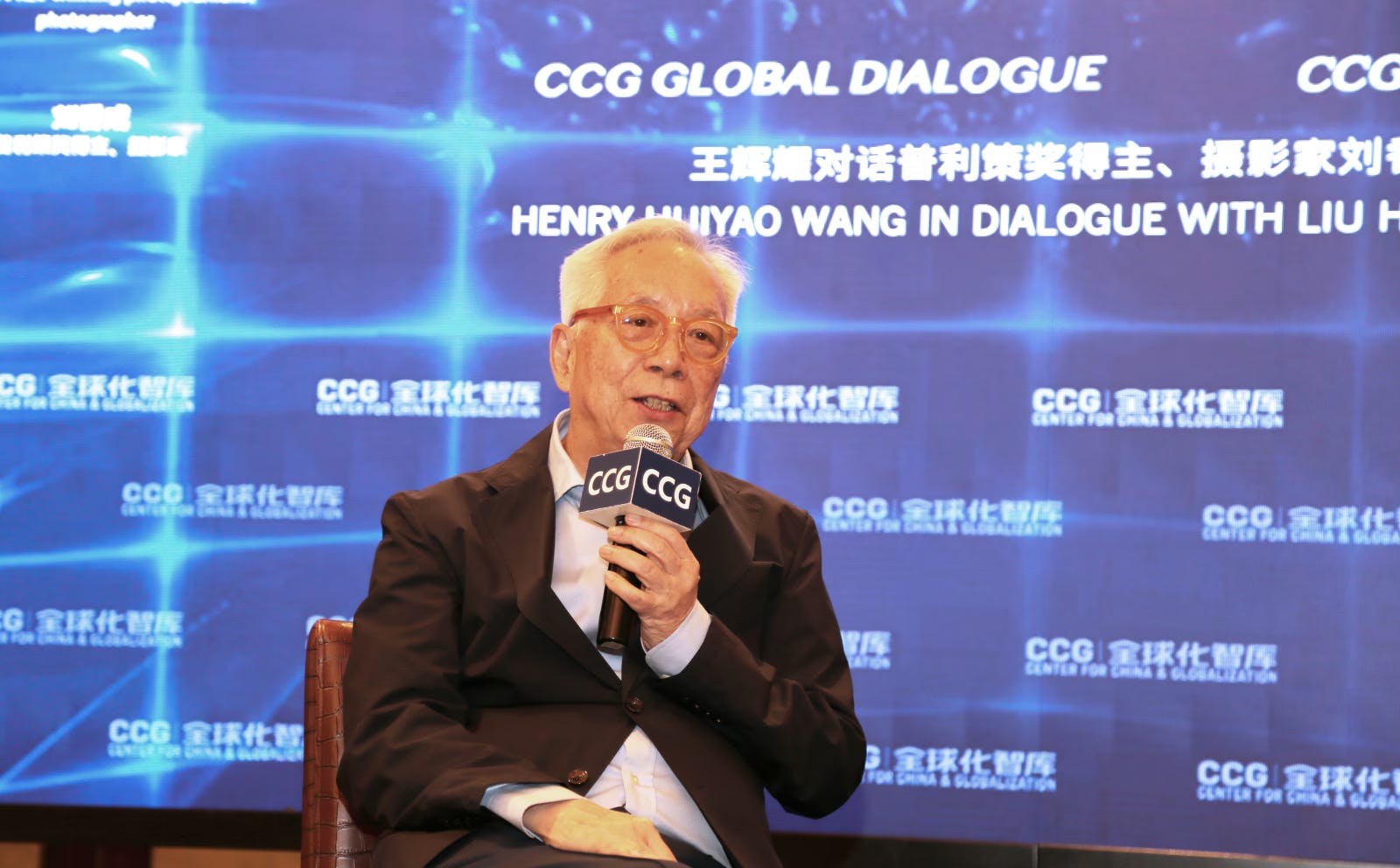
Well, not only seeing, but also listening. And I believe Chinese journalism, Chinese newspaper people, also understand this. But there are nuances. The practices are different. Even, for what I know, Chinese journalists, before going anywhere, have a lot of discussion: what to cover, how to cover, what to cover, and so on and so forth.
It is not unusual in Chinese newsrooms, because I heard this when I visited these state-owned enterprises. They would relate to me that before the Chinese journalists arrived at these projects, they would have very detailed discussions about what they would like to film, what they would like to cover. So in many ways, the decision is made in Beijing.
And when I had to deal with all the state-owned enterprises, which I think is an awesome challenge — I emphasise how challenging it is because, in the state-owned corporations, the people I deal with, and it turns out we become good friends through this work together — invariably, all the Chinese state-owned enterprise people would say, “Mr. Liu, put down what you would like to photograph, what you would like to see, et cetera, et cetera.” Which is what they told me they do when Chinese journalists arrive in these distant countries.
And I was often stuck, because I said to them, “I can’t tell you what I would like to photograph, because if I haven’t been there, I haven’t seen your operation, what would I know about what I want to photograph?” You see, these differences actually speak louder than words. We almost feel like we understand the practice of journalism from different places. For me, it is very, very important to be in the room and see these people and see the interaction. And I decide where I want to be, what I would like to photograph.
So for me, I spent an awful lot of time convincing people. For example, when I asked the people who built this amazing high-speed train from Jakarta to Bandung, I said, “I want to see one more thing. I want my readers to see what it is like in the driver’s compartment.” And suddenly, the conversation paused. And it went on for three more months before they came back to me.
They said, “Oh, Mr. Liu, I realised that when we handed the high-speed train project to the Indonesians, they came back to us and said, ‘By the way, don’t leave yet. Why don’t you help us operate this system, including the ticketing?’” And ticketing turned out to be immensely complex. Same thing in Saudi Arabia: the Chinese light rail train taking over three million pilgrims to Mecca every year. Again, the Saudis asked the Chinese, “Why don’t you manage it?” Because, you know, it is ticketing, the computer, the information, and so on and so forth.
So in Indonesia today, you could just put your ID in there, punch a few things, and out comes the ticket, which sounds much simpler than it actually is. So this gentleman came back to me. He said, “Well, the Indonesians decided to ask us to actually operate it for some time, and because we are operating it, we can think about bringing you into the compartment.” So it goes around and around in circles.
But finally, I’m glad that I asked to be in the compartment because, when I was in the compartment, I realised two drivers from Tianjin, Mr. Zhang and Mr. Wen, who belong to the Beijing Railway Bureau, were sent to Indonesia to operate this train. But behind the two drivers, I saw five or six Indonesian interns watching and listening and learning. That is why my job of being there is so important, because then you see all the nuances. It is not a spreadsheet: this project is worth X billion dollars. You realise the complexity.
And ironically, after I travelled back and forth in 40-some minutes — what would normally have taken 10 hours before — going from Jakarta back to my hotel, it was the old traffic, right? It took two and a half hours to go from the train station just to the hotel. When this 10-hour journey is now reduced to 46 minutes, you can really appreciate why they need China to build this high-speed train. And now they have built the high-speed train, the Indonesians came back to China and said, “Why don’t you build more?”
So this vivid seeing and listening to the people who were involved in this project are essential components of any reporting. And if you watch now, if The New York Times decides to report on China by having a bureau in Seoul, in South Korea, that’s what we have become. And how would these issues be addressed? I hope President Xi will find the answer.
Henry Huiyao Wang
I hope so. Yes. No, I think it is fascinating, because the case you illustrated shows that not only the hardware, but the software as well. And also, on your trips to different projects, you find where the interface is, how to really find the angle, and then all the views. So it has been fascinating not only to see your pictures, but maybe the stories behind those photos will also be very, very interesting. That is what I am thinking.
I was particularly impressed with one of the cases you mentioned, the BYD factory in Uzbekistan. It is very modern. And I saw this green — you know, the world needs green technology and green products. But how can we invest more in different countries, create jobs and make all those local contributions? So that is probably a good story as well, because there is a lot of talk about China just selling, but actually China is building a lot of factories around the world. So that is really also interesting.
Liu Heung Shing
Well, speaking about Uzbekistan, the BYD plant — a month ago, there was a story reprinting a New Yorker article in the Reference News 参考消息, and the writer said he went to Xiaomi and understood that Xiaomi, you know, this fantastic car that looks like a Porsche, can be produced every 76 seconds. So I had a chance to meet the leaders of BYD, and she said, “Oh, for us, it’s not 76 seconds; it’s 48 seconds.”
So, I mean, these things — the nuances in reporting — sometimes come full circle. How you read and what you read extends to a larger narrative, and how people understand the challenge we face.
Henry Huiyao Wang
Okay. So maybe I just have one more question, and then we will open it up for the audience to raise questions and have a dialogue. Finally, I would like to ask you: you have such a lifetime of experience reporting the world between East and West. As a photographer, or maybe as a journalist, what do you think are the three key qualities that you must possess to be a good journalist, a good photographer? What are the three key success factors, or the key qualities that you must have? I would say you work very hard. That must be one of those. But what about those things you can think of?
Liu Heung Shing
I think the result of all and the finest education is to groom students to be curious.
Henry Huiyao Wang
Curiosity. Okay, that’s number one.
Liu Heung Shing
Because curiosity gives you the mental energy to step forward. And I think the second important thing for journalists is that you need an incomparable kind of structure of knowledge. Because at the end of the day, journalism is a trade, it is a practice. If you don’t have a good body of general knowledge, you will very quickly find yourself in a pigeonhole.
Henry Huiyao Wang
That’s interesting. So knowledge — knowledge is power, right? Absolutely. Good. Okay, so of course working hard, too. Any question from our audience here? Okay, we have Antonio.
Antonio Villafranca, Vice President for Research, Italian Institute for International Political Studies (ISPI)
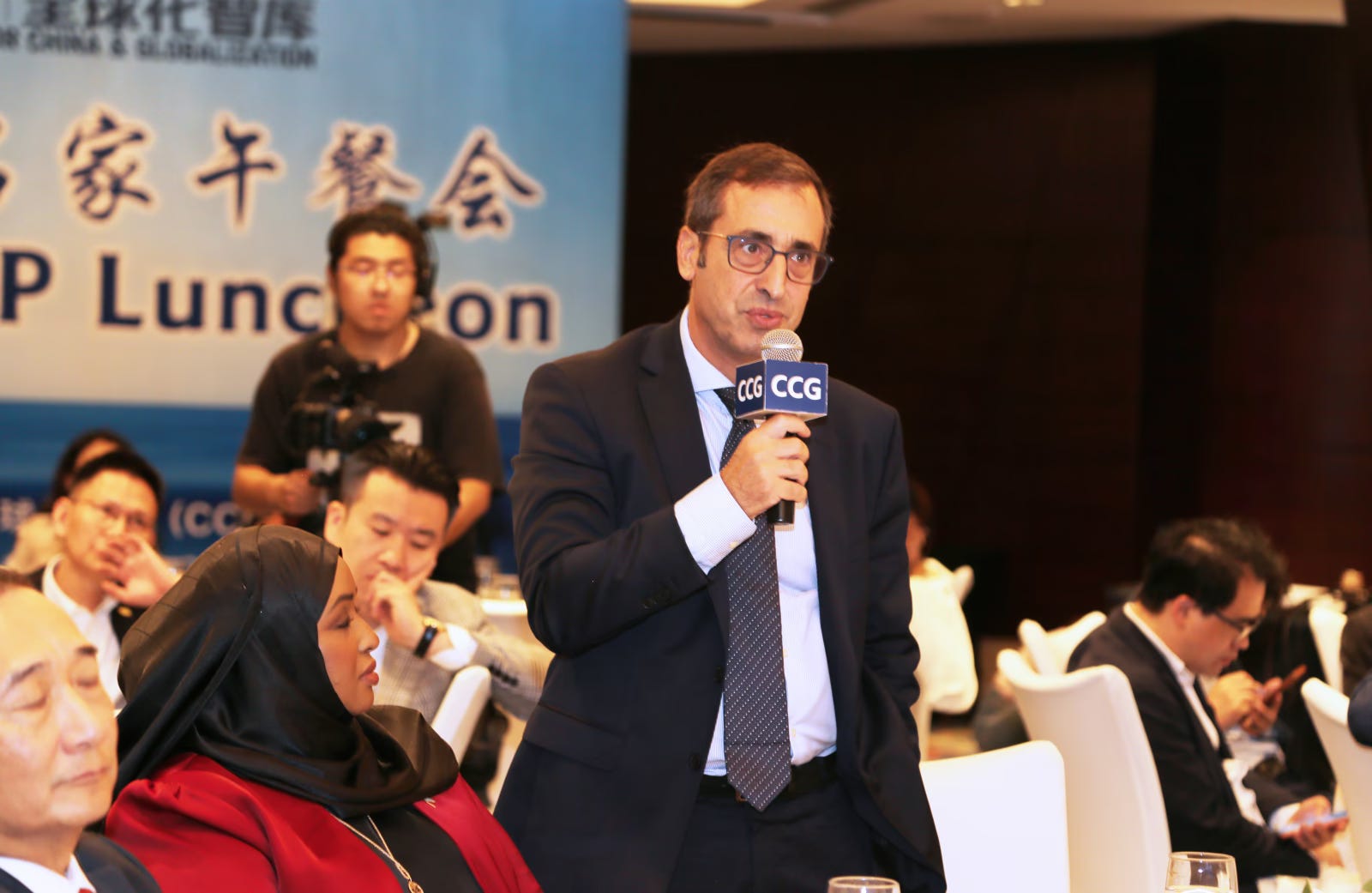
Mr. Liu, it is really a pleasure to meet you. I mean, in this room, there are many people who have been so lucky in their lives, including myself, to go around the world and see many countries. But probably we have done it as diplomats, as experts, as scholars, with different eyes compared with you. So my question to you is about the way you perceive Europe. Since I’m from Italy, from Europe, the way you see Europe — what makes Europe different, in your view and through your eyes, compared with the United States or China? Thank you.
Liu Heung Shing
I mean, whenever I’m in Europe, I continue to be in awe of the civilisation Europeans have built in all aspects. And for me, I want to mention tiny, tiny little details. Whenever I travel in France and Italy and so on, I often go and visit many, many churches, because churches represent something very definitive about Europe. And in the churches, I kind of practise my trade, because these magnificent churches are always very dimly lit, with very little light.
So I learned to practise my craft because I wanted to close my lens down to f/11, f/16, when the actual light should be f/1.4 at 1/15 of a second or 1/8 of a second to get the pictures. So I often practised this. I would turn my lens down and take a slow shutter speed of 1/4 of a second or 1/8 of a second. The result of that is that I found it important for my work that I could hold my camera very steady.
And that resulted in the pictures when Gorbachev — practically, I was the only photographer in the room when he decided, in a live broadcast in the Soviet Union, that he wanted to resign. I decided my only chance for the picture was when he put down the paper, his resignation speech, because at that time history hadn’t ended yet; it was towards ending. So I decided that I must show that the paper was still moving. It had not landed on his desk yet in the Kremlin.
So I decided to do 1/30 of a second, and I was the only one in the room. I thought, my God, you know, the Bolshevik Revolution, the Cold War and the collapse of the Soviet Union would happen right after this, because Yeltsin had tried to push Gorbachev out. And if he resigned, then Yeltsin was the president-elect of the Russian Federation. So I said to myself, if I do 1/30 of a second, Gorbachev could be blurred and out of focus, and I would be the sinner of the world to miss this one.
But I decided to go ahead anyway because I didn’t want to use a flash. A flash makes the lighting in pictures very hard, and it is not nice. I wanted to catch the ambience inside the Kremlin. So when I came out of the Kremlin, back into Red Square, I saw the Soviet flag come down and the Russian flag go up. And back in my darkroom, when I came out and Gorbachev was sharp, and the next day all the editors saw the paper was still moving — it was a highlight in life.
I think when you look at Europe, Europe essentially dominated the world for 500 years. And that frame of reference — of Europe and the world and the rest of the world — is not that easy to adjust. And in order for Europe today, I think, to drastically step up and rekindle growth, certain things need to adapt. Because when you were at the pinnacle of power, you saw things in a certain way.
And you all know — I know everyone in this room knows — in the last few decades, as I mentioned in the film, the Asian century is descending upon us, if it is not already here. In order to have this mutual growth, mutual accommodation — for example, decision-making in Europe compared with decision-making in Asia is very, very different. I think in the late 1950s and early 1960s, European countries built up this superior social welfare system, which has now also come back and extracted a very, very high price vis-à-vis growth. And no European politician can survive trying to modify this system, which is very, very costly.
So we are in an age going through this dramatic transformation, and with this knowledge and information, with AI and so on. So how Europe will respond and react, I think, remains a big challenge. And I think people in Asia, whose first preference for travel may be to go and admire this great civilisation of Europe, at the same time may not be fully aware of what Europe has to shoulder in order to move forward in the globe. I think that is quite important.
Henry Huiyao Wang
Yes. I think Antonio’s question was quite relevant. Actually, both Europe and Asia are long civilisations, right? Two of the longest civilisations in the world. And furthermore, I really admire the early Europeans and the curiosity that we mentioned before. Like Marco Polo. I went to Venice to see the legacy of his voyage to China 700 years ago, and his legacy is still cherished today. And then the old Silk Road he took.
So I think that kind of cooperation, exploration and deepening of cooperation and connectivity is something we still value between Asia and Europe. Okay, maybe we have another question. Yes, Ambassador from Somalia.
Hodan Osman Abdi, Ambassador of Somalia to China
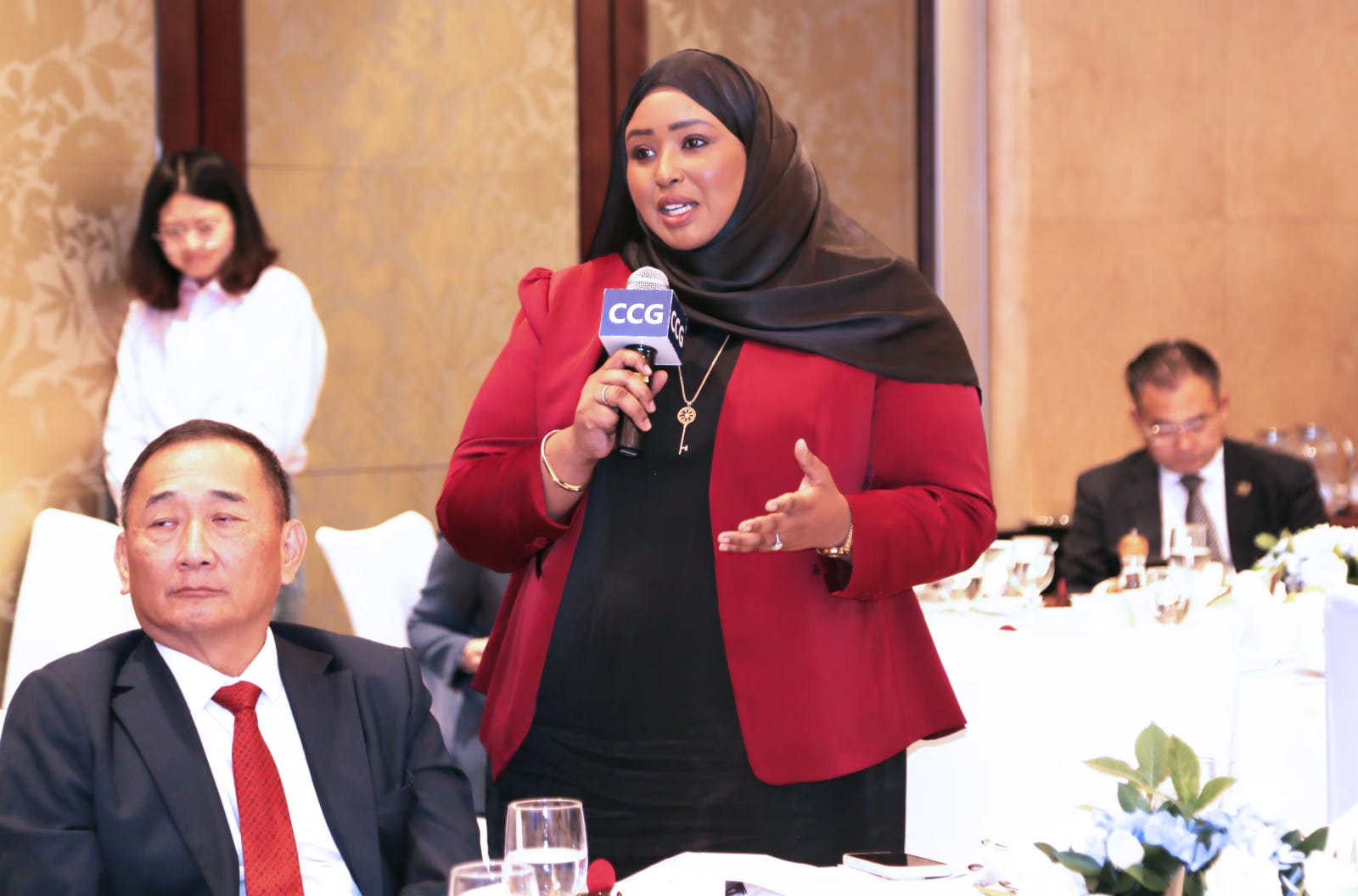
Thank you very much. I would like to thank the organisers for the invitation. It is an honour to meet you and admire your work. In the video that we first saw at the beginning, the first part of it gave me the sense that you were on a mission to kind of obliterate some stereotypes that were out there around the world regarding China, China’s efforts, China’s presence in the world and the Belt and Road Initiative.
However, when it came to your visit to Africa, something that you said really struck me — the fact that you actually wrote a will and you felt that there was danger in this journey. This kind of reaffirmed stereotypes out there around the world about general life in Africa, how dangerous it is, or how perilous that could be.
Now, as a photojournalist, as a Pulitzer Prize winner, I understand that you value what your words, what your impressions, would communicate to the rest of the world. But how do you balance your own prejudice or your own misconceptions against what you are trying to communicate to the rest of the world?
Liu Heung Shing
Thank you for your question. It is a very good question. I want to add a small nuance to the film. That comment in the film wasn’t an attempt to deepen a certain understanding of Africa. Rather, I think Congo, for me, is a unique case in all of Africa. For example, my first stop was Addis Ababa, Ethiopia, and I saw people from Africa going and coming and so on. That remark was very, very specific to me personally.
I mentioned my age. I said I have covered six wars. In Afghanistan, I had people pointing guns at me. And read the news — my colleague from The Wall Street Journal was beheaded in that conflict. So that note, I was trying to show that I wanted to add more caution to this trip. Travelling there in 2025-26, you have to take five vaccinations, and it takes eight weeks to get all those shots. And to arrive there at my age, I had to be prepared.
I was trying to convey why I wanted to do this trip, why the trip would be interesting, and why the trip was important for me. Because I have been following China for a long time. I feel that, for my work on China, doing this reportage was an extension of my work. That is why I made so much effort to go and be there. So I hope, with this little bit more information, you can take that quote with a grain of salt.
It wasn’t about trying to paint Africa as a sort of ubiquitous place of challenge and difficulty, and so on and so forth. It is rather a reflection that I have covered so many stories that I was mindful to remind myself to be a little bit cautious.
Hong Hai, Founder, TimeDoc
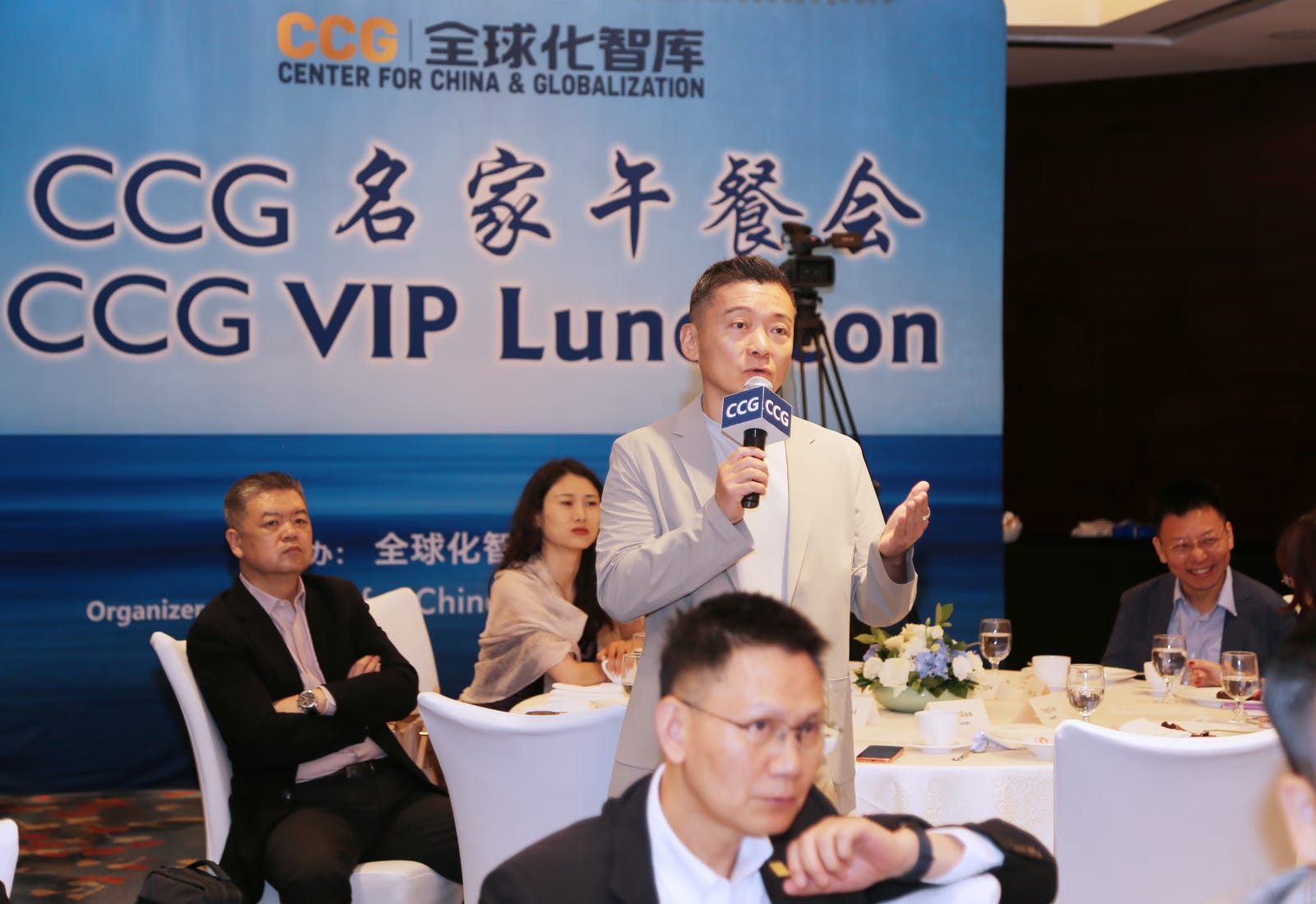
Professor Liu, thanks for sharing. The video is really touching, and your book is very powerful. Thanks. I have a question. Another very famous photographer, Henri Cartier-Bresson, always talked about the decisive moment. I want to know: what does the decisive moment mean to you, and how do you know when the moment has arrived? Thank you.
Liu Heung Shing
Thanks for the question. I think Mr. Bresson gave a rare interview. He hardly spoke to journalists or was interviewed. In the 1970s, there was a piece in The New York Times. It was an interview, and I very much agree with how he defined the decisive moment. He said, when you are in the situation, when you are in front of things, your thought and your heart and the moment you press the shutter are completely in sync. That, for him, was the decisive moment.
But notice how he placed the order in the decisive moment. He said first is your thought. And for me, photographers have to go through considerable effort to familiarise themselves with a lot of information. For us, I think there is a considerable misunderstanding of what photographers do — or at least what a very good and thoughtful photographer would do. They go through a lot, a lot of preparation.
Earlier, I mentioned to Henry, I think for a journalist, as for photographers, the structure of knowledge and information is almost paramount. Besides that, you are interested, you are curious about something. So you could be in a situation in front of a group of people. You could choose — especially today, with memory cards, you could take 800 pictures. So you are no longer restricted by only a roll of film with 36 exposures.
Be that as it may, with 36 frames — and I usually used even fewer than 36 exposures. I usually let a lot of film go to waste because I took pictures not as much as most people did. Because I think observation is more important. Watching the interaction between people is more important. Watching a person’s expression — he or she, how they react — because don’t forget, every time you point the camera at someone, someone is also watching you.
So that we can establish this minimum trust. And with that trust, a lot of things go through very subtle changes. And still, you must wait. And when it happens, you also have to be very fast. So photography is one of those exercises. But I do agree that what you bring in your head to the situation, how you understand the situation, is very, very important.
I have seen photographers arrive somewhere and immediately start pointing the camera at somebody. Every photographer, of course, works differently. But I agree about how much thinking and preparation you need to go through before you go into any story.
Henry Huiyao Wang
Okay. I think the decisive moment for the photographer, of course, is when you push the button. There are a lot of decisive moments, but really, it accumulates all that knowledge and experience you have. So maybe a final question. Zichen, do you want to raise one?
Zichen Wang, Deputy Secretary-General, CCG
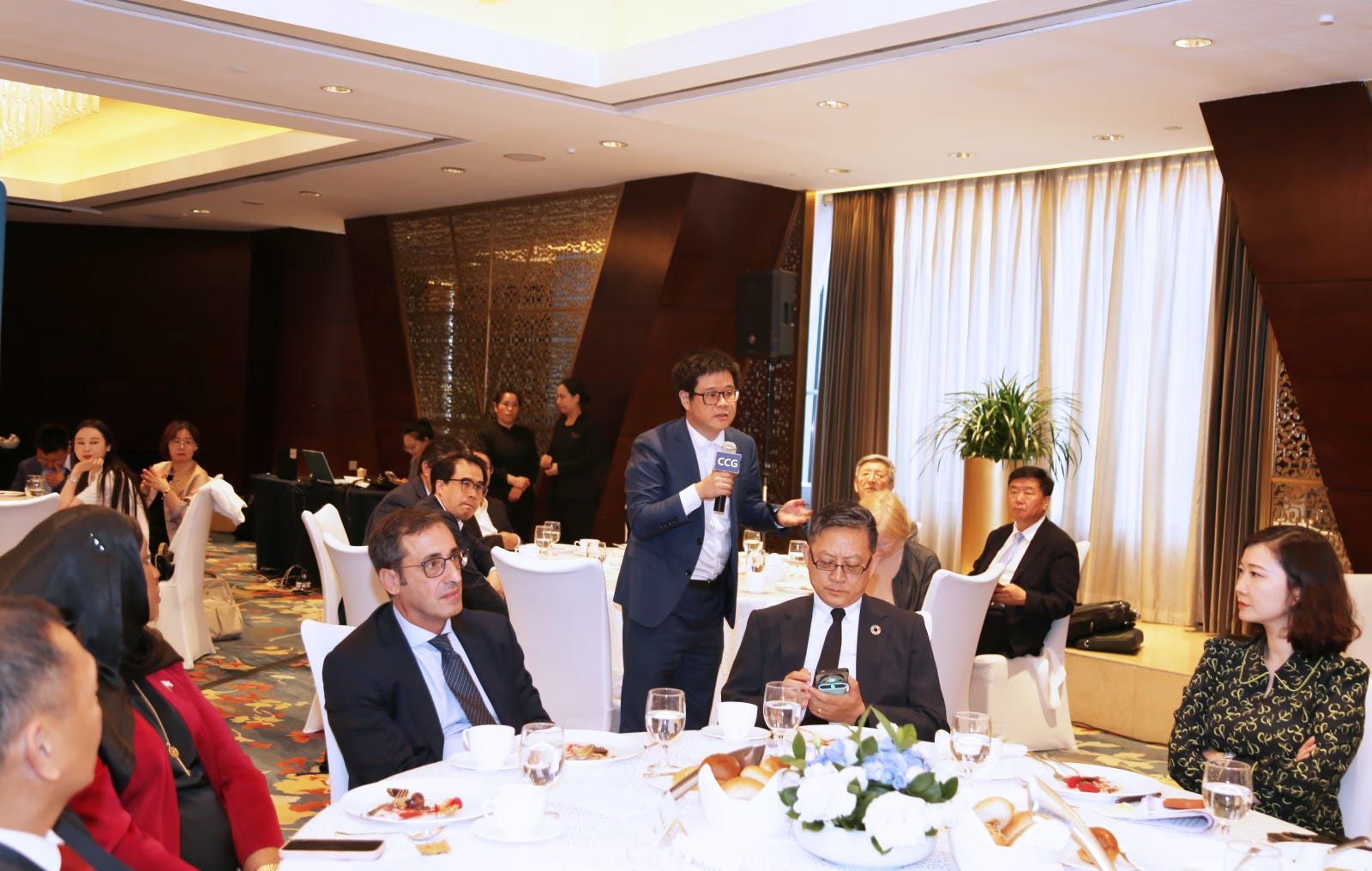
My name is Zichen Wang. I work here at CCG. I used to be a journalist for 11 years for China’s state news agency before coming to CCG. So your name — you are a towering figure in the profession. It is truly a privilege to be in the same room with you and listen to you.
Having spent your career in U.S. mainstream institutional media, and being an inspiration for many in the profession, I’m sure you’ve also heard a lot of criticism and pessimism about the industry. For example, maybe in the 1980s, the availability of cameras was very limited. But now cameras are widely available, and everyone has a smartphone and can take photos with that.
There was a time when the Associated Press and, maybe in China, Xinhua News Agency — when this institutional media, legacy media, had a dominating effect on society. But now people listen to podcasts. They listen to Tucker Carlson. And the power of institutional media has, I mean, indisputably, also been reduced.
So I’m sure there are people, there are naysayers, who say that at this age — and also we are in the age of AI, where just by a few prompts you can create very beautiful videos, and no one is able to tell the truth from the false — with everything, I’m sure there are naysayers who say the era of photojournalism is long over. That’s past, and we have to adapt to a new reality.
I just want to learn from you, as a veteran of the industry, as an inspiration for latecomers: how do you respond? And what would be your guidance for people who still have some belief, have some devotion to the profession? Thank you.
Liu Heung Shing
Well, I can honestly say my profession — at least my previous profession — has undergone dramatic, and I really mean dramatic, changes. When I first arrived in Beijing, I don’t know if you have ever heard, at that time we called photographs that you see in the newspaper “radio photos,” right?
Radio photo means that when I processed my film, I made a print, I added a caption, I would go from Qijiayuan diplomatic quarters, get into the car with my prints, drive to the Xidan PTT office, hand the print to the receptionist, and she would put the print on the transmitter. And then it would start scanning the picture by scanning the picture into sound. Then the sound would be broadcast, like a radio broadcast, to AP Tokyo.
So my colleague would take that signal and download the signal, and then transfer that signal of sound back into the image. And then that image would be sent through the undersea cables at the bottom of the Pacific Ocean, transmitted from Tokyo to New York. And the same pictures would go through an Atlantic Ocean cable and go to Europe. And today, in less than a second, you can send the photographs.
And so, a few years ago, I saw the figure, and I stopped paying attention to it. I mean, mankind now — even a few years ago, five or six years ago, the survey was that we took over four trillion images a year. So we are in this kind of general hyper-explosion of information, both in words and text as well as pictures.
But I don’t think we — I mean, on the one hand, social media has done ravaging damage to traditional media and the way stories are communicated. But I personally find — at least, I could be wrong, but it is my faith — that we continue to need to tell our stories to our children, to our parents, and storytelling will never stop.
And today we are inundated. I’m not a fan of Donald Trump. I mean, he keeps saying, telling every reporter in the White House that they are producing fake news. But we all know there is a considerable amount of false information out there. So if we do not redouble our scrutiny of the information that we receive through AI, which is already here, I think we will be challenged like never, ever before.
So I don’t think children will stop telling their stories to their parents, and mothers will stop telling stories to their daughters. I hope they will still tell true stories to each other. So the challenge is on us. It’s not for me to give you a general comment or observation that tomorrow we are all going to jump off the cliff. So I’m still hopeful.
Henry Huiyao Wang
Okay, okay. Regarding that point, I think that basically, for the future, absolutely, the tradition is still there, even though everyone can do photography. But then professionalism, and also curiosity, perseverance, persistence — all that matters as well. And also, the time you live in. So we are embracing the change.
But absolutely, I think the uniqueness, the speciality, and also the institutional and authoritative voice are probably still going to be really important as time goes on. So we are going to conclude our VIP Luncheon today. I’m very glad that Mr. Liu has shared his half-a-century of experience, and the last several years of his new voyage to 20-some countries.
But you see, I mean, it strikes me that when you came to China in the 1970s and 1980s, when you look at the old pictures you have of the old China just before opening up, and then you see what China is now, and then China is embracing the world by reaching out, by connecting projects, by connecting people. It is an enormous change, and that is probably the biggest thing in the 21st century.
So how can we tell that story, right, but also make it resonate in the world? It is really a very important art and skill. And I think you have done tremendously effective and good work in terms of putting this new picture of China in front of the world, and then, being a veteran Western journalist, looking at China with fresh eyes, from a fresh angle. I think that helps.
And you are not satisfied with that, of course. We still have a lot of room to improve. Now you become an elephant, right? You have to handle relations with other countries — how to really make hardware, but also software, people-to-people, heart-to-heart, and arts, academics, journalists, photography, and all those things. In addition to the economic progress we have made, I think we still have a lot of soft progress that needs to be made. And that is probably why your contribution is one of the very valuable ones that we are having today.
So again, thank Mr. Liu for sharing his great experience. And also thank our ambassadors, our ministers and counsellors, our foreign guests, industrial companies, our journalists and all the specialists. And of course, I noticed Mr. Liu’s wife is here. Also, congratulations on this new project. So we will conclude our VIP Luncheon. But let’s have a photo together. Thank you all very much.