

On 24 March 2026, Henry Huiyao Wang, founder and president of the Center for China and Globalization (CCG), spoke to Emily Tan of The China Connection live on CNBC that China could play a constructive role in promoting an immediate ceasefire and a return to negotiations amidst military escalation against Iran.
The interview video is available on CNBC’s official website.
This transcript is based on the video and has been lightly edited to remove fillers and repetition. It has not been reviewed by any of the speakers.
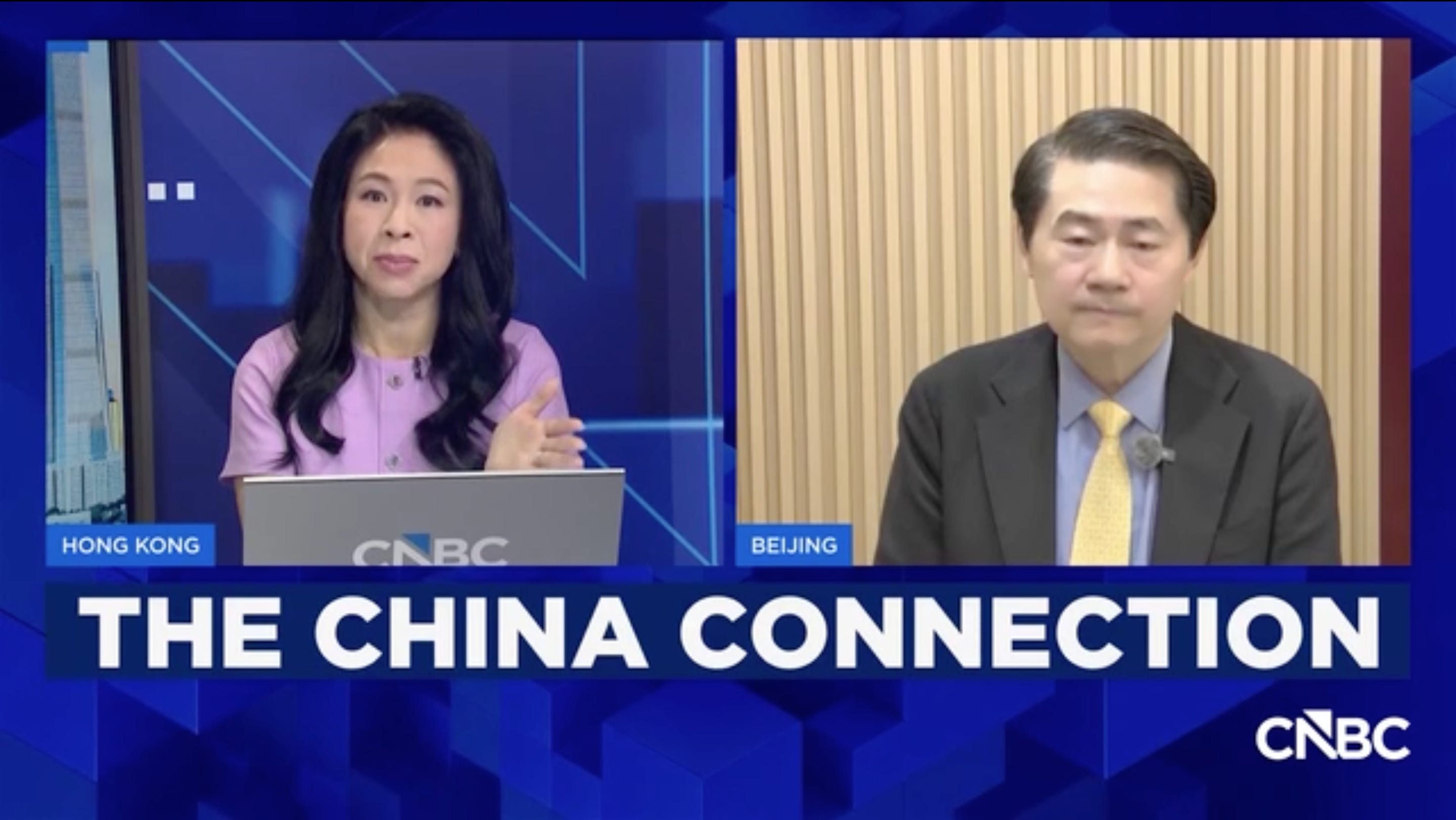
Emily Tan, Anchor, The China Connection
We saw President Trump issue an ultimatum threatening a strike on Iran’s energy grid, only for him to now postpone it by five days on the strike. We will, of course, track all of those developments. I want to get your take. Where do you see the endgame right now? How is this going to resolve itself?
Henry Huiyao Wang, Founder & President, CCG
Thank you. I think that President Trump’s threats and blustering are really not going to work because if he strikes Iranian power infrastructure and then Iran strikes back, we are going to see the Hormuz Channel blocked. We are going to see the whole Middle East disrupted, and then that is going to really devastate the global economy, including the U.S. Also, all the rest of the world will not stand by and see that happen. It would really alienate the U.S. from all its allies. It would create a big gap between the U.S. and the Global South, and we would see China strongly condemn this. So I think they would lose much more than they would gain by hitting Iran’s infrastructure there.
So I think the wise way, as we see now, is that they are already probably talking through Pakistan, which is a great way to calm things down and find a way out of this. And China stands by, always ready to participate in mediating or talking. China’s Special Envoy on the Middle East Issue, Zhai Jun, said yesterday that it is willing to play any role it needs to play, and China wants to see a ceasefire immediately and a return to the table.
Emily Tan
So, as you just mentioned, Pakistan is looking like it wants to help broker peace as a lead mediator to help end the war in Iran. I want to get more on your expectations for China as a mediator and the role that it could play. What ability does China have to broker peace?
Henry Huiyao Wang
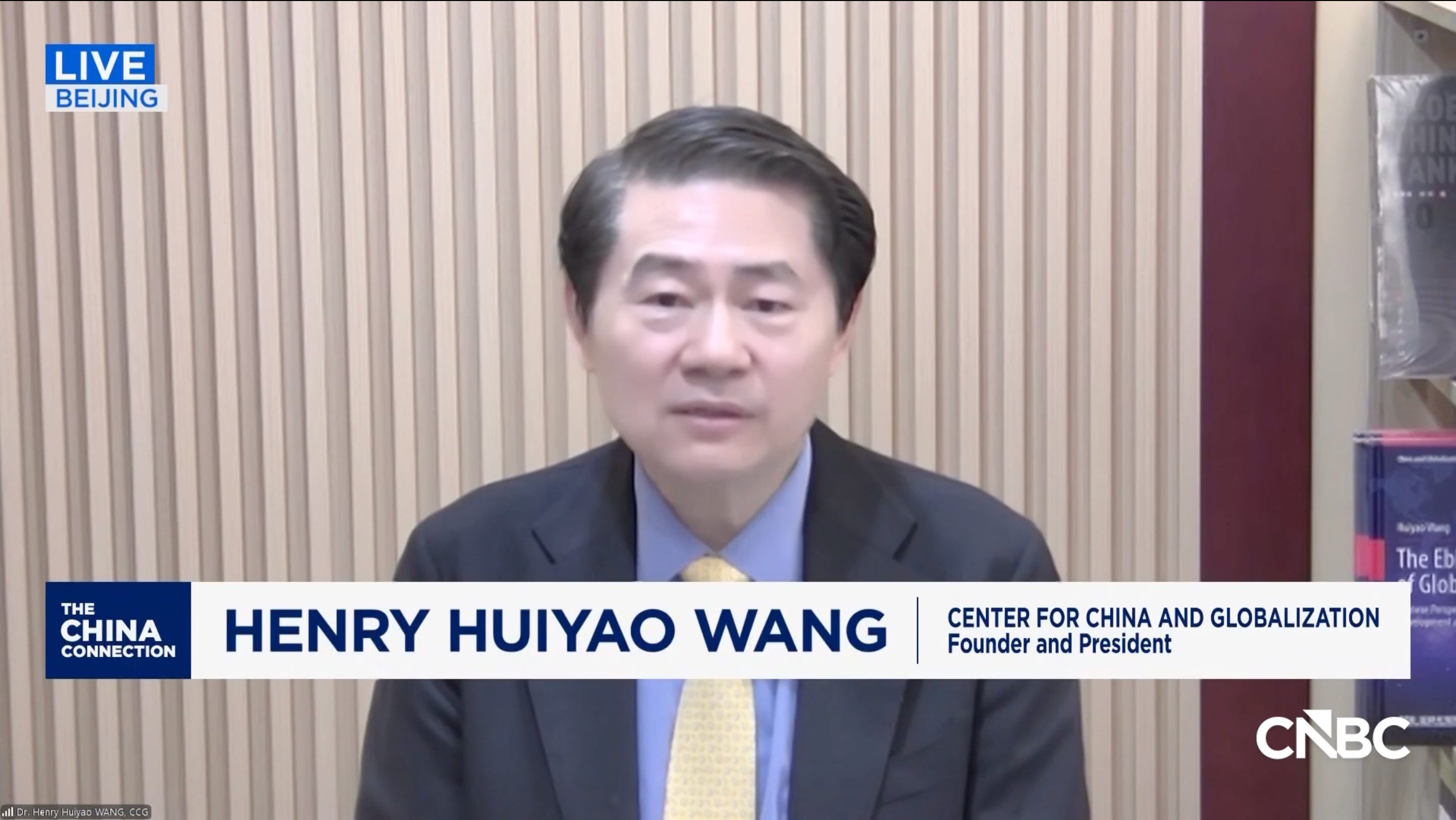
Well, China has a very strong influence. China has a big impact. China is going to hold the China-Arab Summit this year in Beijing, basically. And also, you can see China has a good relationship with Pakistan as well. China does have a lot of soft power in the Middle East region. China is the largest economic partner of almost all Gulf countries, and also the largest trading partner of Iran. So China certainly has a lot of weight to put in.
Of course, the U.S. has been providing security to the Middle East, but that means is gone. The U.S. does not provide security to the Middle East anymore. We see the chaos and huge disruption currently going on in the Middle East and in Iran, and so China emerges as the biggest economic security provider to the Middle East. But the fundamental issue is that we need peace. So I think the U.S. is under a lot of pressure now, and Iran also needs to really sit down and talk and sort things out.
I think this has been delayed a lot. Trump was supposed to come at the end of this month, but now he is probably looking at the end of next month. So I hope this war will be finished as soon as possible, so Trump can make a successful visit to China. I think by that time, China and the U.S. can talk about a lot of things, not just Iran and the Middle East, but the Russia-Ukraine war, global supply chains, the trade war, tariffs, AI, and how to really stabilise the geopolitical world if China and the U.S. work together.
So I think China does provide a path forward. If China is at the table, or if China endorses that, or if China can be a signing party to a multiparty deal, like in the past on the Iran nuclear issue, signed by seven parties—China was part of that—then those things can really help. So I think China does carry a lot of weight in terms of issuing its strong voice against this war and really promoting peace. China can participate if invited to mediate at any time.
Emily Tan
Foreign Minister Wang Yi has been critical of the attacks. What we have heard from him is that he said might does not make right, and the world has regressed to the law of the jungle. So far, China’s response has been measured, and it has taken a neutral stance toward the conflict. Do you think China will have to pick sides between Iran and the Arab Gulf states?
Henry Huiyao Wang
What China is doing is promoting peace. China realises that the Gulf states want to have a good relationship with the U.S., but they also want to have a good relationship with Iran. So China would be in a perfect position to remain very neutral from this perspective.
Also, China strongly defends the UN principles: no violation, no invasion, no sabotage of sovereignty, no killing of leaders, and no hijacking of leaders. China does not endorse any of those things. China is really promoting the backbone of the UN principles of sovereignty and territorial integrity.
So I think China’s stance is very important. China is the second-largest economy and the second-largest stabiliser for the world. I think China’s influence and impact are growing daily, given this war. The image of the U.S. has really been damaged because of the serious wars going on this year.
So I would think that with the upcoming summits between the leaders of the U.S. and China, and also with China being the largest trading partner of all the Gulf nations, China can really exert a lot of influence in ending this war. And actually, Foreign Minister Wang is absolutely right: might does not make right. This kind of law of the jungle has to be stopped. China is strongly against that and against all those violations, invasions, and sabotage of global trade and the sovereignty of nations.
Emily Tan
China has, together with Iran, a comprehensive strategic partnership valued at $400 billion in deals. Also, Iran is a key node in the Belt and Road Initiative. But can it be said now—I mean, China has not taken sides and is maintaining this neutral stance—that Iran is not as important to China as previously thought?
Henry Huiyao Wang
No, I think trade between China and Iran, and between China and other Middle Eastern countries, will always continue. That kind of economic partnership and relationship will always be there. I also envision that after this war is stopped, China would play a big role in reconstructing Iran, and the Belt and Road would certainly continue. Iran would also really strengthen its relationship with China.
So I do not think this will alienate the relationship between China and Iran. China’s relations with all the Middle Eastern and Gulf countries will become even stronger. And also, all the Gulf countries see the danger of having U.S. military bases there. Not only did they not protect them, but actually hurt them. A lot of people rushed away from the Middle East. That is a big lesson, I think, Middle Eastern countries have learned this time. The U.S. did not provide security to them. Rather, it brought them danger.
But the root of the problem is this invasion that the U.S. and Israel started, and how they sabotaged the peace and the status quo there. So that is really a lesson we have learned, and hopefully, we can draw a positive lesson from it and stop the war immediately.
Business Lunch with the Ambassador of Peru to China: Investment and Market Entry Opportunities in Peru

On Monday, 30 March 2026, CCG, in partnership with the Embassy of Peru in China, will host a Peru-focused Business and Investment Lunch in the China World Trade area of Beijing.
Zichen in Foreign Policy: ‘Made in America’ Should Accept Chinese Investment

Zichen Wang, Deputy Secretary-General of the Center for China and Globalization (CCG), wrote in Foreign Policy last week
Transcript: Jeffrey Sach, Vuk Jeremić, & Henry Huiyao Wang at CCG

On 20 March, 2026, the Center for China and Globalization (CCG), in collaboration with Horizons, the flagship publication of the Center for International Relations and Sustainable Development (CIRSD), hosted a “CCG Global Dialogue” and launched the latest issue of Horizons, titled “