


The following is a transcript of TRT World’s The Newsmakers, Turkey’s flagship English-language news channel, uploaded to YouTube on 29 January 2026.
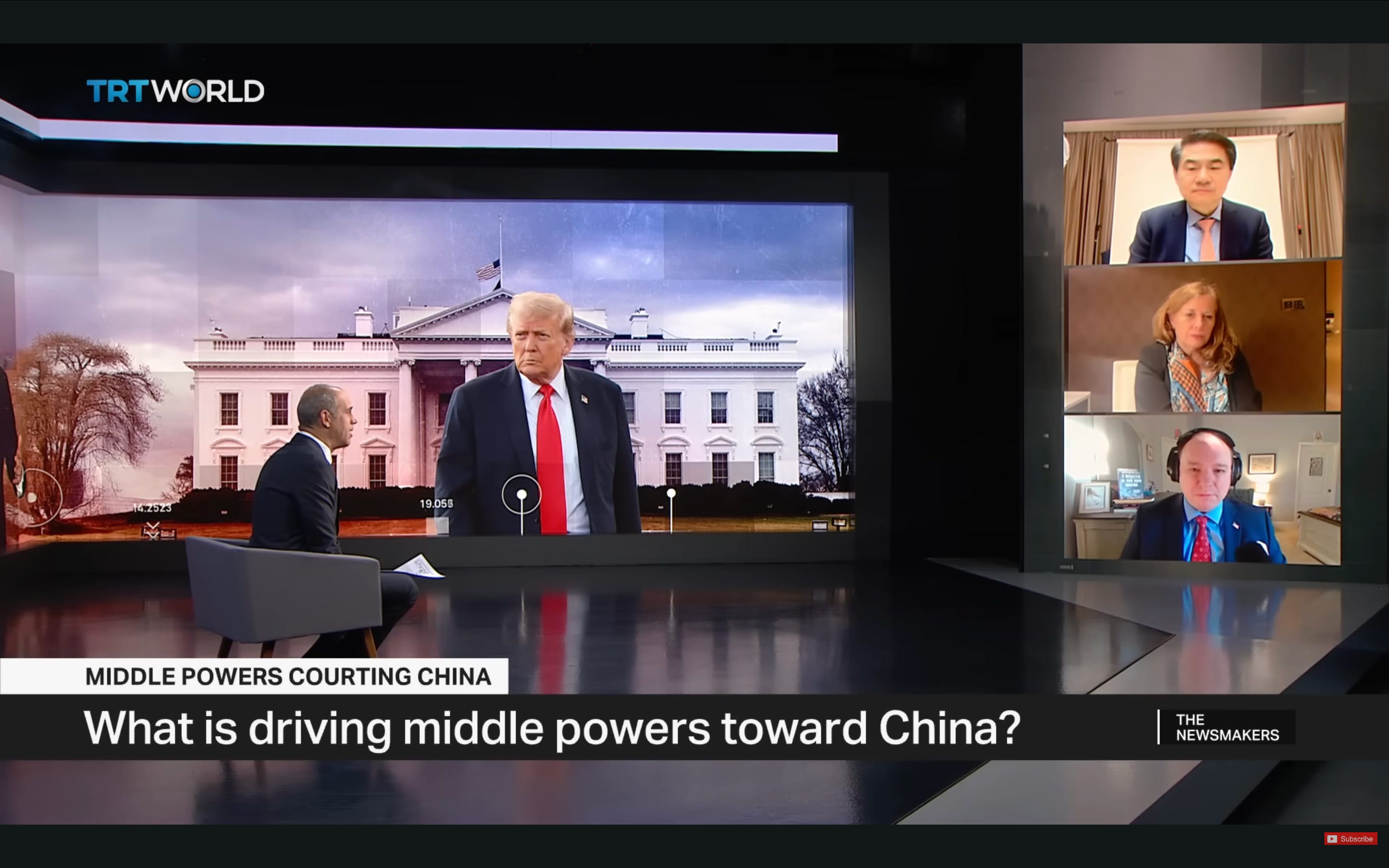
The programme featured Henry Huiyao Wang, Founder and President of the Center for China and Globalization (CCG), as one of three panellists discussing Keir Starmer’s visit to China and a trend of middle powers, including Canada and France, turning to Beijing amid tensions with the U.S.
The other panellists were Alicia García-Herrero, Senior Fellow at Bruegel, and Brandon J. Weichert, former U.S. congressional staff member.
The transcript is based on the YouTube upload and hasn’t been reviewed by any of the speakers.
Newsmaker Anchor
Are the world’s middle powers making a new bet on Beijing? Britain’s Prime Minister Keir Starmer is the latest Western leader to visit China, joining a growing list that includes France’s Emanuel Macron and Canada’s Mark Carney. With the United States increasingly focused inward, traditional allies appear to be charting their own course, which could be summed up as business with China and defence with the U.S. But how long can this balancing act last? Today’s newsmaker is “Middle Powers Courting China.”
This week’s visit by the UK’s Keir Starmer may seem routine, but it comes at a pivotal moment in geopolitics. One by one, the world’s middle powers, from European countries to Canada, are showing up in Beijing, signalling that they’re no longer content to follow Washington’s lead without question. Each visit is framed as economic outreach, but the subtext is strategic autonomy. Meanwhile, Beijing is welcoming them with open arms, even if it isn’t offering much in return, at least not for now. For the U.S., especially under President Trump’s America First approach, this is raising alarms.
...
Joining me now: from Beijing, the president of the Center for China and Globalization, Dr Henry Huiyao Wang. Also in China, in Shenzhen, senior fellow at the Brussels-based think tank Bruegel, Alicia García-Herrero. And from Naples in the U.S. state of Florida, geopolitical analyst and former US congressional staff member Brandon J. Weichert. Welcome to all of you. It’s good to have you on the program.
Alicia, let me begin with you. When you look at these trips to China by Starmer, by Macron, and by Mark Carney, they may seem minor in isolation, but when you view them all together, do they represent a deeper shift in priorities among these middle powers?
Alicia García-Herrero, Senior Fellow, Bruegel

Well, I would say perhaps not for Macron, because he’s been visiting China recently, and I don’t think it’s a major turn. He didn’t announce anything really special, if you ask me.
But Mark Carney and, of course, Starmer—this is a different ball game, because they both, or their predecessors, have not been in China for years and years, around eight years if not ten years. So, you know, it’s a long time, and that is a turning point, at least for these two countries, indeed.
Newsmaker Anchor
Okay. Brandon, let me turn to you. From Washington’s perspective, is this seen as—maybe the word is a little too harsh—a betrayal? Or could it be fairly interpreted as simply hedging by these middle powers to diversify their ties?
Brandon J. Weichert, Former U.S. Congressional Staff Member
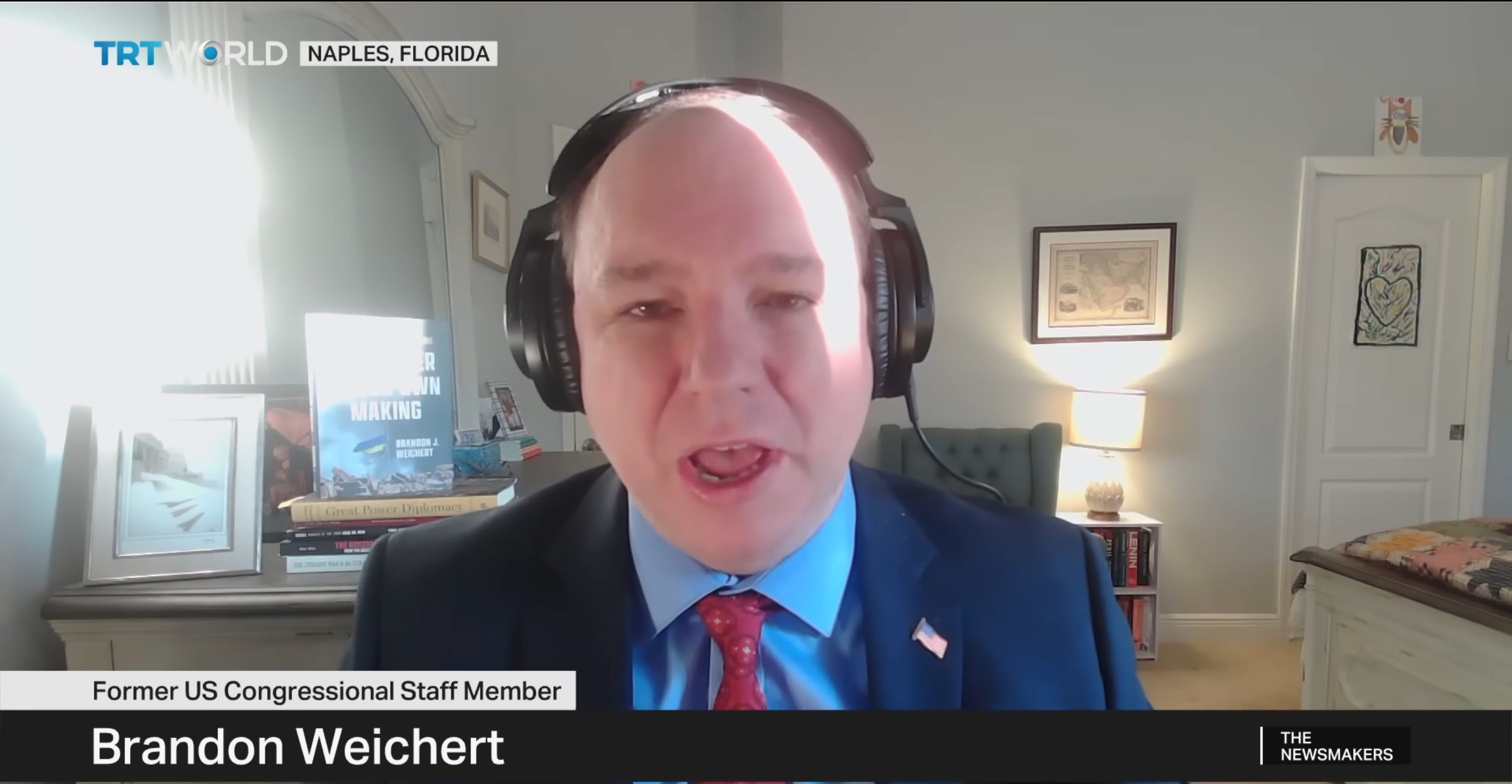
Well, that’s exactly what I think is happening—they’re just hedging. Now, whether the Trump administration, specifically the president himself, believes that is another question entirely.
I suspect he will be expressing displeasure, either publicly or certainly privately, with Keir Starmer. We know that he had expressed displeasure with Mark Carney when Carney did something similar a week ago.
So I believe that the British are simply hedging right now. And I think that ultimately there are a lot of steps that have to happen between meeting with the Chinese leadership for Britain and suddenly reversing 70 years of economic dependency on the United States.
Newsmaker Anchor
Okay. Let’s get the other host’s perspective.
Dr Wang, thanks for your patience. How is Beijing interpreting this series of diplomatic visits? Brandon said it could be interpreted as hedging by middle powers. Is Beijing perhaps viewing this as an opportunity to charm some key allies of the United States?
Henry Huiyao Wang, President, Center for China and Globalization
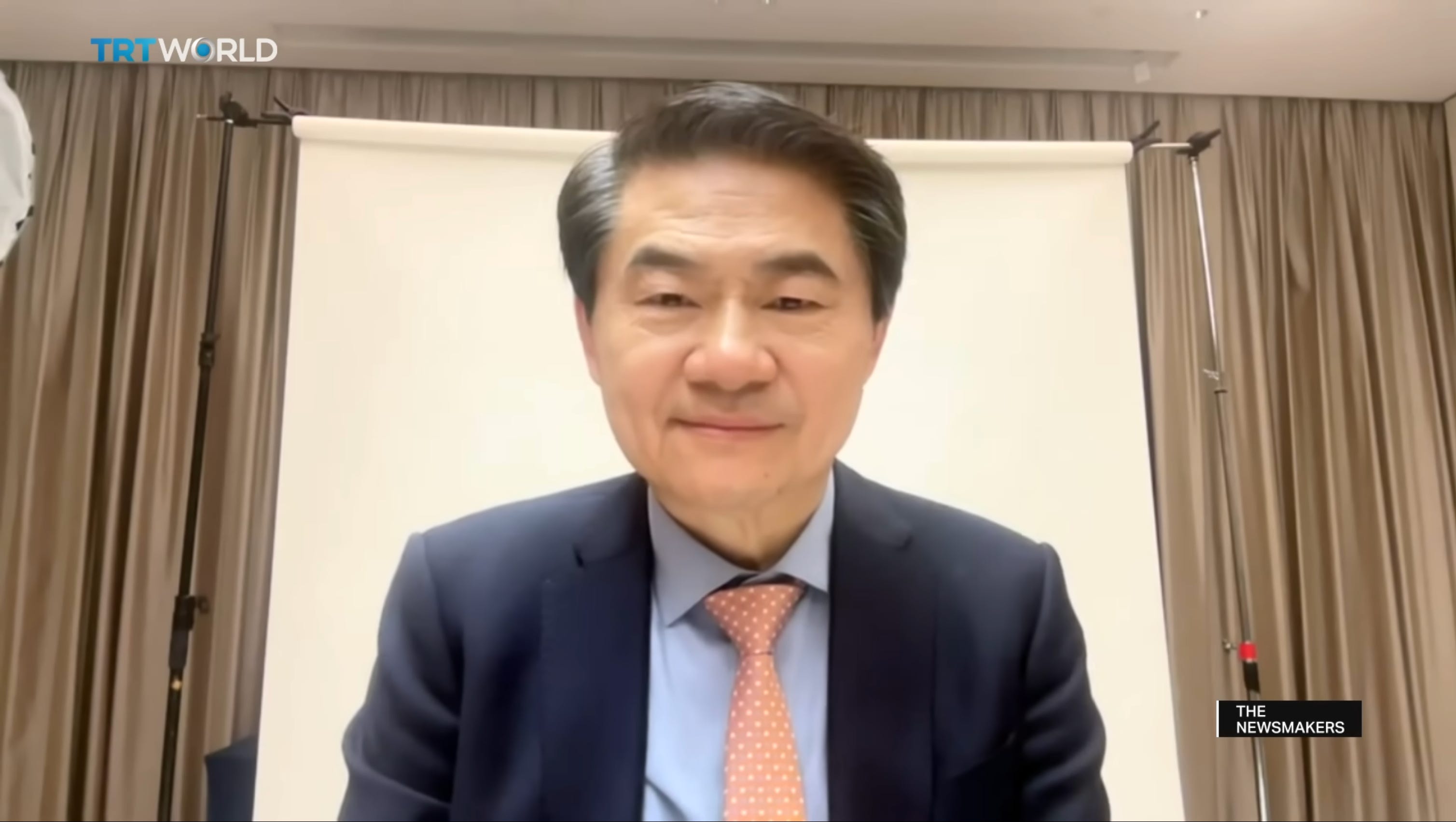
Well, thank you. I think we’re really seeing a paradigm shift, particularly this year, but also over the long term, in relations between China and the West.
I think the narrative of China versus the West, or the West versus China, is probably gone. Many countries, particularly middle powers, are now coming to China based on their own judgment and their own interests.
The so-called Western alliance—particularly what’s happening in the U.S., in NATO, and across the broader Western alliance—is facing serious problems. We see President Trump talking about retreating to the Western Hemisphere, consolidating the hemisphere, and talking about Greenland. That puts a lot of burden on NATO and on European countries.
China, meanwhile, continues to promote globalisation and cooperation. As the second-largest economy, China has become a new anchor of the global system, especially as middle powers worry about the system falling apart.
They come to China first for economic benefits, but second to help hold the international system together. China is one of the few countries still strongly supporting the UN, WTO, and WHO, while the U.S. is withdrawing from 66 international organisations. So countries like the UK and Canada want to maintain global order, and China can be a strong partner in maintaining multilateralism in a multipolar world.
Newsmaker Anchor
Okay. We’ll get to the whole multipolar world in just a bit, but Alicia, let me come back to you.
You had mentioned that while China’s market may not be offering a whole lot of opportunities, countries still want foreign direct investment by China. What exactly are countries like the United Kingdom, Canada, and France looking to gain from Beijing?
Alicia García-Herrero
Well, as I mentioned, the market is not the strength, because Chinese imports are flat. They’ve been flat for a long time. This is basically because there’s a lot of competition in the Chinese market from domestic players, so there’s very little room to be profitable, let alone the fact that Chinese corporates themselves are not profitable. Profitability is very, very low in China. Very low net interest margins—you name it. So profit margins are not there. That’s not what they’re looking for.
However, China is innovating. You just had AstraZeneca announcing 15 billion in investments in China—a big chunk, with 2.5 billion in research and development. Is this good for the UK or for China? That’s a big question. It is good for the UK, but it’s also obviously true that AstraZeneca will be moving R&D from the UK to China.
What they really want, however, is foreign direct investment from China—greenfield investment into green tech, especially EVs and renewables—areas where the West wants to upgrade and reach Chinese levels of technology. That is very appealing to all of these countries.
Newsmaker Anchor
Okay, fair enough. Henry, on the flip side, what is China willing to give?
Henry Huiyao Wang
I think we see this parade of Western leaders coming to China, and it’s a good sign that China can offer many things. Of course, we can normalise relations. We can also provide business opportunities, including more imports from those countries. If you have a bad relationship, you don’t have that. If you have a good relationship, you do—as Australia and many other countries have experienced.
China is also going to be massively investing overseas, because Chinese companies want to go abroad. When geopolitical relations are bad, countries don’t want that. But when relations improve, they do, and we’re seeing an upward trend.
Foreign companies coming to China bring state-of-the-art technology. China is a huge incubation ground and the largest application scene for AI and many other technologies. If you want to conquer the global market, you have to conquer the Chinese market. That’s where you get upstream and downstream supply chains, talent, and supporting systems.
Forty per cent of China’s exports are made by multinationals. Eighty per cent of Apple phones are made in China. Fifty per cent of Tesla cars are made in China. Walmart sources 60 per cent of its supplies from China. So it’s really important to maintain good relations with China.
Newsmaker Anchor
Alicia, when you consider some of the comments by world leaders, especially in the last couple of weeks, and the position European countries and Canada are in, do you feel that this is a sustainable approach—these countries are forging closer economic ties, but on the flip side, staying true to the United States when it comes to security and defence?
Alicia García-Herrero
Even that—staying true with the U.S. on security—is shaking. Europe is pushing for its own security, not just economic security, but now even defence. I think the UK is realising this is a very tricky position, especially since Trump’s attack, or verbal attack, when it comes to Greenland, but also Trump’s position on Ukraine.
Europeans have been saying for a long time that China is enabling Russia’s war of aggression. We’ve heard that many times. But the reality is: while this might have been true, we’ve kind of forgotten about that Trump has done—whether worse or better, but similarly—the same in the Alaska summit, you name it.
So I would say, whether it’s the UK or Europe, let alone Canada, everybody’s really rethinking this security side of the equation, which then tilts the balance, on the economics slightly further towards China, even if the benefits, I insist, are not so clear. But the thing is: the security side is no longer guaranteed by the U.S.
Newsmaker Anchor
Okay, Brendan, let’s get you back, maybe give you a chance to reply to what Alisa was saying. And then I’ll also ask you a question about energy ties with Russia, too. But first, you—
Brandon J. Weichert
All I will say is that I think the long-term trend lines in global trade are definitely working against the United States. But right now, in the near term, yes, the United States has offended its allies. It’s done things to kind of push them around. But ultimately, there really isn’t any considerable movement yet away from the U.S.-led economic order from the British and Canadian perspectives.
They’re seeking leverage, and that’s what middle powers do: they seek leverage. They play the bigger powers off each other to try to extract the best deal. And of course, in the long run, there is a sort of gravitational pull: once these countries start playing footsie with the other power, there is a high probability that over time they will become part of the alternative system that is being created.
But the alternative system being created by China, and even Russia—the so-called BRICS system—is still very much underway. It’s not yet fully matured. And I think, particularly when you’re talking about countries like Britain, which are so integrated into the American system, there are still many steps to occur before there’s a real threat that Britain is going to break away.
And in the case of Canada, just by dint of geography, you know, the Canadians are sort of stuck with Americans and the mercurial whims of the president. And my prediction with Canada is that the Albertan movement—I think they are going to go independent. And I think the United States government under Trump will recognise them as independent and probably try to move towards absorbing them in some way into the Union here.
But regardless of whether that last part happens, once Alberta goes, the Canadian experiment with confederation is over, and they’re going to be even more weakened by that move. So I don’t see either Canada or Britain yet breaking from America realistically and going to, say, a Chinese system. It could happen for Britain over time, but we’re not there yet.
Newsmaker Anchor
Okay. I mean, so you’ve essentially said that this is what sort of middle powers do. And if I’ve understood you correctly, you’re essentially saying that we’re not really in a truly multipolar system.
Brandon J. Weichert
Not yet.
Newsmaker Anchor
It’s more of a system that’s sort of governed by the United States, China, and Russia.
Brandon J. Weichert
Yes, exactly. It’s a tripolar.
Newsmaker Anchor
Do you feel that these middle powers need to pick a side with everything?
Brandon J. Weichert
No, they don’t need to pick a side with everything. But, you know, right now the reason Britain and the reason Canada are making such a big stink—if you will—“Hey, look at us, we’re going over to China; you’re a competitor”—I really think that’s about strategic signalling more than anything for those two countries.
Countries like India are going to be a little bit more able to manoeuvre in that middle ping-pong sort of way between the two sides. But right now, with Britain and Canada in particular, I really think this is them seeking leverage. They know that Trump has sort of embarrassed them. Trump is highlighting their relative weakness on the world stage—not just Britain, by the way, but Europe in general. The Russians certainly have highlighted European weakness with the Ukraine war.
And so I think that Britain, Europe, and Canada are trying to carve out a pathway where they still stay with the Americans, but they put the American administration on guard. But ultimately, and unfortunately for them, it doesn’t really matter, because the power bases for now are the U.S., China, and Russia.
Newsmaker Anchor
Okay. Dr Wang, let me turn back to you. I mean, you’ve heard what Brandon was saying in his definition of the polarity in this world. I’m wondering if you can give me Beijing’s perspective on its role in this—however you want to define it—in this world.
Henry Huiyao Wang
Absolutely. I think that we really have to admit we’re entering a new era of multipolarity—that’s for sure. The unipolar world is gone. I mean, that’s why the U.S. put out this new strategic report: that they will withdraw and retreat back to the Western hemisphere; that’s their focus. You know: “Get into our backyard,” and also solve domestic challenges. And every country should do that—make itself sustainable.
So China is doing great things. China has achieved five per cent growth year after year, and another five years are coming. China built the second-largest economy in the world in just a few decades. In that case, people see it: it’s no longer, you know, kind of China versus the West, because why should they follow one-country party policy and then have a negative feeling about China? China doesn’t have territorial disputes with European countries, with the UK, or with Canada. China doesn’t really invade any countries. China’s military and navy are not set to the English Channel or Canadian seas. They don’t feel the threat of China, and they don’t have to follow the logic of the U.S.
So that’s really what happened. They realised they had to safeguard their own interests for two reasons. First, they need China to keep prosperity, creating jobs and attracting investment. Second, they need China to help save this global system. You know, it’s crackling; it’s falling down, or falling apart. China is becoming a new anchor now. And those middle powers—of course, I think the EU will become, someday, you know, maybe ideologically and value-wise aligned with the U.S., but in economic and trade terms leaning towards China. It’s no longer black and white; it really has to be case by case.
And China could be a good country to work with, for the economy and overall maintenance of the global order, and the multipolar world.
Newsmaker Anchor
Alisa, any response to what Henry was saying?
Alicia García-Herrero
Yes. I have a comment. I actually think that when one looks at China’s size, I would agree that, you know, there’s a lot of hope—I would put it this way: hope that there could be massive gains for European countries, whether it’s the UK or Canada.
But when it comes to the actual gains, there are limits, and that’s important. The largest export market for Europe, for Canada, for the UK—and for that matter, for Japan, South Korea, and ASEAN, the whole of ASEAN—is the U.S., not China. China, however, is the largest import market. So we depend on China for imports.
And that’s very important because China can create these bottlenecks, and it has happened already—just a reminder of export controls on rare earths. It hurts. But one thing is that it hurts; the other thing is that you have a big market: the U.S. is the big market so far—this could change—but that’s where we are now.
So, you know, giving up on the market that is growing for your exports is not easy. So it’s not only security; it’s actually an economic interest. European FDI into the U.S. is ten times bigger than that in China. So I agree that this might happen, but it’s not going to be immediate, unless—and this is a very important call for China—China is ready to offer much more, really open its market fully. But we have been waiting for a long time. And that’s why I think, you know, everybody realises it’s a good opportunity, but it’s not as relevant for Europe as the U.S., so far. That’s what it is.
Newsmaker Anchor
Brendan, I want to get your take on what Alisa was saying, because I know that you were agreeing with her from time to time.
Brandon J. Weichert
I think, again, we’re talking short-term versus long-term. And I really think people need to understand that while there is certainly the rise of—while we’re certainly not in a unipolar system any more—we are still transitioning.
And I think that there’s a lot of concern and a lot of media hype about Britain meeting with China. I think ultimately, though, the key thing to remember here is that the United States—our economy, our military—is still very much the centrepiece of the world. And it may be shifting, but the shifting is going to take time. And the shifting will go on long after Trump’s got, like, 32 months left in office. This is going to continue and become more heightened long after he’s out of power.
So what you’re seeing right now—yes, I think—are the early birth pangs of a new system. But, as your other guest just pointed out, the numbers don’t lie: the United States, for Europe, remains the primary focus point. That may change over time. And certainly, I think, if the situation between the U.S. and Europe continues to deteriorate, you will probably see that.
But I just don’t see any indication yet that, particularly a country like Britain, is seriously shifting over. Especially, you saw the test here with the situation with, I think it was, the Chagos Islands. The British wanted to get rid of their holdings that the U.S. relies on for our facilities in the Indian Ocean at Diego Garcia. And it looked very much like that was going to happen until President Trump intervened and said it’s not happening, and Keir Starmer backed down.
And you see this play out repeatedly. So again, this is why I still say: yes, I believe the multipolar world is coming, and the unipolar world is gone, but we are in a transition period. So any talk about Britain leaving the U.S.-led order, I think, is a bit premature right now.
Newsmaker Anchor
All right. Brandon J. Weichert, Alicia García-Herrero, and Dr Henry Huiyao Wang—thank you very much for joining us here on The Newsmakers. And thanks to you for watching. Of course, you can follow us on social media and be sure to subscribe to our YouTube channel.
CCG in media spotlight as Starmer visits China
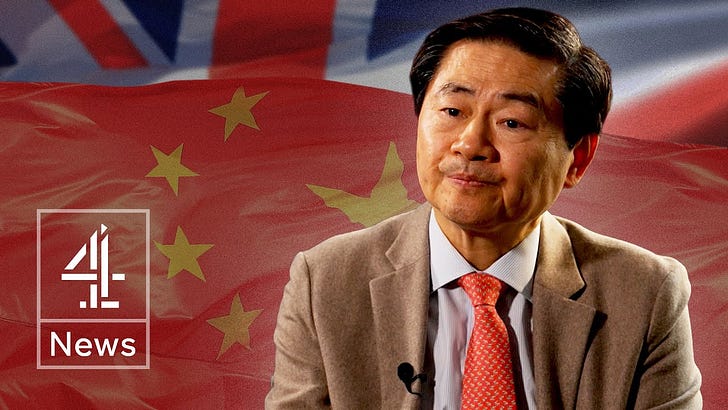
British Prime Minister Keir Starmer arrived in Shanghai on Friday, after meetings in Beijing aimed at resetting ties between Britain and China.