

On 15 April, 2026, Henry Huiyao Wang, founder and president of the Center for China and Globalization (CCG), was invited as the only Chinese guest to speak at Semafor World Economy 2026 in Washington, D.C., where he joined Semafor China columnist Andy Browne for a discussion. The following is the transcript of the conversation.
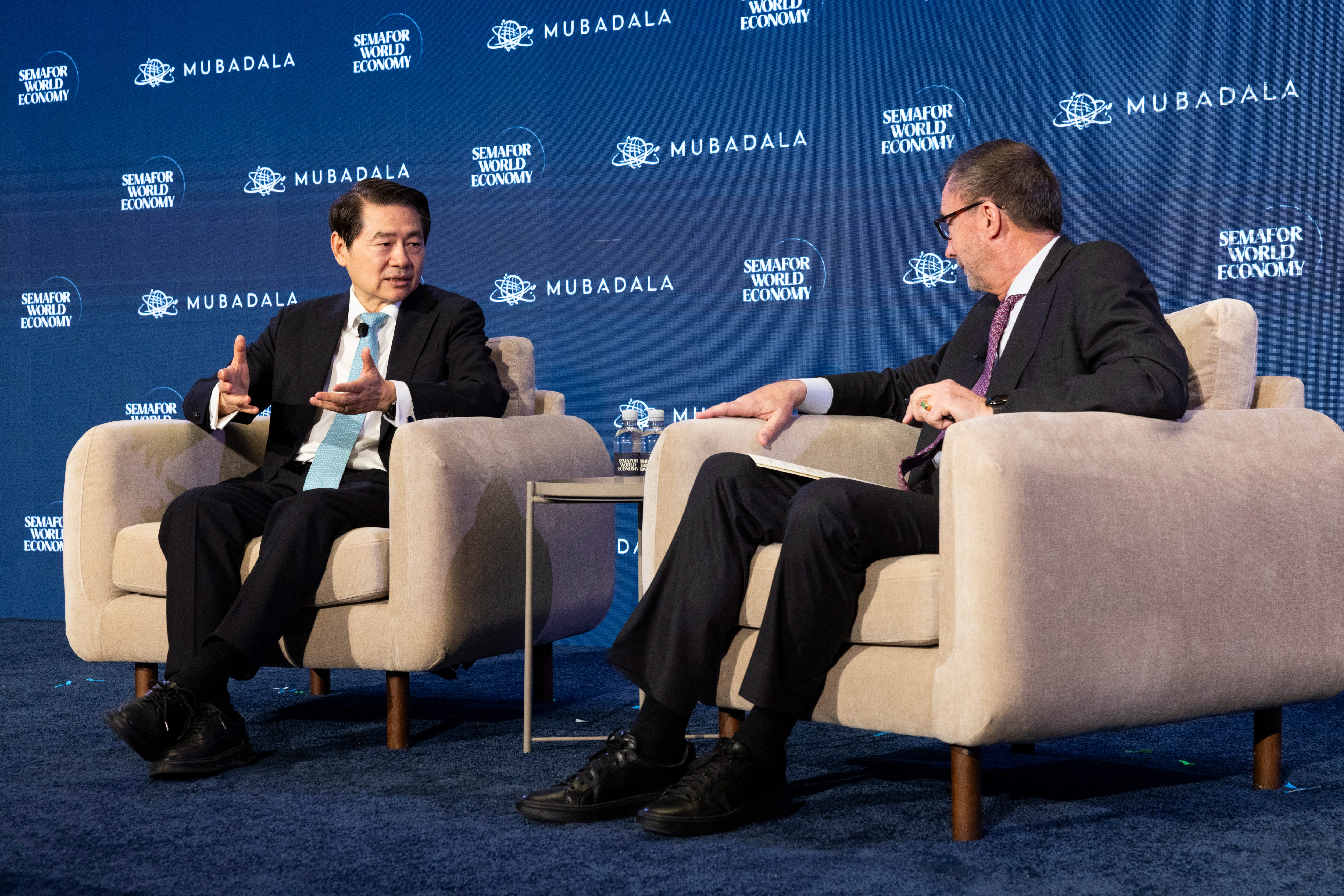
The full video of the session, “Fortifying Resilient Global Systems,” is available on Semafor’s official YouTube channel. This transcript is based on the video and has not been reviewed by any of the speakers.
Andy Browne
Dr Wang, thank you for taking the time.
Henry Huiyao Wang
Thank you, Andy.
Andy Browne
So we’re one month out from a U.S.-China summit in Beijing. When President Trump goes to Beijing, he’s going to be the first U.S. president to visit for a decade. He was the last president to visit during his first term. How do you assess U.S.-China relations right now, and what are you hearing in Beijing about expectations for this summit and the outcome?
Henry Huiyao Wang
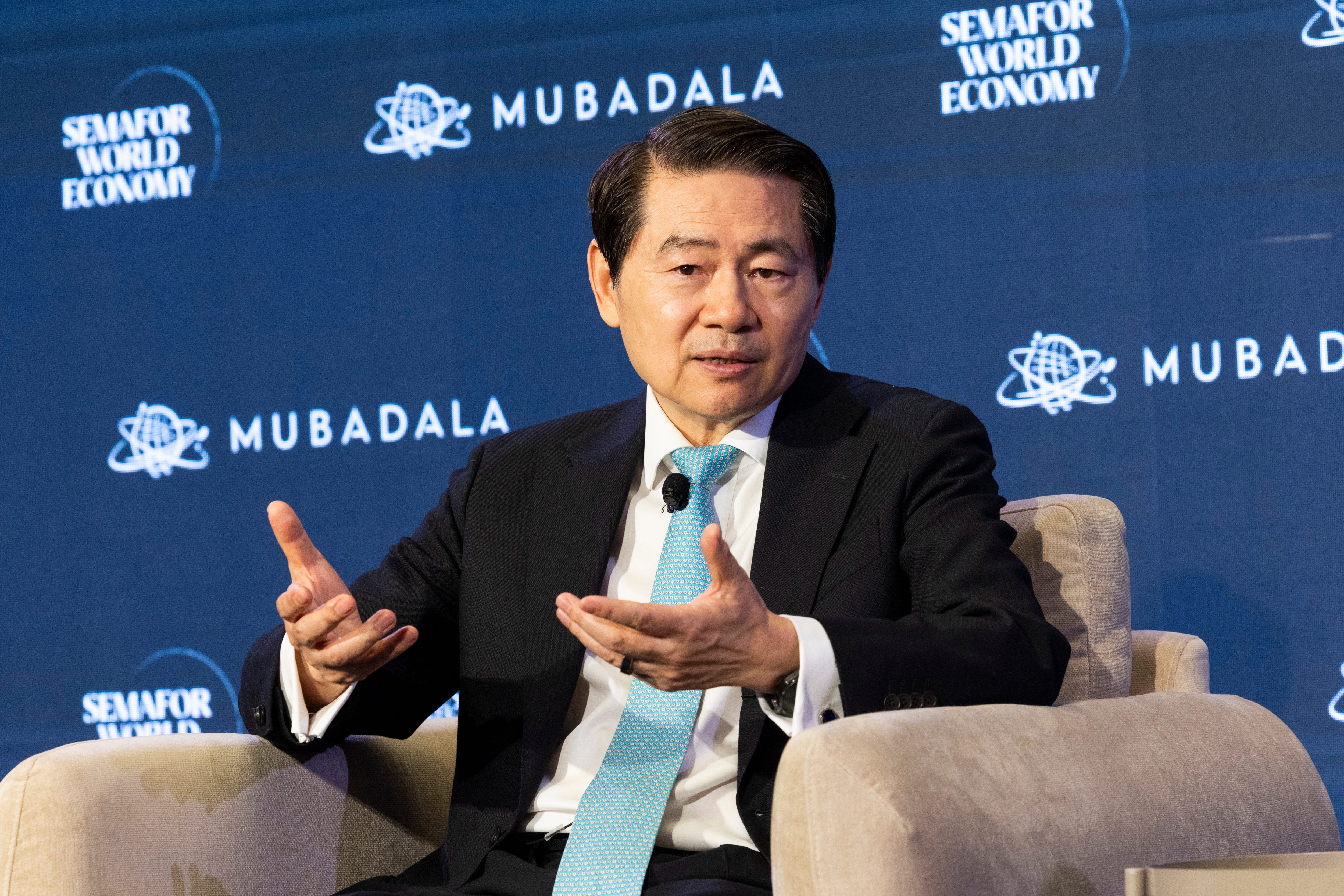
Yes, thank you. Thank you, Andy, and thanks, Semafor, for the invitation. I think President Trump’s visit to Beijing in about a month’s time is so important. And also, China-U.S. relations are the most important bilateral relationship in the world, I would say. I think expectations for President Trump’s visit are quite high, actually, in China too.
First, I think he comes at a big, historic moment, after a decade, and amid all those geopolitical tensions, the Iran conflict, the Russia war, and so on. So it’s very important. But also bilaterally, we have so many things to talk about. I remember last time when President Xi and President Trump made a phone call, they said they were steering a gigantic ship in a turbulent world, and that China and the U.S. can work together to do better things, greater things.
So I would think that through this visit, we will probably see a chance to stabilise the relationship. Stability is probably the most important buzzword, I think, for both China and the U.S. We need stability; the world needs stability. But even merely shaking hands sends a thousand images around the world. So that is really great. But of course, practically, we can still achieve a lot of things. We can probably see how we can stabilise trade frictions. We can see how we can balance trade and also improve global collaboration, but also particularly on peacemaking, which China is really working on right now.
Andy Browne
Somebody said that President Trump is the least hawkish member of his own administration when it comes to China. And from Beijing’s perspective, there’s never going to be a better chance to do a deal, whether that’s on tech, trade, or Taiwan. Does that ring true to you?
Henry Huiyao Wang
I think that’s probably correct. You know, President Trump, in that sense, is very practical. I mean, he was trying to invite President Xi to his inaugural speech. He wants to be a president of peace and unity. And I think that if he wants to be a president of peace and unity, he needs China to collaborate.
And so we do have a lot of bilateral issues. But I think in a global situation like this, in a multipolar world, where the U.S. and China, if they actually stay together, that will generate huge benefits, not only for the U.S. and China, but for the world. So I think we do have differences. Of course, we have competition. We have a lot of different values and systems. But after all, we are all villagers in the global village. We really have to work together.
Andy Browne
We had Scott Bessent at dinner on Tuesday, and he said that one of the outcomes of the summit would be the establishment of a Board of Trade and a Board of Investment. Have you heard about this? How is it going to work? Also, potentially, a white list of Chinese companies that can be waved straight through into the United States?
Henry Huiyao Wang
Absolutely. That’s a brilliant idea. I think that, given the importance of China and the U.S. in terms of trade and investment, particularly Chinese investment—you know, investment is global, there’s outbound and inbound investment flows—I think it’s high time now for the U.S. and China to work together.
I remember President Trump during his campaign saying that if BYD set up a factory in Mexico, he’s going to levy 200 percent, but if it’s in the U.S., he’s open to that.
Andy Browne
So do you think that’s going to happen?
Henry Huiyao Wang
Well, I think probably we still need a little bit of consensus-building on that. But in the long run, I do see a benefit in massive Chinese investment in the U.S. That’s what the Japanese did in the 1980s and 1990s. And if we want to address this imbalance issue, one of the best ways is really to attract more Chinese manufacturing investment, which can help U.S. capability.
Andy Browne
Trump has said that he’s open to the idea of having Chinese car companies. Today, Jim Farley, who’s CEO of Ford, said the U.S. government should keep them out. How do you think it’s going to play out?
Henry Huiyao Wang
I do think there may be a variety of opinions here in Washington, but I do think President Trump has a vision. He has a grand vision. He knows that the two largest economies can’t really be at odds all the time. You need to find a way to really work together. And that’s why he’s so interested in coming to China, and he’s invited President Xi to come again, to return the visit. And then there are another two summits we’re going to see this year. So there are a lot of high-level summits that we’re going to expect.
Andy Browne
Okay, how about the tough question: Taiwan? There’s a lot of speculation that China is going to try to get President Trump to say that the U.S. opposes Taiwan independence, rather than just saying it doesn’t support it.
Henry Huiyao Wang
I think that’s probably something the U.S. could think about because, you know, after all, Taiwan is part of China. The old government recognises Taiwan, you know, as a province of China. That has been written into the positions of 184 countries when they set up diplomatic ties, and the U.S. recognises Taiwan as part of China. It’s part of China, and previous U.S. administrations all opposed Taiwan becoming independent. They can probably say that.
I would think if President Trump can say they support peaceful unification, that would be hugely popular, I think, as well, given that the recent KMT chairwoman Cheng visited Beijing, and there’s a huge normalising of relations between the parties of the KMT and the CCP. So I would think this would be a great idea to do that.
Andy Browne
Okay, since we’re on the topic of Taiwan, there’s a lot of concern among businesses represented here at this event about choke points: the Strait of Hormuz, Panama, Malacca Strait, the Suez Canal. But the biggest one, the most important one, is Taiwan. Every year for the last three or four years, the People’s Liberation Army has been practising for a blockade of Taiwan or an invasion. Should they be worried that China will pull the trigger on this?
Henry Huiyao Wang
No, I think that currently the situation is slowing down and normalising a bit. But of course, China always maintains that if the separatist movement in Taiwan really got out of control, or Taiwan really became independent, China reserves the right to unify its own country, one of its provinces.
I think the opinion polls, and also the KMT, show that they are pro-reunification. And they are the majority in the parliament in Taiwan. I would think, you know, if they keep continuing this kind of peaceful momentum—for example, China welcomes all the Taiwanese coming to the mainland for work, free of health care, schooling, everything. And they also opened all the entry points to Taiwanese; you can get the permit right on the spot at the point of entry.
Andy Browne
Is there a date? Some people think 2027—that’s when the PLA are going to try to take Taiwan. Other people say 2028.
Henry Huiyao Wang
No, that’s purely speculation. I don’t think you can find any official Chinese document saying 2027. I think now, with this historic visit happening after a decade, that myth has been debunked. You know, basically it doesn’t exist.
I think China wants peaceful unification. President Xi and Madam Cheng all stressed peaceful unification. And also, the number of Taiwanese who actually went to the mainland last year doubled, from 2 million previously to 4 million trips made. And there are 1 million to 2 million Taiwanese working on the mainland. There are half a million marriages across the Strait. The integration is so deep now. I don’t think they’re going to have a war over that if they really can work out the differences by themselves.
Andy Browne
Okay, let’s talk about Iran. So last week, President Xi Jinping said the global order is crumbling into disarray. He didn’t actually mention the United States. What did he mean by that?
Henry Huiyao Wang
No, I think, you know, that’s probably because we’re seeing this year that a lot of unexpected things have happened. We saw what happened in Venezuela and Latin America. We certainly are seeing what happened in Iran. Because the U.S. said last June they had already obliterated all the nuclear facilities. So certainly, what was the imminent threat for the U.S. to get in there?
So we don’t want to see the law of the jungle, or “might is right”, right? We really need to have some kind of procedure, either through Congress or the U.N. Security Council, before doing anything on that kind of scale.
But China this time is so different. I know Foreign Minister Wang Yi has actually phoned 26 counterparts, including Israelis and Iranians, and also all the Security Council members and all the other major European foreign ministers, and things like that. And also, of course, the Pakistani foreign minister was invited to Beijing, and they reached a five-point peace proposal for the Iranian conflict. And then we are seeing Islamabad becoming a mediator. And now Vice President JD Vance is going there again. So we see that China probably fully supports this and is really making all its efforts to make this happen.
Andy Browne
Very risky now the U.S. Navy is blockading the Strait of Hormuz. There are Chinese-flagged vessels sailing in and out. What would happen if the U.S. Navy interdicted a Chinese vessel?
Henry Huiyao Wang
I think this is temporary. I don’t think that the choking point can last for long. I mean, first of all, it’s no good for the Gulf countries, longstanding allies of the U.S. It’s no good for Iran, for China, or for the rest of the world. So if this is not beneficial for them, and if the world economy slumps, and also we see that a lot of U.S. dollar-based transactions are delayed or impacted, then in the long run we need to open Hormuz, because certainly China depends on quite a bit of that too.
But China is also diversifying. China’s green power—renewable power—is already half of its capacity, and China can also buy more from other countries too. So it’s not really the end of the world for China. But I think Japan, South Korea, ASEAN, and many other countries depend on that, as do the U.S. and Europe. So we really need to stabilise the world by opening that Hormuz channel.
Andy Browne
So we saw a U.S. Marine Expeditionary Force pulled out of Okinawa, and the U.S. Seventh Fleet redeploying to the Gulf. This is leaving a vacuum in Asia. Does China aspire to fill that vacuum?
Henry Huiyao Wang
Well, I mean, historically, I think for the last 45 years China has never invaded any other countries, never sent any soldiers anywhere, never built up military bases.
Andy Browne
Vietnam?
Henry Huiyao Wang
That was already 45 years ago. So I don’t think that China has that kind of aspiration.
You know, in Confucian countries, you cultivate your land, four crops a year, you stay on your land. That kind of Confucian culture says, “While your parents are alive, you don’t travel so far away.”
Andy Browne
So much pressure on Taiwan, sanctions on Japan, strategic pressure on South Korea, on the Philippines, on all of the United States’ friends in Asia. What’s the strategy here? What is Beijing attempting to achieve?
Henry Huiyao Wang
Well, I think China is actually trying to normalise relations and build better relations. You know, the surrounding countries have become the focus. The Vietnamese new chairman is just in Beijing right now. And also we are working with all the other countries. President Xi last year made trips only to neighbouring countries—ASEAN, Central Asia, and also South Korea. So we work with all the neighbouring countries to improve relations, like the U.S. did in the Western Hemisphere. We want to make good relations.
Andy Browne
Dr Wang, we could go on all day. I’m sure we’re out of time. Thank you so much.
Henry Huiyao Wang
Thank you. Thank you, Andy. Thank you.

