

The 12th China and Globalization Forum, hosted by the Center for China and Globalization (CCG) and co-organized by the China Association of International Trade (CAIT), the China Society for World Trade Organization Studies (CWTO), the China-United States Exchange Foundation (CUSEF), and Schwarzman College at Tsinghua University, was held in Beijing on Sunday, April 26, 2026.
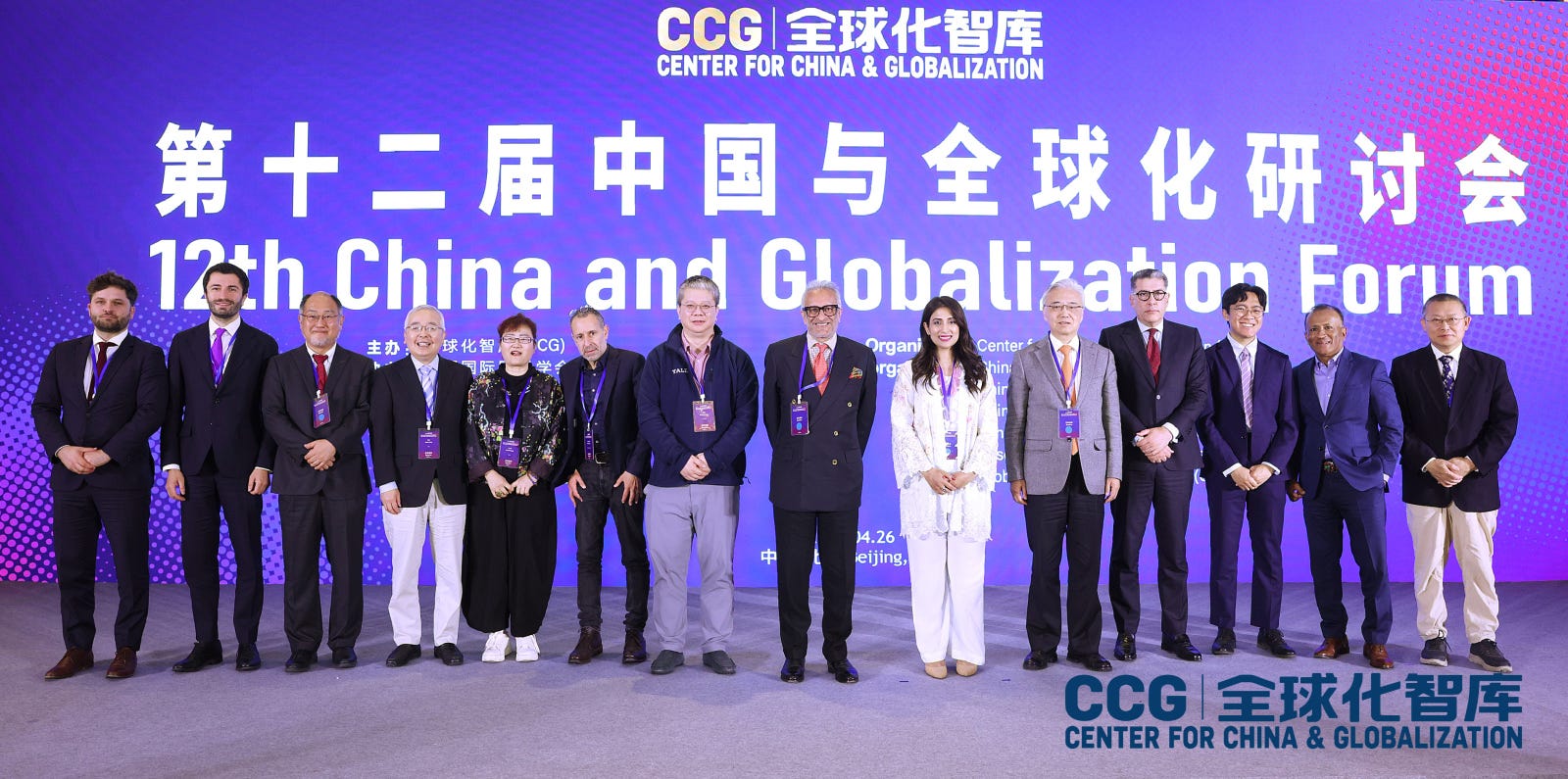
The “The Global South: Forging Cohesion and Defining a New Era of Partnership” roundtable was moderated by Zoon Ahmed Khan, Research Fellow at CCG.
Speakers included
Mohamed Amersi, Founder and Chairman of the Amersi Foundation;
Rza Aliyev, Chief Strategy Officer of the Nizami Ganjavi International Center;
Karim El Aynaoui, Executive President of the Policy Center for the New South;
George Chen, a Partner and Chair of Digital Practice at The Asia Group (TAG);
He Wenping, Research Fellow at the Institute of West-Asian and African Studies, Chinese Academy of Social Sciences;
Daniel Levy, President of the U.S./Middle East Project (USMEP);
Chandran Nair, Founder and Chief Executive Officer of the Global Institute for Tomorrow;
Niu Xinchun, Academic Vice President of Ningxia University and Executive Dean of the Institute of China-Arab Studies;
Osamu Onodera, Head of the Beijing Office and Chief Representative of North East Asia for Japan External Trade Organization (JETRO);
Johnsen Romero, Director of the Asia Program and a Research Fellow at the Institute for Peace and Diplomacy;
Rong Ying, former Vice President of the China Institute of International Studies;
Song Yaoming, Senior Fellow at CCG;
and Maxime Stauffer, co-founder and Chief Executive Officer of the Simon Institute for Longterm Governance.
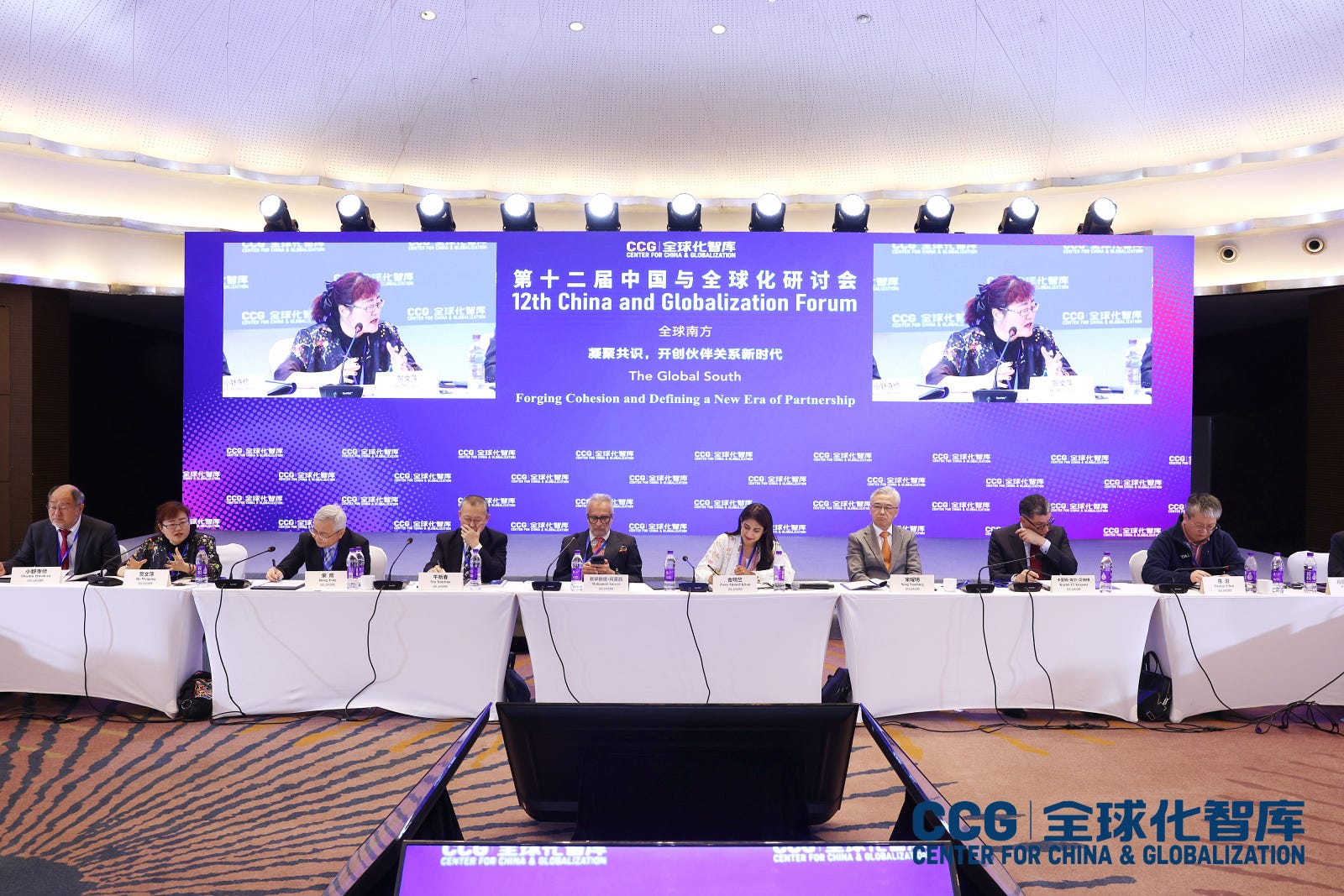
CCG has broadcast the video recording of this roundtable on Chinese social media platforms and uploaded it to its official YouTube channel.
This transcript is based on the video recording and has not been reviewed by any of the speakers.
And this concludes the transcript series of all open-door sessions from The 12th China and Globalization Forum.
Zoon Ahmed Khan, Research Fellow, CCG
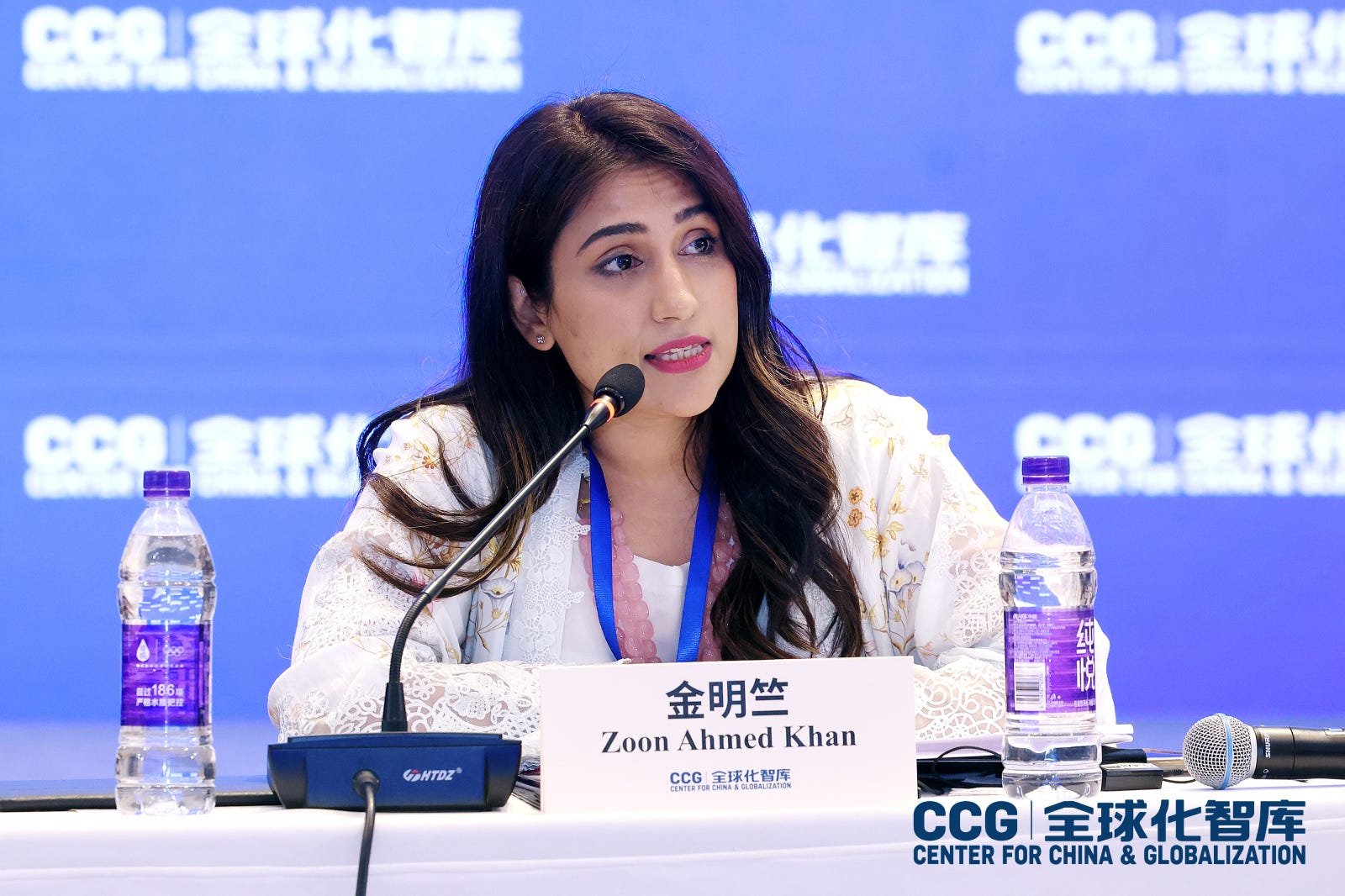
Okay, ladies and gentlemen, for all the panellists, please find your seats. I think we’re still missing one or two speakers. But without further ado, let’s begin. I’ll introduce myself. I’m Zoon Ahmed Khan, fellow at the Centre for China and Globalization. And it’s really an honour for me to be able to chair this roundtable “The Global South: Forging Cohesion and Defining a New Era of Partnership.”
Let’s just say that the Global South, I mean, obviously is about 70 to 80% of the world’s majority. Today, one of the speakers mentioned that about 70% of the global economic growth in the next foreseeable future will come from countries outside of the U.S. and China, and we know that a vast majority of that is in the global south.
When we talk about the Global South, we’re talking about vast parts of Asia, from East Asia to the south to the Middle East. We’re talking about the African continent. We are talking about Latin America. We’re talking about regions that are geographically not very close to each other. But increasingly, what we have witnessed, in the last 10 to 15 years in particular, is a rise in the idea that the global south is not just the periphery, it is not just the silent majority, it is significant.
The Global South has also been successful in creating platforms. If you were not invited to the table, we created our own tables, including BRICS, including the SCO, and the African Union. There are so many platforms that the Global South shares today. And we also know that in recent years, the G77, which in essentially represents the Global South countries, has been able to mobilise and to create spaces for new consensus when it comes to climate change, maybe AI governance, just to name a few.
But the problem remains: How do we essentially define the Global South? Who represents the Global South? Who re, who leads the Global South? What are the collective challenges that we face as one humanity? And what are the challenges that the Global South cares the most about? We can talk about the Sustainable Development Goals. We know that climate change and most countries in the global south, even though we are not emitting the most, we remain the most climate vulnerable.
And at the same time, the issue of financing our development, I think, these are all questions that need to be addressed. Also, we need to maybe today with a very distinguished and a very diverse panel from different parts of the world with different expertise, I would like to understand from them what the core challenges are, firstly, that the Global South is facing. What are the best ways for these regions to mobilise? How can the financing of infrastructure or consensus-building on core issues be made more readily available?
And also, another speaker that I would like to quote, who mentioned that the issues are also epistemological—issues of definition. We know that the Global South collectively keeps talking about an international legal order, not the rules-based order. What does that really mean? I think if some of our speakers can also talk about what is it really the Global South? What is it that the Global South is fighting for? Obviously, representation in existing institutions of the international order, but also to not just recipients of different concepts and ideas, but also once defining what matters to them.
So I think these are some of the core ideas that we’ll begin with. And I’ll start with Mohamed Amersi, who is the founder and chair of the Mohamed Amersi. And if you could briefly talk about, you know, what are today, obviously, given the turbulent times that we are facing. We recently had the war in Iran. There’s so much that the world is facing. Where do you think the Global South stands in all of this? And what are the core challenges and solutions? Thank you.
Mohamed Amersi, Founder and Chairman of the Amersi Foundation
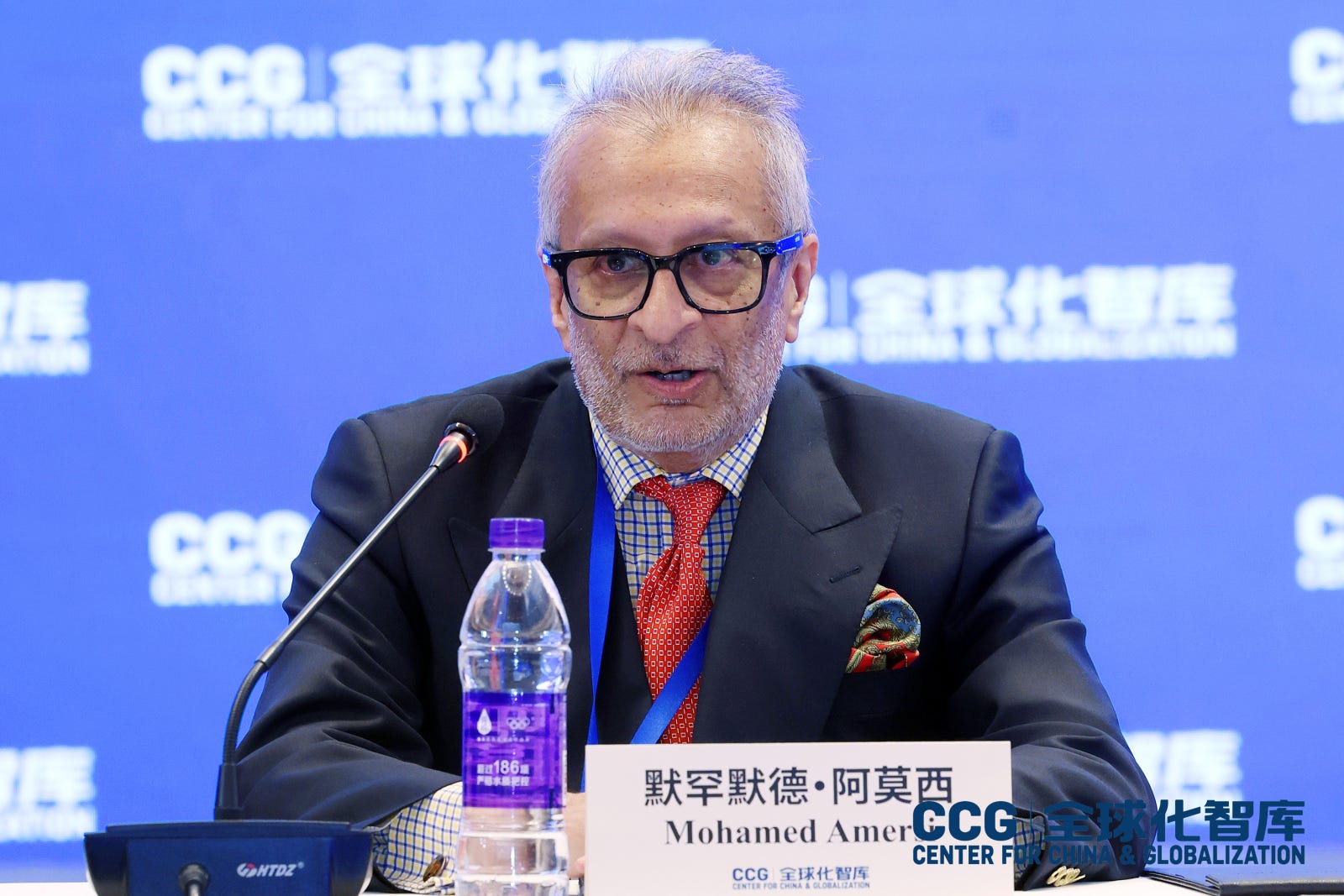
Thank you very much. Zoon Ahmed Khan and all of CCG for having me here in Beijing again. This morning, we discussed the changes in the global order. Now the focus is on the global south. We meet at a moment of profound global transition. In my view, all certainties are fading, power is diffusing, and institutions of the past are under strain.
I speak as a strong proponent of the Global South. In my view, the global south is no longer peripheral. It is increasingly central to world affairs. The key question is clear: Is the Global South a meaningful force in world affairs or merely an umbrella covering very different nations?
In my view today, it is both. It is a real political and economic reality. Countries with growing populations, rising markets and shared development concerns. But it is also an imprecise label, grouping states with very different interests, systems and priorities. Its relevance comes from facts, not slogans. It represents the majority of humanity. It includes many of the fastest-growing economies. It holds major energy, food and mineral resources. It is increasing its influence in trade, finance and diplomacy. It is central to solving climate, migration, security and development challenges.
However, its weaknesses today come from fragmentation, different geopolitical alignments, competing regional ambitions, uneven levels of development, lack of permanent institutions and a tendency to unite rhetorically but divide practically.
So the real issue is not whether the Global South exists. The real issue is whether it can become effective. To be effective, it needs common interests over abstract identity. It needs regular summits with follow-through development finance mechanisms. Coordinated negotiating platforms in global forums, research and policy networks across regions.
Thirdly, its leadership must be shared. No single country can speak for all Asia, Africa, Latin America, the Middle East and small states all need representation.
Fourthly, strategic autonomy is essential. The Global South should not become an instrument of rivalry among major powers. It must engage or align with none blindly and decide based on interests.
Fifthly, its credibility must come from delivery: infrastructure built, trade increased, poverty reduced, technology transferred, and collective positions that shape outcomes.
In my view, the honest conclusion, without cohesion, the Global South is just a label. With institutions, purpose and results, it can become one of the defining forces of the 21st century. So the choice is simple: remain a category that others describe or become a coalition that shapes the future. If it succeeds. This century will not only witness the rise of the Global South, it will also witness its leadership.
Zoon Ahmed Khan
Thank you so much. I mean, I think it’s also important to recognise that our economic representation, the rise economically of the Global South countries, our ability to interact with each other is creating a sense of a new identity. But to what extent is this a cohesive identity? I think that is, as you said, what will determine the future of the Global South, whether it’s going to be able to unite and create solutions, determine and create consensus, right?
And that’s why our topic is also today’s forging cohesion. This is active. We cannot just take the rise of the Global South, as in the rise of individual regions and economies, for granted that this will necessarily result in the structural changes that a majority of the Global South seeks.
So with that, let me invite Rza Aliyev, who is Chief Strategy Officer at the Nizami Ganjavi International Center. Rza, your organisation is also working very proactively in serving as a platform to really get the Global South voices out, to give space to Global South voices, and to help arrive at a consensus. So what’s your take about where we stand today as a Global South? And how can we really forge this kind of unity that so many of us are talking about?
Rza Aliyev, Chief Strategy Officer, Nizami Ganjavi International Center
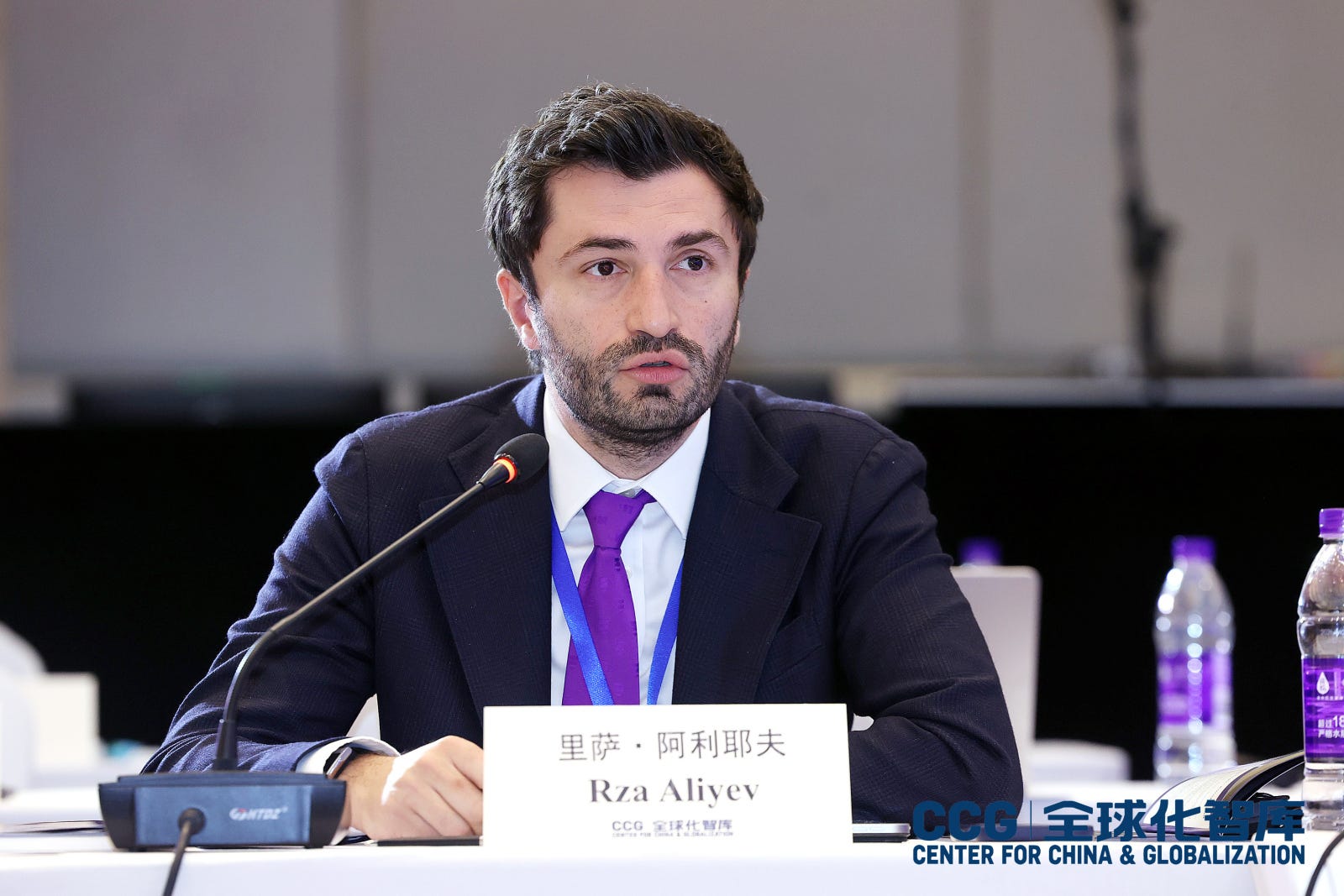
Thank you very much, Zoon. And thank you to CCG for having me here. And yeah, I’m from Azerbaijan and would love to share my thoughts on the Global South and forging cohesion and especially defining the partnerships, a new era for partnership, because my country and our region are going through that phase.
When Mohamed Amersi mentioned the fragmentation, and in order to avoid that, to build the common interest, I think that from Azerbaijan, we have seen quite a lot. If you look at the integration of the Caucasus with Central Asia and being that hub between, let’s say, Eurasian trade, it has gone on at a really high pace. So with that, when I think about the world, and especially Eurasia, it is now being rewired by disruption.
As the only country that borders both Russia and Iran, and with two major wars happening in the region, Azerbaijan is very much affected. But at the same time, when you look at the global trade has reached a record level. I think it was around 35 trillion U.S. dollars annually. But the routes to sustain that global trade are really disrupted.
We saw that in March when all 20% of the global oil and gas flows that go through the Strait of Hormuz were disrupted. You had disruptions of the modern energy markets and then, of course, inflation in Europe and the world and oil prices going high.
So when I look at it now, it’s not an energy crisis, it’s a connectivity crisis. And having that middle corridor as an alternative for connectivity is very important. So when we look at the kind of middle corridor, especially, let’s say, the integration of Azerbaijan, Uzbekistan, and Kazakhstan into the Eurasian map is very important. It links China to Europe and is becoming very strategically central.
The numbers do not lie. So cargo volumes increased by 62% in 2024 and will exceed 5 million tons from China to Europe through our corridor, through the middle corridor. The rail traffic grew 60% in a year. In Azerbaijan, only last year, China-Europe trains were increased by 35% as one one third, more than one third in a year. It’s a lot. And the container shipments would increase, having increased last year by 25-fold. Those numbers are massive. And I’m sure that we’re all travelling quite a lot.
And when we see this kind of degrowth or division, when you come to Azerbaijan, Uzbekistan, Kazakhstan, and Central Asia and the Caucasus, you actually see a lot of optimism. These are very rare places where you come and see: actually, let’s work together, let’s build those bridges.
So when we look at that structural reorientation of the Eurasian trade, why does it matter, right? So the northern corridor via Russia has closed, is closed. The maritime routes in the Middle East have very high risk now. And when you look at the east, west trade, north, south flows, energy transit routes and digital infrastructure with cheap energy, oil and gas, and large land areas, those are all really great pushes for the Global South to really find its own place at the table.
As you mentioned, in Nizami Ganjavi International Centre, which I co founded, we have the, it’s the largest club of the former and current presidents and prime ministers. But what we are really proud of is bringing those voices of the former heads of state and current heads of state of the Global South, of the small island developing states, of the countries in Africa, in Latin America, all in one place and really start building those bridges and bringing the optimism to it.
So, Zoon, you asked, what should we do? What’s the path forward? So I would recommend to the distinguished audience three solutions. One is to really build the corridors of execution, not just connectivity, because 10 years ago, I studied here at Tsinghua, and 10 years ago, when the Belt and Road Initiative was launched by President Xi’s vision, it was a lot about infrastructure development investments. What I would urge us to do is not to just build that infrastructure, but to really use it as the corridors of execution; that synergy should be cultural cooperation, should be business cooperation, should be political cooperation.
Second would be empowering the regional connectors. Countries like Azerbaijan, Uzbekistan, and Kazakhstan are multi-faith, multinational countries. So, really positioning them as anchors of stability and integration would be really great and would increase the motivation for us to do even more.
And lastly, I would say it’s what we are doing with my organisation as well. We’re trying to redefine multilateralism. Because what we see is that the diplomacy, the current multilateralism, is not really working. So we’re really focusing on redefining it, and with the inputs of organisations like CCG Foundation, etc. Having that dialogue, really trying to push forward with redefining it and identifying the new paths, is very important.
Zoon Ahmed Khan
Thank you so much. I think, I mean, especially obviously, I mean, this was a very rich intervention. I feel like you mentioned, 10 years ago, when the Belt and Road was initially announced, it was essentially about hard infrastructure, right? But how to utilise that, how to create that regional consensus, how to create the will, and how to build those ecosystems to utilise that infrastructure effectively? I feel that not many countries are able to do, not many regions are able to build, shape their regional agendas, especially South Asia, which is one-fifth of the world’s population, but the least connected in many ways. So I think, yeah, we have examples within the Global South where we have success stories that can be emulated.
Now let’s welcome Karim El Aynaoui, who is Executive President, Policy Center for the New South. And I would like to know your perspective on how we can overcome the challenges that the Global South is generally facing. And what do you think are the core strategies that countries within the Global South can employ to build a better understanding of leadership values within the South? What can be done to build more regional consensus to promote development? Thank you.
Karim El Aynaoui, Executive President of the Policy Center for the New South
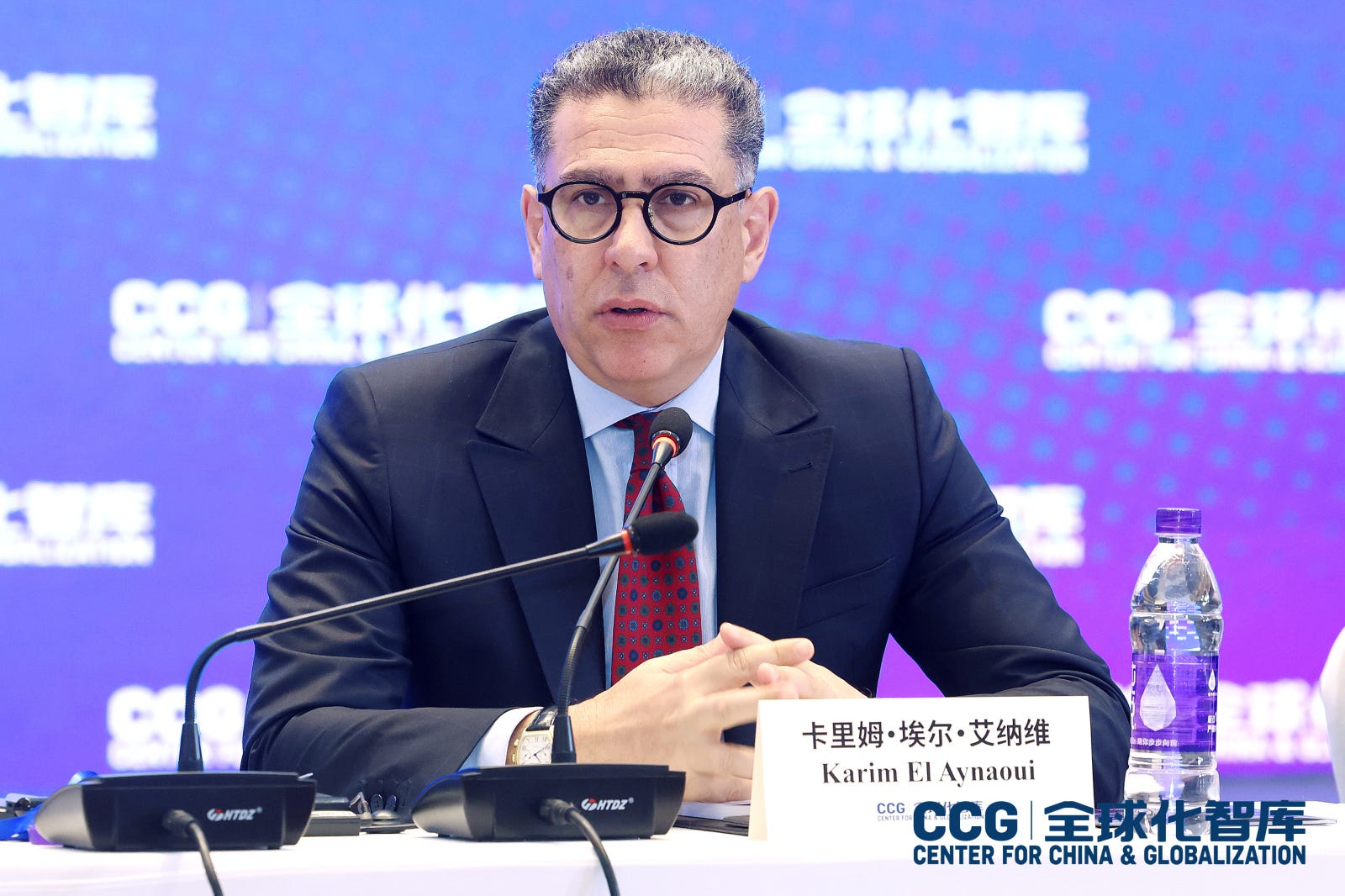
Thank you very much. It’s a pleasure to be here. I’m speaking from Africa, from Morocco, a middle-income country. And I think, without getting into discussions on the concept, the Global South is here because we need to give it a name, but it’s happening because there is space. And that space is, of course, created by exogenous shocks. We’re all facing a change that is coming from decisions that are not ours, and it includes advanced economies, by the way.
And they are winners and losers. I would say on average, what we call the Global South is winning in a way, particularly those countries that are stable, that are sort of at peace internally, and that are not in a conflict area. And their strategic value is changing in the eyes of the losers on the advanced economy side.
If I take a country like Morocco, we are much more interesting for Europe than we were a couple of years ago, for many reasons. So, Zoon, it is as much something you can intellectualise as something that is just a fact of perception, of how we see each other. And I think that has changed. We don’t see the world as we used to see it, and our partners are not seeing us as they used to see us.
My worry is that there can be some kind of reaction there, and I’m seeing things here and there that are sort of pointing in that direction, like reacting to this very quickly multiplying alliances. It’s a bit of a mess. I think this sort of bubbling moment maybe makes sense, but I don’t think this is the end of what we’re seeing.
So there’s diversity, and I’m not sure if you give to the Global South, let’s say, the leadership of the world, I’m not sure we are going to do better than what was done after 1945. So we have to be modest.
And we are facing many challenges. As an economist, I can’t resist. But there’s a long list of challenges, the last one being the oil price shock, but there are many others. There is defence spending increasing everywhere; there are fiscal policy pressures, the scars of the multiple crises since the 2010s. There are, of course, the macro pressures, inflation might be back, and there’s a long list. Then there are also demands from populations: protection and social safety nets. So the demands for development are there.
So governments are under pressure, and they have to deliver, and they need to be organised. They need to be organised and efficient. So it’s an efficiency problem. We’re all facing that. Some advanced economies, you add to that demography, etc. I think apart from a few countries, we are all in that same sort of situation.
And what matters most for us, and I’ll conclude on that, is really financing development. It remains at the centre, and that includes a country like China that wants to escape the middle-income trap. It’s not easy. You need to increase productivity across the board. We need to organise our own finance. ODA is, in the medium to long run, dead. And we need to organise that. We need institutions. There’s an attempt. If I speak from the African standpoint, we need to multiply by 10,20 the size of the African Development Bank, for instance, for example. So that’s, I think this is going to remain with us, the challenge of development.
And I would say there will be some regional groupings in terms of countries, but I do not believe in a sort of global changing world order with a Global South that is coalesced, organised, and capable of bringing back a rules-based order. That was not utopia for the rest of the world. By the way, it should be noted. I mean, ask the Iraqis, ask many nations, if the post-Second World War order was a sort of paradise. That’s not the case.
So you don’t want to be a reactionist by defending that kind of order. We need to invent something together. And we will need, as a South, to take our responsibilities as well. It’s easy to be against something and to criticise, but it’s something else to build that other. And I think there are few countries that are capable of doing so, that can contribute to that. But within the spirit I’ve tried to describe.
Zoon Ahmed Khan
Thank you so much. I think a very valid point that in the end, the challenges we face require tangible investments, right? So, in infrastructure, financing, education, all of that, and regional cooperation, this is all very central to where we wish to see ourselves, if you want to continue to progress.
And then the other point, I couldn’t resonate more with it, that it’s easy to criticise, but do we want to build something new? Do we want greater, fairer representation within the existing order? Most Global South countries do not talk about a rules-based order. We don’t agree with that language in general, right? We talk about a law-based international order, a UN-centred international order. So how do we build the consensus and partnerships to increase our representation within that UN-centred international order?
Now let’s welcome George Chen, Partner and Chair of Digital Practice, The Asia Group. From your vantage point, what are the challenges and solutions for the Global South?
George Chen, Partner and Chair of Digital Practice, The Asia Group (TAG)
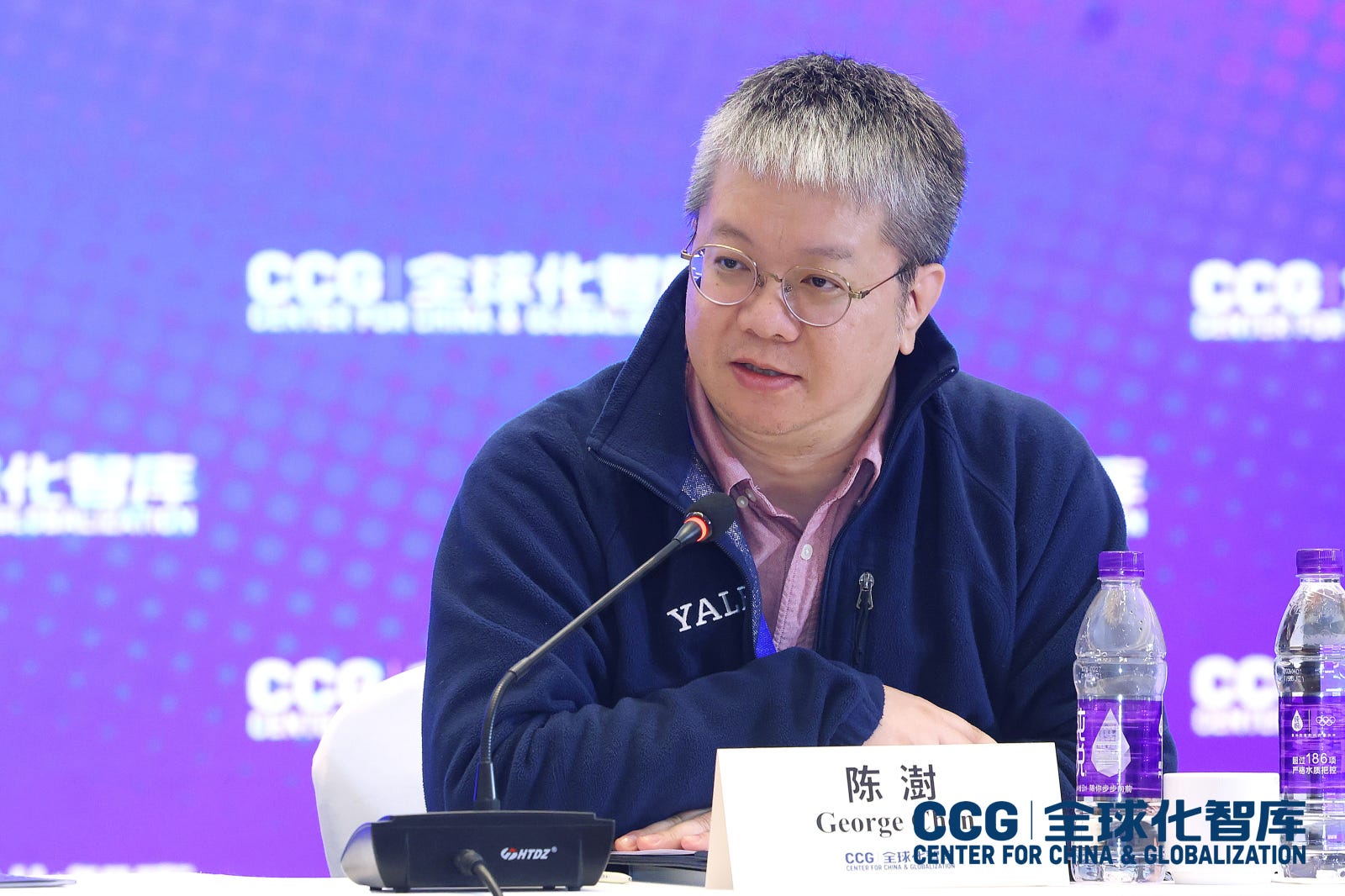
Thank you. Thanks for having me here. Since there are quite a number of Schwarzman students and alumni here, I also want to share my other hat: I also teach at Schwarzman College at Tsinghua University. It is great to see many old and new friends here.
I focus more on the technology aspect, given my background. I worked for some of the largest internet companies, American companies, before my current role at The Asia Group. My worry is that AI is not going to make the situation for the Global South better, but rather more divided and more unequal in terms of economic development, plus many other non-economic issues, social issues.
I can offer my assessment based on my own experience. Before talking about AI, I think we should talk about the internet. If you think about the Global South, with all countries and continents combined, this is basically the largest internet market by user numbers. However, if you do a very simple calculation, many Global South countries still use those very popular, large U.S. platforms on a daily basis. In some countries, one company’s app basically means the internet, for various reasons. But the in-country support for online scams, online safety, and lots of other issues is still very limited. This is still the older social media and internet era. It is like a tiny percentage compared with how many people and resources American tech companies have in Europe or in the U.S.
Now we come to the AI era. Even though many of the leading companies in the world spend tens of billions of dollars every quarter developing the world’s largest language models, that does not really mean much support for Global South countries, either. In the AI race, it is very clear that this is very much a race between the U.S. and China. In the U.S., most of the models we see are closed. China is advocating open models, and that gives a ray of hope to many Global South countries, very much from a cost-efficiency perspective. I think that could be a game-changer.
If you compare this with the old internet or social media era, I think the AI-related risks, in terms of economic impact, cannot be underestimated in Global South countries. I have not really seen a push to call for more equal and fair access to those AI resources. What does that mean for economic development in the next 10 or 20 years? So far, perhaps, we have only seen 10 per cent of AI’s potential. That is my worry.
Last year, the Chinese government organised the World AI Conference in Shanghai. Premier Li Qiang called for a new model of AI governance that should also involve more countries. Global South countries should have a seat at the table, rather than having other big powers decide how the rules and standards should be written. If you go back 30 or 40 years, the whole birth of the internet was a very American thing. You did not really see other countries participating in the rules or standard-setting. But now every country should have a chance. I very much support the UN-based approach, even though America is not a big fan of the UN model these days. I will finish here. Thank you.
Zoon Ahmed Khan
Thank you. Given the paucity of time, it would be interesting to understand what kind of institutions or what kind of mobilisation Global South countries can achieve within the UN system. Maybe regions can be represented. How do they build the technical expertise to determine what these standards should be? How long would that take? These are important questions to think about.
I know there is one other speaker on this panel who has expertise on this topic, and whose view might differ a bit, so it will be interesting to listen to that too.
Now, let us invite He Wenping, Research Fellow at the Institute of West Asian and African Studies of the Chinese Academy of Social Sciences.
From your perspective, one of the issues we all want to address and try to understand is: what is the way for the Global South to really mobilise? Should we have stronger regionalism and regional platforms that can interact with one another? Is it really through the UN system? Do we have good examples of how collective issues of the Global South have been tackled without strong regional platforms? I think climate justice, for example, would be one of them. I know you have deep expertise on this topic and where the Global South is headed, so we look forward to your perspective. Thank you.
He Wenping, Research Fellow at the Institute of West Asian and African Studies, Chinese Academy of Social Sciences
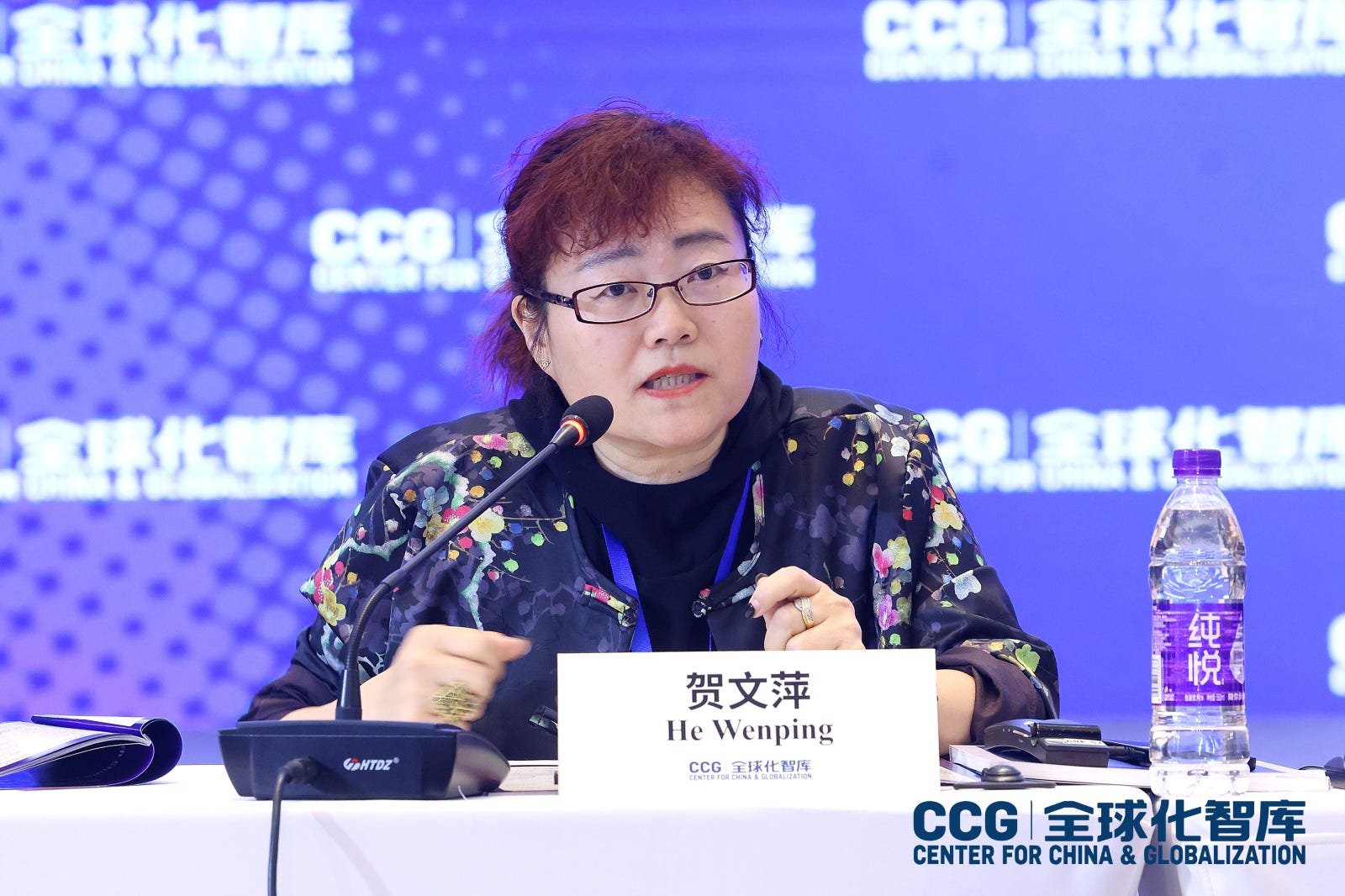
Thank you very much, Zoon. I am very happy to join this forum. I still remember that last year, when I joined the 11th China and Globalisation Forum, we also touched upon the Global South, its rising influence, and how it has developed. I think the answer is obviously yes.
We can see this from different perspectives. From the perspective of economic development, you can see that the world is now focused on China. China is a leading Global South country. It shows very strong resilience in economic development. The year 2026 is the starting year of our 15th Five-Year Plan. You can see this in the GDP growth in the first quarter, the first three months, and also in the number of expos organised in Guangzhou, Haikou, and other places.
Personally, I have engaged with quite a lot of businesspeople from Arab countries and from the African continent. They all come to China to join these expos. From the first day of May next month, China will issue a zero-tariff policy for all African countries that have diplomatic ties with China. This is another very strong force for strengthening and improving trade and economic ties between China and Africa, a major Global South continent.
If we look from another perspective, such as institution-building, we will see that the Global South, of course, plays a very constructive role in pushing ideas such as multilateralism. As we were just debating, do we marginalise the UN, or do we put the UN at the centre?
Now we have seen many global geopolitical conflicts going on. Obviously, wars, whether in Gaza, Iran, or elsewhere, have sidelined and marginalised UN authority. But Global South countries would like to see the UN continue to play its fundamental role.
In this direction, we will see that Africa’s voice is also on the rise. For example, by the end of last year, South Africa had successfully hosted the G20. This was the first time the G20 had taken place on the African continent. Even though there was quite a lot of pressure from the United States to boycott this G20, we have seen a very successful G20 summit hosted by South Africa. This is another proof that, whether the U.S. is there or not, Africa’s strong momentum for hosting the G20 remained on track, and the meeting took place successfully.
Finally, I would also like to add to what previous speakers said about cultural cooperation. This year, 2026, is what we call the China-Africa Year of People-to-People Exchanges. This year, there will be more than 600 activities taking place in China. I have already been involved in several cultural exchanges. Just recently, the National Museum of China hosted beautiful African wood sculptures. Those works may still be there. If anyone in this room would like to enjoy African art, you can go there and take a look. This is part of it.
I have also personally engaged with many African human-resources training seminars organised in China. Now, more and more experts from different backgrounds are coming to China to deepen their understanding of China. This is happening through very rich people-to-people communication.
Also, academic exchanges. For example, my institute has now established contacts with African think tanks and built joint research centres. The first one has already signed documents in Ethiopia, another one will be in South Africa, and the third one will be in Senegal. So you see that these research centres are no longer only in China. We now go to our partner countries to do joint research.
If we put all these things together, we will see the big picture: Global South solidarity is not becoming looser and looser. I think it is becoming stronger and stronger.
I noticed that just yesterday or the day before yesterday, BRICS countries, at the special-envoy or deputy-foreign-minister level, were meeting in New Delhi, India, to talk about how to handle the Middle East issue. So on big international hot-button issues, the Global South also does not remain silent. It now makes its voice heard, as on the Gaza issue. I still remember that the BRICS countries immediately organised an online summit to issue a joint stance on this international issue. This is also gradually improving their influence. Of course, Pakistan plays a very fundamental role in mediating those conflicts as well. I will stop here.
Zoon Ahmed Khan
Thank you so much. I think your intervention is something that probably many people, especially foreigners who have been living in China for a few years, or have lived here, can relate to: the countless small partnerships that may not seem to make much of a difference on the surface, but really do.
I remember one of the first research projects I got involved in at Tsinghua, back in 2015 or 2016. It was a think-tank project between China and what, at that time, we called the Muslim world. What we realised was that there was not a lot of interaction between the media, academics, and think tanks of China and many of the Belt and Road countries. At that time, in the first phase, most of them were predominantly Muslim countries.
One of the issues was: How do we understand each other if we are not communicating with each other? Many would call that an issue of dual Orientalism. If we are not able to understand China’s development model and perspective, and vice versa, then how do we build synergy with each other? How do we cooperate and partner?
So in the last 10 to 12 years, as you rightly mentioned, a lot of progress has been made, and a lot of progress still needs to continue to be made. To try and address this, and to understand the impact of the current trajectory, let us invite Daniel Levy, President of the U.S./Middle East Project.
Daniel, my question for you would also be this: obviously, the Global South is a reality that everyone is talking about, and we know there are collective challenges we face. But where do you think the Global South should ideally be headed? What should the ideal goal be in the next 10 to 15 years? What are the core challenges that it should focus on addressing? What kind of progress should we be looking towards if we really want to become more significant on the global stage?
Daniel Levy, President of the U.S./Middle East Project (USMEP)
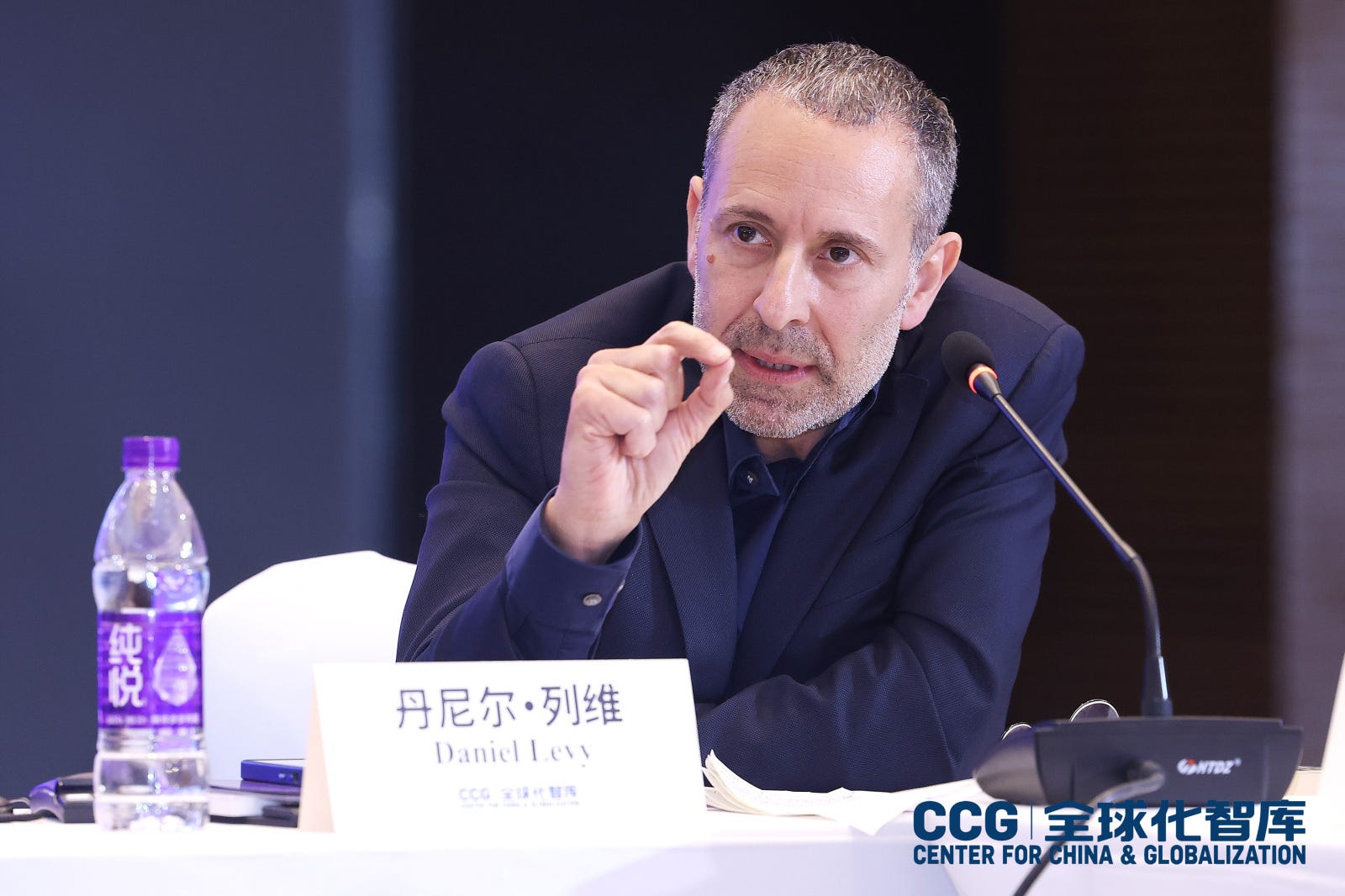
Thank you so much. It is good to be here in person this time. I am going to take a stab at the question you posed by going a route that starts with—and I apologise; I do not want to be a slave to the news cycle—the war currently rages, because I think that will have tremendous implications for all the questions we are addressing here, including where we would like to go.
So I am starting from a narrow space, but one with very broad implications, and one that also plays to my own expertise and background. The role of Israel in this is front and centre, and I will be a bit blunt.
There are many explanations as to what this war is about, but I do not think one can understand it without understanding a vision for West Asia, which has tremendous implications for what we are referring to, albeit, I would argue, problematically, as the Global South. I am sure someone else will pick up on that. It has implications vis-à-vis the U.S., vis-à-vis the West, and the knock-on effects of this.
My starting point is that this is a dangerous confluence of three things.
First of all, U.S. decline anxiety and the attempt to reassert primacy and preponderance are coming to the fore in this war, with a regional ally in Israel that has a specific way of working American power. That is not conspiratorial. Read the reports on what happened in the White House Situation Room that led to this war. That is the first thing. This is an area where military, geo-economic, and other tools have traditionally been deployed by the U.S. Iran has, of course, in many respects been the epicentre of how the U.S. Treasury was weaponised: access to the U.S. financial system, to the dollar system, to banks, etc.
The second component. I would argue we are in a phase of the Israeli, or Zionist, project which is qualitatively different from the past, and which poses new challenges. Israel, I would argue, is in a phase of systemic crisis: ideological extremism, overextension, and legitimacy erosion. And it is driving it to do things where everyone is now impacted.
Thirdly, I think this poses an acute choice for Europe. Having granted Israel impunity over Gaza and empowered that extremism, Europe now faces a choice. Does it go with what Marco Rubio offered at the Munich Security Conference—of a Western century, essentially a return to colonialism—or does Europe find its enlightened pragmatism?
So let me bang on by saying that what I think we are seeing, and it is important to spend a short moment on this, is an attempt at fragmentation in West Asia. I want to briefly explain what I mean by that. I would call it the project of Greater Israel dominion, or hard-power hegemony.
Many people hear that and say: Oh, that is a territorial project, that is a settlement project. It is much more than that. It begins with a zero-sum approach to the Palestinian question, but it is also about that only being successful if you have a region of fragmented, collapsing, chaotic states. Israel is not the only actor that contributes to that, but it is a key actor now.
So that is about the countries that can be weakened, but it is also about the countries that can be co-opted. I would argue that Israel has a vision for the GCC in which the fallout from this conflict in the GCC is intentional. Israel talks about being not just a regional but a global superpower. Türkiye is next. And it is about nodes of connectivity. They have talked about an India-Middle East-Europe corridor, with Israel at its centre, as a competitor to the Belt and Road Initiative.
But I want to end by suggesting that, because we are now in a place where the entire world is essentially paying a tax for this war, for this overambitious project, there is also an opportunity here to put forward an alternative, if we can get beyond this reality, and to significantly advance the coalescence that has been talked about, and to get to an answer to your question.
Conceptually, I describe it as a Bandung 2.0. I am not the only person who talks in those terms. I do not mean physically meeting in Bandung, or the exact same leadership. But if one thought about that as the post-colonial moment and the beginnings of NAM, the Non-Aligned Movement, then can one codify the questions that have been raised by this war, including what we were just asked about: Who gets to make the rules over AI? Is it a UN-based approach, or a Western “rules-based international order” when it suits us?
So we have to think about what we replace this with. We cannot just talk about decomposition, but the composition of something different. Very briefly, a checklist would include a regional security architecture in West and Southwest Asia that is non-bloc, where there is sovereign security equality of states that is indivisible—not one state’s security at the expense of another.
There is also nuclear symmetry. Either this is going to be a region of nuclear proliferation, or it will be a WMD-free area. We also need to think about how this can contribute to a new multipolar architecture, and whether one can counterpose something like The Hague Group, which came from the Global South, led by South Africa, Colombia, Malaysia, and others, to uphold a UN-based approach on Palestine. Are we going to have a Hague Group approach driven from the Global South, or a Board of Peace approach?
There are many things that have come out of China in recent years that I think are part of the anchor for that, whether the Global Security Initiative, the Global Civilisation Initiative, etc. So let me pause there. Thank you so much.
Zoon Ahmed Khan
Thank you. The ideas you shared about this collective rejection of bloc politics and zero-sum mindsets are especially important. One of the speakers earlier, Kishore Mahbubani, mentioned that we have reached a point in history where we reject colonialism. We know it was wrong. Slavery was wrong. And I think, increasingly, we are arriving at a consensus that imperialism, bloc politics, and such divisive ideologies are wrong.
I agree that a lot of what China is talking about, such as the Global Security Initiative and also the Shanghai Spirit, are ideas that can unite and can possibly be compatible with the idea of a Bandung 2.0. What will make that successful or not, I think, is time and our ability to mobilise resources at the right time. Thank you so much for a powerful intervention.
Now, let us invite Chandran Nair, Founder and Chief Executive Officer of the Global Institute for Tomorrow. Given the current scenario, and as Mr Levy said, the current moment also creates opportunities. What is your take on where we stand today, and how can the Global South make the most of this moment?
Chandran Nair, Founder and Chief Executive Officer of the Global Institute for Tomorrow
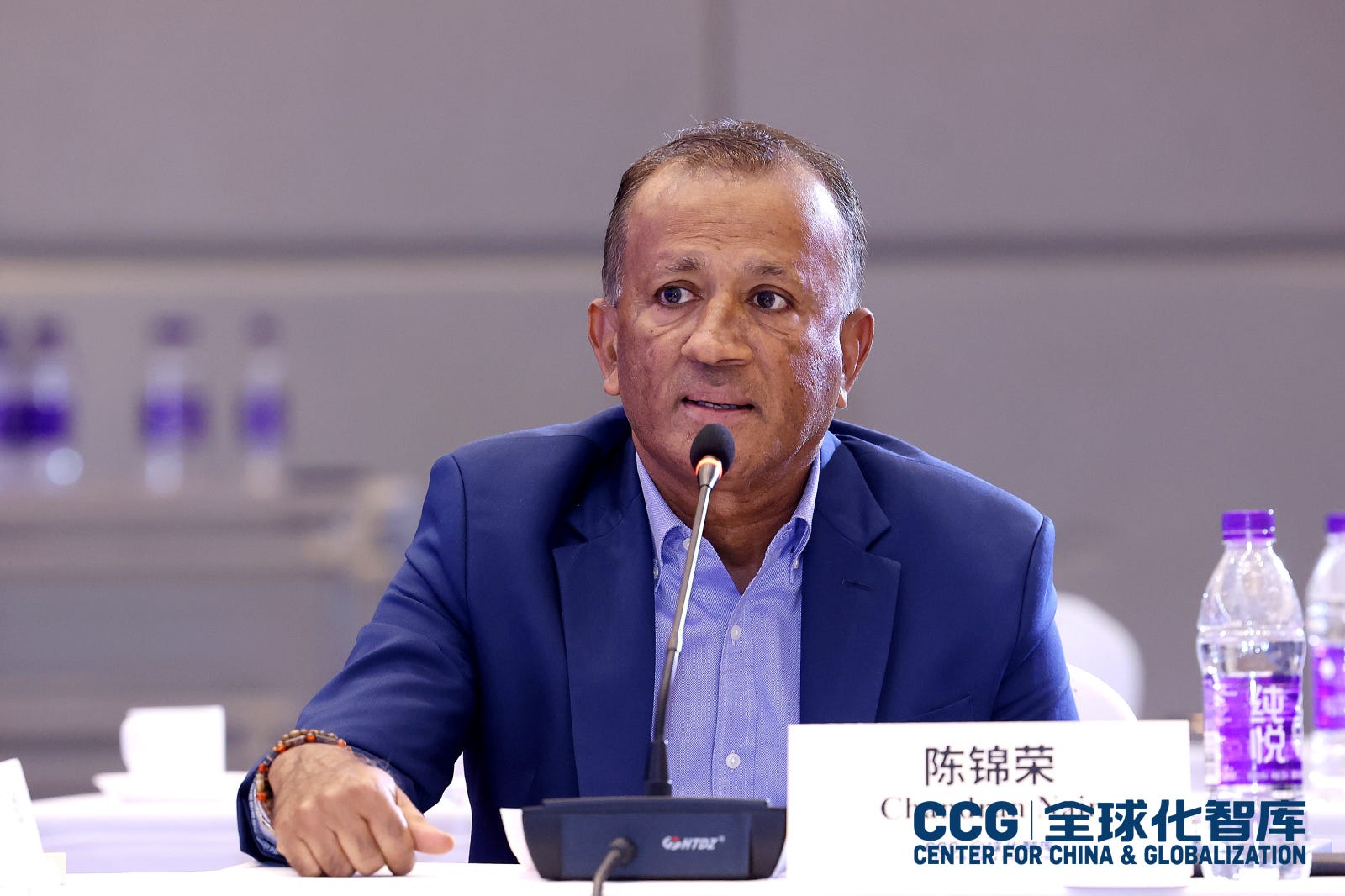
Thank you. I am going to try not to answer the question, because I have been sitting here for, I do not know, 10 hours, listening to a lot of stuff. Did I say fluff? No, stuff.
Let me try to answer this by saying, firstly, I reject the term “Global South” because I think it is imperial, rooted in colonialism, and condescending. I have written about it for those who are interested. I would rather call it the “globally wronged”, if you want, or the “globally formerly oppressed”. More seriously, perhaps, I would call it the global majority.
Most of today, we have listened to the global minority lecture us about the state of the world. I found this, even in China, a bit disquieting. Usually, the Global South event is at the end of the day, when the people who are supposed to listen to us have all left the room. But that is another question. Let me just say that this is typical of these sorts of events: the so-called South thing is put on the periphery. So, a bit of advice to CCG: next time, have it in the middle of the day, when everybody is here.
I would really like to say some of the things that have not been said so far, and put them into three buckets.
Firstly, what drives the global majority narrative? There are three things broadly: the grievances of the past and the current; the continued exploitation and unfairness in the world; and, second, the hypocrisy of the West.
Most of today, we have heard about how bad the Russians are, and all of that. I didn’t hear Gaza until Mr Levy said it, and I would use the other G word called genocide. None of the Europeans dared to have the courage to say: a genocide on our watch. So the Global South, or whatever you want to call it— the majority south—these people cannot be real. To deny that something of this nature is happening—there is the hypocrisy of the West, yet it preaches to us about democracy and all of those things.
And then, of course, the other thing that brings us together as the global majority is the refusal to be second-class, wanting to be at the main table. But therein lies the work that we need to do as well.
My second point is: What is it that most of us think? We are the majority, 85 per cent, but most of the time, we are listening to Europeans and Americans telling us how the world is. But what do most people think? I have the privilege of working in many countries, and I will just put these views into a few points.
Firstly, I think most people in the world—and this is not said enough—view the United States of America as the biggest danger to global peace. I think most of us would nod in agreement with that. It is essentially a rogue state in its current incarnation. That is what most people think.
Second, we think Iran should win. That is interesting. We all want Iran to win. We think genocide was committed, yet no one in the West wants to talk about it. We hope that those who are complicit in genocide will be brought to trial, because then we will have all the things we are talking about structurally. Then we will have the rule of law, or whatever you want to call it. Then we would have the rule of law that would bring many things together.
Secondly, we talk about a new order and all of those things, but what we want is a new consciousness—a consciousness that would come out of different cultures and civilisations, China as part of it, and so on. We want that too, and we do not want to be at a loss as to what that should be.
Fourth, many of us ask—and I have been a follower of this for a long time, following China, particularly, for 20 years—why is it that Europeans and Americans hate China so much? Why, before the trade surplus? I believe it is fundamentally racist: that a non-Caucasian civilisation, for the first time in 400 years, has confronted the West. This is terrifying. I feel the opinion, but I do not condone it. So why is it? And it might be India next, if they get their act together, we hope.
And we also believe this will be the end of U.S. supremacy, particularly the exorbitant privilege of the dollar, which allows it to bully everybody else.
So in the last minute, I will say what needs to happen next. It is very important before we get into the structural issues. Most of our elites are essentially subservient to Western narratives. That is why, whenever we have this, we still need to get those guys from Harvard, MIT, and so on to take the main seat. I am not saying that they do not know much, but they do not know enough about the real world, the one we live in.
So our elites are subservient. They need to be less subservient intellectually, more independent in terms of thought, and not seek allegiance to their legitimacy.
Two more points. We need to develop our own economic and political narratives. This is fundamentally the most important thing. What has not been mentioned today is that we do not live in a world of abundance. I know it has been said before, but if you know the science, you will know that we live in a world where resources are scarce. Ten billion people in 2060 cannot live like Americans and Europeans. So we will have to live very differently, and we will have to have our own definitions of what is prosperous and what is free.
So our freedoms and rights will have to be constrained in that world. That is the antithesis of the Western idea of what freedom is.
Finally, I said that we have to take control of our own destinies. That means, in a world of resource constraints, essentially becoming more self-reliant and self-sufficient. What is more important than food security? Trade and all of those things are peripheral to enabling that. But you cannot have an international order when member states are not self-sufficient, when they are reliant, when they are beggars. They have to be essentially self-sufficient, and that requires a whole new political economy.
The definition of that political economy will not come from the West. It will come from our own world, and that is the thinking that we need to develop in our own world.
So I will end with those statements. Thank you.
Zoon Ahmed Khan
Thank you. Thank you for a candid intervention. Especially on the points you started with, a majority of the Global South completely agrees. And I would say that, increasingly, the populations of some Western countries, or Global North countries, also agree with the hypocrisy.
I think, in the last few years, we have come a long way in trying to fight back against those definitions, those ideas about what freedom is and what democracy is. Within China, we have many forums, such as the South-South Human Rights Forum, International Forum on Democracy: The Shared Human Values, to really understand what those definitions are and what they mean to a vast majority. There is a lot I would like to comment on, but I think—
Chandran Nair
World Peace Forum.
Zoon Ahmed Khan
World Peace Forum as well. Yes.
So I think, in the end, it is a question of how much we respect and study ourselves. I will just quickly add that one of the first things I remember a Chinese scholar saying to me was that the difference between Chinese scholars and Pakistani scholars is that a Pakistani would say, “I studied at the London School of Economics, and hence I have expertise.” But the Chinese would say, “I had to study my own country to understand its unique realities, to boost expertise.” I feel that shift is gradually happening, but it has to be internal.
Chandran Nair
It is the problem of those who have been colonised. They are still being captured.
Zoon Ahmed Khan
And we continue to be.
Chandran Nair
By the books we read. So reject all of those. Read differently. Re-educate.
Zoon Ahmed Khan
Thank you. Thank you so much.
Now let us welcome Niu Xinchun, Academic Vice President of Ningxia University and Executive Dean of the Institute of China-Arab Studies, for your thoughts on a very hot discussion. Thank you.
Niu Xinchun, Academic Vice President of Ningxia University and Executive Dean of the Institute of China-Arab Studies
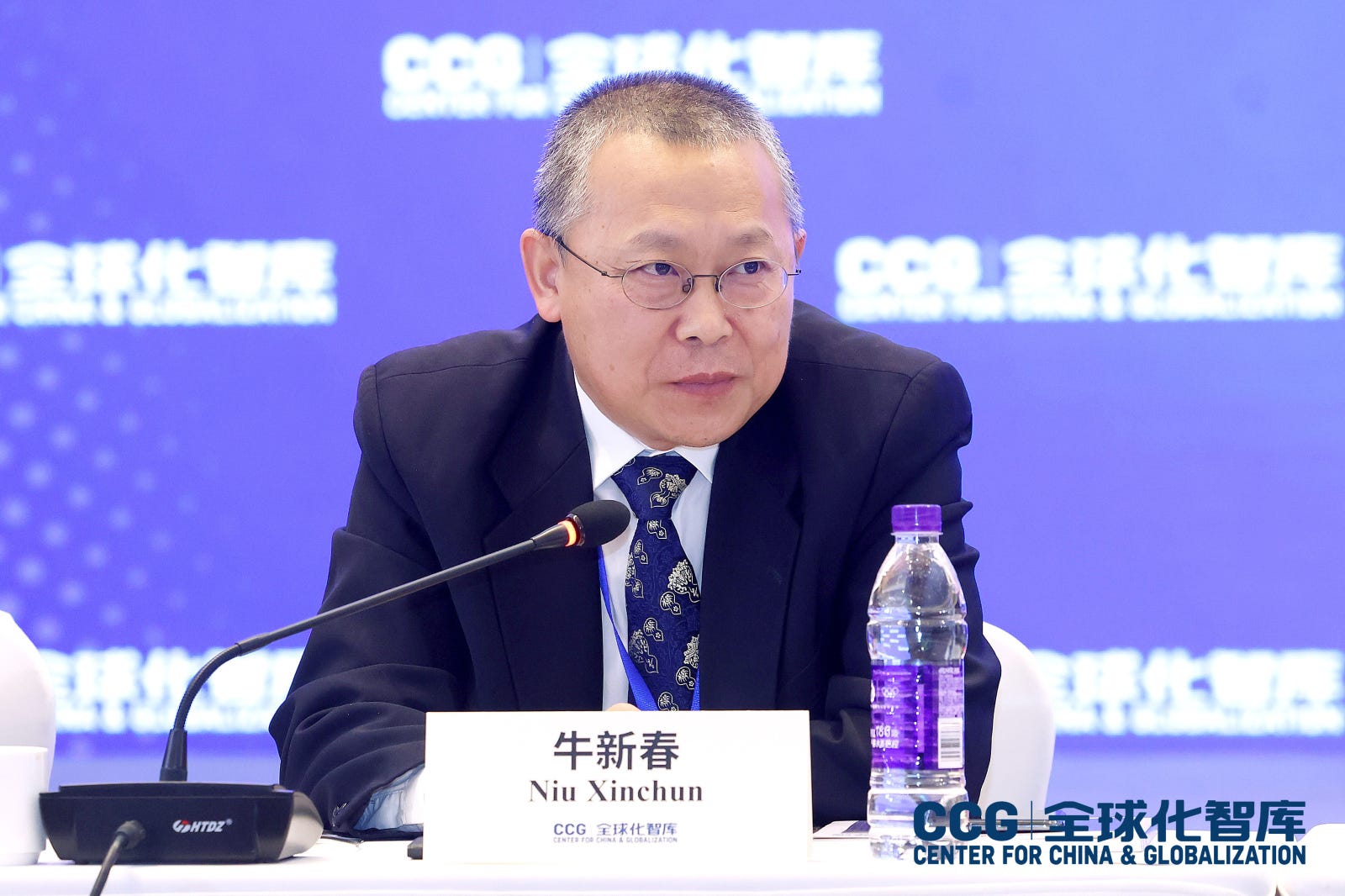
Thank you. Good afternoon, everyone. I remember that last year I talked about the Gaza war in the Middle East, and the Middle East is never short of war. This year, I will continue to talk about the Iranian war.
After almost two months of fighting, the war between the United States, Israel, and Iran is in a stalemate or a ceasefire situation. In the past two weeks, the United States and Iran have tried to sit down and reach an agreement to end the war, but unfortunately, they cannot find common ground to sit at the same table.
The reason is that both the United States and Iran think they have the upper hand. For the United States, it obviously has the military advantage. In the past two months, the United States has had the military capacity to strike wherever it wants, whoever it wants, and almost anything it wants. As President Trump said, the United States has almost completely destroyed the Iranian leadership and the Iranian military force.
But although the United States has a military advantage, it has not achieved any of its military objectives. For the United States, at least, it wants to destroy Iran’s nuclear power and Iran’s military power, especially its navy and other capabilities. But it has not achieved that.
For Iran, although it has suffered a lot, it has a political or strategic advantage. Politically, the Iranian regime has survived, and the Iranian military has survived. So Iran thinks time is on its side.
In the past two weeks, Iran has made preconditions for talks. The Iranian side requested that the United States first end the blockade of the Strait of Hormuz, and then the Iranian side can sit down with the United States.
So I think that in the upcoming months or weeks, I am a little bit optimistic. I think Iran and the United States can finally reach a partial, limited agreement. Maybe both sides can end the blockade of the Strait of Hormuz simultaneously and reach some kind of agreement on the Iranian nuclear issue. That would be very similar to the 2015 nuclear agreement.
Finally, I think the United States will quickly leave the Middle East because, in the past 10 years, the United States’ global strategy has changed a lot. Twenty years ago, the United States fought in Iraq, was trapped in Iraq, and engaged in nation-building in Iraq. It spent eight years in Iraq, and it spent 20 years in Afghanistan. But now I think the United States will fight in Iran and leave Iran quickly, leaving the problem to local partners like Israel and Gulf countries.
So, for China, I do not think China has effective tools to influence the situation in the Middle East to protect China’s economic interests.
My time has run out. I will stop here.
Zoon Ahmed Khan
Thank you. It is true that most people are hoping for some optimistic result. I think in these recent developments, we have also seen that middle powers, non-Western middle powers, have an increasingly important role to play. So that also speaks to the Global South becoming generally important, at least as individual actors.
Now let us invite Osamu Onodera, Chief Representative of the Japan External Trade Organization, for your thoughts on where the Global South is headed.
Osamu Onodera, Head of the Beijing Office and Chief Representative of North East Asia for Japan External Trade Organization (JETRO)
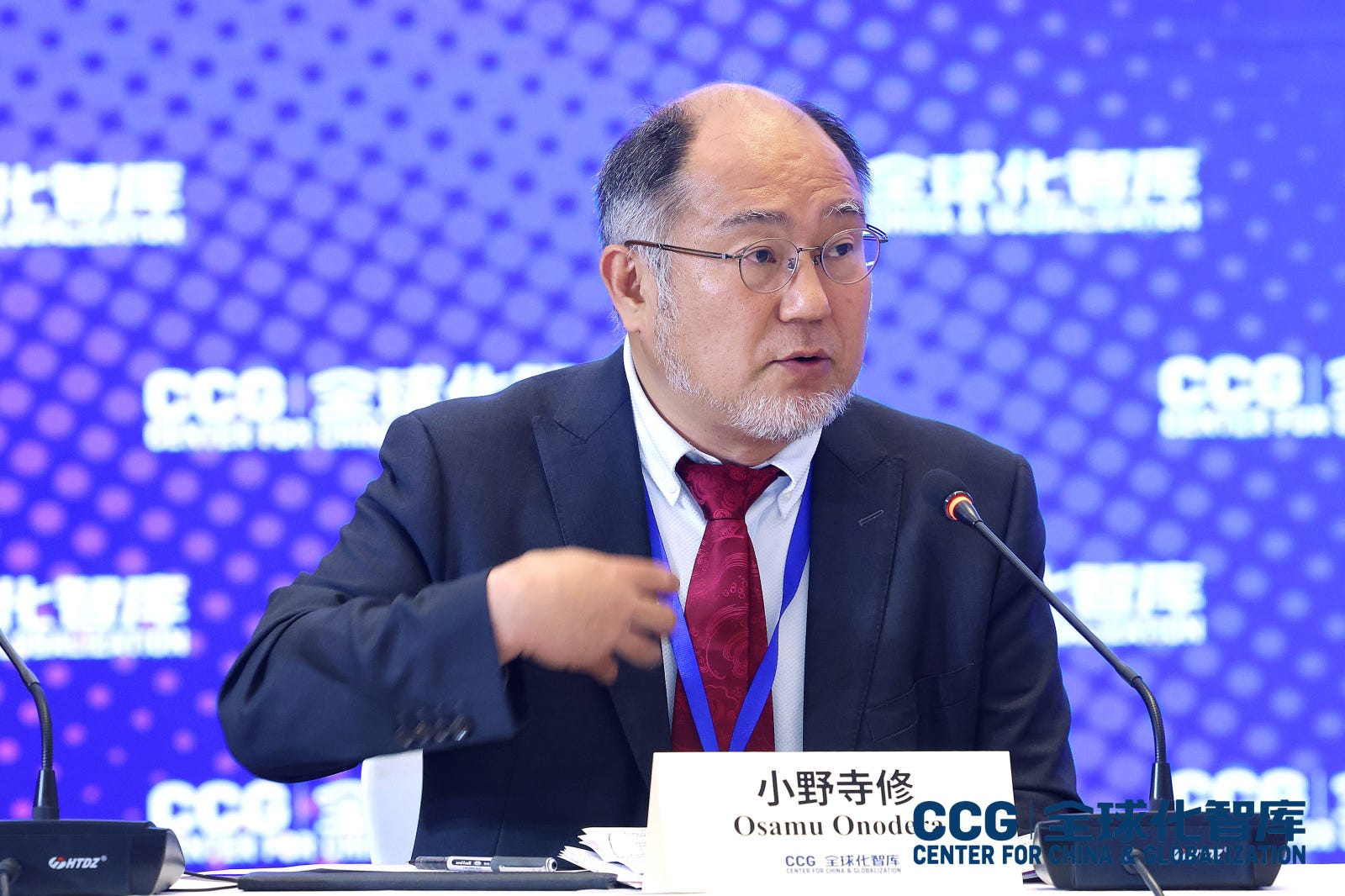
Thank you very much. First, let me change my title to Chief Representative for Northeast Asia, not Chief Representative, period.
So, just going through some of the questions that were asked. First, the challenges faced by countries in the Global South: economic growth and development; weak infrastructure and a weak industrial base; education and human capital gaps; fragile healthcare systems; environmental and climate change challenges; political instability and weak institutions; debt and fiscal constraints; and today, we heard about AI, technology, and technological development.
The commonality among all these challenges is that they are interrelated, but they are similar and different at the same time. Actually, there is a very big regional component that has to take place. Sustainable solutions to challenges do not come from outside, but have to come from inside, with some limited outside assistance. I think that experience comes from Japan’s development, but also from our work with ASEAN and various countries.
The second point is, as Mr Mahbubani was saying in the morning, multilateral institutions continue to be extremely important and central. But there is growing dissatisfaction on the part of the U.S. and a number of countries: a big burden, but decreasing effectiveness. On the one hand, on the Global South, or some countries, underrepresentation or growing unmet needs is a big thing.
So, how to balance the burdens and benefits? There are some countries that give minimal contributions but have extremely big power, etc. So, how to balance the burdens and benefits will be important going forward.
Also, the United Nations probably has to change its modus operandi, so to speak, to put more focus on regional institutions, because a lot of the work needs to take place in regional institutions.
In terms of the U.S. and China, those are two big giants. I do not think we can deny that. So the U.S. and China working on their bilateral relations, to make sure that it is coordinated well, is going to be extremely important. But both countries have a particular kind of responsibility.
Of course, now one country is maybe the problem rather than the solution. But from that point of view, China can take its own path in terms of how to contribute to global structures.
I think the morning discussions were quite instructive. Dialogue is key, and creating confidence is extremely important to prevent miscalculations. Regional conflicts can quickly turn into global problems, and the U.S. and China can both play a big role in trying to create regional stability. One important part, from that point of view, is being careful not to ask countries to choose one side or the other. That is going to be extremely important going forward.
From that point of view, Japan has learned. There was a discussion about imperialism, etc. Japan has actually, contrary to what some people say, learned very well the problems that caused World War II. Imperialism and war are not in anybody’s interest. That, I think, is ingrained now in Japan’s DNA.
Finally, I would like to talk about APEC. China is the chair of this regional organisation this year, and there is what is called the Putrajaya Vision 2040. I was actually, as one of the representatives, instrumental in making this. It goes: “Our vision is an open, dynamic, resilient, and peaceful Asia-Pacific community by 2040, for the prosperity of all our people and future generations.”
One word I wanted to point out is “peaceful”, because that is where I think there is a big difference between Southeast Asia and some of the other regions. ASEAN, as a regional organisation, has played a key role in promoting regional cooperation inside the region, and it has been very successful. So regional dialogue is extremely important to maintaining peace. What the U.S. and China can do, together with the UN, is work to support such regional organisations. Thank you.
Zoon Ahmed Khan
Thank you so much. I think a lot of people even question, for example, the SCO or other regional organisations, saying that they are not real, that they are just imagined. But actually, all such regional platforms create collective identities that become tangible because they are experienced together, and that can bring immense benefits. So, regional cooperation is absolutely at the heart of economic progress for Global South regions.
Now let us invite Johnsen Romero, Head of Asia Program at the Institute for Peace and Diplomacy.
Johnsen Romero, Director of the Asia Program and a Research Fellow at the Institute for Peace and Diplomacy
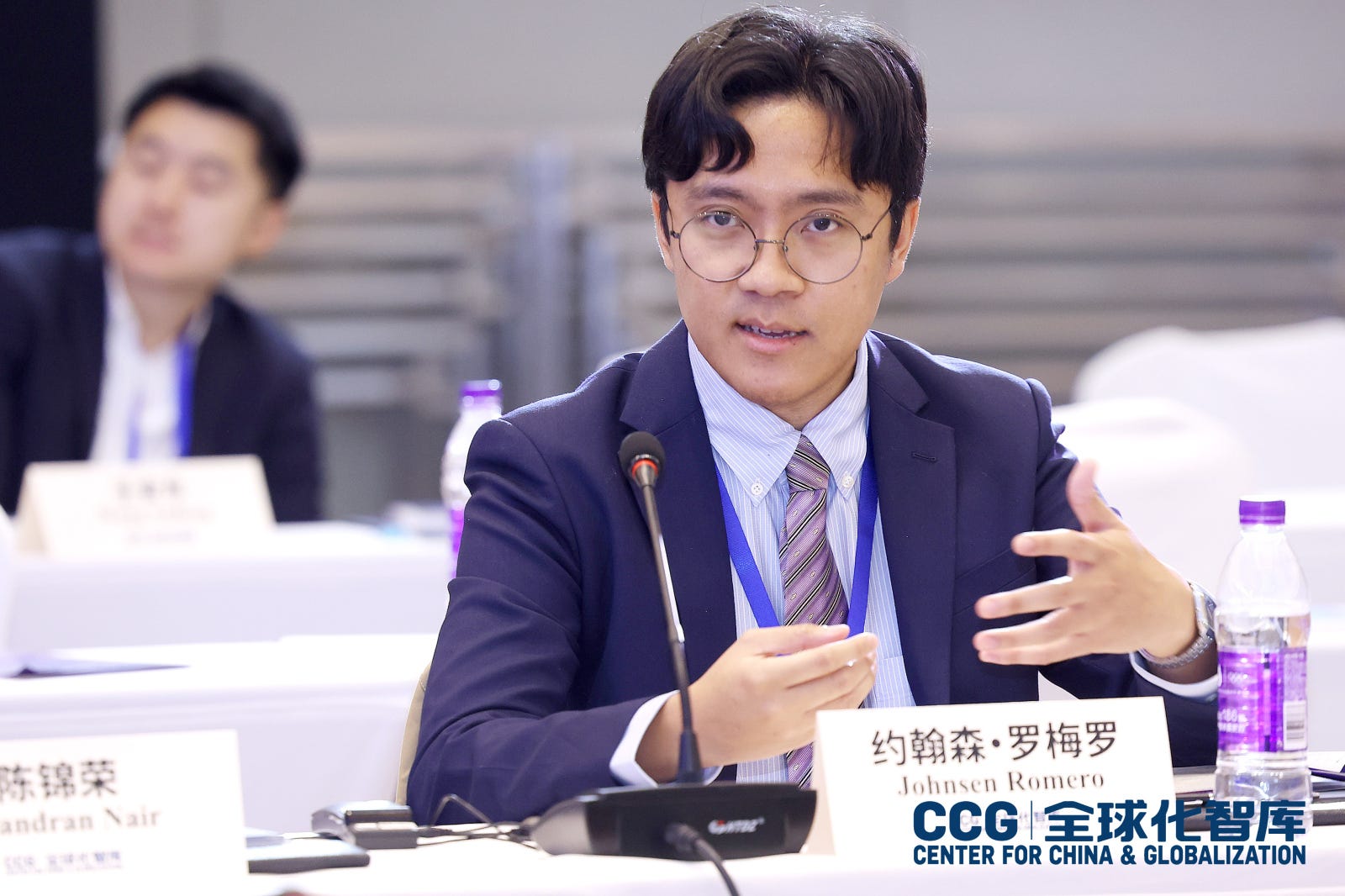
Thank you, Zoon. I am happy that there was a mention of ASEAN just now, because that is something I am going to delve into, given the conversations we have been having about scarcity, living in reality, and the global majority—or, for the purposes of this session, the Global South.
I arrived here in Beijing from Manila earlier this month, where the government has declared a national energy emergency, and where gas stations are pasting extra digits onto their signs as fuel prices have reached record highs. I think what we are seeing now is that geopolitics is something ordinary people are feeling. In Southeast Asia, the region is experiencing the fallout of a great-power war in the Middle East that is not of its own making.
I can speak about the Philippines: the government is negotiating sanction waivers from Washington to purchase Russian oil. The government’s energy secretary put it best recently, just this week, when she said that it was ironic that we have to ask permission from the country that caused the problem.
So I want to address the theme of this hour: How does the Global South manage great-power behaviour when we are looking at all the downstream consequences of unilateralism, disregard for international law, and the inconsistency between how we define order and where it is supplied?
I think all of this is growing more apparent with every passing year, but it is also not just a theoretical question for ASEAN. In Lebanon last month, three Indonesian UN peacekeepers were killed. Two days ago, another one died from the very same incident. UN investigators have already concluded a government that was responsible, but there is little accountability being demanded by those that would call themselves the stewards of this international rules-based order.
So where does this leave ASEAN and the Global South? I think the region’s governments cooperate as a matter of necessity. I think a lot of colleagues here are conscious of that. They know that the collective voice of the bloc is more effective in dealing with the great powers and that banding together creates this institutional legitimacy, record, and centrality that compels great powers to engage Southeast Asia and also to engage with one another.
We saw last year at Malaysia’s ASEAN summit that it was the backdrop for the top diplomats of the U.S. and China to meet for the first time under this White House. What we are seeing is not that ASEAN can decide decision-making here in Beijing or in Washington, but that it is a proven regional anchor that cannot be ignored by either of these countries, that it is a trusted platform to normalise great-power dialogue and to exercise great-power responsibility, where the opportunities for doing so elsewhere are quite scarce.
So if regional blocs are more effective than the traditional international institutions that we think about, it is because this region here is increasingly questioning the order that upholds those institutions. I would like to recall this year’s State of Southeast Asia survey from the ISEAS–Yusof Ishak Institute, an annual one. Their findings showed that less than a quarter of the region’s respondents expressed confidence that the U.S. provides leadership for the rules-based order and abides by international law. Who does? For the first time in this survey, respondents said that ASEAN itself is the best expression of a rules-based order and international law.
So I return to the Middle East. The region is being told to uphold a rules-based system that is facing a crisis of legitimacy. I think we all agree on that. But it is also a system that is not very representative of Southeast Asia’s interests, when it is Indonesia, Cambodia, and Malaysia who are the biggest contributors to the UN peacekeeping mission in Lebanon, for example. It is not representative when half of ASEAN members see a reason to join BRICS or the Board of Peace. And it is not representative when it took a Canadian prime minister in Davos to inform a European audience of something that is not new, but something that Southeast Asian leaders have been saying for decades, year after year, and at the podium of every UN General Assembly: that the international order cannot function if the law of the jungle is treated as international law.
So what we see today is an affirmation of ASEAN’s necessity: that it is a bloc that lends voice and agency to countries where legacy multilateral institutions and a rules-based order do not. While discussions of UN reform are important, I think they cannot be the only discussion, and New York cannot be the only place where those discussions take place.
We know here that great powers act in their own self-interest. For the Global South, it is important to do the same and to do so together. While the war is afflicting Southeast Asia today, and those in Europe and North America tomorrow, I think we have reached this point because international law, the rules of diplomacy, and basic first principles have been repeatedly violated for far too long.
The theme of this roundtable is forging cohesion. Amidst an unravelling of the global norms that we are all talking about, I think ASEAN’s ability to channel great-power responsibility is a meaningful way to preserve multilateralism, even in limited forms.
I think the deficit of international responsibility is an opportunity for the Global South. It is Malaysia that brought the U.S. to the region to champion conflict mediation last year between Thailand and Cambodia. It is Pakistan that is currently shuttling back and forth between here and the Middle East to enlarge China’s role in a regional Middle East peace process.
So regional blocs and proactive members of the Global South have the ability to seize the initiative and to create opportunities for more multilateralism, where we are seeing it recede the world over. I think it is all the more important for the Global South and Southeast Asia to insist upon the great powers that they own up to their responsibilities where interests serve them, uphold restraint where challenges test them, and embrace coexistence where peace demands it.
So I will leave it there.
Zoon Ahmed Khan
Thank you. And also to hold powerful countries accountable. How can we collectively do that? Thank you for a very important intervention.
Now let us invite Professor Rong Ying, former Vice President of the China Institute of International Studies, who has deep expertise on South Asia and the Global South. Your thoughts—and I think especially maybe from a Chinese perspective—what really is the Global South, and how can it move forward? Thank you.
Rong Ying, former Vice President of the China Institute of International Studies
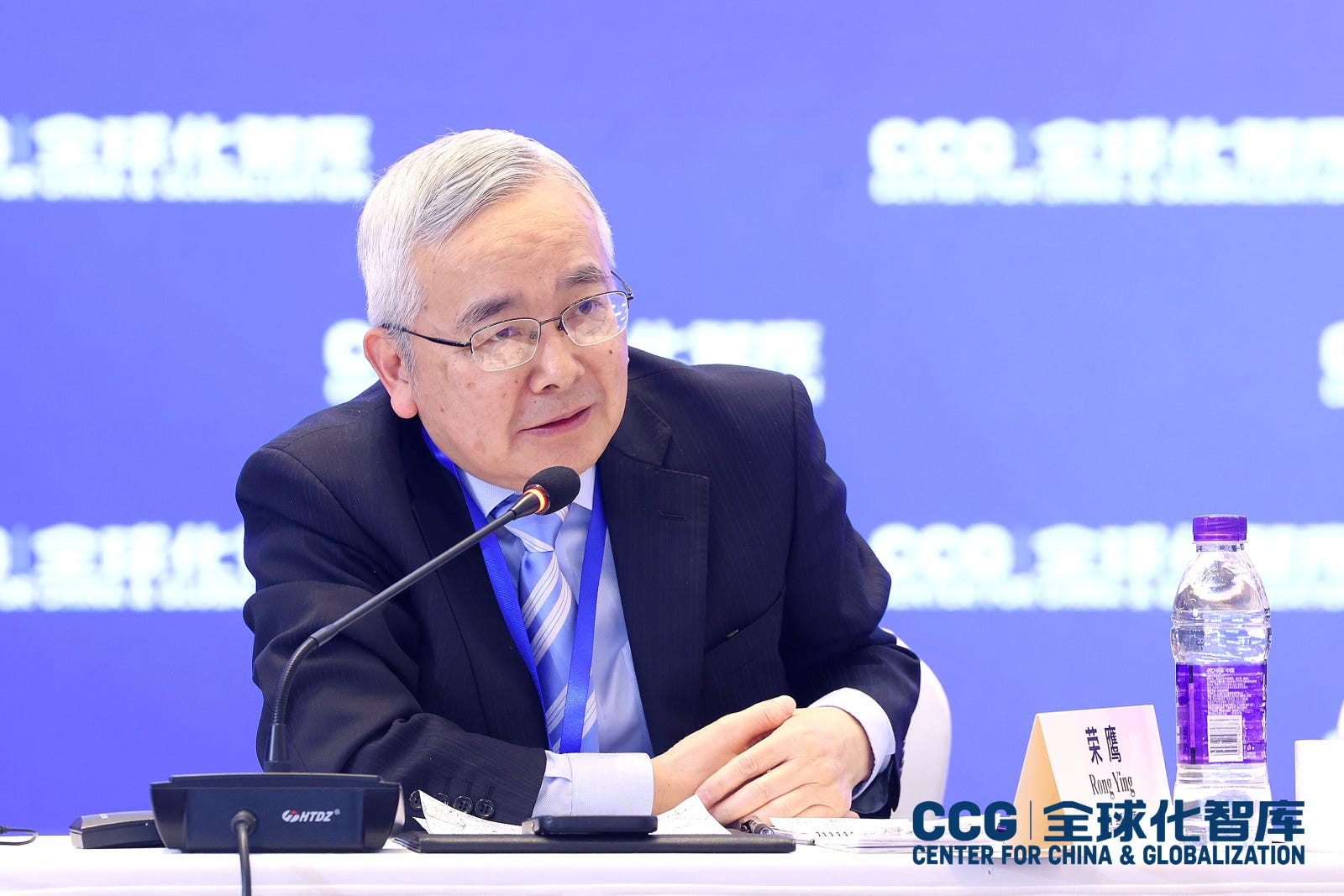
Thank you so much. It is indeed a privilege to speak at this forum, and I have learned so much. The only thing I want to say is that I do not have the answer, but let me share a few points which I hope can help the panel see if we can get some ideas of where the answer will be lying.
The Global South—nobody knows, or nobody can explain, either conceptually or in any other way, what its membership is. But for me, certainly, I think the majority of members of the international community are unhappy or uncomfortable with the way the world is running, leaving aside the United States, because the United States is not happy about it.
Anyway, let me start with my understanding of the ongoing transformation that the Chinese always say is “unseen in a century”, or “unseen in 100 years”, and its impact on this group of countries in the international community.
I think we have seen that more and more Global South members feel that they do not want to be pushed around and do not want to be forced to take sides. They see it as more and more important to achieve, or to have, some kind of strategic autonomy. This is, I think, very strategically significant for the Global South, which has cherished so much the importance of sovereignty, territorial integrity, security, and so on and so forth.
The second challenge, if I can call it a challenge, is of course again very much related to development. The challenges arising from the deficit of globalisation, or the end of global super-globalisation, and the restructuring or reorganisation of global supply and value chains, either as a result of geopolitics or other changes, make the Global South extremely, or even more, vulnerable in terms of their development goals.
Of course, the introduction and advancement of technology, represented by AI and others, make this situation even more complicated. We are seeing a growing gap.
Last but not least, I think the differences or disputes among the Global South have also been growing, largely because of the different kinds of progress made among themselves. If one wants to look at these big or major emerging economies, represented by China, India, and others, it is also a result of different emphases in their priorities to achieve development.
Last but not least, either because—I do not think by design, but possibly as a result—we have seen, even in terms of questions related to, for example, what many people talk about, the trade deficit with China, or the overcapacity problem, and so on and so forth. I do not think this is by design, not necessarily, but as a result. These changes happening around the world are making cohesion in the Global South more challenging, but also probably more necessary and more imperative.
The question is how we can capitalise on this and advance the goals we are looking for. I think possibly we need to have three Rs.
First and foremost, we need to redefine our goals. Instead of looking at one or two particular issues,I think we have been are all unhappy with the international order or the rules. And how that new order or new system is going to be built is something I think that can unite the Global South in general. At least, we can say that nobody wants to see the world, as the Chinese said, “regress into the law of the jungle.”
Secondly, we need to reimagine the role of the Global South. Instead of being a group that can always say no, can we say yes in terms of providing answers and making our contributions, no matter how little or insignificant they may be? As other colleagues have said, at least in the ongoing war in Iran, Pakistan has played a very important role in making peace.
The last R is that we need to be more focused on the priorities. Clearly, there are issues that are very much at stake for development, and for some developing countries, even survival issues—energy, food, and, as we saw during COVID-19, public health issues, and so on and so forth.
Related to that, we need to improve our own internal governance. Good governance definitely matters much in this regard. Capacity building of the Global South is very important.
Last but not least, related to refocusing on priorities, is South-South cooperation. More efforts should be made to share technologies and knowledge. That leads to my last point: China has announced that it will always be a member of the Global South. China has put forward the idea of building a community with a shared future, as well as the four global initiatives. Most importantly, in terms of development traditions, China’s 15th Five-Year Plan has definitely showcased China’s vision and efforts that they want to make in terms of how to adapt to these changes.
On diplomacy in particular, again, I am not going to repeat that point, but look at how busy the leadership has been, and how important it is—you need more poles on Tiananmen Square, because there are too many heads of state visiting and you need more poles to put up their national flags.
Thank you very much.
Zoon Ahmed Khan
Thank you. The problem is not just defining the Global South, or what it is, but really how to put our own house in order, what to reprioritise, and the role China is increasingly playing. Thank you for a very important intervention.
Now let us invite Song Yaoming, Senior Fellow at the Center for China and Globalization. Please.
Song Yaoming, Senior Fellow at CCG
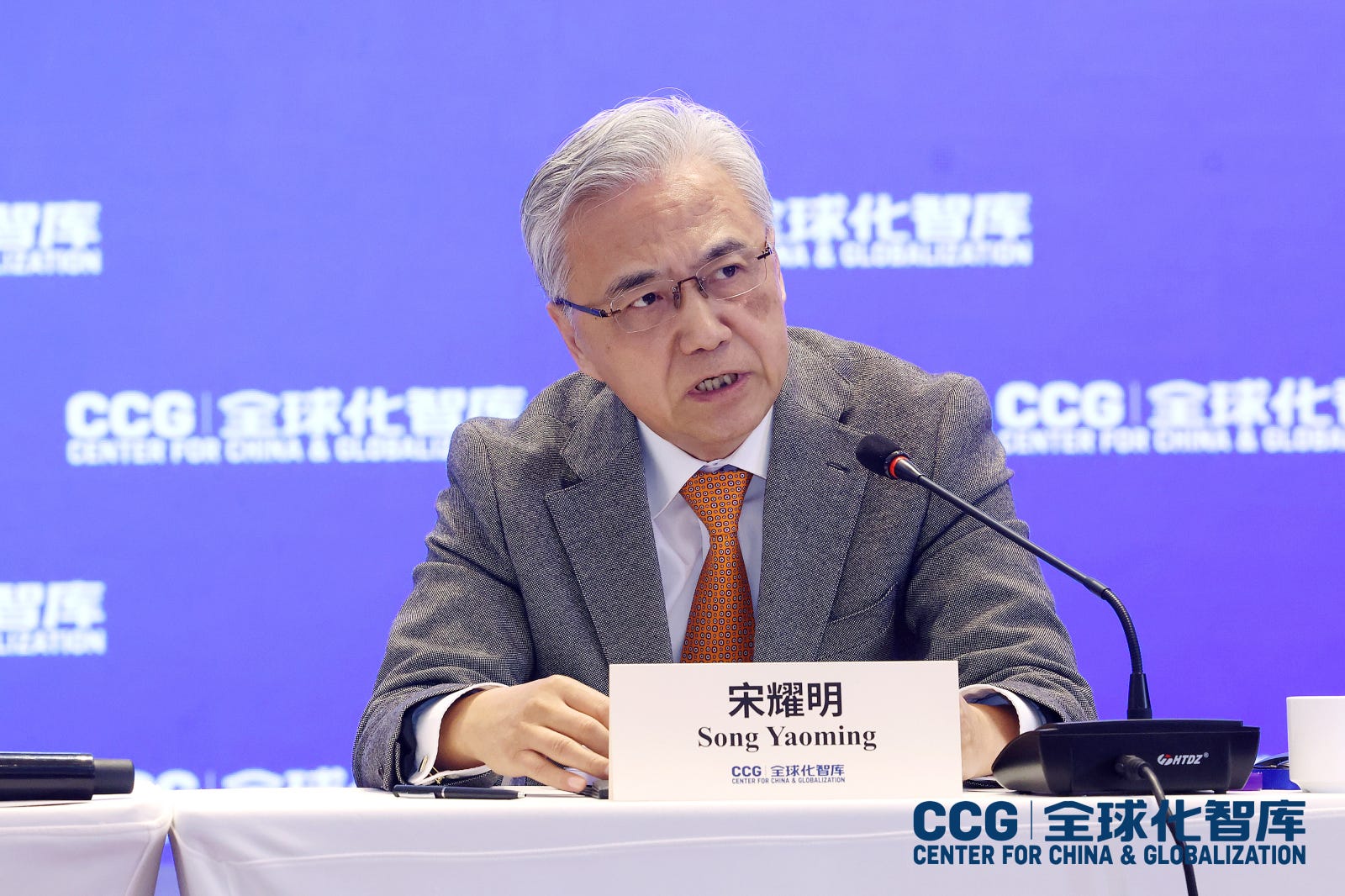
Thank you, Zoon. Thank you for the opportunity to discuss the Global South, forging cohesion, and defining a new era of partnership.
Let me begin with a simple question: What kind of cohesion is actually taking shape across the Global South?
Let me be clear. The Global South is not emerging as a unified bloc, but neither is it fragmenting in any meaningful sense. What we are actually seeing is the rise of a loose, more pragmatic, function-driven network.
The real divide today is not between unity and fragmentation. It is between narratives and delivery. There is no shortage of narratives, but for most countries across the Global South, the real question is very simple: Who can actually deliver in practice?
Cooperation is increasingly defined by four tests. Can products be built? Can they be financed? Can they function? And can they scale? If the answer is yes, cooperation moves forward. If not, it stalls, regardless of political alignment.
This helps explain why more flexible and non-exclusive frameworks, such as the Belt and Road Initiative, continue to attract participation—not because they create alignment, but because they lower barriers to entry and focus on implementation.
So the real risk is not structural fragmentation. It is something more fundamental: the widening gap between ambition and execution. If that gap is to be narrowed, three shifts are critical.
First, from identity to function, with a focus on areas such as digital infrastructure, green transition, and supply chains.
Second, from uniformity to flexibility, accepting modular, variable-speed cooperation.
Third, from statements to systems. This is where multilateral institutions remain essential. Organisations such as the United Nations Conference on Trade and Development, the United Nations Industrial Development Organization, and the World Trade Organization continue to provide critical platforms for trade capacity-building, industrial development, and rule-based coordination. They serve as important anchors in an increasingly complex and interconnected landscape.
At the same time, policy platforms such as the Center for China and Globalization play a useful role in facilitating dialogue, narrowing perception gaps, and supporting more predictable cooperation.
Let me close with one observation. The future of the Global South will depend less on uniform positions and more on the ability to expand connections, and in doing so, to forge real cohesion through practical cooperation and to define a more inclusive and sustainable era of partnership in an interdependent world.
Thank you.
Zoon Ahmed Khan
Thank you so much. It is important to acknowledge that our challenges are not just imagined or about mobilisation. Many of them are also quite tangible.
I will mention that the International Organization for Mediation, IOMed, which was recently initiated, could also play an important role in some regional rifts that are holding some Global South countries back. We should have more platforms to engage in dialogue and move towards pragmatism.
With that, let us invite the last speaker of today’s panel: Max Stauffer, CEO of the Simon Institute for Longterm Governance. I know you have some thoughts on AI, emerging economies, and related issues. Please, the floor is yours.
Maxime Stauffer, co-founder and Chief Executive Officer of the Simon Institute for Longterm Governance
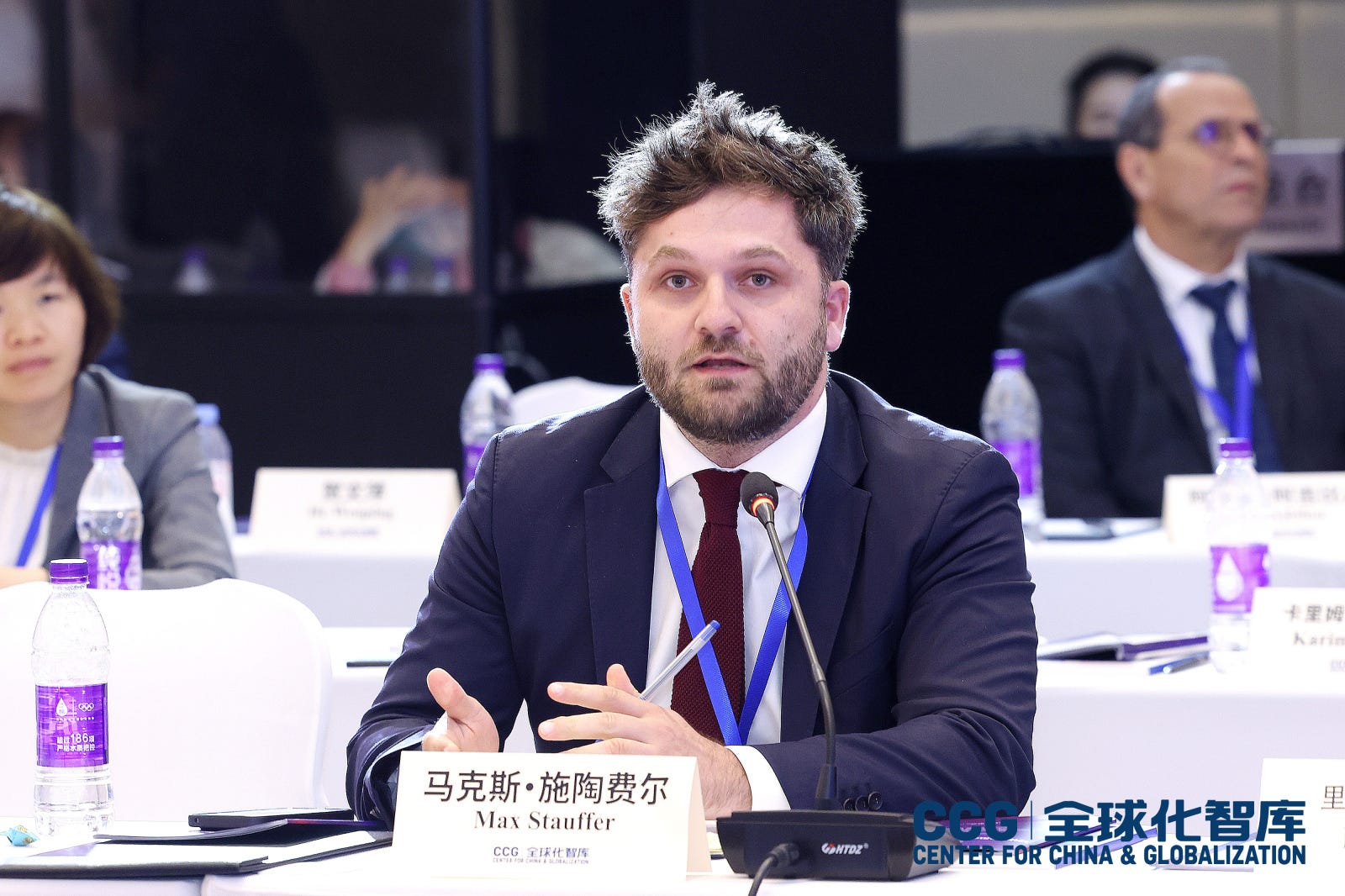
Thank you very much. It is a pleasure to be the last speaker. Thanks to the audience for staying so long.
I work with the Simon Institute, which is a think tank based in Geneva, Switzerland. We specialise in the international governance of AI. As a Swiss citizen, I do not think I can claim anything on behalf of the Global South, or the global majority, or whatever you call it. But in the last years, I have been advising the G77 plus China bloc in negotiations at the UN, specifically on AI governance. So I can share some thoughts that I have observed there.
One is that, in a UN context and on AI, the G77 has expressed a united front. It has found common ground and a common voice. It has actually secured progress on AI governance, despite the lack of willingness on behalf of the U.S. and European countries. That was a massive win, and it was quite unexpected.
I would like to tackle one of the issues that stood out in this debate, and that is the pursuit of open source. Global South countries, the G77, have been fighting for an open-source approach to AI. In many ways, it makes a lot of sense. Open-source models allow more users to access those models because they can access them more cheaply, potentially even more freely. Users can also contextualise and adapt those models to local realities. They can also run these models with much less compute. In so many ways, open-source AI is a good strategy for Global South countries.
But we do need to step back and contextualise open source in the trajectory of AI development.
What we have known over the past decade is that AI capabilities are on an exponential trend, and we are seeing increasingly capable AI models in the world. In the last years, we had chatbots. Last year, we had the emergence of agents—AI models that can take actions and decisions on behalf of humans. Maybe in the next few years, we will have multi-agent systems at scale, with multiple AI agents starting to interact with each other.
So what we see is that we have AI models that are increasingly powerful, and therefore also increasingly unsafe, because we do not yet know how to control them. That might also increase misuse risks. The problem with open source is that it allows users to remove the guardrails that are meant to make those models safe. Those open-source strategies also tend to weaken the liability of developers for the misuse of those models.
So, Global South countries, by choosing an open-source AI strategy, expose themselves to more risks, whether safety risks or misuse risks, and also expose themselves to being more liable for those risks.
You may tell me, “Yes, Max, but we will see the shocks, we will see the problems of AI, and then we will act.” The problem with AI is that we might actually not be able to see the shocks. We might be in a boiling-frog scenario where the shocks are invisible.
Ten years ago, there was a consensus that connecting AI systems to the internet was definitely something to avoid, because imagine connecting AI agents to the internet: they can cause a lot of harm by leveraging web pages, etc. Well, we did connect AI systems to the internet last year, and yet nobody said anything in the international community. Nobody. And that was a shock from an AI standpoint.
So we do need to act in some ways. One thing that I recommend Global South countries do is to demand a safe, open-source governance strategy from the frontier AI developers, namely the U.S. and China, as the only way for them to access AI in a safe manner.
Thank you very much.
Zoon Ahmed Khan
Thank you so much. With that, we cannot conclude—I mean, it is a very important topic. It is about almost 80 per cent of the world’s population. But one thing I would like to say is that, as the Global South and as emerging economies, an opportunity is presenting itself: we are, by default, becoming more significant. Now the question is: how do we maximise this opportunity?
If I want to summarise what all the panellists have spoken about, there are three levels of action that need to be taken.
Number one is domestic and pragmatic. We should be able to understand ourselves and focus on the SDGs, basic development, people-centric development, and good governance. That has to be the priority for every developing country.
Secondly, at the regional level, we need to be able to address the challenges we face. A lot of Global South countries have issues with each other. Go to the platforms that you need to go to in order to address them, or compartmentalise those issues of trust in order to prioritise regional connectivity. This has to be done, and it has to be done proactively.
Third is how we increase our representation in an international order, in a law-based order, in a UN-centred order that we all believe in but would like to be better represented in.
So these are the three challenges. There is a lot to cover, but I want to thank each and every one of the panellists. This was really a learning experience for me. Thank you so much, and thank you to the audience.
The 12th China and Globalization Forum Held in Beijing

The 12th China and Globalization Forum, hosted by the Center for China and Globalization (CCG), was held in Beijing on Sunday, April 26, 2026.
Transcript: Opening Ceremony of the 12th China and Globalization Forum
The 12th China and Globalization Forum, hosted by the Center for China and Globalization (CCG) and co-organized by the China Association of International Trade (CAIT), the China Society for World Trade Organization Studies (CWTO), the China-United States Exchange Foundation
Transcript: Opening Roundtable of the 12th China and Globalization Forum

The 12th China and Globalization Forum, hosted by the Center for China and Globalization (CCG) and co-organized by the China Association of International Trade (CAIT), the China Society for World Trade Organization Studies (CWTO), the China-United States Exchange Foundation
Transcript: China-U.S. Roundtable of the 12th China and Globalization Forum

The 12th China and Globalization Forum, hosted by the Center for China and Globalization (CCG) and co-organized by the China Association of International Trade (CAIT), the China Society for World Trade Organization Studies (CWTO), the China-United States Exchange Foundation
Transcript: China–U.S. Youth Roundtable: A Model for China–U.S. Youth Exchanges

The 12th China and Globalization Forum, hosted by the Center for China and Globalization (CCG) and co-organized by the China Association of International Trade (CAIT), the China Society for World Trade Organization Studies (CWTO), the China-United States Exchange Foundation
Transcript: China–EU Roundtable of the 12th China and Globalization Forum

The 12th China and Globalization Forum, hosted by the Center for China and Globalization (CCG) and co-organized by the China Association of International Trade (CAIT), the China Society for World Trade Organization Studies (CWTO), the China-United States Exchange Foundation