

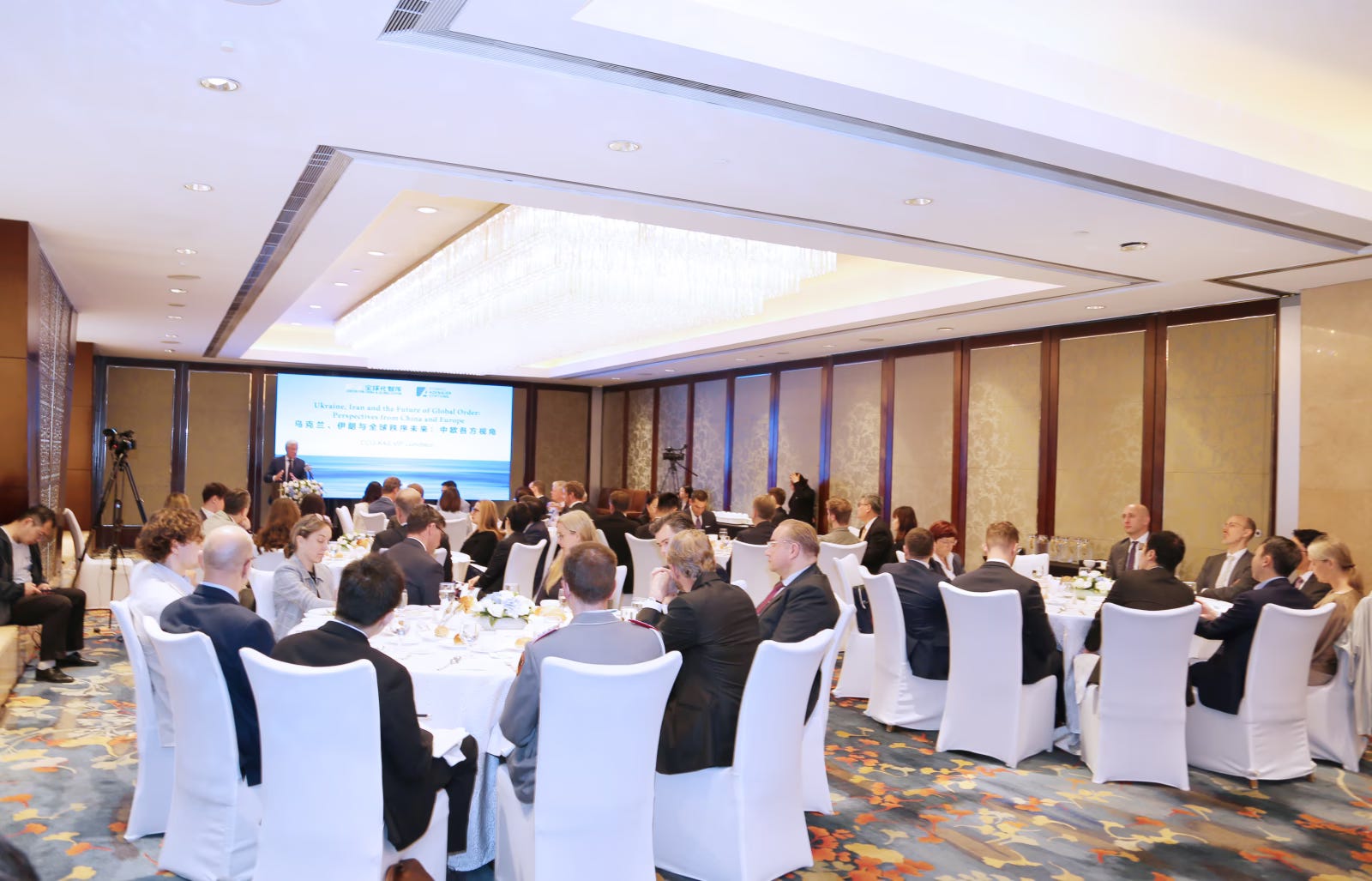
On 15 June 2026, the Center for China and Globalization (CCG), together with the Konrad-Adenauer-Stiftung (KAS), hosted a VIP luncheon in Beijing for a CDU/CSU Parliamentary Group delegation visiting China.
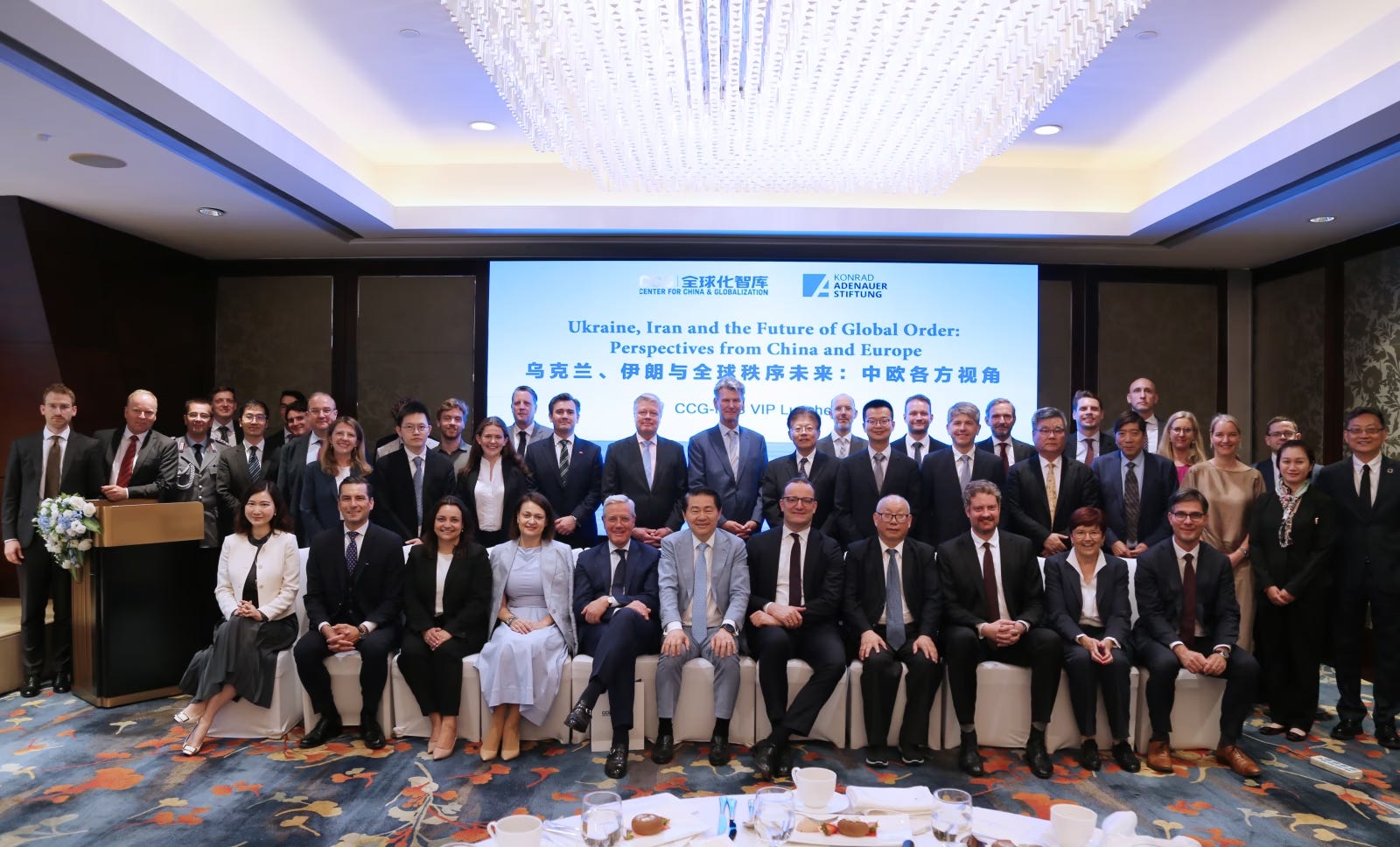
The luncheon, themed “Ukraine, Iran and the Future of Global Order: Perspectives from China and Europe,” was hosted by Mabel Lu Miao, Co-founder and Secretary-General of CCG, and moderated by Henry Huiyao Wang, Founder and President of CCG and former Counsellor of the State Council of China.
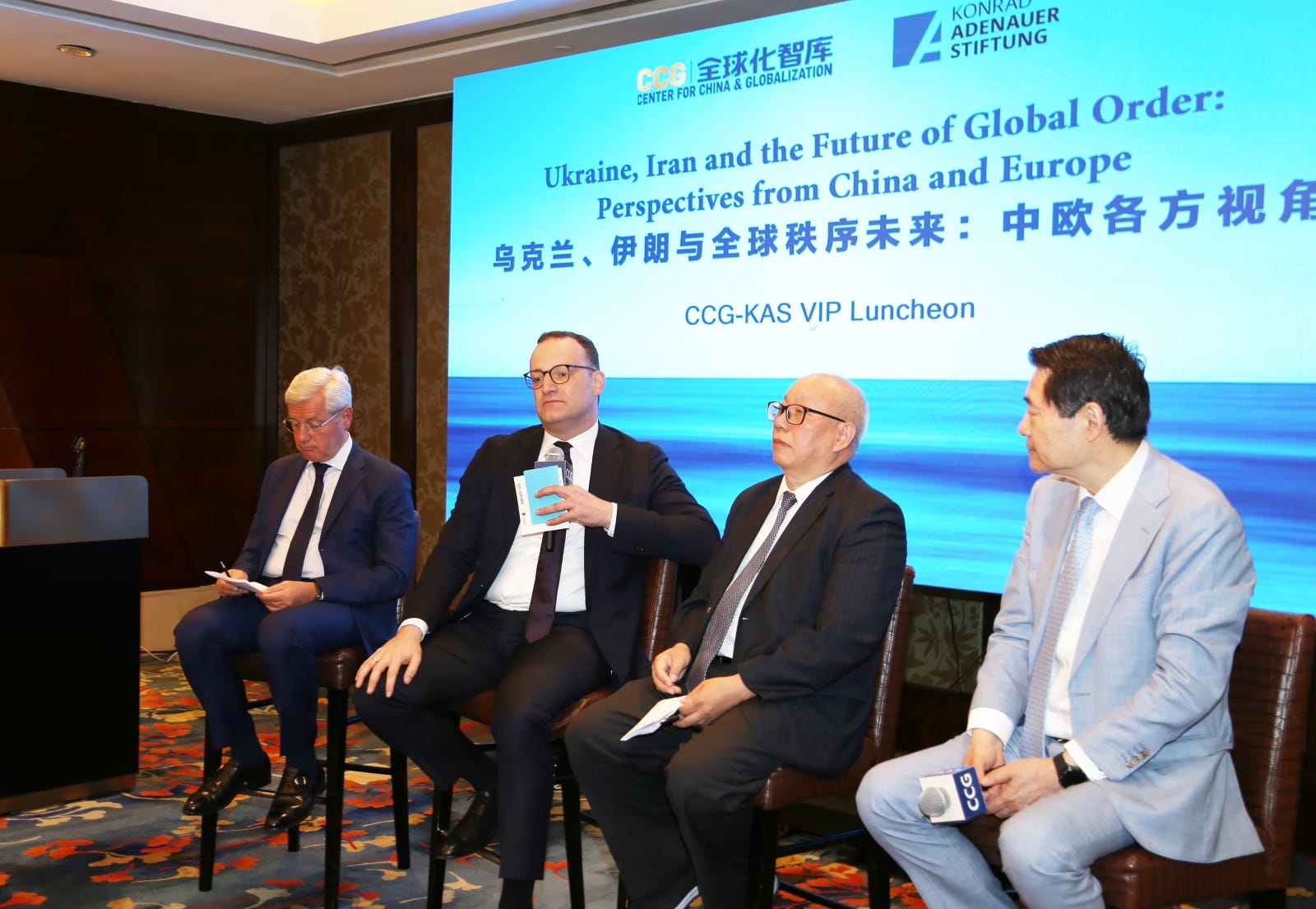
Keynote speakers were:
Jens Spahn MdB, Chairman of the CDU/CSU Parliamentary Group in the German Bundestag; former Federal Minister of Health of Germany
Norbert Röttgen MdB, Vice Chairman of the CDU/CSU Parliamentary Group in the German Bundestag
Huang Rengang, Vice President and Secretary-General of the China Society for WTO Studies, Ministry of Commerce of China
Below is a transcript with slight editing. This transcript is based on the audio recording of the luncheon and has not been reviewed by any of the speakers.
Mabel Lu Miao, Co-Founder and Secretary-General, CCG
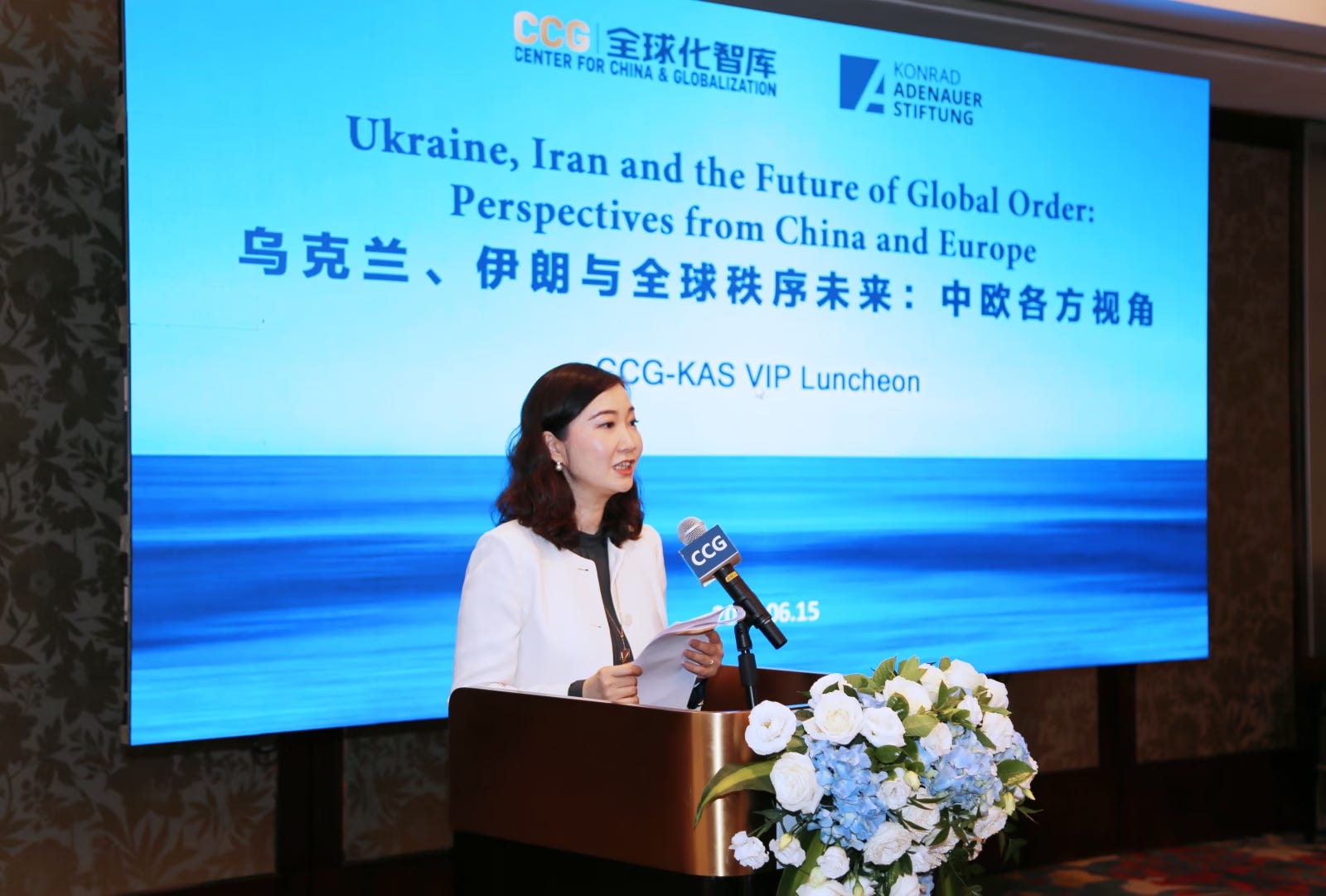
Mr Jens Spahn, Dr. Norbert Röttgen, Your Excellencies, distinguished guests, ladies and gentlemen. Good afternoon. Thank you all for joining us today at the CCG-KAS VIP Luncheon.
Today’s luncheon is a very timely and very themed event. It is our great honour to welcome Jens Spahn, Chairman of the CDU/CSU Parliamentary Group in the German Bundestag, together with a six-member high-ranking parliamentary delegation from the CDU. Mr Spahn paid a visit to CCG a couple of years ago, and we are delighted to have him back with us today. We also extend a warm welcome to Mr Norbert Röttgen, whom we have met on many occasions at the Munich Security Conference and other important events over the years around the world.
Nowadays, escalating conflicts and major power competition have disrupted the global economy and security landscapes. Amid growing geopolitical uncertainties, perspectives from senior policymakers are more valuable than ever. In such a turbulent context, strategic dialogue between major powers has taken on unprecedented significance. Only through frank communication and consensus building can we work out practical solutions to current crises and safeguard global peace and stability? Before we start, let’s take a moment to acknowledge some of our special guests and VIPs who are here.
We have invited representatives from host organisations, distinguished diplomats, government authorities, academic institutions, international organisations, corporate leaders, and media representatives. They are:
Catarina dos Santos-Wintz MdB, Parliamentary Director, CDU-/CSU Parliamentary Group
Nicolas Zippelius MdB, Spokesperson for Development Policy, CDU-/CSU Parliamentary Group
Mark Helfrich MdB, Spokesperson for Environmental Policy, CDU-/CSU Parliamentary Group
Dr Ingeborg Gräßle MdB, Member of the Budget Committee, CDU-/CSU Parliamentary Group
And ambassadors to China:
H.E. Koula Sophianou, Ambassador of Cyprus
H.E. Mikko Kinnunen, Ambassador of Finland
H.E. Thorir Ibsen, Ambassador of Iceland
And the diplomats from different embassies to China, including Embassy of Australia, Embassy of Canada, Embassy of Croatia, Embassy of Denmark, Delegation of the European Union, Embassy of Germany, Embassy of Hungary, Embassy of Norway.
Also from the Chinese Policy Circle, including:
Li Shen, Deputy Director, Germany and Austria Division, Bureau VIII, International Department of the CPC Central Committee (IDCPC)
Huang Rengang, Vice President & Secretary-General of the China Society for WTO Studies, MOFCOM
Han Bing, Former Deputy Director General, Department of European Affairs, MOFCOM
Huo Jianguo, Vice President, China Society for World Trade Organization Studies (CSWTOS), MOFCOM
Zhou Xiaoming, Former Deputy Permanent Representative of China to the UN Office at Geneva
Also, we have invited academics, experts, and scholars. We have experts from Beijing Foreign Studies University, Peking University, Beijing International Study University, Tsinghua University, Beijing Foreign Study University. Welcome, all of you.
We also have representatives from German institutions, including GIZ, Hanns Seidel Foundation Beijing Representative Office, Heinrich Böll Foundation Beijing Representative Office, German Academic Exchange Service (DAAD), and corporate representatives from Merck China, Volkswagen China, and other companies.
Please allow me to introduce Dr Henry Hui Yao Wang, founder and president of Center for China and Globalization (CCG) and former councillor of the State Council of China. He previously worked at China’s Ministry of Commerce. He was also a senior fellow at Harvard Kennedy School and currently holds the position of Distinguished Professor at China Foreign Affairs University. Please join me in welcoming Dr Henry Huiyao Wang to deliver an opening remark and introduce our speakers. Welcome.
Henry Huiyao Wang, Founder & President, CCG; Former Counsellor of the State Council of China
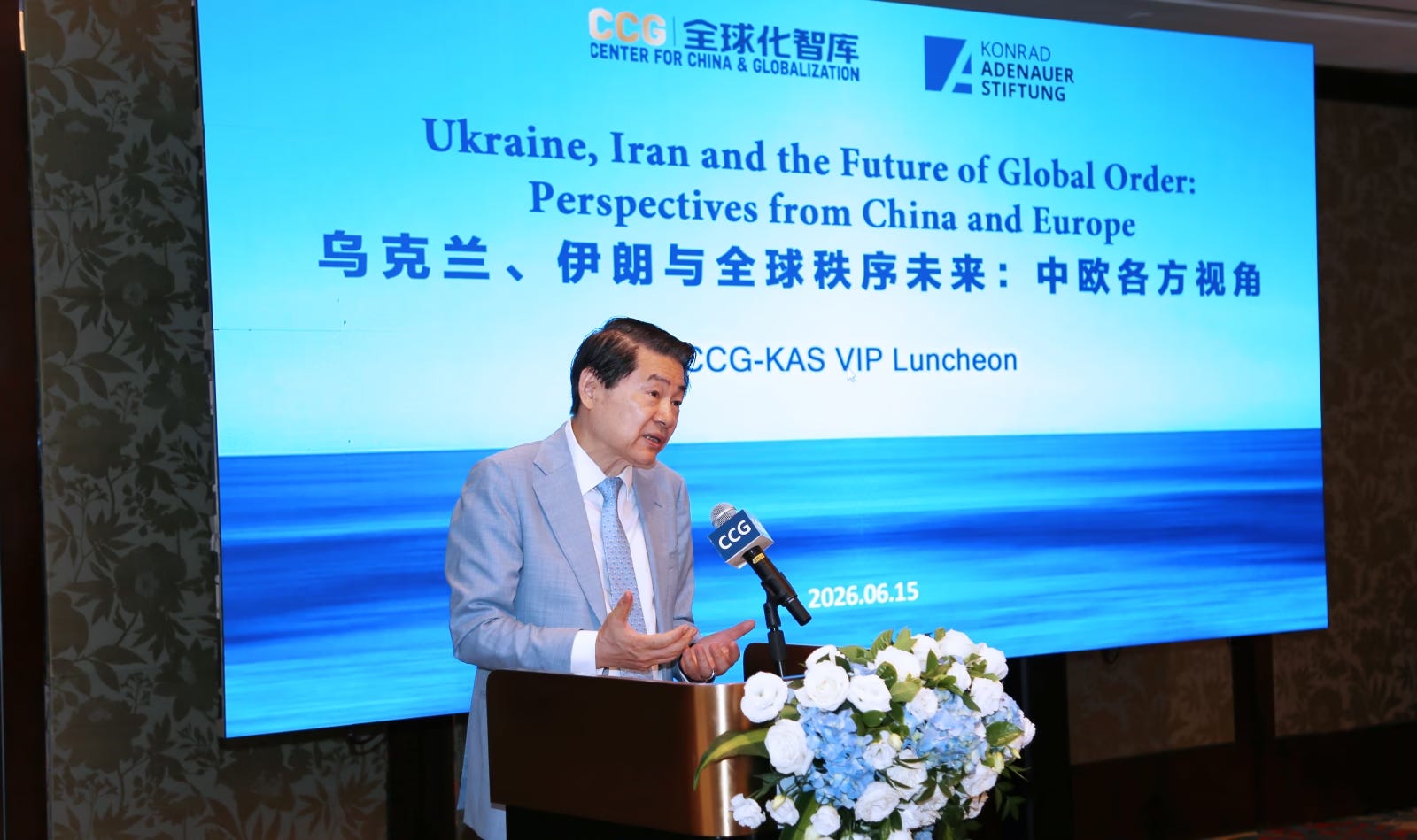
Thank you, Dr Mabel. And so, distinguished Mr Jens Spahn, Minister Jens Spahn, and Chairman of the CDU/CSU Parliamentary Group in the German Bundestag, distinguished Dr Norbert Röttgen, member of the German Bundestag, and Vice Chairman of the CDU/CSU Parliamentary Group, distinguished Excellencies, distinguished guests, and ladies and gentlemen,
It’s really a great honour for us, together with our KAS, to have this very important VIP luncheon, and also on behalf of CCG, I would like to extend our warmest welcome to our German delegation and to all the guests attending the luncheon today.
As we discuss today’s theme, “Ukraine, Iran and the Future of Global Order: Perspectives from China and Europe,” it is highly relevant to the world we face today, which is marked by profound turbulence and uncertainty. The prolonged Russia-Ukraine conflict continues to reshape Europe’s security architecture and disrupt global energy, food, finance, and supply chains.
As a Chinese think tank, CCG has been closely following these geopolitical developments. At the same time, tensions in the Middle East, especially around Iran, nuclear issues, and the Strait of Hormuz, are also affecting energy security and international stability. As Chinese scholars, we need to watch all these developments carefully. At such a moment, the world needs not more confrontation, bloc politics, or escalation, but more dialogue, mediation, multilateral cooperation, and public goods for peace. This is very important. Our German friends, the German parliamentary delegation led by Minister Spahn, have come to China at a very timely moment.
Recently, China-U.S. relations have shown some signs of moving from intense strategic competition towards strategic stability, as both President Trump and President Xi indicated at their summit in Beijing. This is important not only for China and the United States, but also for the world. Hopefully, we can see a more stable China-U.S. relationship, with several important trips already scheduled. I think President Xi is going to visit the U.S. by September, followed by another APEC summit and G20 summit. We hope this will become a positive factor for global stability.
On today’s theme, from the perspective of a Chinese think tank, I would simply say that China has consistently supported the promotion of peace. In February 2023, China released its 12-point position paper on the political settlement of the Ukraine crisis. It emphasised respect for sovereignty and territorial integrity, abandoning the Cold War mentality, a ceasefire, the protection of civilians, nuclear safety, grain exports, and the stability of global supply chains. In May 2024, China and Brazil jointly put forward a six-point consensus. Later, China and Brazil, together with other Global South countries, launched the Friends of Peace group at the UN.
This shows that the Global South is actively trying to participate in addressing this crisis. Developing countries are also paying a price for this war, through higher food prices, energy insecurity, inflation, and disrupted development. So this is also in their vital interest.
Personally, I have previously argued that peace in Ukraine probably cannot rely only on U.S.-Russia negotiations. Any lasting peace must involve Ukraine, Europe, the United States, the United Nations, Russia, and, of course, Global South countries and other stakeholders. One possible proposal I put forward at the time was that we should perhaps have a UN summit bringing together the P5 countries, as well as Ukraine and the European Union, to discuss a ceasefire, security guarantees, reconstruction, and a long-term peace settlement.
After a ceasefire, one of the things I think is important is to explore how a UN-backed peacekeeping force could monitor the arrangement, with participation from European countries and possibly Global South countries such as China, India, Brazil, South Africa, or Pakistan. That is just my personal opinion. I published an op-ed in Foreign Policy before the Alaska Summit, but I think reconstruction will be equally important. Peace is not only about stopping the guns. It is also about rebuilding homes and roads, ports, power systems, schools, hospitals, and other related infrastructure.
Institutions such as the AIIB, the Asian Infrastructure Investment Bank, the New Development Bank, the World Bank, and European development institutions could all play a role in this reconstruction. I was in Berlin just about a week ago, and we had dinner with the State Secretary of the German Federal Ministry for Economic Cooperation and Development. Germany provides a huge amount of development assistance around the world, and it is very important to work together.
The Middle East is also not far from Europe, and as we can see, it is not far from China either. Any major conflict in that region will affect global energy markets, shipping routes, inflation, and supply chains. It will certainly affect China, Europe, Japan, South Korea, ASEAN, and many other countries in different parts of the world.
China’s position on Iran is also clear. We respect the sovereignty and territorial integrity of regional countries. We oppose the use of force. We support the international nuclear non-proliferation regime. We believe the Iran nuclear issue should be resolved through diplomacy and negotiations, not military confrontation.
In this respect, China has also actively worked with Pakistan and other mediating parties. At the recent summit between President Xi and President Trump, both sides said that the Strait of Hormuz should not be closed, that no tolls should be charged, and that dialogue should be promoted. This is really good, and I am sure European countries would also like to see the war stopped, and the strait kept open.
Just today, I think we have seen reports since yesterday that progress has been made on an agreement between Iran and the U.S., and that they are going to sign it on Friday in Geneva. This is a good sign. I think both Europe and China would like to see that. I am sure that in the future, Europe and China, including Germany and China, can continue to play an active role in promoting this peace arrangement.
China’s efforts to promote peace in the Middle East are highly consistent with Europe’s core interests. Europe needs energy security, open shipping routes, and stability in its wider neighbourhood. Preventing a wider war in the Middle East is also essential for averting humanitarian disasters and refugee pressures. So I think this is in all our interests.
Looking ahead, China and Europe, including China and Germany, can work together in supporting future regional peace and reconstruction frameworks, not only for Ukraine, but also for Iran. On reconstruction, we can all work together. Germany has a lot of experience in international development and many good examples of supporting different projects. I think China and Germany can really work together on post-conflict reconstruction and future peacebuilding.
In my final words, China and Europe are both major economies, major trading partners, and important supporters of multilateralism. China and Germany, in particular, have built deep economic ties over many decades, and Germany has been a leading partner in China-EU relations in terms of economic and trade development. These ties not only serve trade and investment, but also provide a foundation for broader cooperation on peace, reconstruction, global governance, and multilateralism.
The world today does not lack weapons; it lacks trust. It does not lack sanctions; it lacks dialogue. It does not lack blocs; it lacks bridges. I really think China and Germany can play important roles. China and Europe can also strengthen strategic communication, reduce misunderstanding, and explore practical cooperation in conflict mediation, humanitarian relief, post-war reconstruction, energy security, and global governance reform.
Once again, I would like to thank Mr. Jens Spahn and Dr. Norbert Röttgen, as well as the parliamentary delegation, for coming to Beijing this time. You have really come at the right time. I hope our luncheon will provide a good platform for dialogue and communication. I look forward to hearing more keynote remarks from our German friends and Chinese friends.
Let me now turn to our next important speaker. I would like to introduce Minister Jens Spahn.
Minister Jens Spahn is Chairman of the CDU/CSU Parliamentary Group in the German Bundestag. He is also a former Federal Minister of Health. Jens Spahn is a German politician from the Christian Democratic Union, the CDU, and has been a member of the German Bundestag since 2002. Since May 2025, he has served as Chairman of the CDU/CSU Parliamentary Group in the German Bundestag.
We had the honour of hosting Minister Spahn at CCG about two years ago, so it is a great honour to see you again. Minister Spahn is from North Rhine-Westphalia and holds a bachelor’s degree in political science. In 2002, at the age of only 22, he was directly elected to the Bundestag and has since been re-elected in his constituency. From 2015 to 2018, he served as Parliamentary State Secretary at the Federal Ministry of Finance. From March 2018 to December 2021, he was Federal Minister of Health in Chancellor Angela Merkel’s fourth cabinet. His tenure included the COVID-19 pandemic, during which he played a central role in Germany’s health policy response.
After leaving government, Minister Spahn remained an influential figure in the CDU/CSU Parliamentary Group and served as Deputy Chairman during the opposition years before being elected Chairman in May 2025. He is considered one of the key decision-makers and strategists within the CDU, and currently one of the chief negotiators of the German government’s reform agenda.
Without further ado, let us warmly welcome Minister Spahn to give his keynote. Welcome.
Jens Spahn MdB, Chairman of the CDU/CSU Parliamentary Group, Germany
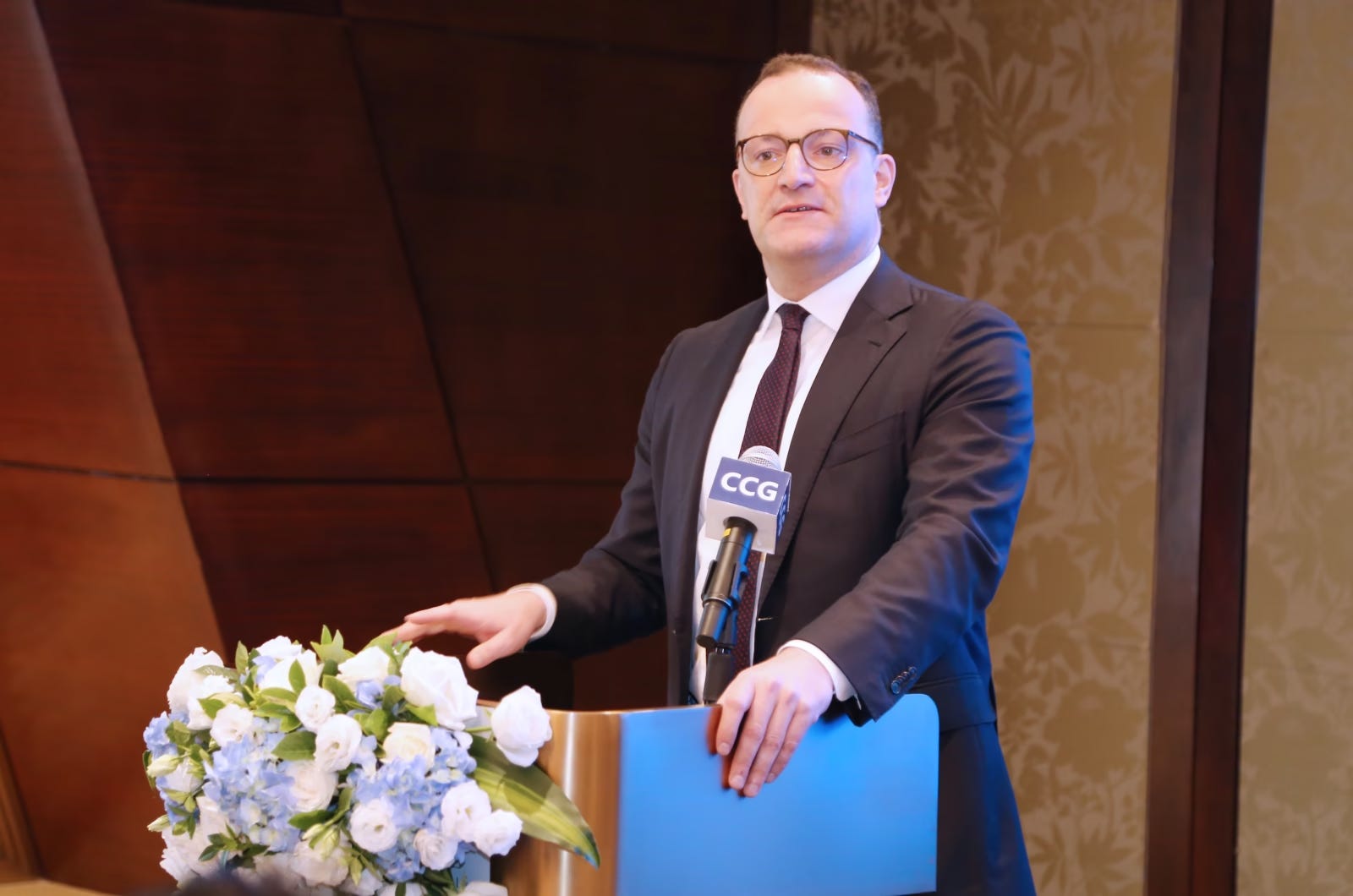
Thank you, dear Henry, ladies and gentlemen, Excellencies, colleagues of the German parliament.
We are here for two days in Beijing for discussions like this. Thank you very much for hosting us again. You’re right, it’s the second time. In the home region of Norbert Röttgen in the Rhineland, after two times, you would say it’s a tradition, but we are building up on one.
The most important difference to two years ago is you have a continuity of government here, but we had a change of government since then, and we are back in government.
Besides this luncheon, the most important part of our journey is tomorrow, the party dialogue that we have with the Communist Party. And actually, you would wonder why conservatives from Germany have a party dialogue with the Communist Party of China. It might not be the most obvious at first glance. But then we actually made the experience over many, many of these meetings — meanwhile, every year we meet in Berlin or Beijing — that it makes really sense to have this open and frank dialogue between the two parties, because it is a good chance in an annual meeting to really discuss what needs to be discussed in a very, very friendly and at the same time very frank manner. So, we are looking forward to it tomorrow with Minister Liu.
Thank you very much to the Center for China and Globalization and the Konrad-Adenauer-Stiftung for hosting this event once again. Henry Wang, we last spoke on the sidelines of the Munich Security Conference. It was a very stimulating exchange, and I remember it with great appreciation.
The Konrad-Adenauer Foundation began its engagement in China already in the 1980s, at a time when the world was facing major transformations. A few years later, the global order was reshaped. And today, once again, we are speaking about the future of the global order. This sounds ambitious, and it is serious, but that does not mean our influence on these developments is small. On the contrary, the fact that we are discussing European and Chinese perspectives today shows how important our relationship is. China is the second biggest, Germany is the third biggest economy in the world. China has the second biggest military budget in the world. Germany, meanwhile, has the fourth biggest military budget in the world.
So, for many, many reasons, it makes sense to have a frank and proper discussion on what’s going on. We know, of course, as Germany, we are not such a superpower as the U.S. or China are, but I’m very, very happy that there are many representatives of our European friends, together with the European Member States — as a European Union member, Germany aligned with the partners in the European Union — we can make a difference.
By the way, that is not our main topic today. One of the main topics today and tomorrow, in all the talks, will be the economic relationship between the European Union and China. There are more mutual dependencies than one might see at first glance.
Of course, we discuss rare earths, subsidies, overcapacity, technology, and all of this. But I dare to say that we might need each other, on both sides, more than some may realise these days. Because obviously, the European market is also quite important for a country that has overcapacity and needs to sell somewhere. So, we should properly and frankly discuss what needs to be discussed in that area.
But today and here, we have another focus. Europe and China both want stability. Our relationship must be based on reciprocity. This reciprocity can create stability. We should preserve this understanding and act accordingly. Wars, unrest, and hegemonic behaviour lead to instability.
This is especially true for Russia’s war of aggression against Ukraine. It severely threatens our security, it violates our understanding of freedom and sovereignty, and it harms our economies. It also harms the People’s Republic of China. China’s growing support for this war is the greatest challenge in its relationship with Europe and Germany.
And what needs to be understood is that this war, and meanwhile, two wars in our neighbourhood, of course, are changing our the European perspective and perception of sovereignty and security. The discussion on de-risking the question that we should be more cautious when it comes to foreign technology in our grids, or our telecommunication grid, or energy grid. Many other discussions, of course, are catalysed by this war and the changing perspective. The longer this war goes, the more this perspective will change, and that needs to be understood outside of Europe as well.
And, of course, there’s a question: when actually is this war a bigger burden on our relationship between China and the European Union than it is benefiting those who are engaged in different ways? China claims neutrality, but not all of its actions reflect it. I hope that the People’s Republic will condemn this war. I hope for stronger trust between Germany and China. This trust would grow if China ended its political, economic, and technological support for the aggressor. Russia has no interest in stability. It misjudges reality. By the way, Russia has the GDP of Italy, it is losing ground, and eventually it will fail. China, on the other hand, can play a much stronger, stabilising, and constructive role in this conflict, a role that corresponds to its historical importance. Europe and China could be key pillars of more stable global order.
This also applies to the situation in the Middle East. China is the largest buyer of Iranian oil. It has a fundamental interest in safe shipping through the Strait of Hormuz. The current conflict increases costs in Chinese and European supply chains.
Global economic slowdowns, although threaten China’s and Europe’s domestic economies that are already under stress. To end this, decisive steps are needed to prevent Iran from obtaining nuclear weapons. I’m very much sure this is an interest of Europe and China, both of us, and there must be no arms exports to Iran. You can argue a lot if this war should ever have started, but after it has started, there should be no result that leads to stronger Iranian regime than it was before the war. We can achieve this only together. We should therefore strive to better understand each other’s perspectives.
By the way, yes, discussions are important, declarations are important, but since this is not our first discussion, and many, many declarations have been made after all these discussions, we need some decisions as well that actually start to make a difference. But to be honest, some of the objects from the economic relationship to the Ukrainian war we have been discussing for many, many years now, but there is no real difference. It’s even getting worse. So I would say discussion is important, but we should, I would prefer to come to common decisions as well.
It is my great pleasure to now invite Norbert Röttgen to give a keynote input. He has shaped foreign and security policy debates in Germany for many, many years with clarity, strategic vision, and analytical sharpness.
As one of the leading thinkers of our parliamentary group, he brings exactly the perspective we need at this moment. Dear Norbert, we are very much looking forward to your remarks. Thank you very much,
Norbert Röttgen MdB, Vice Chairman of the CDU/CSU Parliamentary Group
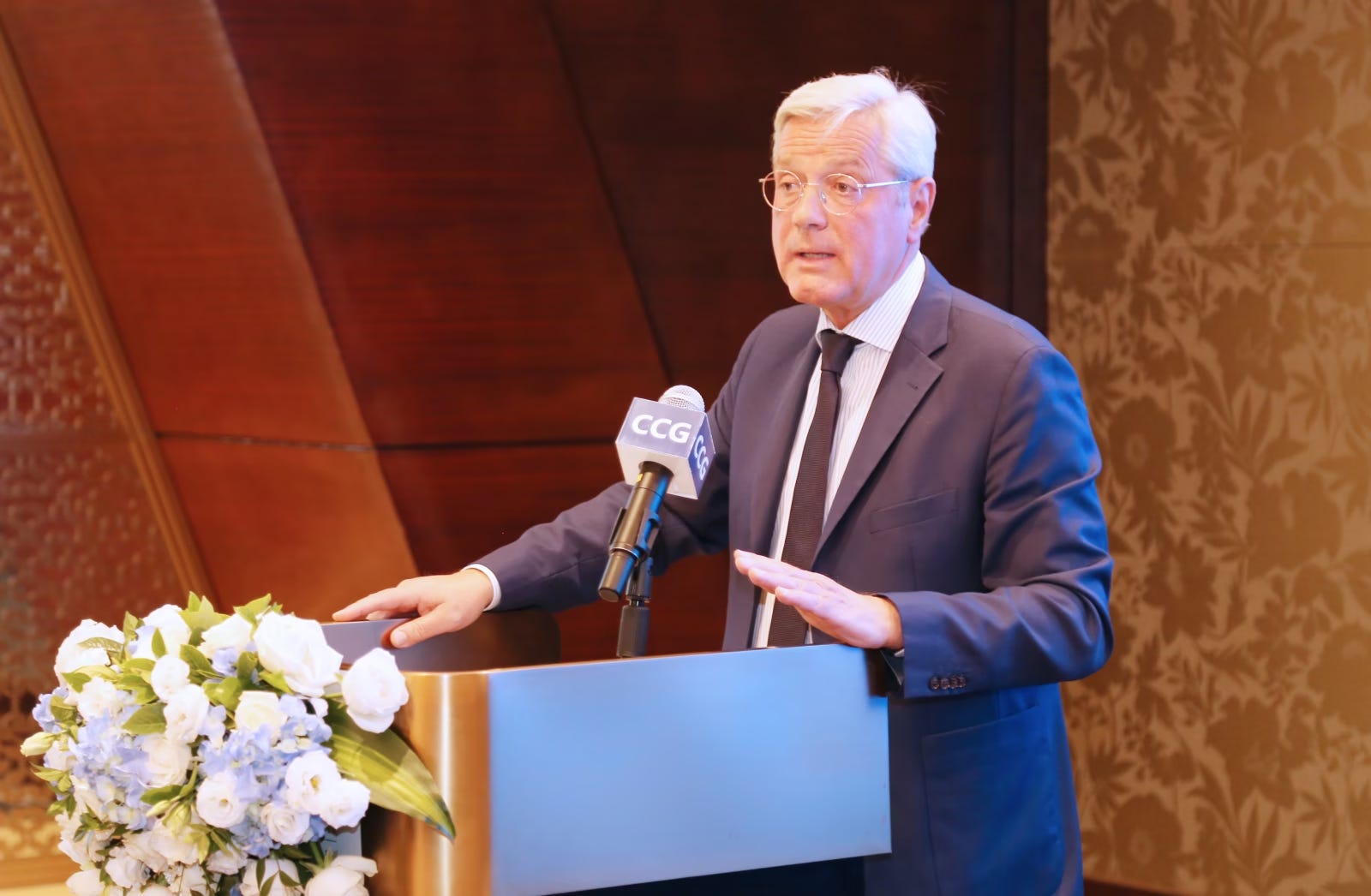
Dear Henry, dear Jens, thank you very much for raising the bar and level of expectation regarding my speech. This is always good to have pressure which makes us deliver better. Dear colleagues, Excellencies, and ladies and gentlemen.
China and Germany are very different countries, but both of us carry considerable international weight. As Jens Spahn earlier outlined, China is a global power. China is the second-largest economy in the world, Germany is the third-largest economy globally, and we are Europe’s largest economy and a central actor within the European Union, whose internal market of 450 million citizens produces roughly the same GDP, slightly more than China does.
What follows from this is very simple. It matters that we, the Chinese people, politicians, scholars, thinkers, and the German counterparts, remain in dialogue. It matters that we understand each other’s interests, perceptions, priorities, problems. It matters that we are candid about where we converge and where our views diverge. It matters for our bilateral relationship, but we share the view and we share the awareness that it’s not only about us. We have an awareness that we are part of a global international community, and this responsibility enlightens our interest and how we define our interests. We have a clear view that our responsibility goes beyond our relationship. We carry and bear responsibility for the international order.
This is why I would like to address three issues that are shaping the international landscape as we are supposed to discuss at this luncheon. It’s Russia’s war against Ukraine; it’s the conflict surrounding Iran and the growing importance of economic international competition, economic statecraft and geoeconomic resilience.
We are very grateful to CCG and to the Konrad-Adenauer Foundation for having created this opportunity for dialogue. As I mentioned, it’s important to stay in a dialogue to exchange our views in order to get a better understanding inside of the problems and challenges we as countries and as the international community are facing. So thank you again for that.
I would like to start with Ukraine, and Jens already outlined the importance of this war that this war has for Germany and for Europe as a whole. Russia’s war against Ukraine is and remains the defining security challenge of our time, and this is really important to see. It’s not one issue, one important issue beside others, but it’s really the defining challenge, whether the return of war that has surprised everybody not only in Europe but across because we thought that war in Europe is a matter of the past and Putin forced us to learn that war again has become a matter in Europe and the 21st century, a matter of the present and possibly of the future. So, to make war a failure is fateful, crucial for the European destiny, and for our future.
It’s a direct challenge; this war is a direct challenge to the principles on which international stability depends: sovereignty, territorial integrity, and the prohibition of changing borders through force. So it’s at the same time a very fundamental defining European war that decides upon the perspectives of our future, and at the same time it’s a challenge to the founding principles of international stability.
So you cannot confine this and define it as a European conflict. It is by nature an illegal war of attrition, a challenge to the international order, as it is to the European peace order. Because Ukraine did not threaten Russia, Ukraine did not provoke it, did not attack it, did not provide any justification for a war of conquest, not to mention the attrition that is happening now for more than four years.
What is at stake, therefore, extends far beyond Ukraine itself. The outcome of this war will shape the security architecture of Europe and beyond for decades to come. And this is why the positions taken by major powers matter so profoundly. China has consistently emphasised the importance of sovereignty and territorial integrity in international affairs. Time and again, it has confirmed how important, how foundational these principles are. And Europe and Germany welcome this commitment, because these principles are also fundamental to our own understanding of international order.
So, there is a very important fundamental convergence in our principal views on how the international order has to be understood. And this is why, for many Europeans, it is so difficult to reconcile these principles with China’s approach to Russia’s invasion of Ukraine, because China is not just a commentator or a bystander in international affairs. China is one of the few countries with significant political, economic, and diplomatic influence over Russia.
No one expects China to adopt Europe’s position, but we do expect major powers to uphold the principles they themselves have repeatedly affirmed. So the talk about international order is not just academic abstract talk; it is one of the most relevant discussions that are crucial to resolve ongoing conflicts and even wars.
So there is one question I propose to be discussed, and we might want to discuss it at this event. And the question is whether a world in which a powerful state, whoever not only Russia — others also are in question — can alter borders by force if we consider this compatible with the principles that China itself regards so essential for international stability. I am convinced, and we are convinced that neither of us does envisage such a world in which borders can be changed by brute force. It’s not our interest, neither Germany’s nor China’s interest.
Let me proceed to the Middle East again. For Europe, the Middle East is not a distant region. The Middle East is our immediate southern neighbour. Instability there quickly affects our security, our economies, our migration systems, our societies. And the Middle East has played a major role in our cultural development, so our past, particularly cultural roots, are closely aligned. In fact, we share common cultural roots. Therefore, we have a profound interest in regional stability and in preventing further escalation in the southern neighbourhood of Europe.
And yet the question of Iran confronts us with a difficult dilemma we have to appreciate and have to discuss. On the one hand, respect for international law and state sovereignty remains an indispensable principle, and this principle, of course, also applies to Iran. On the other hand, we cannot ignore Iran’s own conduct over many years, the mass slaughtering of its own people only a few months ago. Supposedly, at least 30 people were killed because they went to the streets and demonstrated against the regime, the regime’s open support for the illegal war of attrition Russia is waging against Ukraine, Iran’s support for armed proxies across the region, its destabilising activities, threats against Israel, and its persistent pursuit of nuclear capabilities.
So we also have to integrate in our discussion that sometimes there are conflicts of interests and principles can come into conflict, the conflict of sovereignty and the massive abuse and suppression of the people of a regime, of a government, and the support and provision of war and conflict across a region and even beyond. But there are some simpler aspects in this conflict. Certainly, there has been no justification of Iran to attack its neighbours when America attacked Iran, so this is a clear case. And I would say we should agree in our demand and call that Iran must not acquire a nuclear weapon. A nuclear-armed Iran would certainly trigger a wider nuclear proliferation throughout the Middle East and would increase the tension and the probability of war. So, this is something where we can easily converge, and we are where we should work together.
The freedom of navigation and the freedom of the seas is also a founding principle of international law itself, and the closure of the Strait of Hormuz, which is an international waterway, has been illegal from day one. As countries that are exposed and massively and successfully engaged in international trade, the international waterways are fundamental for our own interest and for the stability and the freedom of the international order. So also here China occupies a uniquely influential position, the largest purchase of Iranian oil, and one of Tehran’s most important economic partners.
And so there is leverage in the hands of China, and we should come together in order to exercise leverage for the betterment of the international society, the validity of principles, and for our economic interests.
This brings me to my last point I want to raise as a suggestion for discussion and dialogue, and this is the new economic situation we are in. The new trade situation we are facing, both of us, China and Germany, are industrial heavyweights. We are very successful trading countries, and we are very exposed and engaged in this area. At the same time, we are seeing the international order eroding, while economic interconnectiveness and interdependencies remain. And this has, as a consequence, that eroding international order, which brings about more conflicts and even wars.
While economic relations remain interconnected, economic statecraft, the weaponisation of trade and economic interdependencies have emerged as a new phenomenon. What, particularly, we in Germany have seen over a long time, as a contribution to stability, to trade with each other, to engage economically, we were forced to learn when Russia went to war against Ukraine and cut off the energy transportation lines to Germany. So what we considered a contribution to stability turned out to be a vulnerability of Germany because we had agreed to be too dependent on Russian gas and energy supplies.
China has made a decision for the so-called concept of dual circulation, so to try to get less dependent from others and increase its dependency from others. Germany, as an industrial nation, very successful in trade and industry, with a high competence in these areas, also has clear goals. We have to increase our competitiveness. We have to achieve growth again. We have to decrease dependencies. We have to diversify supply chains. So, we also, as China does, are working for stable growth, competitiveness, and the reduction of dependencies.
And if we were to take decisions in that direction to diversify supply chains and to reduce dependencies, this could not be interpreted as an anti-China policy. It has to be understood as a policy that works for our growth, our competitiveness, our sovereignty in the way China does for itself. China does not accept a unilateral dependency from others; China wants to reduce dependencies; China wants to mitigate vulnerabilities, and this is what is happening.
I think we have to uphold our relationship in the economic realm on the basis of rules, on the basis of what the international order provides as suggestions for fairness. Reciprocity is one of these elements. State subsidies have to be under control, and there has to be a fair valuation of their respective currencies. So this is a major point of discussion we have to face.
I think we are not directed against each other, and this is perhaps one of the fundamental assumptions we should make. And we certainly propose we are not seeing our relations, neither our bilateral relations nor the international order, as a zero-sum game. We are determined to increase growth. We are determined to increase win-win situations by cooperating with each other on the basis of rules, of principles, and of fairness.
And if we were to adopt such a perspective that there is huge potential in our relationship that we bear responsibility for the international stability and order, I think we can really do more and contribute more for our bilateral relationship and for the international order. And one precondition for that making happen is that we engage in dialogue. And this is why I want to again thank the Konrad-Adenauer Foundation and you, Henry, for providing this opportunity for exchange dialogue. Thank you very much for your hospitality. Thank you.
Henry Huiyao Wang
Thank you. Thank you very much, both Jens and Norbert Röttgen, for your really great, very stimulating, and also very encouraging discussion and keynotes.
I think absolutely, you know, this war between Ukraine and Russia has already lasted longer than the First World War. Now it is getting into its fifth year, and so it is high time that we got this resolved.
I am also hearing from you that China is the second largest economy, and Germany is the third largest economy. We really have to work together, not only for stability in Europe, but also for the Middle East. It is in our common interest, vital to both our economies and the livelihoods of our people, that we all work together. So this is absolutely very important.
I also appreciate that Norbert mentioned the economic side. We are so much intertwined, and German-Chinese cooperation goes a long way back. I remember many years ago, when I drove my first Santana, German industry actually revolutionised China’s auto industry and really stimulated the development of China’s auto industry. Now it is time for China to come back and do more investment and technology transfer. So I think it is highly possible that we can do more together in the future.
Now I would like to invite our final speaker from China. He is also a former colleague of mine, and he has worked at the Ministry of Commerce: Mr. Huang Rengang.
He now serves as Vice Chairman and Secretary-General of the China Society for World Trade Organization Studies, which is a key organisation under the Ministry of Commerce. He brings over 30 years of extensive experience in foreign trade administration, multilateral trade diplomacy, and international economic cooperation.
He is a distinguished senior expert with specialised expertise in WTO affairs. He previously served as Minister Counsellor for Economic and Commercial Affairs at the Chinese Embassy in Australia, in Canberra, and was also Deputy Director-General of the WTO Department at MOFCOM.
So he has a lot of knowledge about trade. I think China and Germany, as two of the largest trading nations in the world, have many things in common. We should find a way to collaborate and cooperate, and of course to help the world safeguard the WTO and the multilateral trading system.
Without further ado, let us welcome Vice Chairman Huang to give his keynote. Welcome.
Huang Rengang, Vice President & Secretary-General of the China Society for WTO Studies, MOFCOM
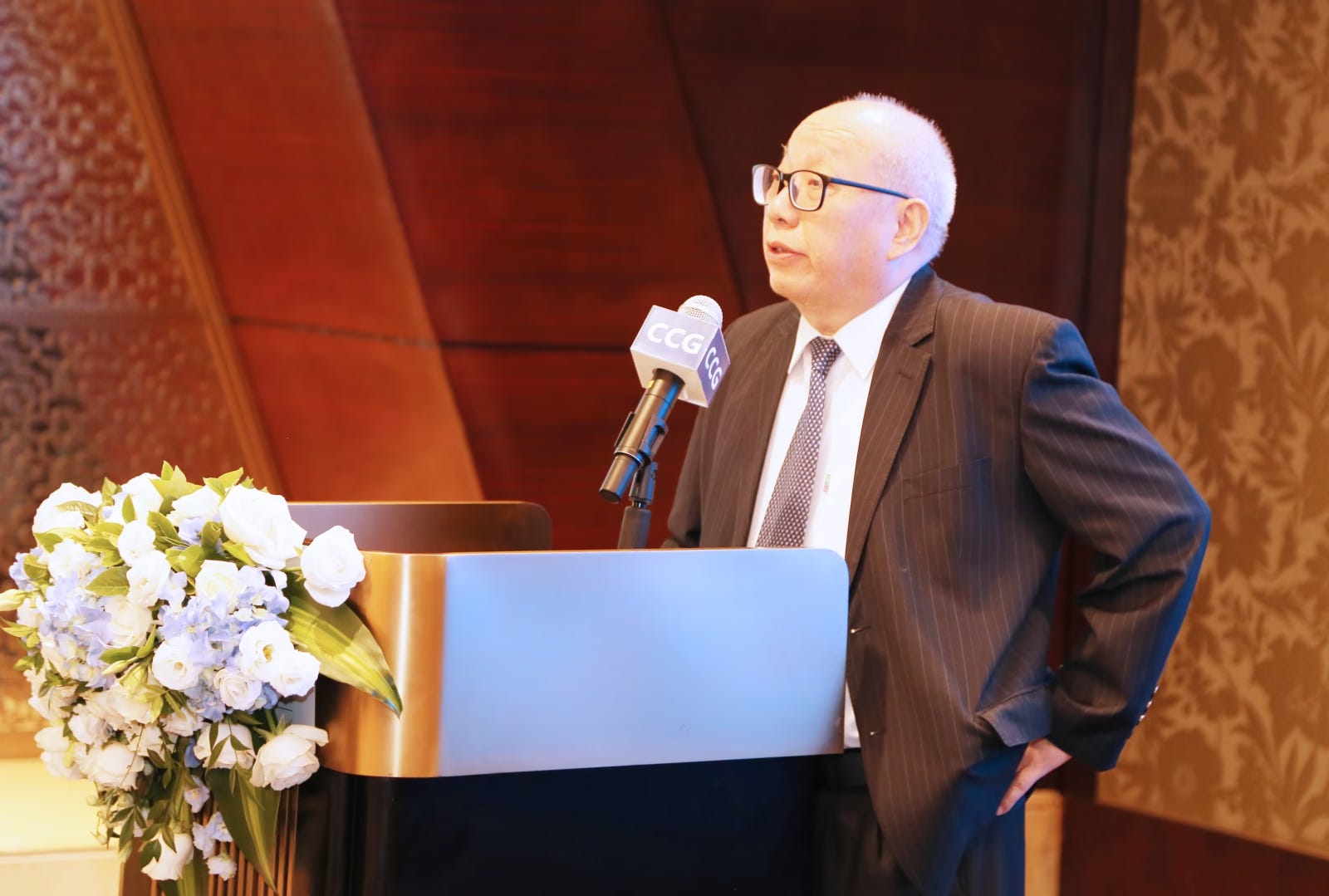
Thank you, Henry Huiyao Wang, for the introductory remarks. It is my great honour to be invited to this CCG-KAS luncheon. I am so honoured to have this lunch with senior politicians, members of parliament from Germany, senior diplomats, ambassadors, and other friends from the business community and academia. It is a good opportunity for me to learn here.
I am very interested in the speeches the previous speakers have just delivered, and I would like to say that, as a trade observer and economic analyst, I am also a peace lover. I hate wars. If you look at what has happened in Ukraine and Iran, both have had a very negative impact on global trade and economic activities. We have seen rising energy costs, higher logistics and shipping costs, disrupted supply chains, and rising prices, to the detriment of consumers and businesses all over the world.
That is my personal feeling. In the past few months, when the United States started military strikes against Iran, you could look at any market in China and see that fuel and gas prices rose obviously, perhaps by nearly 20%, or at least 15%. So this has had a negative impact on almost all Chinese consumers and drivers, as well as people around the world.
From a trade perspective, I would like to see peace realised as soon as possible, both in Ukraine and in Iran, or the Middle East. Maybe I should also echo the perspective of Dr Henry Huiyao Wang a little, because he illustrated China’s perspective on the Ukraine war and the Iran war in greater detail. But from a trade perspective, I think the earlier we bring an end to these wars, the better it is for the world economy.
Different economists have given different analyses of how these wars will impact the global economy and international trade, but it is all bad news. So I would say that now we should make collective efforts to see that peace is realised, that the fundamental concerns of each country can be properly addressed, and that permanent peace can be achieved.
Of course, China is an upholder of the Charter of the United Nations. We would like to see respect for the sovereignty and territorial integrity of each and every nation. We would like to see that no illegal wars are waged against neighbours or each other. We would like to see a normal global order for business and trade maintained, so that factories and businesses can run normally without paying much higher costs.
On the other hand, I would also like to take this opportunity to talk a little bit about Chinese perspectives on how global efforts can reshape the international trade order.
As you may know, I have been engaged in the study of the WTO, the World Trade Organisation system, and its rules for some years. Now you may say that many trading partners are complaining to China: you are producing too much, you are exporting too much. In the previous speeches, you heard words such as “overcapacity” and “subsidies.” So I will tell you what has made China what it is now.
If you look back 30 or 40 years, when China was negotiating its accession to the WTO, our trading partners, including Germany, the EU, the UK, France, the United States, Japan, and Korea, were all telling us that you should open up its market, embrace capitalism, and the market economy was absolutely good for China; you should not follow the old doctrine of a self-sufficient and protected local market.
Forty years ago, a slogan popular among some Chinese economists was that China had no domestic or international debt. The government had no debt; it did not borrow abroad or at home. Then economists from the West told us that this was not a good model. If China wanted to develop its economy, it had to open up its market, lower tariffs, allow investment, and embrace the concept of the market economy.
After years of negotiations, we have done what you told us. I remember that during the 1980s, I was working in gthe foreign investment administration in the Ministry of Foreign Trade and Economic Relations. We had to review applications for foreign investment, including major German investment projects such as Volkswagen in Shanghai and other German investments. At that time, we were given lectures by our trading partners on why China should open its market.
Now, after years of effort, China has been able to welcome and embrace foreign investment. If you look at the number of foreign joint ventures and wholly foreign-owned businesses in China, the numbers are very impressive, including a lot of German investment. We welcome them, and we thank you for your participation in China’s economic development process.
In this process, we changed our laws and regulations to meet WTO standards. We also changed the way we administer and regulate the economy through deregulation, by giving more incentives to businesses and entrepreneurs, and by providing greater protection for intellectual property rights.
As a result, China’s manufacturing capacity has been growing, and Chinese products have become quite cheap and competitive in the world market. So my point is that I would like to say thank you for your participation, your advice, and your lectures on what China could do to do a better job of reform and opening up in the Chinese economy.
Now we have reached today’s stage, where we are talking about overcapacity. Actually, if you look at WTO rules, there is no clear definition of what constitutes overcapacity. For instance, in the WTO, there was a famous dispute settlement case between the U.S. and the EU about aeroplanes, between Boeing and Airbus. The WTO panel of trade judges decided that both Boeing and Airbus had received large amounts of subsidies from various sources, some from governments and some from others. Both were guilty. You can look at the documents and the rulings.
If you look at history, for instance, in the automobile sector, Germany has been a global superpower for many years. If you look at Chinese statistics, Volkswagen accounted for 60%, 70%, or around two-thirds of China’s car market for many years. Volkswagen was the number one car producer in the Chinese market for many years. At that time, perhaps some smaller Chinese car producers complained about Volkswagen’s overcapacity in the Chinese market, but the government seemed to turn a deaf ear to those complaints.
Of course, if you look globally, over 80% of Volkswagen cars are sold overseas, not in the German market. But if you follow the theory of overcapacity, Volkswagen perhaps should only produce 20% of what it produces now to satisfy the German market. For global transnational corporations, you have a vision for the world market, for the international market. This overcapacity issue has been there for decades. It was not China that created this problem. Maybe China copied the practices of some major Western multinationals.
If you look at the case of Airbus, around 85% of Airbus planes are exported outside the European market. China is probably one of its major markets. But you hear few Western economies talk about Airbus overcapacity. When China exports, then people talk about overcapacity.
For instance, last year China exported around 3 million electric vehicles, but the total vehicle production in China was 30 million. Out of 30 million vehicles, China exported 3 million electric vehicles. That is only about 10%. And then you talk about overcapacity. But when you export more than 80% of a product overseas, you do not talk about overcapacity.
So China wants fair treatment in the global market. China is ready to negotiate and talk about such issues. China is also ready to talk about subsidies. That is very interesting.
If you look at WTO rules on subsidies and countervailing duties, there is an agreement and a committee on subsidies and countervailing duties, which defines the situations in which products are judged to be dumped or subsidised, and subject to punishment under WTO rules. Of course, there have been some cases where the United States lost, and the U.S. was unhappy. So the U.S. started telling us that the WTO dispute settlement system was not good and not fair, and that it deviated from the vision of U.S. trade policymakers or experts. So, the United States is now moving away from the appellate system and the multilateral trade system.
The interesting thing now is what has happened. The major shock to the global trade order is what has been done by the United States government: the tariff war. Some people talk about two wars, but actually, now there are three wars: Ukraine, Iran, and a trade war.
The trade war is that the U.S. has put tariffs on almost every trading partner. The EU is no exception, although the rate imposed on the EU may be lower, perhaps 10% or 15%, lower than that imposed on China. But this is an obvious violation of WTO rules, a violation of the United States’ own obligations and trade commitments in the WTO. It is a violation of the MFN, or most-favoured-nation, principle. It is a violation of the principle of non-discrimination. It is a violation of many WTO rules. So this act of protectionism and unilateral trade action should become a serious concern for all trading partners, including China.
I know that at WTO meetings in Geneva, some European representatives of the EU delegation have raised concerns time and time again about this kind of behaviour. I believe that, with collective effort, we will be able to work together to uphold the multilateral trading system represented by the WTO. I hope we can work together to see that global trade and investment can flow in a smooth manner rather than in a more difficult manner.
But if you look at recent moves by the EU, by the bureaucrats in Brussels, some are really concerning, because it seems that they are tightening regulations on trade and investment to the detriment of some Chinese businesses. That is not good news for Chinese businesses. I think it is not good news for European consumers either. Whether it is good news for European businesses, I am not sure. We have to wait and see the impact of these policies and how they come into effect.
Finally, I would like to say that China is ready to work with Germany and other European countries, EU member states, to ensure the smooth flow of goods, capital, and people, to the benefit of all countries. Thank you very much.
Henry Huiyao Wang
Thank you, Mr Huang, for sharing the Chinese perspective.
Now, because I think our time is getting tight, we will go directly into the Q&A section. Let’s put some chairs here. We will invite Mr Spahn, Mr Röttgen, and Mr Huang to come to the stage, and we will have a short Q&A. Please raise your hand if you have any questions.
Okay, let’s invite Professor Cui, one of China’s European affairs experts.
Cui Hongjian, Director, Center for EU and Regional Development, Beijing Foreign Studies University
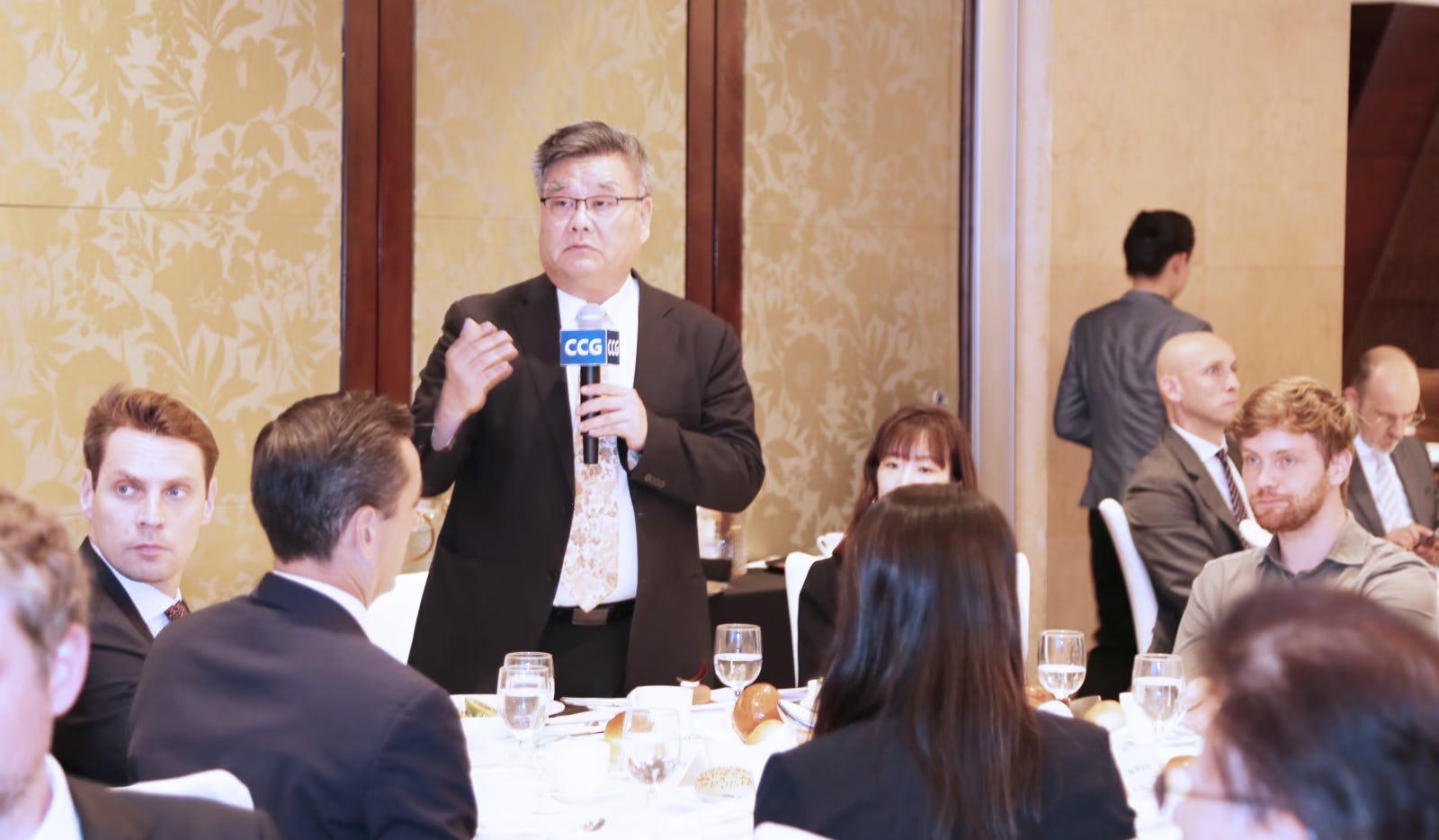
Yes, it is my great pleasure to be here. I am from Beijing Foreign Studies University. It is my great pleasure to meet Chairman Mr Spahn once again after two years. I still remember that we had a very good discussion two years ago. We shared some complaints about the three-party coalition in the German government.
So now, of course, it is your time. I mean, it is time for the CDU and CSU to run Germany, especially amid very, very great uncertainty so far.
First, it is a little bit of a pity for us to say that, over the past years, the Ukraine issue has occupied so much of our bilateral relations. I still understand the position taken by our German friends and European friends about responsibility and the moral issues related to this war. But as we understand it, making a judgment through black-and-white logic is not so realistic in the current situation, just as for the German government to make some clear stance on Iran, Israel, and the Middle East issue.
So I think it could be understandable that China tries to take the complexity of the situation into mind and to find out how to stop the war or invasion. This is different from defeating a country. So now, of course, I think it is time for us to go beyond this kind of controversial issue of morality or other questions.
Recently, I participated in some discussions with our European colleagues on how we could find an opportunity now to finalise this war or conflict. From the European side, now you are talking about a proper way to have direct talks with Russia, in the format of the E3, E5, or some other format.
So, Chairman, could you please give us some ideas? How could China and Germany, or China and Europe, do something together now to stop the war, especially as we know China has been suffering for a long time from the spillover effects of this war?
Another question is for Mr Röttgen. We also had some discussions several years ago in your parliament. You mentioned the economic issues between China and Germany, especially in the name of competitiveness. I also know that you are concerned about issues involving the Chinese government on rare earths and some other materials, just as China is also keeping a very close eye on what the European Union and ASML are doing, I mean, in the Netherlands.
So how could we find a way out of this retaliatory situation? How could we find a way to manage competition in a more cooperative way? Thank you so much.
Mikko Kinnunen, Ambassador of Finland
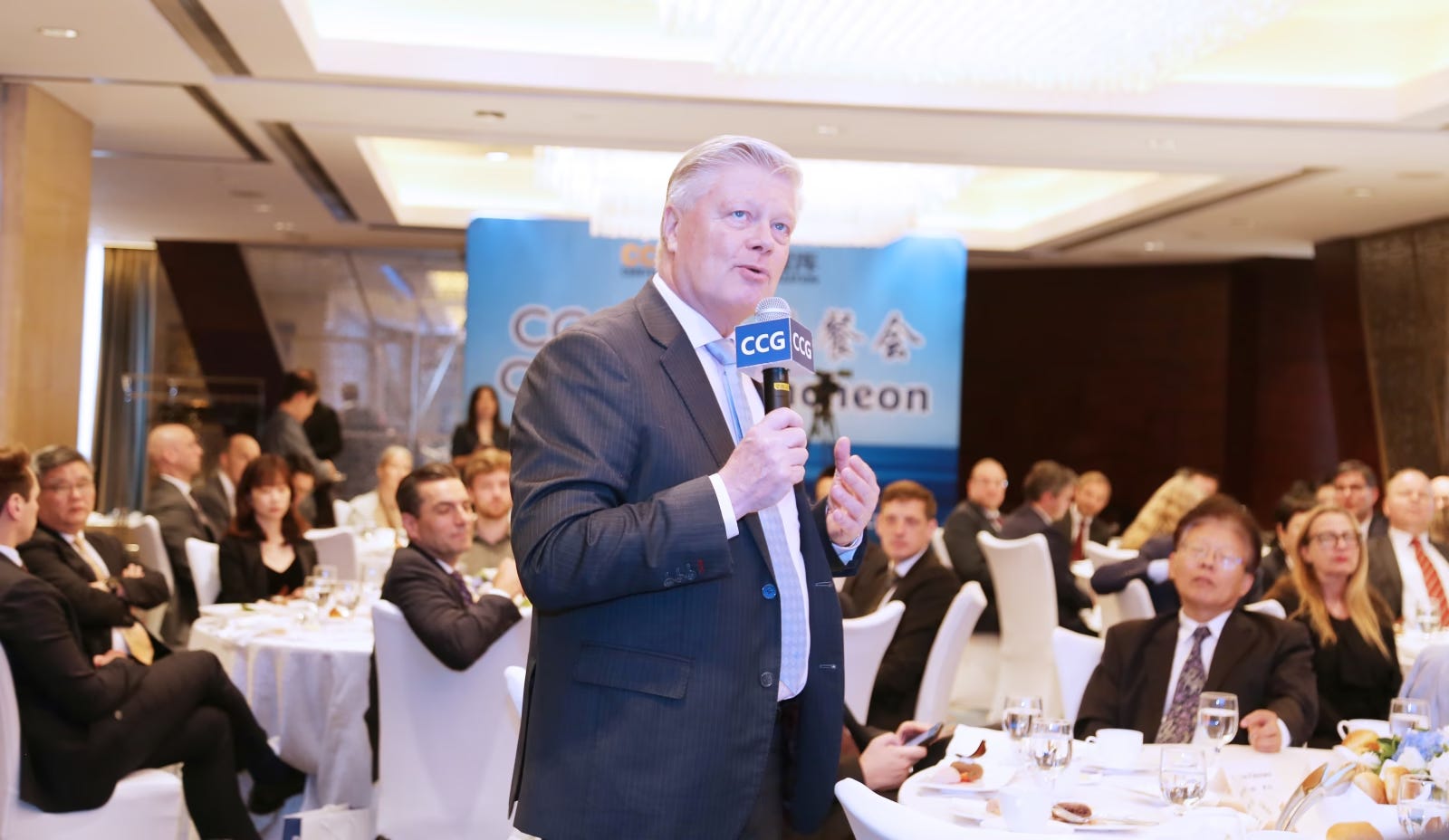
Thank you very much. Thank you, Henry. Thank you for inviting for this luncheon. Obviously, coming from Finland, my favourite topic might have to do with Russia’s war of aggression. Are we in any changing point right now, and perhaps the question being here, when one is here in China, how can we?
I guess one of the big goals is to make sure that Russia will no longer attack any of its neighbouring countries in the future. I mean, if you look at the map all the way from Finland to China, perhaps also including Norway, there are 14 countries that share a land border with Russia. I think all of us, within the last 200 years, have experienced this type of aggression, including annexations of territories and things like that. So I think it would be a great goal to be able to prevent this kind of behaviour from our common neighbour in the future.
Thank you for being here. I think it is valuable that parliamentarians from Europe visit China. I am also trying to encourage your Finnish colleagues to be here as often as possible. Thanks.
Han Bing, Former Deputy Director General, Department of European Affairs, MOFCOM
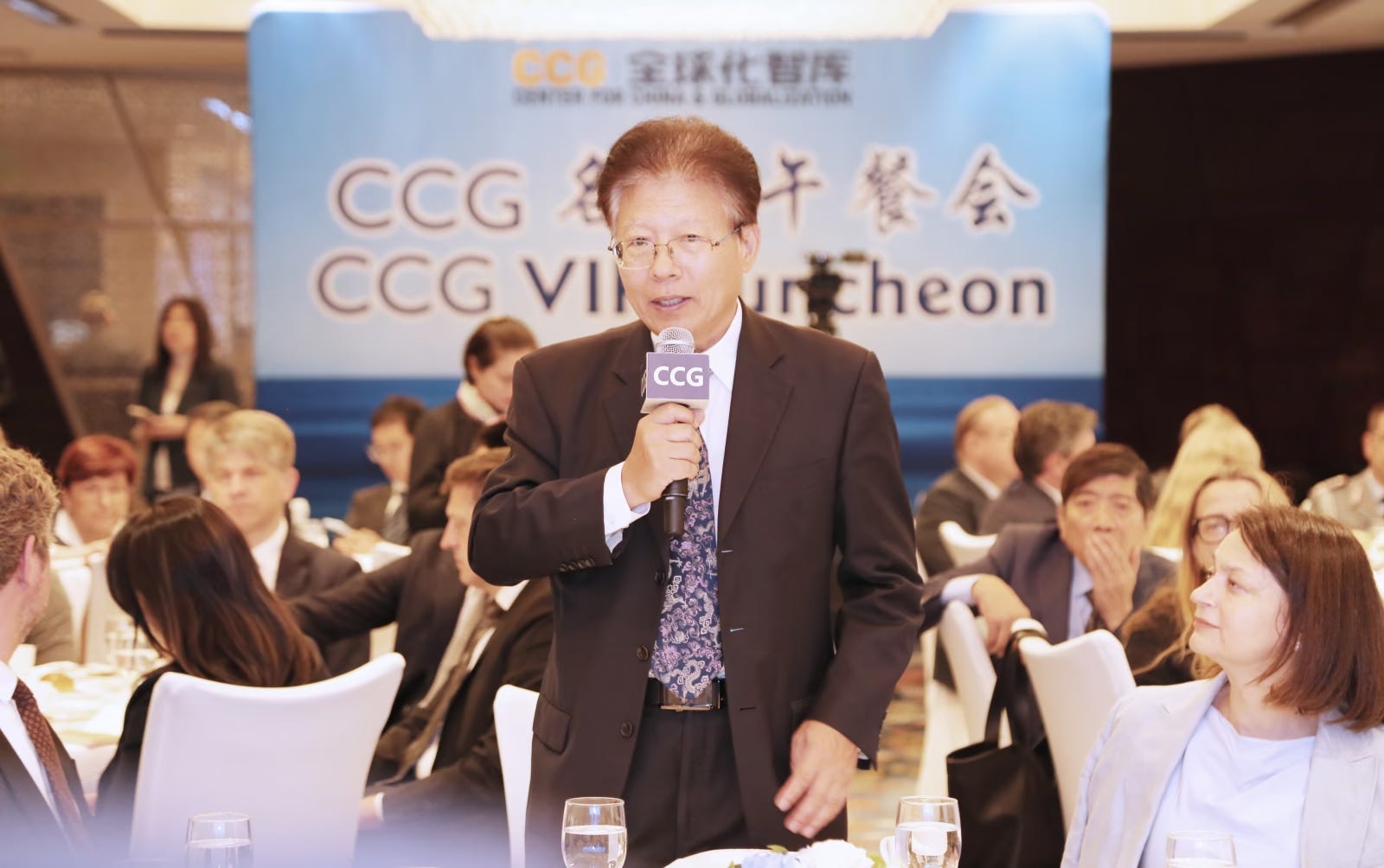
Thank you for sharing these opinions. Your perspectives on these three topics are very clear and very compelling.
I just wanted to ask about the last one, on trade and self-dependence. We understand how European countries see the trade deficit and the huge competitiveness of Chinese products in the EU market. So we quite understand your worries. From the Chinese side, I think we want to seek ways to cooperate in the future on this issue.
I would also like to ask: could you understand why China is pursuing self-sufficiency? We think we are forced to do that. When we intend to import products from, for example, ASML, or when we intend to import high-tech products from the EU or the U.S., there are restrictions, so we cannot get them.
When we produced our aircraft, the C919, our original design was to buy more than 80% of the parts, including the engine, from the international market. That was our plan. But we cannot get the engine. The process of granting permission to export engines to China for the C919 aircraft is very slow. I think fewer than 20 engines are approved each year. So how can we wait for these products?
I would like to ask: could you understand China? We understand your worries. Could you understand why China is doing this? We think we are forced to do this. Could you give us some ideas on how we can get out of this situation?
Henry Huiyao Wang
Okay. Thank you. I think we will turn to our guests, because I do think China and Germany have a lot of common perspectives. I remember four years ago, when Chancellor Olaf Scholz came to Beijing during COVID, when Germany was a G7 leader. China’s top leaders said that no nuclear war should be fought in Ukraine, right? That was a really good outcome.
So I would like to invite Mr Spahn, Mr Röttgen, and Mr Huang to respond.
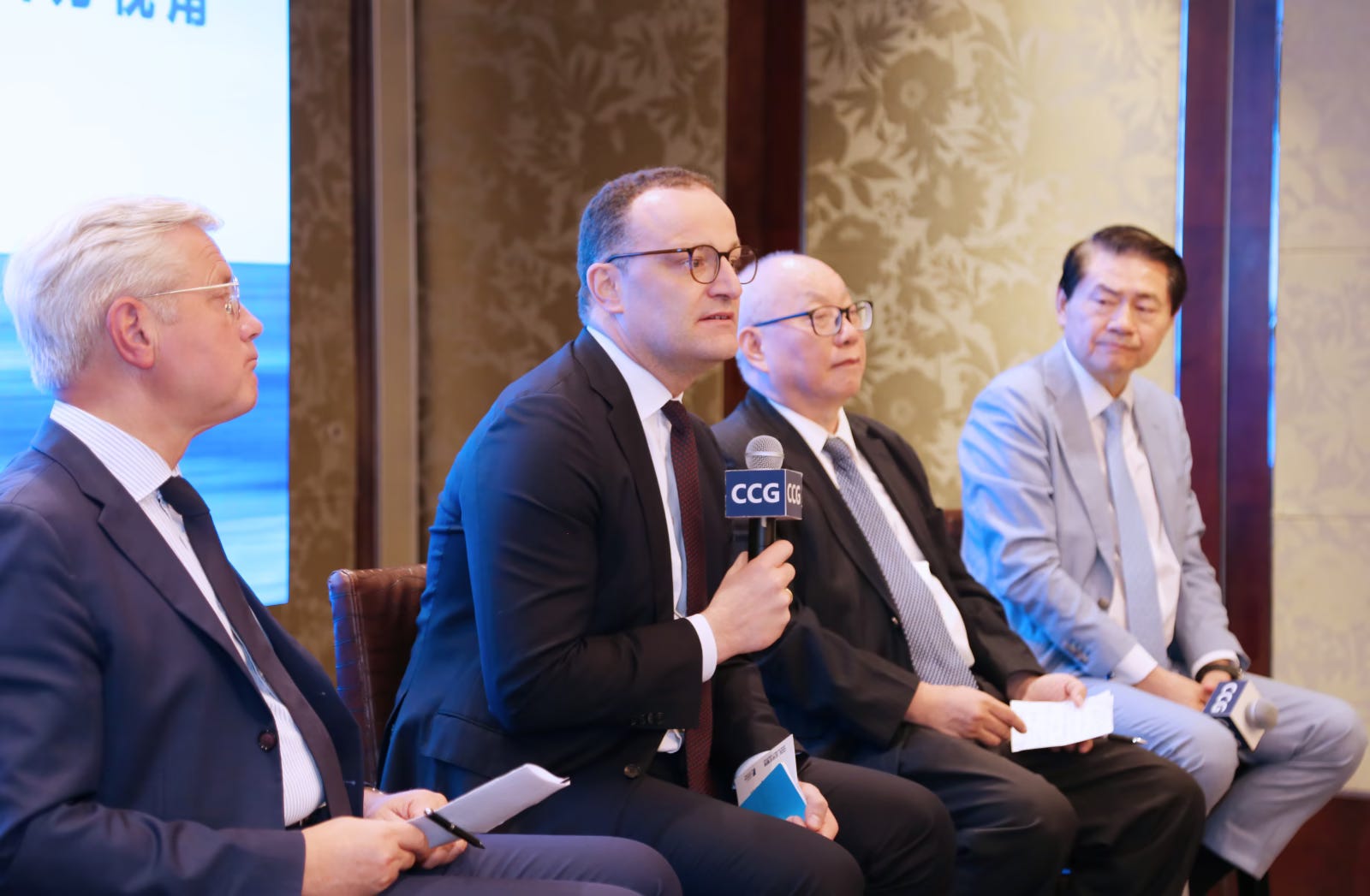
Jens Spahn
Thank you very much indeed. I start with Ukraine, and then I go to trade. First of all, the question of Ukraine, of course, is not very complex. There’s one country invading its neighbour with brutality and brute force for more than four years now: murder, death, rape, taking children away every day.
Secondly, if we just put all morality away, let’s just put it the other way, or imagine the other way. What would you say if there was a country in your neighbourhood destabilising the region aggressively, fighting actually against the way your society works? In this case, in our case, a liberal, free, democratic society, and we would call this country in your neighbourhood, causing all this trouble, our best friend. How would you think about it?
So, of course, if Putin is called the best friend, of course, that is doing something with us, seeing what he’s doing, just one and a half hour of flight away from Berlin. And you’re right. Actually, I say it every time I have a discussion with our Chinese partners. Imagine how much time we could spend discussing other topics if this war would end, how much we could engage in other activities if this would end, but then the question is, how?
And of course, it will end through negotiations, like every war. The question is how: is it just one country dictating peace, or is it really negotiating? That is what this is about. As soon as we have at least a bit of faith, or trust, or however you want to call it in Europe, that there is a serious willingness from Putin to negotiate, then it makes sense.
You asked what you can do. If you would help bring him seriously to the table, then we could play our part. But as long as he does not take it seriously, (it is difficult.)
The last time a German Chancellor talked to Putin, the next day there was one of the big bombardments of Kyiv. That was his sign of being serious about talks. So if you could convince him to take it seriously and come to the table, then we can take over. But for that, you have leverage, perhaps more than you every now and then want to admit, if I can put it this way.
And because our Finnish ambassador mentioned the border, Putin, besides this war with Ukraine, plans to rearm already for after the war. Then you ask yourself in Europe: what is he actually rearming for? What is he planning for? Is it because he wants to go east? I don’t think so. South? I don’t think so. West — that is what it is about, and that is why our Finnish friends are worried.
So one thing is the war. The other thing is what he is actually doing with all the planning for after the war, and where he is looking. And he’s looking west, not with a friendly face. And that is actually the second part of what is worrying. And in all of this, of course, we could cooperate, but then we all need to mean it seriously.
Trade. First of all, as Norbert has already described, our industrial base, the core of our economy, is under real stress. It is melting away. 10,000 industrial jobs gone every month for the last two or three years.
That has several reasons, but one reason is the influx of — and one has to admit this — good products from China. So now the question is, of course, I see your argument: you are saying this is market competitiveness, and we have to accept it. Yes, of course, if it was a fair competition, we would have to accept it.
But overcapacity. The question is, as you said, what is the definition of overcapacity? I will give you an example. The world needs around 600 gigawatts of solar panels per year. You are producing 1,000 gigawatts per year.
In a normal situation, the market would adapt. That means supply would just go away, with companies going bankrupt or leaving the market, until it is adapting to the demand. But that is not happening. Capacity is not adapting to demand in several areas, not just in solar panels, because of subsidies — more of the provinces than of the central state. Because all the provinces are in competition with each other and are supporting industries, and often the same industries, in all provinces.
So when you ask what is meant by overcapacity, I would say that when supply is not adapting to demand because of state interference, that is overcapacity.
If you say Airbus is exporting 85%, yes, but there is demand for it. We are not supporting Airbus to build more planes than are ordered. No one is telling Airbus to build them, whether someone needs them or not. They are just building as many as are demanded in the market. That is actually the discussion we have right now.
And of course, if you see your industrial core melting away, what would you do? Of course, we are reacting because our people are reacting. If you take the political situation in Germany, it is very much driven by this development: in the automotive, machinery, energy, and chemical industries, we are losing jobs. And I would say this is not just because we are not competitive enough.
We have to do our part, that is true. But there is more to it, and it is not only Germany; it is the whole of Europe. That needs to be discussed.
Then I end with what we could do. As I said earlier, we have been describing this to each other for years now. I do not know how often I have discussed it in the last years. The question we all have is: what can we do?
Perhaps start negotiating again. Of course, we can’t just implement the investment agreement from five years ago. It needs to be adapted or renegotiated. But let’s concretely start to negotiate again about a framework for our trade. That would be something to start with, at least, besides all the talking.
Norbert Röttgen
Yeah, I think most of the questions have been answered already. Perhaps I would focus on one aspect you mentioned. I was really struck by the way you mentioned it and raised your question, and that was the question: can you understand?
You asked whether we have an idea for how to cooperate. I would say this is really the crucial question: can we understand each other? I think this is the essential question for achieving results that are in the interest of both of us. And I think we can understand each other.
It does not take so much, because we can understand our mutual strengths. Both of us are economies with strong industries, and industry is at the core — and shall remain at the core — of our economic success and prosperity.
Both of us have more and more export-oriented economies, both in China and, traditionally, in Germany. Exports have been a pillar of prosperity and economic success. We want this to be maintained and to endure.
We share challenges and problems. Both of our societies are ageing, so we have a demographic problem, and we are under pressure. China has to do some serious economic homework, and so does Germany.
So we are under pressure. We have different political systems, and pressure appears in different forms. But at the end of the day, our governments, political systems, and leaders have to resolve the problems, and we feel the pressure we are under.
And as a result, we share the necessity, or the desire, to have a combination of protection and openness. Openness is a precondition for prosperity; protection is a precondition for the safety of our people. So this has to be managed.
I would say that currently, and for a while, we have chosen the path of a kind of economic struggle that might become, to the world, a bit more than only a struggle, in order to get more protection for our respective economies and demand openness from the other side. There is a danger in that, because we have this unravelling of the international order; we are seeing domestic pressure. We might be tempted to think that if we go against each other, we might achieve more results. And I think this would be a major, major mistake.
So if we start by trying to understand each other — and it’s not so difficult, because we share so many opportunities, challenges, and dangers — I think if we were to manage the balance of openness and protection, we would achieve for both sides a lot more than we have today.
In a way, it is a reverse situation, and I can fully understand the history you mentioned. You mentioned that China has come all the way from a very low level, and we know the history of one hundred years of humiliation. Now you have a big, big goal to come back, to see the comeback again, and now you are becoming very successful. And now the traditional players, like Germany, come: “Oh, you have to be restricted in your success.” So I can fully understand that.
On the other side, you have become so strong and so competitive at the global level that now you are in a role that Germany has occupied for decades. And we now see the erosion of our industrial base. So this means homework for us in terms of innovation, productivity, and competitiveness. But it also requires that we do something about the systematic destruction of more and more industrial areas. We can’t sustain that. We cannot sustain that politically or economically.
So I think we can find points very easily where we share the challenges and see the opportunities. Then we should simply design how to manage the balance. There might also be conflicts of interest, but if we were to start a dialogue and a discourse in this spirit, I am really convinced that it would be for the betterment of the global economy, as well as for our two economies.
So thank you very much for this question: “Can you understand us?” I can understand that. I would also ask: can you understand us? And starting with this is a good start.
Thank you.
Huang Rengang
I only want to add, finally, that for China, I think my organisation, the China Society for WTO Studies, gives advice to government trade policymakers. Our advice is that it is good to engage, to negotiate, and to talk, rather than waging trade wars, sanctions, or retaliation. This is always our basic position.
I think this also applies to any conflict, including military conflicts. It is very important to encourage the parties concerned, as stakeholders, to engage in talks.
…
My observation is that China is ready to engage with all our trading partners and talk about these issues, including, as you mentioned, subsidies, overcapacity, state-owned enterprises, industrial policy, and the structure of the economy.
But there is an interesting phenomenon. My observation is that nowadays, every day, a lot of U.S. government agencies are translating Chinese government documents issued by different ministries, as well as speeches by Chinese leaders. Every day, they are trying to see why China has been successful in manufacturing, what our industrial policy is, and why Chinese manufacturing has grown in this way. As a result, they are not only translating, following, and studying these documents, but also turning some of those ideas into practice.
So now you see the U.S. government taking measures to encourage foreign investment by promising government subsidies in semiconductors and chips, promising government equity participation, and planning for future industrial policy or remanufacturing with U.S. government involvement, support, and subsidies.
As a phenomenon, I think this is worth studying by academics and experts. I don’t think a long-term trade or merchandise surplus or deficit will last forever. As you mentioned, for decades Germany was very competitive in many sectors, and many of its products are still competitive. That is the reason why my colleague Han Bing mentioned that we want to buy aircraft engines from you, but you do not sell them.
So if you check the list of products that you don’t sell to China, you had better have a sense of urgency. Sell them now to China. It is like some chips, such as H200. Two years ago, the United States banned sales to China, but now they have reopened sales. But China may not want them, because China is now able to produce similar products.
So my advice is: have a sense of urgency, and try to readjust your trade policy and export restrictions towards China. Sell what you have now to China, and trade can maybe be balanced more quickly.
Thank you.
Henry Huiyao Wang
Thank you. I think we are running out of time. Just to conclude, my brief remark would be that I think we have had a very productive and stimulating discussion.
On geopolitical wars and conflicts, I think Europe and China, being the second and third largest economies, should get involved. We should not be set aside. Personally, I would encourage Europe to get involved in direct talks on the Russia-Ukraine war and also on the future of the Middle East and on re-establishing a peaceful situation there.
China should also be involved. As I proposed, we should have a UN-based multilateral approach. I think Germany, Europe, and China should be involved in future geopolitical guarantees, peacemaking, and stabilising the situation. That is one lesson I have learned: we should not sit on the sidelines, but should get involved in peace negotiations.
Finally, on trade, I think this is really great. Germany has been one of the largest and longest-standing investors and manufacturers in China. You have so many German industries doing very well in China — probably over 10,000 of them. But we should probably also work together, because you have so much experience working with China.
Now we can have joint ventures back in Germany, in the Global South, and in other European countries. We could have more technology sharing. China has now become a fitness room for German companies.
So now let us all train well and go back to Germany and other countries. Let us work together and have a joint-venture approach. I am sure that 40 years ago, we had joint ventures in China, and 40 years later, we can have joint ventures back in Germany and many other places. In this way, we can address the trade deficit and trade surplus, and we can perhaps build closer cooperation between our two great nations.
Once again, I want to thank Mr Spahn, Mr Röttgen, and Mr Huang very much, as well as the ambassadors and all the distinguished guests.
Finally, I would like to give the floor to Mr Johann Fuhrmann, Chief Representative of KAS, for his concluding remarks.
Johann Fuhrmann, Chief Representative, Konrad Adenauer Foundation (KAS) China / Beijing
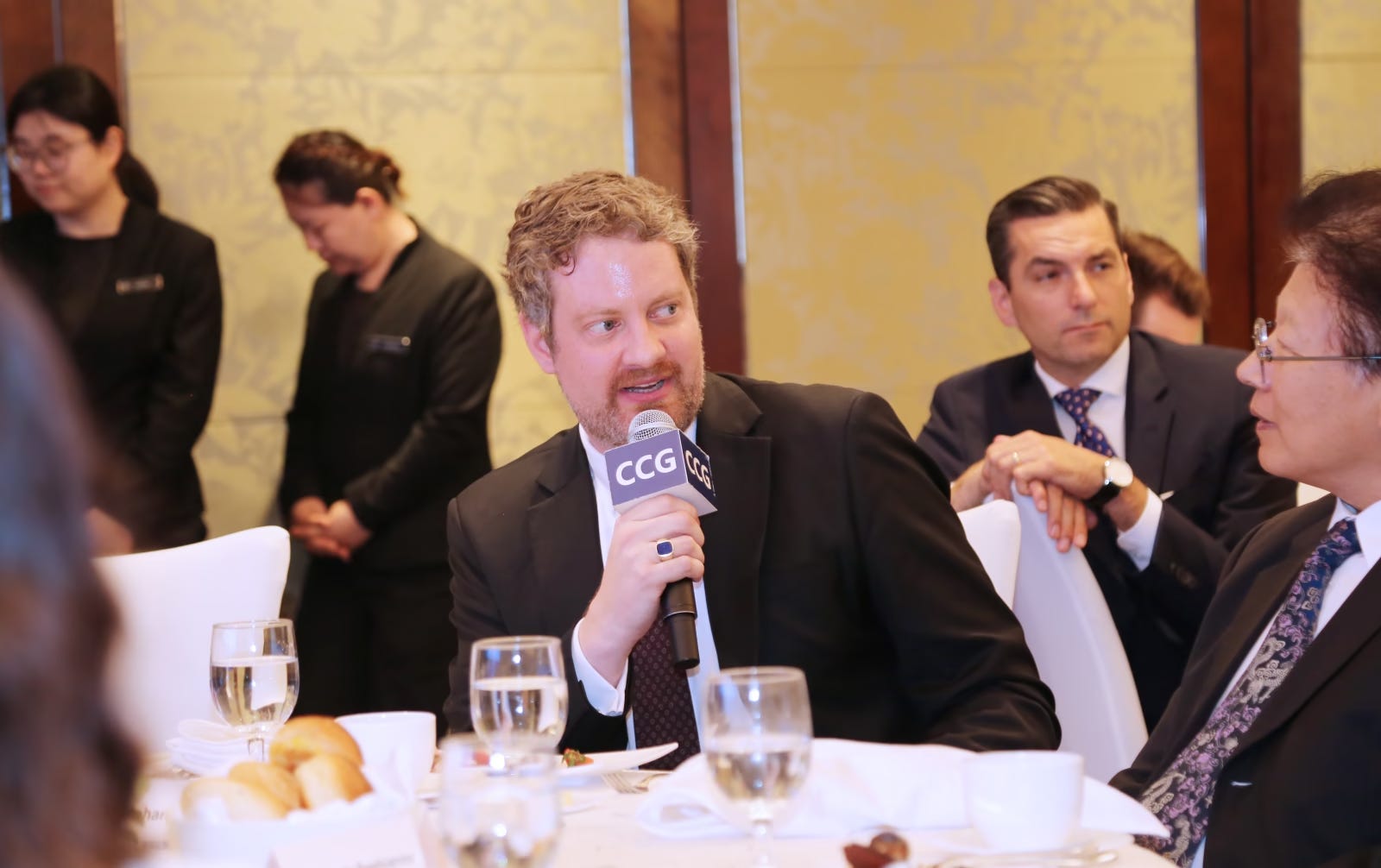
Thank you so much, Henry, and of course, Mabel and CCG, for making this very open discussion possible. I assigned the easiest job to myself today, because I only have to say thank you. Thanks to all of you for your time. Thanks to all of our speakers. And of course, thanks to our staff and to all of those who made this event possible.
This was our second luncheon organised by CCG and KAS. And I hope to invite all of you again, in a very timely manner, to such an event. Thank you so much
Our members of parliament still have a little bit of time, so please mingle and talk with them. Thanks and see you soon.
A Governance Question for the International Human Rights System
I am writing because my experience raises what I believe to be a broader question concerning governance, accountability, and the credibility of the international human-rights system.
For more than a decade, I have alleged that I have been subjected to torture, coercion, social and professional sabotage, security-related entrapment, and the systematic denial of remedies in Norway. During that time, I sought protection, investigation, accountability, and independent scrutiny through police authorities, prosecutors, courts, oversight bodies, medical institutions, human-rights organisations, journalists, and international mechanisms.
What is most striking is not only the alleged underlying conduct, but the apparent inability to secure any genuinely independent examination of the evidence despite exhausting an extraordinary range of domestic and international avenues.
What I encountered was not the absence of institutions. It was the presence of many institutions, each formally tasked with providing accountability, oversight, protection, or remedy, yet collectively unable or unwilling to independently examine the underlying allegations.
Responsibility was repeatedly transferred.
Scrutiny was repeatedly deferred.
Procedures were repeatedly invoked.
Yet the substance of the allegations remained unexamined.
This is what I describe as the accountability gap.
The issue is not merely whether individual institutions fail. It is what happens when institutions established to protect individuals from misconduct, abuse of power, and violations of rights cease to function as safeguards and instead become mechanisms through which accountability is obstructed, scrutiny is prevented, complaints are neutralised, and those seeking protection are exposed to retaliation, containment, and continued harm rather than remedy.
My concern extends beyond Norway.
Western governments, international organisations, NGOs, and human-rights bodies routinely scrutinise allegations of torture, abuse of power, and violations of international law when such allegations arise outside their own political and security sphere. Yet my experience raises a more difficult question: what happens when similar allegations concern institutions operating within states that are widely regarded as democratic, rights-respecting, and governed by the rule of law?
My concern is that institutional reputation can become a substitute for verification. Presumptions of compliance replace independent investigation. The stronger the institutional reputation, the less likely meaningful scrutiny may become.
The architecture remains intact.
The challenge disappears.
I am not asking anyone to accept my allegations as true.
I am asking whether my case warrants independent examination as a means of exploring a broader question: whether contemporary accountability mechanisms are capable of scrutinising allegations directed at state-linked actors and institutions operating within highly trusted Western democracies, including where allegations concern security-related activities and potential violations of international human-rights obligations.
If such scrutiny is not possible in practice, then the issue extends beyond any individual case. It becomes a question of institutional legitimacy, the universality of international law, and the credibility of the international accountability system itself.
The Accountability Gap