


The 12th China and Globalization Forum, hosted by the Center for China and Globalization (CCG) and co-organized by the China Association of International Trade (CAIT), the China Society for World Trade Organization Studies (CWTO), the China-United States Exchange Foundation (CUSEF), and Schwarzman College at Tsinghua University, was held in Beijing on Sunday, April 26, 2026.
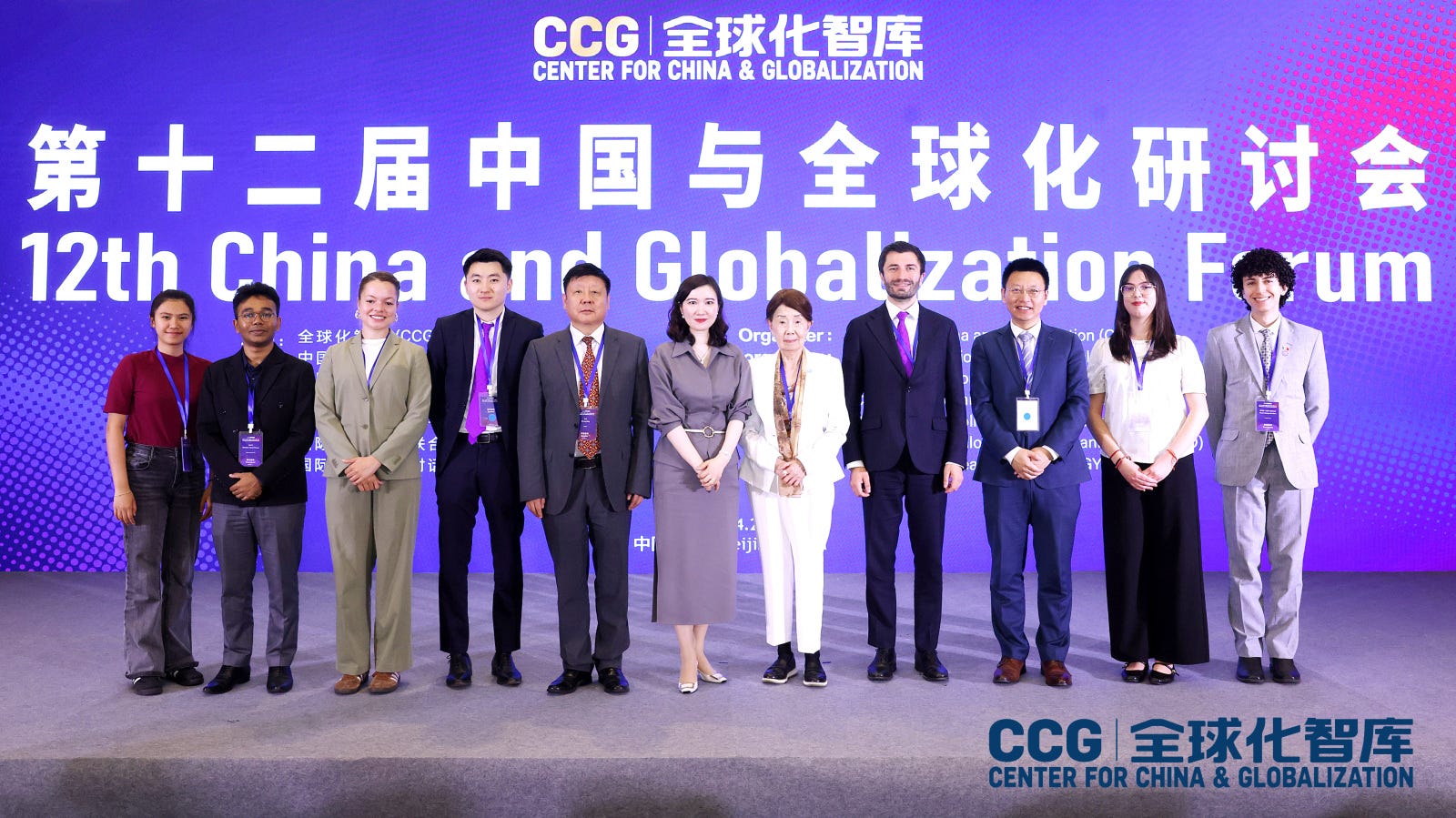
The “China–U.S. Youth Roundtable: A Model for China–U.S. Youth Exchanges” session was moderated by Mabel Lu Miao.
The speakers included:
David Qingzhong Pan, Executive Dean and Professor of Schwarzman College, Tsinghua University;
Zhang Ning, Vice President of the Chinese Society of Educational Development Strategy (CSEDS) and Chairman of the International Competence Development Committee (ICDC);
Cheng Yan Davis, Founder and President of the Forum for World Education;
Rza Aliyev, Chief Strategy Officer of the Nizami Ganjavi International Center;
Anthony Andong Wang, Schwarzman Scholar;
John Zhanjie Zhao, Director of the Alliance of Global Talent Organizations (AGTO).
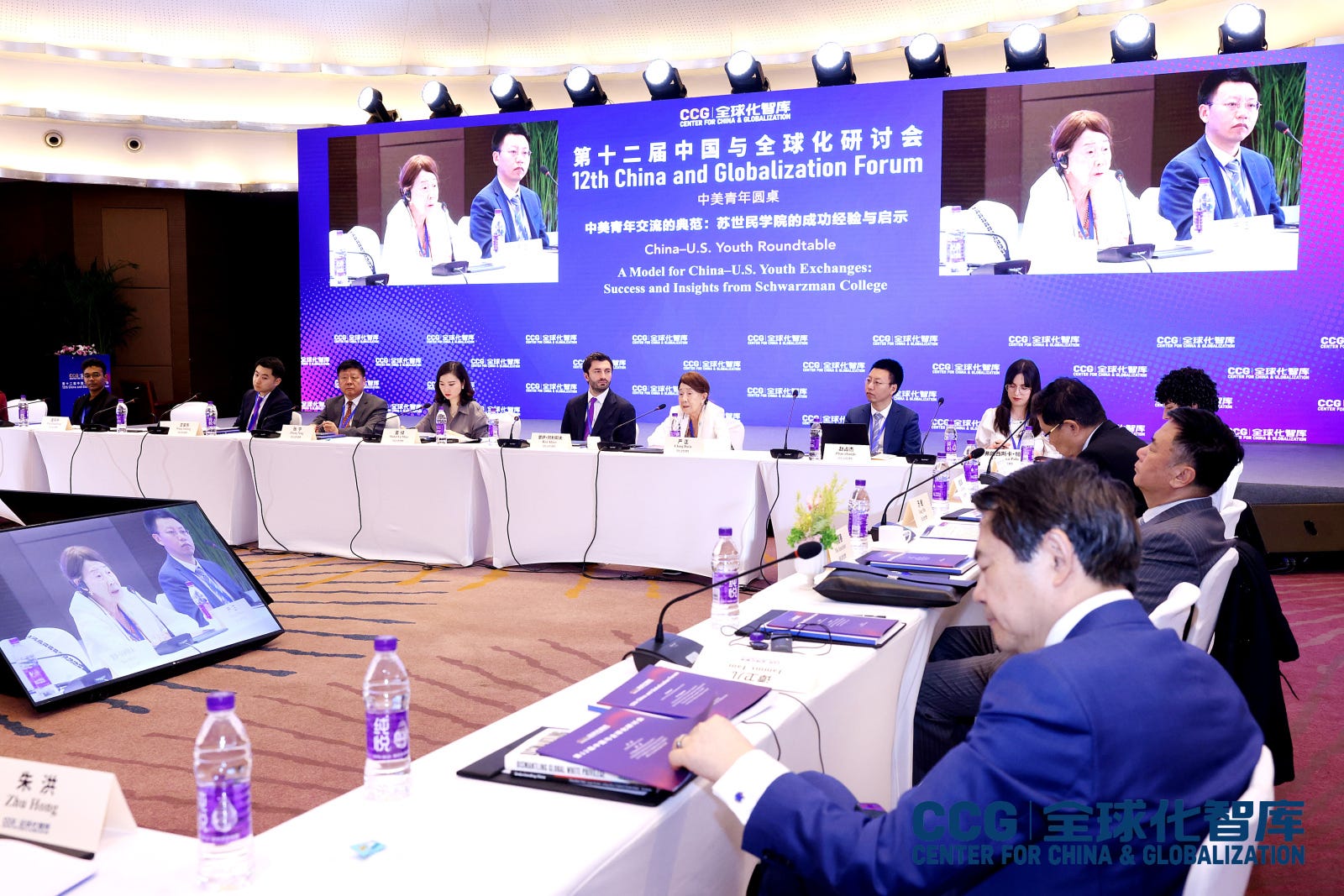
The session also included brief interventions from:
Maria Gabriella Oliveira Costa, Schwarzman Scholar
Murilo Rangel da Silva, Master Student in Political Science, Tsinghua University
Francesca Pala, PKU-LSE Master student in international affairs
Joey Ng, Serial Entrepreneur; Undergraduate Student, Tsinghua University
Matobbar Tanvir Parvez, young ESG professional; former President, Student Association of Belt and Road Initiative (SABRI), Tsinghua University
CCG has broadcast the video recording of this roundtable on Chinese social media platforms and uploaded it to its official YouTube channel.
This transcript is based on the video recording and has not been reviewed by any of the speakers.
Mabel Lu Miao, Co-Founder and Secretary-General, CCG
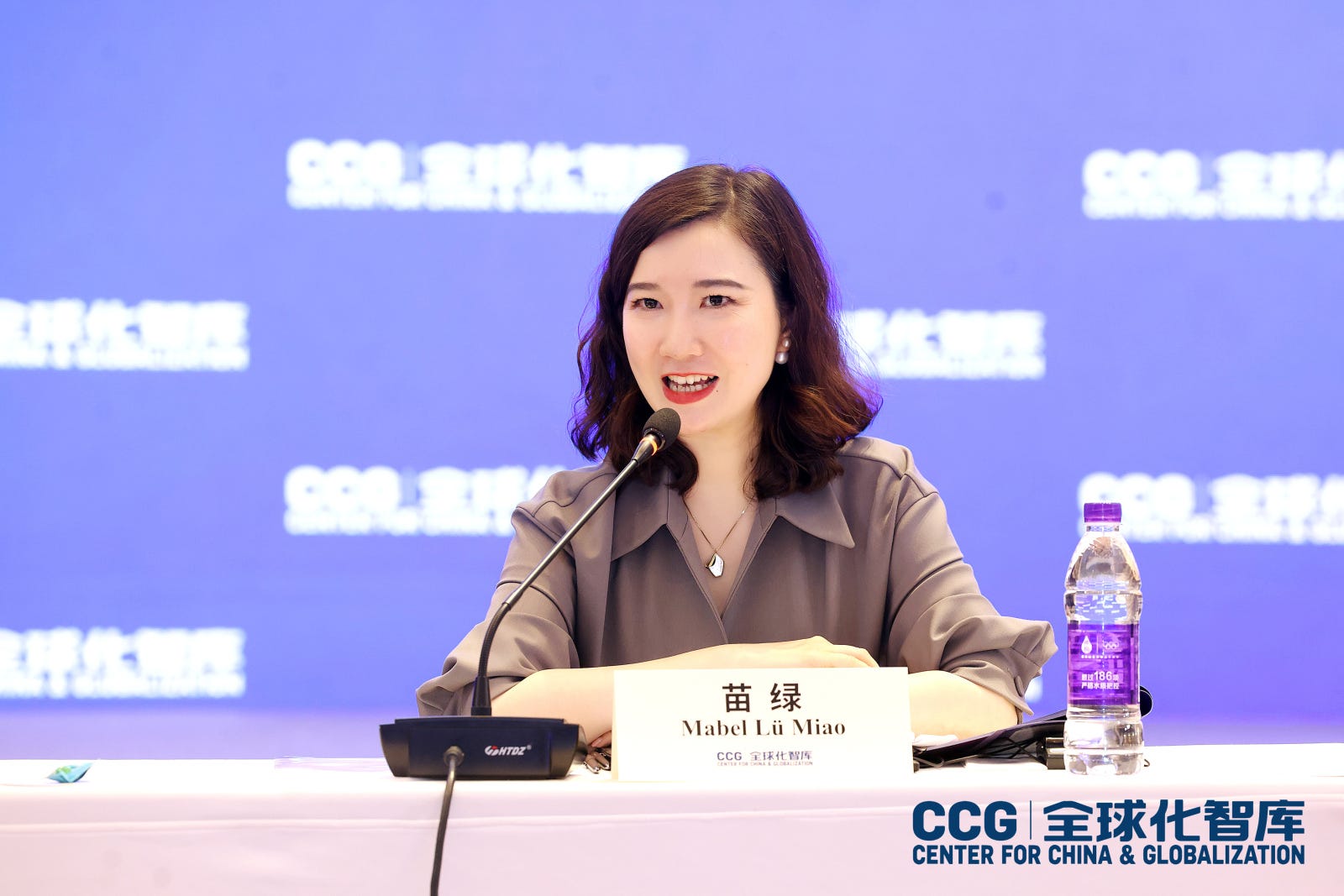
Ladies and gentlemen, good afternoon. Welcome back to our afternoon session and roundtable. I’m Mabel Lu Miao, Secretary-General of the Center for China and Globalization. It’s my pleasure to moderate this panel. I’m very excited about this panel, as our topic is extremely important.
It is about youth exchanges. Today, we are holding the China–U.S. Youth Roundtable: A Model for China–U.S. Youth Exchanges — Success and Insights from Schwarzman College. We are honoured to have Dean Pan from Schwarzman College join us. Schwarzman College has just concluded its 10th anniversary celebration. I joined the gathering last night, and it was a grand occasion. That is why many Chinese scholars and American friends were cautiously optimistic this morning, because such events help boost confidence in U.S.-China relations. Young people are the future of this relationship.
That is why we designed this panel around this topic. This forum is co-hosted by CCG and Schwarzman College, Tsinghua University, and supported by AGTO and GYLD.
I’d like to introduce our distinguished panellists: David Qingzhong Pan, Executive Dean and Professor of Schwarzman College, Tsinghua University; Zhang Ning, Vice President of the Chinese Society of Educational Development Strategy (CSEDS) and Chairman of the International Competence Development Committee (ICDC); Cheng Yan Davis, Founder and President of the Forum for World Education; Rza Aliyev, Chief Strategy Officer of the Nizami Ganjavi International Center; Anthony Andong Wang, Schwarzman Scholar; and John Zhanjie Zhao, Director of the Alliance of Global Talent Organizations (AGTO).
We will discuss the following topics: How can Schwarzman College serve as a benchmark for U.S.-China youth exchanges? What are third-party observations on its successful model? What implications does it offer for China’s international education and global talent development? How can young leaders strengthen cross-border cooperation to address shared global challenges?
I’d like to invite Dean Pan to briefly introduce the Schwarzman Scholarship and Schwarzman College, and share what benchmarks you have set for U.S.-China youth exchanges. The floor is yours.
David Qingzhong Pan, Executive Dean and Professor, Schwarzman College, Tsinghua University
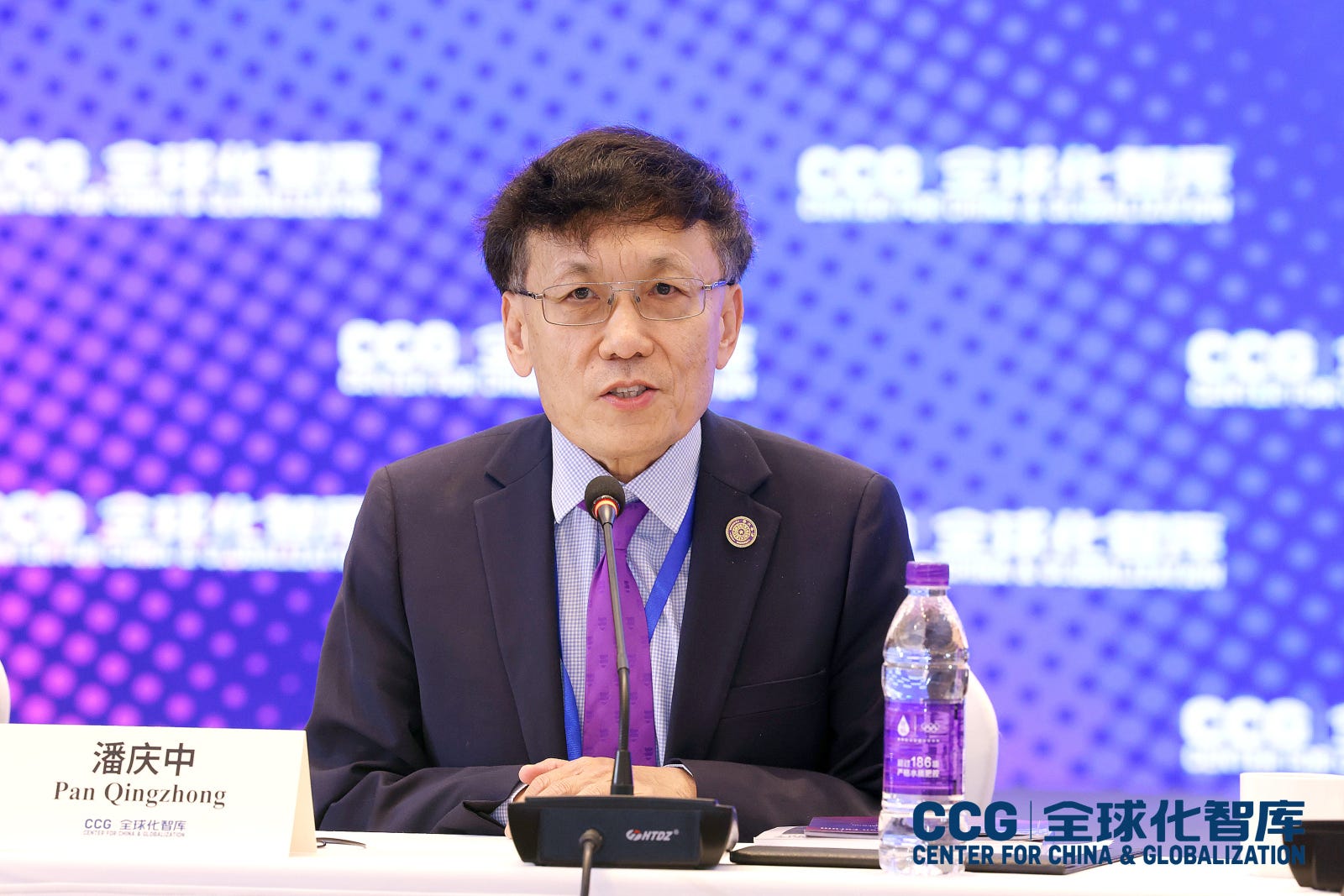
Thank you, Mabel. Good afternoon. This week is the busiest week for Schwarzman College in the past 10 years, as we are holding our 10th anniversary reunion. More than 1,166 scholars from all over the world have gathered in Beijing from April 22 to today.
Today is still very busy. I can see Professor Thomas and George Chen here, as well as many scholars, including Rza and Anthony. They are all busy too, though perhaps not as busy as CCG. I rode a bicycle from Tsinghua University here and arrived exactly two minutes before 2:00, because of the traffic. They told me the event was 40 minutes late, which means this place is even busier, with more topics to discuss. That’s a good thing. That means everyone wants to talk about today’s challenges.
We are busy solving the problems. I am too old to solve many problems. That is the responsibility of young leaders like Anthony and Rza. You are the future, and that is the mission of our programme: to cultivate future leaders to solve future problems.
We face enormous challenges today. The first piece of news I saw on my phone this morning was that Donald Trump had been involved in a shooting incident at a conference venue, which was shocking. We never know what will happen when we wake up. There are too many challenges. This is the reality we have to face.
Back to the Schwarzman College: why did we establish Schwarzman College? We wanted to build a platform where everyone can get to know each other, learn from each other, and work together to solve problems. This is particularly important today.
We held a grand ceremony on the 24th, and everyone talked about peace and development. When you see our students from 104 countries, with diverse backgrounds, coming together to discuss the same topics, it is because they share the same mission and concerns. You see our scholars becoming real friends, because that is human nature.
Why should we hurt our civilised society? We should uphold a civilised society globally, for everyone. I won’t take more time. I’ll pass the floor to others. To summarise, the mission of the Schwarzman programme is to build a platform for mutual understanding, peace, and development. Thank you so much.
Mabel Lu Miao
Thank you, Dean Pan. Professor Pan Qingzhong is Executive Dean and Professor of Schwarzman College, Tsinghua University. He has been extremely busy these days, and I highly appreciate your efforts to join our platform and introduce Schwarzman College.
We take the Schwarzman Scholarship as an example for the future of U.S.-China relations, especially youth exchanges. As you mentioned, it is a programme for peace and development, and you have nurtured more than 1,200 scholars from different countries who share the dream of promoting relations between China and the world, as well as global peace and development.
I remember your programme has three pillars: China, Leadership, and Global Affairs. These three pillars are significant for promoting relations between China and the world and enhancing mutual understanding. Thank you very much.
Next, I’d like to invite Mr Zhang Ning, Vice President of the Chinese Society of Educational Development Strategy and Chairman of the International Competence Development Committee. Your committee is affiliated with the Ministry of Education, and you are a senior official and leader in the development of Chinese students’ international competence. The floor is yours. Please introduce your committee and share your views on the implications of the Schwarzman Scholarship for China’s international education and global talent development.
Zhang Ning, Vice President, Chinese Society of Educational Development Strategy; Chairman, International Competence Development Committee
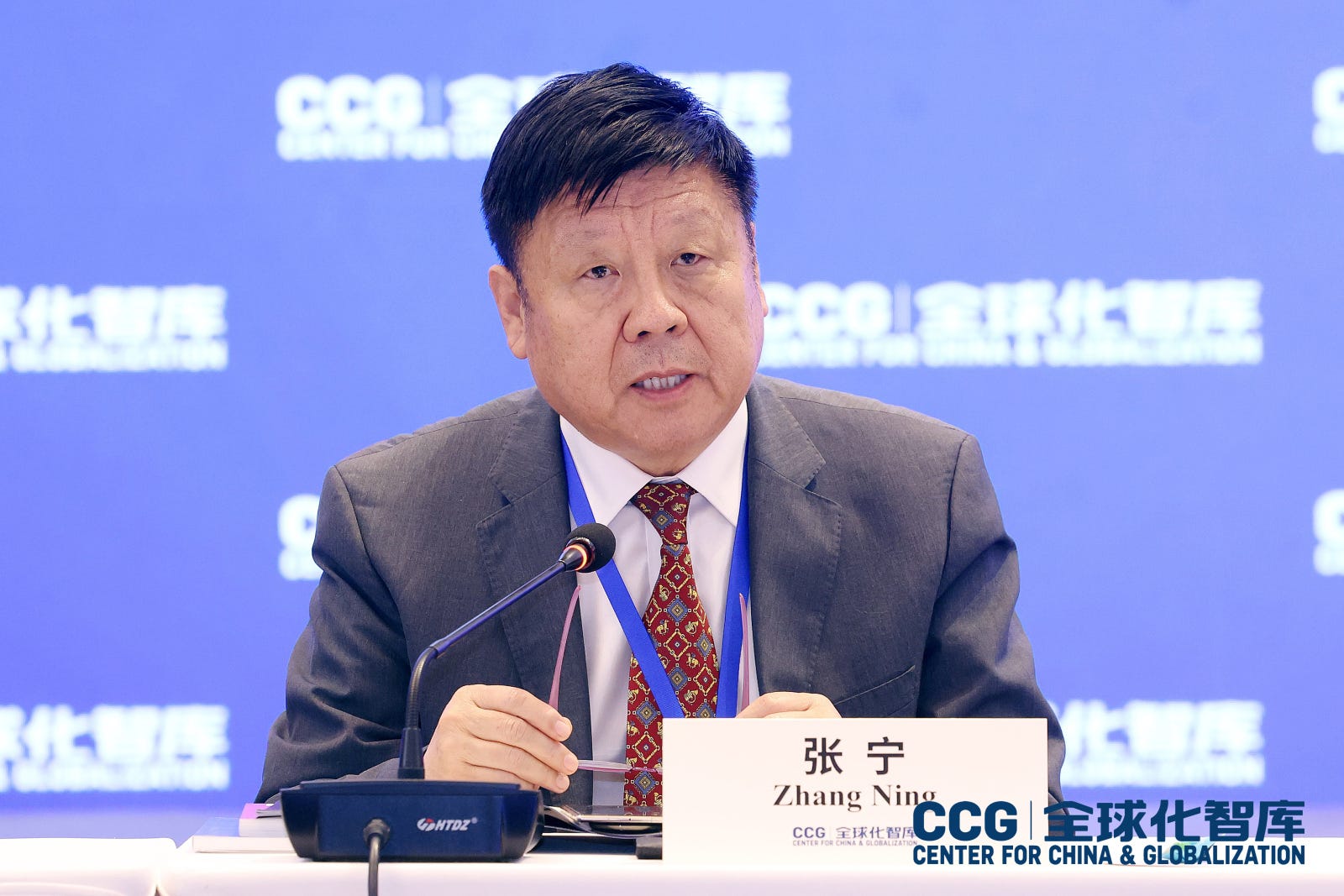
Thank you, Mabel. Just now, we listened to Dean Pan’s remarks. He has served as Executive Dean of Schwarzman College for 10 years. In fact, Schwarzman College and Tsinghua University have created a special educational institution. Over the past decade, this institution has built a multicultural setting and a platform for Chinese and international youth, especially Chinese and American youth, to study and live together.
As mentioned earlier, the College has already welcomed pver 1,200 Chinese and international students from 104 countries, with Chinese students accounting for 20% and international students 80%. This in itself is a unique achievement. There are several aspects of this innovation that deserve particular attention.
First, it conducts world studies. At lunch today, I met a professor from the University of Geneva who has been teaching at Schwarzman College for many years. The College has attracted renowned experts and professors from around the world to teach these students, bringing global information and perspectives. While studying the world, it also focuses on China.
It uses several methods. The first is interdisciplinary integration. The second is to respond to questions related to China’s development. The third is extensive practical learning, including research visits to Chinese enterprises, government institutions, rural areas, and remote regions.
Another aspect is the cultivation of global leadership. How does it cultivate global leadership? By broadening the global vision of Chinese and international students, improving their global competence, and training their global leadership. In fact, global vision and global competence are the foundation, the underlying capabilities, on which global leadership is built.
In addition, the College also connects students with future career pathways. Some students go on to work in international organisations, some in national governments, some in multinational companies, and some start their own businesses. All of this has made Schwarzman College a highly successful educational institution.
When it comes to Chinese and American youth, Chinese young people have several characteristics in terms of competence and personal qualities. One is that they have a relatively strong capacity for sustained learning. This is a distinctive feature of Chinese students. Whether through homework or examinations, they have developed the ability to keep learning. In addition, they tend to be honest, responsible, technically aware, and strong in teamwork.
Alongside these strengths, Chinese students also have some relative weaknesses, such as public speaking, planning and organisation, communication, and the ability to discuss and question. When I say these areas are relatively weak, I mean this applies to around 60% to 80% of students, not every individual. Some students may not fit this description. Compared with American students, there are several dimensions I would like to introduce.
First, in terms of global awareness and cultural understanding, Chinese students generally have a strong sense of national identity and cultural confidence. Their understanding of global issues, however, tends to be more theoretical, and their cross-cultural understanding often remains at the level of surface symbols. They lack a deeper observation of the values and logic of thinking in other cultures. American students, by contrast, have long been immersed in a multi-ethnic environment and are able to connect global issues with their own life experiences, although they sometimes also carry a Western-centric perspective.
In terms of cross-cultural communication, as I mentioned earlier, Chinese students are more modest and reserved, with a strong sense of collective cooperation. However, their public expression and practical foreign-language skills are insufficient. Their communication tends to be introverted and conservative, and they often avoid conflicts of opinion. American students are good at impromptu expression, public speaking, and debate. They communicate directly and actively, attach importance to expressing their own views, and have a stronger sense of self in teamwork.
In terms of critical thinking and innovation, Chinese students are good at summarising and deep learning, but they have an insufficient spirit of questioning. They tend to rely on standard answers, and their originality, breakthrough capacity, and innovation are relatively weak. American students are more able to question authority, engage in diverse forms of reasoning, and value divergent thinking, trial and error, and exploration. They have strong practical critical-thinking skills, although their thinking can sometimes be fragmented, and their capacity for deep research may be relatively insufficient.
In terms of global responsibility, Chinese students identify with the ideas of multilateralism and common development, and have a strong sense of collective responsibility. However, their participation in international exchanges, overseas volunteering, and cross-border projects is relatively low, and they lack initiative in global practice. American students, generally speaking, are more active in social practice, public service, and overseas study programmes. They are more action-oriented, although their understanding of global responsibility can sometimes carry ideological tendencies.
Thank you. That is my introduction.
Mabel Lu Miao
Thank you, Chairman Zhang. He used to be Deputy Secretary-General of the China Scholarship Council and held positions in several departments and overseas offices under China’s Ministry of Education, so he understands the strengths and weaknesses of Chinese students compared with U.S. students.
Next, I’d like to invite Cheng Yan Davis, Founder and President of the Forum for World Education. She served as Special Advisor to the President of Teachers College, Columbia University, on international advancement, and as Senior Advisor to the Shanghai Pudong Government. Before joining Teachers College, she worked at the University of Pennsylvania. She is a senior educator with deep knowledge of both the U.S. and Chinese education systems. Please share your views on this topic.
Cheng Yan Davis, Founder and President, Forum for World Education
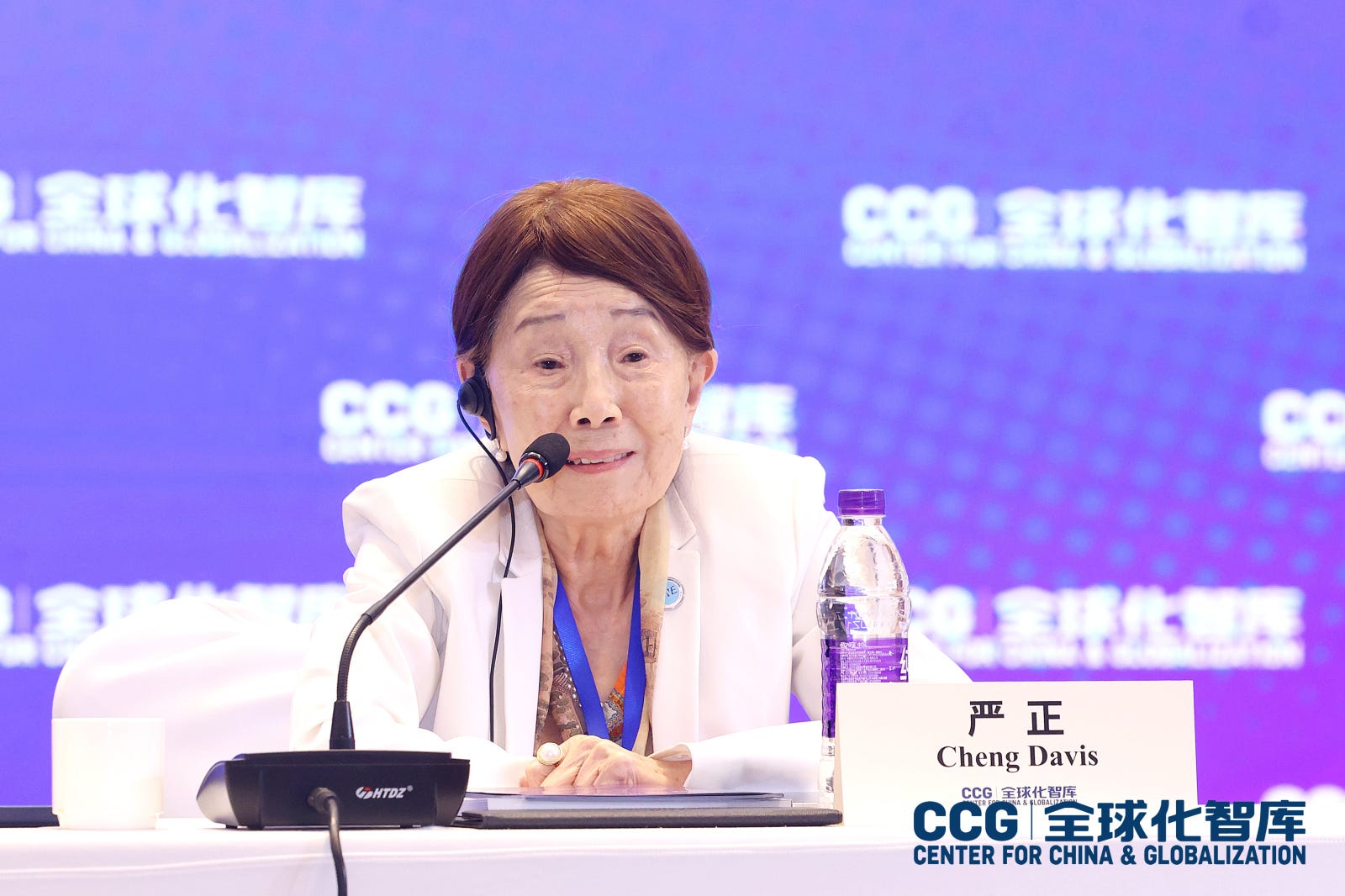
Thank you very much, and thank you for inviting me, Secretary-General Miao, and also Henry.
This is an exciting time to talk about education. The Forum for World Education was founded by our trustee, Mr Paul Kelly. He is a business leader, and he believes that no one can talk about education better than business leaders, because they can tell us what we should do and what kind of people education should cultivate for business to hire the right people.
At the Forum, there are two important tasks we focus on. One is education as diplomacy. Today, I heard many scholars and business leaders talk about U.S.-China relations. But I just want to tell you that many years ago, in 1977, U.S.-China relations began to open through ping-pong diplomacy. Education exchanges also started at that time. In 1977, only 56 Chinese scholars visited universities in the U.S. But to date, 3 million Chinese students have been educated by American universities.
We should say that this kind of powerful educational diplomacy means there should be no reason for the U.S. and China to have problems. The U.S. and China should have no problems, because we have so many young leaders.
But at the same time, I want to ask: if, in 1977, we had had a better education system to help the American people understand China, the relationship would be much better today. We reviewed American high-school textbooks, and we found that social studies teachers do not understand China. The textbooks also do not have good explanations of other countries’ history and culture. So you cannot expect leaders in the White House to understand the world or understand other countries.
If, at that time, we had had international education that could help the American people understand the world and understand other countries, the American people, who are wonderful people, would have accepted and elected good leaders to lead the country. But right now, most politicians in Washington have never had a passport. They have never been to another country. How can they understand the world and make the right decisions for the world?
Today, we are talking about the United Nations, and some people say the United Nations is a sunset organisation. I do not think this is simply because it is a sunset organisation. It is because they did not care enough about education. If, when the United Nations was built, it had focused on international understanding, rather than just bringing leaders to sit in New York and fight with each other, we would be in a much better situation.
So, at the Forum for World Education, we promote education first. We have great respect for Stephen Schwarzman. I think he is a very important person. He has led us by building a school for the world to understand China. But unfortunately, there is only one such school. We also have universities in China, such as NYU Shanghai and Duke Kunshan University, but we do not have Chinese universities or Chinese schools in America.
So I really think, Mabel, you should come to the U.S. more often, to tell our people how good this country is, and how much you appreciate it, and to let the American people know more about China.
I have to tell you that we are very worried, because 40% of our people in the United States have very little education, and 60% of our people have only an elementary education. You cannot imagine that we have the best elite education in the world, but we do not have good public education.
I see why China has achieved what it has today: your education system has played a very important role. You sent so many talented students overseas to learn from other countries.
From my own experience, I was Senior Vice Dean of the Graduate School of Education at the University of Pennsylvania. We worked with the Wharton School, and over 10 years, we trained 600 CEOs from China’s stock exchanges. 600 people came to our university over those 10 years. Then they returned to China and built a beautiful and very productive financial and stock-exchange system.
I think Chinese people appreciate American education. Chinese people know America, and Chinese people love America. But unfortunately, we do not have such a good system to let the American people know China.
So I would like to say that the Forum for World Education is an organisation that promotes cooperation among 17 countries. Let me give you another example. Britain invested £41 million to learn Shanghai’s mathematics teaching methods. The OECD Research Centre worked with us, and six years later, British primary-school students’ mathematics skills improved.
So we would like China to think about training our mathematics teachers, and we hope America can have better maths. As Tim Cook, Apple’s CEO, said, it is not that he does not want to bring Apple’s production line back to the U.S.; it is because we do not have enough skilled technological workers like China has.
China has a wonderful culture. As the Chinese saying goes, if you learn mathematics, physics, and science, you can find a job anywhere in the world. But in our country, America, right now, we ask students to be sports stars. If you are a sports star, you can go everywhere and get work. But we do not focus enough on maths and science education, and we are far behind you.
Education is diplomacy. China and the U.S. should really use education to work together. But now, we need your help. If you really want to have a good relationship between the two countries, focus on education and educate good leaders. Education will make the difference.
Thank you very much.
Mabel Lu Miao
Thank you, Dr Cheng. When we were in the U.S., Dr Cheng inspired me a lot. She told me that we should go to the U.S. more often and carry out more education diplomacy. We reached a consensus that, in the future, people-to-people exchanges between the U.S. and China should place greater emphasis on education and student exchanges.
This is one of the reasons why, this time, we take Schwarzman College as an example for U.S.-China relations, to promote people-to-people exchanges and young people’s leadership.
Next, I would like to invite a vivid example from Schwarzman College, the young man sitting beside me, Rza Aliyev. He still looks very young, but he is already a very successful think-tanker and organiser. He is the Chief Strategy Officer of the Nizami Ganjavi International Center in Azerbaijan. The Center is also an important organiser of the Baku Forum. I have just concluded my journey to the Baku Forum, which convened many international organisation leaders and statesmen. It was a very successful occasion for global cooperation.
So I would like to invite Rza to say a few words. I know you are a distinguished alumnus of the Schwarzman Scholarship. The floor is yours.
Rza Aliyev, Chief Strategy Officer, Nizami Ganjavi International Center
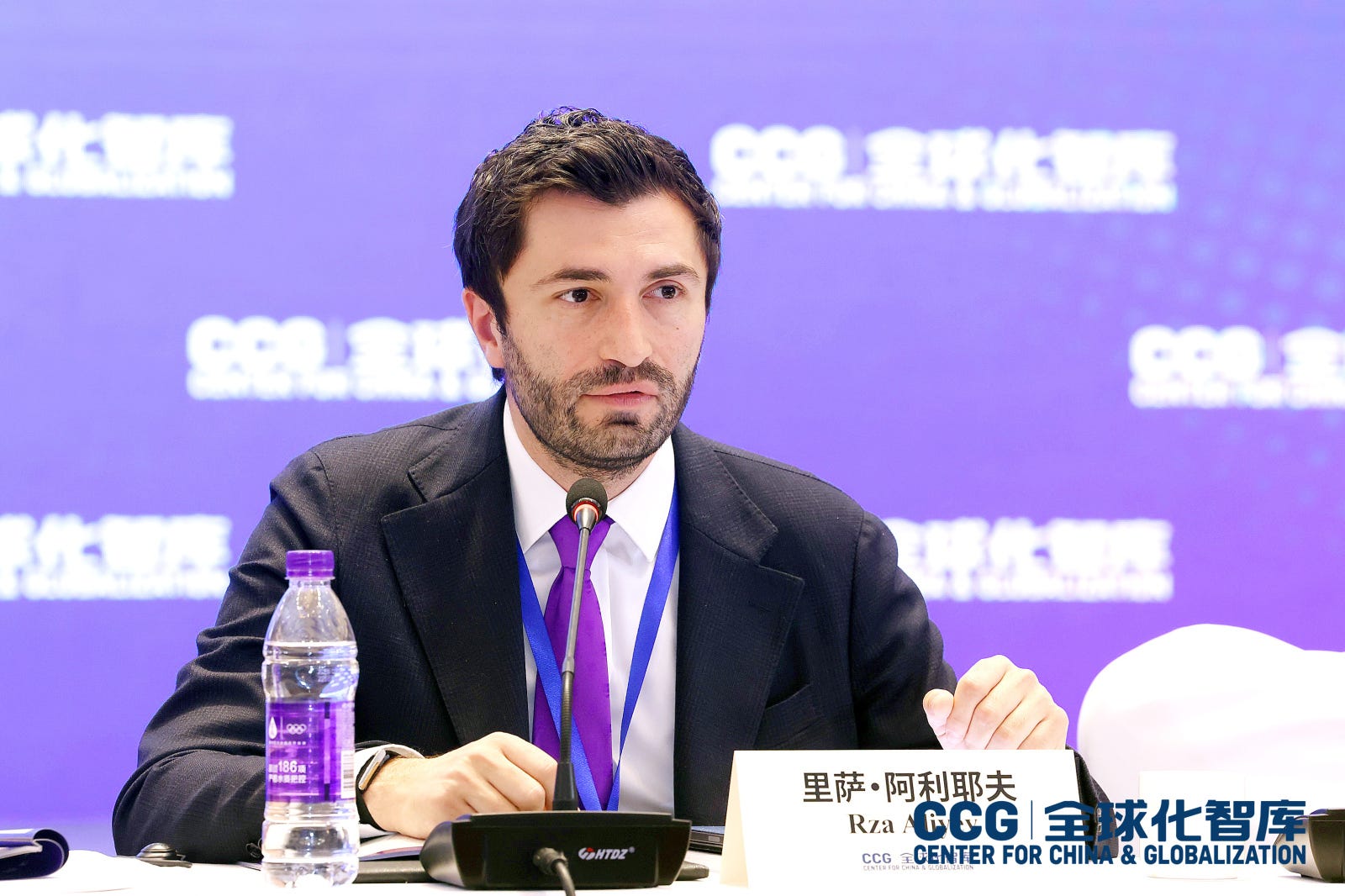
Thank you, Dr Miao. First of all, thank you to Dr Wang Huiyao for having me here.
As Dean Pan mentioned, this has been a very busy week, and also a very special and emotional week for us, as we are celebrating the 10-year reunion. I am also here as one of the first alumnus of the Global Young Leaders Dialogue as well, which was back in 2016. So I have seen CCG’s input and impact on young leaders.
If you allow me, I will share a few thoughts with you. Ten years ago, when we came here, I was from the first cohort. Back in 2016, when we came to Beijing, it was my first time in China. I was living in a small country, Andorra, although I am from Azerbaijan. I had never been to China, but we took a leap of faith, trusted Steve Schwarzman’s vision, and came here.
This week, when I reflected on the situation now versus 10 years ago, it is incredible to see that there have of course been many positive changes. The pollution level is definitely much better now. But the world has become much more divided and much more complex than before. We have two ongoing global wars. We have the AI revolution. We have lots of problems.
In all of this, as Madame Cheng was saying, education is one of the most important parts of the solution. The bonds that come through education will stay with us forever. The impact that education and Schwarzman Scholars have made on my life has been tremendous. I am based in London now. I would not be based there if it were not for the programme. My business partner and co-founder is a Schwarzman Scholar. His wife is a Schwarzman Scholar. So it is quite incredible what impact education and a programme like this can have.
When I reflect on why, as our panel says, Schwarzman College is a successful model, I would put it in three criteria.
First, immersion is better than exposure. Of course, it is different to come to China and see it for a week or a couple of days. But when you spend a year here, over a few months, you start making friends. One thing I realised is that making friends with Chinese scholars is very different from making friends with, let us say, American scholars, in terms of the model. In the U.S., where I also used to live, you go somewhere and after one week, or after one drink, you become very good friends. In China, you go for tea with Chinese scholars, and then you have many, many, many teas. You get to understand each other at a much deeper level. Then, after that, you have fun with some baijiu and become even better friends. So I think that immersion, rather than exposure, is really important in both directions. It would be great to have that in the U.S. as well, and in Europe as well.
Second, intellectual honesty over the comfort zone. During the year at Schwarzman, we had some very deep and very honest discussions on topics that might not be very comfortable. The openness of the scholars, and also the professors’ courage to talk about uncomfortable things, is what really makes the programme impactful. Over the years, you reflect on that and build upon it.
Third, the continuity of the network. One thing is to come for a year and then finish. Another thing is what we have seen this week: 10 cohorts, more than 1,100 people here. Having that network continuity, and having the programme as a very important part of your life, is what brings long-term value to us.
To finish, I want to say one thing. We see division in the world. But the problem that education can tackle and address is the need to get to know each other. I think the problem is not simply that we do not know each other—that the U.S. does not know China, or China does not know the U.S., in terms of lifestyle. The bigger problem is the risk that global politicians may take by miscalculation.
Before I came to China, I thought that, of course, because I had studied diplomacy and worked in diplomacy, I knew China. I came here and realised I knew nothing about China. I did not know all the beautiful diversity of its nature, food, and people. Thinking that we know is a much bigger danger than not knowing, because then you do not want to learn.
So I would say that this kind of miscalculation is one of the big risks of perception, and education is very, very important. I want to call for action so that learning experiences and education can be carried forward by people.
Thank you.
Mabel Lu Miao
Thank you very much, Rza. You mentioned your experience with the Schwarzman Scholarship and the College. I think the last point you mentioned, the lifelong network, is very important. It boosts mutual understanding and reduces misperceptions, especially miscalculations about each other.
Sometimes these miscalculations are one of the major reasons for misjudgements in policy, and even for wars and conflicts. Networks such as the Schwarzman Scholarship, Duke Kunshan University, NYU Shanghai, and many other joint-venture institutions in China are very important.
As President Xi mentioned at the San Francisco Summit, in the next five years, China would like to invite more than 50,000 American students to study in and explore China. I think this is a great project for mutual understanding.
Next, I would like to move to Mr Anthony Andong Wang. He is also a Schwarzman Scholar, and I would like to listen to your story and opinions. Anthony is a Schwarzman Scholar who graduated in 2019. He was previously an investment banker at J.P. Morgan in New York. He also worked in private equity at CITIC Capital, focusing on international investments. He currently runs his own venture capital firm, focusing on innovative start-ups across frontier technology sectors.
So I would like to invite you to say a few words.
Anthony Andong Wang, Schwarzman Scholar
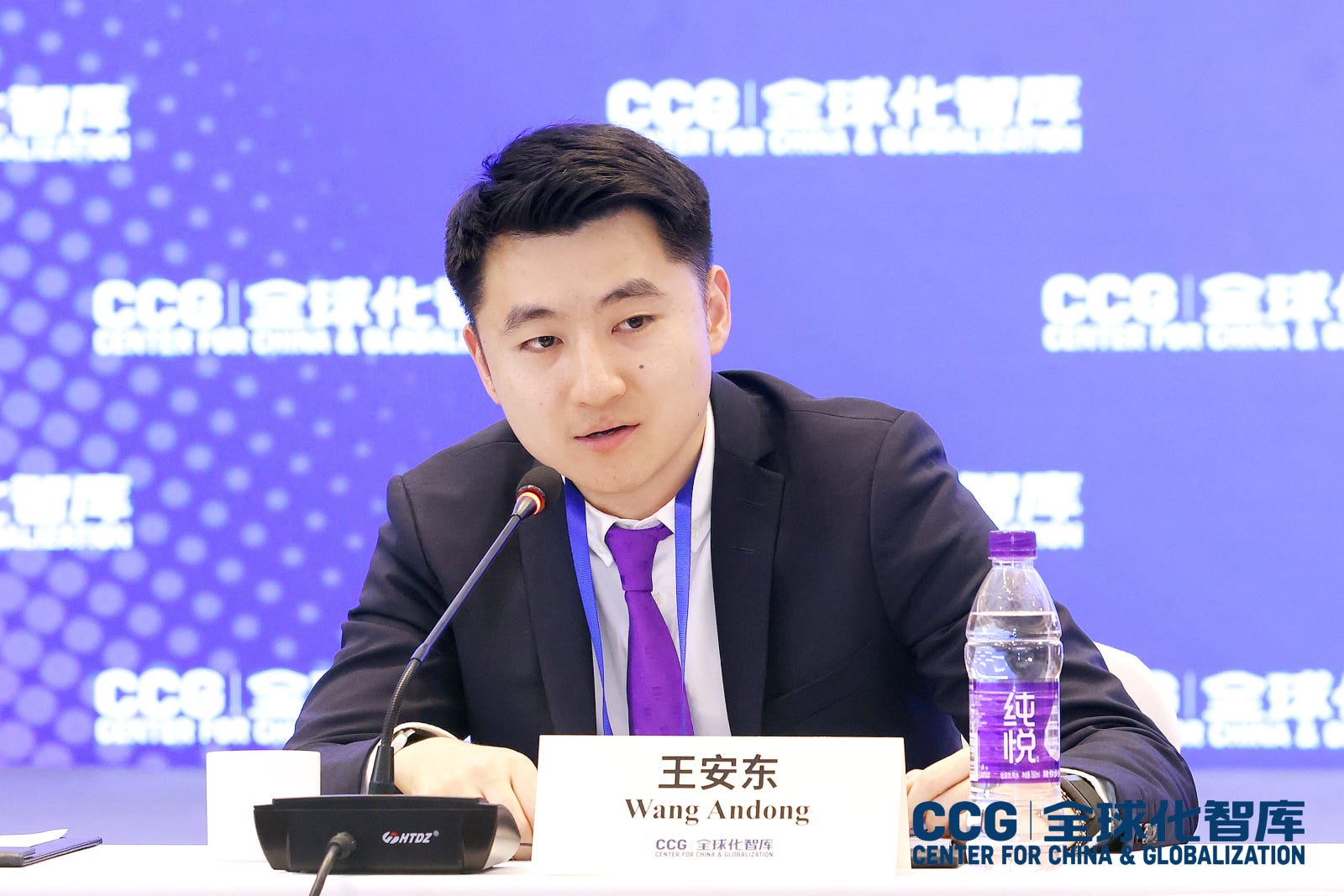
Thank you, Dr Miao, and thank you to CCG for having me. It is such an incredible honour to be here today, reunited with former professors, classmates, and distinguished panellists.
This past week, I spent time at the 10-year Schwarzman reunion, and it was actually surreal to catch up with old friends and classmates from the class of 2019. It felt like yesterday that 140 of us came together for a one-year shared experience in China, a year that was formative and, honestly, life-changing. It moved us beyond seeing China as an abstraction.
The programme was also extremely diverse, not just geographically, but intellectually. It included military officers, entrepreneurs, artists, and civil servants. That range forced genuine cross-pollination.
Exchange works when it is immersive. Short delegations and goodwill dinners do not really move the needle, but months together do. The programme created a shared language, not necessarily Mandarin, but a shared frame of reference. That matters enormously when these are the people making decisions in government, finance, and tech 10 to 20 years from now.
In a period of real geopolitical tension, people-to-people ties are one of the few channels that remain open and trusted. Schwarzman alumni, hopefully, can serve as a back-channel network.
I applied to the programme in 2017, during an era of global cooperation. I was optimistic about the opportunities between China and the U.S., the two largest markets in the world, and how this could benefit my own career. Since then, the era has shifted to strategic competition, or even rivalry. But did that make the programme a bust or a failure? No. I think the complete opposite.
Steve Schwarzman’s original thesis played out faster than we would have thought: that mutual understanding between China and the U.S. would be imperative for the future of our world. The programme has adapted to train students on where the real fault lines are, and where cooperation is still possible and necessary.
I think everyone here knows that the world is changing at an extremely rapid rate. As a venture capital investor, I have a front-row seat looking at some of the most emerging technologies, such as AI. These are truly powerful technological breakthroughs, which only highlight the importance of global governance and AI safety, among many other topics.
Today, the world is largely divided and broken. Cross-border exchanges and dialogues have stalled. Student exchanges between China and the U.S. have declined by up to 40% from 2019 levels. Yet I left the 10-year Schwarzman reunion with a newfound sense of optimism.
Despite the significant challenges and headwinds, including four years of COVID impact, which disrupted the status quo, the programme has demonstrated incredible resilience. While Schwarzman Scholars was initially characterised as a start-up, it has now transitioned into an established platform, with the real value showing up 10 years later, as things have finally begun to compound.
Across 10 cohorts and roughly 1,300 alumni, 90% expressed interest in coming back to China for the reunion, with an actual attendance rate of 83%. This set a new Tsinghua record for alumni network attendance. For many scholars, Schwarzman was probably the most memorable year of our lives.
The scholars coming out of this programme, I hope, are going to be in the rooms where it matters. I think that is the real ROI and the legacy that Steve Schwarzman is leaving us. Hopefully, this type of community is one that can transcend any single era.
Thank you.
Mabel Lu Miao
Thank you, Anthony. These two speakers are very vivid examples of Schwarzman Scholars — what kind of experience they had in China, and what kind of vision they built through this programme.
Today, we want to take this example to reflect on how important these scholarships and people-to-people exchanges are, and what role they can play. CCG has recently released a special research report on strengthening U.S.-China youth exchanges and implementing this important initiative. We put forward concrete policy recommendations to build a sustainable mechanism for youth engagement and global leadership development.
Meanwhile, we launched the Global Young Leaders Dialogue, or GYLD, which has built a high-level platform for global young leaders to enhance mutual understanding and cross-cultural cooperation. We received a congratulatory letter from President Xi. We have also built a strong network of more than 2,000 young leaders from 80 countries.
Recently, we launched AGTO, the Alliance of Global Talent Organizations, to advance global talent mobility, international cooperation, and innovation in cross-border talent governance.
I would like to invite Mr John Zhanjie Zhao from AGTO to briefly introduce AGTO and share his views on this topic. The floor is yours, John.
John Zhanjie Zhao, Director, Alliance of Global Talent Organizations (AGTO)
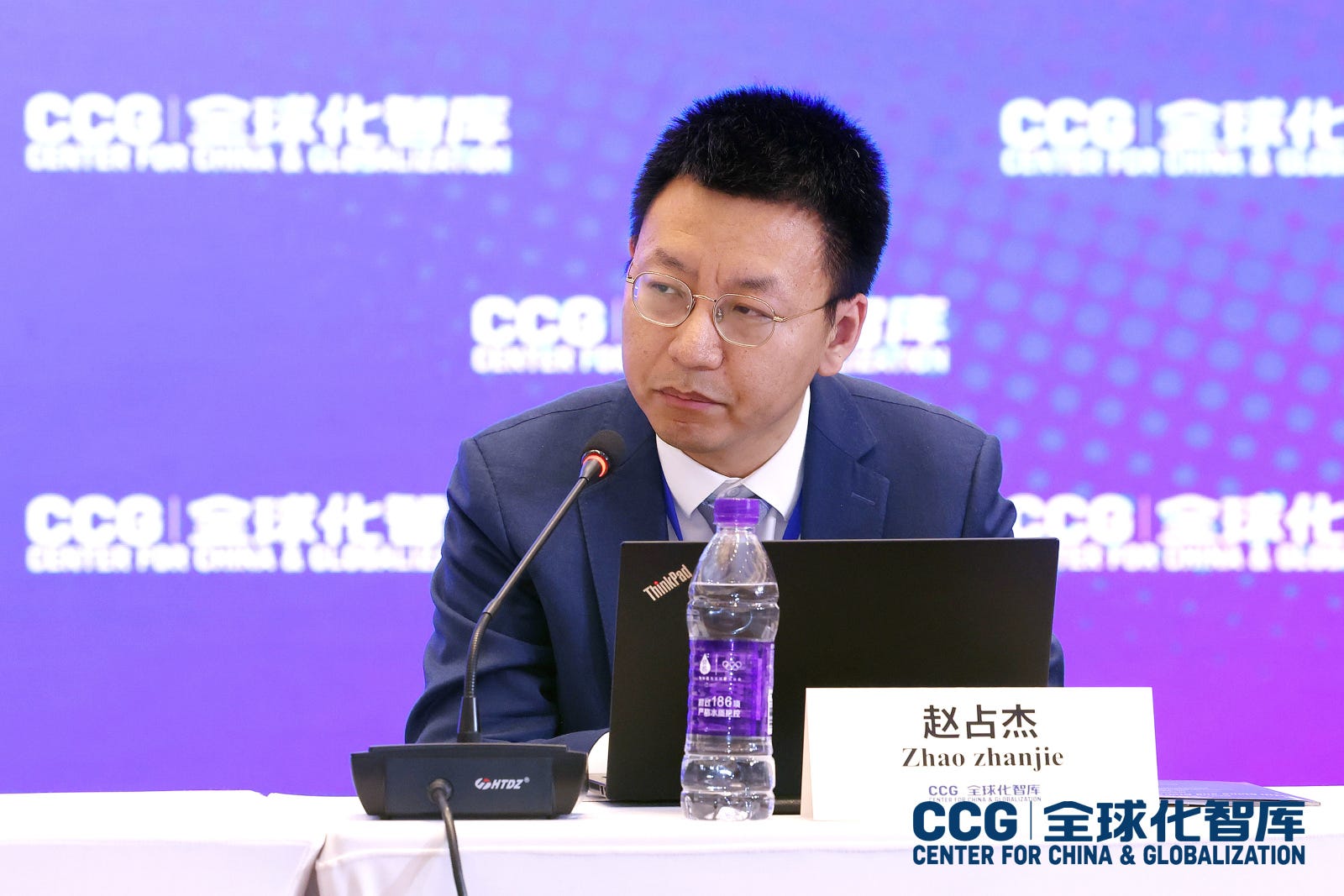
Thank you, Mabel. It is a great honour to join this roundtable and introduce the Alliance of Global Talent Organizations, and also the Global Young Leaders Dialogue (GYLD), because many Schwarzman Scholars are also GYLD members.
GYLD is a programme initiated by Dr Mabel Miao in 2020. We gather young leaders under 45 from over 100 countries. It is not just a talk shop, but an incubator for actionable ideas on global governance, sustainability, and technology.
AGTO is a non-governmental international organisation. We bring together institutions, such as universities and multinational companies, to shape the rules and pathways for talent mobility.
Why did we build these two programmes or institutions? Because we want to promote deep and cross-cultural engagement between talent and between institutions. We can see that the GYLD programme is inspired by the Schwarzman College model. It shows that deep cross-cultural engagement can really create impact.
I really agree with what Madame Cheng just said. We must create more Schwarzman-like pipelines that are long-term and trust-based. It is not just about one-time exchanges, but about embedding global talent within local contexts.
Recently, I read a book that talked about the ability to be equipped with multiple explanatory systems. As Rza just said, before you came to China, you may have had an explanatory system based on Azerbaijan or the UK. But I think it is important to have more explanatory systems, such as a China explanatory system.
In recent years, there has been a lot of talk about the “China shock”. But as Dr Henry Wang said, it is better understood as a “future shock”. If you are equipped with more explanatory systems, especially a China explanatory system, you can better understand the future. That is, I think, what Schwarzman College, or the Schwarzman College model, shows us: how cross-cultural engagement and a deep dive into one country’s culture and mechanisms can provide young people with strong abilities.
In conclusion, the Schwarzman model proves that when you invest in deep residential leadership development, you create ambassadors for life. At GYLD and AGTO, we are committed to scaling up this model and ensuring that the next generation of young leaders are not just connected, but are truly co-creators.
Thank you.
Mabel Lu Miao
Thank you, John, for your kind introduction of CCG’s programmes and our participation in people-to-people exchanges.
Last but not least, for this conference and this topic, we selected five distinguished young people from our talent pool to join the Q&A. But time is limited, so each of you will have one minute to say a few words and express your opinions on this topic.
Maybe we can start with Maria, who is also a Schwarzman Scholar. Maria, please. Each person has one minute. Sorry, time is limited.
Maria Gabriella Oliveira Costa, Schwarzman Scholar
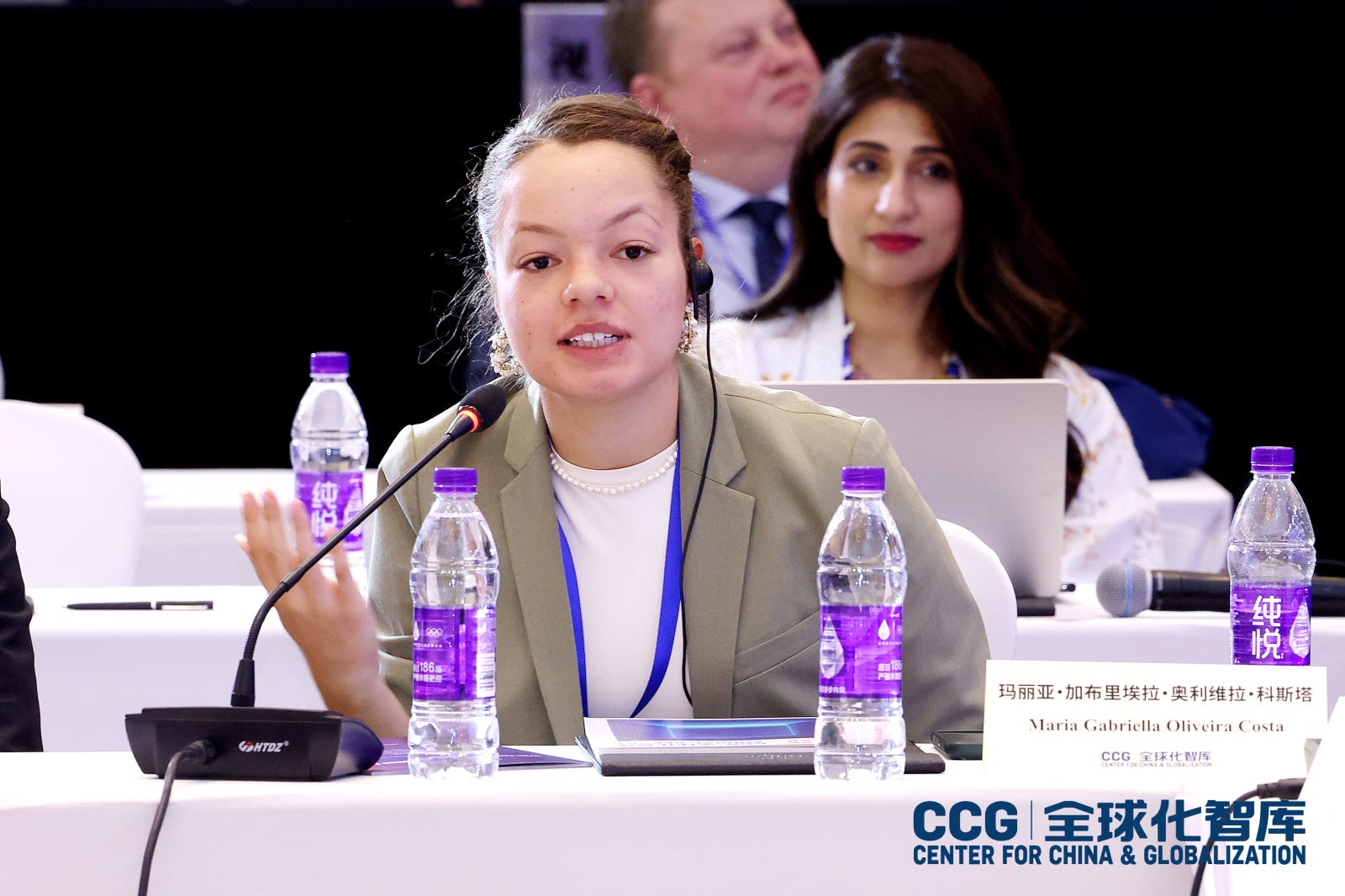
Thank you for having me, and thank you for this event. I am currently a Schwarzman Scholar from C10, so I have had the pleasure of meeting many alumni this past week, and I completely agree with everything they said.
I am a scholar from Brazil, and I feel that the programme has allowed me to gain both perspectives and learn from the strengths of both Chinese scholars and U.S. scholars, which is a very privileged position to be in.
I also agree that being in China is such an incredible opportunity. Coming from Brazil, we normally do not have as much exposure to what China looks like in reality. So, being here and living here, the programme has allowed us to have a deep-dive experience. I was able to go to Guizhou, and it was incredible to see rural China, but also Beijing, developed China, and Shanghai.
I always tell my parents that I fell in love, because it is so different from everything we sometimes have contact with. It is so much more complex. Also, coming from a Global South country, I believe there is a lot we can learn from China, and there are a lot of ways in which we can cooperate. So being here and being a Schwarzman Scholar is definitely truly a privilege.
Thank you.
Mabel Lu Miao
Thank you, Maria.
Next is Anna, a master’s student in finance at Tsinghua University. Maybe we can move to another one first. Yes, maybe you can introduce yourself briefly.
Murilo Rangel da Silva, Master Student in Political Science, Tsinghua University
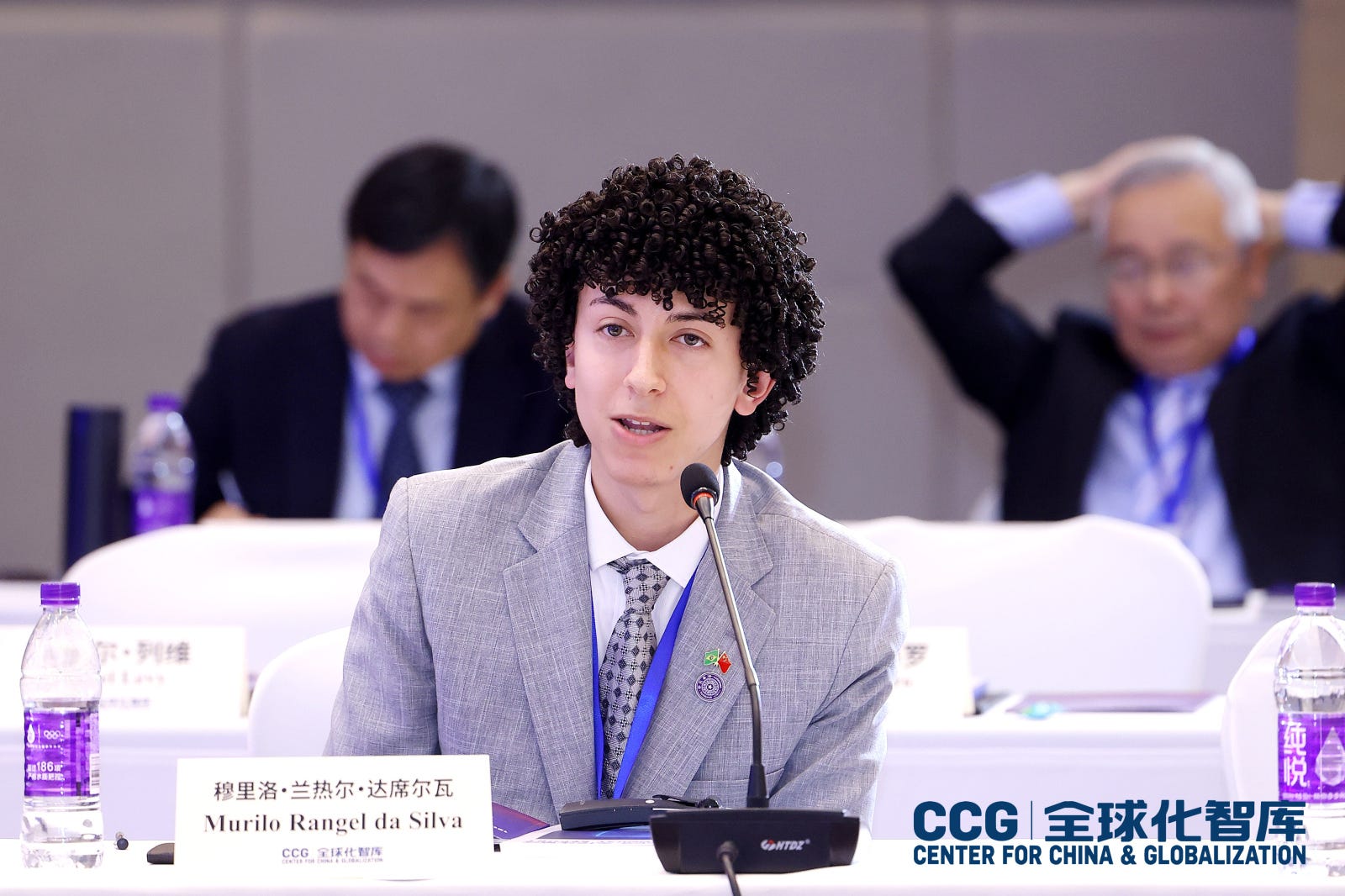
Hello, everyone. My name is Murilo. I am from Brazil as well. I am a master’s student in political science at Tsinghua University, and it has been a great pleasure to study in China.
I came here in 2024 for a finance summer programme at Tsinghua as well. I also worked at the Bank of Communications in Brazil, which is a Chinese bank in Brazil. I could see how cooperation between China and Brazil has been developing so fast. This bank is especially focused on agriculture. So I see that this cooperation between Brazil and China is fundamental to creating more bridges between us.
I think that, with many scholars and through meeting Schwarzman Scholars as well, I can see that this cooperation is not just between Brazil and China, but also with the whole world.
Thank you.
Mabel Lu Miao
Thank you. Next is Francesca.
Francesca Pala, PKU-LSE Master student in international affairs
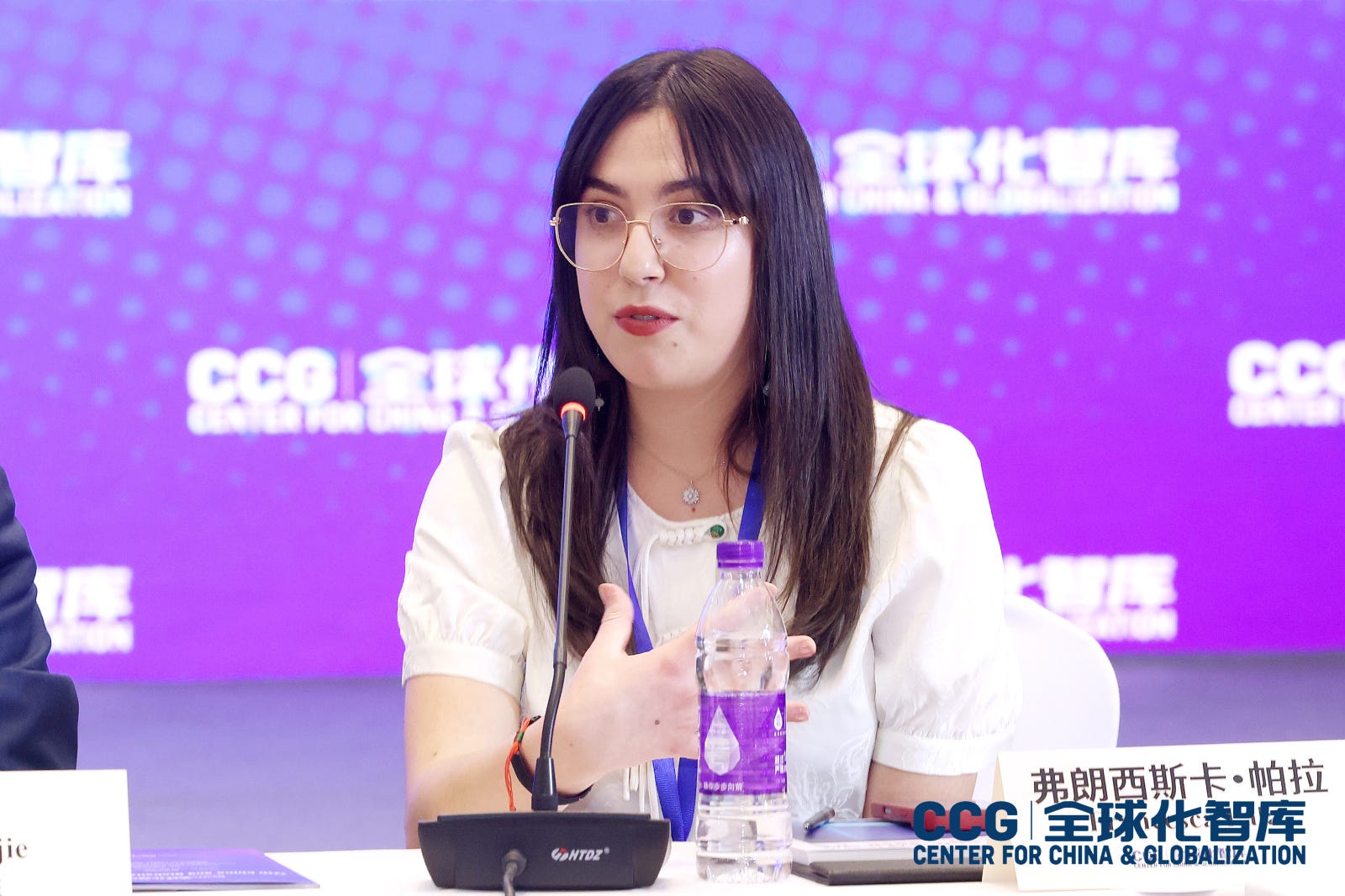
Hello. Hi, everyone. My name is Francesca. I am currently a postgraduate student at Tsinghua’s neighbour, Peking University. I am part of the PKU-LSE master’s programme in international affairs, but I am also quite familiar with the Schwarzman programme, which I think is incredible. I have also been involved with Yenching Academy, which is kind of the neighbouring programme, similar to Tsinghua’s Schwarzman programme.
It is a real honour and privilege to be here and to learn from your insights. Thank you so much for everything that was shared.
Being a foreigner in China and a student at Peking University has been truly an amazing experience, which I think all of us can relate to. I truly agree with what was shared about really being immersed, rather than just being temporarily in China. There is only one way to learn from China, which is to engage as much as possible with Chinese people throughout the long term. So at least a one-year programme, or ideally a two-year programme, would definitely be the best.
Thank you so much, everyone.
Mabel Lu Miao
Thank you. We are so pleased to know so many distinguished young people. Maybe we can move to Ms Ng.
Joey Ng, Serial Entrepreneur; Undergraduate Student, Tsinghua University
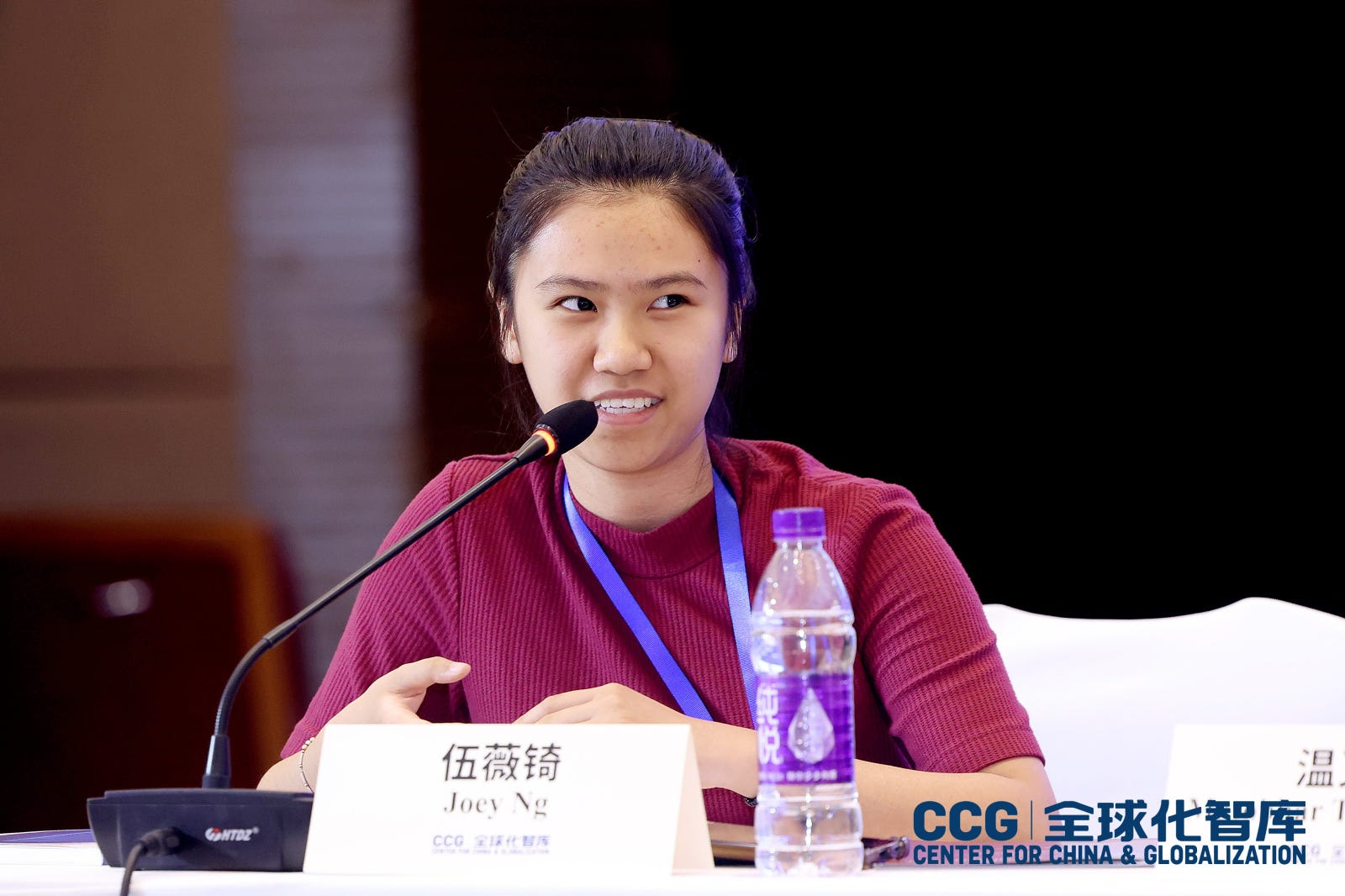
Hello. Hi, everyone. I am Joey, and I am from Malaysia. I am currently a first-year undergraduate student in the Economics and Management Department.
I am currently an entrepreneur bridging the China-Malaysia technological gap, and I am also an AI start-up founder and a student with the Yao Class. Even though this is my first year in China, I think this is a really great opportunity for me, especially as an entrepreneur, because I believe this place is full of resources. China is one of the most important places for AI and technology.
So I am really, really grateful to study here, explore, and get to know so many people here.
That is all from me. Thank you.
Mabel Lu Miao
Let’s move to the last one. Please.
Matobbar Tanvir Parvez, young ESG professional; former President, Student Association of Belt and Road Initiative (SABRI), Tsinghua University
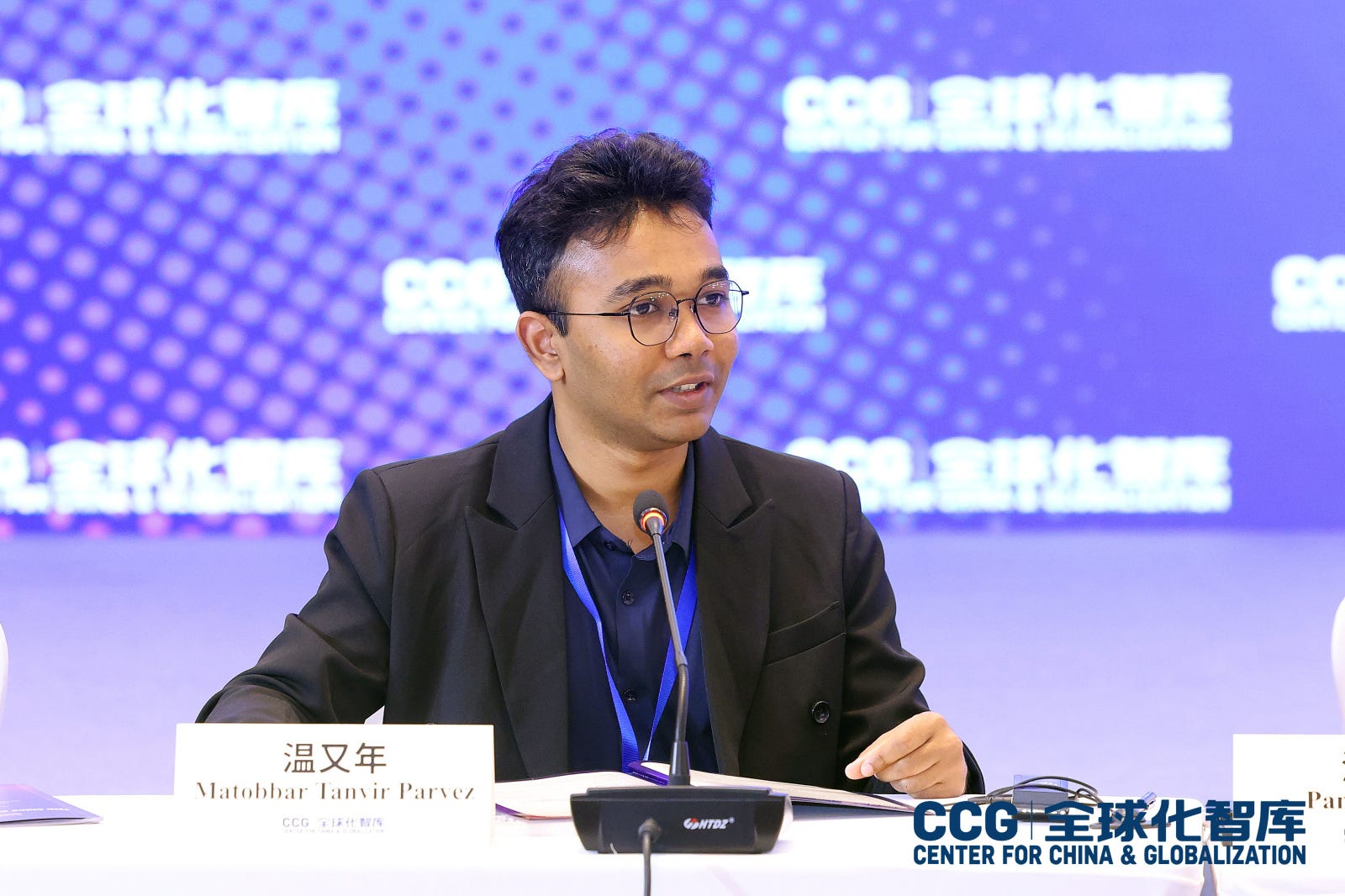
Thank you, everyone, and thank you for the wonderful talk. My name is Matobbar Tanvir Parvez. I am from Bangladesh, and I am a 2025 Tsinghua graduate.
Having spent the prime time of my life, almost seven years, here in China, I have had many different experiences. I also had the privilege of leading one of the largest student-led organisations on campus at Tsinghua University, and it is also one of the largest in the world.
Having this diverse experience from China, and with people from many other countries, I learned something very special here. We talked about diplomacy, and we talked about education. We are really proud to say that we are part of this core, fundamental thing that is going to drive the future of this world.
From our position, we will try our best to contribute. Thank you to all the pioneers like yourselves for guiding us on the right path.
Thank you.
Mabel Lu Miao
Thank you all. I just wanted to introduce these young people, these vivid examples, to all of our audience members and senior scholars who pay attention to this topic.
These young people and their experiences will shape the future of U.S.-China relations, China’s relations with the rest of the world, and world peace. The future lies in the youth.
Today, we took Schwarzman College and the Schwarzman Scholarship as an example to show how important people-to-people exchanges are. Today is just the beginning. In the future, we will see what flowers may bloom from our mutual understanding and from the future of the world.
Thank you all. As time is limited, let’s wrap up our panel here. Thank you all for your great participation, and let’s have more international cooperation for us and for the future of the world.
Thank you for your great participation.
The 12th China and Globalization Forum Held in Beijing

The 12th China and Globalization Forum, hosted by the Center for China and Globalization (CCG), was held in Beijing on Sunday, April 26, 2026.
Transcript: Opening Ceremony of the 12th China and Globalization Forum
The 12th China and Globalization Forum, hosted by the Center for China and Globalization (CCG) and co-organized by the China Association of International Trade (CAIT), the China Society for World Trade Organization Studies (CWTO), the China-United States Exchange Foundation
Transcript: Opening Roundtable of the 12th China and Globalization Forum

The 12th China and Globalization Forum, hosted by the Center for China and Globalization (CCG) and co-organized by the China Association of International Trade (CAIT), the China Society for World Trade Organization Studies (CWTO), the China-United States Exchange Foundation
Transcript: China-U.S. Roundtable of the 12th China and Globalization Forum

The 12th China and Globalization Forum, hosted by the Center for China and Globalization (CCG) and co-organized by the China Association of International Trade (CAIT), the China Society for World Trade Organization Studies (CWTO), the China-United States Exchange Foundation
