


This is the transcript of the third roundtable of the 10th China Global Think Tank Innovation Forum, held on 20 November 2025. The forum was hosted by the Center for China and Globalization (CCG) and co-organised with the China Association of International Trade (CAIT).
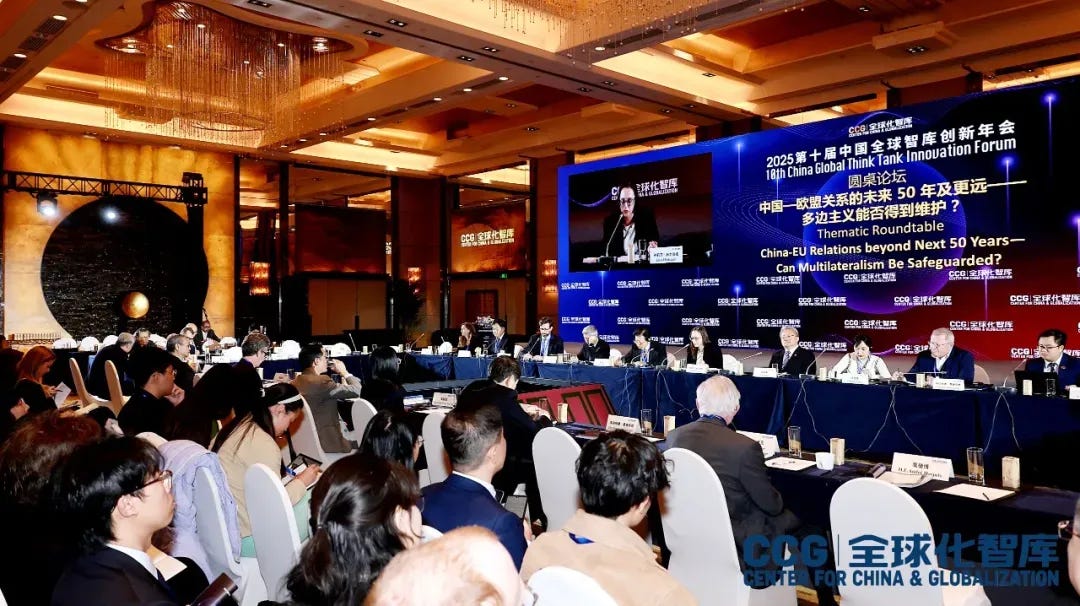
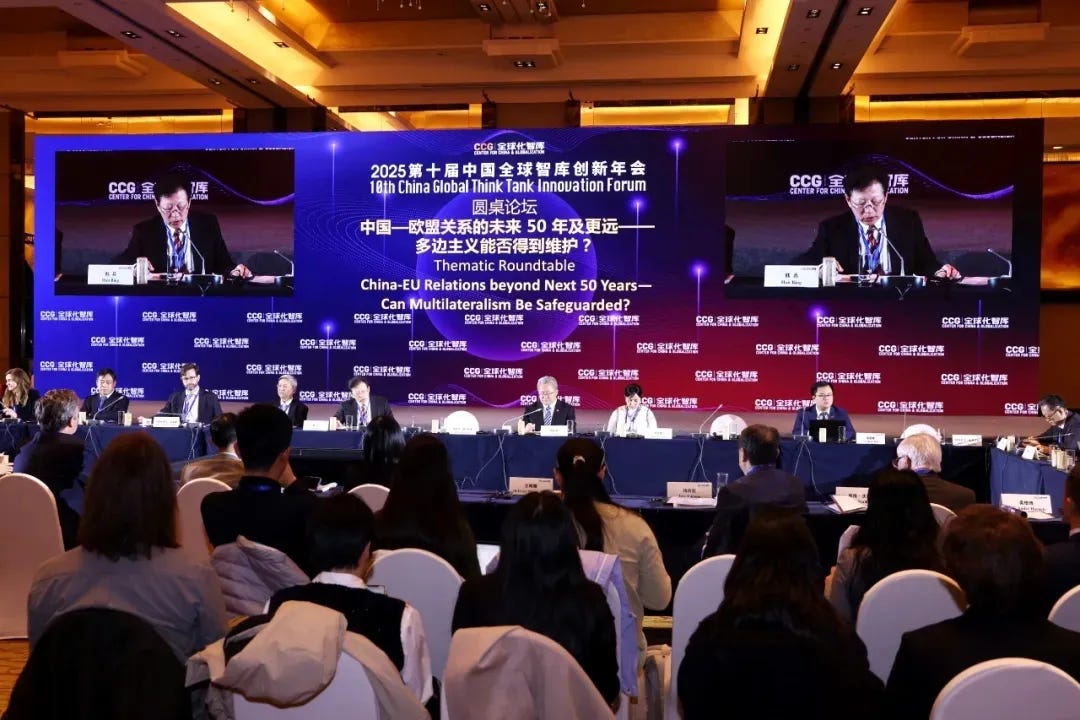
The roundtable, themed “China-EU Relations beyond Next 50 Years—Can Multilateralism Be Safeguarded?”, highlights shifts and uncertainties in the bilateral relationship driven by the securitisation of trade, the subsidy debate, the green transition, and U.S. policy as an invisible third party.
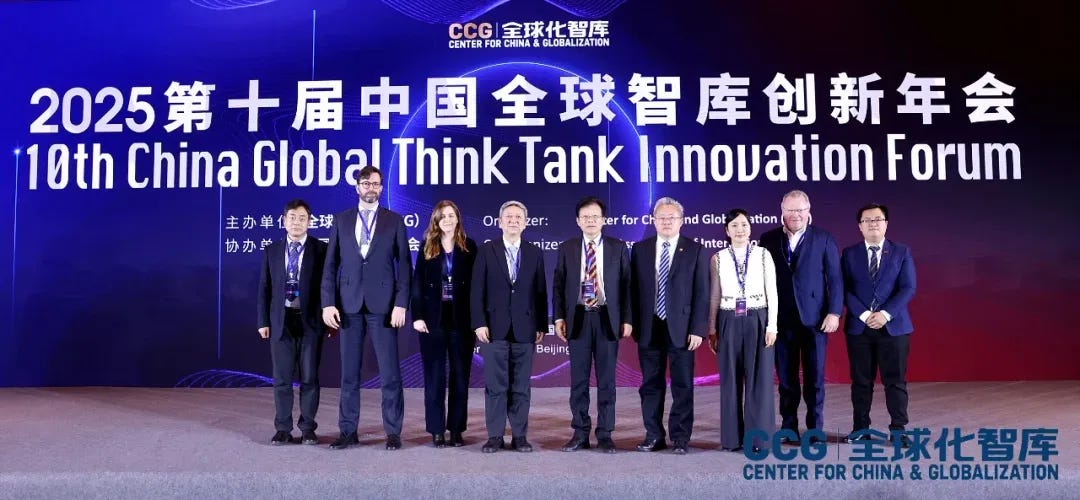
Moderated by Han Bing, Former Deputy Director-General in the Department of European Affairs, Ministry of Commerce, the session featured:
Carolin Albrecht, Founding Managing Director, Berlin Global Dialogue
Elisa Hörhager, Chief Representative, German Federation of Industry (BDI) in China
Lu Ruquan, President, China National Petroleum Corporation Economics and Technology Research Institute
Christoph Polajner, Founding Member and Vice Chairman of the Eurasia Society in Berlin
Eberhard Sandschneider, Senior Professor, Freie University Berlin; Former Director of the Institute of the German Council on Foreign Relations
Sun Yongfu, Senior Fellow, CCG; Former Director-General, Department of European Affairs, Ministry of Commerce
Wang Yiwei, Jean Monnet Chair Professor of European Union Studies, Renmin University of China
Zhang Yunqi, Vice President, Huajian Group
The discussion also included participation from GYLD delegate LY Quoc Thai, Policy Officer at the European Chamber of Commerce in Vietnam (Eurocham Vietnam).
The full video recording of the event is available on CCG’s YouTube channel and official website. For a quicker look, a standalone video of the roundtable has also been uploaded.
CCG has also broadcast the forum on Chinese social media platforms, where it remains accessible.
This transcript is based on the video recording and has not been reviewed by any of the speakers.
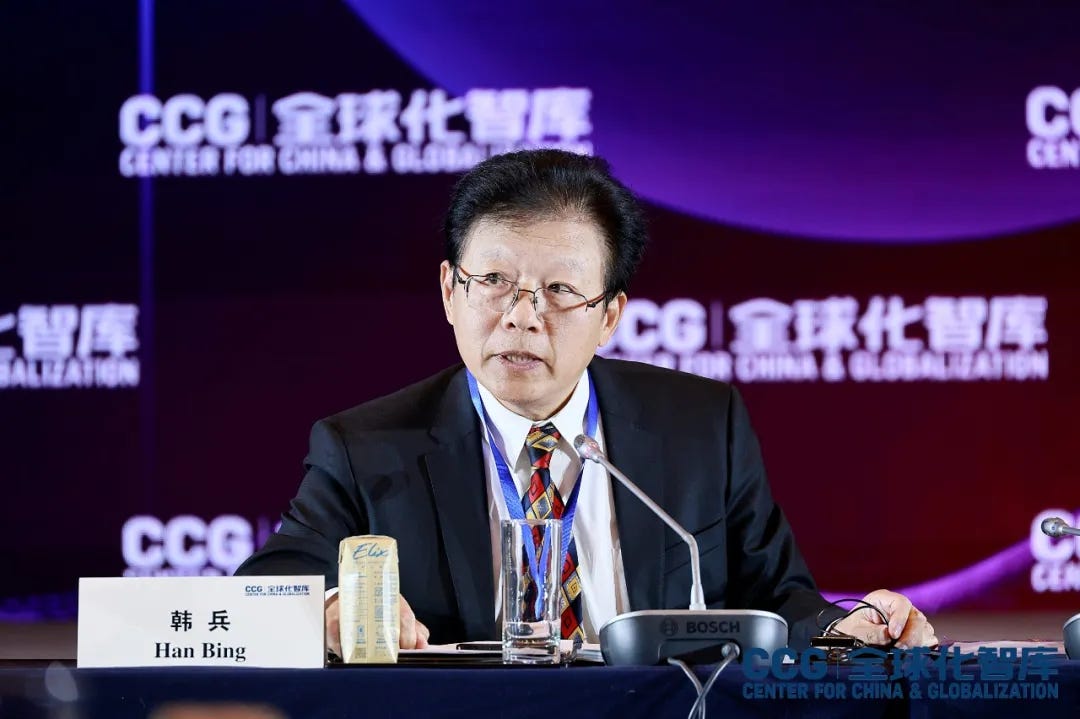
Han Bing, Former Deputy Director-General, Department of European Affairs, Ministry of Commerce
This roundtable session will focus on China–EU relations beyond the next 50 years. China and the European Union now mark over 50 years of diplomatic relations at a time when the global order is undergoing profound restructuring. As the international community confronts geopolitical fragmentation, supply-chain realignments, climate challenges, and the rise of new digital and technological power centres, China–EU relations have become increasingly central to the question of whether multilateralism can be preserved and renewed in the decade ahead.
China and the EU remain major stakeholders in global governance, each committed, in principle, to multilateral institutions and rules-based cooperation. Yet strategic outlooks differ in key areas, including trade policy, digital governance, human rights, industrial subsidies, and security priorities. At the same time, the EU’s pursuit of de-risking, China’s push for high-standard opening up, and the evolving roles of regional actors and emerging economies shape a complex environment for diplomatic engagement. Whether the two sides can maintain stable co-operation while managing structural differences will significantly influence the future of global economic stability, climate action, and institutional reform.
This session brings together leading European and Chinese scholars, policy advisers, think tank directors, and representatives of diplomatic and industry organisations to assess the long-term trajectory of China–EU relations by examining shared interests, policy gaps, and emerging areas of collaboration, from the green transition and digital standards, to global health, infrastructure connectivity, and WTO modernisation. The session seeks to identify practical pathways to uphold multilateralism and avoid strategic drift. The discussion emphasises not only state-to-state diplomacy, but also the role of civil society networks, academic communities, and industry partnerships in sustaining constructive engagement over the next 50 years and beyond.
Today, we have the participants in the roundtable, and I would like to introduce
Carolin Albrecht, Founding Managing Director, Berlin Global Dialogue;
Elisa Hörhager, Chief Representative, German Federation of Industry (BDI) in China;
Lu Ruquan, President, China National Petroleum Corporation Economics and Technology Research Institute;
Christoph Polajner, Founding Member and Vice Chairman, Eurasia Society, Berlin;
Eberhard Sandschneider, Senior Professor, Freie Universität Berlin, and Former Director, the Research Institute, German Council on Foreign Relations;
Sun Yongfu, Senior Fellow, CCG, and Former Director-General, Department of European Affairs, Ministry of Commerce;
Wang Yiwei, Jean Monnet Chair Professor of European Union Studies, Renmin University of China;
and Zhang Yunqi, Vice President, Huajian Group.
At the end, we will also have, from the Young Leaders Dialogue, Mr LY Quoc Thai, Policy Officer at the European Chamber of Commerce in Vietnam (Eurocham Vietnam).
I would like to ask the speakers to choose one or two questions, within a maximum of five minutes. The questions are as follows.
First, what are the main structural drivers shaping China–EU relations in the coming decades, and how can both sides balance co-operation with strategic differences?
Second, how can China and the EU safeguard multilateralism amid rising geopolitical rivalry and weakening trust in global institutions?
Third, in what areas, such as climate governance, green finance, energy transition, digital regulation, and global health, do China and the EU have the greatest potential to deepen collaboration?
Fourth, how are the EU’s approach to de-risking and China’s economic modernisation and openness agenda reshaping business confidence, technology partnerships, and supply-chain strategies?
Fifth, what role can international organisations, non-state actors, academic co-operation, and cultural engagement play in sustaining long-term mutual understanding and stable dialogue between China and the EU?
First, I would like to ask Carolin Albrecht to take the floor, please.
Carolin Albrecht, Founding Managing Director, Berlin Global Dialogue
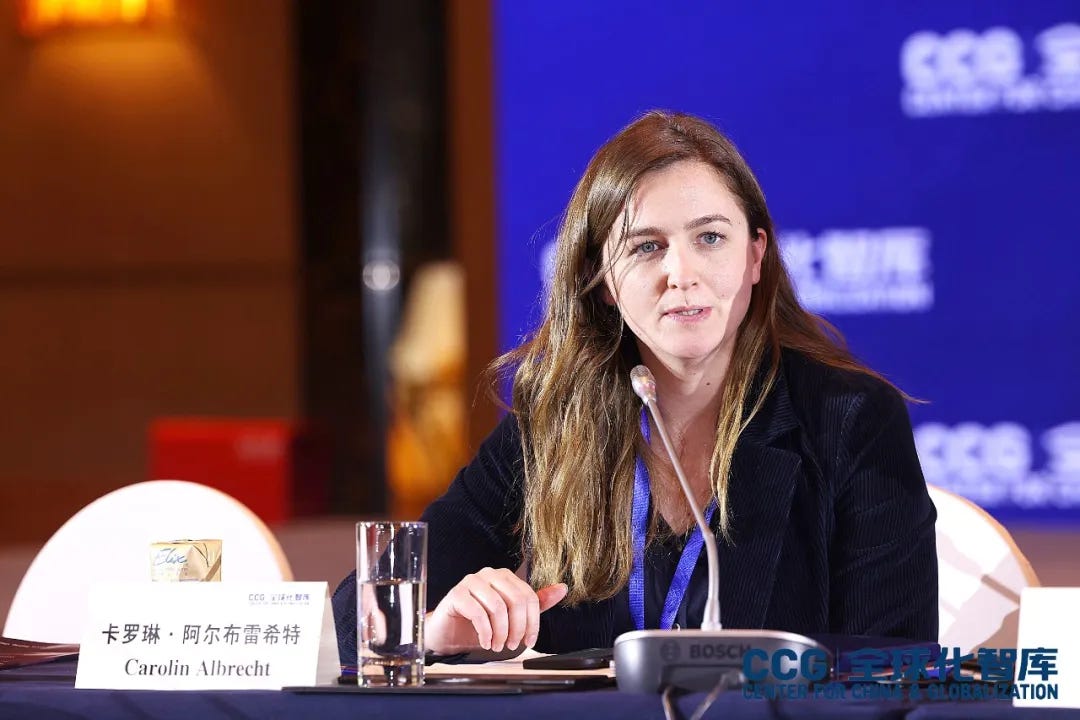
Thank you so much, and thank you to CCG for bringing us together today. By way of introduction, Berlin Global Dialogue is a forum based in Berlin that brings together political and business leaders to discuss the impacts of geopolitical shifts on the global economy. And, of course, you cannot discuss the global economy without having China at the table. Since we started Berlin Global Dialogue three years ago, we have established a regular exchange with the Development Research Centre of the State Council, as well as with the broader business community in China. I’m very glad to continue that exchange here with all of you today as well.
I want to offer a perspective on two of the questions that you’ve posed to us: first, the main structural drivers shaping China–EU relations in the coming decades, and second, how we can together safeguard multilateralism.
Regarding the structural drivers, first of all, I think we need to acknowledge that we are witnessing a complete recalibration of the economic relationship between the EU and China. For the past two decades, growth in Europe and China was complementary. The industrialisation and growing prosperity here in China created demand for EU products, especially in Germany. That meant there was high demand for exports in machinery, chemicals, and the automotive industry. That was a win-win situation, and we were able to grow together.
Today, China has overtaken Europe in many areas of manufacturing and has also become an innovation powerhouse, as we heard earlier today as well. Of course, there’s a question of whether trade deficits are good or bad, but just to give you one perspective: this year, Germany’s trade deficit with China will grow to 87 billion euros, up by 20 billion euros compared to last year. That gives you an idea of the trends we’re seeing.
At the same time, due to broader geopolitical competition and also concerns about dependencies, we’re seeing a securitisation of everything. From supply chains, data, and energy, to infrastructure, there’s a clear focus on resilience and strategic autonomy over efficiency. Companies are a lot more likely to accept higher costs if it reduces geopolitical exposure. There are also increased investments from governments and companies in areas such as defence, space, AI, as well as resilient digital infrastructure.
So economic logic is still very important, but security considerations are now setting the boundaries, and are also a key driver of economic strategy and decisions. All of that is to say that the relationship between China and Europe has fundamentally shifted in its power and its interests. First of all, we just have to accept that reality, because it will inform the path ahead of us. In this new setting, we also have to be realistic that finding win-win scenarios is going to be a lot harder than it has been for the last two decades.
Because of that, I believe that multilateralism will be very essential for us to keep finding common ground. Both Europe and China share the core belief that multilateral cooperation provides more benefit than unilateral action. We heard a lot about that this morning when we talked about the future of the United Nations. And I think there are still a lot of areas across climate, green finance, AI, global health, and development where we can find win-win cooperation, and where our interests are more closely aligned.
In a lot of ways, our mission is not just for China and Europe to work together to safeguard multilateralism, but I also think our joint efforts for multilateralism can be a safeguard to protect Europe and China as we renegotiate our economic partnership.
As we all know, multilateral institutions are in desperate need of reform, but we should not abandon them. It will be a balancing act in the coming decades to uphold existing multilateral institutions, while establishing stronger bilateral and plurilateral agreements that can maybe deliver quicker results through issue-based coalitions, whilst multilateral institutions undergo the reforms that are needed.
Lastly, I think it’s important that we do not fall into the trap of believing that we need to choose sides. I believe in a multipolar world, partnerships and alliances will become a lot more fluid and flexible, based on shared interests and specific issues. That flexibility requires a lot of engagement, ongoing engagement across many different issues, and trust. I hope we can continue the China–EU partnership based on the spirit of friends, not camps. Thank you.
Han Bing
Okay, thank you. We had a very long discussion during lunch, and we still didn’t finish, so thank you for sharing your opinion. Next, I would like to call Ms Elisa Hörhager to give her opinion, please.
Elisa Hörhager, Chief Representative, German Federation of Industry (BDI) in China
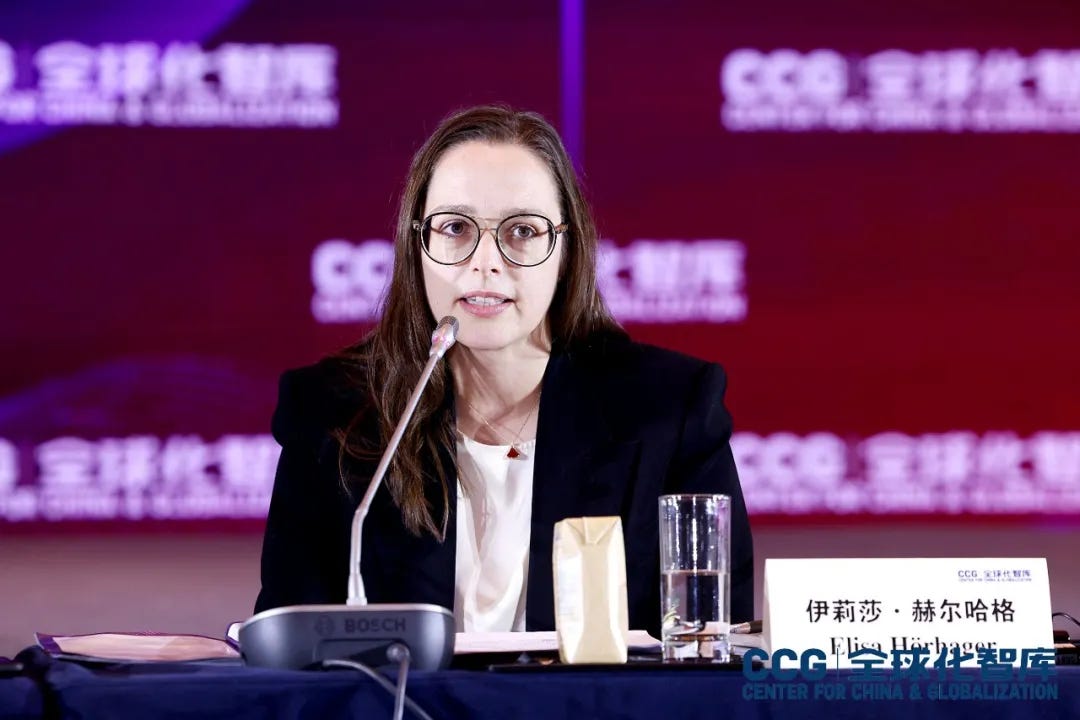
Thank you very much, Mr Han Bing. Thank you to CCG for inviting me. It’s a pleasure to join today’s discussion. Let me just briefly state that I represent the Federation of German Industries, otherwise known as BDI. We’re the umbrella organisation of German industry and industry-related services. That’s why, in my remarks, I’m going to focus on the first question that you asked, Mr Han, which is what the main structural drivers are that are shaping China–EU relations, because I believe that this is the question that captures the situation that industry across Europe and China is navigating at the moment.
The reality is that these structural drivers are increasingly defined by imbalances, and they lie in the evolving economic relationship between the EU and China. China’s share of global industrial production has risen enormously and very rapidly. It’s now at around 30%, and it’s projected to reach around 45% by 2030. And this shift is mirrored in trade flows as well. Germany’s trade deficit, for example, with China has just reached a record 87.6 billion euros last year, surpassing the previous peak in 2022, and exports from Germany to China have declined sharply, while China is Germany’s largest supplier by a wide margin, with particularly strong increases, among others, in imports of electrical equipment and machinery.
So, ladies and gentlemen, let me focus on the machinery sector for a while, because I believe that it illustrates how these structural trends and changes are affecting industry and impacting trade relations, and ultimately the wider EU–China relationship. Up until three years ago, Germany was the world’s leading exporter of machinery. Today, that title belongs to China, and Chinese machinery manufacturers are highly competitive in both products and pricing.
Research by the IMF, the OECD, and others links this shift to, among other factors, extensive industrial subsidisation. Subsidies are certainly not the only factor, but they do have a clear impact on industry beyond China. Under programmes such as Made in China 2025, subsidised exports of electrical machinery have been found to be roughly 7% higher than exports of non-subsidised products. On the import side, subsidies suppress imports of targeted goods to China, compared to non-targeted ones, an effect that IMF researchers do not observe to the same extent in other economies. In practical terms, what this means is that industrial policies expand China’s export share and reduce its import share in subsidised product categories, with supply-chain linkages amplifying these effects. Subsidies given to upstream industries significantly expand the exports of downstream industries as well.
Industrial policy is also increasingly being justified on national security grounds, or what we might call a securitisation of industrial policy, as the previous speaker mentioned. This is adding even further strain. China’s export restrictions on rare earth elements and magnets, all items which are critical for European manufacturing, continue to create vulnerabilities and uncertainty deep in our supply chains. Such measures only serve to highlight the risks associated with Europe’s asymmetric dependencies, risks that have become impossible to overlook.
Chinese experts describe an economic model driven heavily by supply-side expansion rather than domestic demand. We heard this this morning as well. So, continuing to subsidise mature industries long after they’ve reached global competitiveness undermines fair competition and ultimately fuels political tension.
There are compelling studies by Chinese academics from universities in Beijing, Shandong, and Nanjing, among others, which outline how subsidies for China’s NEV sector continued for too long. By 2015, China was already the global leader in NEV production and sales. Yet, from 2015 to 2018, total government spending on NEV subsidies roughly tripled compared to the preceding years. Subsidies continuing beyond this point contributed to subsidy dependence, reducing companies’ incentives for genuine technological innovation and even encouraging waste.
Part of the objective of this programme, of course, was to enhance the industrial competitiveness of Chinese automakers in the global market, catering to external demand. This is where countries such as those in Europe, with an existing auto industry, face difficulty, because subsidies promote Chinese exports, and, on the other hand, limit imports. This is true not just in the auto industry, but in all sectors prioritised by Chinese industrial policy. It makes China’s current growth model an issue for the rest of the world, but especially for the EU, because China has increasingly taken Europe’s market share in a host of manufacturing sectors.
This level of subsidisation is bad for the innovation of individual companies, and a lot of studies show that as well. Despite these challenges, though, I believe there are constructive avenues to address these imbalances. For both the EU and China, it’s clearly in our shared interest to avoid an escalation of reciprocal tariffs. Avoiding escalation is only possible if the underlying causes of the imbalance are addressed.
One concrete step could, for example, be for China to engage in strategic and detailed discussions with the EU on ways of reducing the most competition-distorting subsidy measures, or at least their negative impact on value creation in Europe. Such talks could help prevent a continued subsidy spiral in China and corresponding defensive measures in the EU and would benefit both sides. The incentive to engage in such discussions, of course, will increase as Europe’s market access becomes more coveted, and therefore, this will allow space, an off-ramp, if you will, to rebalance the economic relationship.
At the same time, I believe there are encouraging signs of macroeconomic adjustment within China, as outlined, for example, in proposals for the current 15-year plan, and strengthening domestic consumption, which is obviously on the agenda, allowing a more market-driven appreciation of the renminbi. All of this would help reduce trade imbalances and also contribute to a more stable long-term economic relationship with Europe.
So, ladies and gentlemen, the question before us is how China and the EU can balance cooperation with strategic differences. It can’t be answered by trade policy alone, clearly. But if we are serious about stabilising EU–China relations to the benefit of sustainable economic development on both continents, then the steps outlined above seem unavoidable, as well as mutually beneficial.
Clear, enforceable commitments on fair competition are essential if we want to build a resilient and balanced partnership for the decades to come, providing room for future complementarities and mutual benefit from economic development on both continents.
Han Bing
Thank you. Thank you for sharing your opinion, and thank you for your very frank remarks. I think it is good to have such a discussion. Maybe some of your opinions need further discussion, but we don’t have time now. Anyway, I’m very thankful and glad that we can discuss, on this occasion, in a very frank way. Next, I would like to ask Mr Lu Ruquan to share his opinion.
Lu Ruquan, President, China National Petroleum Corporation Economics and Technology Research Institute
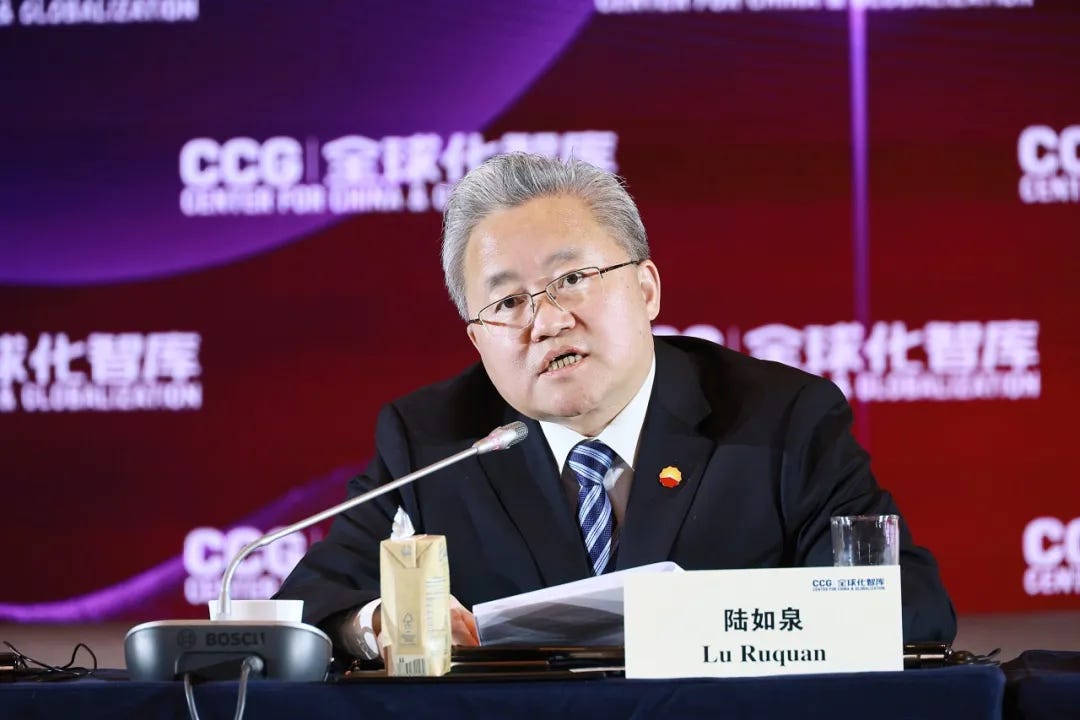
I’m from an energy think tank, and I will share my viewpoints from the perspective of China–EU energy cooperation and competition. We know that energy cooperation is a key area in which China and the EU could practise and promote true multilateralism. However, right now, I think the EU takes China not only as a cooperative partner, but also as an economic competitor, and a systemic rival. So, China–EU energy relations present a complex picture.
On the one hand, in the context of the EU’s de-risking strategy towards China, the two sides have increasingly become competitors on supply chains related to the energy transition and energy security. For example, in the fields of EVs, electric vehicles, and batteries, the EU is seeking to limit cooperation with Chinese enterprises through instruments such as tariffs and CBAM, the Carbon Border Adjustment Mechanism, and it has adopted the Critical Raw Materials Act to diversify supply-chain partners and reduce dependence on raw materials from China. The fundamental driver of the EU’s de-risking is that dependence on Russia for oil and gas must not be replaced by dependence on China for new and renewable energy technologies.
This mindset has led the EU to re-examine its approach to energy security. Some member states have slowed the pace of the energy transition, redirected oil and gas imports towards the United States, and moved towards a more exclusive energy structure, which will push China–EU relations into a period of systemic competition.
However, China and the EU share similar energy concerns, common energy objectives, complementary energy industrial capabilities, and companies with strong capabilities as well as a willingness to cooperate. The two sides have jointly promoted the energy transition, and are partners and stakeholders in strengthening global climate governance.
First, the two sides have established multi-level mechanisms for policy consultation and dialogue, such as the EU–China High-Level Dialogue on Environment and Climate. As of July 2025, six meetings have already been held within this framework.
Second, the two sides have engaged in complementary industrial cooperation. The EU enjoys significant resources and technological advantages in wind power, while China is able to supply key components at low cost. The two sides, both the EU and China, have formed a pattern of complementarity, with in-depth cooperation in such areas as wind turbine technology and the development and operation of offshore wind projects. Within the framework of the China–EU Hydrogen Energy Cooperation Forum, the two sides cooperate along the entire hydrogen value chain, including production, storage and transportation, and end-use applications, in technology R&D, standard setting, and demonstration projects.
Third, the two sides have delivered a series of flagship projects. Notable examples include the Daya Bay Nuclear Power Plant in China, the Trans Adriatic Pipeline project in Greece, and the Dolan Solar PV Park in Germany, all of which stand as landmark achievements of China–EU energy cooperation.
Generally, we can say China and the EU have broad prospects in upholding multilateralism and advancing the energy transition. I would recommend that, within the framework of climate governance, the two sides should, first, take concrete action to defend the international regime centred on the United Nations, that means the UNFCCC, the climate change organisation, and the Paris Agreement, and jointly provide institutional public goods for the global energy transition.
Second, strengthen cooperation on subsectors of renewable energy in complementary areas, encourage enterprises from both sides to increase investment in each other, and set up factories locally.
Third, expand cooperation in the global oil and gas market by encouraging Chinese and European oil and gas companies to engage in joint exploitation and development worldwide, and help stabilise the supply of oil and gas resources.
Fourth, deepen third-market co-operation on the development of critical minerals by encouraging Chinese and European enterprises to jointly develop such resources in regions including Africa and Latin America, and to establish China–EU joint ventures and refining and processing facilities in Europe. That’s all. Thank you.
Han Bing
Okay, thank you. Mr Lu, I think the energy sector is a potential area where China and the EU could have very good cooperation. The energy sector has a lot of subsectors, and also concrete products and production. I think we could find products or technologies that we can incorporate very successfully. Next, I would like to ask Mr Christoph Polajner to share your opinion.
Christoph Polajner, Founding Member and Vice Chairman of the Eurasia Society, Berlin
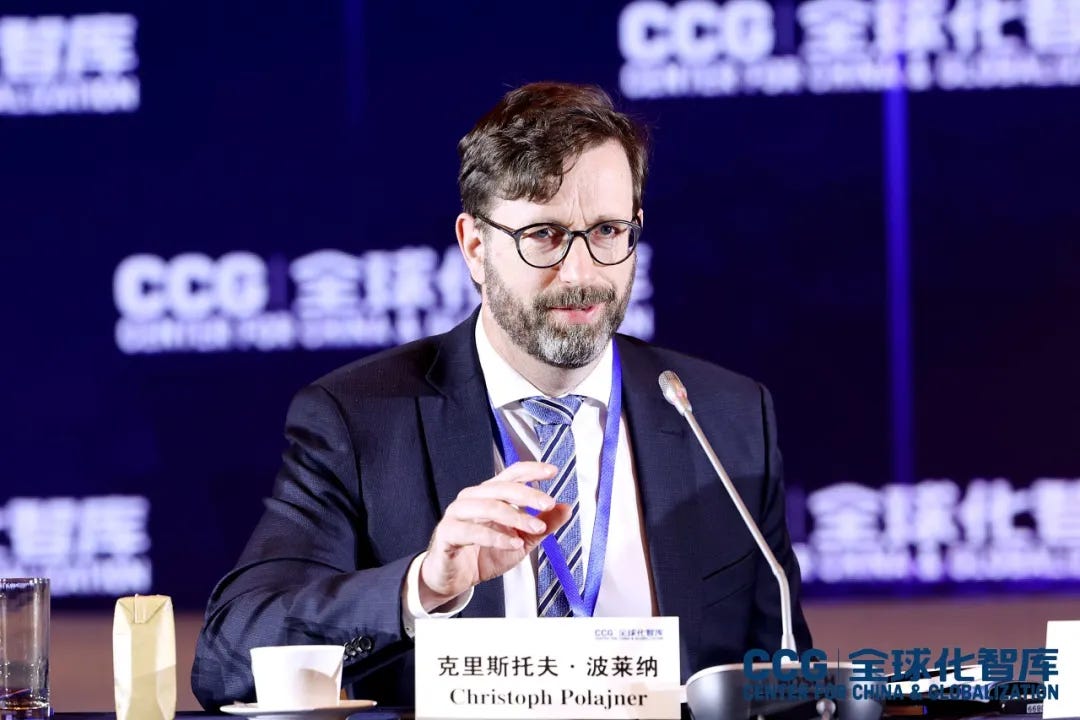
Thank you very much. For both the European Union and China, and the relationship between the European Union and China, the most important question is the future of the international order. What will it look like? What place will the EU and China occupy in it? How long will the transitional phase take from the current order to a new one? And, very importantly, will the transition be peaceful or violent?
An increasing number of people see the world at a crossroads between war and peace. That’s also how the Chinese Minister of Defence put it at the Xiangshan Forum. When we look back in history, there is some reason to believe there’s a risk. The track record is not positive. We see the Westphalian system as the basis of our modern international order, but that was established after the Thirty Years’ War in Europe. The same is true for the League of Nations, which was established after the First World War, and for the United Nations after the Second.
Often, the pattern was such that you had the failure of an established order, then you had a war, and then you had a new order. But before the war, there were often many discussions on solutions, on reforms of the international system. The League of Nations was mentioned this morning, but the idea was also brought up before the First World War, and I have the feeling that we’re in a similar situation at the moment. Everybody feels that something is changing.
It was very obvious in the run-up to the BRICS summit in 2023 in South Africa, for instance. BRICS was established by four countries originally, and was extended by one additional country over a period of 20 years. And then, all of a sudden, 40 countries wanted to join. So you see that there’s an obvious need for reform, and we discussed this morning.
I think China has quite a successful track record in moving people out of poverty and development, and also in a peaceful foreign policy. Since 1971, the country hasn’t been involved in any armed conflict. On our side, on the side of the European Union, it would be good to do a bit less finger-pointing, and to maybe engage more in discussions to better understand Chinese ideas to reform the international system, and also involve more other actors, which would probably allow us to develop some new ideas. The Chinese proposals don’t have to be the last word, but we can maybe also develop other ideas, additional ones to the Global Gateway Initiative that we developed.
Linked to that is the question of the international security architecture. Most pillars that we have built in the past to stabilise the international system have disappeared. That didn’t start in 2022. The ABM Treaty disappeared 20 years before that. IMF disappeared. Open Skies disappeared. And also for the remaining pillars, they are shaking. New START is a question mark, whether that will continue. The NPT Treaty review that will come up next year, it’s not clear how that will work.
The EU is not a main actor in all of that, but it’s of vital interest for us. At the moment, I don’t see any EU–Russia dialogue on this. There’s too little EU–China dialogue on this. There is no trilateral dialogue between Russia, China, and the United States. We simply cannot afford that. When we assume that the world is at a crossroads, that the international system is changing, when we have an armed conflict in Europe, the biggest one since the Second World War, then I think we need to get together and develop new ideas.
It was mentioned this morning that we need to pool ideas and wisdom, and the answers are not simple. The strategic environment has changed. It will involve quite some thinking to come up with ideas for a new security architecture.
Another point I think we urgently need to focus on is financial stability. People here in Asia remember the Asian financial crisis. We all remember the financial crisis of 2007–2008. I think the international financial system is not in a better shape at the moment. The debt levels of many countries, including many major countries and also countries in the EU, are simply not sustainable. Yes, we have EU–China dialogue on financial stability, but I don’t think it’s enough. I don’t think that we are prepared to stabilise the financial system, and we are certainly not prepared for a major financial crisis.
To end on a maybe positive point: coming from and being based in Berlin, I know that the idea of discussing the perspective of renewed cooperation with Russia is not very popular in the EU at the moment. But I think we should never underestimate the power of ideas in solving problems. China has tabled quite a number of positive ideas, global initiatives, and the Belt and Road Initiative. We have our Global Gateway Initiative. If we work together on a positive vision for the Eurasian continent, I think that can help us move away from the discussions we have at the moment on arms, ammunition, sanctions, and possible military conflict, to focusing our energy on peaceful coexistence and cooperative relations between the countries of Europe and Asia.
Han Bing
Okay, thank you, Mr Polajner. I quite agree with your opinion about dialogue. You mentioned that there is no dialogue between the EU and Russia, and too little dialogue between the EU and China. There is a lot of dialogue between the U.S. and the EU. We need dialogue, and without dialogue, there will be no results. So, no matter what differences exist, communication is necessary. Next, I would like to ask Eberhard Sandschneider to give your opinion.
Eberhard Sandschneider, Senior Professor, Freie University Berlin; Former Director of the Institute of the German Council on Foreign Relations
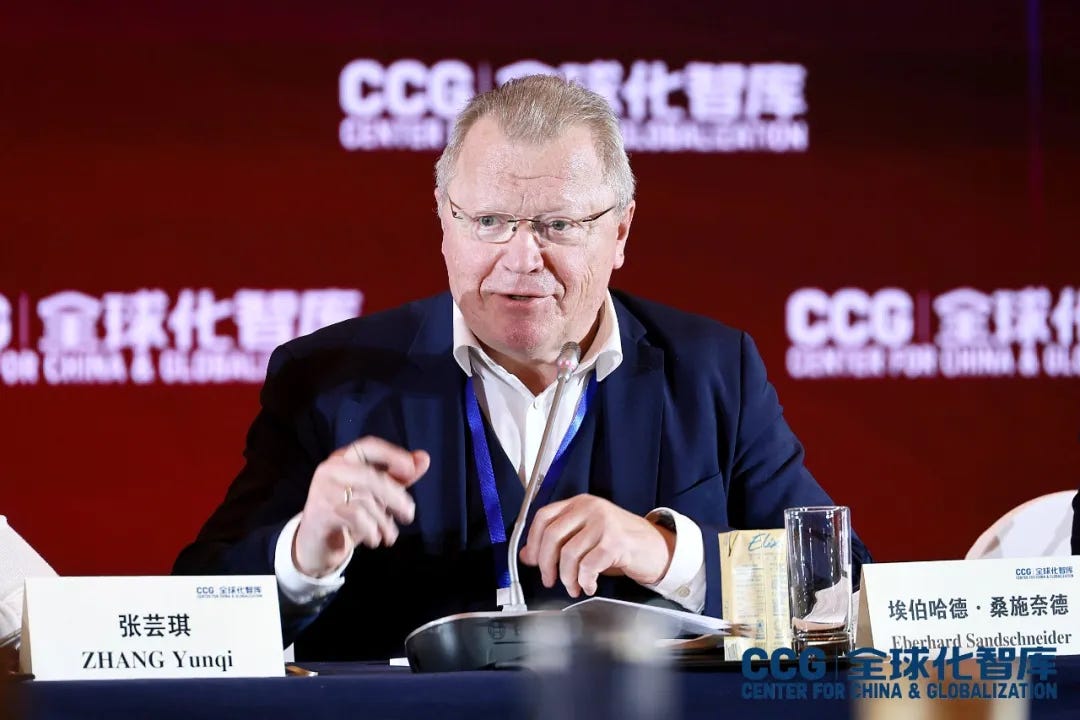
Thank you very much again for giving me the opportunity to share a few ideas with you on EU–China relations. Let me start with your last remark, Mr Chairman. I am certainly absolutely in favour of dialogue. But let us remind ourselves: dialogue does not necessarily lead to success. You might end up in misunderstandings and conflicts. Dialogue is an important prerequisite for the organisation of bilateral relations, but not an automatic instrument of success. Let’s keep in mind what I’ve just said.
First, I would like to draw your attention again to the last 50 years of official relations between China and the European Union. My overall assessment is: what a success, based on the expectations back in 1975. No one would ever have assumed that our economic and political relations would develop as they did.
Let me also remind you: in the first years, the European Union started by calling China, first, a partner. In the next conceptual paper, it was a strategic partner. Then it became an enhanced strategic partner. At that time, I was joking that the next step would be offering membership to China in the European Union. But, as we heard this morning, we have reached several inflection points.
For me, in today’s perspective, the biggest problem is the fact that we are securitising and weaponising our trade relations. That is perhaps not originating in China, and not in Europe, but we have an American friend who is always with us as the invisible third party. This is the major challenge.
We have heard so far that there are many opportunities in our bilateral relations, but there are also obstacles. These obstacles have led, if I’m not completely wrong at the moment, to a high level of mutual frustration on both sides. While I have been here in China for the last week, I was confronted again and again, almost on a daily basis, with the frustration on the Chinese side.
Let me, for a moment, come back to what you referred to in the diplomatic addresses this morning. Don’t forget, I’m speaking to you as a citizen of the European Union. The European Union, in my perspective, is a very un-united union. If you are asking for Europe’s China policy, don’t only look to Brussels. That’s perhaps one important aspect. But you have to look at 27 plus one. Each and every member state of the European Union has its own perspective on China, plus Brussels. So it is difficult, from the Chinese perspective, to deal with the European Union.
You may remember Henry Kissinger asking for the telephone number of Europe. So, better prepare yourself to get 28 numbers in your booklet.
Europe itself, and this is important to know if you are seeking to understand our bilateral relations, is in at least two big dilemmas. The most important dilemma is: it is an unbelievable success story. Never forget that. If you take Europe’s history, when all this started in the early 1950s, no one ever would have expected Europe to be where it is today. No one. It is a success story. But in success lies the germ of failure.
The biggest success, in my reading of the European Union, is helping stabilise the transformation processes in Central and Eastern Europe after 1989. That was important. That was a success. But at the same time, it led to a simple dilemma: the European Union is overstretched externally and overregulated internally. This morning, the ambassador’s remark really caught my attention: regulation is not fast enough. That is one of the European diseases compared to China. We do not need regulation. We need learning about social media. But Europeans start with regulation first, before they continue with developing technology. My impression is that, in this country, you proceed exactly the opposite way, and much more successfully.
So, in the end, we may have reached an inflection point—yes, it might be there in the official diplomatic speech—but it is also characterised by a big division in attitudes towards China between politics, on the one hand, and business, on the other. My impression is that, while politics is getting ever more critical of China, weaponising some aspects of our relations, as I said, business is continuing, despite all the problems which have been mentioned, to regard China as what China really is: one of the most important markets of the future. I don’t know any business person in Germany who does not want to be part of the action in the biggest market of the future.
So the perspective waiting for us is hard work, especially in the political sphere. We have lost trust. We have lost mutual understanding. We are all challenged to help contribute to overcoming this lack of trust.
If I should end on an optimistic note, I am pretty sure that growing global pressure necessitates less fundamentalism in our bilateral relations and more pragmatism. That is perhaps something we Europeans can learn from China, and hopefully we do. Thank you so much.
Han Bing
Okay, thank you, Mr Sandschneider. We need to look at our relationship and not weaponise it. We also need to better understand each other. Next, I would like to ask Mr Sun Yongfu to give his opinion.
Sun Yongfu, Senior Fellow, CCG; Former Director-General, Department of European Affairs, Ministry of Commerce
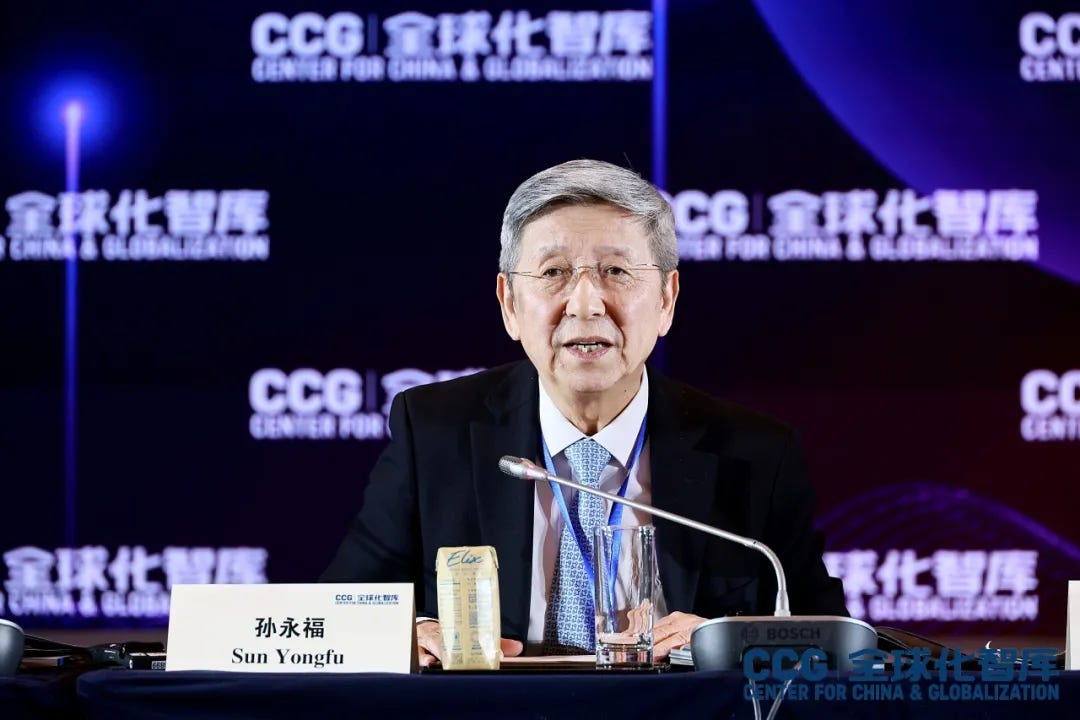
Thank you very much for having me participate in this dialogue. It’s very interesting. I noted that most, if not all, of the panellists this afternoon are mainly from Germany, but I think it’s quite natural, because Germany has been the number one trading partner for 40 years, if we look at China–EU economic and trade relations. I was part of that for a little bit more than 12 years, as I was the Director-General for the European Department of MOFCOM. I’m quite lucky that, in my time, the economic and trade relationship between China and the EU was very good. We were on a very healthy track. Comparing with the present situation, I think we are a little bit off track, and there is not enough trust between each other, as mentioned by previous speakers.
We had some trade frictions during that period of time, such as textiles and solar panels, but we had rules to obey, which were WTO rules. Through negotiations and through dialogue, we could more or less solve our trade frictions. But now it’s difficult.
Germany is still our number one trading partner within the EU, and it is the most important trading partner for us. It is more or less one-third of our bilateral trade between China and the EU. Germany plays a very important role, around one-third or one-quarter of our bilateral trade. So the role of Germany is very important in shaping bilateral trade and economic cooperation between China and the EU as a whole.
Now, I think it’s quite complicated, as mentioned: how should China treat the EU? Should China deal with the member states as 27 members, or should China discuss more with Brussels as a union? My feeling is that, in order to solve the individual problems of member states, they always concentrate all their requirements in Brussels, so that they can put everything into a group to discuss with our top leaders. But for those individual members, for the sectors where there are no big problems, there is not too much difficulty. They put the difficult items in Brussels. So it’s difficult for China to discuss with the EU, with Brussels.
I still can recall that, for those high-level economic dialogues, it was very difficult to answer all the questions concentrated by all the members of the EU. The questionnaire is too long.
Right now, we see more and more competition instead of complementary economic relations. From 2019, China has been labelled into three categories, as mentioned before: partner, competitor, and systemic rival. The worry is that more and more, “systemic rival” is on the top agenda, instead of having real dialogue on cooperation, like Christoph’s last comments mentioned.
I think we need to concentrate on areas of cooperation, especially in green technologies, solar panels, for example, EVs, and other areas. We have a lot to explore in terms of cooperation, and not pay too much attention to so-called de-risking or systemic rivalry. We need to get our trade relations back on track. Thank you very much.
Han Bing
Thank you, Mr Sun. He was the Director-General of the Department of European Affairs in MOFCOM for a long time. I think, at that time, the economic relationship between China and the EU was quite nice, and he made a very big contribution to that. At that time, there were some problems, but not so headache-inducing as now. So I think his opinion shared with us is very constructive. And I would like to ask Mr Wang Yiwei to share his opinion.
Wang Yiwei, Jean Monnet Chair Professor of European Union Studies, Renmin University of China
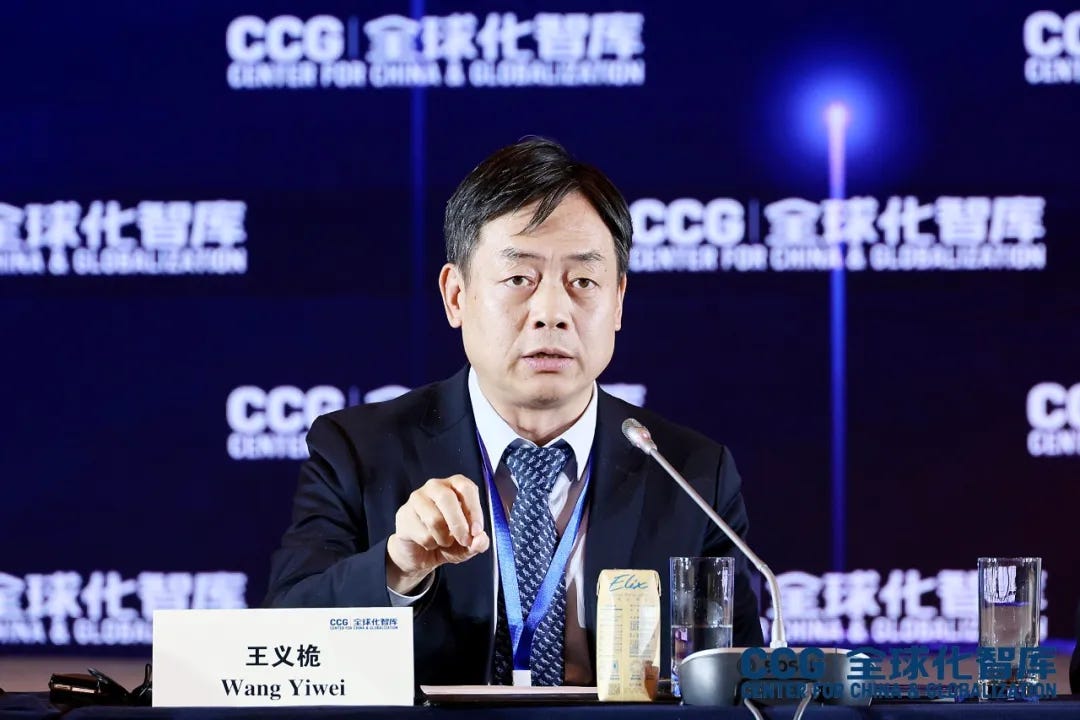
Thank you. I just came back from Brussels, attending the China–EU forum organised by Friends of Europe and the Chinese Mission to the European Union, in memory of the 50 years. I have two very strange messages from there.
One is: the Europeans think about Ukraine as their core interest. China asks Europe to respect Taiwan as a core national interest. Why do you not respect Ukraine? I said, Taiwan is a core national interest of China. Ukraine is a core interest of Europe, but not a national one, because Ukraine has not joined the European Union yet. So it’s not your territory. So it’s different.
Secondly, they are very worried about the so-called 2027, that China will use force to unify Taiwan, and they read the 15th Five-Year Plan, which they think says very clearly to promote the national unification process. But the misunderstanding of that is: in Chinese, it says 推进祖国统一大业、民族复兴伟业, the Chinese nation’s rejuvenation and the cause of national reunification. So these are two different words.
Then I have five suggestions because Europeans have many, many complaints about that. I say: if you complain today, you will lose tomorrow. If you complain tomorrow, you will lose the day after tomorrow. So better to view tomorrow from the day after tomorrow. As Deng Xiaoping said very early in the opening reform: Emancipate the mind.
Number one: from cooperation to cooperation. Win-win, maybe you say why China wins twice, but the digital and green transition cooperation should jointly shape the future. I think that’s for human civilisation. So for finance and services, we still have lots of opportunities to cooperate. In traditional manufacturing, there may be competition.
Second: from the current market to the future market. For instance, the ageing society and AI, I think it’s a future market. The UNESCO STEM centre is located in Shanghai. I think the key difference between Chinese and Europeans is: your young people are playing postmodern art, Chinese young people are working very hard in a laboratory. So basically, we need to focus on that.
Thirdly, from the national level, or the EU level, to the regional level. When I visit Italy, Tuscany, there are many regions very active in relations with China. Maybe in China, we can have an office for them, for the regional province or region, right? You have regional representatives in Brussels. So we need to emancipate our minds.
Fourthly: from traditional to non-traditional security. Traditional security, you limit Huawei, 5G, but for other non-traditional data, for instance, the data of tourists, I think we need a lot of cooperation. When I visited France, it was still very old to have the video and the audio guide. In China, everything is digital: scan, recharge, everything, translation, it’s very popular now, even Alipay.
Number five: new infrastructure cooperation. The old infrastructure has lots of problems, not just the EU’s Global Gateway Initiative, the Chinese Belt and Road Initiative, and third-party market cooperation. China now has the China–Central Asia–West Asia railway extended across the Caspian Sea, and from Azerbaijan to Türkiye, and then reaches Europe. This directly connects each other, because the China–Europe Express was cut by the Ukraine war, and also sometimes Poland also closes. So I think that makes our straight connections in the new infrastructure building. I think there are lots of opportunities to cooperate. Thank you.
Han Bing
Okay, thank you, Mr Wang. I think the five areas he mentioned are very constructive thinking, and, in these areas, some should be very good areas, and potential areas, for successful cooperation between China and the EU. Next, I would like to ask Ms Zhang Yunqi to share. She is the Vice President of Huajian Group, which is a big company for footwear production. This is from the enterprise side. I would like to hear the opinion of the enterprise.
Zhang Yunqi, Vice President, Huajian Group

Good afternoon, everyone. Our group is a local private company making shoes, and we relocated our manufacturing to Africa. I want to share, from the perspective of a Chinese entrepreneur and Chinese business, how we regard China–EU relations.
China has been a manufacturing power for thousands of years. Chinese products are imported into Europe, into America, and also into African countries, and our shoes have been exported to other countries. But wherever I am, I must depend on China’s supply chain. Why? Because I’m sure many of you have lived in China, more or less. What you feel, what you really experience here, is a high level of convenience. China has 1.4 billion people, and China has the best and most developed supply chain in the world. That is unrivalled in any part of the world, in any country in the world.
So China plays an indispensable role in the global supply chain, and there is no country in the world that would not want to connect with China. Otherwise, they would lose some potential access to this global supply chain, whether in terms of living standards. So be it developed countries in Europe and America, or developing countries in Africa, all need Chinese products. Closing doors is not a good choice, obviously. Only with openness and cooperation can we find the keys to the future.
In China, there is not just a manufacturing industry, but also industrial parks, and we have global investors from all continents, from Europe, from Africa, and from other continents. We have European investors and investors from Southeast Asian countries, all operating in our industrial parks. Standing at this point, when there are actually no borders among countries, I regard myself as not just a Chinese citizen, but also an Ethiopian businesswoman, and there is a global market for me to create value.
I’m not just operating in Africa merely for money. We can go virtually everywhere in this world, and the global market is global, rather than an individual market for Europe, for America, or for others.
So, for China–EU relations, yes, of course, there are surely challenges, but more importantly, we need to work together to find opportunities, and through cooperation, manage all the challenges, and that is actually what brings us here for this dialogue.
One year ago, when I was in Ethiopia, I was thinking that, not far away from our factory, somewhere in Egypt, there was war. A lot of kids lost their homes, or even their lives. In almost every country in Africa, there are a large number of poor people. So, except for national interests, what can be done for this world? That is what needs to be thought about, because every life is equal, and when life is born, it is not labelled as what nationality or what country it is from. So what I really hope, from a business side, is that Europe and China can find a sustainable way where they can find long-term and shared success. Thank you.
Han Bing
It’s a voice from enterprise. I think Ms Elisa Hörhager had another meeting at 4:00, so she left earlier. In her speech, she talked a lot about subsidies in China. When we heard from the enterprise, I think the competitiveness of Chinese products, or Chinese production, is not subsidies. It is the material supply chain and the ecological production environment that produce the competitiveness.
I would like to thank all the panellists for their speeches. At the end, I would like to ask the young leader representative, Ly Quoc Thai from Vietnam, to share his opinion with us. Thank you.
LY Quoc Thai, Policy Officer at the European Chamber of Commerce in Vietnam (EuroCham Vietnam)
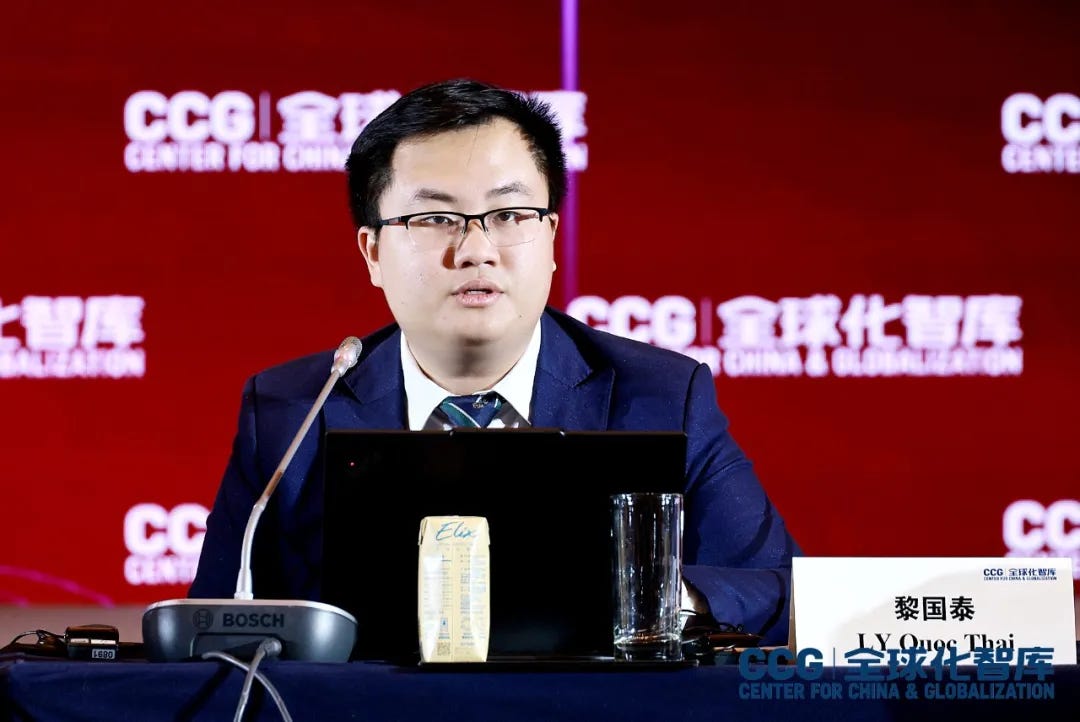
I would like to thank all the honourable speakers today on the panel for their insights and the discussion. My name is Ly. I’m a young leader for the GYLD and a Policy Officer for the European Chamber of Commerce in Vietnam.
My question brings the focus to the core engine of the EU–China economic relationship, which is competitiveness. To understand this, I want to highlight three fundamental pillars. One is the people: the demographic and talent pool, both vast and increasingly skilled, which is a clear advantage for China. Second is the system: a capacity for long-term strategic planning and rapid mobilisation, which is undeniably very effective in China. Third, and what I want to highlight the most, is the regulatory environment, which historically has been one of the most complex pillars from the European perspective.
The European Commission’s own assessment has consistently highlighted that regulations in China are not a neutral factor, but a significant barrier. Under the whole framework of “partner for cooperation”, “economic competitor”, and “systemic rival”, the perception of this complex regulatory environment was a key contributor to the stagnation of the landmark Comprehensive Agreement on Investment (CAI). This stagnation is particularly in stark contrast when we look at the broader regional context, where other countries like Vietnam, for example, have actively reformed their regulations to align with international agreements, paving the way for the Vietnam-EU Free Trade Agreement, the CPTPP, and two recent comprehensive strategic partnerships with both the UK and France.
The current situation presents a paradox. We see a lot of potential in the EU–China economic relationship, but we also see a lot of competition within the region. My question is threefold, addressed to any members of the panel.
We talk a lot about relations. We talked about the whole recalibration of the EU-China relationship, dialogues, and different approaches to the relationship itself. So first of all, how do you see the current trajectory of China’s regulatory environment in practice today? Are we seeing a shift from a framework perceived as more of a shield to one that acts as an enabler for high-quality investment for the EU beyond 50 years?
Second, how can regulations evolve not just to improve China’s own competitive attractiveness, but also to become a genuine asset for the EU–China partnership?
Third, what specific shift in the EU’s own approach is necessary to practically encourage and facilitate this positive development? Thank you.
Han Bing
Thank you for sharing your opinion. Vietnam is analysing the Chinese experience very deeply, and there is quite a clear understanding of Chinese development and the Chinese system. For your question, I would like to ask some panellists to give some comments.
Wang Yiwei
China’s experience is a very dialectical approach to regulation and development. In Chinese, there is a saying: “Regulation in development, development in regulation.” First, you need creation and development, then regulation, and, within further innovation, a new regulation is needed. But the European approach is very tight regulation first, and then AI cannot grow. China learns from both the European and the U.S. models: the U.S. has laissez-faire, Europe has strict regulation, and China is midway. That is the meaning of China.
Han Bing
Thank you. Today we had a very nice discussion. I will wrap up, and maybe in Chinese it is easier for me.
Many thanks for your remarks and discussion, which are very inspiring and constructive. Regarding the future development of China–EU relations, first of all, communication and exchange need to be intensified. Right now, the exchange is not sufficient. China has adopted visa-free policies to some African countries to welcome them to come and communicate, including through tourism. I believe this kind of policy can apply to Europe as well.
Second, both sides can clarify and correct their understanding and cognition, which should be impartial, pragmatic, and based on truth and reality. This kind of communication will be warmly welcomed.
Third, China–EU relations, by China’s definition, should be a partnership. For the European Union, China does not deem it a foe. Some individual member states take national interest and security as an excuse to bar the import of Chinese products. This is ridiculous. China does not accept this kind of excuse based on so-called national interest and national security. Some European countries, in the name of “de-risking”, have adopted some measures and made claims or complaints against China, and China does not accept them.
Policy-making by the European Union towards China should be based on a correct understanding of China. Some decision-makers from the EU are not correct enough, and some even have biases and prejudices. China’s decision-making is based on truth, but EU decision-making positions sometimes are based on lies. For example, lies about spying. China encourages EU decision-makers to base decisions on truth, and also to consider the interests of their own nationals.
Last but not least, a personal observation: in the future, this kind of phenomenon should be avoided, what we call “self-fulfilling prophecy”. It means that based on an expectation, or belief, about something that would take place in the future, these kinds of preemptive assumptions determine actions right now. But this kind of assumption may not happen, and these negative preemptive assumptions, or illusions, would lead to bad decisions. Some negative behaviours are based on these kinds of preemptive assumptions, and that is something we do not want to see and have to avoid. Thank you again for the contributions by the panellists and all participants.
Transcript: China–U.S. Relations and Tariff Wars, 10th China Global Think Tank Innovation Forum

This is the transcript of the second roundtable of the 10th China Global Think Tank Innovation Forum, held on 20 November 2025. The forum was hosted by the Center for China and Globalization (CCG) and co-organised with the China Association of International Trade
Transcript: opening ceremony & opening roundtable, 10th China Global Think Tank Innovation Forum

On November 20, 2025, the 10th China Global Think Tank Innovation Forum, hosted by the Center for China and Globalization (CCG) and co-organized with the China Association of International Trade (CAIT), was successfully held in Beijing.
The 10th China Global Think Tank Innovation Forum Held in Beijing
On November 20, 2025, the 10th China Global Think Tank Innovation Forum, hosted by the Center for China and Globalization (CCG) and co-organized with the China Association of International Trade (CAIT), was successfully held in Beijing.