

On September 10, 2026, the Center for China and Globalization (CCG) hosted the recording of a special CGTN program, Building an Asia-Pacific Community to Prosper Together, at its Tongzhou office in Beijing.
CGTN, China’s English-language national broadcaster, has since released the full program on both its official website and YouTube channel.
Moderated by CGTN Radio host Tu Yun, the discussion featured
Gonzalo Talavera, Minister and Deputy Head of Mission at the Embassy of Peru in China;
Henry Huiyao Wang, Founder and President of CCG;
Bert Hofman, Honorary Senior Fellow on Chinese Economy at the Asia Society (online);
Paul Samson, President of the Centre for International Governance Innovation and former Canada Deputy for Finance at APEC (online);
and Ravi Velloor, Associate Editor and Senior Columnist at The Straits Times (online).
Antonio Basilio, Director of the APEC Business Advisory Council International Secretariat, also delivered a video message.
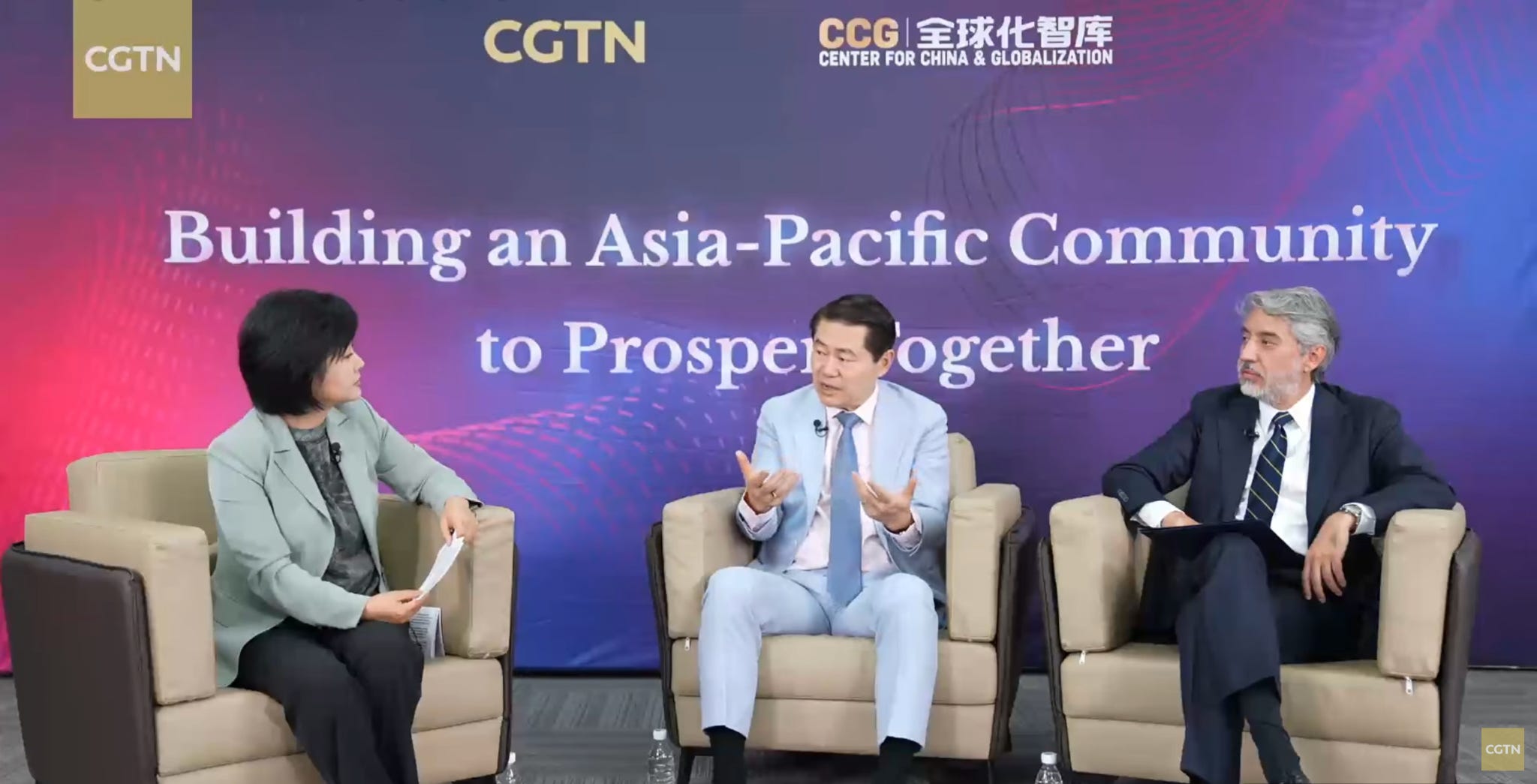
The program came as China’s 2026 APEC host year entered its final stretch, ahead of the APEC Economic Leaders’ Meeting in Shenzhen in November. The discussion centered on this year’s theme, “Building an Asia-Pacific Community to Prosper Together,” and its three priorities: openness, innovation and cooperation.
This transcript is based on the video recording and has not been reviewed by any of the speakers.
Tu Yun, Host, CGTN Radio
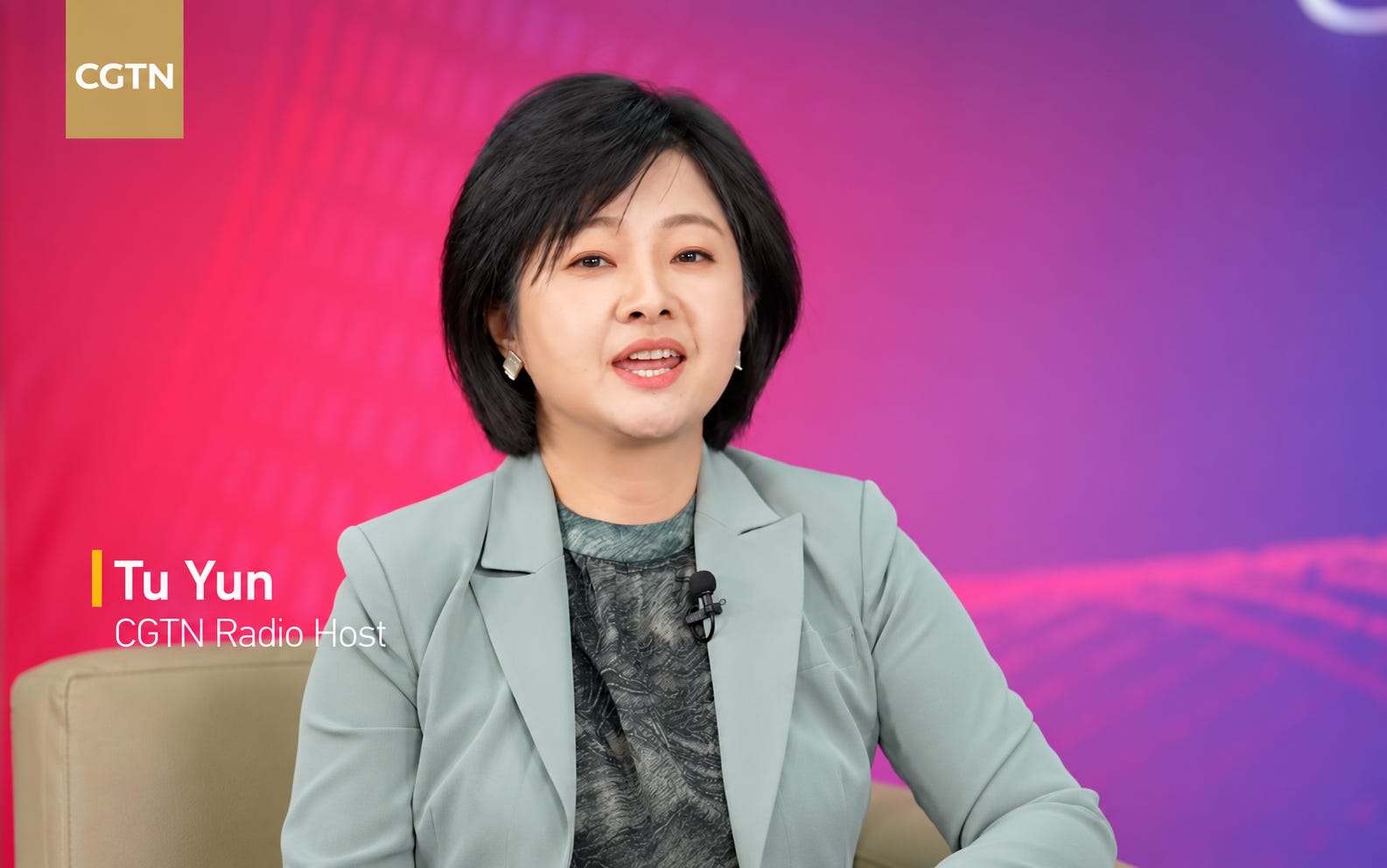
Different economies, different perspectives. Can APEC still find common ground to prosper together? Welcome to the 2026 APEC China Year Media Chats. I’m Tu Yun with CGTN Radio. It’s a great pleasure to have you with us for this special dialogue, jointly hosted by CGTN and the Center for China and Globalization.
As China hosts APEC this year, today’s discussion will explore China’s vision and priorities, review the outcomes of the meetings held so far, and look ahead to the APEC Economic Leaders’ Meeting to be held in Shenzhen. We’ve brought together officials and experts from different economies and backgrounds to share their perspectives on the opportunities and challenges facing the Asia-Pacific.
Joining me to preview this year’s APEC Economic Leaders’ Meeting to be held in China’s southern tech hub of Shenzhen are Gonzalo Talavera, Minister and Deputy Head of Mission at the Embassy of Peru in China; Henry Huiyao Wang, Founder and President, Center for China and Globalization; Bert Hofman, Honorary Senior Fellow on Chinese Economy, Asia Society; Paul Samson, President, Centre for International Governance Innovation, and former Canada Deputy for Finance at APEC; and Ravi Velloor, Associate Editor and Senior Columnist at The Straits Times, Singapore.
It’s a great pleasure to have you all on the show, gentlemen. In the audience, we also have teachers and students from Renmin University of China, the University of International Business and Economics, and Capital Normal University. Welcome to you all.
Well, before we begin our roundtable, we are very pleased to have a special video message from Antonio Basilio, Director of the APEC Business Advisory Council International Secretariat.
Antonio I. Basilio, Director, APEC Business Advisory Council International Secretariat
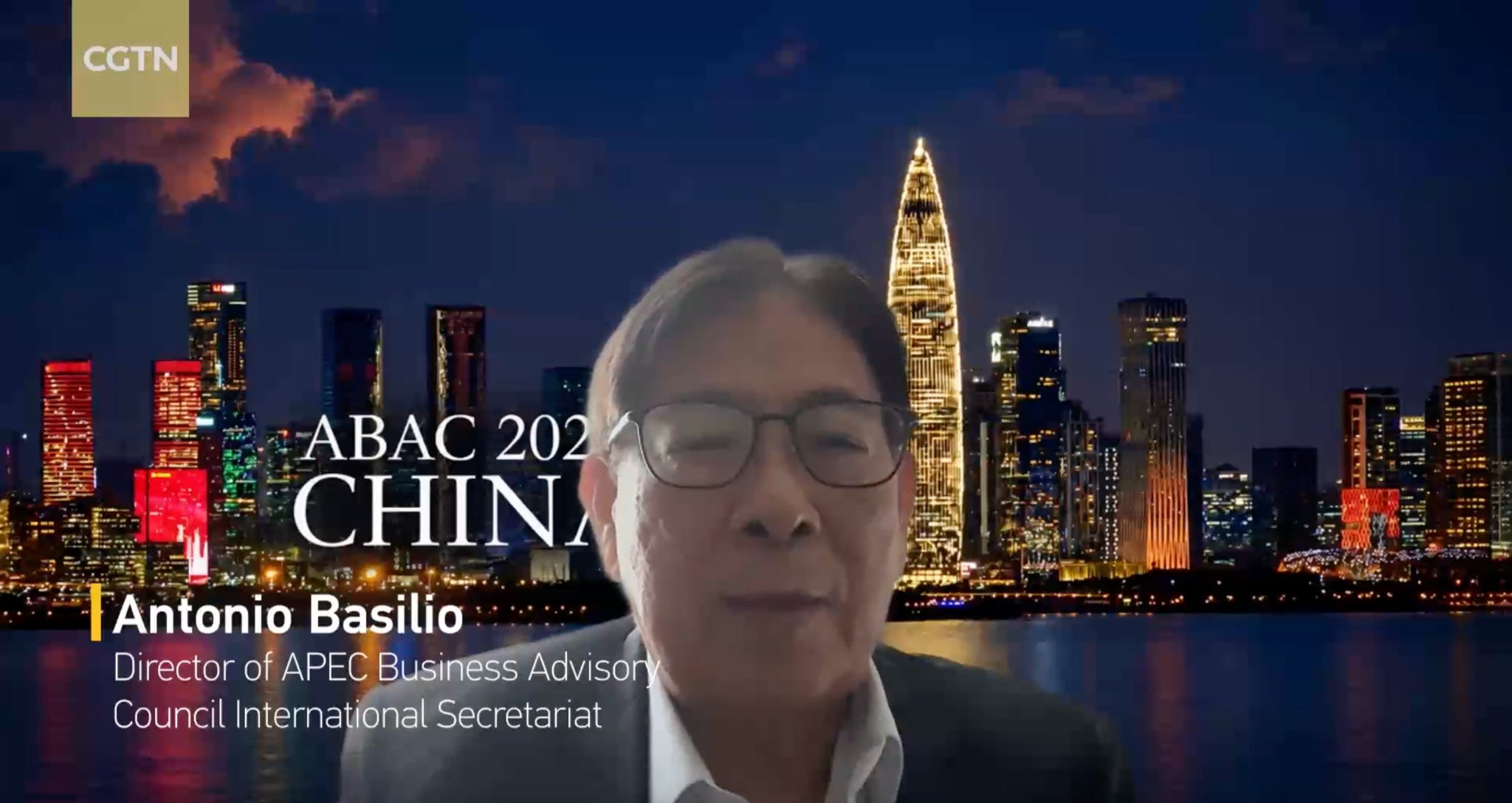
Good morning. I would like to thank the Center for China and Globalization and CGTN for organizing this important and timely event. China’s chairmanship of APEC draws to a close when APEC leaders meet in November in Shenzhen for their annual summit. China’s chairmanship comes at a period when the region is facing slower economic growth, rising protectionism and fragmentation, supply chain disruptions, and energy security challenges.
At the same time, we are experiencing very rapid technological change. Artificial intelligence, quantum computing, and other frontier technologies are transforming not only the way we produce, trade, and do business, but all facets of our lives. The energy transition to a low-carbon economy is also creating both new opportunities and new challenges for our economies. This year, China has had the responsibility of leading the APEC region in responding to the challenge of continuing to sustain growth and prosperity in this increasingly uncertain environment.
From the business perspective, which ABAC, the organization I represent, brings, this greater policy uncertainty is making it more difficult for businesses to plan, invest, and grow. Under its chairmanship, China has focused APEC’s attention on, one, recommitting to openness and predictability, which is the foundation of our region’s economic success; two, pursuing practical initiatives to support this openness, including enhancing connectivity and facilitating trade; three, utilizing digitalization and AI to enhance productivity by encouraging its responsible deployment and making it accessible to all. Other areas like food security, healthcare, and other areas where greater cooperation can strengthen growth and resilience are also on China’s agenda.
The APEC Business Advisory Council, or ABAC, was created by APEC leaders to provide the business perspective on the major economic issues facing the region. Our role is really quite practical. We look at what is happening on the ground. What is preventing companies from trading and investing? What is making supply chains more difficult or more costly? What can improve productivity and competitiveness? And where can governments and businesses work together to make a real difference?
Our 2026 report to APEC economic leaders brings together ABAC’s recommendations on how we believe the region should respond. The report is accessible on our website, and I encourage your audience to take a look. Thank you again for giving me this opportunity to say a few words, and I look forward to the discussion to follow.
Tu Yun
Well, first, shall we have a brief introduction from each of our panelists? And please keep it to no more than two minutes. Shall we begin with Gonzalo?
Gonzalo Talavera, Minister and Deputy Head of Mission, Embassy of Peru in China
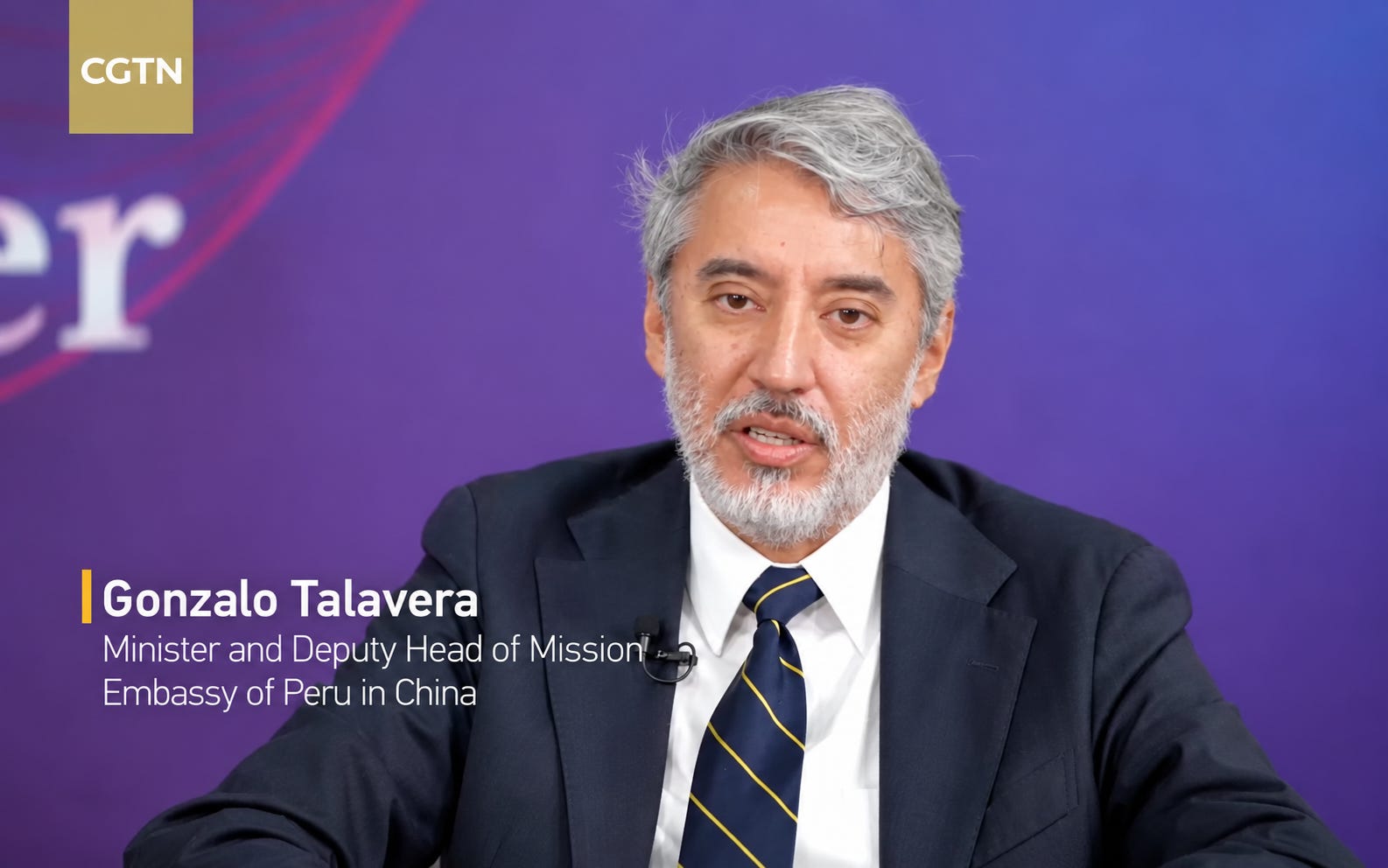
Good morning. Thank you very much for inviting us to participate in this event. My name is Gonzalo Talavera. I am the Deputy Head of Mission of the Embassy of Peru in Beijing. I have worked for more than 20 years in the Ministry of Foreign Affairs of Peru as a diplomat, but only in two countries, in the U.S. and in China. Unfortunately, I have never been in charge of APEC issues, but my boss has, and he has given me his notes. So I will try to follow them as well as I can, so we can have a constructive dialogue today.
Tu Yun
Thank you. Henry.
Henry Huiyao Wang, Founder and President, Center for China and Globalization
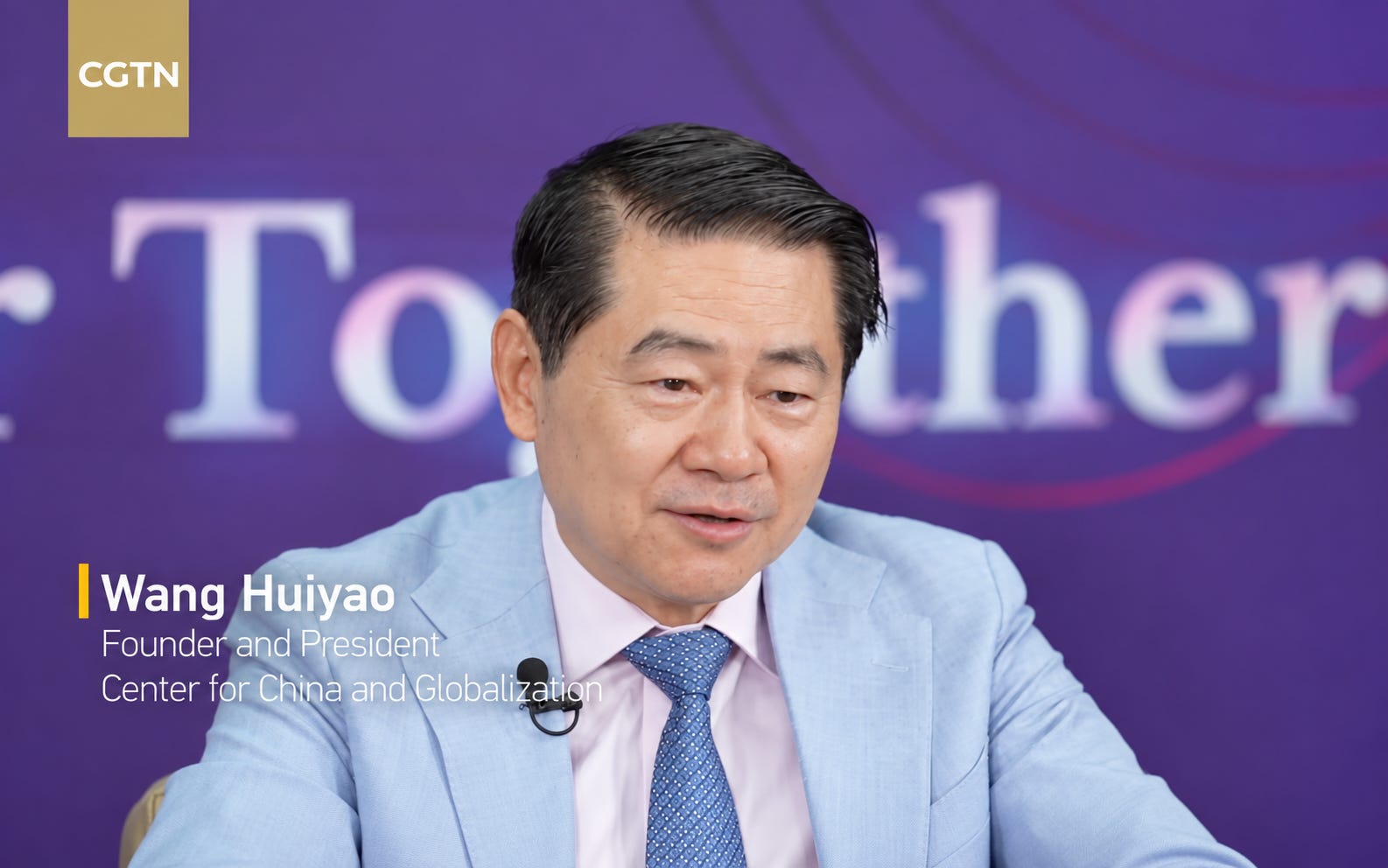
Yes, thank you. So it’s really great to work with CGTN on this timely, very important subject, and really great to see old friends on the screen and also the Deputy Ambassador here as well. And thank CGTN for organizing this as well.
So I think it’s so important that we’ve got different perspectives. We’ve got perspectives from the Asia-Pacific, from Canada, from Singapore, from Asia, from Europe, and also Latin America. So I think it’s all Asia-Pacific-related, and I’m sure this year, when we have all the leaders, probably the most attended meeting compared with previous years, we’re going to generate a lot of outcomes. So let’s really discuss it, and hopefully we can make some contributions.
Tu Yun
Sure. It’s not just different economies; it’s also different perspectives or backgrounds, right? Then let’s turn to Bert with Asia Society.
Bert Hofman, Honorary Senior Fellow on Chinese Economy, Asia Society
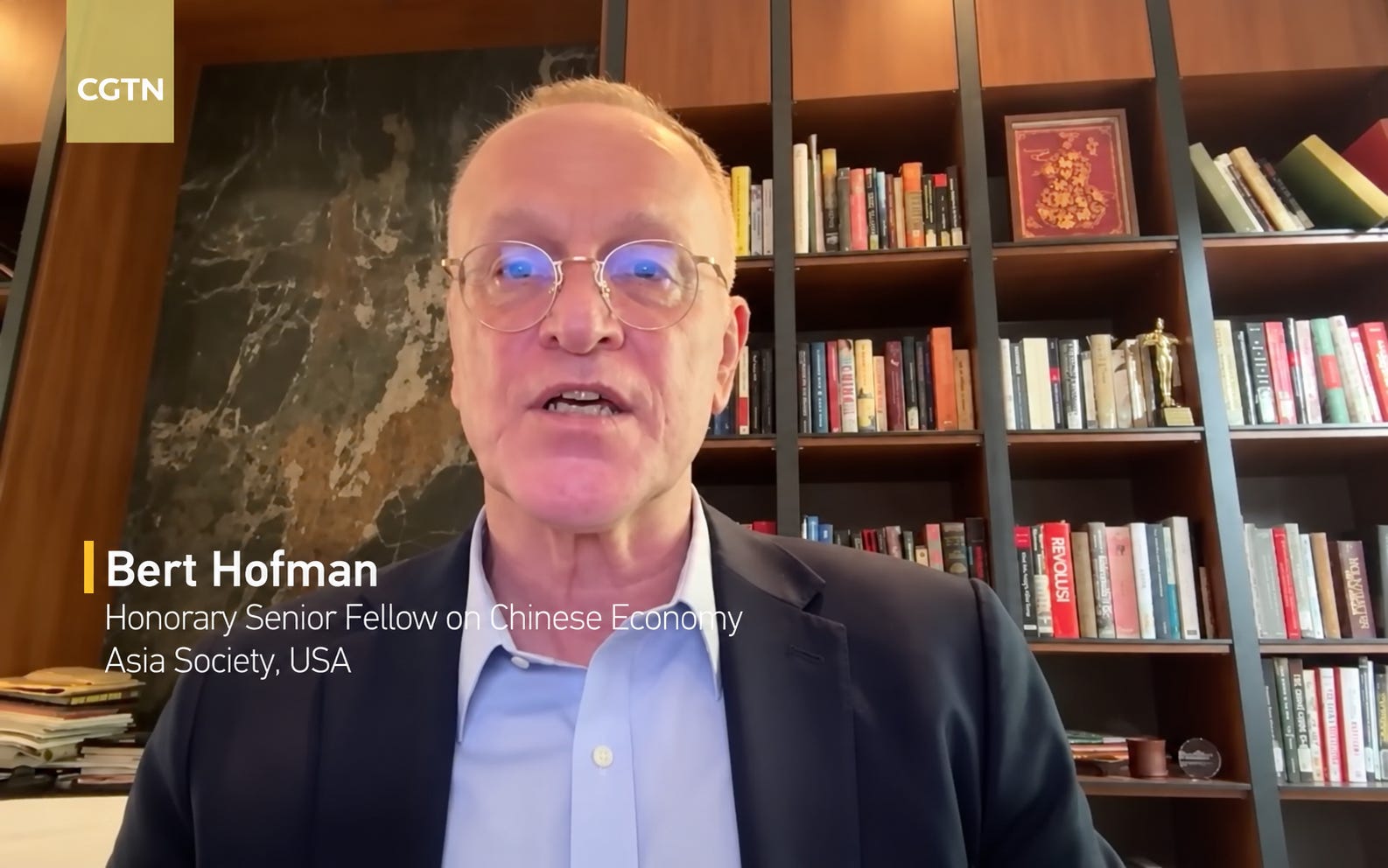
I’m Bert Hofman. I’m right now a senior fellow at the Asia Society and also a senior fellow at the National University of Singapore’s East Asian Institute. I used to be the director of that institute, and before that, I spent 27 years at the World Bank. My last job was Country Director for China. My current research is on China and the world, on global integration and the tensions of geopolitics, and the effects on trade and investment flows.
Tu Yun
Should we go to Paul with CIGI?
Paul Samson, President, Centre for International Governance Innovation, and former Canada Deputy for Finance at APEC
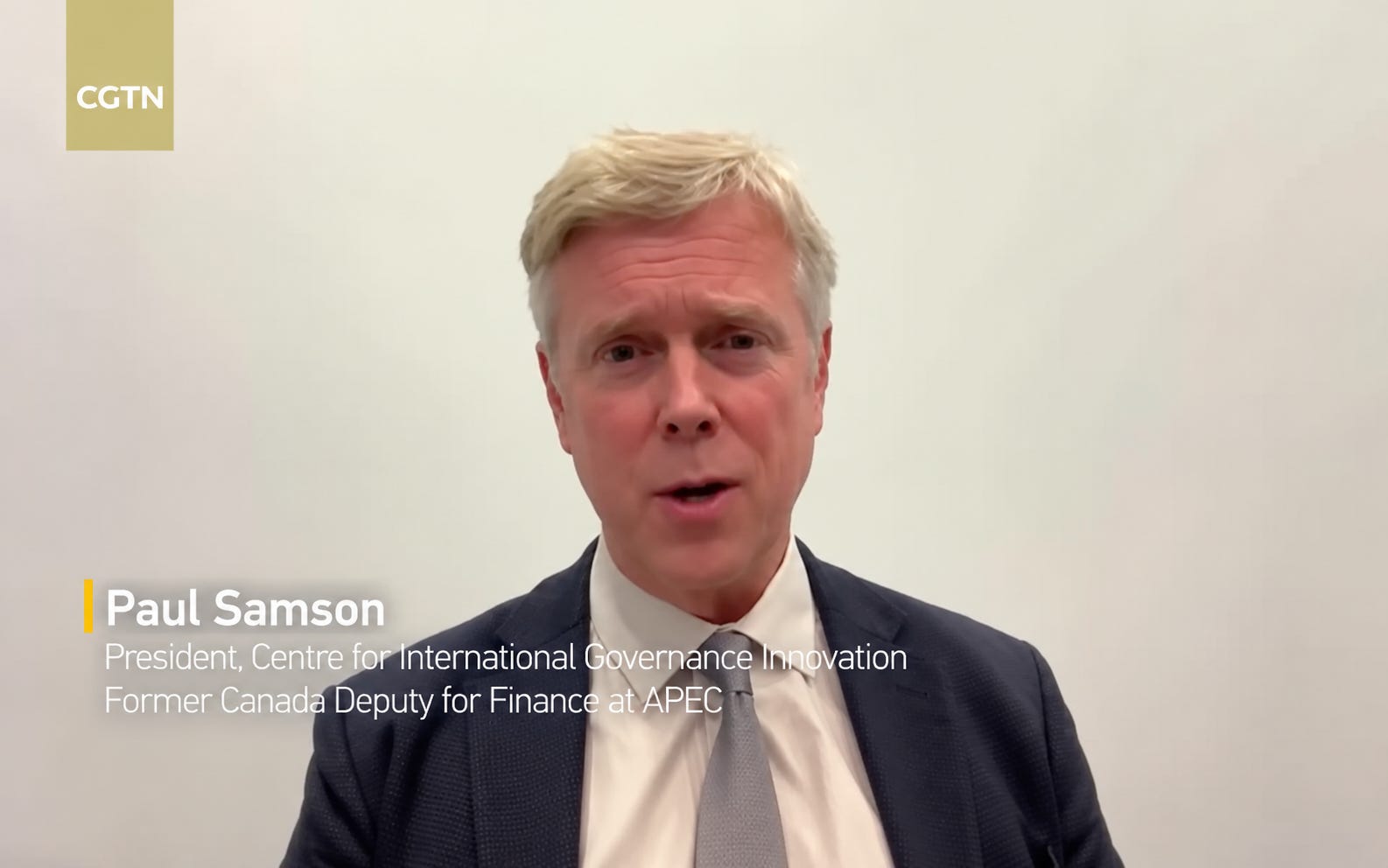
Yes. Hello. Thank you very much for the invitation. Paul Samson, President of the Canadian independent think tank Centre for International Governance Innovation. I had the honor to be a member of the APEC table for almost five years as Canada’s finance deputy, and I was also a co-chair of one of the G20 working groups on the global economy for five years. So there’s an interesting comparison and contrast as to how these different groups work and how they can move things forward.
Tu Yun
Thank you. And last but not least, Ravi, please.
Ravi Velloor, Associate Editor and Senior Columnist, The Straits Times
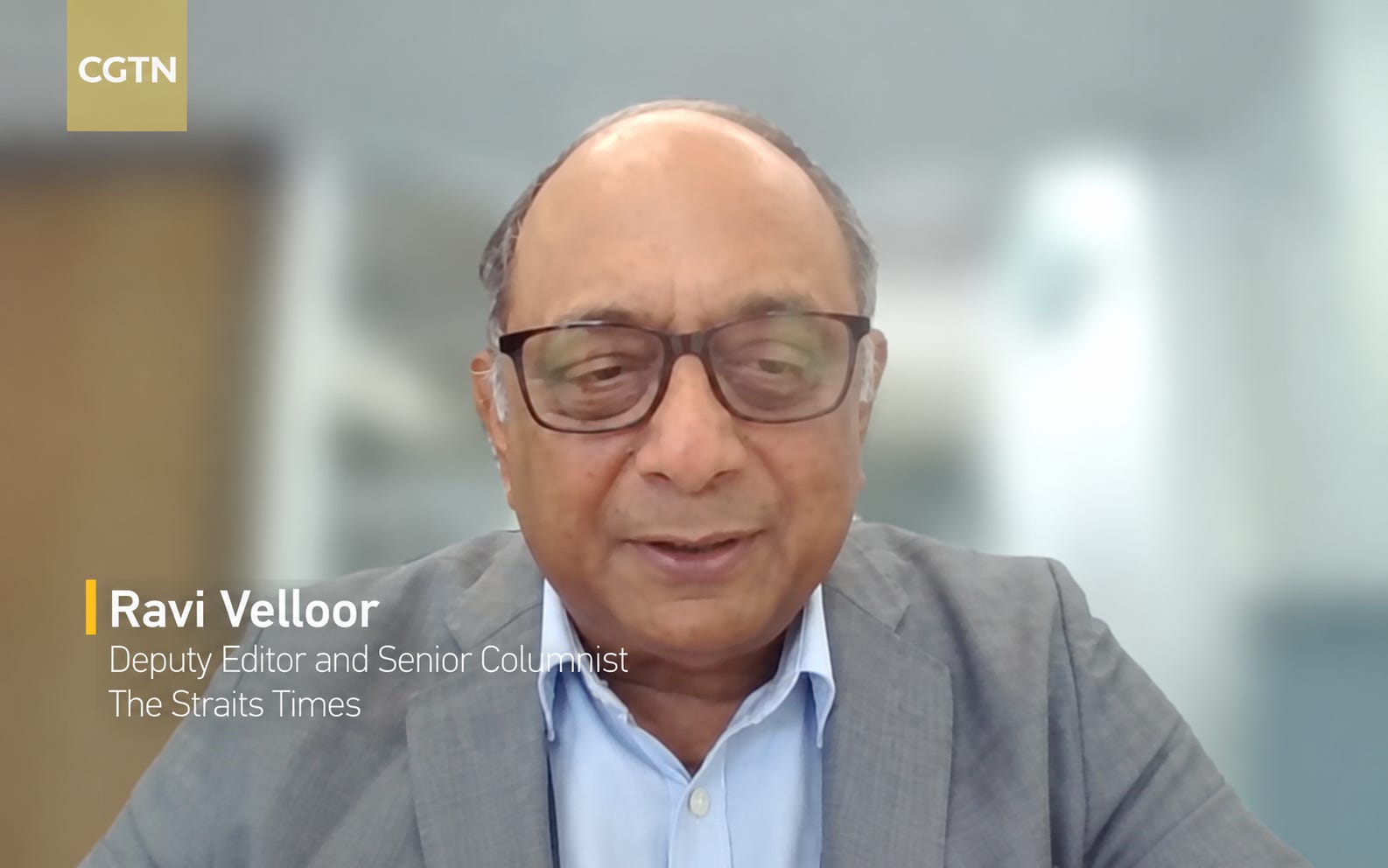
Morning, everybody, and thank you for having me on this program. And thank you to Dr. Wang, an old friend, for inviting me. I write for The Straits Times. I’m a senior columnist, and I focus on the Asian transition, regional diplomacy, macroeconomics, and geopolitics. I’m also a podcaster, and my program is called Asian Insider. Last month we did a podcast that proved to be immensely popular. You might want to see it.
Very happy to be here. I speak from the viewpoint of a nation that is critically dependent on keeping trade channels open. Singapore is probably the world’s most trade-dependent economy, and with APEC especially, I think almost 80 percent of our trade goes to APEC. So the region is very important to us, and I’m very happy to be here. Thank you very much.
Tu Yun
Let me begin with the theme of China’s APEC year, “Building an Asia-Pacific Community to Prosper Together,” with three priorities: openness, innovation, and cooperation. So Gonzalo, Peru actually hosted APEC two years ago, right? And you are now serving here in Beijing as China hosts APEC. So that gives you a rather unique vantage point. How has the APEC agenda changed from your perspective since the Peru year, and what does an Asia-Pacific community mean to you?
Gonzalo Talavera
I think that we have to take into consideration three areas here. First of all, we have to recognize that every time an economy hosts the APEC meeting, it has the advantage of choosing or proposing the things that that meeting will be focused on.
In the case of Peru, we chose “Empower. Include. Grow.” And that was in 2024. In 2025, Korea hosted the APEC meeting, and they chose their own topics, and they developed and centered on AI and demographics. And this year, as you have said, China has chosen the topics that the APEC meeting will focus on. That’s the first issue: the agenda for the APEC meeting in that year is entrusted to the host economy.
What has changed is the environment. The environment of 2024 is very different from the environment of 2025 onward, so there are more challenges for the economies that are hosting the APEC meeting since 2025. What has not changed is the destination, because so far there have been some advances. All economies are betting on facilitating trade, facilitating exchanges among the APEC economies.
What we understand by a shared community—that’s what you said—for us is to be able to be treated as equals in all economies, meaning that a small or medium-sized company in Peru can sell its products to Japanese consumers, Singaporean consumers, Canadian consumers, American consumers, Chinese consumers. And we have to work so that, in the future, we will be able to facilitate these trade flows between all our economies.
Tu Yun
Indeed, inclusiveness is very important, right, all the time, I think. Thanks, Gonzalo. Let me bring the rest of the panel into the discussion. Henry, you specialize in China’s engagement with the world and global governance, so what does an Asia-Pacific community realistically mean to you?
Henry Huiyao Wang
Great question. And what I think is that, particularly for the last 10 years, the world has really been in turmoil. Particularly, we’ve seen and witnessed protectionism, trade wars and sanctions, and all the measures taken in the international trade arena and economic arena. I think the Asia-Pacific APEC summit remains one of the most relevant and highly valuable platforms, and particularly I place very high hopes on this year because President Trump is going to come, and probably Putin is also going to come, so we will see, and of course all the 21 leaders of Asia-Pacific economies.
How can we really build an Asia-Pacific community to prosper together, as the theme reflects, under the keywords of openness, innovation and cooperation? So I think the theme maybe still reflects what everybody has been hoping for for many decades. But hopefully this time, let’s put something real on the ground. I know there are several ministerial meetings that have already happened, but also it will be held in Shenzhen, which 40-some years ago was just a village, a fishing village. Now it’s a cosmopolitan city of 20 million, and that demonstrates how we can prosper together.
And particularly, I think the spirit of working together, of leaders having dialogue together, and a lot of preparation work this year under the APEC theme is really productive. Hopefully, we can also have some joint consensus in order to really reflect the urgent crises we’re having. There are many issues. There’s climate. There’s AI. There’s global imbalance. There’s debt. There are many trade frictions. So hopefully this can generate some more positive sentiment and more positive policy directions.
I don’t expect everybody will agree on everything at the same level, but at least show some kind of spirit of cooperation. That’s exactly what we need to bring back. And I think APEC is also very comprehensively representative and represents 60 percent of the global economy. Particularly, the U.S. and China are in it, and hopefully this is going to be very relevant with ASEAN, with Latin America, with many other countries in the Pacific.
So I hope this is going to send a huge signal. I mean, we cannot go back to the Free Trade Area of the Asia-Pacific. But that was a vision that we had many years ago. But at least we can come together, and hopefully we’re going to send a message to the world: okay, we are still talking. We are still tackling all those tough issues. We may be different, but let’s really get together.
Tu Yun
Indeed, we look forward to some substantive progress this time, and we’ll come to this free trade agreement later on in the show. But to Bert, you have extensive experience with China and the broader Asia-Pacific economy. So your interpretation of an Asia-Pacific community?
Bert Hofman
Well, look, it’s a very strong community. Aside from the share in global GDP, also in trade, almost half of global trade takes place in the Asia-Pacific. That hasn’t changed, despite all the noise and all the geopolitics. It is still a very strong community, and two-thirds of trade within the Asia-Pacific takes place within the Asia-Pacific economies, and one-third is outside those economies. So that’s a very strong community.
At the same time, there are, of course, forces that drive some of the economies apart. The geopolitics of it is very clear, but it’s also an opportunity. Look, I mean, there are very few organizations where China and the U.S. are coming together and talking with other countries—not just with themselves, but with other countries—about the issues that face global trade. So that community can hopefully entice some countries to continue to be part of that.
Tu Yun
And Henry just mentioned there might be some trilateral meeting among those three heads of major economic powers later.
Bert Hofman
Right. So, I mean, if you get a number of people together, it’s always good to have the bilaterals. That’s really where it happens. Or trilaterals—that’s really where it happens. And creating an opportunity in such a summit, where indeed both the leader of the United States and the leader of China attend, is going to be an opportunity.
Tu Yun
Indeed. And Paul, given your experience in the Canadian government, APEC, and G20, what’s your answer?
Paul Samson
Yeah, I would say that I’m an optimist, but I’m also a realist, right? And so when I look around at what’s happening, you know, a huge part of the economy, a huge part of trade, and also one of the most dynamic economic areas on the globe, maybe the most dynamic. So it’s certainly a place to look at.
At the same time, the headwinds are going to remain, right? We’re kind of in a world where industrial policy is full-on in many countries. Tariffs are going to linger. We’re still going to be facing export controls, security considerations and things, so those will be out there relating to supply chains. But I think the kind of thing that APEC can do, on the optimistic side, will be to continue to show how trade facilitation works. Standards can be shared.
I think the treatment of data is going to be very important. Digital interoperability is something where I think APEC can demonstrate some leadership that could spill over into other parts of the world as kind of a good example. So I’m optimistic about APEC, but I’m also realistic about those headwinds that are out there that I think are going to remain.
Tu Yun
I think optimism is very useful now. And to Ravi, you’ve spent decades reporting on and analyzing Asian geopolitics and international relations. In your view, what would an ideal Asia-Pacific community look like?
Ravi Velloor
Look, Tu, I’m in the happy position of being able to agree with almost everything that has been said by the people who spoke before me. So I really can only add to what they said and endorse what they’ve said so far.
We should not forget that we are in the happy situation where our region is still growing, and growing reasonably well, and we need to preserve that. And to me, a community is one which consistently works to improve its shared space and works on resolving issues before they become problems. So that is my vision of a strong community where open discussions take place.
And one of the best things about this meeting is that, as you mentioned, so many of these key people are going to be around. They’re going to be pulling each other aside, and any time when people meet at that level, there has to be good.
Now, that doesn’t mean that there are not real issues to address, and there are many. We need to talk about choke points. We need to talk about resilience in supply chains. We need to talk about climate, which is very important for the part of the world where I’m speaking from. Southeast Asia is in the vortex of what’s called the intertropical vortex, which means that we have very heavy floods and very dry summers. And so climate is important for us. Energy resilience, health—all these issues belong in APEC and should be discussed.
So I think we have a real opportunity to discuss some of these things, and especially because APEC is an intergovernmental organization, not a supranational one. I think there is room for frank discussions, and frank discussions surely have to be fruitful.
Tu Yun
Right. If, like you’ve all mentioned, an Asia-Pacific community to prosper together means it should be inclusive, it should include communication, or it’s all about being connected between different economies, then the first question is whether those economic connections, or economies, can remain open. So that’s why the “China Year” has placed openness at the top of its three priorities.
But tariffs, like you all mentioned, trade barriers and industrial policies, and supply chain realignments are reshaping the global trading landscape. So against this backdrop, Ravi, according to your observation, do you still believe APEC can serve as a force against increasing economic fragmentation?
Ravi Velloor
Well, I take heart from the fact that the United States—to borrow an expression used by a former Australian prime minister—you know, the U.S. has been so recalcitrant on so many of these issues, but it is still inside APEC, unlike the TPP, which the President withdrew from on his first day in office. He signed that away. I take heart from the fact that the United States is still within APEC, and that, to me, is a positive that I’d like to work on. It’s something that probably is a gentle force that works against the fragmentation that you ask me about.
And I do believe that initiatives like supply chain resilience, which Singapore is working on, and also paperless trade, which Singapore is working on—these things do act as counterforces against whatever fragmentation might be taking place around us. And always, I think managed interdependence is the answer to many of our problems.
But we also need to recognize that many of the Asian economies, particularly, are at different stages of economic growth. We have to be mindful of that. And China’s theme, as was mentioned, is to prosper together. I think later I might talk a little bit more about this, but there is real fear of deindustrialization taking place in some of the major economies in Southeast Asia, and we need to ensure that some of these economies do not get left behind as openness and trade proceed. So I think I’ll stop at that point and come in later if you need me to.
Tu Yun
Sure. So you do believe that APEC can counter increasing economic fragmentation?
Ravi Velloor
Well, I think there are enough positive forces at work to stay the negative forces at work as well.
Tu Yun
Sure. And to Henry then, from China’s perspective, what concrete measures could China promote through APEC to advance openness at a time of rising trade protectionism?
Henry Huiyao Wang
Yes, good question. Actually, I just got back from Xiamen. I attended the 26th China International Fair for Investment and Trade. It was huge. This year they had a much larger scale.
China still pursues this openness in practice, welcoming all the foreign investment, many ministers. And yes, the China International Fair for Trade in Services in Beijing opens again. We are going to have one session tomorrow there. So you can see China does that. And of course in November we’re going to have the China International Import Expo. So I think they put this openness into practice.
What I think China can do, probably at this APEC summit, is first, we can of course emphasize all those principles: openness, prosperity, cooperation, development. Those are still the key words because these days we hear less about those keywords.
Second, I think we need to build up some consensus. So basically, build up trust. I think what we’re lacking is trust. So the meetings we have, leaders having dialogues—that’s a good way to build up trust. And then we should probably reduce the rhetoric on trade wars, sanctions and measures, and, “If you do not do this, I’m going to do that.” Let’s use dialogue. So I think, build up some rapport and a friendly atmosphere.
And thirdly, which is important, let’s propose some concrete measures, like China has already done with over 70 countries coming to China visa-free now, almost one way or the other. Fifty-three African countries, including others, about 60 or 70 of them, come to China tariff-free. We could do more on that. We could open visa-free access for the U.S. and many other countries.
And thirdly, let’s welcome Chinese investment, because we see there are a lot of complaints about China overcapacity, subsidies and things like that. But why not welcome Chinese investment? Because if we hang on to those sanction banners all the time, and then we hear the bad stories all the time, there’s no Chinese investment there. The Peruvian Deputy Ambassador was just telling me that Peru has become a major destination for Chinese investment because we have good relations. Brazil is the same. I just came back from Brazil. And also, I think ASEAN has become the largest trading partner of China for the last six or seven years now.
And then, of course, we need to really strengthen our cooperation with Europe, with America, with the Middle East, with all the other countries too. So I think in this Asia-Pacific, we probably cannot reach complete consensus, but let’s re-emphasize open and free trade, cooperation, and then propose some concrete measures. And of course, it’s also a good time for China to hear from all the leaders about their comments, suggestions, recommendations, or even some differences on what’s going on.
But by inviting them all to come to Shenzhen, they’re going to see a vast miracle in 21st-century modern history. Forty years ago, it was just a village. This is probably one of the largest cities. It’s become the Silicon Valley of China. It demonstrates how one Five-Year Plan after another Five-Year Plan, how working together with openness and attracting foreign investment can produce miracles. So that experience can also be shared among Asia-Pacific countries. So I think many things can be done, but most important is to build up trust. Seeing is believing.
Tu Yun
Gonzalo, what’s your evaluation of what China has done? Like Henry just mentioned, there are some countries saying that China is not doing enough. From your experience here over the past two years staying here in China, what’s your evaluation?
Gonzalo Talavera
We are working very closely with China, but you have to know that Peru has the opposite model of the Chinese economy. China has very strong state-owned companies. We have almost zero. We have a very private economy. Probably 95 or 96 percent of our economy is private.
So when we work with China, we work with the understanding that we want to bring investment from China to my country, to develop my country and to improve the quality of life of our population, under one principle, and that principle is the principle of non-discrimination. We don’t even discriminate between foreign and national investment, so much so that we don’t have statistics about foreign investment. Every time we receive investment, we don’t care which flag it has, as long as it invests and respects Peruvian law. And that’s how we work with China. We try to invite them, to convince them that they have very good opportunities in Peru, and we do that with the U.S., with European countries, with Asian countries, with everybody.
Tu Yun
Have you found Peruvian products here in China? Are we open enough?
Gonzalo Talavera
Yes. Fortunately, in the last two years we have been able to open a couple of new products, but we have been exporting grapes for maybe 15 years. There are a lot of blueberries coming here and a lot of copper. And one thing that we are working on with China is that we want to diversify our trade, because so far it is almost focused on one product, which is copper.
And if we want to make a stronger relationship, that relationship should not be based only on one product, but on many other ones. And we try to convince GACC, the Chinese authority responsible for phytosanitary matters, to let more Peruvian products come to China. And that’s a little hard. I have to say, it takes years to open the market for one Peruvian product, but we are working very hard in that sense.
Tu Yun
Right. I believe many of us here have been consumers of Peruvian grapes or blueberries. And to Bert, how much room is there for APEC to preserve an open trading system when some major economies are increasingly putting economic security ahead of economic efficiency?
Bert Hofman
Well, look, economic security is a fact of life, and both the United States, as well as Europe, as well as China, pay a lot of attention to that, and that complicates trade. But at the moment, there’s not enough understanding of what it actually means. And if national security is one thing, it could mean everything.
So setting some understanding around that—what is acceptable behavior in light of national security concerns, and what is not—would already be tremendously helpful. The WTO has a rule on that, but it is so comprehensive that, in practice, it doesn’t mean that much. So working on that is important.
Second, there are clearly different phases in different countries. If you want, the United States is now stepping back from a number of responsibilities that it has performed in the world for a very long time. They no longer play that leadership role, neither in trade, nor investment, nor in other parts. And China could step up. Henry already talked about a number of things that China could do unilaterally. That is good for China, but also good for others.
One thing that China could do more of to help all the other APEC economies is stimulate domestic demand. It’s a clear domestic priority. China is very strong in investment, very strong in exports, but not very strong in domestic demand. That would help everybody export more to China, and that would therefore help the Asia-Pacific community.
Tu Yun
Actually, I think the Chinese government is doing everything it can to promote domestic consumption, right? That’s what we all know. Then, to Paul. You have argued that Canada and other countries will need to step up in responding to changes in global trade. So what does that mean in practice: more regional agreements, a stronger commitment to multilateral rules, or something else?
Paul Samson
Yeah, I think Canada is a particularly good example right now because we’re an open trading economy with a high percentage of exports going to the United States, and that regime has been shaken up, right? But what I’m about to say, I think, applies to many other countries as well, and that is that there are several tracks to this.
The first one is to diversify trade concretely beyond the opportunities that exist on paper through existing arrangements. In our case, we have agreements with many, many countries, but they have not actually been realized to the degree that they probably should. So, in our case, we’ve set a target to diversify a significant part of our exports to new markets, and that would include Europe, but a lot of it is the Asia-Pacific.
I think the second thing that applies to Canada, and I think it applies to other countries as well, is to ensure that the infrastructure, in a broad sense, is up to par with demands. Getting what you’ve got in terms of products to markets—and often, in the case of APEC, that’s on the Pacific Ocean—you want that ability to maximize things through ports, transportation corridors, trains and highways. All those links really matter. And in Canada’s case, the more infrastructure we have to get products out through the West Coast, Pacific Ocean, the more options we have, right? Because a lot of our infrastructure is north-south, and that can’t get products to APEC countries as easily. And many countries are facing the same thing.
And then the final thing that I would say that would apply to Canada and a number of other countries is a little bit of that middle-powers discussion, where when the smaller economies have good ideas, they can still demonstrate best practices. They can build little mini-coalitions on issues that they want to move forward. I think areas of digital trade are showing some promise there. I think artificial intelligence needs help, and it’s not necessarily going to come from China or the United States on their own. Maybe they need some encouragement to get these kinds of regimes clear—interoperability, data. I think energy will be another one, and then issues like the reform of the World Trade Organization. I think small, or smaller, open economies need to get more active on that front to maintain the value of those organizations.
Tu Yun
Indeed. Talking about infrastructure construction and AI, I believe China can do something there if Canada allows us to do so. Then, one possible answer to maintaining openness in the region is a Free Trade Area of the Asia-Pacific, or FTAAP, mentioned earlier by Henry. It has been on the APEC agenda for two decades, and this year China has proposed a standalone outcome on FTAAP as part of the APEC 2026 deliverables. Henry, what could realistically constitute a meaningful FTAAP breakthrough in Shenzhen?
Henry Huiyao Wang
Well, I think absolutely those are crucial issues, and we need to really continue to make a breakthrough on that. I think China calls for that, and China is willing to do that. For example, we have upgraded our free trade agreement with ASEAN, and recently we did that with Switzerland. And I really hope that we revive this comprehensive investment treaty with Europe.
But specifically for the Asia-Pacific, even though the FTAAP, the Free Trade Area of the Asia-Pacific, was proposed, as you said, 20 years ago, we still see some progress. We have RCEP, the largest free trade agreement in the world, concluded a few years ago. We have the CPTPP, which is now really in the hands of middle powers. And I think I really agree with what Paul just said. Middle powers can play a role. It’s no longer black and white. It’s no longer China versus the West or the West versus the rest. It’s really picking on merit.
So if the CPTPP can really uphold free trade and higher standards of trade above the WTO—a mini-WTO—then let’s talk. I mean, China expressed interest in joining that, and the UK has already joined that, and the European Union is interested. So we could talk about many things, but I do think, one step at a time, that we could continue to push for FTAAP. But also, with smaller steps, pursue bilateral and trilateral free trade agreements.
But there’s also more than trade now. There’s climate. There’s artificial intelligence. There’s digital. There are many, many areas. So I’m really pleased to see a lot of ministerial meetings happening now, and then I really hope that we can create a new climate, a new trust, a new narrative, and really, with all those 21 leaders of the Asia-Pacific staying together, that we are going ahead with all those valuable agendas that we’ve cherished for so long. It’s just that these recent few years have really distorted things, and then we’ve also gotten into different regional wars. So energy is important. How can China play a role in solving this Middle East crisis? How can China play some role in solving this European-Ukraine crisis? So I think many things can be done.
Tu Yun
Do we need anything physical or visible or tangible—something like that—a formal roadmap or anything else?
Henry Huiyao Wang
I think they already had the roadmap before, but of course FTAAP would be a long-term objective. But what I think is this: if the Asia-Pacific can get a handle on AI, which is really rapidly developing and out of control, and then also on energy caused by the Middle East, the Iranian war there, and with the U.S.—I think, how do we deal with new energy?
We talk about climate. We see what happened in Nepal and Xizang just recently, for example. So what we need to do is basically how we can promote this new technology, new green power, new globalization of green. Those things are really concrete. But I do think we can re-emphasize open trade, newly emphasize AI cooperation—not weaponize AI—and emphasize the digital divide between the Global South and the Global North.
And of course, I think I would have a bold proposal: can we somehow merge RCEP and the CPTPP? I mean, can we intertwine them? Have a big cooperation among those two largest groups, and have some new policy for that.
Tu Yun
All right. And Gonzalo, from Peru’s perspective, what could leaders in Shenzhen add that ministers have not already said in this regard?
Gonzalo Talavera
Sometimes when we have a crisis in an international forum, we have to just stop. Let me use an analogy. We have to stop the horses to check if the wagons are still connected, because sometimes the horses go away and we lose the wagons. I think this is an opportunity to look backwards and see where the wagons are.
And what Peru did in 2024 was that we annexed the Ichma Declaration to the 2024 Declaration in Lima, setting the basic themes and areas where all the economies agree. And I think that the leaders this time, if they cannot advance 100 percent toward their objective, could try to make a roadmap to fulfill all those deliverables that we have agreed on over the last 10 years, 15 years, because there is a lot of work to do.
One example is trade facilitation, validation of certificates. There are many areas where we have already agreed—even to discuss, even to disagree. We have to standardize our language, and we can advance in that sense. So what the leaders can do is stop negotiating, maybe, and start implementing what has already been agreed on.
Tu Yun
I think they’ve talked about customs clearance, to upgrade or streamline the process, right?
Gonzalo Talavera
For example. Or the new topics that were agreed on just last year about the use of AI in trade facilitation. For that, for example, the challenge is not technical. The challenge is a regulatory challenge. It’s a legal challenge. We have to adapt national laws to those tools that AI is developing, and in our own languages, because a small or medium-sized company in Peru will never be able to use them if they cannot understand them.
Tu Yun
Right. I think that’s what Paul just mentioned: interoperability. So Paul, Canada is part of the free trade pact USMCA with the United States and Mexico, as well as other regional trade arrangements. From your experience, how difficult would it be to build an agreement that can accommodate such a diverse group of economies, and what would make meaningful progress politically possible?
Paul Samson
Yeah, I think in some ways, if you were able to prove the experiment backwards, the CPTPP grew out of a bit of an APEC vision and kind of dynamism in the region, because of course most of the members are APEC members as well, right? And so that, as Henry said, is a nucleus to grow from.
I think it’s hard to imagine some kind of comprehensive formal trade agreement encompassing all APEC economies right now. But I could imagine quite a bit of progress on the kinds of issues that were just mentioned—ones that are around updating and modernizing customs to be fully digital, electronic documentation that is compatible. Because the smallest thing that is different kind of means these systems don’t operate smoothly. So there’s a lot that can be done there in facilitating.
I think standards are very important as well. They often sound kind of boring and in the background, but the degree to which they are compatible and meshed makes a big difference. And APEC has been doing that.
And I think, as was mentioned earlier, trust is quite high within APEC. When you look at the different tables and conversations around the world in different settings, I’ve been to many of those, and I’ve always felt that APEC had one of the best feelings of that trust and kind of building it together, which is the theme for this year. So I’m optimistic about some of those small things, but I don’t think we’ll quite get to some kind of broader comprehensive agreement in the short term.
Tu Yun
Right. But what about in the long run?
Paul Samson
Well, the long run depends on how long you mean. But I don’t—I mean, that’s too far out to project right now.
Tu Yun
Sure. And to Ravi, what’s your observation here?
Ravi Velloor
Okay. Can I just go back to the comment that Bert made about the importance that China stimulate domestic demand? I think he really had it spot on, because the more China stimulates domestic demand and gives the rest of the world an opportunity to sell into it, the resistance that we are seeing build around the world to Chinese manufactured goods coming out into the world will ease.
And, you know, for us in Singapore, trade is also a means for global peace. I mean, really, when people are interdependent, the chances of conflict come down. But let me just say this: China has got so good at manufacturing. I’m not in the camp of people who say that the Chinese are mercantilistic exporters or anything like that. I just believe that you’re very good at what you’re doing, and that you’re so efficient, your supply chains are so smooth, and it’s very difficult to compete against that.
It’s going to get worse when we enter the field of services. That’s going to be the next wave, and the third will be when AI-embedded products come out. And I see China going to be very dominant in all that. So if you want to remove the resistance that’s bound to happen, even in places like Southeast Asia, which, in my mind, is the region most favorably inclined towards China—we have no residual issues. We don’t carry half the suspicions against China that the rest of the world seems to have.
So in our common interest, I think, A, you can help grow economies here because if you feed domestic demand in these countries, that helps your exports. Secondly, if you can stimulate domestic demand there, it gives us an opportunity to trade into you. So that’s the point I wanted to make, taking up what Bert said.
To what Henry said and what Gonzalo said, there is a saying in parts of Asia. Grandmothers tell their grandchildren that before you stretch out both your legs, make sure you’re sitting down, because if you don’t, you could just fall. So it’s important to do these things incrementally. And in this current situation that we are in in the world, it is the time to lie low and build incrementally and quietly. We don’t want to do things or announce things that are so big that it catches the attention of the White House, and then everything stops.
So what is realistic? If we can move on digital trade, paperless trade, basic rules on AI, as Henry said, align the various FTAs, the RCEP and APEC and all that, and bring some of that together, I would think that, for me, that would be more important than any dreams of an FTAAP dramatic announcement, which I just simply don’t see happening in today’s climate.
Tu Yun
Yeah. What Ravi just mentioned actually brings me to the question for Bert. Paul just mentioned he is not so optimistic in the short term, but could APEC’s relatively informal and non-binding nature actually be an advantage here? Because economies do not have to agree on everything, right, before they can begin cooperating on practical economic issues.
Bert Hofman
That’s very true. I mean, I’m with the other speakers that we can’t expect a big free trade announcement from APEC at this particular point in time. I define the short term as until November 2029, i.e. the next elections in the United States. Beyond that, a lot will be possible again.
If you look at the experience under President Biden, he turned again to internationalism. He turned again to international cooperation—not as before, because the world has changed—but that we can expect. So if, in the meantime, we can make smaller progress, and we are below the radar screen, or as part of a modular free trade agreement of the future, the areas that were mentioned—AI, customs, standards, and more specifically standards in, say, agriculture, even more narrowly in electronics, wherever you want to put that—those will help in eventually building something that could be considered a free trade agreement.
The competing vision, of course, is to say, well, APEC is a discussion club and will make some practical progress and innovate some at the margin, but the bigger agreements will be in RCEP or CPTPP. That’s a decision that hasn’t been made yet, but that could come out in a couple of years as being a more practical route towards further opening up, which is the goal of most countries around the world at the table. Thanks.
Tu Yun
Right. And whenever we get confused or things get too abstract, we can always refer to some concrete examples, right? One example, I think, is Peru’s Chancay Port, for how openness can help strengthen regional connectivity in the Asia-Pacific. It has emerged, if you will, as an important new link between Latin America and Asia.
If I remember correctly, its total container throughput in the first half of this year recorded an increase of over 70 percent. So under these circumstances, Gonzalo, what does the Chancay experience tell us about the potential for stronger Asia-Pacific connectivity? And do you think this kind of cooperative model can be promoted or expanded elsewhere in the region?
Gonzalo Talavera
That will depend on the legal framework each country, each economy, has. For example, Chancay Port is a very good example to explain how Peru works. Chancay Port is not the product of a government-to-government agreement. It has never been. It was the idea of two entrepreneurs who used to be navy officers in Peru, who discovered a perfect place for a deep-water port.
And they spent 12 years of their lives going to Europe, to the U.S., to many countries, presenting their project. And for 12 years, nobody listened to them, until, at one meeting in Davos, they reached a manager from COSCO Shipping. They made contact, and they were invited to Hong Kong to present the project. So these two entrepreneurs presented the project to a company in Hong Kong, and they asked for a Peruvian counterpart. And that Peruvian counterpart was a mining company called Volcan.
So COSCO put 60 percent of the capital, and Volcan put 40 percent of the capital, and it was a private endeavor that developed Chancay Port. That is very important for us. It had an effect of 1 percent of GDP growth last year. And more than that, it has reduced the shipping time from Peru, from South America, to Shanghai, to Asia, from 35 or 38 days to 23 or 25 days. If you calculate the cost savings of that, it’s very, very big, and that’s a reality.
The other thing is that we are betting that Chancay will become a regional hub, and it is already transforming into a regional hub, because we are receiving cargo from Ecuador, from Colombia, Chile, and even Brazil. What we are trying to convince the Chinese part is that they will let us come, for example, from Chancay to Shanghai, use a phytosanitary certificate from the Peruvian authority, and allow us to re-export that product to other economies of the region—to Indonesia, Thailand, Japan, Korea. And we are working with the customs authorities in Shanghai on that.
And that will benefit China, and that will benefit Peru, because Chancay in Peru will consolidate as a regional hub, and China will provide logistics services for cargo that will not just come to China but to the other economies of the region.
Tu Yun
That’s what we say: prosper together, right?
Gonzalo Talavera
It’s a very good example of what the Chinese call a win-win situation.
Tu Yun
Right. And then Henry, what would it take to turn individual connectivity projects like Chancay Port into a broader regional network, rather than leaving them as isolated infrastructure projects?
Henry Huiyao Wang
Yeah, what the Deputy Ambassador just told us was really a very vivid story. It’s the first time for me to hear that. I thought it was some kind of state project, but it was actually a private initiative, and for 12 years nobody was interested, and China started to do something. So that’s a good example.
I think that kind of story will gradually make China become more connected and then promote prosperity for different regions. So I think now China is not only doing that in Peru, but also in Indonesia. ASEAN is now super-connected. They’re building railways in Vietnam, Malaysia, Thailand. Laos is already there. So that’s a good example.
And then I think something can be done on green development. How can we really help the world fight climate change with the most cost-effective, most available products? Find a way to do that in a friendly way. I agree with our panel colleagues that China should stimulate domestic consumption. I mean, that’s because I think we went through COVID, real estate has been flat and coming down, and maybe people felt, okay, we need some more cash savings for the future. But again, China built the largest social security network, the largest education system, the largest Medicare system. Let’s improve on that. So we should spend more money on those things, and then people probably will have more confidence to consume.
And the other thing I would really like to see is tourism. We should have more tourists going to Peru, going to Europe, going to different countries. So visa-free access is really good, and I really call for other countries to give China free access to travel, because right now, even when I travel, I have to apply for visas for many places, and it takes a long time. That’s a big process. And of course Canada is such a beautiful country. We love to go. I hope the visa process can also be simplified.
And more than that, I would think China is using this kind of open attitude, trying quietly to promote globalization, but also peace. For example, Chinese Foreign Minister Wang has made 40 calls to different foreign ministers on the Iranian conflict in the region. So I do think that the U.S. and China, with the four summits, kind of high-level meetings this year—never had before—with President Trump and President Xi, could really send a lot of positive signals about doing things together.
But I do agree with our panelists, and I also propose this too: let the APEC summit model the CPTPP. Because it’s already Asia-Pacific-related, it was looked after by middle powers. But let’s use those standards, upgrade all the standards, and then maybe have overlap between RCEP and the CPTPP and increase RCEP as well. And then eventually, can we merge CPTPP and RCEP?
Instead of FTAAP, let’s say the convergence of RCEP and CPTPP. That’s a pathway for the future, and that probably will strengthen relations among the economies. While the U.S. is not in the CPTPP, there won’t be too much interference. Let middle powers and China find more practical cooperation through these two largest free trade agreements in the world.
Tu Yun
Sure. And talking about challenges, I believe, back to the Chancay point, we all see that it didn’t come easily. It’s not without challenges, especially over the past few months, if I can say that. So if regional partners want to copy that, or learn from Chancay’s experience, what kind of challenges do you think other players or partners should focus on, or meet, or tackle? What’s your experience for us?
Gonzalo Talavera
From the Peruvian perspective, we have more or less clarified the situation. We want to keep our legal framework stable.
So foreign investors will have a lot of confidence investing in Peru. I cannot recommend how to do it in other countries, because they have different legal systems, they have different financial challenges. But I had the chance to follow more or less what happened with Chancay Port since I was working in Hong Kong, because I had to legalize some documents for that financing.
Actually, it went quite smoothly because the Chinese are among the best builders on the planet. So to build that port with high technology, I am sure that they must have been quite stressed. But all the dates, all the deadlines were fulfilled on time, even though President Xi Jinping went in November 2024 to Peru to participate in the APEC meeting, and we took advantage of that to make a state visit, and President Xi and President Dina Boluarte at that time inaugurated the port in November.
I don’t dare to make recommendations, because each country has its own realities.
Tu Yun
That’s true. Well, trade and physical connectivity are only part of the story, and increasingly the next border could be digital. Data crosses borders instantly, while regulations struggle to keep pace. And yes, AI offers huge opportunities for productivity and inclusion, but it can also fuel technological rivalry.
So that brings us to the China Year’s second major priority: innovation. APEC’s digital and AI discussions this year have highlighted cross-border data flows, interoperability, open-source approaches, and responsible governance. So Paul, from a global governance perspective, I think you’ve already touched upon this a little bit, but why are these issues becoming so important, and what kind of common ground does APEC realistically need to find?
Paul Samson
Yeah, I think that now what we traditionally call trade infrastructure is actually becoming digital infrastructure in many ways, as the backbone of much of the interactions we’re seeing, right? So digital is becoming inherent, and AI is dramatically accelerating that change.
You don’t have to look very far into the news to see the latest AI models, coming mostly out of the United States and China, moving the needle quite rapidly on the importance of AI. A number of significant reports have come out just in the last few weeks on the likely impact on productivity and economic growth, which all countries are trying to move on because of debt-level pressures and things. It’s just becoming so central to the planning of all countries that we can’t not embrace it.
And I think APEC is well positioned to make some of the connections that we were talking about earlier. If we used to, in the past, talk about ports and containers and tariffs and things like that, we do have to get into these questions of models and computer infrastructure, digital identities, electronic payments. We haven’t mentioned electronic payments so far in this conversation. That is moving very, very rapidly, right?
And we’re moving into a world where there will be several different forms of electronic payments, some of which are being led out of China. Of course, you’ve got the SWIFT system. One of the critical things is going to be, again, interoperability between those systems. I think we’re going to have a hybrid model, but it doesn’t mean it can’t function well if there are these bridges and smoothing elements to it.
I think the question of open source—I want to say a word on that. It’s a huge issue, and it’s a fascinating one that comes up pretty much every time with new technologies. But this time it’s even more fundamental with AI because of all the layers involved in the models, and the transparency question becomes paramount.
Now, there’s a lot of confusion around what open source means, because open-weight and open-source all have different meanings. You can have something that is fairly open in terms of the model—it can be downloaded and replicated and things—but it may still not be open in terms of how the training was done, what the sources of data are.
So I think this is going to be a huge debate. I think there’s going to be pressure to move more towards open source, but because of the national security elements, there are a lot of pressures to keep some things non-open-source. But I think this would be a great conversation for APEC to have and to push the importance of that issue.
So, huge scope here. I think everyone has an interest in more cooperation on AI, whether it’s for safety risks or just facilitation. There’s competitiveness, of course, but there’s a lot of low-hanging fruit that APEC could lead on, I would say.
Tu Yun
Right. I think everybody knows how much benefit AI could bring to this region, but there could also be some confusion about which model you should choose, right? Especially when it comes to this question of rivalry between the two biggest AI powers.
So there comes the question: how can Asia-Pacific economies avoid being forced to choose between competing technological ecosystems, especially when it comes to smaller or middle economies like Peru? Gonzalo?
Gonzalo Talavera
The cheapest one that solves the problem.
Because we are not a rich country, and we don’t have security threats outside our borders. Our security problems are inside our borders, and to fight those threats, we need AI. We need some tools that we do not have.
But with those tools, we don’t want to create any dependency, because the moment you create a dependency, you are going to miss opportunities and probably spend more resources than you could with an open-source model or an open-weight model. We want to be able to choose at any time in the next few years. It’s just a matter of resources.
Tu Yun
Then what about another economy, Singapore? Ravi?
Ravi Velloor
With your permission, will you allow me to digress a little bit and go back to the point that Gonzalo made about ports? If I have your permission, I’ll just take a couple of minutes. The reason I want to do that is I want to make a point that connectivity landmarks are also going to be part of geopolitical tussles.
You only have to read Pete Hegseth’s speech at last year’s Shangri-La Dialogue, and his words on the Panama Canal, to know and understand how much these huge connectivity projects are coming under the radar of geopolitics. And in this context, I want to mention the Arctic, which is shaping up to be, potentially, maybe in 15 years or 20 years—which is not really that long in the history of civilization—a major transit route for goods from Asia or the Pacific into Europe.
There are three significant Arctic states attending this year’s APEC, and they are Canada, the United States and Russia. China has declared itself to be a near-Arctic state. Everybody there has a stake in it. The Arctic is turning out to be a hotbed of geopolitical tussles and wrestling. You can see that taking shape. Huge military movements are taking place. People are moving forces into the region.
And I go back to what I said about a community. I think this is an opportunity for the leaders to discuss that region and to make sure that it stays open for everybody to use and to benefit from. So that’s the point I wanted to make.
To come back to this thing about navigating between rival technological poles, if you want to call it that, we in Singapore feel that pressure all the time, and so far we’ve survived. And I know many companies, big insurers, banks, that use technologies from both sides. I don’t think we’re in a position to exclusively go with either American technologies or Chinese technologies when it comes to data storage, when it comes to other issues.
So everyone’s trying things out. They’re feeling their way through this. And that’s the only way to survive, is just not to take sides in this, and have a foot in either camp, if you want to call it a camp. There’s no other way to do this.
Tu Yun
Say that again?
Ravi Velloor
I said there is no other way but to have good relations and good ties, good technological contacts, with both sides. I mean, it’s too early to pick sides, and I don’t think, even at any point, it’s worth taking sides at all, because that really works against this region’s interests.
Tu Yun
It’s too early, but it might be—
Ravi Velloor
No, no, no, no. I meant to say, even if it’s [inaudible]. But I really do not believe that taking sides is the way out of this. I mean, you have to have knowledge, you have to have experience, and you have to have an understanding of the technologies that both sides offer, and take the best, but keep hedging on both sides equally. Maybe a little bit one way or the other, but the hedging is important.
Tu Yun
Sure. I wanted to push you further. I think that’s the attitude shared by a lot of small and medium-sized economies in this region, and—
Ravi Velloor
Long may it stay that way.
Tu Yun
And to Bert, the APEC AI agenda also emphasizes making AI benefits accessible to all. What would be the first practical indicator that this ambition is actually working?
Bert Hofman
Well, look, I think we’re only finding out how much AI is being used, and we have surveys from around the world. It’s growing very rapidly. Adoption is very rapid. So in that sense, there is a lot of access. And there are basically two models.
One is the Chinese model with open weights, and you can use a lot—especially in applications, you can use the base models from China. And then you have the U.S. model, where you pay for basically a subscription, and you can build your own models on that without actually having access to the weights in the model.
I believe that has some room to play, and I don’t think we need to regulate that or choose that at some point. What we need to avoid is making things exclusive. And there I have my concerns, and maybe APEC could be a forum in which those concerns can be expressed, because the superpowers in AI could force countries not to use particular models in their supply chains. And that would be very difficult.
But it has been done before, and I can only mention Huawei in telecoms, where basically Huawei was excluded from a number of countries because of pressures from a national security point of view. The second part—and that’s a concern for everybody, but it’s really business for only a few countries—is national security concerns. We’re talking about very sophisticated systems with national security risks, and I think everybody has an interest in that being managed.
And that is more important, if you want, than the supply chain issues that we have been talking about now—the national security issues. And that, I think, a summit between China and the U.S. will do more about than an APEC summit.
Tu Yun
Indeed. And that brings us to an important test of all the bigger ideas. It’s relatively easy to talk about AI, digitalization, and innovation at the level of governments and large technology companies. The harder question is whether an ordinary small business can actually feel the benefits, right? That’s also where shared prosperity becomes more than a slogan.
Following the September 4 APEC SME ministerial meeting in Guangzhou, the agenda now includes not only the proposed AI Empowerment Center for SMEs, but also an APEC SME Cooperation Zone in Shenzhen. So Bert, what is the outlook for these initiatives? And more importantly, what would it take to make them work in practice rather than remain ideas in a plan?
Bert Hofman
Well, thanks. And this is really an area where you can learn from China. Having a special zone for SME adaptation to all these new technologies is fantastic. China has shown that, in the end, you need to be on the ground. You need to see, in practice, what the issues are that particular enterprises face and how governments or other parties can help. That’s simply a way to find out.
You can’t think of it all, especially not in a very fast-moving area such as AI, digital and others. You can’t regulate everything ex ante. You can’t design everything ex ante. You need to have that practical experience. So a special zone to actually find out is a fantastic idea.
Tu Yun
Right. I think we also learned this idea of establishing special zones from Singapore, right, Ravi? What would you use as the test—more SME exports, higher productivity, or better access to finance?
Ravi Velloor
Look, long before the TSMCs and the Hynixes came to global attention, East Asia’s economic success was built on the energy and enterprise of its small and medium enterprises. Now, as we go forward in this new world of automation and AI, I see employment turning out to be a national security issue for many countries.
And you already see that manifesting in Southeast Asia and India. We don’t know the real situation in China, frankly; I’m not very familiar with that. But if you want to keep employment going, small and medium enterprises are going to be very valuable in that enterprise.
And anything that helps SMEs—I was talking to the head of AI for Accenture, a Chinese-American lady, just last week, and she was describing to me the ways in which AI can help small and medium companies scale up, improve their sales, improve their marketing. And if China can really do good work in this and share that knowledge with the rest of the region, I think it’ll go a long way toward what the Chinese goal is about shared prosperity for APEC. That’s what I have to say. Thank you.
Tu Yun
Right. Thanks for your faith in China. And then there comes the question for a middle power, Paul. Canada is neither one of APEC’s two largest economies nor a peripheral player in the region, and you’ve also worked directly with APEC and the G20. So can middle powers such as Canada play a bigger role in keeping regional economic cooperation functioning when relations among the largest powers become increasingly difficult?
Paul Samson
Yes, I think they can. Let me make a bridge with two points that relate to the conversation we’ve just had about digital and AI. The first one that we haven’t mentioned, which I think is very important, is that countries want to maintain some kind of sovereign capacity over core issues, whether they’re national security information or health data and information.
You wouldn’t store your paper files in another country, right? On your health data, you’re not going to store them in the cloud with a kind of system that you don’t completely trust. You’re not going to feed them into AI models that are completely controlled elsewhere. So there’s going to be a sovereign element. I think countries are going to insist on that. Middle powers will insist on it. I think other countries are going to be concerned that they’re going to be shut out from that, especially poor countries that have less capacity. That’s point one.
And then point two that we haven’t mentioned is cybersecurity. I think right now, because of the power of AI systems, we’ve seen those escaped training models in the United States that actually autonomously created a cyberattack event, right? So there’s going to be a common interest between countries to have rules around cyber protection, because we’re all vulnerable, right? So I think that’s a good APEC conversation, even though some elements of cybersecurity that are part of national security conversations wouldn’t be on the table. But I just wanted to set up with those two points.
So what can middle powers do? I think we’ve touched on the issues already a little bit. The first one is there are issue-specific coalitions where they come together to show either a vision of something that makes sense and is demonstrated through best practices, or the best standards that could catch on. The larger powers say, hey, this is the right thing to do. It starts to create momentum. So middle powers can do that.
They can also sometimes broker an issue. There have been several references in this conversation to the need for the U.S. and China to work out issues bilaterally. I completely agree, but they can still be helped along a little bit with ideas and facilitation and things. Sometimes with ideas from the outside, and sometimes it’s almost easier if it’s an idea from the outside than just the direct bilateral conversation. So I think they even have a role there.
I think the middle powers do have an interest in a lot of the institutions that keep systems open, and that will be the case. Just like you think of open shipping lanes, the ability to get your product onto the other side of the world. If you have interoperability for data and AI systems, and you’re an SME, that’s going to help you have a global market for your unique product, right? So it’s going to play out in a similar way. So I think middle powers will have an interest in these kinds of open systems, and that will include interoperability systems.
Tu Yun
Sure. That’s where the spirit of collaboration or cooperation can play an essential role, right? So we’ve talked about what APEC wants to achieve: openness, connectivity, innovation, and more inclusive growth. But there is still a question underneath all of these: can the APEC mechanism itself still deliver in an environment that’s becoming more fragmented? I’d like to ask this to you all. I think Paul, you just mentioned you are optimistic, so shall we begin with you?
Paul Samson
Sure. I mean, if you like, let’s compare and contrast the World Trade Organization, which is right now frozen in many ways. The ministerials can’t make progress on the core issues. It’s a consensus-based organization, but it has very tight rules and procedures.
APEC is very nimble, and so there’s much more scope for experimentation. APEC’s always been very good at that: let’s pilot this, let’s pilot that. I think there is a level of trust within the majority of APEC countries that allows pilots to flourish. So to me, there’s a good, less risky approach for countries to experiment via APEC than through some of these other formal mechanisms.
Now, I’m not giving up on the World Trade Organization. I think that’s important. But for the moment, it’s not going anywhere, right? It’s going very slowly. So in that sense, I do think APEC has a good model for the times. It doesn’t mean we’re going to get everything we want, but it is the right kind of forum, I think, for the current times.
Tu Yun
Sure. And Bert, do you have any different opinion?
Bert Hofman
No. I agree with Paul that you can have lots of progress even if only parts of APEC agree, and you can take steps forward. I mean, just recently, another informal grouping, the G20—they didn’t agree on everything, but they agreed on a lot of things. So some points in the chairman’s concluding statements were controversial, but most of them were actually agreed.
So you can get agreement even if you don’t agree on everything. APEC, because it’s not formal, doesn’t need to have consensus on everything. It’s a way to push agreements in particular areas. Thanks.
Paul Samson
And just a point on that, to contrast APEC and the G20. One difference is that APEC does have a small secretariat that helps follow up on things and kind of push initiatives through, whereas the G20 rotates each year to a different presidency, and it’s a little bit harder to build between the years. So APEC has an advantage of being able to link between years a little bit more easily.
Tu Yun
That’s an acute observation.
Ravi Velloor
We are privileged to be the host nation for the APEC Secretariat, as you know. It operates out of Singapore. All I have to say on this point is that there used to be a time when APEC would feed into the WTO. But as we all know, the WTO is more or less strangulated, paralyzed, whatever you want to call it, at this point in time.
So I think, more than supranational organizations, an intergovernmental organization like APEC—where people meet, where people can discuss, where people are not committed or bound—is really the way to go in this environment. We are all feeling our way, and sometimes even these summit meetings are the best solution to a lot of things. So I really don’t have more to say than that.
Tu Yun
Okay. Henry?
Henry Huiyao Wang
Yes. No, I think this is an excellent discussion. What I think APEC, as our colleagues just mentioned, can achieve most urgently is AI. As we know, we are already divided into two camps now. We just had Pax Silica, in which the U.S. has some 20-some countries, and China has launched this World Artificial Intelligence Cooperation Organization in Shanghai lately, with 29 countries in that.
But the U.S. is telling many countries not to join the Chinese organization. For example, Kazakhstan is in both camps, but then they were told not to do that. So I think that is not really a great approach.
What I think now is that China’s AI has an open system, and it has vast applications. They have hundreds of thousands, even millions, of robots and humanoids and applications. Seeing that China is second to no one now, that can generate practical AI serving small and medium enterprises, and that’s probably something that can be said at the APEC summit.
And also, I think there need to be boundaries on how to regulate AI. And I think the U.S. and China have to have a dialogue. I mean, that’s the key subject coming up at the summit between President Trump and President Xi, actually just next month. So I think that’s something we could really strive for, for AI.
But finally, I would like to say that we should really still pursue openness, liberalization and trade. And now APEC countries have the two largest free trade agreements in the world: RCEP and CPTPP. Why don’t we start to see what the differences are? Can we intertwine with each other? Can we invite each other to join each other? And then can we really make a difference?
Because I know, as you said, colleagues, the WTO is marginalized or paralyzed sometimes. I’m actually going to the WTO Public Forum next week. I’m invited to speak on four panels there. But what I found is, yeah, we have a good example of regional multilateralism booming. RCEP and CPTPP can find a way, and that could be an interesting topic for APEC to discuss: how to really raise the two largest free trade agreements in the world. And then that can push the WTO and all the other free trade. So that’s the bedrock of the prosperity, cooperation and resilience that we have.
Tu Yun
Right. I think Henry couldn’t wait and jumped to the next question, so let’s just deal with it. And everybody here, bear with us. There are still two more questions to go before you can raise questions. So each of you, name one concrete deliverable you’d like to see come out of Shenzhen. Gonzalo?
Gonzalo Talavera
For us, it is to have a permanent body that will deal with mining.
Tu Yun
Mining?
Gonzalo Talavera
Yes. Because what we know is that 70 percent of all mining production is done among the APEC economies. Three-quarters of all mining investment in the world is done by APEC economies. So it could be good to have a mining body that will follow up on all the agreements that we could make in that sector.
Tu Yun
Right, right. It’s mining. And Ravi?
Ravi Velloor
What I’d really like to see coming out of Shenzhen is—I don’t want to call it an agreement—a statement agreed on by everybody present that commits themselves to a rules-based trading order. If we can get that statement out, I think it’s more important than anything, any other things that might be announced there. Just a commitment to a rules-based trade order. Thank you.
Tu Yun
Okay. Let’s combine the last two into one. Paul?
Paul Samson
Yeah. Well, if you’re looking for a bigger outcome, I would come back to the word that I’ve said a number of times, and that would be a digital and AI interoperability framework recognizing that there’s a lot of diversity within APEC. And in a way it’s a microcosm—you’ve got a bit of almost everything, right? The point that was made about Peru being 100 percent, or close to 100 percent, private sector, not—you know.
So what does that look like concretely? A framework for APEC to work on over the next few years, to make some progress now in Shenzhen, but to talk about trusted data flows, electronic trade documents, the whole kind of system that’s going to be needed for digital trade and AI.
I think that could be combined into some visionary framework. And then get into some of these issues about the role of open-source AI, and start to get things on the table. I don’t think they’re going to be quickly resolved, but I think setting the menu would be a good outcome.
Tu Yun
Right. And last but not least, Bert, please.
Bert Hofman
So I like the framework that Paul just mentioned. But on very specific outcomes, I think that we could have specific outcomes in standards in very specific areas—call it agriculture, call it mining, call it other consumer goods—where an agreement would simply make progress. It won’t be very big, but it will be very concrete and useful for the participants. Thanks.
Tu Yun
Now I’d like to open the floor to questions from our audience. So maybe three to four questions. If any of you have a question, please raise your hand, name the guest you want to ask, and tell us where you’re from.
Q
[Speaking in Chinese]
Thank you very much, professors. I’m sorry, but my English isn’t very fluent. May I speak in Chinese?
I’m Natsuki Shiraiwa from Japan, and I’m studying at Capital Normal University. I have a question today. APEC has long promoted free and open trade, but countries are also placing increasing emphasis on economic security and supply chain stability. It seems to me that these two objectives can sometimes be in tension with each other. How does APEC hope to strike a balance between free trade and economic security?
Henry Huiyao Wang
No, I think absolutely—we, the world, have been functioning for the last 80 years. I mean, the supply chains and all those logistics are great. We talk a lot about shipping and all those transport links and infrastructure. So that’s still going to be the bedrock of the global functioning system.
But on security, I do agree with our previous panelists: there was over-securitization, right? Everything becomes a security issue. That’s probably the problem.
That’s why I really emphasize trust. We need to really build up trust. What is security? Violating prosperity, violating cooperation, violating the goodwill among all of us for the last 80 years—that’s the biggest security threat.
So I think we have to go back to the basics and really restore our confidence and our trust. And we’re all human beings. We now have to work together for Mars, for the Moon, for climate, and for AI. Now a new species is coming up. So I think we need to really find a way to work together.
APEC could provide a good opportunity. And particularly, I see President Trump, President Xi and Putin probably coming together. Let them sort out the wars in Europe together with the European countries, and then let’s make some peace. And also for the Middle East.
Tu Yun
Yeah, but some viable or concrete solutions—anything to make the first step? Or does any other guest from the panel want to answer her question? I think Japan is also facing a similar dilemma, right? Maybe Paul?
Paul Samson
Well, I would just say that I agree with what Henry Wang just said, that you can separate the discussions around supply chains, economic growth and prosperity from national security, partially. Of course, there’s always some linkage, right? But you can certainly separate them in terms of there being an interest for countries to move forward on both of those agendas.
I think that, in the conversation around national security, there are a lot of shared and common interests as well that are emerging around the new technologies. So it’s not all rivalry and competition. I think there are some common interests there too.
So we need to tone down the current temperature a little bit, right, to focus on the elements of cooperation, which I think actually exist on both the growth agenda and the national security agenda. But I think we can separate out the growth one for the APEC conversation.
Bert Hofman
So to add, look, there are mechanisms that can actually handle some of these security issues. The Wassenaar Arrangement is one of them. So you basically agree on a list of goods that are dual-use, and those can be discussed. So those are restricted, but others are not.
So having clarity on what is not restricted is going to be very important. Expanding that type of discussion to issues such as digital, data and AI is, in my view, a natural extension. It’s hard to do, but having clarity on what is and what is not a national security risk, and agreement on that, is the first step.
Tu Yun
Right. Hopefully those government officials can have that vision. Thank you, Bert. Any other questions? Yes, please.
Q
So basically, my question is: how do you see the organization, all of you, in the future, like in 10 years or 20 years? And can we have an opportunity to invite Kazakhstan to join this good party, to make business and make visas a little bit easier to get? Basically, these two questions.
Henry Huiyao Wang
I think there’s a tendency now to look at the economic agenda in every organization. Now we have BRICS countries, we have the SCO, the Shanghai Cooperation Organization.
And of course, I would think we can expand. I hope that we can invite Central Asian countries or other African and European leaders to sit in or to be observers, so that whichever organization is most effective, I think it should be open and welcome all the others to participate.
Tu Yun
Right. It’s kind of like a poll. Gonzalo?
Gonzalo Talavera
I would like to ask one of our colleagues who knows more than I do, but maybe you can join as an observer. Maybe Bert or Paul knows if that category exists in APEC.
Tu Yun
All right. Paul?
Paul Samson
What I would say is that it may not be necessary to formally join an organization per se, but the vehicles that the organization is kind of incubating or creating, like the CPTPP, that’s maybe where the action is going to be, right? And that’s where you want an expanding circle of members and partners, whether it’s formally part of APEC or not.
I mean, I think the way that the OECD dealt with this issue was to have observers. In many cases, observers were part of different working groups and things, so as not to get stuck on who’s a formal member and who isn’t, and then just link it to the real issues.
Tu Yun
That’s a feasible way. We can have a third question, if you have any.
Q
Hello, guys. My name is Ding Ding, and I’m the President of the SDGs Innovation Academy. And thanks for hosting today’s conversation and discussion. I think it’s very meaningful.
And my question is actually about the U.S.-China relationship. So we know that the U.S. and China are both APEC members, and I just want to ask our guests and panelists: if the U.S. and China cannot cooperate on the core issues, what can the other 19 economies actually achieve besides hosting meetings in Shenzhen?
And also, middle powers like Singapore, Canada, Australia and Korea often say they want to bridge the U.S.-China divide, but has any of them actually succeeded? Or is “bridging” just a polite way of saying “avoiding choices”? So I want to hear your opinions. Thanks.
Henry Huiyao Wang
I could give it a first shot. But I do think U.S.-China relations are very important. I mean, Trump said this is G2, but anyway, I think it’s a very important relationship.
But I do think the frequency of President Xi and President Trump’s meetings—four times in 2026—is a great step forward. And also, in the first term of Trump, it was strategic rivalry. In the second term, now we call it strategic stability. So that sends a lot of good signals around the world.
I do think middle powers and all the other 19 members of APEC can really make a lot of difference, can have a lot of impact on this bilateral relationship, in that we don’t take sides, but we really look at the merits.
So whoever has the good merits, good things, let’s follow it. Let’s support it. If the U.S. has something right, let’s support the U.S. If China has something right, support China.
So I think then the U.S. and China will feel, okay, if we’re losing popularity in the world, then we have to make corrections. So if global democracy is working, then I think this is going to inject good vitality into our multilateral system like APEC.
Tu Yun
Thank you. And before we wrap up our panel discussion today, let me thank all our guests again: Ravi Velloor, Associate Editor and Senior Columnist at The Straits Times, Singapore; Paul Samson, President of the Centre for International Governance Innovation; Bert Hofman, Honorary Senior Fellow on Chinese Economy at Asia Society; Henry Huiyao Wang, Founder and President of the Center for China and Globalization; and last but not least, Gonzalo Talavera, Minister and Deputy Head of Mission at the Embassy of Peru in China.
There are still many questions we haven’t been able to explore today. But by November, when APEC leaders gather in Shenzhen, we should have a much clearer picture of whether the region can turn openness, innovation and cooperation from aspirations into concrete results.
Till then, take care. I’m Tu Yun, saying thank you for being with us.