

Shabhaz Khan is Director of UNESCO Multisectoral Regional Office for East Asia. He joined UNESCO in 2008 and served as the Director of the Regional Bureau for Sciences in Asia and the Pacific in Jakarta, Indonesia, and UNESCO Representative to Indonesia, Brunei Darussalam, Malaysia, the Philippines, and Timor-Leste (2015–2021). Prior to joining UNESCO, Professor Khan worked in Australia, France, Indonesia, and Pakistan as Professor and Director at the Charles Sturt University and is currently Adjunct Professor at the University of Canberra and Western Sydney University and Lincoln University (New Zealand) as well as a Distinguished Professor at the National University of Science and Technology (Pakistan) and Capital Normal University.
Among his many degrees, Professor Khan holds a BS in Civil Engineering from the University of Engineering and Technology, Lahore, an MS in Water Resources Technology and Management and a Doctorate in Civil Engineering from the University of Birmingham.
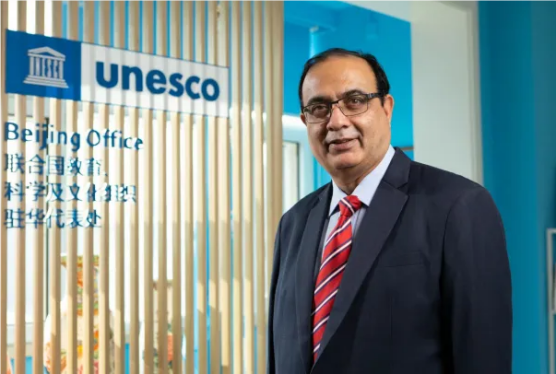
His essay is selected from the open access book Global Development and Cooperation with China: New Ideas, Policies and Initiatives for a Changing World (free book PDF download) of the “China and Globalization Series”.

This book combines the insights and wisdom of 26 representatives from a wide range of international organizations into a collection of 21 essays, focusing on the latest trends in four major areas—global governance, trade and economics, science and technology, and culture and exchange—providing the reader with information on the latest developments in these areas with a special focus on China and its relevant contributions.
The Chinese Way—Harnessing the Power of Cultural Heritage for Inclusive and Sustainable Development
Shabhaz Khan
Abstract:
China’s cultural wealth and rich heritage form part of the core of human civilization. After China resumed its position at the United Nations 50 years ago, its economic achievements have been astounding, but its “intangible wealth” in education, sciences, culture, communication, and information, deserves equal attention. China, which has had a deep and long-lasting relationship with UNESCO, has put culture at the center of its development strategy and blazed a path toward “eco-civilization” while also ensuring that no one is left behind as it pushes forward.
“Etiquette and culture are learned after the granaries of the people are full. Honor and shame are understood when the people have enough to eat and wear.” The words of the ancient Chinese statesman and philosopher, Guan Zhong, who lived during the Spring and Autumn Period about 2700 years ago, demonstrate the Chinese philosophical understanding of the link between material abundance and social progress.
Since China resumed its rightful place in the United Nations 50 years ago, its economic success has left the world in awe: one of the world’s most populous countries, China became the second-largest economy in less than half a century and has accomplished the largest scale of poverty alleviation in human history. China’s economic prowess has become the most studied subject among economists—factors that have led to China’s material wealth are put under the microscope of a myriad of economic metrics and political analyses. Nonetheless, the measurement of China’s achievement in social progress, that is, China’s “intangible wealth” in education, sciences, culture, communication, and information, requires a different set of lenses.
China’s Contributions to Education, Science, and Culture
China joined UNESCO on November 4, 1946 and the United Nations General Assembly Resolution 2758 was passed on October 25, 1971, recognizing the People’s Republic of China as “the only legitimate representative of China to the United Nations.” The UNESCO Beijing Cluster Office was established in 1984. The President of the People’s Republic of China, Xi Jinping, made an historic visit to UNESCO’s headquarters in Paris in 2014 as the first-ever Chinese Head of State to visit the organization. Over the span of a person’s lifetime, the precious partnership between UNESCO and China has matured and grown ever stronger.
Since the inception of this historic relationship, UNESCO has been closely linked with China’s steady and astonishing social progress.
In the cultural sphere, China has ratified five UNESCO culture conventions, and has made a considerable contribution to global cultural preservation and development efforts by adding 56 sites to the World Heritage List, 42 items to the list of Intangible Cultural Heritage (ICH), and 14 cities to the UNESCO Creative Cities Network.
In the realm of nature and science, China has made great contributions in enhancing the harmony between human and nature on a scientific and institutional level by establishing 34 Biosphere Reserves in UNESCO’s Man and the Biosphere program (MAB), 41 UNESCO Global Geoparks, and four Global Water Museums. China is also contributing to international cooperation and networking in the sciences to enhance institutional capacities and promote knowledge sharing by systematically building a series of science-related Category 2 Centers.
In education, China has seven education-related UNESCO chairs. In realizing its commitment to support the implementation of the UN’s 17 Sustainable Development Goals (SDGs), notably to “ensure inclusive and equitable quality education and promote lifelong learning opportunities for all” (SDG 4) and “make cities and human settlements inclusive, safe, resilient and sustainable” (SDG11), China has established several institutions which are members of the UNESCO-UNEVOC network that aims to strengthen and upgrade China’s Technical and Vocational, Education and Training (TVET) systems and has a group of cities that are members of the UNESCO Global Network of learning cities.
Leaving no One Behind
From UNESCO’s perspective, China’s intangible social wealth is not simply a matter of strength in numbers, namely its mountains of eye-catching statistics on governmental brochures and business spreadsheets, China also possesses a genuine concern for the most vulnerable, marginalized, and underprivileged members of society, which resonates with UNESCO’s fundamental humanitarian mission of shaping an inclusive and equitable society that “leaves no one behind.”
The weight behind these four simple words is nonetheless easily ignored. Today’s societies are constantly burdened with a hybrid reality—rampant hate speech in the cyberspace and staggering inequality manifested in both finance and ideology in real life. Discrimination, both as a destructive psychological tendency lurking behind our collective unconsciousness and as a repressive social construct sometimes blatantly institutionalized within different parts of our societal systems, must be eradicated in all its noticeable shapes and colors, if we were truly committed to achieve inclusive and equitable social progress.
In this regard, whether a country truly lives up to its promise to leave no one behind hinges on whether it allows the dividends of development to reach the most vulnerable and marginalized groups in society. This humanistic concern was a part of Chinese tradition of political philosophy very early on: “The blessing of a country that will lead it to prosperity is to treat its people with great affection as if they were wounded”. This excerpt is from the fundamental principles of good governance written by the great Chinese historian, Zuo Qiuming, an esteemed contemporary of Confucius.
China has always been a good student of its own history. China recently lifted 770 million rural population out of poverty, which accounts for 70 percent of the world’s total poverty reduction. As part of this unprecedented endeavor, more than 7 million persons with disabilities have been lifted out of poverty, around half of which are women. In recent decades, China has also made tremendous efforts in promoting the lives and livelihoods of the over 85 million people with disabilities living in the country. With the passage of more than 130 laws and administrative regulations formulated concerning the protection of rights of the disability community in China, over 1,700 cities and counties nation-wide have initiated efforts to improve accessibility and remove barriers for persons with disabilities. A new law titled Legislation on the Construction of Barrier-Free Environment in China is currently being developed, marking a huge step toward promoting and protecting the rights of persons with disabilities at the national level. The 2022 Winter Paralympics set an excellent example with a total of 336 thousand barrier-free facilities being added in Beijing alone. This has elevated the public awareness and need for accessibility to an unprecedented level. Moreover, China has ratified The Marrakesh Treaty to facilitate access to published works for persons who are blind, visually impaired or otherwise have barriers to printed materials. The Treaty went into effect in May 2022 and will play a positive role in the cultural and educational sectors for the 17.32 million people with visual disabilities and other people with print disabilities in China.
In support of China’s efforts in carrying forward this endeavor, UNESCO, also in its capacity as Chair of the UN Theme Group on Disability in China, has been working alongside persons with disabilities, as well as governmental and nongovernmental stakeholders, to promote inclusive education, tackle disability-related stigma and discrimination in and through media, as well as to harness technology and innovation for better access to information and knowledge for persons with disabilities.
Culture at the Center of Development
Confucius, the great Chinese educator, philosopher, and statesman, once commented on the value of culture to a nation’s development, “if people from lands far away feel alienated from us, we should embrace them by cultivating our own culture and virtue.” Two thousand years later, UNESCO was founded after two devastating world wars in the twentieth century, and with a deep conviction similar to that of Confucius, that political and economic agreements between states are not enough to secure the sincere support of the people and that only a human-centered approach to development based on mutual respect and open dialog among cultures can lead to lasting peace.
However, the divisive forces underlying the global pandemic, the deepening climate crisis and the bleak international geopolitical reality, are driving us into an increasingly fragmented world plagued by all sorts of risks and insecurities. We have never been more in need of culture, as an indispensable soft power, which can restore social cohesion and rebuild the intellectual and moral solidarity of mankind. In this regard, China has set a wonderful example in harnessing the power of culture and heritage to foster international solidarity and to implement constructive global governance.
China ratified the World Heritage Convention in 1985, and has since demonstrated its strong commitment to implementing the Convention, which is by far one of the most important global conservation instruments in the world. Since its adoption on November 16, 1972, the 1154 natural and cultural World Heritage sites in 167 countries are a testament to the universal appreciation and achievement of this groundbreaking legal framework. It embodies a visionary idea—that some places are so important that their protection is not only the responsibility of a single nation, but is also the duty of the international community as a whole; and not only for this generation, but for all those to come.
From the very first batch of inscriptions in 1987, China has added 56 sites to the World Heritage List, including 38 cultural, 14 natural, and four mixed sites. Influenced by the Convention, over the years China has developed rigorous legislation and operational guidelines for cultural, natural, and mixed World Heritage sites with a team of over 50,000 site managers at local heritage conservation administrations. Young people in China have become more aware of and engaged in heritage conservation; since 2011, the annual University Student Forum on World Heritage and Conservation Proposal Competition, facilitated by the UNESCO Chair on Sustainable Tourism in UNESCO Designated Sites at Sun Yat-sen University has been actively participated in by thousands of students from over 100 colleges and universities around China. With the inauguration of the China Cultural and Natural Heritage Day, a nation-wide cultural celebration, in 2006 and the emergence of a number of TV programs and variety shows on World Heritage sites in China in recent years, World Heritage also gained invisibility and popularity in the public sector.
Over the past decades, China has also steadily become a leading figure in facilitating international dialog and collaborations on heritage conservation and sustainable development among member states, advisory bodies, experts and civil society, and has made commendable efforts in supporting other developing countries to enhance the implementation of the World Heritage Convention. For example, since 1989, China has been providing technical assistance to Cambodia in restoring the Angkor monuments. After a 7.8-magnitude earthquake hit the Kathmandu Valley World Heritage site in Nepal in April 2015, China pledged 94 million yuan to start a five-year project to restore the Basantapur Tower. Since 2017, China and UNESCO have jointly organized four International Youth Forums on Creativity and Heritage along the Silk Road, which have brought together young women and men from over 100 Silk Road countries to contribute to the dialog on heritage conservation and development. China has also forged strong collaboration with Africa in the field of World Heritage since 2018 through joint projects supporting long-term capacity-building and strengthening the monitoring and management of African World Heritage properties. China has also served four times as World Heritage Committee member, and has hosted the World Heritage Committee meeting twice—2004 in Suzhou and 2021 in Fuzhou.
As the world’s second-largest developing country and a major economy that has undergone rapid development and urbanization over the past decades, China has been at the forefront of addressing issues of heritage conservation that is in synergy with socio-economic development. It is heartening to see that China’s national five-year development plans already address the role of culture and heritage as a pillar in achieving high-quality development, while a prominent culture component is featured in the 2021–2025 United Nations Sustainable Development Cooperation Framework (UNSDCF) for China, which will serve as an overarching framework for collaboration between the UN and China in the years to come. This reflection resonates with the spirit of the UN 2030 Agenda for Sustainable Development, in particular Sustainable Development Goal Target 11.4 - “Strengthen efforts to protect and safeguard the world’s cultural and natural heritage,” which highlights that culture and heritage are both ends as well as means to sustainable development.
For over 15 years, UNESCO’s Beijing Office has been working closely with Chinese ministry offices, site administrations, academic institutions and local communities to enhance China’s World Heritage site management capabilities, foster platforms for exchange, and explore heritage-driven approaches to key developmental issues such as poverty reduction and rural revitalization. Specifically, UNESCO is implementing a range of initiatives such as the “World Heritage Sustainable Livelihood” pilot activities for local communities, “Panda Ambassador” initiative on heritage education for youth, and “Heritage So Young” initiative on heritage communication in the digital era through the UNESCO-China Youth Development Foundation Mercedes-Benz Star Fund Funds-in-Trust Project “Conservation and Management of World Heritage Sites in China.” In the face of new challenges and opportunities, we need to broaden the definition of heritage, bring heritage into a broader framework, and engage more stakeholders. We need to look at heritage from the perspective of not only protection but also development. We need not only to retain the vitality and resilience of heritage itself, but also to let heritage play a new role in promoting the sustainable development of economy, society and environment.
The year 2022 marks the 50th anniversary of the World Heritage Convention. This landmark year comes at a watershed moment for conservation. Urban expansion and infrastructure development are exerting unprecedented pressures on traditional monuments and historic urban landscapes. Global climate change is also proceeding at a relentless pace with its effects increasingly extending beyond the environmental sphere, causing both irreversible impact on nature and biodiversity, as well as multi- plying the risk of vulnerable communities. The COVID-19 pandemic has revealed the vulnerability of the heritage ecosystem in the face of sudden crisis, as demonstrated by the closure of 89% of World Heritage sites. More than ever, we need to explore and discuss new horizons for heritage conservation in the face of global challenges. To tackle these challenges, the international community should pool their wisdom through intercultural dialog, commit themselves to in-depth research and practices, explore effective measures that meet national conditions and particularities of heritage sites, and achieve a balance between heritage protection and community development.
The Road Toward Eco-civilization
In addition to its gentle human touch for disadvantaged groups from specific social segments, China’s governance style is also characterized by its long-term vision and grand design that focuses on the big picture of the synergy between society and nature. The notion of “eco-civilization” is a Chinese answer which incorporates environmental, economic, educational, political, agricultural, and other societal reforms toward sustainability in a whole-of-system approach. China is a global champion of the concept of “ecological civilization”, which was enshrined in its Constitution in 2018. Since then, China has been developing this concept in greater depth and at a faster pace, placing ecological civilization on its five-in-one national modernization agenda. UNESCO shares the concept’s core mission of enhancing harmony between society and nature, as well as responding to public demand for a healthy living environment.
In October 2021, the 15th meeting of the Conference of the Parties to the Convention on Biological Diversity (COP15) was held in the city of Kunming in China’s southwestern Yunnan Province. One of the major achievements of the conference, the Kunming Declaration was adopted to ensure the development and implementation of the post-2020 global biodiversity framework to reverse the current loss of biodiversity and secure its recovery by 2030, which will lead to the fruition of the 2050 Vision of “Living in Harmony with Nature.” As the host and the chief driver of the conference, China has demonstrated its staunch determination in taking a leadership role in promoting international cooperation on ecological development and environmental protection. In his speech during the leader’s summit of COP15, President Xi has emphasized (1) the overarching role of the concept of “eco-civilization” as the fulcrum which sustains the balance between human society and nature; (2) green transformation, which is a green low-carbon recycling economy as the driving force to help global sustainable development; (3) focusing on people’s welfare to promote social equity and justice as the guiding principle of all policies and actions; (4) staying rooted in the foundation of international law and maintaining a fair and reasonable international governance system that truly manifests multilateralism. Ambition needs to be combined with pragmatism.
Against this backdrop, China has taken the initiative of contributing 1.5 billion RMB ($234.6 million) to establish the Kunming Biodiversity Fund to support biodiversity conservation in developing countries. China is also accelerating the construction of a nature reserve system with national parks as the mainstay of its most important natural ecosystems. In order to fulfill its promise of creating a green economy, China will release a wide range of national actions in key areas and industries to build up the “1 + N” policy system to achieve its carbon emission peak and carbon neutrality.
UNESCO and China share the common vision that putting biodiversity on a path of recovery is a defining challenge of this decade. The implementation of a visionary and game-changing post-2020 global biodiversity framework calls for mutual trust and firm political support, which are vital pillars to multilateralism. Within the framework of the Kunming Declaration, UNESCO is fully committed to cooperating with China to further enhance collaboration and coordinate actions with ongoing multilateral environmental agreements; to increase the provision of financial, technological, and capacity-building support to developing countries necessary to implement the post-2020 global biodiversity framework; to ensure that postpandemic recovery policies, programs and plans contribute to the conservation and sustainable use of biodiversity, promoting sustainable, and inclusive development.
Contemporary sinologists have always described China as a “civilizational state” that is exceptional in its own way. The social progress achieved by China today and its contribution to international governance is not a historical coincidence. It has been made possible by the conscious efforts of 1.4 billion Chinese people in safeguarding their common cultural heritage and standing by their precious traditions of good virtues and resilience. It is guided by a responsible government that is convinced that no development can be sustainable without a strong cultural component and has consistently demonstrated an unwavering commitment to deliver for the well-being of its citizens.
As always, in support of China’s effort in carrying forward the Sustainable Development Goals at the national and global level, UNESCO reaffirms its humanist mission to safeguard and revitalize cultural heritages in China and beyond, and to realize our common vision in building an inclusive and equitable society that leaves no one behind. As a knowledge-based organization, UNESCO fully recognizes and cherishes this precious and unique partnership with China. With the roadmap of our successful cooperation within the framework of the 2030 Sustainable Development Goals, I’m confident that UNESCO and China will together build a sustainable future and march toward the dawn of an eco-civilization that leaves no one behind.
What to read on China and globalization in 2026: CCG's “China and Globalization” series

As year-end reading lists take shape, CCG Update is highlighting the Springer-published “China and Globalization” series as a compact way to navigate a crowded debate. Since 2021, the series has grown into a practical reference set for readers tracking China’s evolving role in a more fragmented world. Many volumes are available open access, making the s…
Beate Trankmann: Building a Green and Inclusive Future: Accelerating China’s Low-Carbon Development

Beate Trankmann is Deputy Regional Director for Asia and the Pacific and Director of UNDP Bangkok Regional Hub. She served as Resident Representative for UNDP China from October 2019 to January 2026, after serving with UNDP in Mongolia, Sri Lanka, and Cambodia. Prior to joining UNDP, Ms. Trankmann was Research Fellow at the European Institute for Asian …
A United Nations “Fit for Purpose” to Address the Current Geopolitical Environment and Challenges Facing the Community of Nations

Siddharth Chatterjee has been the UN Resident Coordinator in China since 16 January 2021. He has more than 25 years of experience in international cooperation, sustainable development, humanitarian coordination, and peace and security in the United Nations and the Red Cross movement. He has served in many fragile and war-torn countries all over the worl…