

CCG hosts UK visiting officials
On the afternoon of Monday, 16 March 2026, a British Whitehall delegation of more than 20 officials visited the Center for China and Globalization (CCG). The group included officials from UK departments covering foreign affairs, trade, health, finance, education, and energy, and was accompanied by representatives from the British Embassy in China.
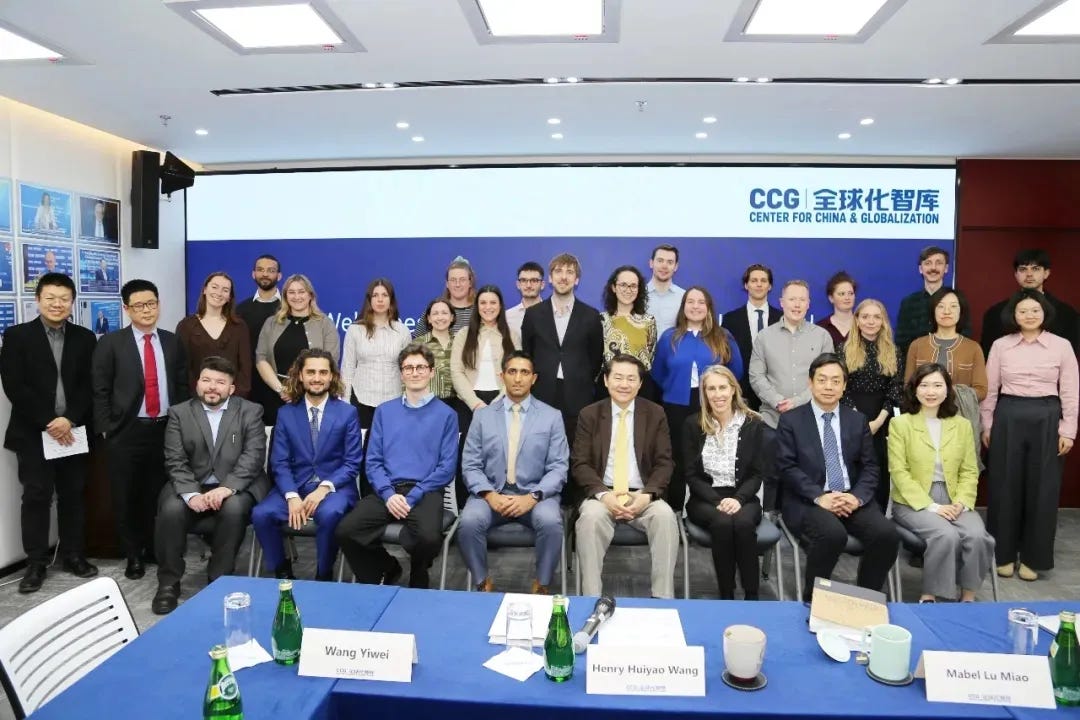
The delegation met Henry Huiyao Wang, President of CCG, Mabel Lu Miao, Secretary-General of CCG, and Wang Yiwei, Jean Monnet Chair Professor and Director of Center for European Studies at Renmin University of China, for discussions on China-UK relations and global governance.
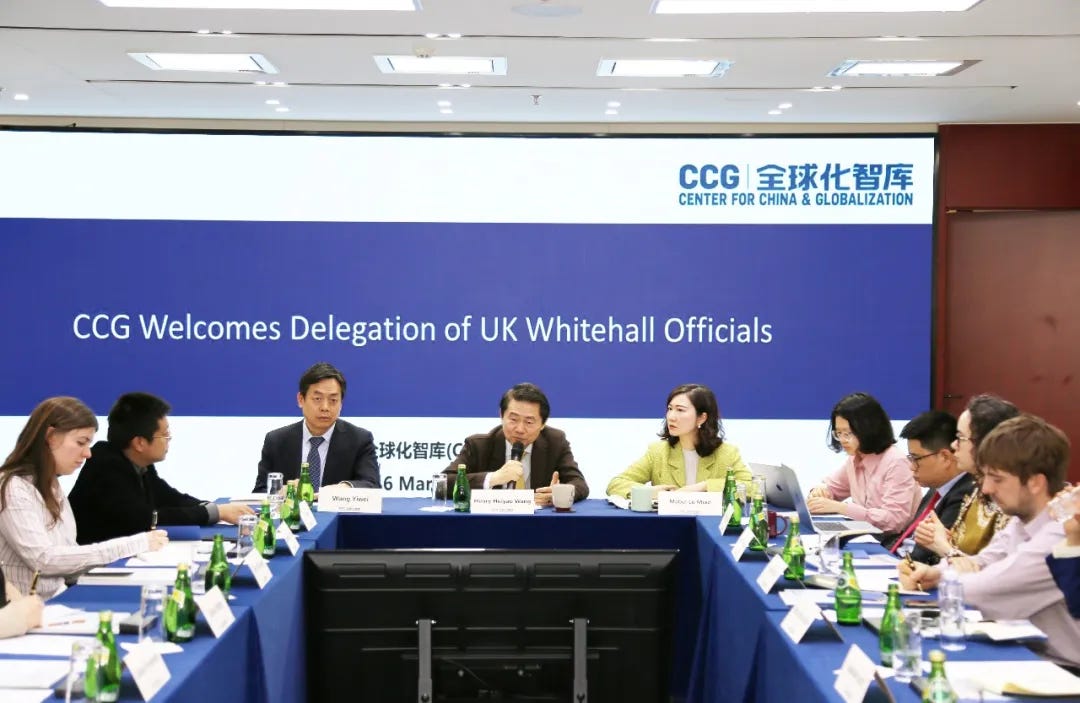
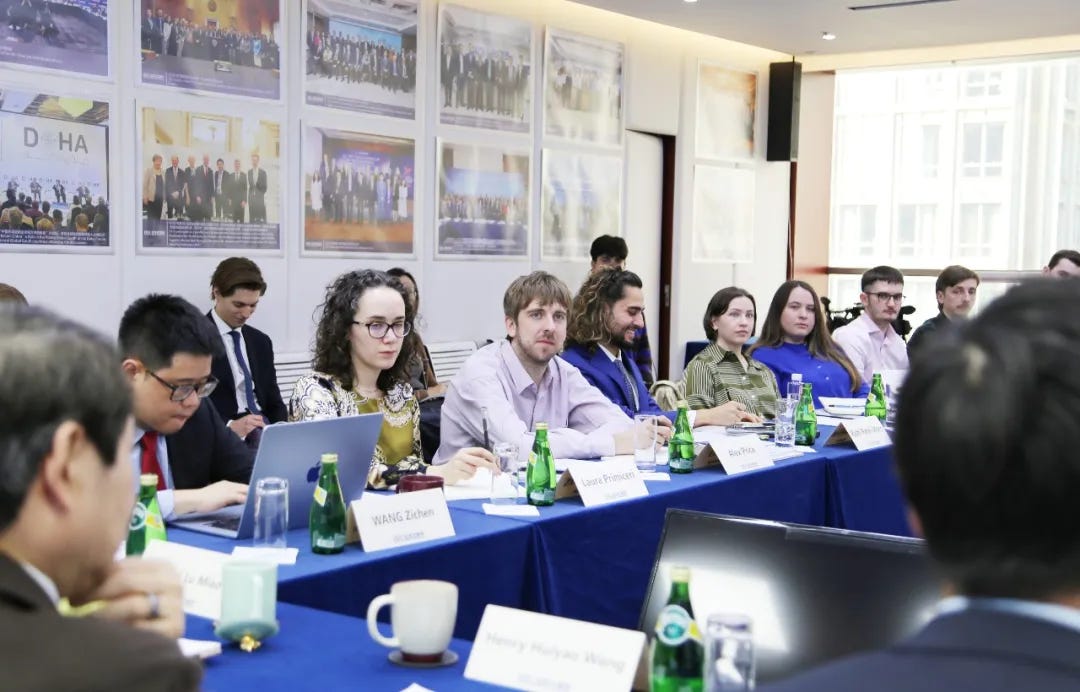
In recent years, the UK government has organised short visits to China for officials from London and overseas postings to deepen their understanding of the country. This marked the programme’s third visit to CCG, following earlier visits on 13 March 2024 and 25 February 2025.
CCG hosts Post Two Sessions Policy Recap
On Tuesday, 17 March, the Center for China and Globalization (CCG) hosted a luncheon seminar in Beijing for diplomats, representatives of international organisations, and business leaders on the key messages from China’s recently concluded “Two Sessions”. The discussion focused on the Government Work Report, the 15th Five-Year Plan, and related current issues.
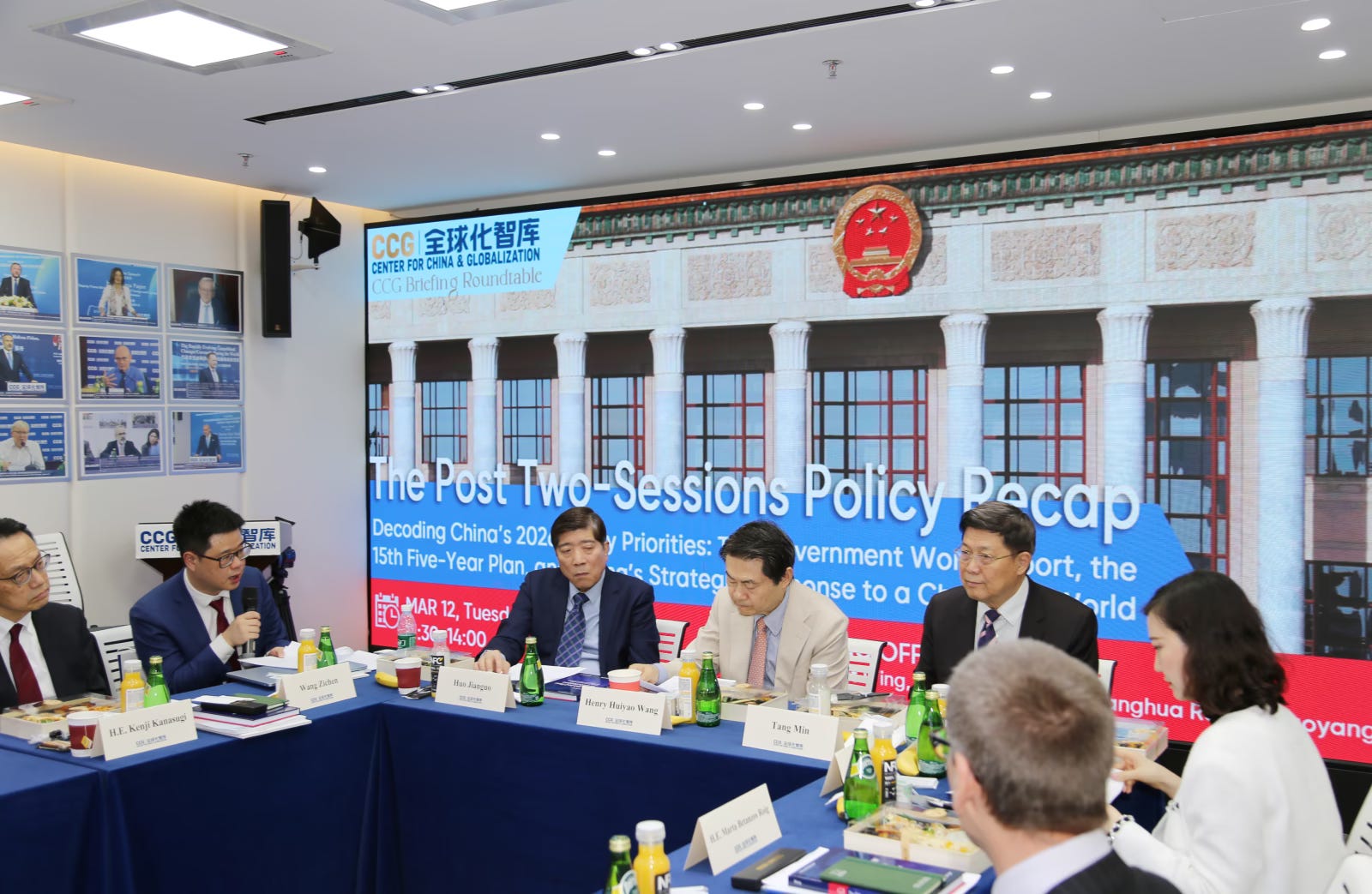
The keynote speakers were Tang Min, former Counsellor of the State Council, China’s government cabinet; Huo Jianguo, former President of the Chinese Academy of International Trade and Economic Cooperation under the Ministry of Commerce; and Henry Huiyao Wang, Founder and President of CCG and former Counsellor of the State Council. Mabel Lu Miao, Secretary-General of CCG, delivered the welcome remarks.
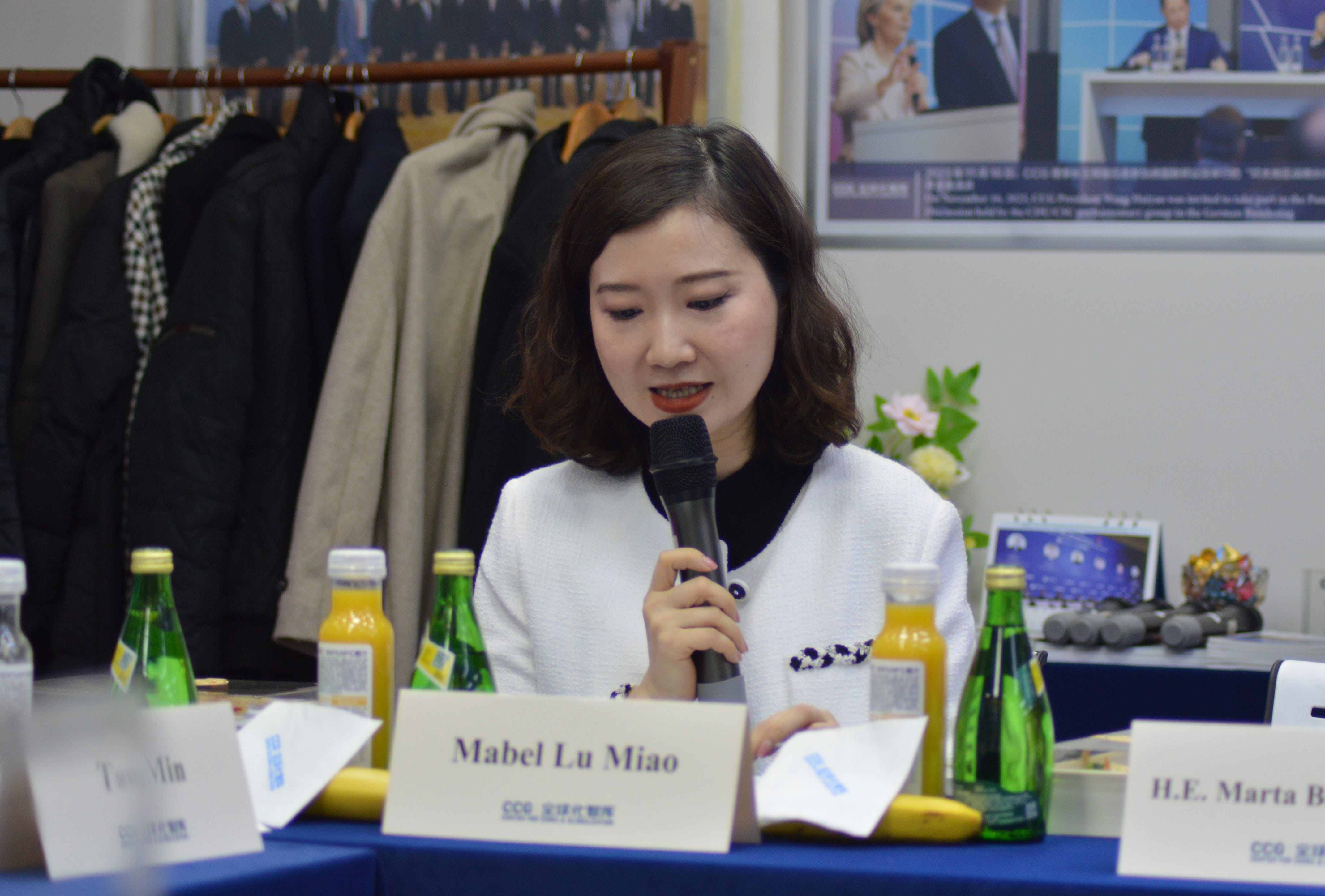
In her opening remarks, Mabel Lu Miao said that 2026 marks the opening year of the 15th Five-Year Plan, making this year’s “Two Sessions” an important window on China’s economic and social priorities and a key opportunity for the international community to better understand the direction of China’s next-stage reform and opening up.
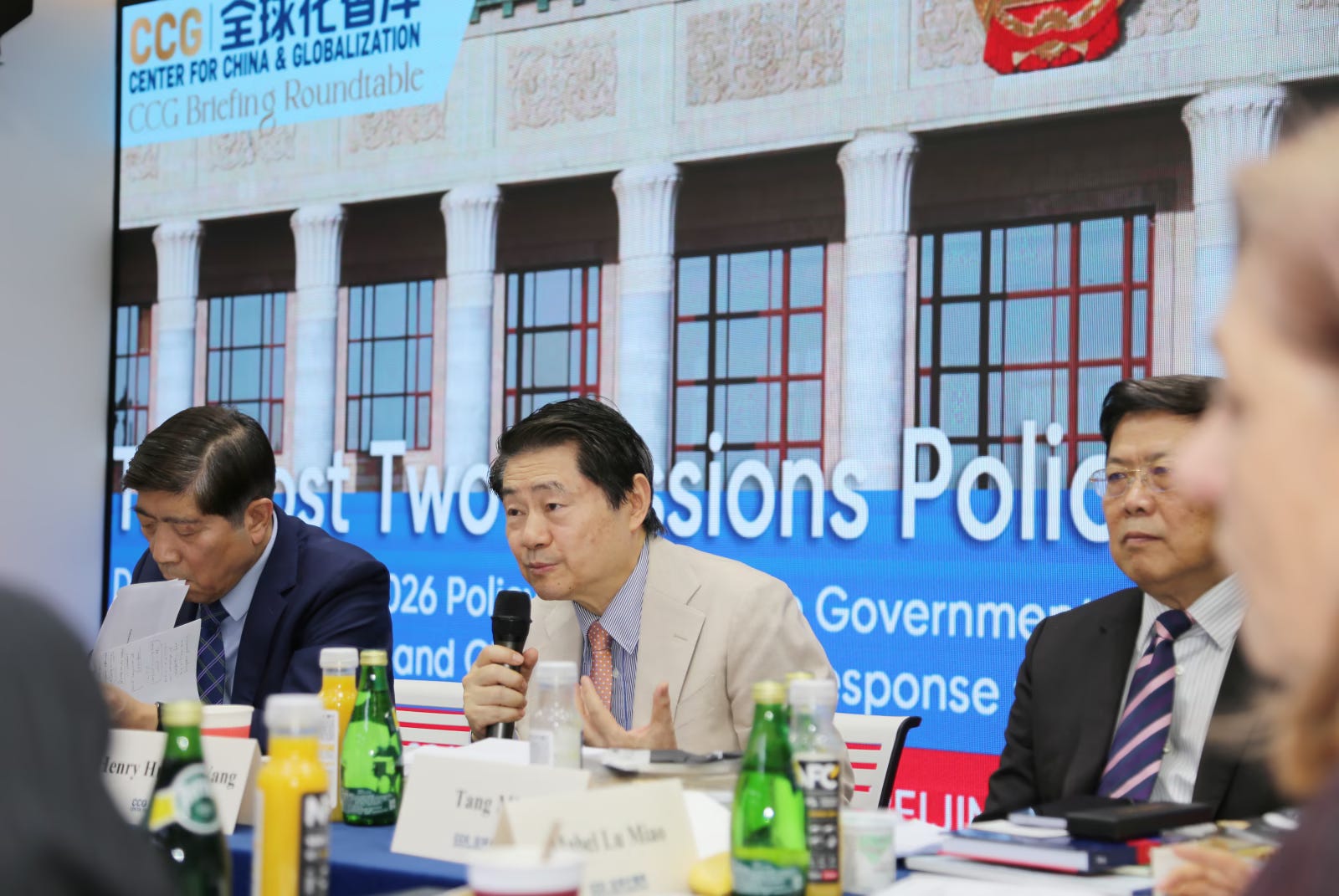
Henry Huiyao Wang said China’s development model is undergoing a further shift: from high-speed growth to high-quality development, from abundance to excellence, and from an industry-led model to one driven by technology. China will continue to draw on major strengths including its vast domestic market and complete industrial system, while making artificial intelligence a core growth driver.
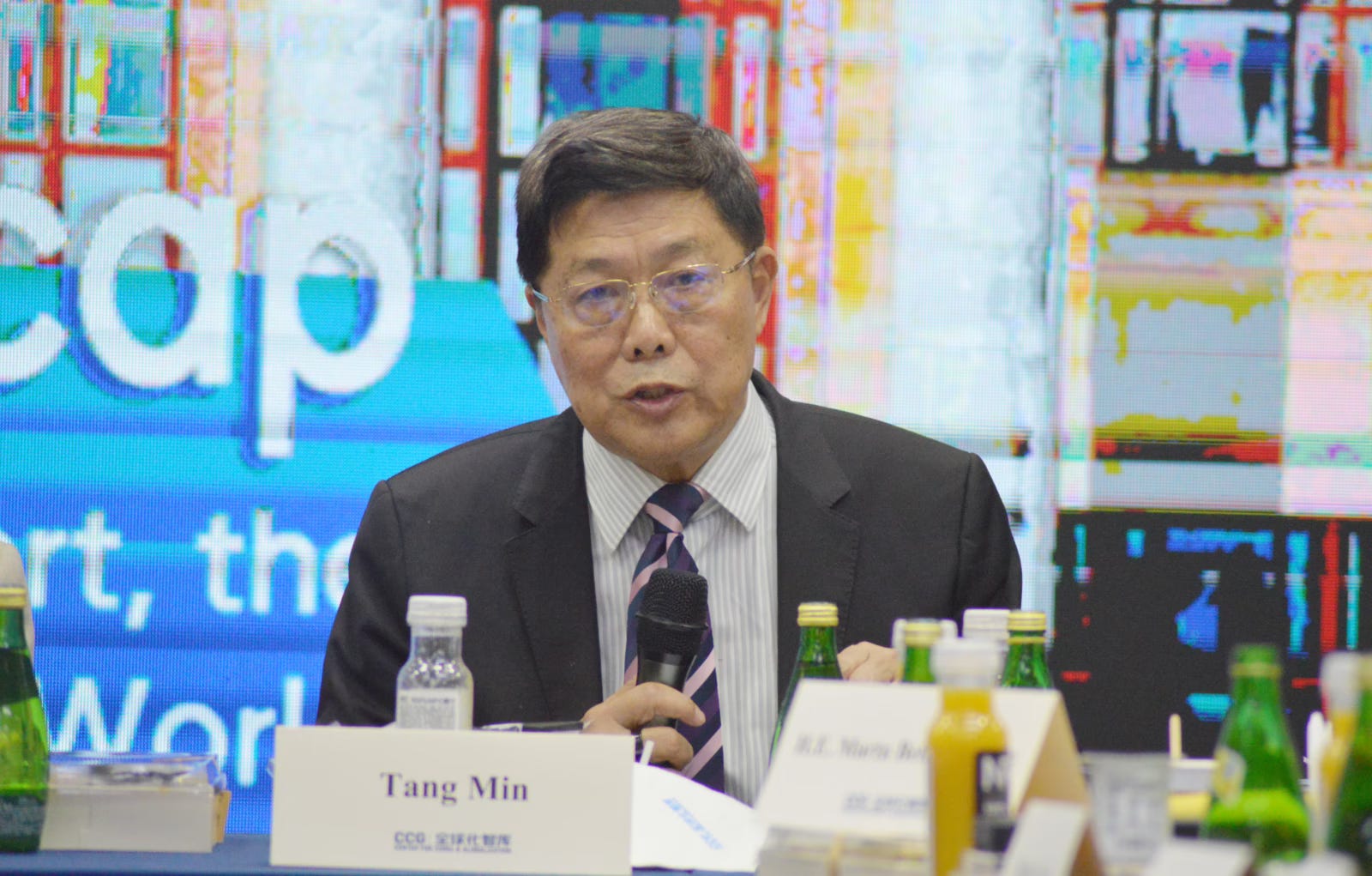
Tang Min highlighted seven major differences between this year’s “Two Sessions” and last year’s. He noted in particular that, for the first time, the Government Work Report set the growth target as a range of 4.5% to 5%, reflecting a pragmatic approach that leaves room for structural reform.
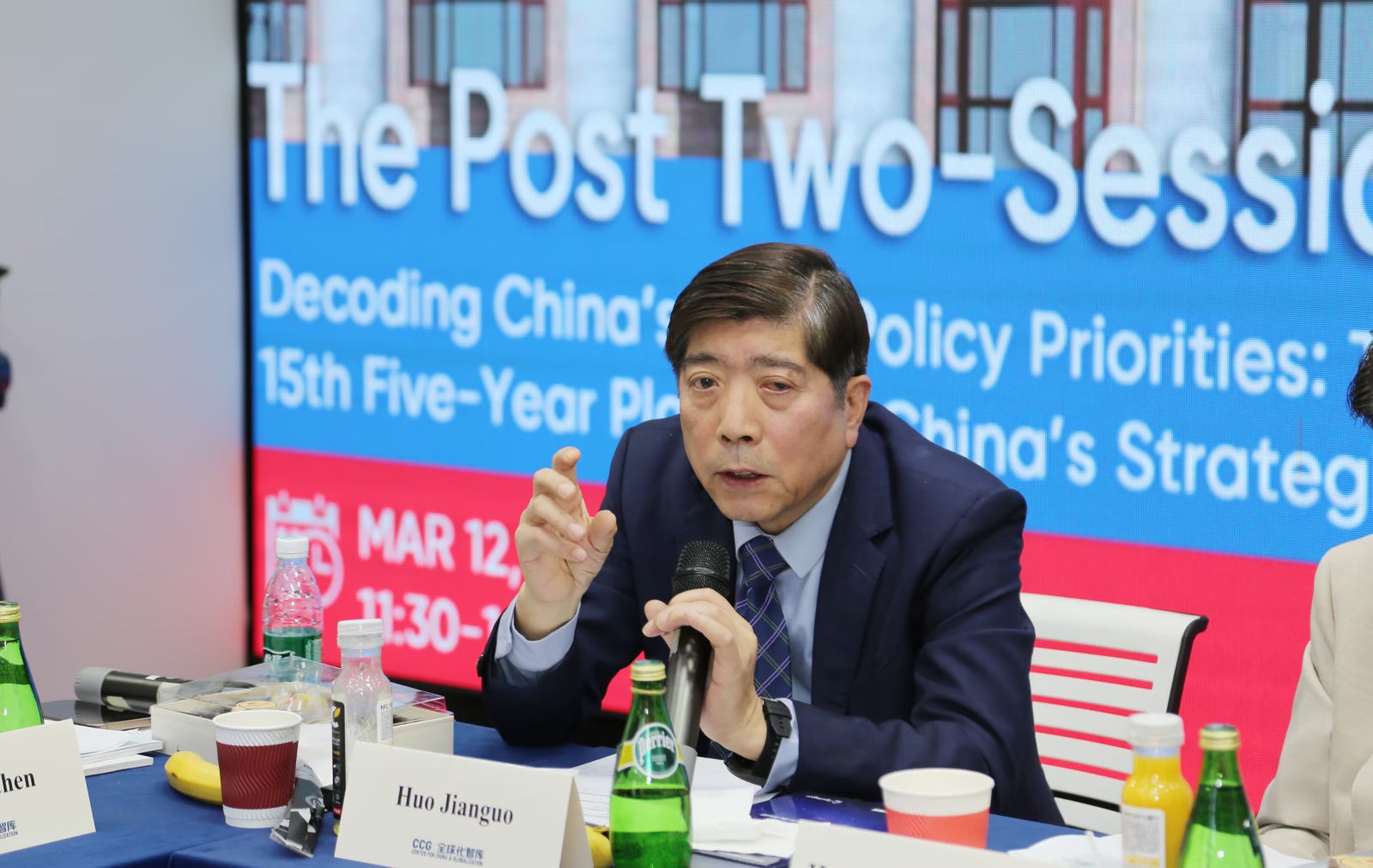
Huo Jianguo examined the new meaning of “institutional opening up” from the perspective of foreign trade and investment. He said China will use accession to high-standard agreements such as the CPTPP to drive deeper domestic reform in regulation, standards, and governance.
In the discussion that followed, Kenji Kanasugi, Japanese Ambassador to China, Marta Betanzos Roig, Spanish Ambassador to China, and other diplomats, representatives of international organisations, business leaders, and think tank experts exchanged views with the speakers on macroeconomic targets, further opening up, and opportunities for international cooperation.


Participants in the policy luncheon seminar:
Marta Betanzos Roig, Ambassador of Spain to China
Kenji Kanasugi, Ambassador of Japan to China
Martin Taylor, WHO Representative to China
María Victoria Scola Pliego, Deputy Head of Mission, Embassy of Spain in China
Sapir Shimoni Bettan, Counsellor for Internal Affairs and Innovation Cooperation, Embassy of Israel in China
Fiona Antonnette Barnaby, Head of Humanitarian Affairs and Policy, Regional Delegation for East Asia, International Committee of the Red Cross
Thøger Christensen, First Secretary for Economic Policy, Embassy of Denmark in China
Alexander Chapman, First Secretary for Political Affairs, Embassy of Australia in China
Wicher J. Slagter, Second Secretary for Political Affairs, Embassy of the Netherlands in China
Ivan Mezenin, Deputy Defence Attaché, Embassy of Russia in China
Gregorius Suryawijaya Yulian Sunarto, Deputy Chief Representative, Bank Indonesia Beijing Representative Office
Claudia Barkowsky, Chief Representative in Beijing, VDMA
Btissam Dakkouni, Chief Representative, Attijariwafa Bank
Juergen Kurz, Regional Director for China, HEUFT Systemtechnik
Cynthia Xing, Managing Director of Public Affairs and Government Relations, Edelman China
Tobias Knörich, Policy Adviser, Konrad Adenauer Stiftung Beijing Office
Julia Chen, Long-Term Governance Adviser, Simon Institute
Matilde Cenacchi, Policy Officer, Trade Section, Delegation of the European Union to China
Julio Arias, Political Affairs Officer, Delegation of the European Union to China
Liu Xiaomei, Humanitarian Affairs Adviser, Regional Delegation for East Asia, International Committee of the Red Cross
Rhea Zeng, Senior Research Analyst, Attijariwafa Bank
Yu Mu, Senior Research and Project Officer, Service Bureau for Diplomatic Missions in Beijing, Beijing Foreign Affairs Office
Aviad Levi, Analyst for Innovation Cooperation, Embassy of Israel in China
Zili Wang, Analyst, Hua Xian Group
Teresa Ng, Policy Assistant, Defence Attaché Office, Embassy of Singapore in China
Nick Temperli, Embassy of Switzerland in China
Jasmine Amram, Junior Officer for Economic and Financial Affairs, Embassy of Switzerland in China
Francesco Cosentino, Freelance Writer
Business Lunch with the Ambassador of Peru to China: Investment and Market Entry Opportunities in Peru

On Monday, 30 March 2026, CCG, in partnership with the Embassy of Peru in China, will host a Peru-focused Business and Investment Lunch in the China World Trade area of Beijing.