

Mbelwa Kairuki, High Commissioner of the United Republic of Tanzania to the United Kingdom and former Ambassador of Tanzania to China, has contributed an updated article to CCG, revisiting his earlier chapter, “Linking Infrastructure Across Africa and Asia: Practical Links Between SADC Corridors and the BRI Silk Road,” in CCG-edited volume China and the World in a Changing Context: Perspectives from Ambassadors to China (Springer, 2022).
Reflecting on developments since 2021, Kairuki examines the revitalisation of the Tanzania-Zambia Railway (TAZARA), the development of the Lobito Corridor, growing interest in critical minerals, and investments in regional ports and railways. These developments give renewed relevance to the article’s central argument: that stronger transport connections, supported by productive investment and effective international partnerships, can help African countries capture greater value from their resources and expand regional trade.
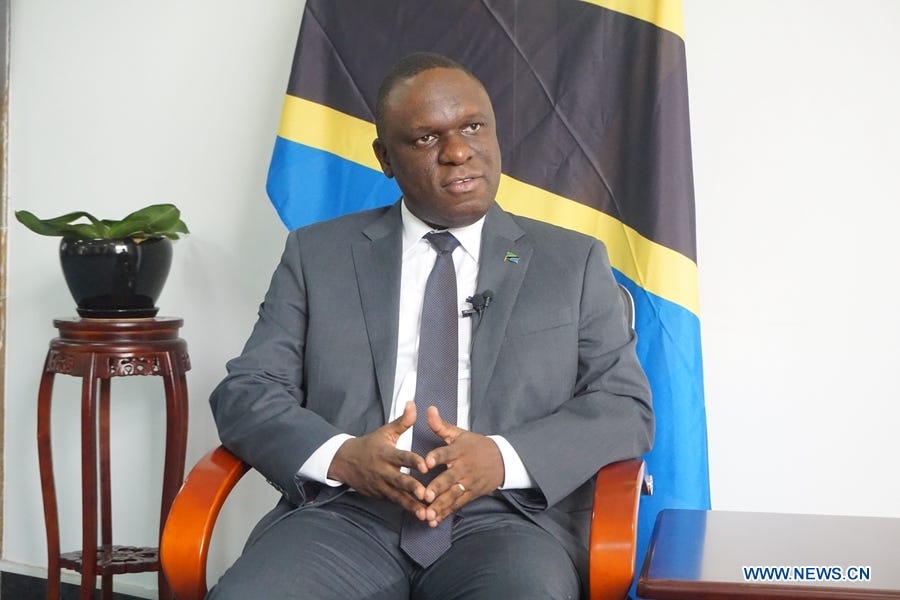
Linking Infrastructure across Africa and Asia
TAZARA, the Lobito Corridor and regional industrial development in 2026
By Ambassador Mbelwa Kairuki
Updated 14 November 2026
In my earlier essay, I argued that linking the Benguela and Tanzania–Zambia Railway (TAZARA) corridors could give practical expression to cooperation between Africa and China, while advancing Southern Africa’s industrialisation. Developments between 2021 and 2026 have made that proposition more tangible. TAZARA has secured a major revitalisation agreement; the Lobito Corridor has attracted operating concessions and development finance; and Tanzania’s investment in ports, railways and inland logistics is strengthening its role as a regional gateway. These developments create an opportunity to build a more connected African production and trading system.
The strategic objective should be greater African economic choice. Reliable access to the Atlantic and Indian Oceans can give producers alternative routes, improve resilience and widen the markets available to regional enterprises. The benefits will depend on how transport investments are connected with power, processing facilities, agriculture and skills. The measure of success must include the value created within Africa and the opportunities available to its people.
An expanded framework for cooperation
The policy framework has evolved since the 2018 Beijing Summit of the Forum on China–Africa Cooperation (FOCAC). The Beijing Action Plan for 2025–2027 explicitly supports African manufacturing, local value chains and deeper processing of critical minerals. It also links transport infrastructure with industrial parks and encourages cooperation involving African development banks, private investors and other partners. This provides a stronger basis for presenting corridor development as an industrial programme with transport at its core. The African Continental Free Trade Area (AfCFTA) should guide this investment logic, with transport designed to support trade among African economies as well as overseas exports.
For Tanzania, the appropriate approach is to bring these commitments into alignment with regional priorities and commercially credible projects. China remains an essential partner through its engineering capabilities, industrial experience and longstanding relationship with TAZARA. African financial institutions, European partners, the United States, Gulf investors and others also have relevant roles. A well-prepared African investment programme can draw on these different capabilities while maintaining national ownership and regional coherence.
TAZARA revitalisation and the Indian Ocean connection
TAZARA’s revitalisation is the most consequential change to the eastern part of the original proposition. On 29 September 2025, TAZARA signed a concession agreement with China Civil Engineering Construction Corporation (CCECC) to rehabilitate and modernise the railway and operate its freight business. The programme provides for investment exceeding US$1.4 billion in infrastructure and rolling stock. The 1,860-kilometre line connects Dar es Salaam with New Kapiri Mposhi in Zambia, where onward railway connections give it regional significance.
Implementation has begun, although the stages need to be stated precisely. In July 2026, construction was launched on a new training centre and operations control centre in Dar es Salaam. These facilities address the practical requirements of a functioning railway: skilled staff, coordinated train movements and effective operational management. They are early components of the wider programme, rather than evidence that rehabilitation of the entire route has been completed.
TAZARA’s Board communiqué of 13 October 2026 records equipment mobilisation, infrastructure surveys and preparatory activities. It also identifies outstanding requirements before the concession takes full effect. Under the approved strategy, TAZARA would continue freight operations during the initial investment period, with the concessionaire assuming freight operations after rehabilitation. The strategy projects annual freight of 1.2 million tonnes in 2029/30 and 1.8 million tonnes in 2030/31. These are future targets, not present traffic volumes.
This distinction has important commercial implications. Shippers need dependable timetables during the transition, and investors need clear arrangements for maintenance, asset condition and service obligations. The Board’s call for professional concession oversight and monitoring of investment commitments is therefore central to the programme’s success. Tanzania and Zambia should use the revitalisation to establish a railway service that manufacturers and farmers can incorporate confidently into their business plans. Its historic symbolism will acquire renewed force through reliable performance.
Lobito and the Atlantic connection
The western corridor has also changed substantially. Lobito Atlantic Railway (LAR) took over freight operations and maintenance of the Angolan railway in January 2024 under a concession awarded in 2022. Its services connect Angola with the Democratic Republic of the Congo (DRC) and carry minerals alongside agricultural, industrial and other cargo. On 31 July 2026, the Development Bank of Southern Africa announced financial close with the US International Development Finance Corporation on US$786 million for the existing railway’s rehabilitation, upgrading and long-term operation.
This financing concerns the operating railway. A separate project would create a direct connection from Zambia’s Copperbelt to Angola. In its update of 3 November 2026, Africa Finance Corporation (AFC), the lead sponsor and developer, described an approximately 830-kilometre line from Chingola to Luacano, connecting with the Benguela Railway. Preferred engineering and construction bidders had been selected, while prospective users had signed preliminary arrangements covering about two million tonnes of freight annually. AFC was targeting financial close in 2027. The new link consequently remains a development project; preliminary freight commitments are not equivalent to realised traffic.
The development of Lobito should encourage a wider African conversation about the relationship between corridors. The railway itself illustrates the scope for successive contributions by different partners: LAR acknowledges the reconstruction undertaken by China Railway 20 Bureau in 2015, before the present concession and financing arrangements. The lesson I draw is that infrastructure partnerships can build upon one another. Regional governments should seek compatible operating arrangements and wider market access, supported by investment from partners willing to advance those objectives.
A functioning network between the two oceans would require dependable connections through Zambia and the DRC, as well as improvements at individual railways and ports. The agreement to rehabilitate TAZARA and the financing of Lobito do not, by themselves, establish a seamless coast-to-coast service. That remains a practical agenda for railway operators, customs authorities and governments to negotiate.
Railways and the wider regional network
Tanzania’s Standard Gauge Railway (SGR) is creating another major route for regional integration. The Tanzania Investment Report 2025, published in 2026 by the Bank of Tanzania and its partner institutions, records operating freight services between Dar es Salaam and Dodoma. It also records the inauguration of the Kwala International Logistics Hub on 31 July 2025, linking inland logistics, industrial development and rail freight. These are operating foundations on which a wider network can be built.
The western extensions remain works in progress. Tanzania Railways Corporation’s October 2026 account of an official inspection identifies construction on the Makutupora–Tabora, Tabora–Kigoma, Tabora–Isaka and Isaka–Mwanza sections. The proposed connections into the Great Lakes region should therefore be discussed in stages, with completed services distinguished from sections under construction and future cross-border links.
The Tanzania–Burundi railway provides a particularly clear connection between transport and productive investment. In December 2023, the African Development Bank approved financing structures valued at US$696.41 million for the joint railway programme, including sections towards Kigoma and Musongati. Tanzania’s Ministry of Transport subsequently reported the signing of construction contracts for Uvinza–Musongati. The AfDB identifies access to Burundi’s mineral resources, including nickel, as part of the economic rationale. The railway is an investment in future capacity, rather than an operating mineral-export route.
Other regional developments reinforce this direction. Kenya Railways reported the commencement of actual construction on the Naivasha–Kisumu section in July 2026, within the wider plan to extend the SGR towards Malaba. Uganda’s October 2026 parliamentary record describes progress on design, surveys, mobilisation and other preliminary work for the Kampala–Malaba SGR. These are significant steps, while completion of a continuous regional standard-gauge service remains ahead.
The connecting railways within Southern Africa are equally important. In March 2026, Zambia Railways appointed a transaction adviser to raise US$60 million to complement a €50 million EU grant for rehabilitation of track, signalling and communications. In July, the DRC’s Council of Ministers approved a public-private partnership proposal with Mota-Engil for rehabilitation of the Dilolo–Kolwezi–Lubumbashi–Sakania railway, the Congolese component of the Lobito Corridor. The former is a financing mobilisation initiative; the latter records cabinet approval of the proposed partnership. Both address links that are essential to a wider network. Their implementation deserves the same attention as the better-known ocean-facing corridors.
Technical integration requires deliberate planning. TAZARA uses a 1,067-millimetre gauge, which allows interchange with several Southern African systems. Tanzania’s SGR is a different railway system. Shared economic purpose does not make rolling stock interchangeable. Terminals, cargo-transfer facilities, border procedures and service coordination must therefore be included in corridor investment plans. The same attention is needed at lake ports, where rail and shipping services can extend the reach of inland production centres.
Port development and the complete logistics chain
Ports have become a more substantial part of Tanzania’s regional offer. The Ministry of Transport’s 2026/27 budget summary reports that Dar es Salaam’s cargo throughput increased from 16.27 million tonnes in 2020/21 to 27.76 million tonnes in 2024/25, an increase of about 70.6 per cent. These are fiscal-year figures, not a measure of full-year 2026 performance. The growth reinforces the importance of matching maritime capacity with inland transport and cargo clearance.
New operating partnerships are part of this development. DP World began operations at Dar es Salaam in April 2024 under a 30-year concession, while Adani International Ports Holdings announced a separate 30-year concession for Container Terminal 2 in May 2024. Their value to the wider economy should be assessed through service reliability, charges, cargo dwell time and efficient connections with inland transport. Improvements at individual terminals need to be translated into lower and more predictable costs for users across the entire route.
The port network extends beyond Dar es Salaam. Tanzania Ports Authority lists Tanga with a 13-metre draft and annual capacity of three million tonnes, while Mtwara has berths offering drafts of up to 13 metres. These facilities offer scope to serve different production areas and relieve pressure on a single gateway. The appropriate mix of services should follow demonstrated cargo demand, inland access and commercially viable shipping connections.
Bagamoyo remains relevant to longer-term planning, but its status must be described carefully. The 2026/27 transport budget set out preparatory work and intended dredging for a new development; it did not establish an operating new deep-water gateway. On the Atlantic side, Angola inaugurated the multipurpose terminal under Africa Global Logistics’ concession at Lobito in March 2024. Across both coasts, the policy task is to coordinate terminal investment with rail capacity, warehousing and customs so that improvements at one point are sustained through the whole journey.
Critical minerals and African industrial development
Critical minerals now give corridor development a sharper industrial and strategic significance. The International Energy Agency’s Global Critical Minerals Outlook 2026 identifies continued supply concentration and a projected copper supply gap of around 25 per cent in 2035 under its announced-project assessment. It also reports that critical-mineral investment fell by 9 per cent in 2025. These findings point to opportunity alongside financing risk. Strong long-term demand does not guarantee that every deposit or processing proposal will attract capital.
Tanzania’s projects illustrate both the progress and the remaining work. Kabanga’s feasibility study was released in July 2025. Lifezone Metals’ October 2026 disclosures describe continuing engineering, procurement, early works and financing activity. The company then expected a final investment decision in the first quarter of 2027, subject to the framework agreement, financing and lender requirements. Kabanga should accordingly be presented as an advanced development opportunity, rather than an operating mine or completed processing complex.
Mahenge provides a parallel example in graphite. Black Rock Mining’s quarterly report of 29 October 2026 records a US$204 million credit facility involving CRDB Bank, the Development Bank of Southern Africa and South Africa’s Industrial Development Corporation, alongside its strategic relationship with POSCO. The deadline for financial close had been extended to 30 November 2026, and the company was still seeking the remaining equity needed for a fully funded investment decision. Early works and financing commitments are important progress, but full project funding and commercial production remained subsequent milestones.
These developments strengthen the case for coordinated infrastructure planning. A mineral project needs dependable electricity, water and transport, while a railway needs sustained paying traffic. Preparing those investments together can reduce uncertainty for both. Public authorities should encourage shared infrastructure where viable, assess realistic production schedules and avoid basing railway revenues on mines whose financing or commissioning remains uncertain.
The industrial objective also needs greater precision than a general ambition to manufacture batteries. Copper can support electrical equipment and other industrial uses. Nickel and cobalt participate in particular battery chemistries, while graphite has a distinct role in anodes. The IEA’s 2026 outlook highlights how the expansion of lithium iron phosphate batteries is changing cobalt-demand expectations. Technology choices therefore matter: local processing and manufacturing strategies should be tested against customer specifications, energy requirements and the direction of the market.
The African Union’s Green Minerals Strategy, adopted in February 2025, provides a continental basis for this approach through value addition, regional industrial development, skills and responsible resource management. Tanzania and its neighbours should identify the stages of production they can undertake competitively, then build the partnerships and capabilities needed to move further. Beneficiation is strongest when firms can sell consistently into regional and international markets on sustainable commercial terms.
International partnerships should reinforce this African agenda. Agreements with mining and industrial investors should provide credible pathways for training, local procurement and technological capability, with measurable obligations appropriate to each project. Environmental assessment, water management and fair treatment of affected communities need to be built into project preparation. They influence a project’s ability to secure finance, retain public confidence and operate over its full life.
Priorities for implementation
The next phase requires a practical programme that connects the major investments now advancing. I would propose a regular technical dialogue among the relevant corridor states and operators, supported by the Southern African Development Community (SADC) and the East African Community (EAC) where appropriate. Its initial purpose should be to identify the operational and institutional gaps between existing projects: interchange arrangements, border delays, incompatible documentation, missing handling facilities and weaknesses in maintenance. A common register of these constraints would make cooperation more specific and accountable.
Investment should then follow a sequenced pipeline. Projects that improve the use of existing assets can often provide a basis for larger expansion: rehabilitation of connections, additional loading equipment, reliable power at terminals and digital cargo tracking. Major new railways and processing facilities should be supported by credible freight demand, realistic construction schedules and clear responsibility for operating costs. Public guarantees and borrowing should be assessed against the benefits and risks of each investment.
African financial institutions should have a substantial role in structuring this pipeline. Their participation can help connect national development objectives with the requirements of commercial lenders and strategic investors. Different instruments will be appropriate at different stages: project-preparation funding, long-term debt, equity, guarantees and trade finance. Governments should seek competitive terms and preserve sufficient flexibility to serve a diverse range of customers and trading partners.
Corridor development should also support agriculture and smaller enterprises. Grain, fertiliser, food processing, construction materials and consumer goods can broaden the economic base of a railway and generate return traffic. Producers will need access to aggregation centres, storage, standards services and affordable logistics. The gains from improved connectivity should be visible in rural incomes and local business opportunities as well as mineral exports.
Finally, performance should be published in terms that users can judge: transit reliability, border-clearance time, cargo dwell time, total logistics cost, freight volumes, local procurement and employment outcomes. Concession commitments need independent monitoring, while training programmes should be linked to the skills required for operation and maintenance. These disciplines would help turn announcements into services and investments that endure.
The central proposition of the earlier essay is stronger in 2026. TAZARA’s revitalisation, Lobito’s development and investment across Tanzania’s transport system provide the foundations for a wider regional network. Tanzania can help connect these initiatives through patient diplomacy, credible project preparation and partnerships that respect African priorities. The outcome we should seek is an economy in which African resources support African production, regional enterprises reach larger markets, and improved transport gives our countries greater capacity to shape their own development.
Prospects for China–Africa Cooperation

The 15th BRICS summit takes place in Johannesburg, South Africa from Aug. 22-24. On this occasion, we share with you Prospects for China–Africa Cooperation by Rahamtalla M. Osman. The article is part of China and the World in a Changing Context, a 2022 open-access book edited by Henry Huiyao Wang and Mable Miao, and published in partnership with Springe…
New Zealand: A Trade-Led Economic Recovery

As Prime Minister Chris Hipkins concludes his visit to China, the Center for China and Globalization shares New Zealand: A Trade-Led Economic Recovery by Clare Fearnley, the country’s former ambassador to China.