


On 13 May 2026, the Center for China and Globalization (CCG) hosted the 23rd CCG VIP Luncheon in Beijing under the theme “Strategic New Opportunities for China’s Healthcare Industry in the Post-Pandemic Era”.
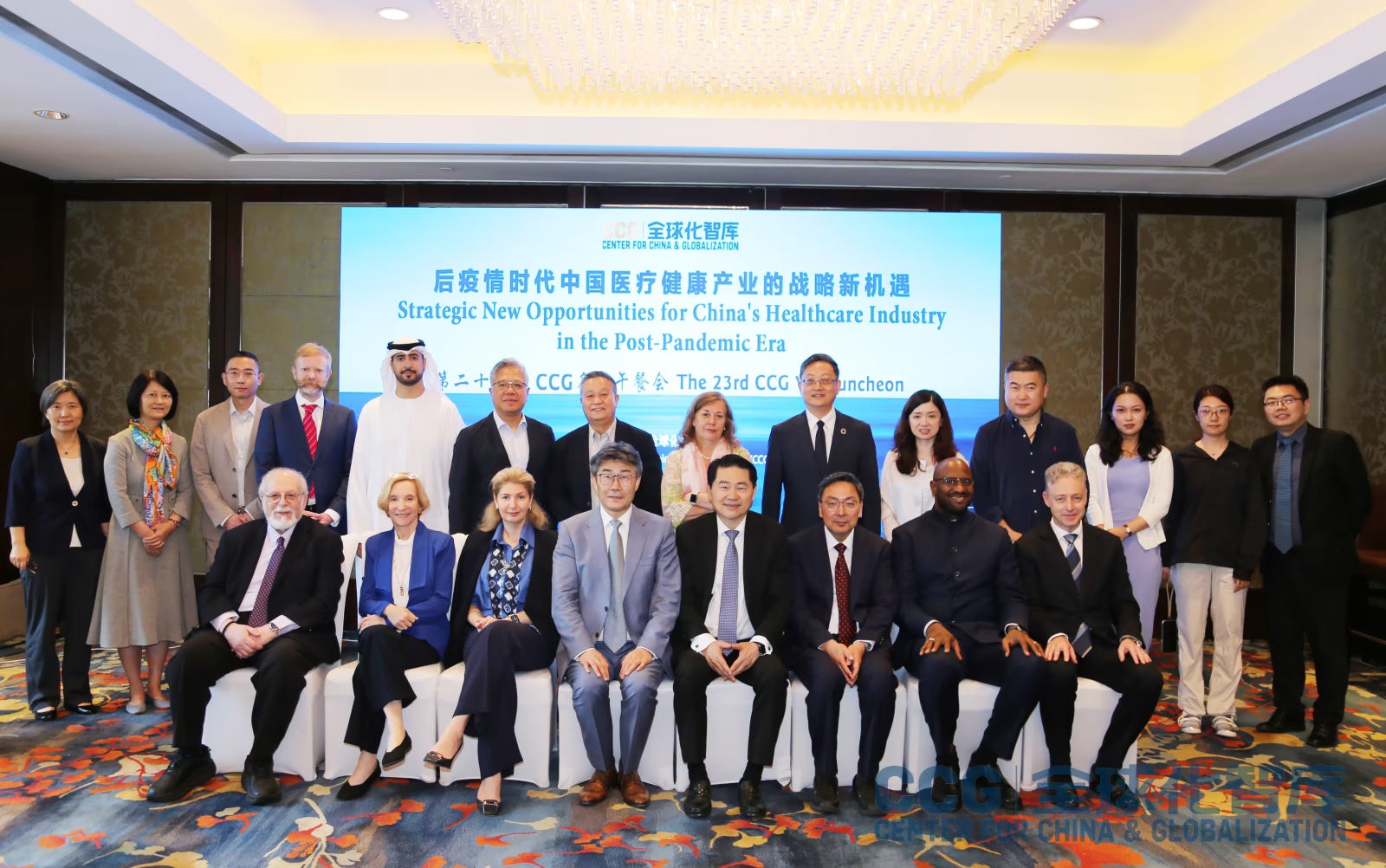
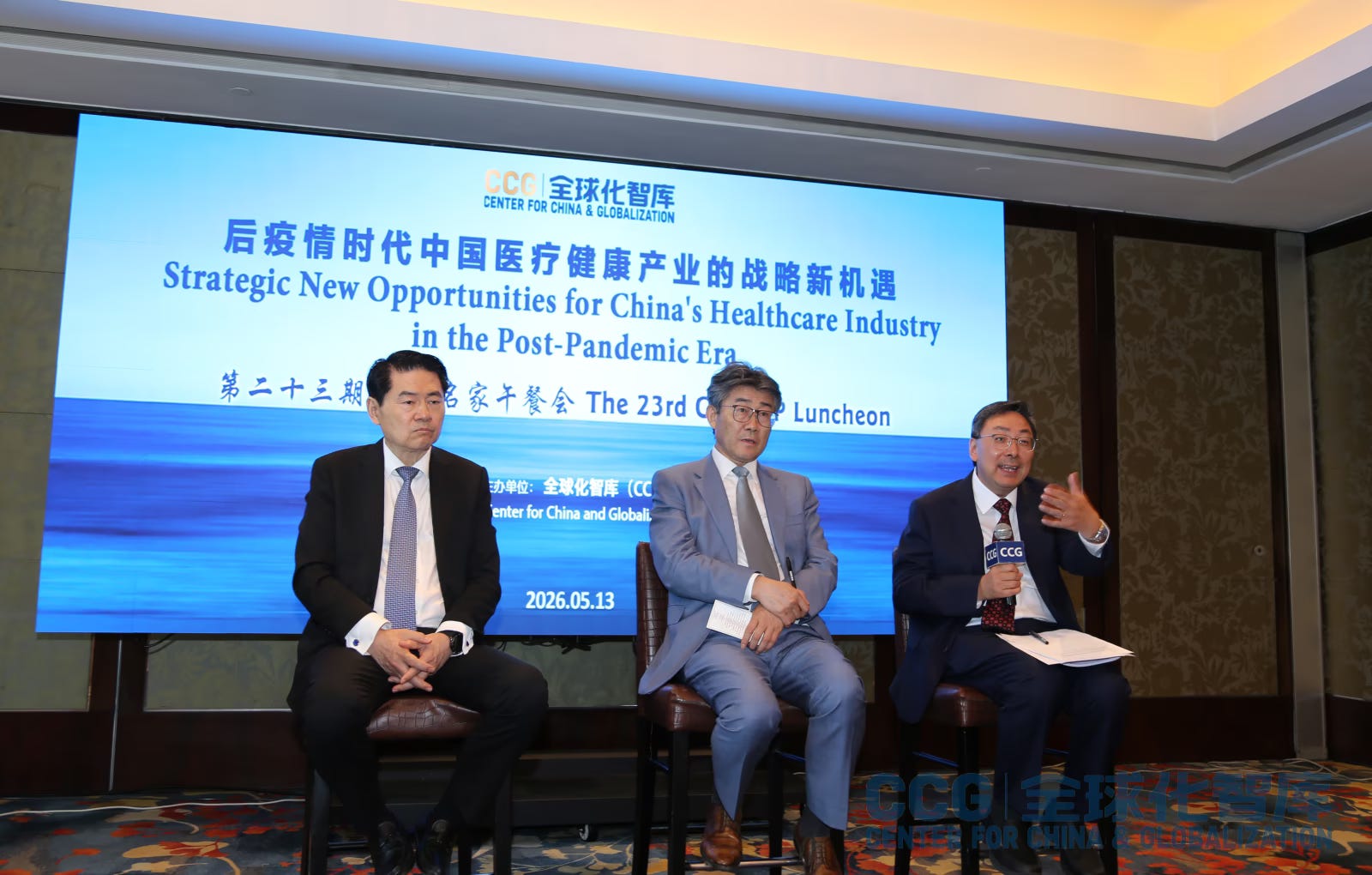
The luncheon was hosted by Mabel Lu Miao, Co-founder and Secretary-General of CCG. The panel discussion was moderated by Henry Huiyao Wang, Founder and President of CCG.
Keynote speakers are:
George Fu Gao, Academician, Chinese Academy of Sciences; Former Director-General, Chinese Center for Disease Control and Prevention
Yanzhong Huang, Senior Fellow for Global Health, Council on Foreign Relations (U.S.); professor and director of global health studies, School of Diplomacy and International Relations, Seton Hall University
Ambassadors in attendance included Scott Dewar, Australian Ambassador to China; Koula Sophianou, Ambassador of Cyprus to China; and Ian Marshall, Ambassador of Grenada. Also present were representatives from the Embassy of Australia, the Embassy of the Netherlands, the Embassy of the UAE, alongside scholars, business representatives, and members of the media.
CCG has broadcast the video recording of this luncheon on Chinese social media platforms and has also uploaded it to its official YouTube channel.
This transcript is based on the video recording and has not been reviewed by any of the speakers.
Mabel Lu Miao, Co-founder and Secretary-General, Center for China and Globalization (CCG)
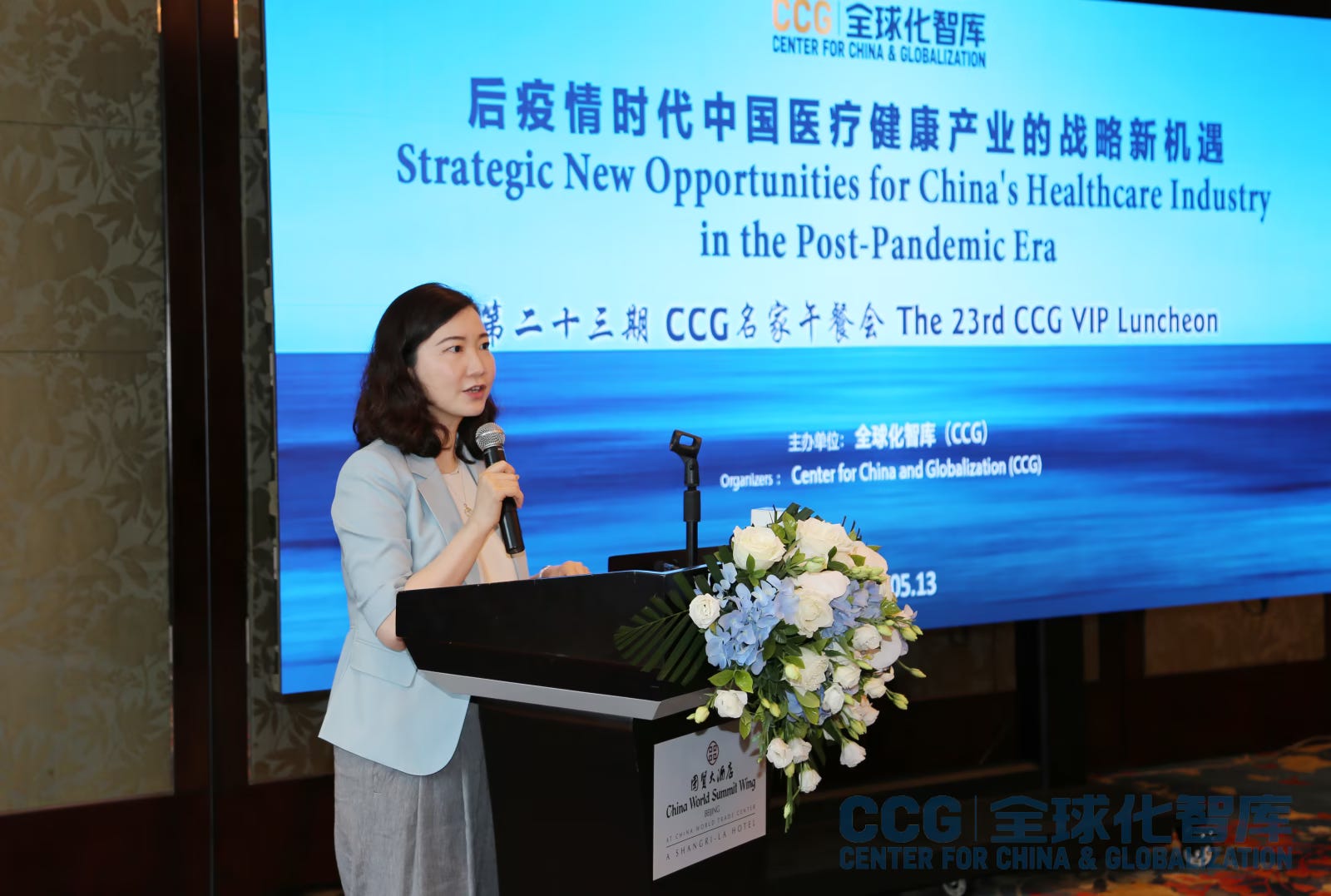
Distinguished guests, excellencies, ladies and gentlemen, good afternoon, and thank you all for joining us today at the Center for China and Globalization VIP luncheon again. The CCG VIP Luncheon is a flagship high-level international exchange platform established by the Center for China and Globalization. It serves as a key bridge connecting global political, business, and academic communities to promote pragmatic cooperation between China and the world. Since its launch, this luncheon has maintained a China-based global perspective, closely following China’s opening up and international cooperation strategies. It has become one of China’s most influential non-governmental diplomatic and business exchange platforms.
Today’s theme is “Strategic New Opportunities for China’s Healthcare Industry in the Post-Pandemic Era”. China is steadily deepening its healthcare reform, upgrading the big health industry, and improving universal healthcare coverage. Under the new Five-Year Plan, China’s average life expectancy is expected to reach 80 years, advancing steadily toward even higher goals. These developments and changes not only affect the health and well-being of the entire population but also present new opportunities and challenges for medical enterprises, pharmaceutical companies, and multinational drug firms.
Today, we are honoured to host this VIP luncheon, bringing together leading experts with deep experience in scientific research, policy, and global health. We also have professionals from medical enterprises, the big health industry, multinational companies, investors, and related practitioners who join today’s event. We believe this luncheon will foster rich and substantive dialogue, offering valuable insights and connections for all participants.
Before we start, let us take a moment to acknowledge some of our special guests and VIPs who are here. We have representatives from distinguished diplomatic missions, including several ambassadors and government authorities, as well as academic institutions, healthcare and life science professionals, corporate leaders, and media representatives. They include:
His Excellency Mr Scott Dewar, Australian Ambassador to China
Her Excellency Ms Koula Sophianou, Ambassador of Cyprus to China
His Excellency Mr Ian Marshall, Ambassador of Grenada
We also have embassy representatives from the Australian Embassy, the Embassy of the Kingdom of the Netherlands, and the UAE Embassy.
International organisation representatives include Olga Dzhumaeva, Head of the East Asia Delegation, International Federation of Red Cross and Red Crescent Societies (IFRC).
Government and academic representatives include Denis Simon, Chairman of the Association of Global Talent Organizations (AGTO) and former Executive Vice Chancellor of Duke Kunshan University; Yang Xiaolin, Vice President of Anhui Provincial People’s Association for Friendship with Foreign Countries; and Sha Yang, Consultant, Oral & Maxillofacial Surgery Khoo Teck Puat Hospital Singapore.
We also have corporate representatives from many medical and healthcare industries, so welcome to all of you. We have also invited media friends from China High-Tech Industry Herald, People’s Daily, CCTV, Caijing Magazine, and others.
Now, please welcome Dr. Huiyao Wang, Founder and President of the Center for China and Globalization, to introduce our programme and also introduce our two distinguished keynote speakers: Mr Gao Fu, Academician of the Chinese Academy of Sciences and former Director-General of the Chinese Center for Disease Control and Prevention; and Dr Huang Yanzhong, Senior Fellow for Global Health at the Council on Foreign Relations, a well-known American think tank. Welcome all of you, and the floor is yours, Dr Wang.
Henry Huiyao Wang, Founder and President, Center for China and Globalization (CCG)
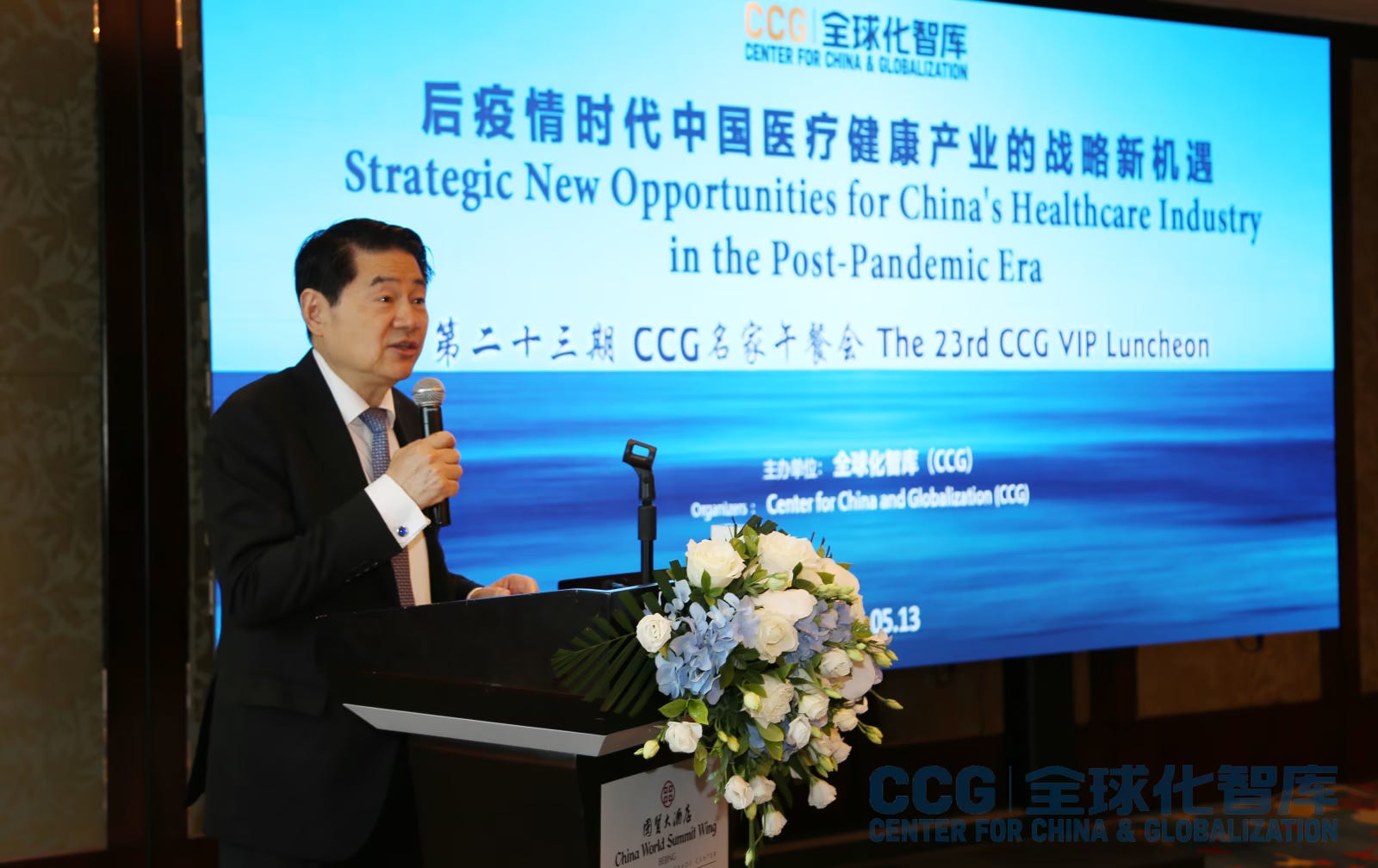
Thank you, Dr Miao. Distinguished guests, excellencies, experts, ambassadors, officials, and all the guests here today, this is the 23rd CCG VIP Luncheon. Over the past two years, we have held 23 sessions. It has become a landmark global exchange platform in Beijing.
We have many friends here, and we warmly welcome you. I also know that today we are competing with Trump, because there is a lot of attention on his upcoming visit tonight. Actually, he is arriving this evening. So I appreciate all of you coming to this luncheon at such short notice as well.
I noticed Roberta Lipson is here. You are one of the leaders of United Family Healthcare, a very large hospital enterprise. It is really great to have you here. We also have many expert friends from embassies, ambassadors, and experts across disciplines. We also have senior journalists from CCTV and other media. So it is really great.
Today’s luncheon, “Strategic New Opportunities for China’s Healthcare Industry in the Post-Pandemic Era,” is very important. We say “post-pandemic,” but we still see some small-scale pandemics or outbreaks happening. So it is important to remind ourselves how to continue improving pandemic prevention, and also how China’s healthcare industry has developed over the past several years.
Dr Miao just mentioned that, during the 15th Five-Year Plan, China’s life expectancy is expected to reach 80 years. That is an enormous objective and a great achievement. For these new opportunities and new challenges, we are very proud to have invited two prominent experts to share their thinking with us today.
First, I would like to introduce Academician Gao Fu. He is a prominent biologist and immunologist who works on virus host jumps and global health, and he is also an advocate for globalisation and interdependence in science. That is really important. I am glad to see an advocate for globalisation and interdependence, which is a rare value now in this era of great-power rivalry.
He has also served as Director-General of the Chinese Center for Disease Control and Prevention, and Vice President of the National Natural Science Foundation of China, among many other important posts. He has played a key role in improving public health emergency response mechanisms and has been instrumental in advancing the modernisation of China’s public health system and the global health security agenda.
He has been instrumental in promoting the control and prevention of the infodemic and infovirus, a term he used early and widely. That is very impressive. Now, I think Dr Gao continues to focus on the institutional challenges and solutions for reforming China’s healthcare system in the post-COVID era, advocating science-based infectious disease surveillance and early warning systems, emergency review mechanisms for drugs and vaccines, and cross-border coordination in disease control.
As one of the early discoverers of the virus and its receptor during the COVID-19 pandemic, he has actively promoted the innovation chain from basic research to industrial translation. He helped facilitate the development and application of the world’s first approved COVID-19 neutralising antibody drug and recombinant protein subunit vaccine, providing a practical model for how the biotech industry can serve national public health needs, and also international needs.
Dr Gao has been elected as a foreign member or fellow of the U.S. National Academy of Sciences, the Royal Society of London, the German National Academy of Sciences Leopoldina, the Russian Academy of Sciences, and the World Academy of Sciences, among many world-renowned organisations. He has received international honours, including the UNESCO–Equatorial Guinea International Prize for Research in the Life Sciences, the Galilea Medal of Russia, the Nikkei Asia Prize of Japan, and the Nigerian Government Award of Excellence in Global Health.
He is committed to sharing China’s experience in global health governance and promoting the vision of a global community of health for all in cross-border epidemic response, technical assistance, and international cooperation in the bioindustry. Among other things, he is also the author of several popular science books, including Cat and Mouse Game Between Humans and Microbes, and he works actively to enhance public understanding of science.
He has a very impressive CV, and I cannot cover all of it. So without further ado, let us welcome Dr. Gao to give his talk and presentation.
George Fu Gao, Academician, Chinese Academy of Sciences; former Director-General, Chinese Center for Disease Control and Prevention
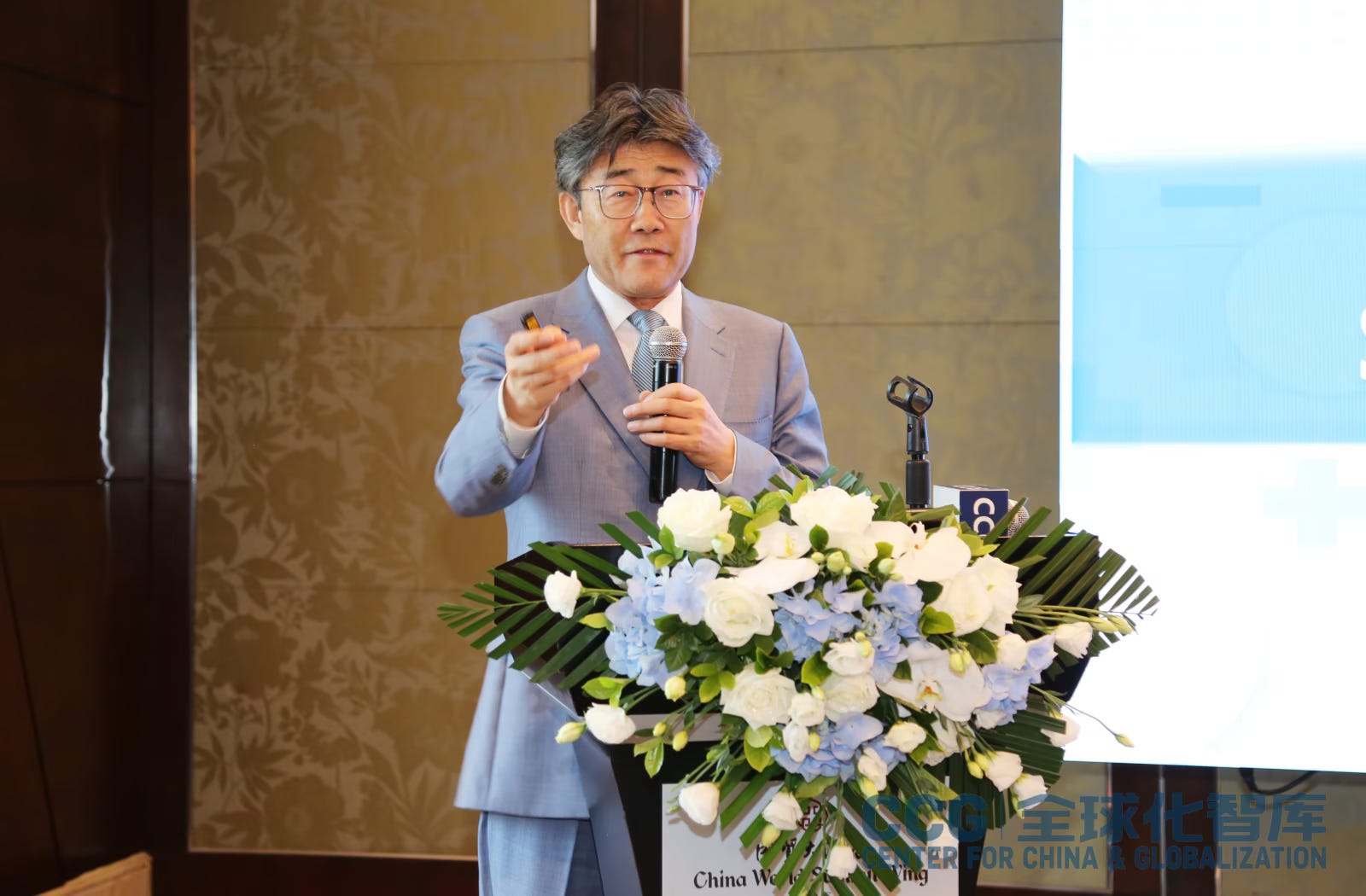
Thank you, Henry. Thank you for inviting me to be here to share my view on almost, I should say, everything about post-COVID. Finally, we have passed through COVID. So where are we now, and what can we do?
When Henry asked me, “Can you come here to share your view about post-COVID, about Medicare and healthcare?” I said, “Okay, why not?”
So I am going to share my view in three parts. First, I will talk about my understanding of what we are doing at the moment in China for Medicare or healthcare. The second part, because I am a scientist, I would like to talk about post-COVID-19: where is the science, and what can we do with science, technology, and entrepreneurship? So where are the investment chances for everybody? That is my view. And the third part, I would like to say that we are living in the AI era, not just the post-COVID-19 era. So we have a lot of things we can do, especially for the infodemic and infovirus, and a new interdisciplinary field, infodemiology.
So these are the three parts I am going to cover here within my 15 minutes for the introduction. Henry told me to give a 15-minute introduction, and then we will have an open discussion.
The first slide I have is two Chinese words: “危机 weiji.” “Wei” means crisis, and “ji” means chance. So we have been experiencing so many crises, including the one at the moment. This is a Chinese word. The first one is double C. In the world, we are threatened by double C. We have hot wars at the moment: Russia-Ukraine, Iran-Israel, and the U.S. We have a Cold War. A lot of people used to be friends, but now they do not talk to each other. They are like a football wall. And then we have the tariff war, everything. So this is why we have the crisis.
Meanwhile, you have to think about where the chance is and what we can do under this crisis. So this is why I have this slide as my first slide.
Now, although we are at CCG—Henry created it together with Mabel—the last G of CCG is especially important: globalisation. So I would like to use the word: Where are we now? Post-COVID, is it the end, or is it the dying period of globalisation? Do you really think we still have globalisation? We have anti-globalisation movements all over the world. So globalisation is dying. I am not saying it is already dead, but it is dying. Because without globalisation, another problem follows: interdependency. So this is why so many governments encourage their own independence—interdependency is another word.
We thought we would work together. We would go to Mars together, led by Elon Musk. We would explore Mars. Of course, Elon Musk decided that we are not going to Mars; we are going to the Moon first. Right? He has come back to his idea. So this is where we are now. So this is why we need to redirect our thoughts and, for me as a scientist, our research.
Anyway, Henry, I hope your G will survive. I hope so. We will still have CCG here. Henry, without globalisation, it will be a waste of resources for the whole world. It is a waste of resources. So we still have to work together. If we do not work together, it is a massive waste of resources.
So this is why I want to remind everybody, because we are talking about health, that when the WHO was established in 1948, they defined health in three aspects. Health means a complete state of physical well-being, mental well-being, and social well-being. So this is why you are here, smiling and sitting here, because socially you are healthy. Your social health is healthy, because this is social life. You need social life.
This is to remind everybody about the three aspects of health. This is why, in my last part, I am going to touch on something about the infodemic. It has something to do with your social well-being. That also provides you with some industrialised ideas for your thinking.
This is why I am writing a lot of books about public understanding of science. Think about it: we used to have vaccine hesitancy. Now we have an anti-vaccine movement in the whole world. A lot of people do not want to have the vaccine. They think the vaccine is really risky for their kids.
However, if we want to live up to 120, we need to think about this. My focus at the moment, in my research, is that when you get into your 60s or 70s, should you get another round of vaccination? We have very good vaccination programmes for kids, but we have never thought very seriously about the elderly. How can we promote our immunity? How can we remind our immune system again? Some elderly people with infectious diseases, no one really takes care of them. But we are still talking about 120 years. Where is 100? Are we ready for the science? Are we ready for the technology? Are we ready for the products? Actually, we are not.
So this is why, in my last part, I will remind everybody: forget about the infodemic, forget about the anti-vaccination movement. Let us come back to think about how science and technology can help us survive at least to 120. Someone is already talking about 150. But if we are still fighting each other, if we do not have Henry’s last word, globalisation, how can we work together?
All countries are producing their own systems, and then we do not share data. We do not share achievements from different countries. I think we are in trouble.
So this is the first part of my talk. I have given you a lot of stories. I also want to tell you where Medicare or healthcare reform in China is at the moment.
In my opinion, China’s reform has two words. First, freedom. Give freedom to the farmers. Give freedom to individuals. They can do whatever they do. That is the first keyword.
The second keyword is openness—globalisation. Because for China’s 1.4 billion people, China opened the door. Roberta is here, right? Your company was set up very early. I have known Roberta for a while, right? So openness and freedom. If all countries do this, openness and freedom, I think we are in business.
So this is why I want to show you what the so-called Five-Year Plan is. We are now in the 15th Five-Year Plan for China. We still want to address something about this.
I think what matters is what we are talking about post-COVID. I want to remind everybody of the words from our President, Xi Jinping. During the COVID-19 pandemic, he said “people-centred” and “life-centred.” In Chinese, 人民至上 and 生命至上.
When you are talking about people-centred, that means the population level. Whatever policy you are making, you have to think about the population level. Life-centred means the individual level. Whatever you are talking about, how can you save every single individual life? So this is the policy you should cover.
Then after that, I want to tell you about One Health. We have to really think about the health of animals, the health of the environment, and the health of people. Without environmental and animal health, I do not think we have human health. That is why we have One Health, universal health. Now we even have planetary health, because we thought Elon Musk was going to take us to Mars. So how can you know what you would bring back when you come back from Mars? We do not know. Maybe some microbes—because I am a microbiologist—maybe it is not a virus, maybe it is bacteria. We never know what we will have.
I also review our National Health Commission. Dr Lei Haichao called this the Sanming experience. In Fujian province, we have Sanming. So for that, in my opinion, my personal view, there are two words again. The first expression is public welfare, so-called 公益性.
The second is community-level health. Because of China’s situation, to be honest, you have travelled so much and to so many places in China. If you are living in Shanghai, Beijing, or Guangzhou, you may think life in China is even much better than in New York or Sydney. But if you go to some areas, like Sichuan, or to my hometown in Shanxi province, in some rural areas, you may think, “Oh, this really is a developing country.” It is an unbalanced situation in China.
So this is why people ask me why we want to introduce traditional Chinese medicine in rural areas, and why we are working so hard to promote a health system and policy focused on the community level. Because without that, I think we will have trouble.
Think about the 17 SDGs from the United Nations. What do you really want? Equity and equality. You want to balance this. If you do not balance the health system for the wealthy and the poor, I think you are in a little trouble.
So exactly, I think this will end my first part about policy and what we are doing. Now I want to come to my second part: science and technology. Obviously, science and technology play a role.
I want to show you that in my own field, there are a lot of things. Why do we have trouble? Why can we not reach 120? It is behaviour and ecological change. A lot of diseases are behavioural diseases. Without cruise travel, we would not have the Andes virus, right? Without ecological change, if you did not disturb the Amazon forest, you would not have the Andes virus. Those viruses are hidden in that area.
So a lot of problems really come from behaviour. This is why body weight management is so important. It reminds you of your behaviour and of ecological change. This is why One Health and environmental health are everything.
Think about your behaviour change. If you do not believe your behaviour has already changed over the last 200 years, think about what you wore in the 18th century and what you wore in 1990. People always forget about this. I like to use this one to remind everybody that your behaviour has changed. You forgot about this.
That is why, in China, last year, there was a law on public health emergencies.
Now I want to think about science, technology, and the bioindustry. I am the president of the Chinese Society of Biotechnology. So we have BioChina. We also have a development report from my society.
So where are we? I saw that when Henry had the introduction about today’s luncheon, he used the words “following,” “running alongside,” and “leading.” I saw this. So when we talk about where China is in the medical industry, some people say, “Some of it, we are still following someone. Some of it, we are already running alongside. Some of it, we are already leading.” I can say that, at the moment, some areas are really leading.
I will give you some examples. For example, cell-based therapy in China is really leading. This is a very important field. Because we have so many clinical doctors, they are leading in this area.
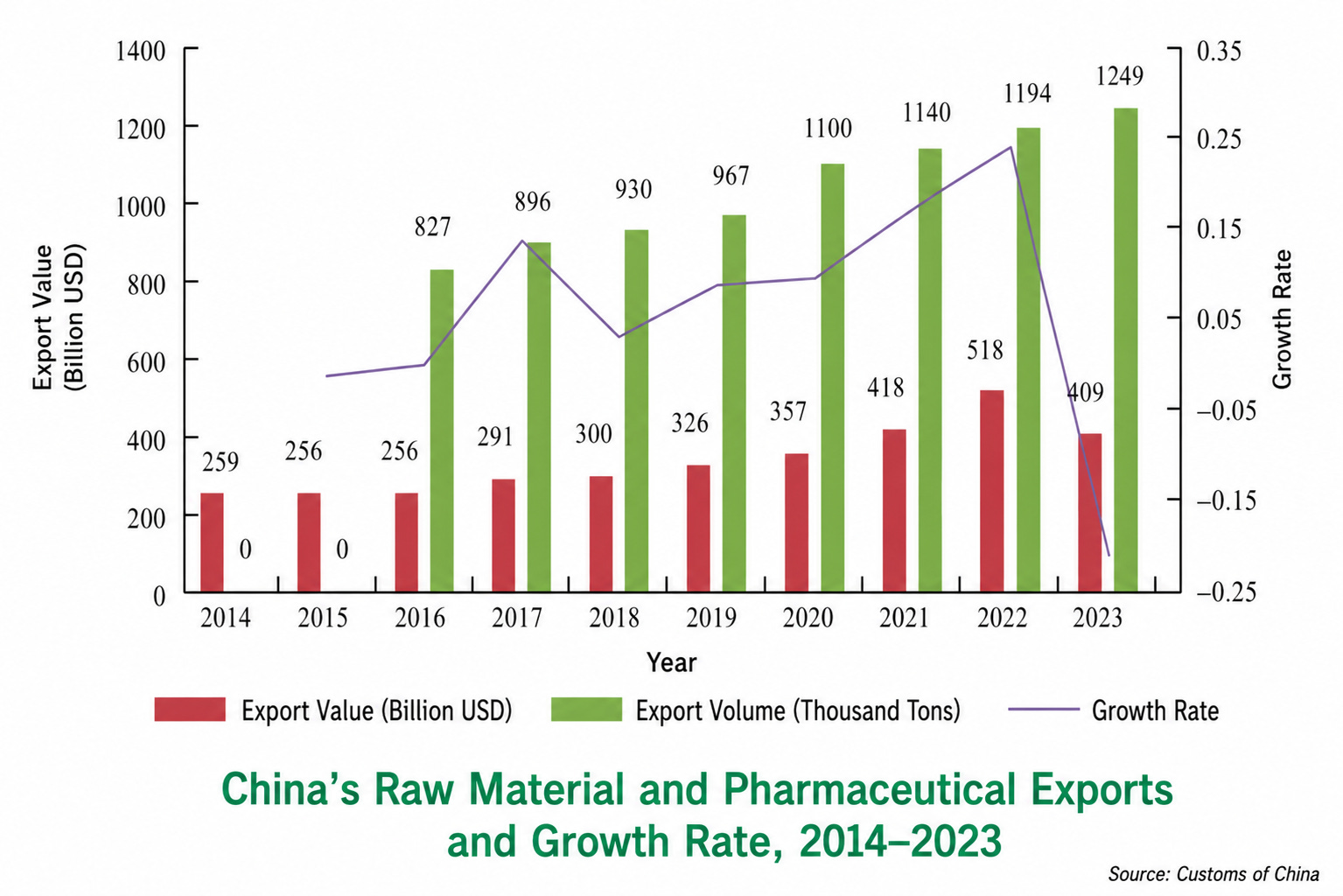
Secondly, active pharmaceutical ingredients, APIs. You may not know APIs in my field, but you know the antibiotics. 80 per cent of antibiotics in the world, including in the U.S. and in European countries, are from China.
Then you have brain-computer interfaces. China is almost leading at the moment.
And then you have digital tissue sections. Before, you might have had some problems with misdiagnosis for some cancers. At the moment, because of digital tissue sections, you have pathologists all over the world to help you. This is why AI is so important.
I will give you some examples here. APIs, active pharmaceutical ingredients. China is really leading at the moment. This is why we still need globalisation. Do not just go back to your country and create your own APIs. Let us trust and let us work together. All over the world, share the data and share the products.
Next, I want to give you very quickly my own experience during the COVID-19 pandemic. My research group developed a vaccine, a protein subunit vaccine. I am running a basic research lab. My research is about how the virus gets into your cells, but that gives you a chance for vaccine development. We developed a vaccine, a protein subunit vaccine.
Then we also developed some molecular antibodies. Our monoclonal antibody was co-developed by Eli Lilly, an American company, even during the pandemic period. Even my own group collaborated with Eli Lilly, [inaudible], and Junshi Biosciences: three academic groups, Chinese companies, and Eli Lilly, a big pharma company. Together, we produced the monoclonal antibody. It saved millions of lives in 2021.
Now we are in the AI era. It will help us solve so many problems. Meanwhile, it also creates new problems for us. One of the problems is the infodemic: the anti-vaccination movement at the moment. Scientists are working so hard. Remember during the COVID-19 pandemic, scientists and professionals were attacked. Some people thought the virus was made up by scientists and professionals because they wanted to make money. So this is why they released the virus. There were so many rumours.
Because human beings do not have very good brains. We are not clever enough. This is a very good example.
Can we really live to 120? Recently, one good example is Sid Sijbrandij. He had a tumour, and the tumour was cured for two years. In 2024, the tumour came back. Then he organised his own team. He is so rich, and he organised his own team: geneticists, genomic scientists, computer scientists, everyone working together with him. Now he has recovered. This is big news, a big story.
So this is why, in the AI system, a good thing is that personalised medicine is here. And we will solve even cancer. Hassabis, the Nobel laureate, also mentioned this. So in the AI era, it is possible to solve all these cancer problems. Meanwhile, we have problems with ethics and morality. And infodemics are here.
We have the infodemic. That means misinformation and disinformation flow everywhere. Every morning, you are filled with fake news.
Here is an example. This is a very good example. I know maybe you do not like Charlie Kirk. Maybe you do not like Brian Thompson. However, you cannot kill them. But that is exactly what happened. Why is that? It is just infovirus and infodemic. Your brain is filled with so much hatred.
So that is another problem. I remind everybody: when you are talking about health, physical health—everybody sitting here is healthy. Mentally, those guys, the killers, are ill. They are not healthy. And socially, they are not healthy either. When we had monkeypox, people thought Bill Gates made up this virus. Can you believe it?
We grew up, and we know Francis Bacon said, “Knowledge is power.” But at the moment, remember Orwell’s novel 1984. He said, “Ignorance is strength.” At the moment, this is where we are living.
So my last slide is about the infodemic, infovirus, and infodemiology. Again, I will add up to tell everybody: when you are talking about healthcare and Medicare, think of three parts—physical, mental, and social. Without that thinking, I still think you are not in the business.
Thank you. I will stop here. Let us have a discussion. Thank you.
Henry Huiyao Wang
Thank you, Professor Gao. That was a great, excellent presentation. I think we’ve learned a lot. You covered quite a wide spectrum of this field, from pandemic to health development in China and the world, and all the latest innovations and all the areas that we need to pay attention to, particularly in the final part. I like the idea of the infodemic. That is, we are getting into the age of information explosion, but also fake news. So we must be very, very careful.
Before I introduce our next speaker, I also want to point out Alicia Garcia-Herrero, Chief Economist for Asia Pacific, Natixis, who just joined us. I saw you can come in. So next, I’d like to introduce another expert for his talk with us today. I’d like to introduce Dr Yanzhong Huang.
Dr Yanzhong Huang is a senior fellow for Global Health at the Council on Foreign Relations, where he directs the Global Health Governance roundtable series, and a professor and director of Global Health Studies at Seton Hall University School of Diplomacy and International Relations. So he’s also an international expert, but more on the global health front as well. He’s currently on leave, serving as a Boeing Visiting Chair in International Relations at the Schwarzman Scholars Program at Tsinghua University. We have another professor at Tsinghua University here, Denis Simon, who is the former Provost of Duke Kunshan University. So a lot of experts are here today.
Professor Huang’s expertise encompasses Chinese public health, global health governance, and US China relations. He is the author of Governing Health in Contemporary China and Toxic Politics: China’s Environmental Health Crisis and Its Challenge to the Chinese State. His work has appeared in the New York Times, the Washington Post, the Wall Street Journal, Foreign Affairs, the American Journal of Public Health, and peer reviewed journals like the China Journal of Health Security. He co authored his first article, which systematically examined China’s soft power in 2006—that’s twenty years ago.
Dr Huang has testified before US Congressional committees on multiple occasions and is regularly consulted by leading media outlets, private sector organizations, and of course government and non government bodies on global health and on China. He is a lifetime member of the Council on Foreign Relations, a member of the National Committee on US China Relations, and a member of the CSIS bipartisan alliance for global health security. In 2012, New Jersey named him one of the twenty brainiest people in New Jersey. Okay, that’s great. Excellent. So without further ado, I’d like to invite Professor Huang to give his part of the talk for this VIP luncheon. Welcome.
Yanzhong Huang, Senior Fellow for Global Health, Council on Foreign Relations (U.S.); professor and director of global health studies, School of Diplomacy and International Relations, Seton Hall University
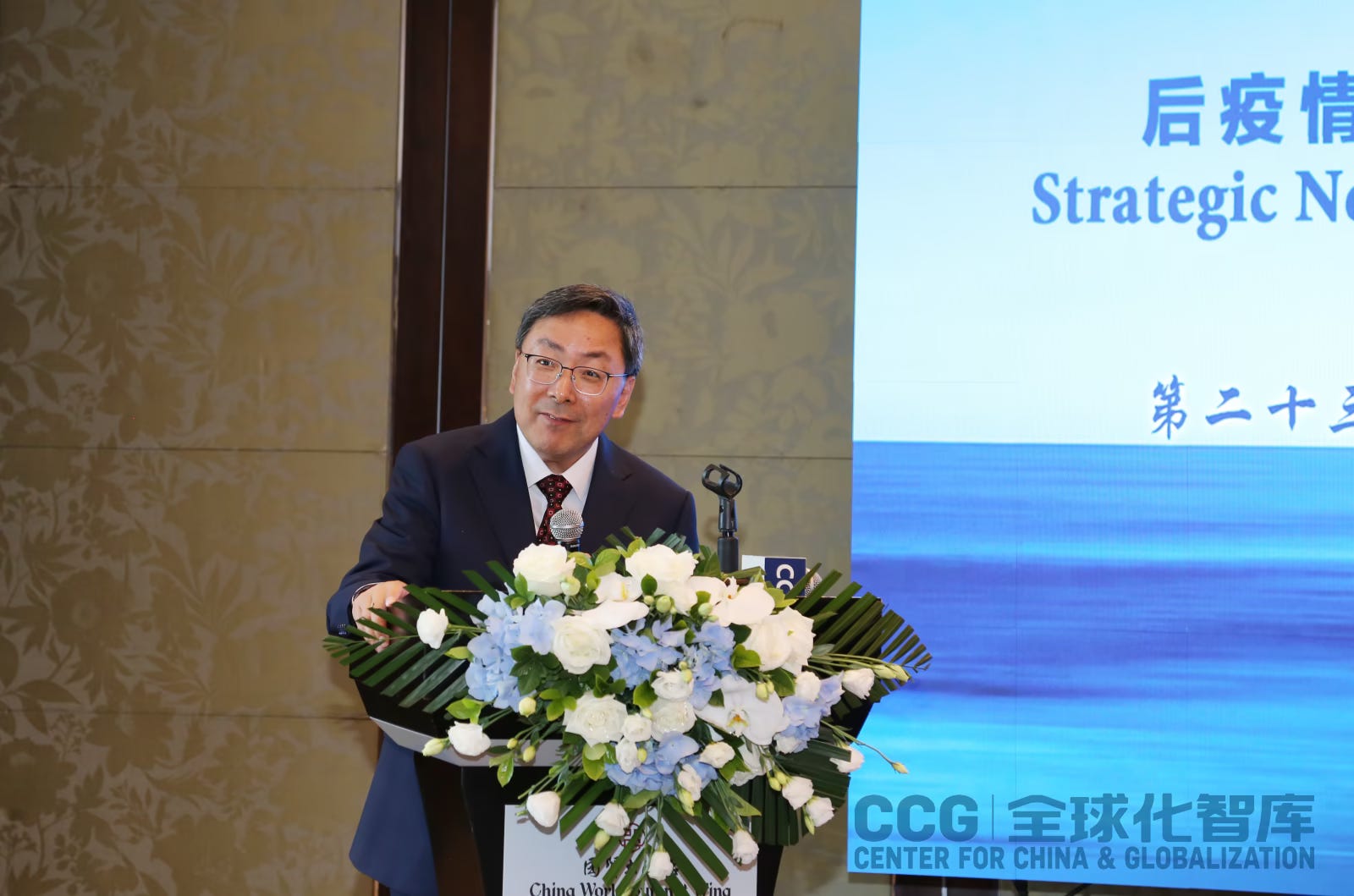
Well, thank you, Henry, for that very generous introduction, and thank CCG for organising this event. It’s a real privilege to share the stage with Academician Gao, someone who was quite literally at the centre of the storm in ways I was not. I’ll try not to say anything that makes him wince too visibly.
I want to be upfront about my intention today. I’m not here to deliver a definitive report or a tidy list of conclusions. Think of what I’m doing as the Chinese saying goes, “抛砖引玉 paozhuan yinyu”—throwing out a rough brick in hopes of inviting better jade in return. My hope is that what I say sparks a real conversation and that Dr Gao, Henry, and all of you, will push back, correct me, and fill in what I’ve missed.
I will, like Dr Gao, cover three areas in roughly equal time: public health, the healthcare industry, and global health. Fifteen minutes go fast, so I will move quickly.
So first, let me start with what I think is the most important question any of us in this room should be sitting with: if another pandemic came tomorrow, are we ready, or can we do better? I ask this not rhetorically. I ask it because, honestly, I’m not sure we know the answer. We’re certainly not running short of those pathogens of pandemic potential, called PPPs. There are just so many PPPs, right? Purchasing power parity, public private partnership—now we’re talking about pathogens of pandemic potential. We are thinking of hantavirus, norovirus, the outbreaks linked to cruise ships that are happening now.
In this respect, I want to flag an encouraging and important development in the post-COVID era that Dr. Gao actually alluded to. That is, China has overhauled its law on the prevention and treatment of infectious diseases. That law entered into force on September 1 last year. Two things stand out.
The first is on reporting. The law tries to fix a long standing and stubborn problem—the disincentive to report early. Basically, it explicitly protects and rewards individuals and institutions who report in good faith, even if the event is later ruled out. I think that’s a meaningful signal, both culturally and legally: you won’t be punished for raising an alarm.
Second, on data and privacy, the law limits the use of personal health data strictly to disease prevention purposes. Those of you who remember the controversy over digital health codes during COVID will appreciate why that matters, both legally and politically.
Now, let’s cast your minds back to early 2020. After the Wuhan outbreak, there was a moment—brief as it turned out—of genuine institutional introspection. There was a real appetite for honest assessment. That was encouraging. But here’s what I found powerful: since COVID, the public conversation seems to have gone quiet. What happened in Guangdong during the chikungunya outbreak last year only deepened that uncertainty, because there we saw local governments made containing the outbreak the overriding political task and adopted a mass mobilisation playbook for a mosquito borne disease that is really fateful.
But that uncertainty is certainly not unique to China. In the United States, COVID 19 has become essentially a forgotten pandemic. We saw the politicisation of public health, as Dr Gao pointed out, vaccine skepticism. And actually, we have a vaccine sceptic being the Secretary of Health and Human Services. That is undermining the U.S. capacity in pandemic prevention and preparedness, another PPP. So if another pandemic came, we’re likely even less prepared than we were before 2020. That was essentially the conclusion we drew in the Council on Foreign Relations special report released in 2023.
So that’s about public health—my two cents. Let me shift to the healthcare industry. Here I will get a bit more personal, and I hope you will indulge me.
Certainly, the headline story today on health coverage is generally positive, right? With roughly five per cent of GDP, China has actually built the world’s largest health infrastructure, and coverage now exceeds 95% of the population. AI and telemedicine, as Dr. Gao mentioned, are beginning to redefine the ecosystem of healthcare in China. I think that is a remarkable achievement by any global standard. And I see it in my own life. My hometown in rural Jiangsu province now has access to quality healthcare that simply did not exist when I was growing up. I think that is real progress.
But coverage rates and progress in biotech can mask what coverage actually buys you. And this is where I want to pause on something that should trouble anyone who cares about health quality. Because there remains a profound gap in the system. Just last month, I was in my hometown. A relative of mine suffered a cerebral haemorrhage requiring emergency surgery. Her total bill came to roughly 100,000 yuan. After insurance reimbursement that is about 60%, she was left paying nearly the entire year’s average rural income out of pocket. So that is not a story about insurance coverage; that is a story about a system that still has a very real threshold beyond which ordinary families fall.
The equity gap isn’t just about money; it’s about the underlying architecture—who designed these systems, for whom, and with what assumptions about risk and dignity. I raise this not to be grim, but because for those of you from the private sector and the diplomatic community, this is precisely where innovation, investment, and advocacy can make a real difference: supplemental insurance products, technology-driven cost reduction, new care delivery models. The gap is large, and the need is urgent.
So finally, let’s move to part three: global health. I suspect this is of most interest to the diplomatic community in this room. On the eve of the World Health Assembly, which will begin later this week or early next week, I saw that Health News yesterday published an article basically saying China will use the assembly platform to share its experience, put forward Chinese solutions, and contribute Chinese strength toward building what it calls the global community of health for humanity, and to inject, in their words, stability, certainty, and consensus into global health governance. This is not just propaganda, right?
China now accounts for 30 to 31 per cent of the world’s innovative biopharmaceutical drug candidates, second only to the US at 33 per cent. In 2023, the gap was 13 percentage points. By 2025, it had narrowed to just 2.5 points. Chinese companies have added more than 4,000 innovative new drugs to global pipelines since 2022. China hosted 7,100 to 7,700 clinical trials in 2024-2025, surpassing the U.S. and making it the world’s number one location for clinical research.
This has profound implications for global health governance. Chinese dominance in manufacturing APIs and key starting materials, along with a rapidly growing innovation pipeline, will accelerate new therapies and drive down prices, thereby democratising advanced medicines that were previously unaffordable in lower- and middle-income countries.
Meanwhile, China’s global health posture has shifted considerably in the post COVID era, just as the United States is stepping back from global health, and the “America First” global health strategy released last September is quite explicit about this. China is stepping forward. We’ve seen China pledge $500 million to the WHO over the next five years, making it the agency’s largest state donor. We’ve seen China channel resources through UN agencies like UNICEF to fill gaps left by USAID’s withdrawal in Southeast Asia. And China has launched the Global Health Innovation Institute in Shanghai again last September, positioning itself as a producer of global health knowledge and affordable treatments, not just a builder of infrastructure.
But the structural constraints have not fully changed. China’s combined foreign aid budget in 2024 remained very small compared with USAID’s $42 billion. The head of China International Development Cooperation Agency (CIDCA), China’s equivalent of USAID, has stated explicitly that China has no interest in filling the U.S. void, and we are not seeing any significant increase in Chinese health aid thus far.
There is also a chronic shortage of professionals trained at the intersection of public health, diplomacy, and implementation science. China still lacks a coherent global health strategy. That gap is complicated by geopolitical tensions and the growing securitisation of health on both sides—the BIOSECURE Act, as you may know. There are concerns about APIs being weaponised—just one illustration of how fraught the tensions have become.
So what does all this mean for the room? A few things. For the private sector, China’s expanding global health footprint creates real opportunities in medical technology, digital health, and manufacturing partnerships with the Global South. The MOU for an insulin production facility in Nigeria, signed earlier this year, is one example of how commercial and diplomatic interests are being woven together.
For the diplomatic community, the normative landscape of global health is generally in flux. Questions about data sovereignty, accountability standards, and the terms of health partnership are being contested in real time. And for China itself, the question is whether this moment of U.S. retreat can be converted into durable soft power, or whether structural limitations, including budget constraints, human capital gaps, and commercial incentives, will blunt that opportunity.
So, to return to where I started: Are we ready for the next pandemic? Has the healthcare system become genuinely more equitable? And is China’s global health ascent as substantial as it appears? My honest answer to all three is: maybe, partially, and we’ll see. Well, that’s not a satisfying answer, but I think it’s an honest one, and I hope it’s a useful provocation. I’m genuinely curious what you think. Thank you.
Henry Huiyao Wang
Okay, great. Thank you, Dr. Huang, for your stimulating and also quite informative presentation. So I think we’ll hear all sides. We’ll see how we can best achieve the results, seize the opportunity, but also, on the other hand, acknowledge the outcomes and the successes we have.
So now we are open for discussion. I think Dr Gao is probably taking a phone call. Let’s already have Professor Huang here, and then we can start. And also, let’s hear comments, questions, and interjections, and all the rest. So, Yanzhong, maybe you can come up.
I don’t know if Roberta, you are the top expert in China’s hospitals. Perhaps you could share a bit of your thoughts as well. I welcome other experts to share your views on this as well. Because we see so much happening in the health industry in China: AI, aging, and also the ratio of doctors to nurses is far behind World Bank standards. So what are the opportunities and challenges, maybe from your perspective? You used to be in charge of such a big hospital system in China. Your comments and views, please.
Roberta Lipson, Founder, United Family Healthcare; Chair Emeritus, American Chamber of Commerce (AmCham) in China
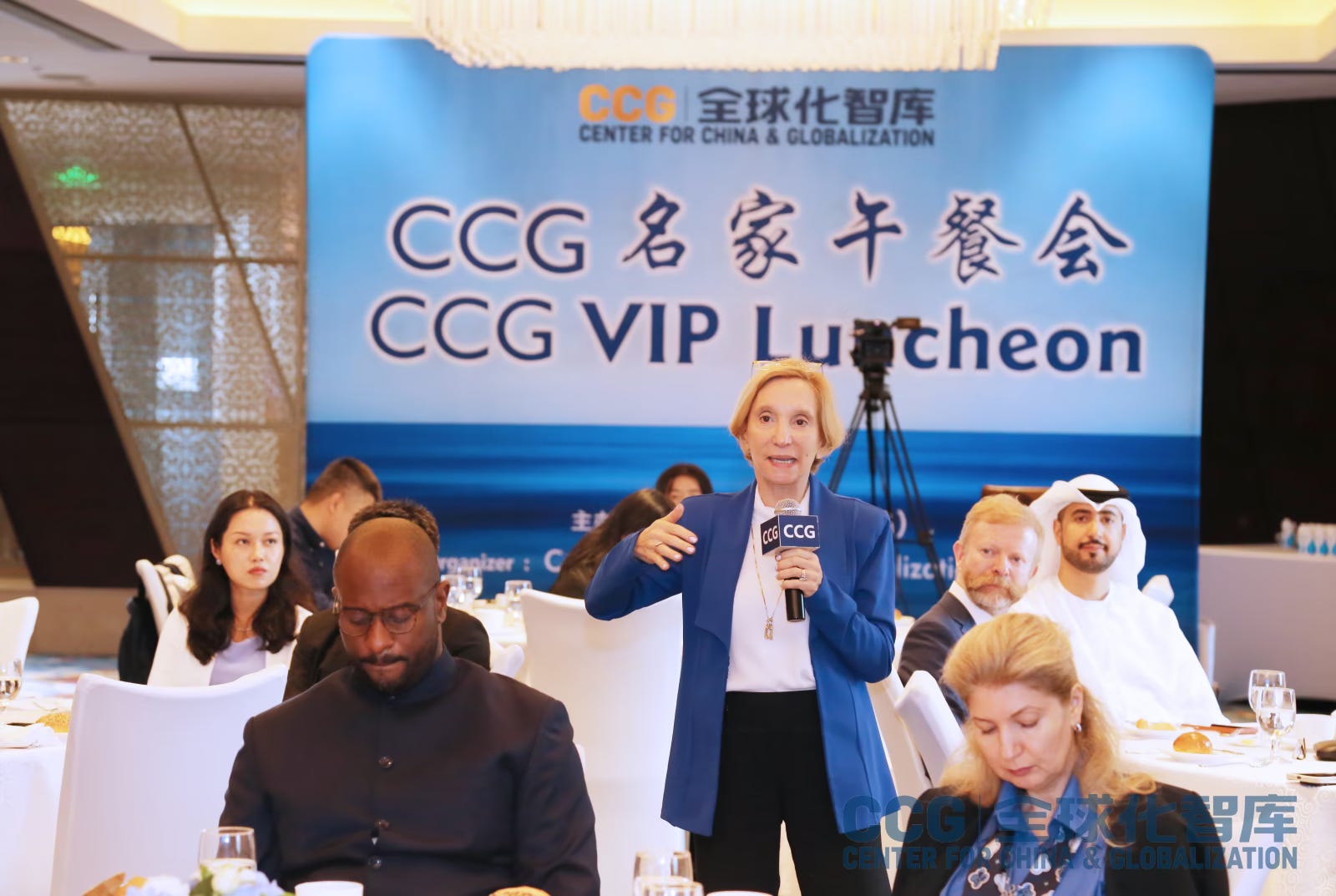
So first of all, having lived through two pandemics in China—SARS and COVID —I must say that I was very pleased to see the word “pandemic” in the title of this afternoon’s discussion, because I tend to attend a lot of healthcare seminars, talks, and conferences, and everybody is very, very reticent about bringing up the issue of pandemic preparation and this discussion between, for example, the U.S. and China. And this has made me very, very concerned.
The way COVID turned political, and where the whole global discussion has gone since then, was really contrasted so clearly with SARS, which at the beginning, China was extremely open, invited the U.S. CDC, invited all experts from all over the world, and we all benefited from that. And I saw a very, very different response, a very politically sensitive response, during COVID. Not having seen the recovery from that yet, the fact that we’re starting to have these discussions is super important. The infectious disease regulation is super important. I’m glad to see that that has come.
But I think that often when I’m at U.S.-China track two meetings and various government discussions, on the one hand, people say healthcare is the one least sensitive issue that we should be able to find common ground on for discussion. On the other hand, we’re all so protective of our data and we are so closed on data that these discussions are not happening. It’s not been the entry point for the U.S.-China cooling or warming of relations. It has not come up as much as many of us push for it to be on the table. So really glad, Henry, that you decided to have this as the title of your luncheon. And I’m really grateful to the two experts up there for all the work that they do and continue to do. I know you’re pushing that open discussion forward in every way you all have the platform to do it.
Henry Huiyao Wang
But also, Roberta, I know you are the Honourable Chair of AmCham in Beijing. But also, I know since Trump is coming tonight, I would like to hear what you see as the potential opportunities for collaboration between China and the US on the health industry and research, and I know there’s a lot of drug applications or tests also conducted. So what are the opportunities? Let’s talk something.
Roberta Lipson
I’m not sure I have a crystal ball on that. I think the opportunities are huge. Are we going to talk about them? Are we going to take advantage of them? I sort of still doubt it. The only healthcare-related thing that I know is on the table is further discussion on fentanyl precursors, which is great. I’m happy for that. But there’s so much that we’re missing out by not talking about. I think we’ll see more progress in trade, maybe tariffs, Boeing, soybeans, and maybe a discussion on the Iran war—I don’t know—but healthcare, I don’t think is a priority for them.
Henry Huiyao Wang
But I know, on cancer research, on some basic research, on medical collaboration, there’s still a lot of potential there. I know that Mr Zhang Milun, Senior Director of External Affairs at the Danaher Group, I don’t know if she has anything to add, because they’re from the industry. You are a big multinational in China, so we’d like to hear from an industry perspective as well.
Zhang Milun, Senior Director of External Affairs, Danaher Group
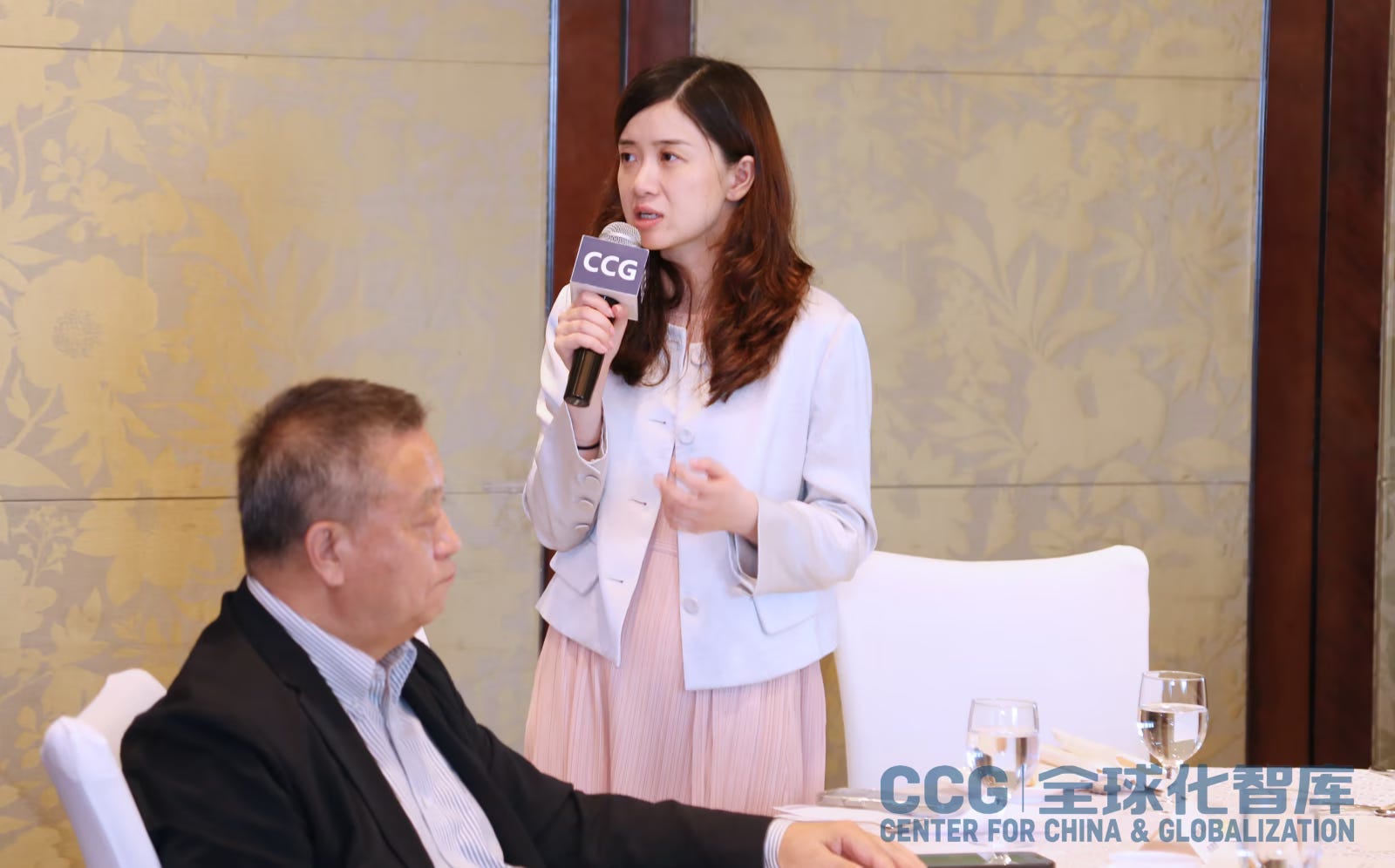
Thank you very much, and thanks for introducing me. Actually, I just joined Danaher, so I might not have a precise industry perspective. However, I can speak in very general terms about how MNCs, pharma, and biotech play in this China opportunity. I think there are several things.
After the pandemic, especially in the past two years, because of geopolitical tensions, there are concerns from the global headquarters about whether we should continue to invest in China. I worked at Amgen and previously at Novartis. I think there are concerns from the industry, especially on the U.S. side or the headquarters side. However, I think it’s inevitable or undeniable for us to see that there are still tremendous opportunities in China in two ways.
One way is that China is a huge market with an aging population. So there’s still a lot of demand, even though we are facing price pressure and local competition, regardless. Especially in such uncertain times, I think China offers a stable and growing opportunity for MNCs. On the other hand, what Danaher has tried to play very well, I believe, is to immerse itself with the local industry, with the local companies, to see what Chinese opportunities can bring to the world. We saw last year we had a lot of BD deals—billions of dollars of BD deals—and now Chinese companies are going abroad. I think in the future, not only through BD deals but also through collaborative commercialisation.
So I would say these are still very exciting and challenging times for the industry, as we can see opportunities both ways: from global to China and from China to global.
Henry Huiyao Wang
Great, great. Thank you. Good share. Any further comments? Any comments from Singapore? Denis, you want to jump in? Okay.
Denis Simon, Chairman, Association of Global Talent Organizations (AGTO); former Executive Vice Chancellor, Duke Kunshan University (DKU)
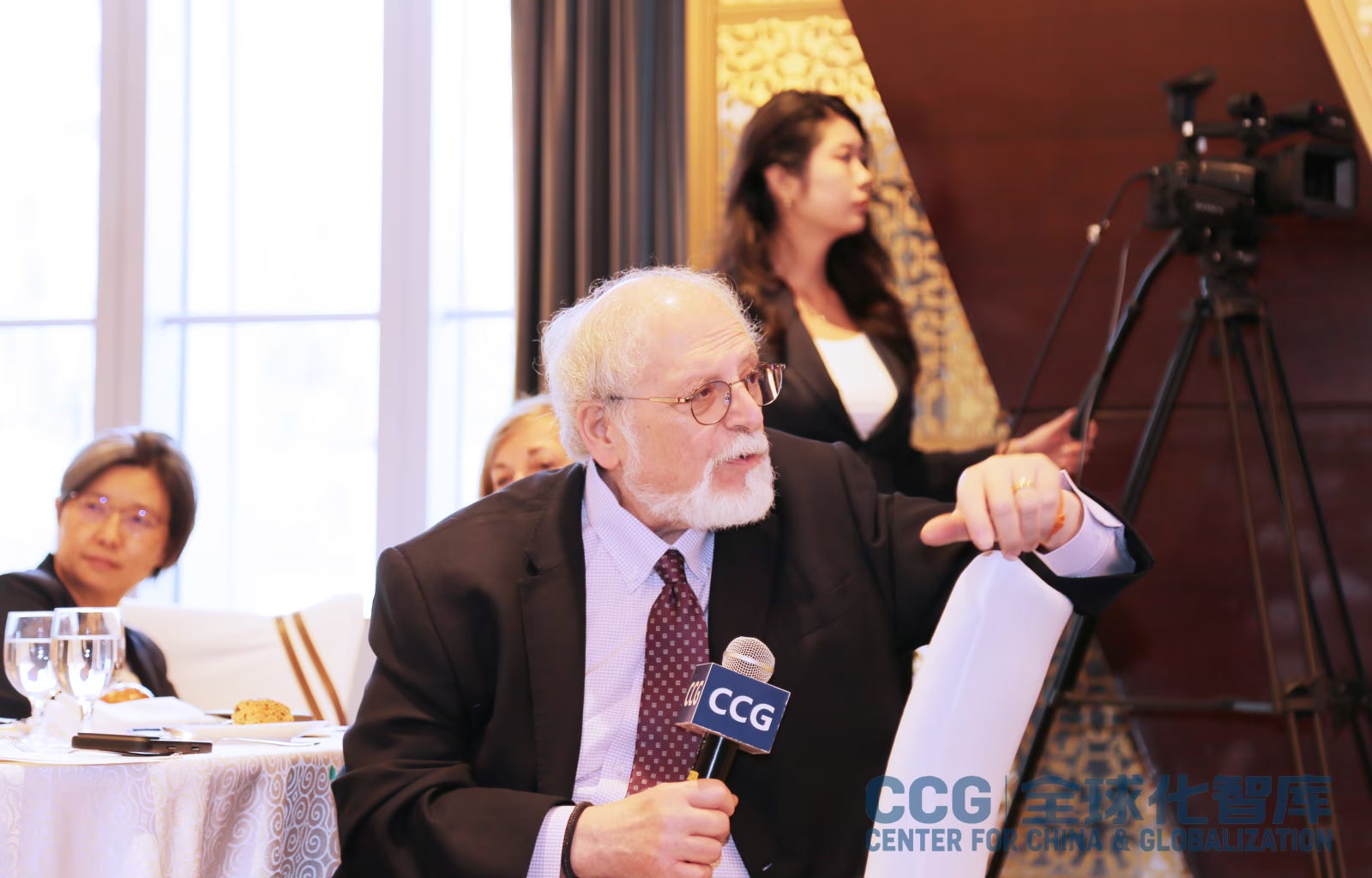
Thank you. You know, I think the logic underlying the need for some collaboration is there. I don’t think that we have to make too much of an argument, not only for cancer, Alzheimer’s disease, and other things. If you look at the past since 1979, over forty years of collaboration in science and technology, collaboration in healthcare, medical collaboration has been one of the highlights, in fact, one of the most successful areas. One of them, as you know, is folic acid to help pregnant mothers avoid birth defects. That has proven not only bilaterally important but also important to the globe. Mothers throughout the world, by taking folic acid, have now diminished the likelihood of having birth defects.
So I’ll give you one specific one, which I mentioned: Alzheimer’s disease. Alzheimer’s is not only a major problem in the United States, but as Chinese men and women have started to live older, they now are encountering diseases they would not have had before, Alzheimer’s being one of those.
Could the two of you maybe discuss what a collaboration scenario might look like? In other words, step one, step two, step three. And maybe it’s not President Trump and President Xi that inaugurate this. I know Professor Huang and I did some work with CSIS in Washington, and we’ve been trying to talk back here in China. But I think one of the problems is that the concrete step one, step two, step three, we haven’t been able to articulate that. I wonder if the two of you, between yourselves, might be able to lay out what the roadmap of that collaboration might look like.
Henry Huiyao Wang
Okay, so before we do that, maybe I’d like to hear from Alicia as well. I know you’re based in Hong Kong, Taipei, and all those places. Maybe you are in Beijing now.
Alicia Garcia-Herrero, Chief Economist for Asia Pacific, Natixis
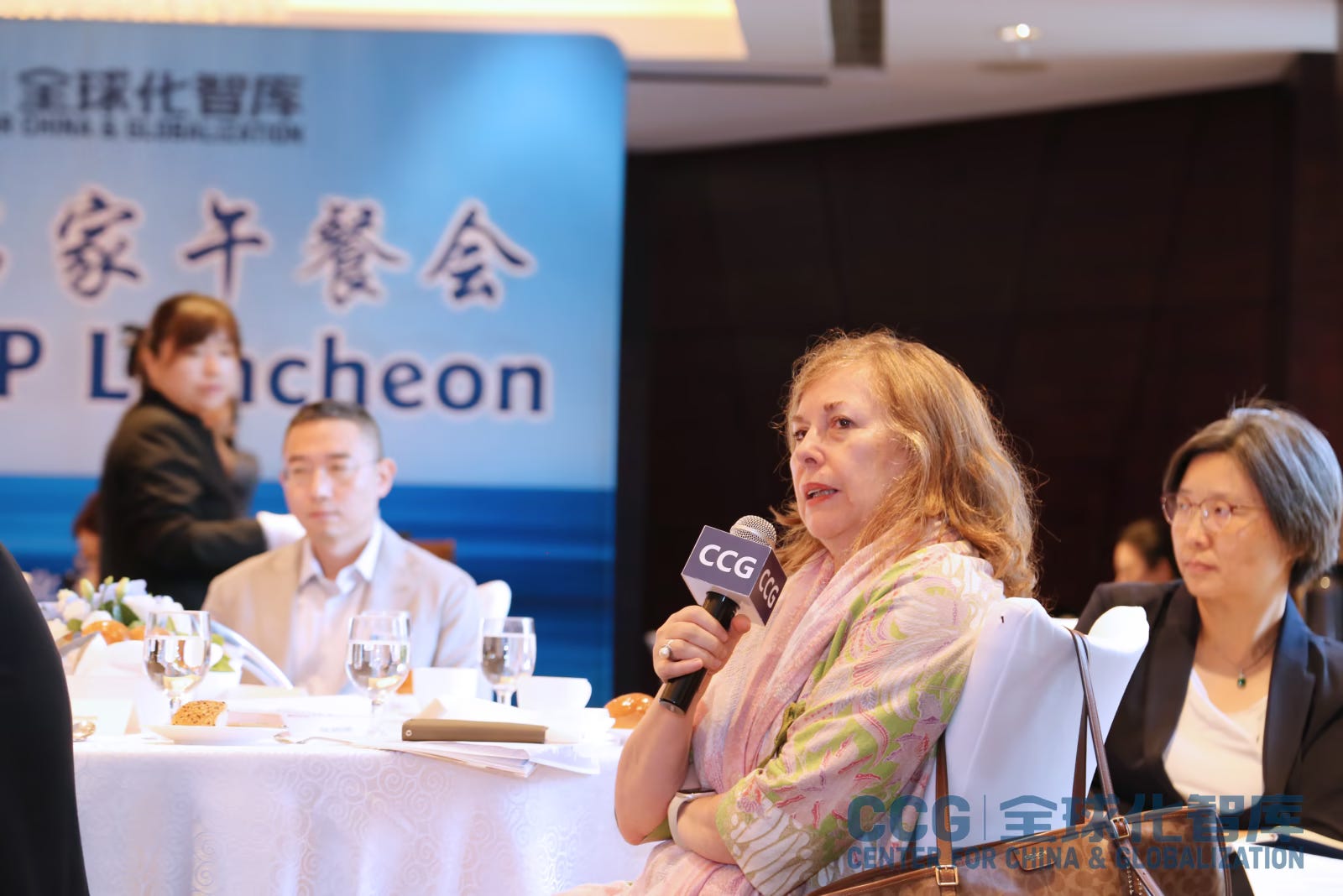
I’m not an expert on this topic, although I’m on the board of a new think tank in Taipei that is all about health and public health. It’s an Asia wide think tank called CAPRI. We did a study on vaccine hesitancy—exactly the topic you mentioned—across the Asia Pacific. It’s actually not only a U.S. problem; it is going to be a serious global problem. So I just wanted to highlight that.
We were beyond the issue of whether we are heading towards a new pandemic or not. I think what I really want to agree with absolutely is what was said, well, you didn’t say we are less ready, you didn’t dare say that, but I’m going to say maybe we are less ready because the social fabric, instead of having learned the lesson, I think we’re really thinking, why did it all happen? Everybody wants to forget it. And if anything, they’re more hesitant. I think that’s a very worrisome issue because it’s going to be much harder, in my view, to deal with the next one if that social fabric isn’t there. So I just wanted to highlight that big problem in my view. Thank you.
Henry Huiyao Wang
Okay, good. So anything from Singapore? We have a doctor from Singapore. Maybe you want to comment as well. Before we get into our experts’ great views.
Sha Yang, Consultant, Oral & Maxillofacial Surgery Khoo Teck Puat Hospital Singapore.
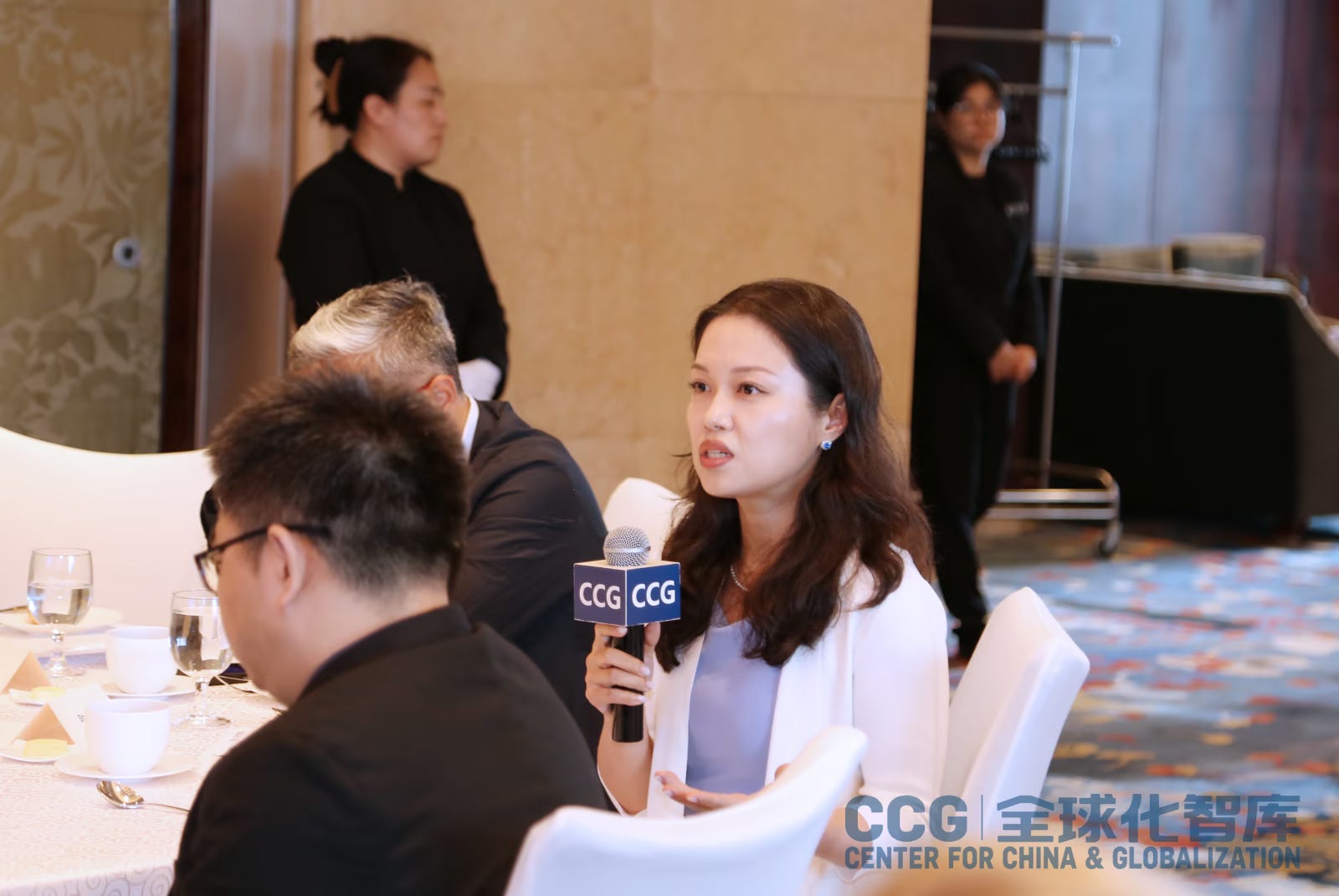
Hello everyone. I am a maxillofacial surgeon. I’m from Singapore. I’m currently in Beijing for a foundation fellowship for this year. I don’t really have a global view like the rest of you guys. But coming from a medical professional point of view, I just have a very simple example, something very micro.
After coming to China. I’ve realised there are many magical surgical equipment in China that works really wonders, and they’re at a fraction of the price of what we try to get in Singapore. However, every time I try to talk to the manufacturer or approach the purchasing personnel, the answer is always, “I can’t really bring it to Singapore because it doesn’t have this and that.”
So one of the barriers, I feel, from the medical user perspective, is that the system in China feels very much separated from the rest of the world. I mean, Singapore being small, we just fall back on international standards like JCI. If a hospital has JCI, then you know it’s being recognised. And if something has the European CE mark on it, if it’s ISO recognised, then you fall back on that. But we don’t seem to have something similar from China, so it becomes quite difficult for us to justify. However, on a personal level, we all know that they work really well, but they are not recognised internationally.
Therefore, small countries like us, even if we want to really use those products, it’s quite difficult to make exceptions for each and everything that we want to import. So it’s a small ask from my personal perspective: if it’s possible to have a collaboration, maybe if we could have that kind of standardisation for Chinese products, it would become much easier for these things to go overseas. And vice versa, it would be easier for things to enter China as well if that kind of international recognition can be developed somehow.
Henry Huiyao Wang
Good comments. Good suggestions. Okay, Roberta, you want to?
Roberta Lipson
Just something quick to add to that. A couple of years ago, there was a law passed in China about international accreditations. So we used to have JCI here, and all of our hospitals were JCI accredited, and then they were told to leave, and we were told not to use international accreditation agencies anymore. That’s a real loss. It’s a real shame, especially as now China is trying to attract patients from all over the world, and we’re seeing patients really interested in some of the new cancer treatments that are only available in China. We’re seeing patients come from other countries to seek medical care. So that was a real loss.
An opportunity is looking at the Project Orbis, where I think now eight countries have signed on to recognise each other’s clinical trials for cancer cures, and China has not become a signatory to that. So I encourage whoever’s interested in that to look into the Project Orbis agreement, which, if China joined, I think would make a difference not only for Chinese industry but for patients all over the world, including patients in China who would get quicker access to foreign drugs as well.
Henry Huiyao Wang
Great, great. I don’t know, Director, you may have some comment for us. Director Olga of the East Asian Regional Office of the International Federation of Red Cross and Red Crescent Societies. You are a top expert as well.
Olga Dzhumaeva, Head of the East Asia Delegation, International Federation of Red Cross and Red Crescent Societies (IFRC)
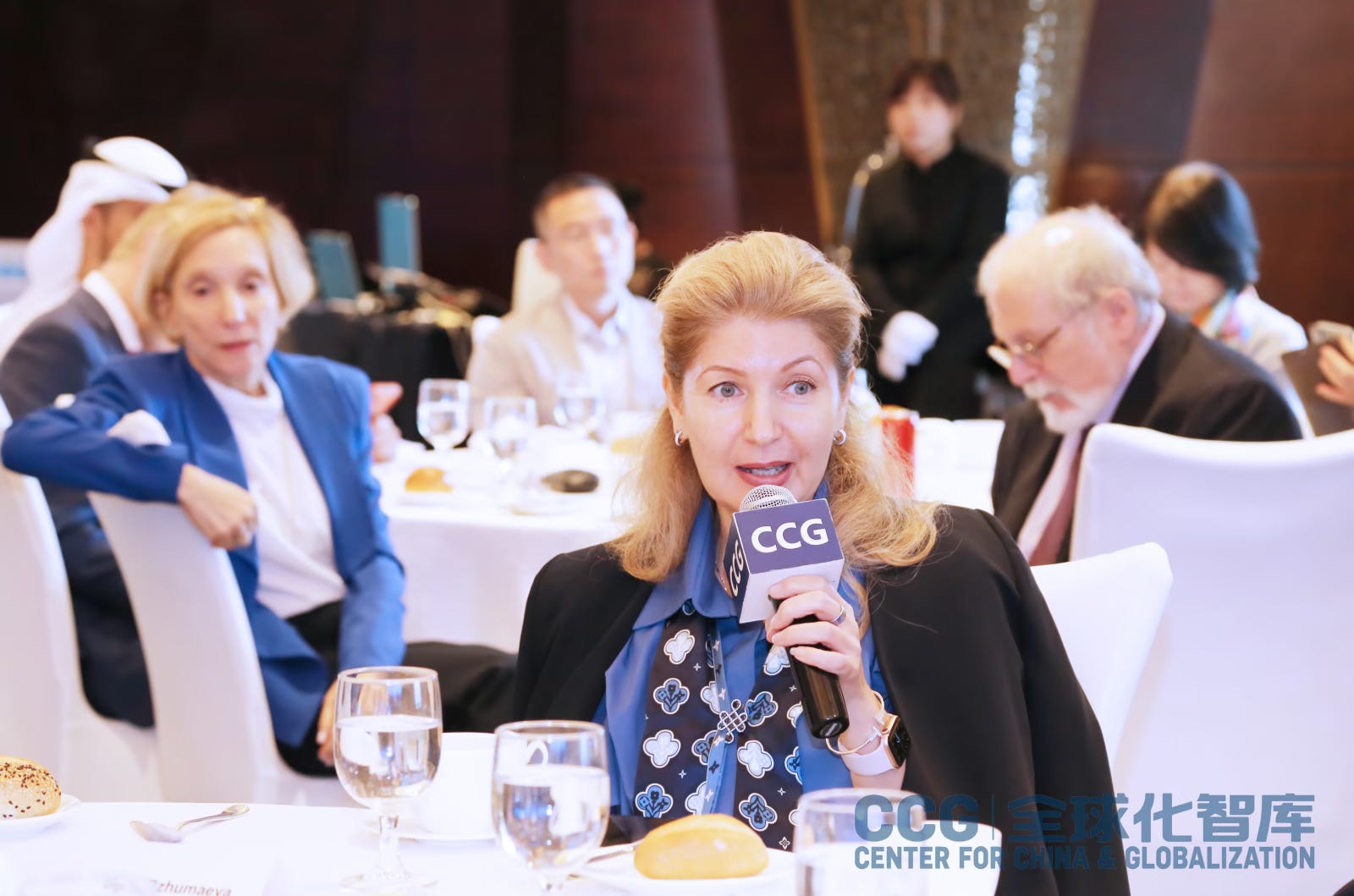
Thank you very much. I don’t think I’m a top expert, but I was really happy to see the title of the presentation because Red Cross teams, doctors, and nurses were among those who were not staying indoors, who had to work day and night in response to the COVID pandemic. And I just wanted to first really thank you for the brilliant analysis and brilliant presentations. Dr Gao, thank you for taking us back to 1948 and the comprehensive perspective on health—physical, mental, and social—but also linking it to the whole infodemic around it. And when we saw it again with COVID, people were suffering mentally, but they also didn’t know who to believe, what to do, or where to go.
And also Dr Huang, again, brilliant questions, thought provoking questions, but a very painful realisation in your presentation that COVID is a forgotten crisis. And yet it was the most deadly single disaster that the world has faced in many years, claiming millions and millions of lives.
And of course, last year at the World Health Assembly, we were all celebrating the adoption of the regulations to prepare for pandemics and to address epidemics. So again, from our perspective, what we saw was important was the availability of drugs or vaccines, the availability of instructions and support structures, but also people on the ground who can communicate and create that trust so that people can be aware. In the IFRC, we did research post COVID. It was trust and local action that were actually one of the key elements that helped to manage the response to COVID.
I’d like to return the question back to you: Are we ready for the next pandemic? But also, are there approaches to have cross-border cooperation, to organise simulation exercises, to really try and test if something happens? What do we do on the vaccine front? What do we do on the communication between borders front? How do we do surveillance and share this data? How do we bring communities on board through community-based systems and structures so that we can act as one big comprehensive body that could respond to that? And because China has a very strong and influential position, what would be China’s role in maybe encouraging those cross-border cooperations and simulation exercises? Thank you so much.
Henry Huiyao Wang
Thank you. Thank you, Director, for your excellent comments. So maybe we will have our experts for this round of discussion—comments, questions—and then you can give your general view as well. So let’s start with Dr Gao, please.
George Fu Gao
Okay, thank you. I tried to catch some of the questions and some open discussions. One of the issues is about birth defects, a great accomplishment not just for China but for the whole world. Without that, I don’t think life expectancy could reach that high. So this is why I talked about, in addition to children’s health, elderly health at the moment, so we need to really pay attention to both ends.
And for Alzheimer’s disease collaboration, definitely, that’s something common to two countries. I don’t know whether you know that one third of AD patients live in China, from statistics. At the moment, we don’t know exactly because our population is 1.4 billion; the population is very big. Of course, I should say we thank the national statistics. Without that statistic, we don’t know the number, but at least one-third of AD patients are in China. So this is a great challenge for China. I think it’s a very good field for collaboration between China and the rest of the world, including Australia, America, etc. Without relief from AD or AD-related dementia, if we have so many AD or dementia patients, how can we live in a healthy society? You might have a long life expectancy, but if you have so many AD or dementia patients, they are living a kind oof life where they need so much healthcare. So when they take up so many resources, I think this is something the U.S., China, and other countries can really do together.
Another issue you touched on is about clinical trial data. At the moment, the USFDA is about to have that law. They did want to have Chinese clinical data used in the U.S. So, for a while, we pushed very hard to share clinical data in order not to necessarily repeat all these clinical trials all over the world—China, then Australia, then the U.S.—that is not necessary. Maybe if one wants to do it, just a very simple Phase III clinical trial. So how can we have mutual benefit from this clinical data? At the moment, the whole thing has reversed back to, say, no mutual recognition of clinical data. I think this is very bad. I think this is something we should push very hard. Otherwise, again, it’s a waste of resources, a waste of time, a waste of relief for patients. The patients are waiting for good medicines and good measures, and we are waiting for another clinical trial. I think this is something maybe CCG and your colleagues and friends sitting here should push for. This is for the whole of mankind’s future.
And another question you asked: Are we ready for the next pandemic? Well, it all depends on how you define readiness. What do you mean by ready? Because we have already experienced this pandemic. Of course, we are ready. We knew the virus is there. We knew the viruses are there. This virus gives you a good example: we knew the virus; they don’t have passports, they don’t need visas, they travel anywhere. So from then on, we are ready, the virus is there, and they will travel everywhere. One cruise... We used to see one flight. The distance for a virus to turn into an outbreak in another place is just one flight. Now, one cruise. They stopped over, I think this one started from Argentina, went through that, they are going to... Cape Verde, right? That’s the place they are going. They stopped over so many places, and now we have so many places. From that, we are ready. For the preparedness, I do think we are ready. From that sense, again, I want to remind everybody about physical, mental, and social. I think we are ready, maybe physically—we are ready to receive the virus. Mentally, we are fighting each other. Socially, we still cannot sit together. So from that sense, we are not healthy, we are not ready.
How do we do surveillance? That’s my field. Back in 2018, when we just experienced the Zika outbreak, I was invited by a journal called Cell. Cell asked me, “George, can you write a small commentary about emerging pathogens?” I wrote something there in 2018. It’s very brief, only three sentences in the abstract, very brief. I said, you know, the viruses are there. What can we do first? Put your money into basic research. With basic research, help for the measures, help for medicines, help for vaccines—that’s investing your money in basic research. And then do surveillance. When you talk about surveillance, it’s global surveillance. At the moment, without collaboration, without global surveillance, without data sharing, from that sense, we are not ready. So when you talk about surveillance, it must be global surveillance. We really need to convene a kind of thing to work together. For example, I was involved in a USAID organised project called the Global Virome Project. Then the whole project was removed because of Tony Fauci. They think Tony Fauci supported this programme. The Trump administration just removed this project. So at the moment, global surveillance. Thank you. That’s my very quick comment. Maybe.
Yanzhong Huang
Well, thank you, Dr Gao. I’m just going to quickly follow up on what you just said in terms of our readiness. Certainly, after COVID, we have seen some efforts to basically fix the loopholes, like now we have a pandemic accord, although the appendix will have to be approved in this coming World Health Assembly. We have a pandemic fund overseen by the World Bank, and we also now have a hub in Berlin for exchanging disease-related surveillance. So there’s a lot of progress being made indeed, and that’s impressive. But in the meantime, unfortunately, we’re seeing the U.S. withdraw from the WHO. The WHO is now in a real financial crisis. They are slashing funding and staff. That is inevitably going to have an impact on global disease prevention, preparedness, and response.
And then, if you look at what people always look to China for help, in the meantime, we have to remember that China contributed $500 million over the next five years, but that is not going to offset the losses incurred by the U.S. withdrawal. Not to mention that at the global level, global health financing has dropped. In 2025, we’ve seen more than a 20% drop in global health financing. Also, geopolitical tensions: during COVID, even when facing a common threat, the U.S. and China had no serious cooperation or collaboration at all. Even today, we haven’t seen any real government-level dialogue. So that really makes me think it’s not a good sign for future pandemic preparation.
And then back to Denis’s question about potential U.S.-China collaboration: Could they find a win-win on issues like Alzheimer’s and non-communicable diseases? Of course, that’s not disputable. But if you look at the ecosystem of mutual dependence, decades ago, China provided essentially the active pharmaceutical ingredients, and the U.S. imported those patented drugs. You saw that as a kind of mutual dependence. But now we see the ecosystem is changing. The U.S. not only has to rely on Chinese APIs and key starting materials, but also has to rely on innovative solutions from the Chinese side. Those outlicensing deals increased significantly since 2020, during COVID. In the meantime, we see the Chinese now heavily rely on the U.S. market; for innovators, pharmaceutical companies, and biotech startups, they heavily rely on the U.S. market. So you see a different kind of dependence.
But now that dependence is also changing. As Dr Gao pointed out, the U.S. is now considering this overdependence on Chinese products a big national security problem. So they are moving to sort of de-risk or decouple from China. So, actually, as Dr Gao just pointed out, they are moving to not use clinical trial results from China. They will also potentially limit Chinese access to the U.S. market. They are also going to basically build a standalone supply chain without Chinese participation. They might rely on friend-shoring or on-shoring, but without Chinese participation. We’re going to see a report come out, I think this month, about Chinese active pharmaceutical ingredients and how the U.S. responds to the risk posed by Chinese products. I haven’t read the entire report—I just saw the draft quickly—but my impression is that the U.S. will securitise its own supply chain and build a more protectionist system without Chinese participation. Eventually, you’re going to see that U.S.-China decoupling is going to continue.
Henry Huiyao Wang
Yes, Ambassador, please.
Scott Dewar, Australian Ambassador to China
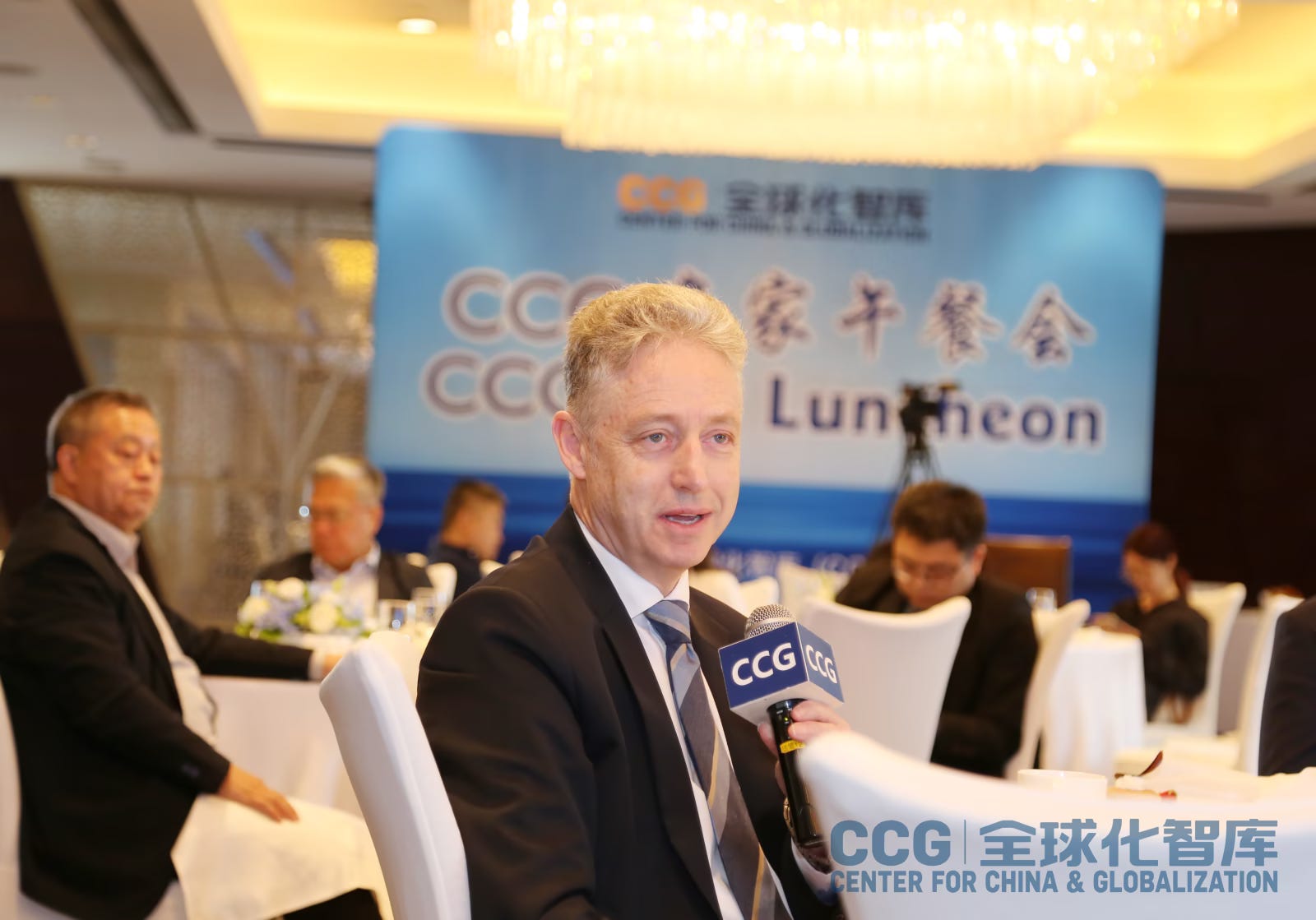
Thank you very much, Mr. Wang, Dr Gao, and Professor Huang. Thank you for your presentations. I wanted to talk about Australia-China medical and health cooperation, if I could. Our Prime Minister was here last year, and one of the areas he focused on was MedTech cooperation.
I’ve just got back from Hong Kong yesterday; I was at the Asia Summit for Global Health. We had a big Australian pavilion there because we bring research and development. We’ve got a very good health ecosystem in Australia, including R&D. We don’t have any problems with our data. Australia’s Phase I clinical trials data is accepted everywhere around the world, including by the FDA, which makes us a great place to do Phase I trials because if Chinese companies do their trials in Australia, they’re accepted by the U.S. So we’ve got some real benefits there, and we’re really looking at cooperation with China in this space.
Hong Kong, I think, just from my trip yesterday, has a real opportunity here as a financial hub, of course, and as access into the Greater Bay Area. But I think there’s a bigger opportunity for China here. And this is just my own opinion, but for China, with a big trade surplus at the moment and trying to find ways to increase imports, I think China should be looking at that as an opportunity.
Countries like Australia offer great medical technology, great skills, great services that we could bring into this market that I think is going to help meet the growing demand in China, particularly with the ageing population. And I think we have a lot to offer in this, but I think there’s an opportunity here for China to do some of its high-quality opening up that brings in and makes it more accessible for foreign companies to bring their high-end goods here. And I think it comes back to some of those standardisation issues that the colleague from Singapore was mentioning. So I think there’s a real opportunity. It’s not just an opportunity for China’s own healthcare industry; it’s an opportunity for China to invite the world in and deliver some great health outcomes for the Chinese people.
Henry Huiyao Wang
Great. Thank you, Ambassador. Absolutely. There’s an enormous opportunity for China and Australia to collaborate in the future, particularly in the medical health sectors. Maybe we have a few minutes left. Any last round of questions, comments? Yes.
Roberta Lipson
I wonder what our two panel experts think about the absolute very strong firewall about collaboration on genetic material—anything that has to do with genetic material research. I feel like it’s a huge barrier, and I feel like it’s paranoia. I wonder if there’s any way to break through that. Okay, good. We’re here. Our last round of experts.
George Fu Gao
That definitely is a problem, but how do you think we can solve this problem?
Yanzhong Huang
You know, I totally agree that this is kind of crazy. For example, we saw initially that was not an issue—China sharing these samples with the United States. I think until 2018, that was not a problem according to the agreement they reached. After SARS, the U.S. and China shared disease samples in real time. Now certainly, that’s no longer the case.
Remember during COVID 19—and I’m honest; Dr Gao can correct me if I’m wrong—China didn’t share the samples; they shared the sequence, right? But now, to my understanding, the Ministry of Science and Technology basically says that you’re not allowed to share genetic resources with outside actors without government authorisation. And certainly the United States is doing a similar thing by securitising these genetic resources through the BIOSECURE Act, for example, not allowing shipment of U.S. genetic materials to be processed by Chinese companies like BGI.
So one of the concerns is that this could be securitised. For example, China did not allow the shipment of Chinese genetic materials for fear that they could be weaponised. But even when I was talking to my brother in law the other day, who is not well-educated, even he understands that in the U.S. you have millions of Chinese, why bother? If you really need those resources, you could easily get them from there. So I think sometimes when we securitise these kinds of things, it leads to really non-scientific, irrational decisions that are not to anyone’s benefit.
George Fu Gao
Roberta, I think that’s a very good question. As long as we still have nationalists there, I don’t think we can solve this problem. Scientifically, like Dr Huang said, you have millions of Chinese living in the U.S., and they already share the genetic material. You could use it. You are living in the US, right? Your genetic materials are already in the U.S. It doesn’t matter why I still want to have some genetic material from here. But the problem is that officials and those who made these laws have different opinions. And the U.S. is the same.
For example, you mentioned sharing genetic material, sharing viral sequences. The technology is there. If you give me the sequence—for example, in my lab, you give me the sequence, I can make the virus, like a coronavirus, an influenza virus. The technology is already there everywhere. As professionals, scientists can make it. So it doesn’t matter whether you share the sequence or share the virus, you can have the virus. So this is why, of course, a lot of people think, “Ah, the scientists made the virus,” a lot of stories. So the technology is already there; that’s the science. The question you ask is beyond science, beyond technology. So this is why I think it will be very, very difficult for both sides. That’s why I say I hope Henry’s G—CCG’s G for globalisation—is still there.
Our brains are blocked. I am a professional working on virology. He is a professional on sociology. He is a professional strategist. But by then, do you think we really have this disciplinary classification for the Earth? We don’t. Do you think really the Australians and Chinese—Scott and me—are different? Scott and I are Homo sapiens—we are one species. The viruses are so different. Some viruses use RNA as their genetic material storage; some use DNA. For example, monkeypox uses DNA to store its genetic code. Flu and coronavirus use RNA. But ordinary people think the virus is only one species. But this is a general question – a very good question. I do think we can solve it only when we solve the problem of the infodemic, when we eradicate the infovirus. Only when we are in that stage, maybe we are in the business. So for me, I don’t have a solution for such a question. Thank you.
Henry Huiyao Wang
Okay, great. We are probably running out of time, so we will conclude here. But I think we have had a very good, stimulating, and constructive luncheon discussion. I also want to respond briefly in a personal capacity.
I think after SARS, COVID-19, and all the challenges that humankind has faced together, one lesson we have learned is that we have to work together. Of course, I believe we are better prepared than before. After all the ups and downs, lessons, and problems we have been through, we have gained a great deal of experience. That is why, as we said, the WHO is so important, and China continues to support it. We also still have the International Red Cross and other health organisations, and that is very important.
So I agree with Dr. Gao: mankind can be much better prepared if we are not divided geopolitically or ideologically. We are facing viruses, and we are all human beings. In that sense, we certainly can work together. We certainly can overcome our differences. In the face of viruses and pandemics, humankind should unite as one.
On that note, I think this is both the lesson we have learned and the experience we have gained, as well as the achievements and successes we have made. After all, humankind has successfully contained COVID-19, and now we are in 2026. I am sure China and the U.S., given that President Trump is coming today, as well as China and other countries, can all work together more strongly.
Just a few months ago, I hosted a foreign delegation. The head of the association brought a number of U.S. pharmaceutical CEOs, and they all seemed very bullish on China. China has huge potential. Given that health standards are rising and China is also ageing, this provides opportunities not only for China, but also for the world. So I think we have to work together. And this is exactly what CCG is doing. On globalisation and inclusiveness, we have to keep talking together.
So thank you all. In particular, I want to thank our two top experts for sharing their very unique views today. I also want to thank the ambassadors, industry representatives, international organisations, the media, think tank colleagues, and industry friends here today. Thank you all very much.
George Fu Gao
May I add one more sentence here? You know, when you are talking about data sharing or whatsoever, I thought that would remind everybody of common sense. Everybody must know the so-called reproductive isolation. Australians, the British, the US, the Chinese, Indian, when we got married, we still could have a kid. We are only one species. We are so close. But the influenza virus, they have A, B, C, D. Different subtypes cannot mix together. They have so called reproductive isolation. Again, we are fighting the virus; they are working together. Thank you. That’s my last comment.
Register Now for Dialogue with David Shambaugh on U.S.-China Relations in Beijing

U.S. President Donald Trump paid a state visit to China from May 13 to 15. During the visit, the two heads of state held sustained, candid, in-depth, constructive, and strategic discussions on major issues concerning China-U.S. relations, as well as world peace and development. They actively explored the right way for the two major countries to get alon…
This presentation is pertinent. https://ianbrighthope.substack.com/p/ebolathe-next-plandemic?publication_id=1749153&post_id=198523051&isFreemail=true&r=11eqm&triedRedirect=true.
It poses a question that went unanswered during Covid. Who will take responsibility? Who will run the trials on drugs that are out of patent that can be efficacious?