

This is an excerpted transcript of the year-end dialogue of Henry Huiyao Wang, President of the Center for China & Globalization (CCG), Mabel Lu Miao, Secretary-General of CCG, and Victor Gao, Vice President of CCG.
The video recording of the Chinese-language dialogue was broadcast on Chinese mainstream platforms on 31 December 2025 and remains accessible on CCG’s WeChat blog.
This transcript is based on the video recording and has not been reviewed by any of the speakers.
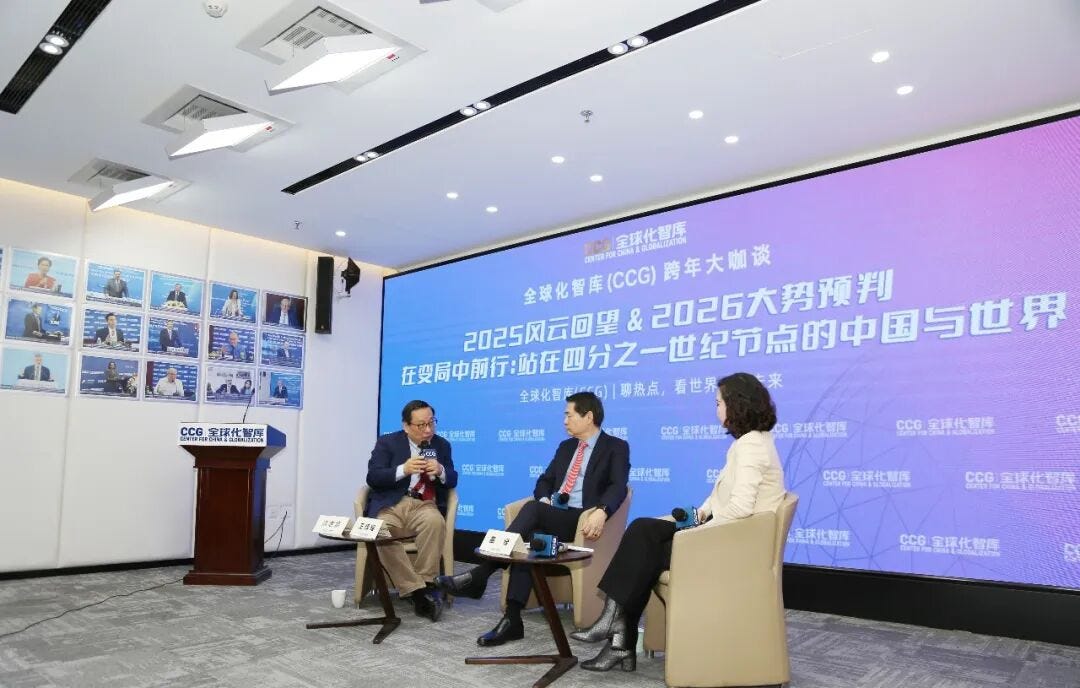
Mabel Lu Miao: Looking back at 2025, and looking ahead to 2026. Hello, and welcome. Today, the Center for China and Globalization (CCG) is pleased to invite two distinguished guests: Henry Huiyao Wang, CCG’s President, and Victor Gao, CCG’s Vice President. Together, they will reflect on the year 2025 and offer their outlook for 2026 at this turning point, as a new quarter-century begins.
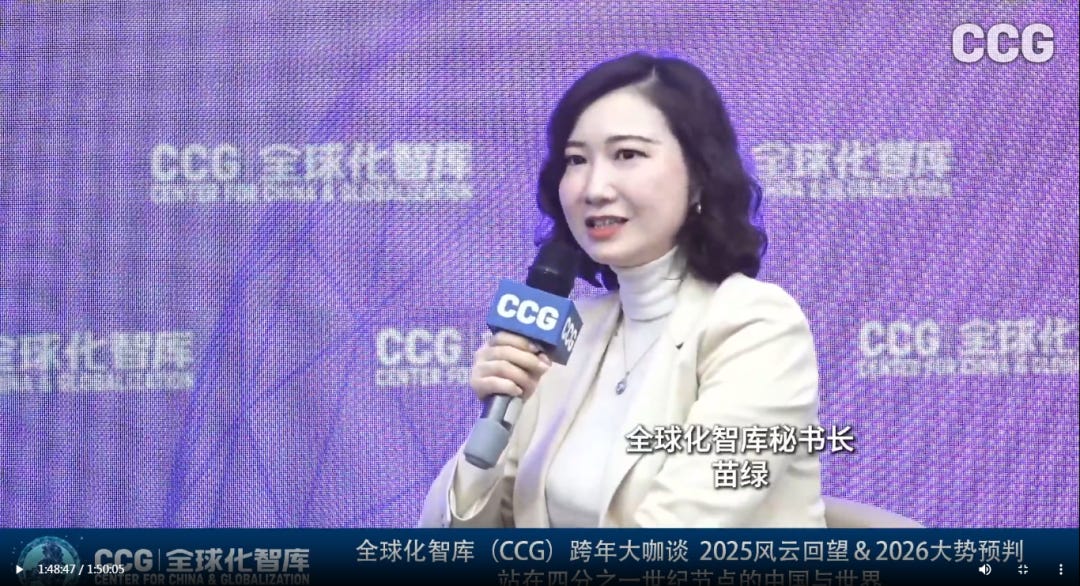
2025 was a productive year. CCG released seven research reports, published five issues of its think tank journal, and facilitated the publication of nine books in Chinese and English. CCG also completed ten commissioned research projects for government agencies and submitted more than 120 policy recommendations. Beyond research, CCG hosted seven flagship forums, ten CCG VIP luncheons, more than 20 thematic seminars, and over ten CCG Global Dialogues. CCG also visited more than 20 countries and over 30 cities, continuing to deepen global cooperation and intellectual dialogue.
CCG’s three English-language newsletters, Pekingnology, The East Is Read, and CCG Update, now reach more than 40,000 subscribers worldwide, with annual readership exceeding four million. CCG experts have also been interviewed frequently by leading international media outlets, contributing actively to global conversations.
As for the world in 2025, to borrow the phrase used by Foreign Minister Wang Yi, it has been “this new turn in the course of history.” The U.S. tariff war has put pressure on the multilateral trading system, global economic uncertainty has risen, and the credibility of the dollar has come under closer scrutiny. Investment in artificial intelligence has surged, alongside concerns about potential bubbles. At the same time, China has continued to serve as a key engine of growth, while the rise of the Global South is reshaping the global landscape.
Looking ahead to 2026, there are several major questions worth discussing. Will U.S.–China relations move towards confrontation, competition, or some form of rebalancing? How can AI be integrated more effectively with the real economy? What kind of governance changes might the Global South bring? And how can China continue to demonstrate responsibility as a major country?
Today’s conversation will focus on those issues. To begin, let me invite President Henry Huiyao Wang to share his thoughts.
Henry Huiyao Wang: Thank you, Dr Miao, for that overview. Victor has been a close colleague of mine for more than two decades, and he has remained very active on the international stage throughout that time, which I have always followed closely.
On the question of China-U.S. relations that you just raised, my view is that both sides are, in effect, “finding a new equilibrium.” China-U.S. relations have never been quite like this. They are facing, and are about to enter, a new stage and a new normal.
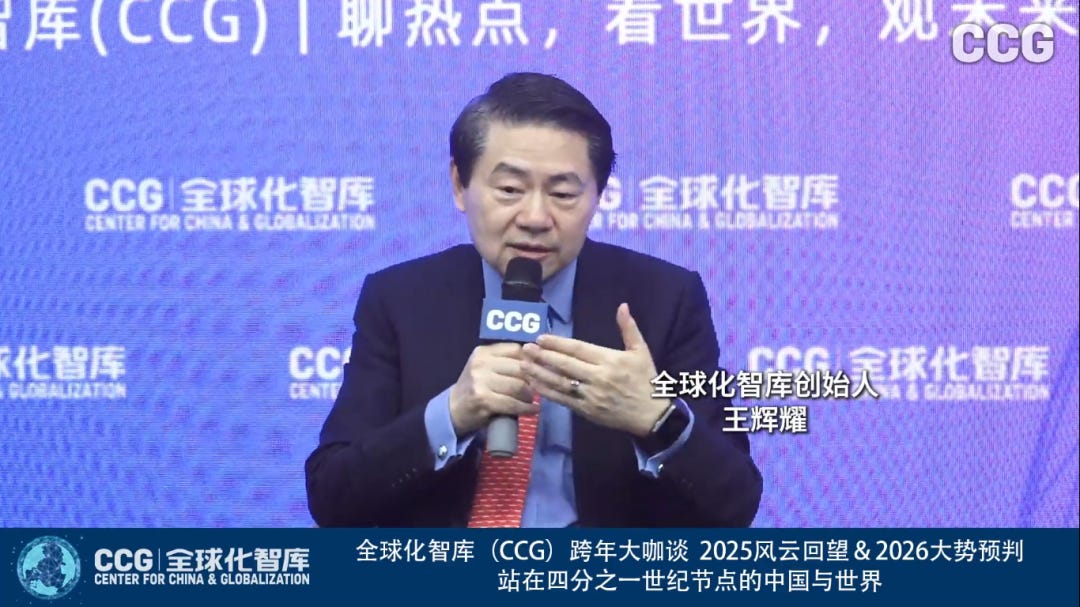
This new balance is closely tied to what happened in 2025. All of us witnessed President Trump launching what he called a “Liberation Day” trade war on 2 April, targeting more than a hundred countries around the world. Then, in mid-April, Victor, Dr Miao, and I went to Washington immediately for a ten-day visit. During that period, it felt as if every morning brought news of another round of tariff hikes or new sanctions from the U.S. side.
But precisely in that tense, high-pressure environment, it became very clear that this trade war is genuinely hard to take all the way, because the reality is deep interdependence, “you are in me, and I am in you”. For example, when President Trump rolled out a USD 400 billion tariff list, he had to announce exemptions for USD 100 billion almost immediately. The basic reason is straightforward: the U.S. market is heavily dependent on manufacturing in China. Around 80% of iPhones, 50% of Tesla vehicles, and 60% of Walmart’s global sourcing are tied to China. In other words, pressuring China also ends up hitting the United States itself.
At the same time, China’s economic resilience has become more evident. China’s share of trade with the U.S. has been declining, while trade with the rest of the world, especially with countries in the Global South, has been rising quickly. It is important to recognise that the U.S. market accounts for only the low teens as a share of global trade. The remaining 88% of global trade space exists independently of the United States. So, while U.S.–China relations in 2025 were volatile, the year ultimately clarified, and in a sense established, a “new equilibrium” that neither side can ignore.
Looking to 2026, I believe this new balance could lead to a relatively steadier phase. Some positive signals are emerging. The two presidents may meet in April. President Trump has announced his visit to China. China will also host an APEC summit, and the U.S. President is expected to attend. This year’s G20 will be held in the United States, and China’s leadership is also likely to participate. These major moments of head-of-state-level diplomacy can provide critical guidance for the relationship.
Of course, the long-term structural contradictions between China and the U.S. will not disappear. But if the rhythm is managed properly, and this new equilibrium can be sustained, China will be better positioned, in the context of a more multipolar world and the rise of the Global South, to play a more significant convening role as the global order is reshaped.
That, ultimately, is the value of think tank work. Thinking back to April, Victor, Dr Miao, and I went to the U.S. at precisely the moment when the tariff war was escalating, and we held dozens of dialogues and meetings. That experience left a deep impression on me, and it is one reason CCG will continue to watch, analyse, and engage on the future trajectory of China-U.S. relations with sustained attention.
Mabel Lu Miao: I still remember that trip to the United States. When President Trump announced “Liberation Day”, the core question was exactly this: who, in the end, is going to “liberate” whom? At the outset, the U.S. calculation may have been that the tariff stick would force countries, including China, to give in.
But within just a few months, the outcome became clear. By last autumn and winter, the situation had already shifted in a noticeable way. The U.S. strategic narrative on China gradually moved away from the idea of unilateral “conquest” and towards a reluctant recognition of the reality of “coexistence” that it has to face.
With that, let me invite Victor Gao to speak about China-U.S. relations. Looking back and looking ahead, what is your assessment?
Victor Gao: Thank you, Dr Miao, and Dr Wang. Looking back at 2025, I think one conclusion is clear: at a time when U.S.–China relations have become the most important bilateral relationship in the world, 2025 will be remembered as a turning point.
The significance of that turning point is this: the United States tried, through various forms of coercion and pressure, to suppress what it defined as its “primary rival”, China. But by 2025, the facts had become undeniable: bullying and containment cannot defeat China. War between China and the United States is not an option, and it should never be an option. And no matter what tools of containment the U.S. deploys, it cannot come out unscathed. That is a crucial shift in understanding.
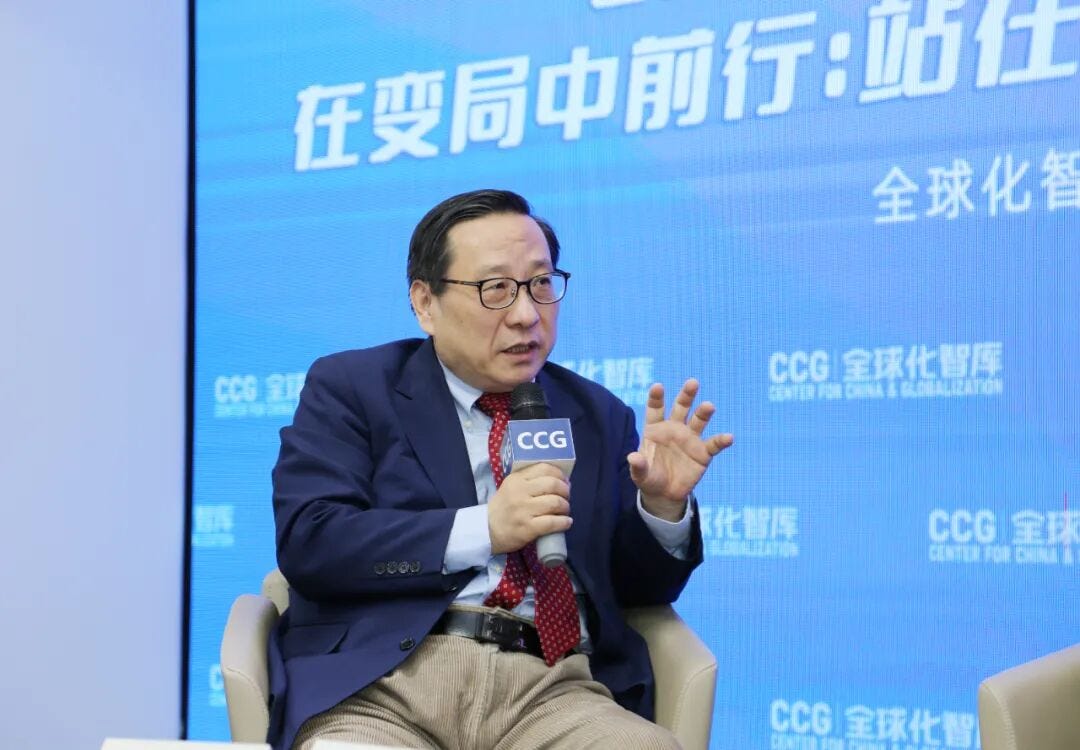
Of course, it is still necessary to watch what comes next. For example, when President Trump met China’s President in South Korea and used the phrase “G2”, does that signal a fundamental shift? And even if many expect China-U.S. relations to become calmer in 2026, could there still be surprises? Those questions remain open. But what is already clear is that 2025 was a turning point, and every Chinese person has reason to feel proud of that.
Looking ahead to 2026, I believe it will open a new phase in China-U.S. relations. This phase is not set in stone. But as President Wang noted, there are at least four opportunities this year for head-of-state-level engagement. That includes President Trump’s planned state visit to China in April, which would be a major diplomatic moment. It is also worth noting that President Biden was the only sitting U.S. president since Richard Nixon not to make a state visit to China, and Trump’s visit would reverse that precedent. From that perspective, both sides in 2026 have an interest in keeping the relationship stable and in avoiding any disruption to the current positive momentum.
At the same time, there is another side to the picture. Even though the U.S. has made a number of policy adjustments, and President Trump’s tone on China has been broadly positive, I do not think the deeper layers of the U.S. system have fully abandoned an adversarial, confrontational posture towards China. That is why the key task is to ensure that President Trump’s current positive stance is not derailed by other forces, and to prevent anti-China sentiment and hostile factions in the U.S. from regaining the upper hand.
This is precisely where think tanks like CCG can play an important role. It is necessary to sustain communication with all parts of American society, whether government, business, or the think tank community. Right now, more dialogue between China and the United States is better than less. Even if agreement is not possible on every issue, communication can reduce misperceptions and build mutual understanding. At the same time, it is important to identify and highlight areas of shared interest for cooperation on a global scale, so that the world can see more clearly the costs of confrontation and the benefits of cooperation.
Take one example. As allies and comrades-in-arms who jointly defeated Japanese fascism in 1945, can China and the United States cooperate to prevent a resurgence of Japanese militarism and to stop Japan from developing nuclear weapons? If the issue is defined clearly, it becomes easier to see that there are many practical things the two sides can do together in 2026.
So, 2026 marks the beginning of a new phase. The challenge is to make that phase concrete, to strengthen it, and to give it an “irreversible” quality, so that the relationship can only move in the right direction. Even if anti-China forces remain active within the U.S., they should not be able to overturn that trajectory. At a minimum, the aim should be to prevent the current positive momentum from being disrupted during the remainder of Trump’s term, and through sustained effort over the next three years, to ensure that any new U.S. administration that may come into office in 2029 is no longer in a position to reverse the new, irreversible phase in U.S.–China relations that has taken shape.
…
Mabel Lu Miao: In 2025, China also convened an important Central Conference on Work Related to Neighbouring Countries, once again underscoring just how critical China’s relations with its surrounding region are. China has consistently called for and worked towards delivering greater fairness and development benefits to countries in the Global South, firmly positioning itself as part of the Global South and as a defender of its interests.
At the same time, one very striking trend I observed in 2025 was the genuine rise of BRICS cooperation, which may suggest that 2026 could become an even more pivotal year for its development. In addition, at this year’s Shanghai Cooperation Organisation summit, President Xi Jinping put forward the Global Governance Initiative, which in itself seems like an active response to the growing momentum of the Global South and the trend towards a more multipolar world.
With that context in mind, I would like to ask both of you: how do you look back on the overall performance and progress of the Global South in 2025? And what is your assessment and outlook for its trajectory in 2026?
Henry Huiyao Wang: I see the rise of the Global South as a major new phenomenon. In international conversations, a question comes up again and again: “BRICS countries are so different from one another, and the internal cohesion doesn’t look that strong, so what really holds it together?” My answer is that the rise of the Global South is, at its core, the awakening and strengthening of a political identity, a response to a historical pattern in which the West dominated, and often constrained, the international order. And in that process, China is the largest Global South country.
A few years ago, when the term “Global South” gained new momentum because India hosted related meetings, there was a debate at home: Does China still count as part of the Global South? As a think tank, CCG responded early and published an article in Global Times making the point that China remains, and will continue to be, a developing country, an important member, and a leading force within the broader developing-country community. That reflects policy advisory work, but it also aligns with China’s positioning in recent years: China has become an indispensable driver, and in many cases a convenor, for development across the Global South. That political identity matters.
Looking ahead, the Global South has enormous potential. During recent trips to Brazil and to several Middle Eastern countries, including Qatar and the UAE, it was striking how much stronger the sense of autonomy has become. Many of these countries want to band together, build a shared identity and value chain. China plays a key role in that. Of the more than 150 countries involved in Belt and Road cooperation, the majority are Global South countries. And through platforms such as the China–ASEAN Summit, the China–Arab States Summit, the Forum on China–Africa Cooperation, and the China–CELAC Forum, China has built dense economic linkages with the Global South.
In a sense, China is trying to lead through economic globalisation and the building of a community of shared interests, and that stands in sharp contrast to the U.S. tendency towards “over-securitisation” and geopolitical pressure.
And there are tangible outcomes. ASEAN is now China’s largest trading partner. China has also recently announced tariff-free treatment for 53 African countries. That is a stark contrast with tariff hikes imposed by the U.S. on many countries, and it has clearly strengthened China’s international image. So, looking towards 2026, I would expect the Global South to remain one of the brightest spots in global development.
On that basis, one practical recommendation is this: institutions China has supported, such as the SCO development bank and the New Development Bank under BRICS, should deepen cooperation with established multilateral lenders such as the World Bank, the Asian Development Bank, the African Development Bank, and the Development Bank of Latin America. This is a very real and positive expectation that I have heard in places like the Middle East, and China can play a stronger convening role in taking South–South cooperation to a new level.
Victor Gao: In today’s world, the Global South already represents half of the international community, and arguably more than half. Looking ahead, these countries will play an even more important role in global economic development and in many other areas. China has always taken pride in being part of the Global South, and remains committed to promoting peaceful coexistence, both within the Global South and between the Global South and the developed economies of the Global North.
But there is an urgent new challenge that I think deserves far more attention: the profound transformation driven by artificial intelligence. I have coined a term for it: the “AI divide”. Right now, in the development of AI, only two countries are truly far ahead, China and the United States. And much of the momentum is being driven through closed, proprietary models, often with the aim of establishing “AI dominance”, and even equating that dominance with “American intelligence”. That trajectory will inevitably create a severe AI divide.
It is not hard to foresee the risk: many countries in the Global South could end up on the disadvantaged side of that divide. That would be an extremely dangerous situation. China is pursuing a different path. China is working to develop open-source AI, to lower costs and reduce barriers to entry, so that every country and every company can participate, and so that man-made walls and divides can be dismantled. That is exactly why China should play a stronger leadership role in the Global South. The message should be clear: China is not seeking “AI bullying”. The goal is to ensure that the development of AI benefits every country in the Global South, the Global South as a whole, and ultimately humanity. That point is absolutely critical.
There is another reality as well. After what happened in 2025, when the U.S. launched what it called a “reciprocal tariff war”, many countries in the Global South were left bruised and battered. Now they are being pressured into a binary choice: pick a side between China and the United States.
That demand for a forced “either-or” choice is wrong, and it should be called out as wrong. For countries in the Global South, the real choice should not be about lining up behind Beijing or Washington. It should be about exercising independent judgment. Look at what the U.S. is doing: is it right or wrong? If it is wrong, why follow it blindly? Look at what China is doing: is it right or wrong? If it is right, why not cooperate?
So, for the Global South, there are two core questions. First, how to preserve strategic autonomy between China and the United States, and make decisions based on right and wrong, and on what truly serves national interests. Second, how to ensure that the wave of AI development does not harm these countries but benefits them. How can they avoid falling onto the wrong side of the “AI divide” and instead secure a place in this technological revolution while working together to ensure that AI develops in a direction that serves the good? That is one of the defining challenges of this era.
CCG Book Catalogue 2025

In 2025, CCG facilitated the publication of 10 books—3 in English, 5 in simplified Chinese, and 2 in traditional Chinese. These publications are meant to offer the world a China-based lens, and to bring global perspectives to Chinese readers. As always, CCG’s mission is to strengthen mutual understanding and work with partners to explore practical paths…
Transcript: Zichen Wang on China-U.S. Tensions in Panama and the "Donroe Doctrine"

The following is a transcript of TRT World’s The Newsmakers, Turkey’s flagship English-language news channel, aired on 7 January 2026.
Henry Huiyao Wang on U.S.’s moves on Venezuela and Greenland
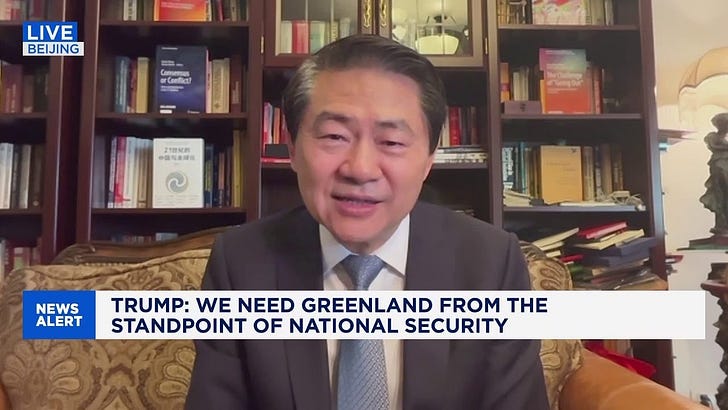
In the wake of the U.S.’s moves on Venezuela and Greenland, Henry Huiyao Wang, founder and president of the Centre for China and Globalisation, spoke to Emily Tan of The China Connection live on CNBC that Washington’s recent moves risk undermining long-standing international norms and stressing that the Venezuela episode should not be read as a preceden…